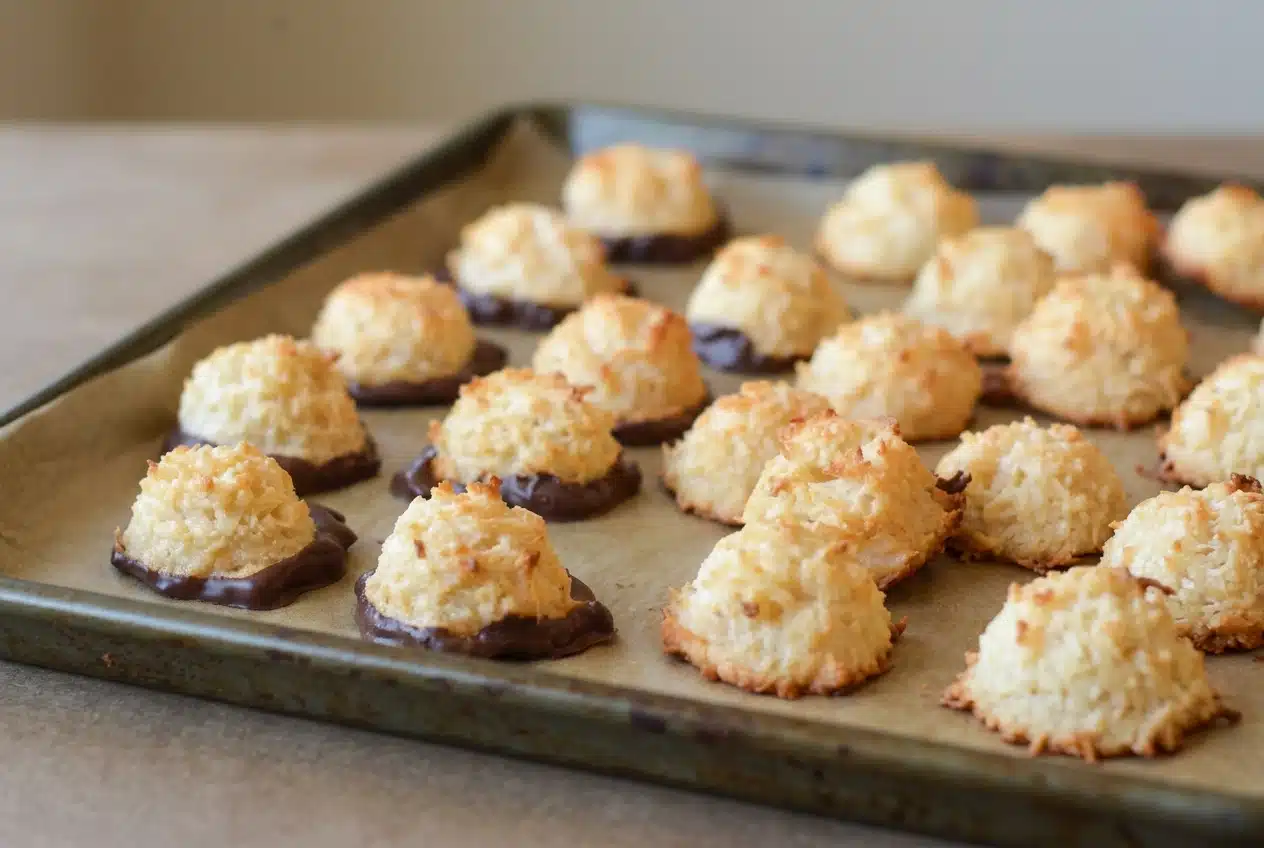
Coconut macaroons are coconut drop cookies with crisp golden edges and chewy centers. Mix sweetened flaked coconut with condensed milk and vanilla, fold in stiffly beaten egg whites, and bake until the exposed coconut tips turn golden. Chocolate-dipped bottoms are optional.
These coconut macaroons get their rich chew from sweetened condensed milk and their lighter structure from whipped egg whites. Their craggy coconut strands toast around a moist middle, giving each bite a little crunch before the chew.
You don’t need piping skills or a perfectly smooth batter. Careful measuring and gentle folding matter more than fancy shaping. Watch those golden tips.
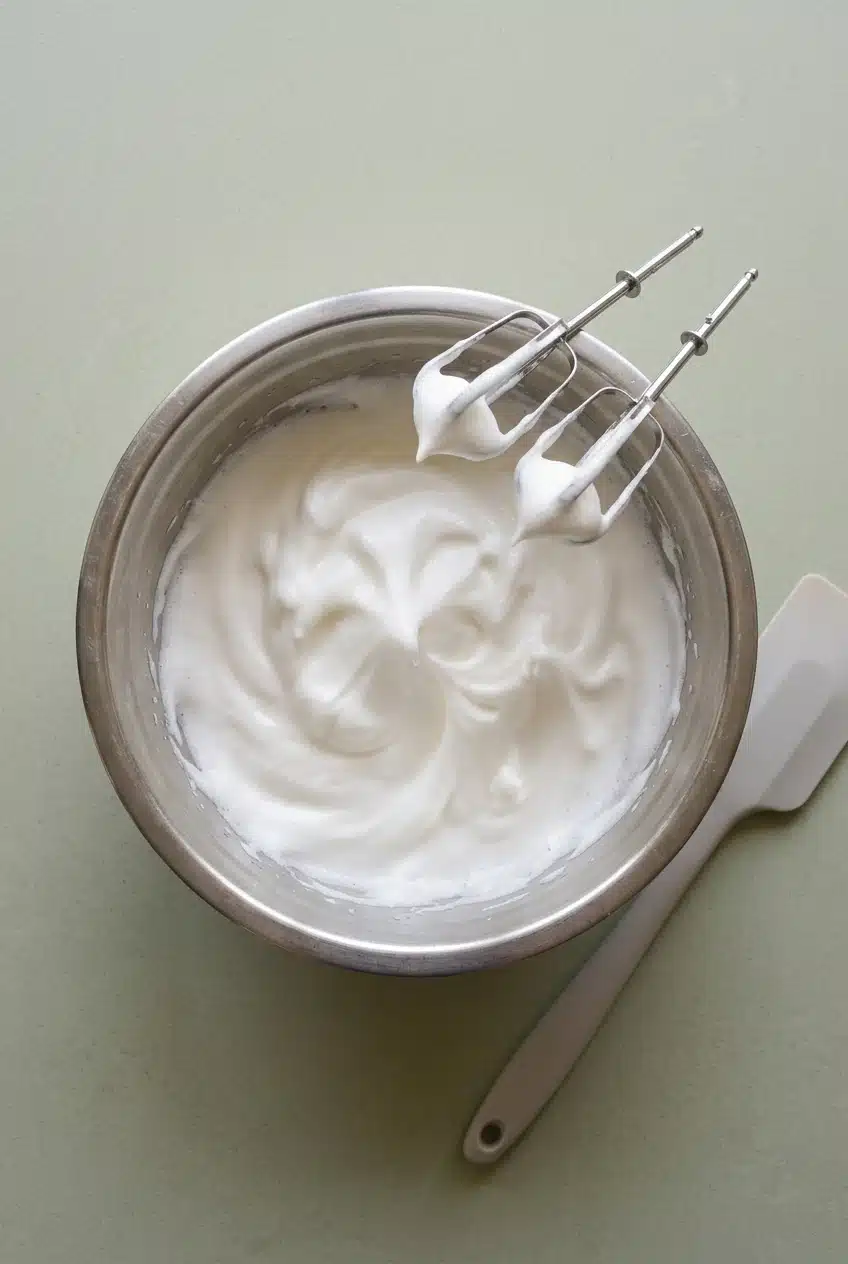
Keep the mixing bowl and beaters grease-free so the egg whites can whip into upright peaks.
Why Ingredient Balance Matters: Essential Coconut Macaroon Ingredients
Coconut supplies texture, condensed milk adds moisture and richness, and egg whites provide structure. Vanilla rounds out the coconut flavor, salt balances sweetness, and optional semisweet chocolate brings a pleasantly bittersweet finish.
- 1 (14-oz) bag sweetened flaked coconut, (such as Baker’s Angel Flake (see note))
- ⅞ cup sweetened condensed milk ((see note below on measurement))
- 1 teaspoon vanilla extract
- 2 large egg whites
- ¼ teaspoon salt
- 4 oz semi-sweet chocolate, (best quality such as Ghirardelli, chopped (optional))
Coconut: Choose sweetened flaked coconut as listed. Its soft, moist flakes cling together differently from dry unsweetened shreds. Brands vary in moisture and strand length, which can affect how neatly the mixture forms mounds.
Condensed milk measurement: Measure the listed portion rather than emptying the entire can into the bowl. Excess milk can escape around the cookies and scorch instead of staying within the coconut.
Egg whites and flavorings: Stiffly whipped whites give the sticky mixture lift. Vanilla adds aroma, while salt keeps the sweetness from tasting flat. For dipping, choose semisweet chocolate you enjoy eating on its own.
I’d judge this mixture by how it clings together, not by how smooth it looks; distinct coconut strands belong here.
How to Make Coconut Macaroons Step by Step
Allow 20 minutes for prep and 25 minutes for baking, with additional time for cooling and optional chocolate setting. The recipe yields about 26 macaroons.
- Arrange two racks close to the oven’s center, heat to 325°F (165°C), and cover two baking sheets with parchment paper.
The parchment should cover the areas where the sticky mounds will sit. - Combine the coconut with the condensed milk and vanilla in a medium bowl, then leave the mixture aside while whipping the whites.
The flakes should look evenly coated and sticky rather than surrounded by loose liquid. - Whip the egg whites with the salt using an electric mixer, then gently incorporate them into the coconut mixture with a large rubber spatula.
Before folding, the whites should hold straight-standing peaks when you lift the beaters. - Portion heaping tablespoons onto the lined sheets using a mini ice cream scoop or two spoons, leaving about 1 in (2.5 cm) between mounds.
Each portion should hold together as a rounded mound with coconut strands visible around its surface. - Bake for 23 to 25 minutes, exchanging the pans’ upper and lower positions and turning them front to back during baking, then rest the cookies on their pans for a few minutes before moving them to a wire rack to finish cooling.
Look for golden tops and edges, and handle the warm bottoms gently because they remain tender. - For the optional coating, microwave the chocolate in a microwave-safe bowl at medium power, stirring every 30 seconds, or melt it in a double boiler above simmering water.
Stop heating once stirring produces a smooth, creamy consistency. - Lower each completely cooled macaroon’s bottom into the melted chocolate, let the surplus fall into the bowl, return it to the parchment, and refrigerate for about 10 minutes.
The chocolate bases should be set rather than wet before you handle them.
Mixing the Coconut and Condensed Milk
Look for an evenly moistened mixture that clings together when pressed. Coconut should remain recognizable, not disappear into a puddle of milk.
Whipping and Folding Stiff Egg Whites
Soft peaks bend over; stiff peaks stand upright. Fold with broad, gentle movements rather than vigorous stirring, which knocks air out of the whites.
Scooping and Baking Until Golden
Compact mounds hold together better than loose piles of strands. Judge doneness by golden tops and edges, not by waiting for the entire cookie to turn brown.
Melting Chocolate and Dipping the Bottoms
Stir between heating intervals so you can judge the chocolate before adding more heat. Completely cooled cookies are easier to dip without damaging their tender bottoms.
Pro Tips and Troubleshooting Common Macaroon Mistakes
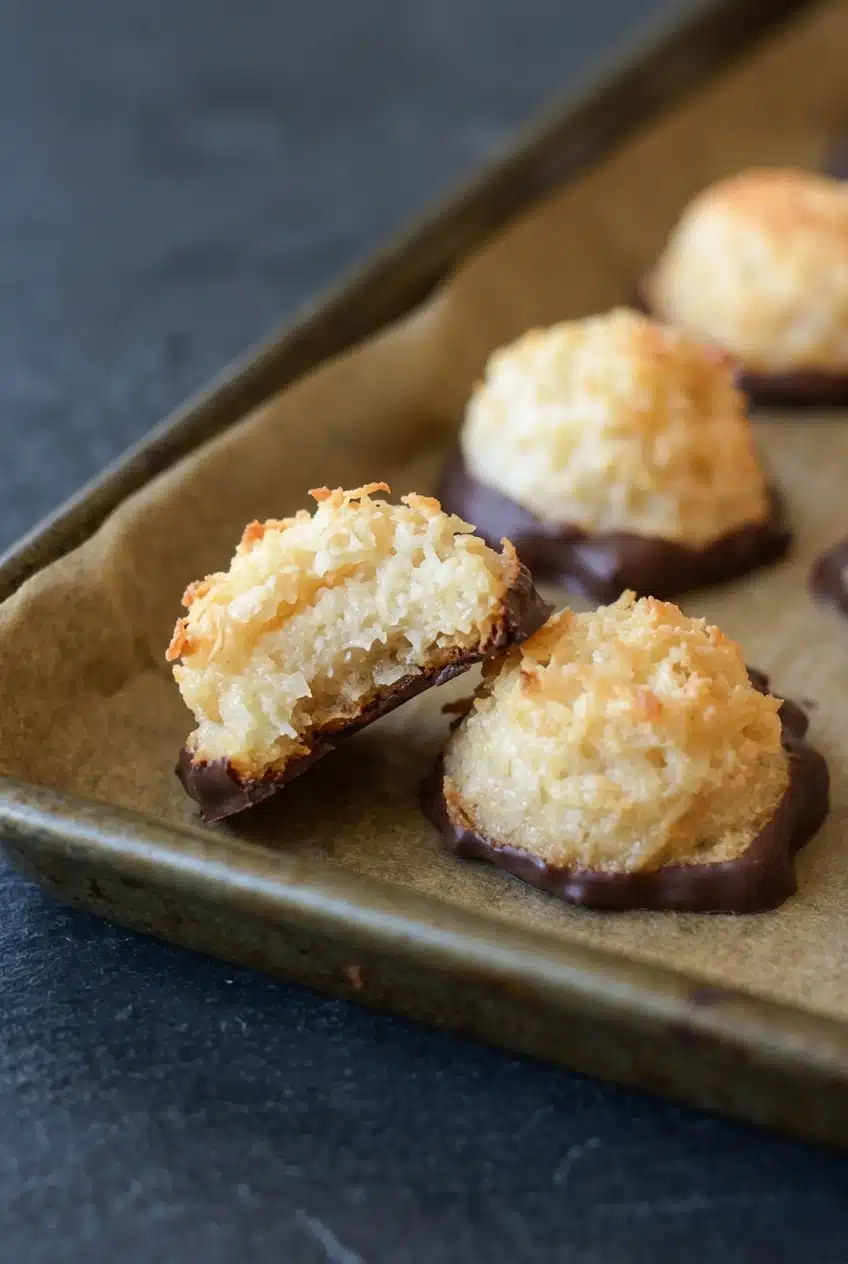
Most texture problems begin with excess liquid, loose shaping, or rough handling of the whites.
- Syrup puddles: Too much condensed milk can leak onto the pan and burn. Measure it carefully rather than using a whole can.
- Fragile mounds: Loose coconut strands don’t form a cohesive cookie. Pack the scoop firmly enough to bring the mixture together without flattening every outer ridge.
- Dense centers: Vigorous stirring deflates the whipped whites. Use the large spatula to fold gently.
- Scorched bottoms or uneven color: Rack position and uneven oven heat can contribute. Keep both racks near the center, use parchment, and rotate the pans as directed.
- Thick, dull chocolate: Excess heat can spoil its consistency. Use medium microwave power and the stirring intervals in the method instead of continuous heating.
As an optional shaping adjustment, brief pulsing can shorten unusually long coconut strands for closer cohesion. Light fingertip ruffling offers a craggier exterior with exposed ridges; neither adjustment is necessary.
Macaroons vs. Macarons and Classic Variations
These optional directions change the flavor or style, but they don’t replace the ingredient list and method above.
Coconut Macaroons vs. French Macarons
American coconut macaroons are chewy, textured drop cookies. The broader macaroon family has roots in Italian almond cookies, while French macarons are smooth almond-meringue sandwich cookies with filling. Say macaroon “mak-uh-ROON,” with the ending of “balloon.”
Chocolate-Dipped vs. Chocolate-Drizzled Macaroons
Dipped bottoms create a solid chocolate foundation; drizzled tops leave more coconut exposed. Optional chocolate choices offer different balances:
- Dark chocolate: A stronger bitter contrast to the sweet coconut.
- Milk chocolate: A sweeter, creamier finish.
- White chocolate: A mellow finish without cocoa bitterness.
Dairy-Free and Condensed-Milk-Free Approaches
Sweetened condensed coconut milk is an alternative direction, not a confirmed interchangeable substitution here. Traditional egg-white-and-sugar macaroons use a different formula altogether. Choose a recipe designed for either approach, and verify labels for your dietary needs.
Almond and Citrus Flavor Variations
- Chopped toasted almonds: Add a nutty contrast and extra crunch.
- Almond extract: Offers a more pronounced almond aroma.
- Lemon, lime, or orange zest: Brings fresh citrus fragrance to the rich coconut.
Dietary, Holiday, and Passover Considerations
This formula contains no flour or leavening, which helps explain macaroons’ longstanding place on Passover dessert tables. That ingredient pattern alone doesn’t establish suitability for every guest.
Check the coconut, condensed milk, vanilla, and chocolate labels for relevant allergen information and kosher-for-Passover certification when needed. Confirm your guests’ requirements rather than assuming that flourless means certified gluten-free or appropriate for their observance.
Storage and Texture Protection
Let the macaroons cool completely before placing them in an airtight container at room temperature. Closing the container around warm cookies traps moisture and can soften their crisp edges.
For chocolate-bottomed cookies, wait until the coating has set before arranging them in the container. Protect the delicate coconut ridges from crushing rather than packing the cookies tightly.
How to Serve and Gift Macaroons
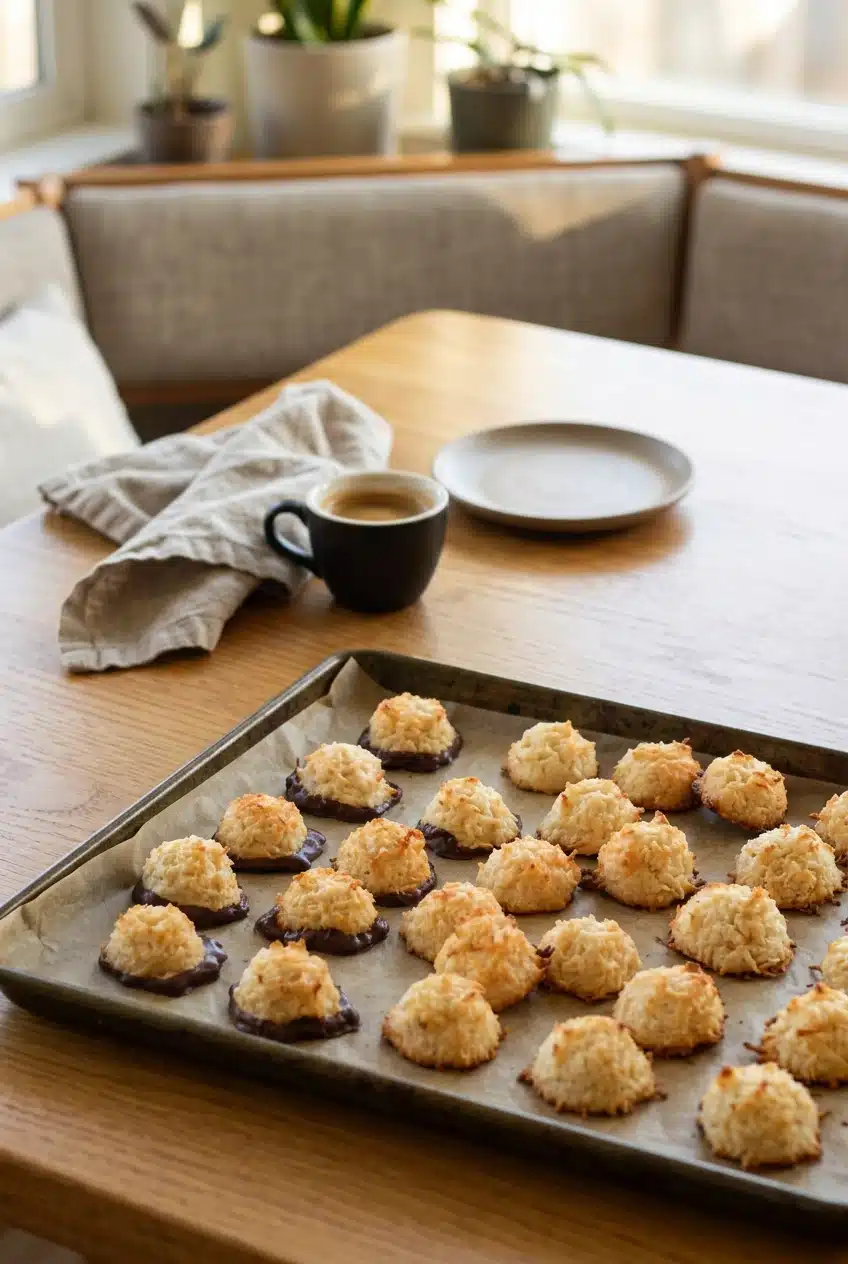
Serve them with espresso, dark roast coffee, or black tea to contrast their sweetness. Fruit sorbet makes a refreshing accompaniment.
For a holiday dessert assortment, pair them with rich Texas fudge. Arrange fully cooled, chocolate-set cookies in paper candy cups for tidy gift boxes, or on a Seder platter after checking the ingredient requirements above.
Final Thoughts on Baking Classic Macaroons
Measured condensed milk and gently folded egg whites give these cookies their rich, chewy centers and crisp golden edges. Upright peaks are the checkpoint worth watching.
Enjoy them plain for full coconut flavor or chocolate-dipped for a bittersweet contrast. Either finish deserves a place beside a warm cup of coffee.
Frequently Asked Questions
What Is the Difference Between Macaroons and French Macarons?
Coconut macaroons are craggy, chewy drop cookies. French macarons are smooth almond-meringue sandwich cookies with a filling.
How Do You Pronounce Coconut Macaroons?
Say “mak-uh-ROON,” rhyming with “balloon.” Macaron, the French sandwich cookie, ends with a softer “rohn” sound.
Why Did Liquid Pool and Burn Around My Coconut Macaroons?
Excess condensed milk can seep out and scorch on the pan. Measure the milk precisely, use the specified coconut, and fold in stiffly whipped whites.
Can I Use Unsweetened Shredded Coconut Instead of Sweetened Flaked Coconut?
It isn’t a dependable direct swap because moisture, sweetness, and strand texture differ. Use sweetened flaked coconut for the texture intended here.
Can You Make Coconut Macaroons Without Sweetened Condensed Milk?
Yes, egg-white-and-sugar versions exist, but they require a different formula. Simply omitting the condensed milk would remove essential moisture and binding from this recipe.
Are Coconut Macaroons Gluten-Free and Kosher for Passover?
This formula contains no wheat flour, but that doesn’t establish certified gluten-free status. Verify package labels and relevant kosher-for-Passover certifications for your guests’ needs.
Coconut Macaroons

Equipment
- Baking Sheets
- Parchment Paper
- Medium bowl
- Electric Mixer
- Large rubber spatula
- Mini ice cream scoop
- Wire rack
Ingredients
- 1 (14-oz) bag sweetened flaked coconut (such as Baker’s Angel Flake (see note))
- ⅞ cup sweetened condensed milk ((see note below on measurement))
- 1 teaspoon vanilla extract
- 2 large egg whites
- ¼ teaspoon salt
- 4 oz semi-sweet chocolate (best quality such as Ghirardelli, chopped (optional))
Instructions
- Arrange two racks close to the oven’s center, heat to 325°F (165°C), and cover two baking sheets with parchment paper. The parchment should cover the areas where the sticky mounds will sit.
- Combine the coconut with the condensed milk and vanilla in a medium bowl, then leave the mixture aside while whipping the whites. The flakes should look evenly coated and sticky rather than surrounded by loose liquid.
- Whip the egg whites with the salt using an electric mixer, then gently incorporate them into the coconut mixture with a large rubber spatula. Before folding, the whites should hold straight-standing peaks when you lift the beaters.
- Portion heaping tablespoons onto the lined sheets using a mini ice cream scoop or two spoons, leaving about 1 in (2.5 cm) between mounds. Each portion should hold together as a rounded mound with coconut strands visible around its surface.
- Bake for 23 to 25 minutes, exchanging the pans’ upper and lower positions and turning them front to back during baking, then rest the cookies on their pans for a few minutes before moving them to a wire rack to finish cooling. Look for golden tops and edges, and handle the warm bottoms gently because they remain tender.
- For the optional coating, microwave the chocolate in a microwave-safe bowl at medium power, stirring every 30 seconds, or melt it in a double boiler above simmering water. Stop heating once stirring produces a smooth, creamy consistency.
- Lower each completely cooled macaroon’s bottom into the melted chocolate, let the surplus fall into the bowl, return it to the parchment, and refrigerate for about 10 minutes. The chocolate bases should be set rather than wet before you handle them.