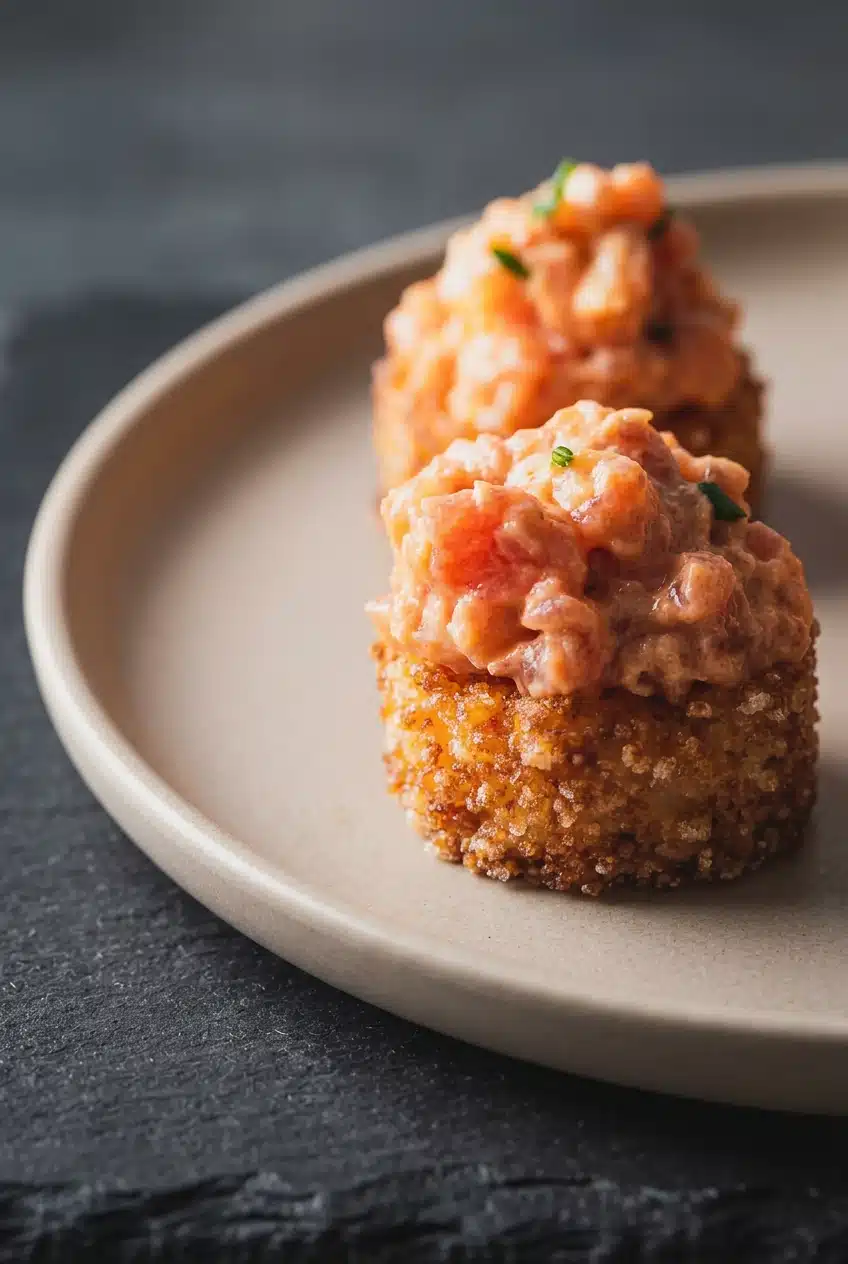
Spicy tuna crispy rice pairs golden, pan-fried sushi rice cakes with cool ahi tuna coated in spicy Japanese mayonnaise. Firm pressing and thorough chilling help the rice hold together, giving each bite a warm, crisp shell beneath its creamy topping.
These sushi-bar-style appetizers bring seasoned rice and spicy tuna together in one bite. Rice vinegar, mirin, and sugar flavor the rice throughout, while sriracha and toasted sesame oil give the tuna a gentle kick and nutty aroma.
The rice needs advance chilling, but that pause makes the final frying and assembly more manageable. You can keep the garnishes restrained or add avocado and jalapeño for contrasting textures. The crunch starts with the pressing.
Have a 9×13-inch baking dish and a second dish ready before the cooked rice cools too much to press evenly.
Key Ingredients and Smart Substitutions
Each ingredient contributes to the contrast: sushi rice provides structure, vinegar balances richness, mirin and sugar round out the seasoning, and mayonnaise coats the tuna. Sesame oil adds aroma, sriracha brings heat, and the optional toppings supply freshness, creaminess, or crunch.
- 1½ cups uncooked sushi rice (short-grain Japanese rice)
- 1¾ cups water (for cooking rice)
- ½ tsp kosher salt
- 2 tbsp rice vinegar
- 4 tsp mirin
- 2 tsp granulated sugar
- 12 oz sushi-grade ahi tuna (finely minced)
- 3 tbsp Kewpie mayonnaise
- 2 tsp sriracha (adjust to taste)
- 1 tsp toasted sesame oil
- Vegetable oil (for shallow frying)
- Optional toppings (avocado slices, chopped scallions or chives, sesame seeds, furikake, thinly sliced jalapeño)
Short-grain Japanese rice matters for structure. Its sticky texture lets the cooked grains compress into a cohesive slab. Long-grain rice won’t bind the same way, so save protein and flavor substitutions for the topping rather than changing the rice.
Seasoning the rice while it’s warm distributes the vinegar, mirin, sugar, and salt throughout the grains. Vinegar adds brightness, while mirin and sugar soften its sharp edge. That seasoning also encourages browning during frying, so watch the crust closely.
Kewpie mayonnaise supplies a rich, tangy coating for the finely minced ahi. Sriracha cuts through that richness, and toasted sesame oil adds a concentrated nutty aroma. The tuna should retain some delicate texture rather than becoming a smooth paste.
The ingredient list calls for sushi-grade ahi; when shopping, ask the seafood seller specifically about suitability for raw preparation and handling instructions. Don’t treat appearance alone as a safety check. Cooked topping alternatives appear below.
I favor a light hand with the tuna mixture: distinct little pieces give a more pleasing bite than a thoroughly mashed topping.
How to Make Spicy Tuna Crispy Rice Step by Step
Complete the rice chilling before starting the final frying stage. The listed timing is 15 minutes prep, 1 hour cooking, and 5 hours 15 minutes total, with a yield of 10 servings; an overnight rice chill extends the schedule.
Cook the Sushi Rice
- Wash the rice with cold water until the runoff turns clear, then cook it in a rice cooker with the measured water and kosher salt.
The finished grains should be tender and cling together. - Distribute the rice vinegar, mirin, and sugar through the warm rice with gentle stirring, then allow it to cool slightly.
The seasoning should coat the grains without crushing them into a paste. - Fit plastic wrap into a 9×13-inch baking dish, compress the rice into an even ½-inch layer, cover it with more plastic wrap, and press firmly with a second dish before chilling for at least 4 hours, preferably overnight.
The chilled slab should feel compact and hold its edges rather than shift like loose rice.
Make the Spicy Tuna
- Combine the Kewpie mayonnaise, sriracha, and toasted sesame oil in a bowl, gently incorporate the minced tuna, then cover and chill until serving.
Stop folding once the dressing coats the tuna evenly and the pieces remain distinct.
Fry the Rice
- Lift away the pressing dish and plastic wrap, then portion the cold rice slab into squares with a wet knife or rounds with a small biscuit cutter.
Clean edges and firmly packed centers help the pieces stay intact. - Bring 1 inch of vegetable oil to heat in a skillet over medium-high, cook the rice pieces in batches for 2–3 minutes on each side, and transfer them to paper towels.
Look for a golden, crisp crust before turning, with the cakes releasing readily rather than tearing.
Serving
- Spoon the spicy tuna onto the freshly fried rice cakes, add any optional scallions, avocado, sesame seeds, furikake, or jalapeño, and serve immediately.
Each bite should combine warm, crunchy rice with a cool, creamy topping.
Pro Tips and Common Mistakes to Avoid
Most problems come from weak rice structure, premature turning, or uneven browning. Check these details before changing the recipe.
- Cakes crumble: Loose packing or rushed chilling leaves the grains poorly connected; use the specified short-grain rice, press across the entire slab, and complete the full chill.
- Edges tear during cutting: Sticky grains drag against a dry blade; wet the knife or biscuit cutter so it moves through the compact rice cleanly.
- Rice sticks in the skillet: Turning before the underside forms a crust can pull the cake apart; leave it undisturbed until golden and easier to release.
- The outside darkens too quickly: Sugar and mirin encourage browning; watch the color throughout each batch and moderate the heat if the crust scorches before becoming crisp.
- Cakes feel oily: Crowded batches can interrupt frying, and undrained oil collects underneath; fry in batches and use the paper towels before topping.
- Tuna turns pasty: Excessive mixing smears the minced fish; combine the dressing first, then fold only until the tuna looks evenly coated.
- The crunch disappears: Early assembly lets the creamy topping soften the crust; finish the bites immediately before serving.
Creative Variations and Substitutions
These optional directions change the topping or finish, not the official rice method. Choose according to the flavor and texture you want.
Cooked or Canned Tuna Option
Cooked tuna offers a firmer, flakier topping, while oil-packed canned tuna has a softer texture and fuller richness. Both suit the creamy, spicy mayonnaise profile, though neither will mimic the delicate bite of minced raw ahi.
For a cooked seafood dinner rather than individual appetizers, savory rice with fish offers another way to enjoy that pairing.
Spicy Salmon, Shrimp, or Crab Swap
- Salmon or yellowtail: Optional raw-fish directions with different richness and texture; ask your seafood seller about suitability for the intended preparation.
- Cooked shrimp: A springier, more pronounced bite beneath the creamy seasoning.
- Crab: Delicate sweetness and soft flakes that contrast with the rice crust.
- Avocado or tofu: Plant-based topping directions with buttery or mild texture, though other components also need consideration for a fully plant-based dish.
Air Fryer Crispy Rice Adaptation
An air fryer is an alternative worth considering if you’re exploring a different texture, but results may be drier and less evenly golden than shallow-fried rice. This recipe’s timings apply only to the skillet method; there isn’t a validated air-fryer setting or procedure here.
Eel Sauce Glaze or Sambal Heat
- Soy or eel glaze: An optional savory or sweet-savory finish that changes the balance of the bite.
- Sambal oelek: A different chili profile with a more pronounced chili-paste texture.
- Avocado: A creamy accent alongside a neatly portioned tuna topping for restaurant-style presentation.
If gluten avoidance matters, check the labels of the condiments and garnishes you choose rather than assuming the finished bites meet that need.
Make-Ahead Prep and Storage
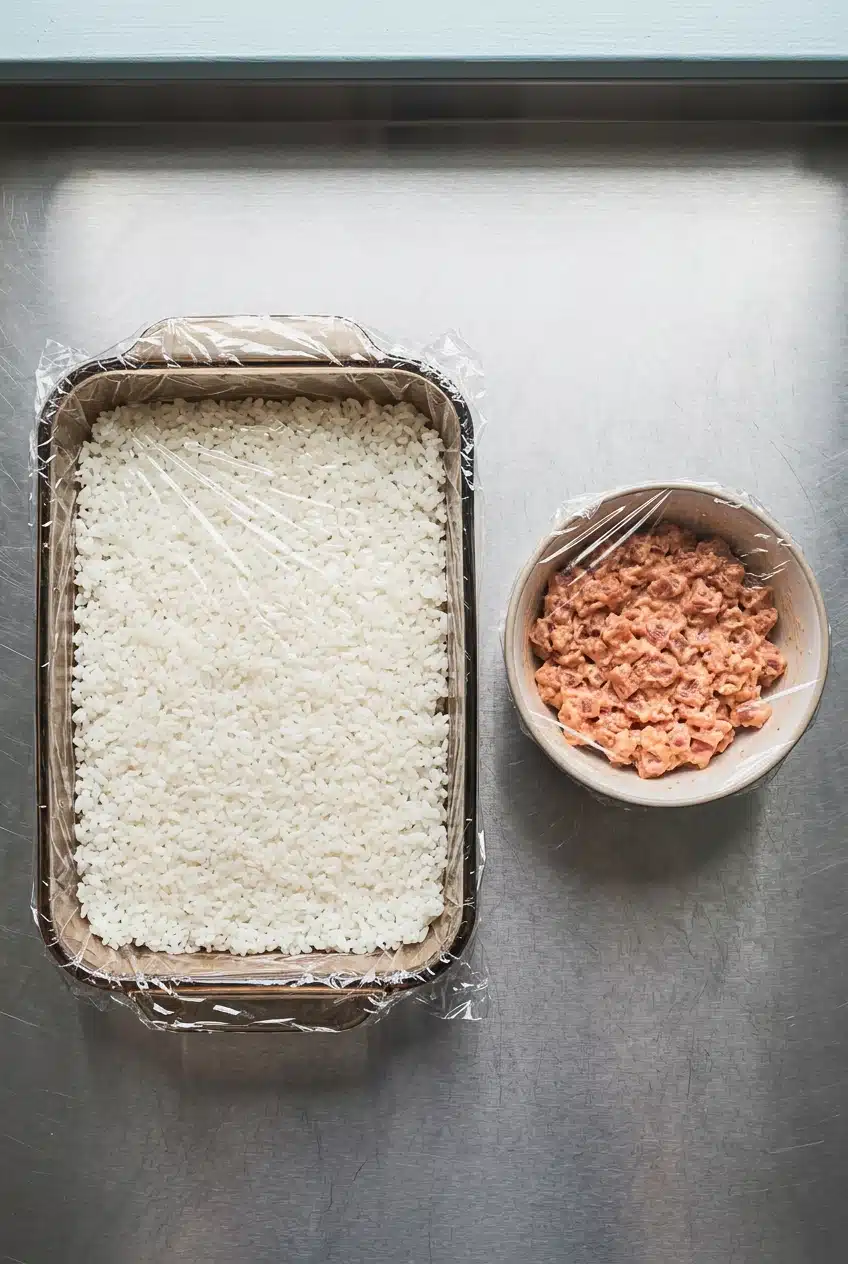
The rice slab is the useful advance-prep component because pressing and chilling are already part of the method. Keep it covered during its specified chill, then leave cutting, frying, and topping for the serving stage.
Prepare the tuna mixture separately and keep it covered and chilled until assembly. For entertaining, organize the garnishes before frying so the finished rice cakes don’t sit while you chop toppings.
The rice’s chilling instruction is a texture-setting step, not a storage-life guarantee for cooked rice or raw fish. Ask your seafood seller for handling and storage advice appropriate to your purchase; no extended holding period is established here.
Plan to serve assembled bites immediately rather than store them as finished appetizers. Keeping the components separate until serving protects the crisp crust and makes it easier to assemble only what you need.
What to Serve with These Crispy Rice Bites
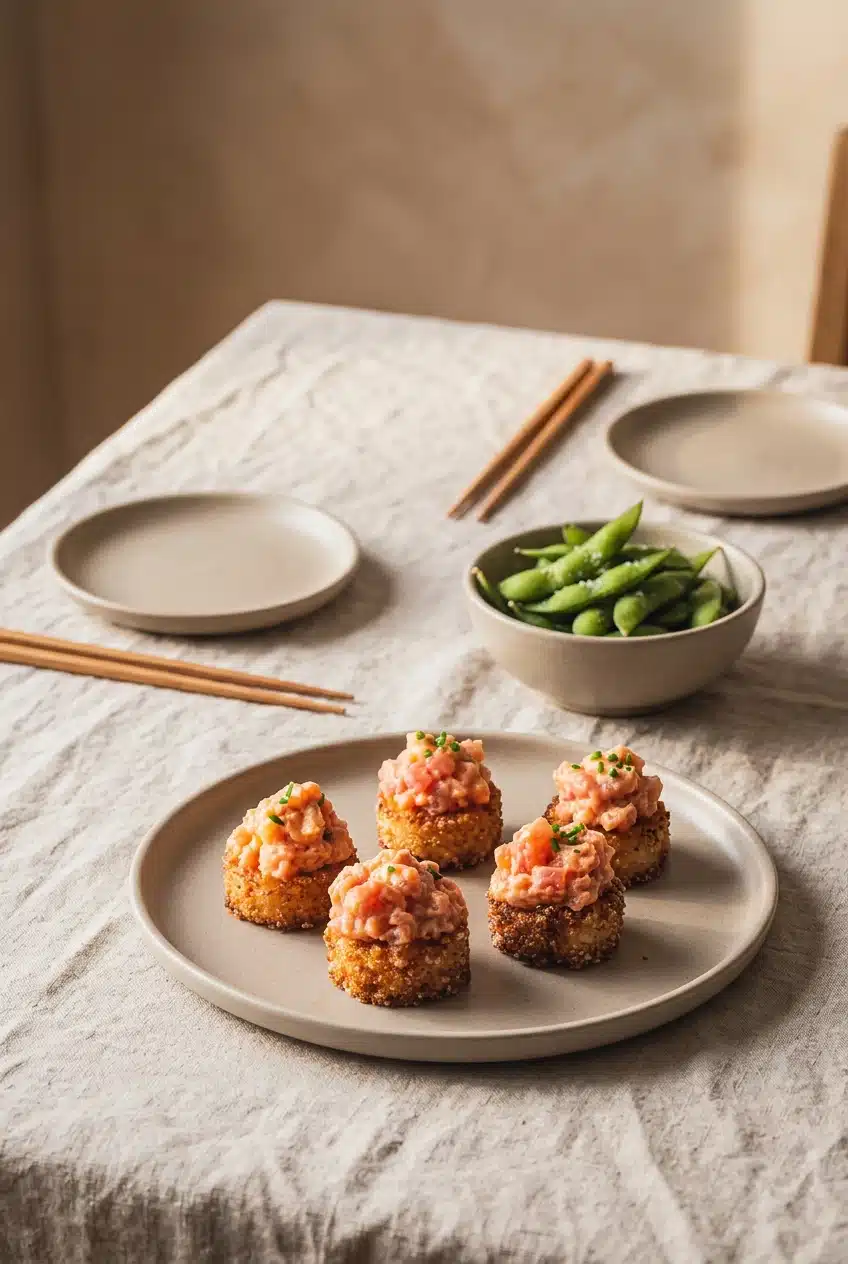
Bright vegetables and lighter accompaniments balance the fried rice and rich tuna topping.
- Refreshing sides: Smashed cucumber salad, steamed edamame, or crispy shiitake salad provide contrast without competing with the tuna.
- A fuller salad pairing: An edamame rice noodle salad rounds out an appetizer spread with a cool accompaniment.
- Dinner companions: Miso-glazed fish, poke bowls, or sushi rolls fit a sushi-night menu.
- Drinks: Cucumber-citrus sparkling water or an unsweetened citrus drink offers a refreshing counterpoint to the spicy topping.
Final Thoughts on Making These Bites at Home
The appeal comes from contrast: golden rice with a crisp exterior, topped with cool, savory-spicy tuna. A firmly pressed slab and a well-formed crust make that contrast possible.
Finish with the optional avocado, jalapeño, scallions, or furikake that suits your table. Keep assembly close to serving so everyone gets the crunch while it’s at its best.
Frequently Asked Questions
What Tuna Is Used in Spicy Tuna Crispy Rice?
This version uses sushi-grade ahi tuna, finely minced for an evenly coated topping. Ask the seafood seller about suitability for raw preparation and handling instructions rather than relying on appearance alone.
Why Do My Crispy Rice Cakes Fall Apart in the Pan?
The usual causes are unsuitable rice, loose compression, or insufficient chilling. Use short-grain sushi rice and let a golden bottom crust form before turning the cakes.
Can I Make Crispy Rice in the Air Fryer Instead of Pan-Frying?
An air-fryer version is a possible alternative, but it may have a different crust and drier texture. The skillet instructions don’t establish air-fryer timing or settings, so they aren’t interchangeable.
Can I Use Canned Tuna or Cooked Seafood Instead of Raw Tuna?
Yes, cooked tuna, oil-packed canned tuna, cooked shrimp, or crab are optional topping directions. Expect flakes or a firmer bite rather than the delicate texture of minced ahi.
What Pairs Well with Spicy Tuna Crispy Rice?
Cucumber salad, steamed edamame, and shiitake salad balance the rich topping. Miso-glazed fish or sushi rolls make suitable dinner companions, with cucumber-citrus drinks alongside.
How Many Calories Are in Spicy Tuna Crispy Rice?
The estimated nutrition is 190 calories per serving of 4 rice cakes. Treat that as an estimate rather than an exact count for every plate, since portions, frying oil, and optional toppings can differ.

Spicy Tuna Crispy Rice

Equipment
- Rice Cooker
- 9×13-inch baking dish
- Skillet
Ingredients
- 1½ cups uncooked sushi rice (short-grain Japanese rice)
- 1¾ cups water (for cooking rice)
- ½ tsp kosher salt
- 2 tbsp rice vinegar
- 4 tsp mirin
- 2 tsp granulated sugar
- 12 oz sushi-grade ahi tuna (finely minced)
- 3 tbsp Kewpie mayonnaise
- 2 tsp sriracha (adjust to taste)
- 1 tsp toasted sesame oil
- Vegetable oil (for shallow frying)
- Optional toppings (avocado slices, chopped scallions or chives, sesame seeds, furikake, thinly sliced jalapeño)
Instructions
Cook the Sushi Rice
- Wash the rice with cold water until the runoff turns clear, then cook it in a rice cooker with the measured water and kosher salt. The finished grains should be tender and cling together.
- Distribute the rice vinegar, mirin, and sugar through the warm rice with gentle stirring, then allow it to cool slightly. The seasoning should coat the grains without crushing them into a paste.
- Fit plastic wrap into a 9×13-inch baking dish, compress the rice into an even ½-inch layer, cover it with more plastic wrap, and press firmly with a second dish before chilling for at least 4 hours, preferably overnight. The chilled slab should feel compact and hold its edges rather than shift like loose rice.
Make the Spicy Tuna
- Combine the Kewpie mayonnaise, sriracha, and toasted sesame oil in a bowl, gently incorporate the minced tuna, then cover and chill until serving. Stop folding once the dressing coats the tuna evenly and the pieces remain distinct.
Fry the Rice
- Lift away the pressing dish and plastic wrap, then portion the cold rice slab into squares with a wet knife or rounds with a small biscuit cutter. Clean edges and firmly packed centers help the pieces stay intact.
- Bring 1 inch of vegetable oil to heat in a skillet over medium-high, cook the rice pieces in batches for 2–3 minutes on each side, and transfer them to paper towels. Look for a golden, crisp crust before turning, with the cakes releasing readily rather than tearing.
Serving
- Spoon the spicy tuna onto the freshly fried rice cakes, add any optional scallions, avocado, sesame seeds, furikake, or jalapeño, and serve immediately. Each bite should combine warm, crunchy rice with a cool, creamy topping.