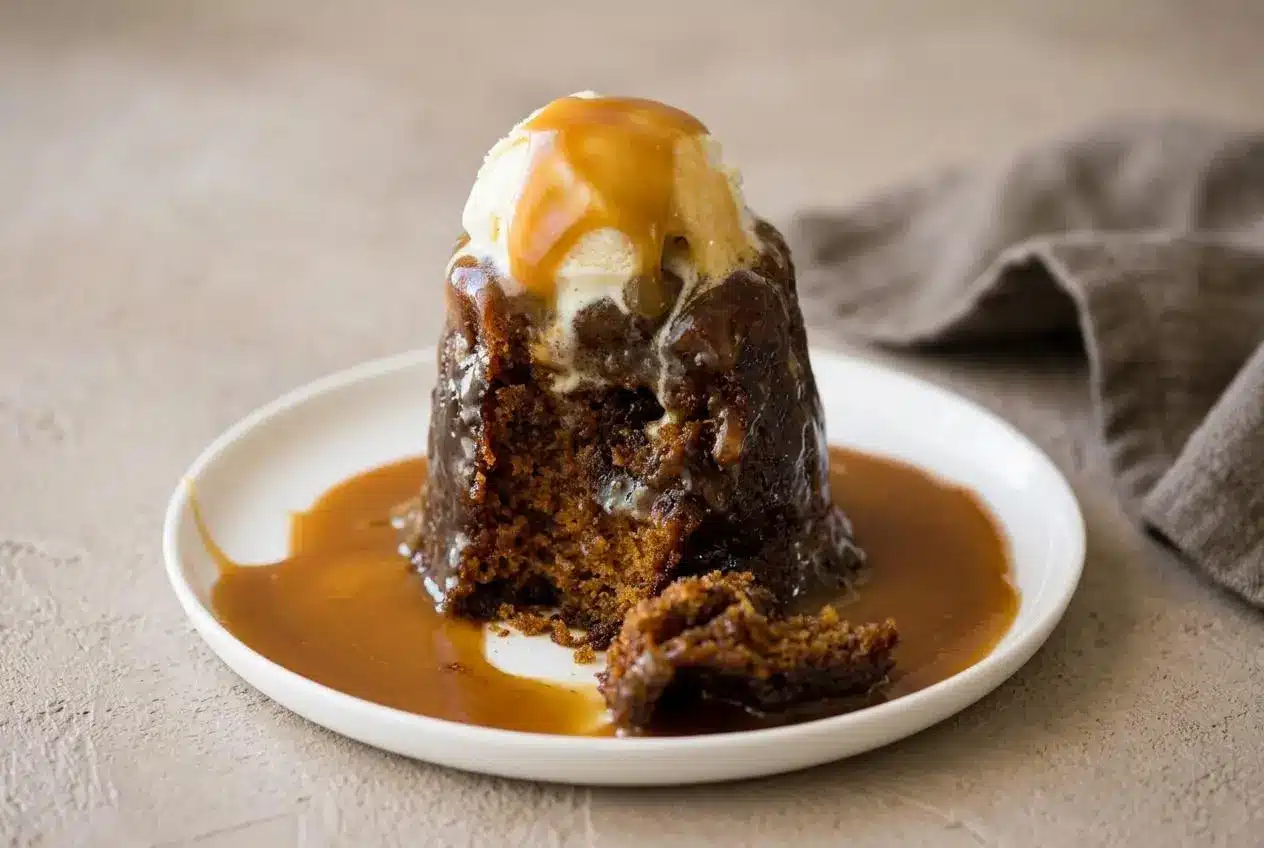
Sticky toffee pudding is a warm British date sponge cake soaked in brown sugar and cream sauce, rather than an American-style custard. Finely mashed dates give it a moist crumb, while hot butterscotch sauce sinks into the cake and pools around each serving.
This sticky toffee pudding pairs a tender baked sponge with a complete homemade sauce. Choose an 8-inch square cake for sharing or seven individual puddings for a dinner party. Both formats get a first helping of sauce while still hot.
The dates soften into the batter, bringing caramel-like sweetness without leaving big pieces of fruit when mashed thoroughly. The finishing sauce stays warm and pourable, ready for ice cream or cream. Save some for the plate.
Keep the date soaking liquid in the bowl, and have a skewer ready before the pudding comes out of the oven.
Essential Ingredients and Why Each One Matters
Dates and their soaking liquid supply moisture, eggs and flour build structure, and butter adds richness. Baking soda helps soften the dates, while baking powder lifts the sponge. Brown sugar, cream, butter, and vanilla give the sauce its rounded sweetness and glossy finish.
- 280g / 9 oz pitted dates, roughly chopped
- 1 tsp baking soda / bi carb soda
- 1 cup boiling water
- 1/4 cup brown sugar, loosely packed
- 80g / 6 tbsp unsalted butter, softened
- 2 eggs, at room temperature
- 1 1/4 cups plain flour (all purpose flour)
- 1 1/2 tsp baking powder
Butterscotch Sauce
- 1 cup brown sugar, tightly packed
- 1 1/2 cups thickened cream (heavy cream)
- 1/2 tsp vanilla extract
- 70g / 5 tbsp unsalted butter
Serving
- Ice cream or dolloping cream
Notice the different sugar measurements: loosely pack the brown sugar for the sponge, but tightly pack it for the sauce. Those directions matter because packing changes how much sugar fits in the cup.
For US baking, plain flour means all-purpose flour, and heavy cream is the familiar choice for the sauce. The cream provides richness and body; butter adds a smooth finish. Vanilla rounds out the brown sugar flavor without competing with the dates.
Softened butter combines more readily with sugar than cold butter does. Room-temperature eggs also mix more evenly into that mixture, helping you avoid unnecessary beating later.
Medjool or Deglet Noor Dates for a Tender Sponge
Medjool dates tend to be soft and fleshy, so they mash readily after soaking. Deglet Noor dates are usually firmer and may need more attention with the masher. Either can work with the listed quantity and water.
Check for stray pits as you chop, even when the package says pitted. Thorough mashing spreads the fruit through the batter, making distinct date pieces and fruit flavor less prominent. The finished sponge should taste rounded and caramel-like, though some date flavor can remain.
Why This Batter Uses Baking Soda and Baking Powder
The two leaveners enter at different stages for different purposes. Baking soda, also called bicarbonate of soda, goes into the hot date soak to help soften the fruit. Baking powder joins the flour to support the sponge’s rise.
They aren’t interchangeable here. Keep both in their assigned places rather than replacing one with extra of the other.
I mash the dates in their soaking bowl so every bit of the flavorful liquid stays with them.
How to Make Sticky Toffee Pudding Step by Step
Choose one baking format before mixing. Make the sauce while the sponge bakes so it’s warm and ready for the first soak; its instructions appear after the two baking alternatives below.
- Set the oven to 180 °C/350 °F, or 160 °C fan-forced.
Allow it to reach temperature before baking the sponge. - Butter 7 pudding molds, or butter a 20 cm / 8 inch square cake pan and line it with parchment extending above the sides.
The parchment overhang provides handles for lifting the sharing cake.
Mashed Dates
- Cover the chopped dates with the baking soda and boiling water, wait 10 minutes, then crush them thoroughly with a potato masher or fork.
Keep all the liquid and aim for a dark, loose, porridge-like mixture without large firm pieces.
Batter
- Beat the softened butter with the loosely packed brown sugar in a mixing bowl.
Stop when the mixture looks smooth and evenly combined. - Beat the eggs into the butter mixture until fully incorporated.
No separate streaks of egg should remain. - Add the flour, distribute the baking powder over it, and mix just until the flour disappears.
The mixture should have no visible dry flour pockets. - Mix in the mashed dates and all their liquid briefly, then use either baking format below.
The dates should spread evenly throughout the batter, which may look loose or slightly uneven.
One Pudding
- Spread the batter evenly in the prepared square pan and bake for 35 minutes, checking the center with a skewer.
A clean skewer indicates that the sponge is ready. - Pierce the hot sponge across its surface about 40 times with a skewer, distribute 1/2 cup warm butterscotch sauce over it, and allow 10 minutes for absorption.
The sauce should sink into the holes rather than remain entirely on top. - Lift the soaked cake using the parchment handles, cut it into portions, and serve warm with the remaining warm sauce and ice cream or cream.
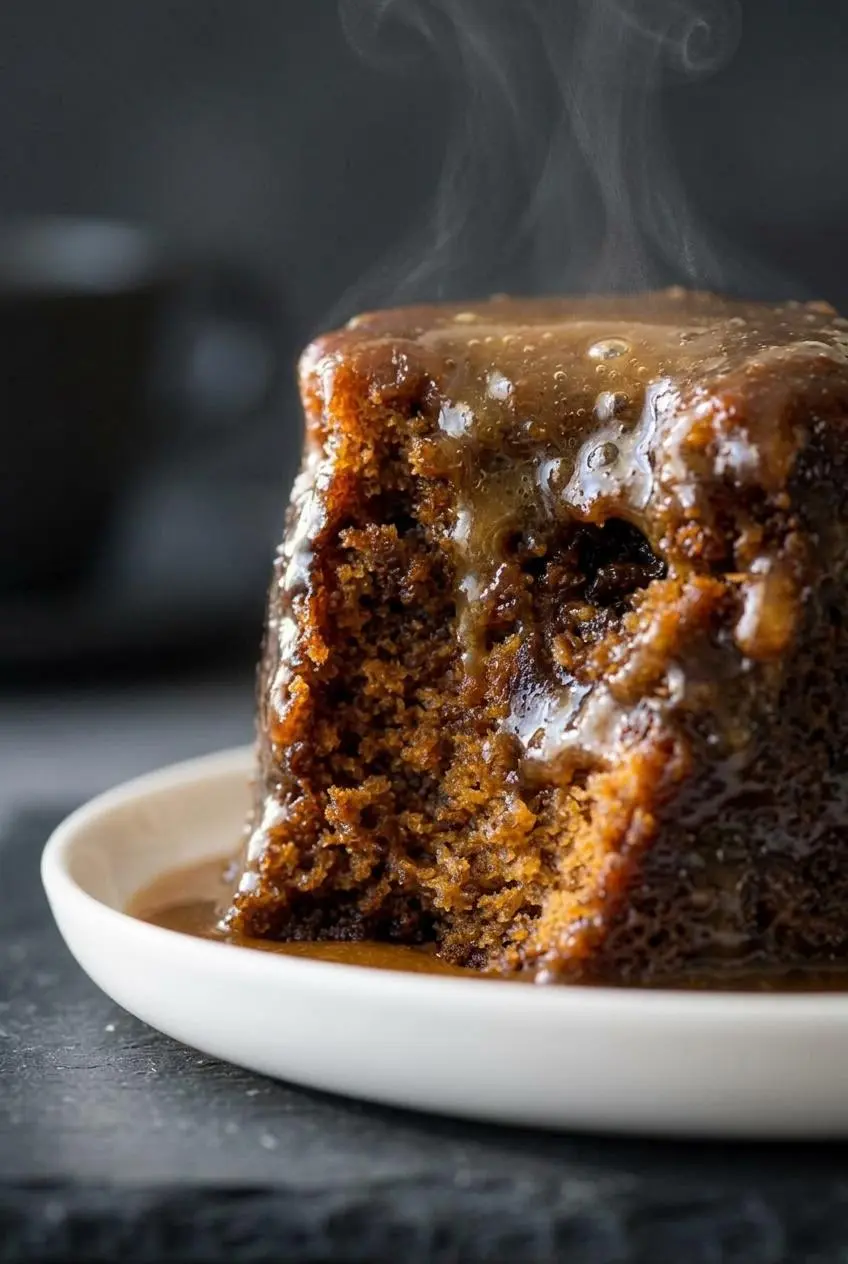
The crumb should be moist, with sauce soaking into the cut edges.
Baking Individual Puddings
- Divide the batter among the prepared pudding molds, stopping at 2/3 full.
The space above the batter allows the sponges to rise. - Bake the individual puddings for 25 minutes and check their centers with a skewer.
The skewer should emerge clean rather than coated in wet batter. - Make about 10 skewer holes in each hot pudding, spoon 1 tbsp warm butterscotch sauce over each, and allow 10 minutes for soaking.
The sauce should gradually absorb into the warm tops. - Invert the molds onto serving plates and serve the puddings warm with the remaining warm sauce and ice cream or cream.
Each pudding should hold its shape while keeping a tender, moist interior.
Butterscotch Sauce
- Heat the sauce ingredients together in a saucepan over medium heat, stirring after the butter melts and bringing the mixture to a simmer.
Look for gentle bubbling rather than a vigorous rolling boil. - Maintain the simmer for 2 minutes, stir once during that time, then take the saucepan off the heat and serve the sauce warm.
The finished sauce should look glossy and remain pourable.
Soaking and Mashing the Dates
The soaking water belongs in the batter. Don’t drain it. After the 10-minute soak, mash the fruit directly into that liquid, pressing any larger pieces against the bowl.
Expect something closer to loose, dark porridge than a dry fruit paste. This consistency helps distribute moisture and date flavor throughout the sponge instead of leaving isolated chewy chunks.
Mixing the Sponge Batter
Follow the sequence of butter and sugar, eggs, flour and baking powder, then dates. Incorporating the flour before the wet date mixture makes dry pockets easier to spot.
Once the dates go in, work briefly. A loose or slightly curdled-looking batter isn’t a reason to add more flour. Extra flour would change the moisture balance, while prolonged beating can make the crumb tougher.
Baking and the Hot Sauce Soak Trick
The square cake bakes for 35 minutes; the individual molds bake for 25 minutes. In both cases, use the clean-skewer test rather than color alone to judge doneness.
The first sauce portion belongs on the sponge while it’s hot. Spread the holes across the surface so the sauce reaches more than the center. Let that portion absorb before lifting or unmolding, then reserve the rest for serving. This gives you a moist interior and a fresh pool of sauce on the plate.
Expert Tips and Common Mistakes to Avoid
Most texture problems come from date preparation, excessive mixing, or overcooking the sauce. These checks help you catch the likely cause without changing the formula.
Pale Sponge, Date Chunks, and Dry Crumb
- Patchy color or obvious fruit pieces: Incomplete mashing leaves the dates unevenly distributed, so press out large pieces before adding them to the batter.
- A dry crumb: Draining the dates removes liquid the batter needs, so retain the entire soaking mixture and avoid baking beyond the clean-skewer stage.
- A lighter cake than expected: Date variety and brown sugar affect color, so check doneness with a skewer rather than waiting for a particular shade of brown.
An optional smoother date puree can reduce visible fruit pieces further, but the masher method works well when you’re thorough. A dark cake isn’t automatically a moist cake; moisture retention and baking time still matter.
Flour Lumps Without a Tough Sponge
- Dry pockets: Flour that hasn’t incorporated before the dates go in can become harder to see, so check for it at the flour-mixing stage.
- A firm or chewy crumb: Extended beating after adding flour can develop too much gluten, so stop when incorporated and mix the dates in quickly.
Glossy Sauce Rather Than Gritty or Overly Thick Sauce
- Overly thick sauce: Extended simmering evaporates more liquid, so keep to the listed cooking time rather than reducing it until it resembles candy.
- Gritty texture: Hard boiling and prolonged cooking can contribute to graininess, so use medium heat and a gentle simmer.
The sauce should pour easily while warm. The short simmer supports that texture, but it doesn’t guarantee that sugar crystals can never form.
Date Sponge Variations and Pan Options
The square pan and pudding molds have specific directions here. Other pans and darker sauce flavors are optional adaptations, not changes you need to make for a successful pudding.
Square Pan, Individual Molds, Muffin Tins, and Skillets
- 20 cm / 8 inch square pan: Bake for 35 minutes and use the clean-skewer test; this sharing format serves 7 to 9 people.
- 7 pudding molds: Fill each 2/3 full and bake for 25 minutes, checking for a clean skewer; this format produces seven individual puddings.
- Standard or jumbo muffin tins: These are possible individual formats, but their capacities and batter depths differ, so no exact conversion time or yield is provided.
- Individual ramekins: Capacity and material affect baking, so don’t assume every ramekin behaves like the specified pudding molds.
- Oven-safe skillet: A skillet offers family-style serving, but diameter, depth, and material change baking behavior; no tested skillet conversion is provided for this batter.
For the most predictable result, choose one of the two specified formats. An unfamiliar pan needs closer attention to the center’s doneness rather than a borrowed time from another dessert.
British Treacle and Browned Butter Toffee
The supplied sauce has a rounded brown-sugar butterscotch flavor. Dark muscovado sugar brings a stronger molasses character, while black treacle or dark molasses adds a deeper, slightly bitter edge associated with some British pub-style versions.
One optional flavor direction combines browned butter, flaky sea salt, and a touch of black treacle or dark molasses. Think toasted butter aroma, darker sweetness, and salt for balance. These changes need their own sauce adjustments rather than casual additions to the measured formula.
Caramel sauce uses a different method that caramelizes sugar. It isn’t simply another name for this brown sugar, butter, and cream sauce.
Prune Substitution and a Less-Sweet Serving
- Prunes: They can offer an alternative fruit profile; gently simmer them until softened before mashing, recognizing that their flavor and texture differ from dates.
- Less-sweet serving: Keep the sauce formula and initial soak intact, but offer a smaller amount of reserved sauce at the table.
- Gentle warming spices: Treat these as an optional flavor direction, keeping them restrained so they don’t overwhelm the dates and toffee.
Casually cutting sauce sugar or adding extra liquid can change its body. Adjusting the serving amount gives you more control without sacrificing the intended consistency.
Best Serving Ideas for Warm Date Sponge
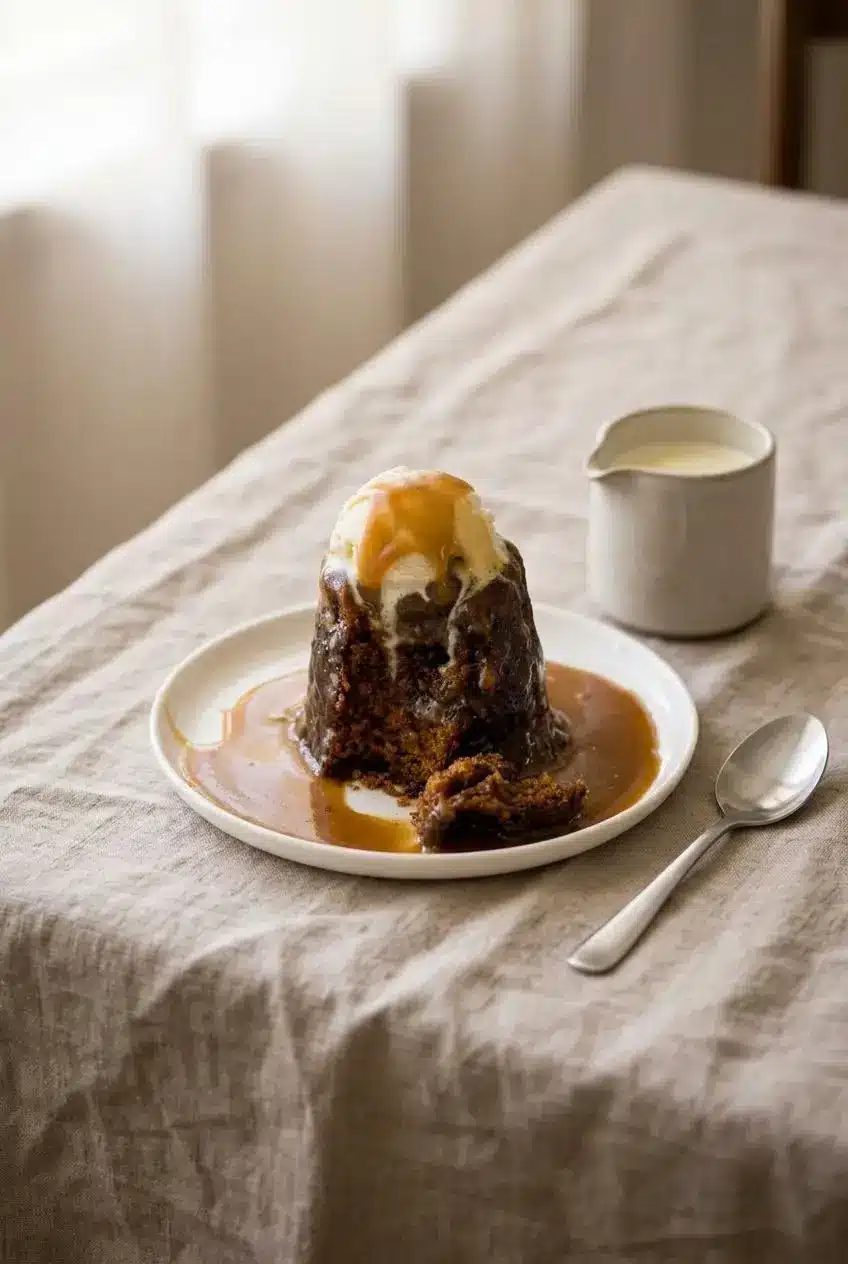
Serve the sponge and sauce warm, with ice cream or cream for contrast. Add the cool topping at the last moment so it doesn’t melt before the plate reaches the table.
- Vanilla ice cream: A cold scoop melts into the warm sauce and gives each bite a creamy contrast.
- Pouring cream: Unsweetened cream softens the impression of sweetness without adding another strongly flavored topping.
- Custard or crème anglaise: Either makes a softer, more enveloping accompaniment for a spoonable dessert.
- Crème fraîche: A tangy dollop provides contrast to the rich brown sugar sauce.
For a Sunday dinner menu, follow classic roast beef with modest portions of warm pudding. Keep the reserved sauce ready to pour so you can finish each plate just before serving.
Date Sponge Storage and Gentle Reheating
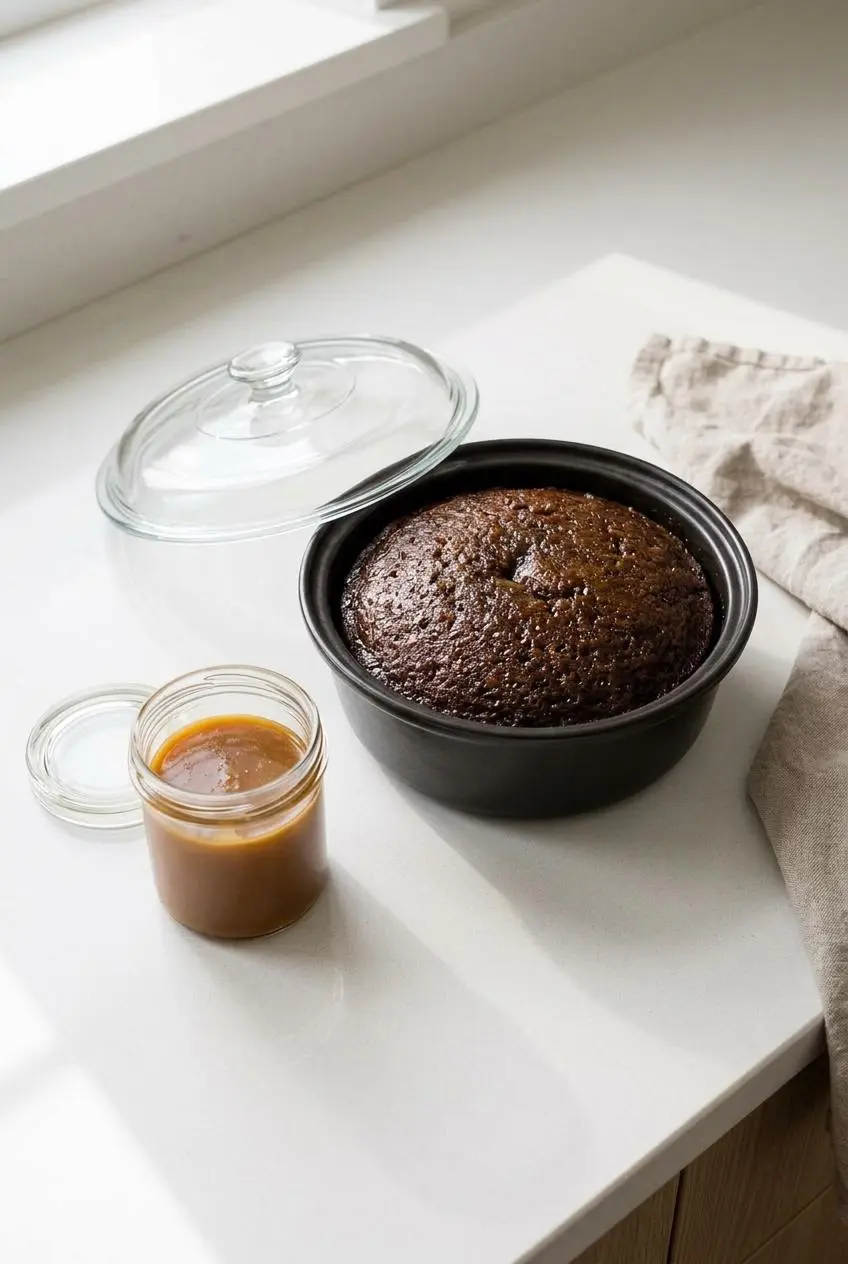
Keep the soaked sponge and reserved serving sauce separately so you can warm each without overcooking the other. After the initial sauce soak, let the pudding cool, cover it, and keep it refrigerated; cover and refrigerate the remaining cream sauce too.
For microwave reheating, warm individual portions gently and check the center as you go. Stop before the edges become dry or tough. For oven reheating, cover the pudding to limit moisture loss and check that the center is heated through.
Warm the reserved sauce separately, stirring gently until pourable rather than letting it boil hard. Finish the warm sponge with that sauce just before serving. Avoid leaving the cream-based sauce sitting out between servings.
Conclusion
A moist date sponge and warm, glossy butterscotch sauce make this dessert satisfying in either a sharing pan or individual molds. Thorough date mashing gives the crumb a more even texture.
Keep all the soaking liquid, mix briefly after adding flour, and sauce the sponge while it’s hot. Then bring it to the table warm, with something cool and creamy alongside.
Frequently Asked Questions
Do You Drain the Soaking Water From the Dates Before Mixing?
No. Mash the softened dates with all their soaking water. Add the whole mixture to the batter for the intended moisture and even date distribution.
Can You Actually Taste the Dates in Sticky Toffee Pudding?
They contribute caramel-like sweetness and moisture, though some date flavor can remain. Thorough mashing reduces distinct fruit pieces and spreads the flavor throughout the crumb.
What Is the Difference Between British Sticky Toffee Pudding and American Pudding?
Sticky toffee pudding is a baked date sponge with warm sauce, unlike the creamy dessert commonly called pudding in the US. British usage also treats “pudding” as a general word for dessert; Americans usually retain this dish’s British name. In Australia, sticky date pudding is a familiar name for it.
How Do I Store and Reheat Sticky Toffee Pudding?
Complete the initial sauce soak, cool the sponge, and refrigerate it covered, with the reserved sauce in a separate covered container. Reheat the sponge gently using the microwave or covered oven approach described above. Warm the reserved sauce separately and pour it over the warm pudding before serving.
Sticky Toffee Pudding

Equipment
- pudding moulds
- 20 cm / 8 inch square cake pan
- Potato masher
- Skewer
- Saucepan
Ingredients
- 280 g / 9 oz pitted dates roughly chopped
- 1 tsp baking soda / bi carb soda
- 1 cup boiling water
- 1/4 cup brown sugar loosely packed
- 80 g / 6 tbsp unsalted butter softened
- 2 eggs at room temperature
- 1 1/4 cups plain flour (all purpose flour)
- 1 1/2 tsp baking powder
Butterscotch Sauce
- 1 cup brown sugar tightly packed
- 1 1/2 cups thickened cream (heavy cream)
- 1/2 tsp vanilla extract
- 70 g / 5 tbsp unsalted butter
Serving
- Ice cream or dolloping cream
Instructions
- Set the oven to 180 °C/350 °F, or 160 °C fan-forced. Allow it to reach temperature before baking the sponge.
- Butter 7 pudding molds, or butter a 20 cm / 8 inch square cake pan and line it with parchment extending above the sides. The parchment overhang provides handles for lifting the sharing cake.
Mashed Dates
- Cover the chopped dates with the baking soda and boiling water, wait 10 minutes, then crush them thoroughly with a potato masher or fork. Keep all the liquid and aim for a dark, loose, porridge-like mixture without large firm pieces.
Batter
- Beat the softened butter with the loosely packed brown sugar in a mixing bowl. Stop when the mixture looks smooth and evenly combined.
- Beat the eggs into the butter mixture until fully incorporated. No separate streaks of egg should remain.
- Add the flour, distribute the baking powder over it, and mix just until the flour disappears. The mixture should have no visible dry flour pockets.
- Mix in the mashed dates and all their liquid briefly, then use either baking format below. The dates should spread evenly throughout the batter, which may look loose or slightly uneven.
One Pudding
- Spread the batter evenly in the prepared square pan and bake for 35 minutes, checking the center with a skewer. A clean skewer indicates that the sponge is ready.
- Pierce the hot sponge across its surface about 40 times with a skewer, distribute 1/2 cup warm butterscotch sauce over it, and allow 10 minutes for absorption. The sauce should sink into the holes rather than remain entirely on top.
- Lift the soaked cake using the parchment handles, cut it into portions, and serve warm with the remaining warm sauce and ice cream or cream. The crumb should be moist, with sauce soaking into the cut edges.
Baking Individual Puddings
- Divide the batter among the prepared pudding molds, stopping at 2/3 full. The space above the batter allows the sponges to rise.
- Bake the individual puddings for 25 minutes and check their centers with a skewer. The skewer should emerge clean rather than coated in wet batter.
- Make about 10 skewer holes in each hot pudding, spoon 1 tbsp warm butterscotch sauce over each, and allow 10 minutes for soaking. The sauce should gradually absorb into the warm tops.
- Invert the molds onto serving plates and serve the puddings warm with the remaining warm sauce and ice cream or cream. Each pudding should hold its shape while keeping a tender, moist interior.
Butterscotch Sauce
- Heat the sauce ingredients together in a saucepan over medium heat, stirring after the butter melts and bringing the mixture to a simmer. Look for gentle bubbling rather than a vigorous rolling boil.
- Maintain the simmer for 2 minutes, stir once during that time, then take the saucepan off the heat and serve the sauce warm. The finished sauce should look glossy and remain pourable.