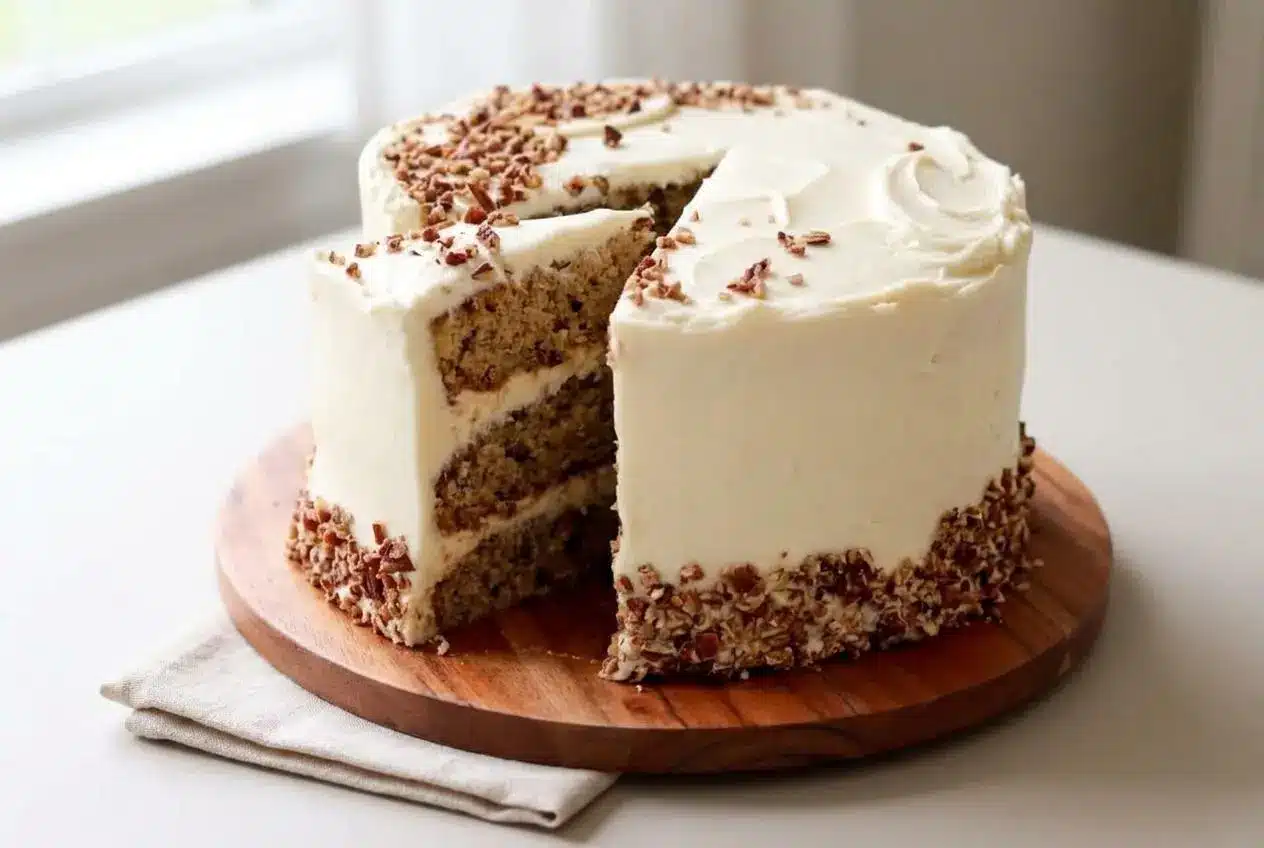
Hummingbird cake combines moist banana-pineapple layers, toasted pecans, warm spice, and tangy cream cheese frosting. This three-layer version uses an oil-based batter mixed by hand for a tender crumb, with optional roasted bananas for deeper flavor.
Sweet fruit, cinnamon, and fragrant toasted nuts give hummingbird cake its generous, celebration-worthy flavor. The pineapple blends into the crumb rather than forming a separate filling, so every forkful brings fruit, spice, and frosting together.
The batter comes together with a whisk and spatula. Give yourself time for cooling and chilling before stacking, and the frosting will be much easier to manage. The pecan crunch makes the finish.
Set out a cooling rack before you begin so the toasted pecans and baked layers have somewhere to cool.
What Is Hummingbird Cake and What Does It Taste Like?
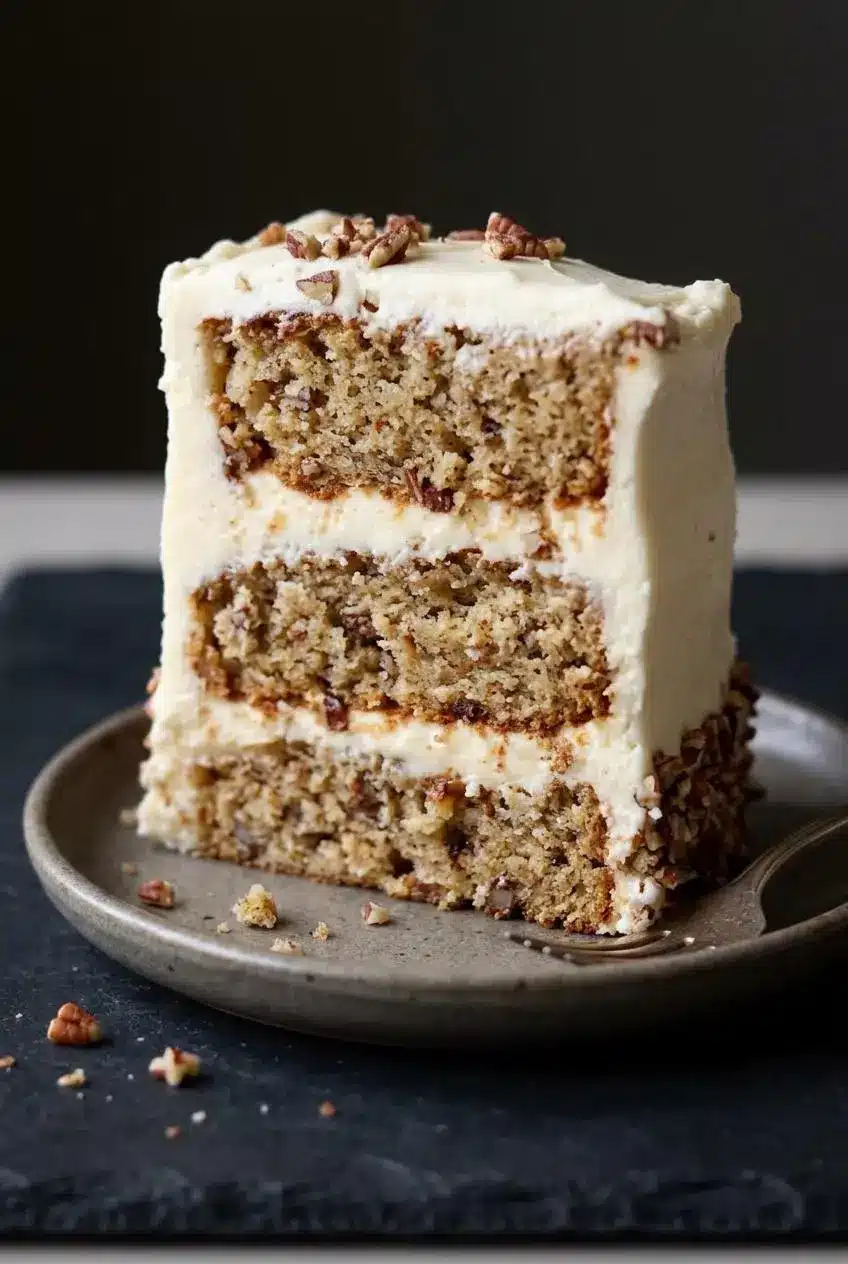
Think of it as carrot cake’s tropical cousin: banana sweetness, bright pineapple, cinnamon, allspice, and toasted pecans beneath tangy frosting. It shares the cozy spice-and-cream-cheese appeal of Amish carrot cake, but there are no carrots here.
This oil-based fruit cake has a moist, substantial crumb rather than the airy texture of a sponge cake. The nuts provide contrast, while the cream cheese gives the sweet layers a welcome tang.
The cake has Jamaican roots and a naming connection to the Doctor Bird, Jamaica’s national hummingbird. It later became a favorite on Southern dessert tables. That Jamaican connection explains the name more usefully than stories about the cake being sweet enough to attract birds.
Essential Ingredients and Why They Matter
Each ingredient contributes to the cake’s balance: flour and eggs build structure, oil and fruit supply moisture, spices add warmth, and pecans bring crunch. Butter and brick-style cream cheese give the frosting richness, tang, and enough body for stacking.
Hummingbird Cake
- 1 Cup (120g) chopped pecans, toasted plus more for garnish
- 1 1/2 Cup (345g) mashed banana (ripe and/or roasted) about 3 large bananas
- 3 Cups (375g) all-purpose flour
- 1 tsp baking powder
- 1 tsp baking soda
- 1 1/2 tsp ground cinnamon
- 1/2 tsp allspice
- 1 tsp salt
- 3 large eggs, room temperature
- 1 Cup (240ml) vegetable oil
- 1 Cup (200g) brown sugar
- 1/2 Cup (100g) granulated sugar
- 2 tsp pure vanilla extract
- 1 Cup (8oz) crushed pineapple, undrained
Cream Cheese Buttercream
- 1 Cup (226g) unsalted butter, room temperature
- 16 Oz (452g) full-fat brick-style cream cheese, room temperature NOT the spread
- 8 Cups (960g) powdered sugar
- 1 Tbsp pure vanilla extract
- 1/4 tsp salt, or to taste
Garnish
- 1/2 Cup (60g) toasted chopped pecans
Flour, oil, and eggs: All-purpose flour gives these fruit-heavy layers enough structure to stack. Eggs help bind the batter, while vegetable oil keeps the crumb soft without a butter-creaming stage. Measure carefully; extra flour can make a moist cake feel heavy and dry.
Undrained crushed pineapple: Choose pineapple packed in juice rather than heavy syrup. Both fruit and juice belong in the batter, and draining changes its liquid balance. Pineapple’s acidity can react with baking soda, while the baking powder also contributes lift.
Bananas: Very ripe, spotty bananas mash easily and bring developed sweetness. Roasting offers a deeper cooked-banana flavor and softens the fruit, but it doesn’t reproduce every change that happens during natural ripening. Include the collected roasting juices and keep the measured mashed amount unchanged.
Spices, sugars, and pecans: Cinnamon and allspice warm the tropical fruit flavors. Brown sugar contributes a mellow molasses note, and toasted pecans add a nutty contrast to the soft crumb.
Brick-style cream cheese: Use full-fat blocks, not a spreadable tub product. The cream cheese provides tang and body; butter and powdered sugar help the frosting hold its shape between the layers.
I prefer to measure the mashed banana rather than rely on the number of bananas, since their sizes vary so much.
How to Make Hummingbird Cake Step by Step
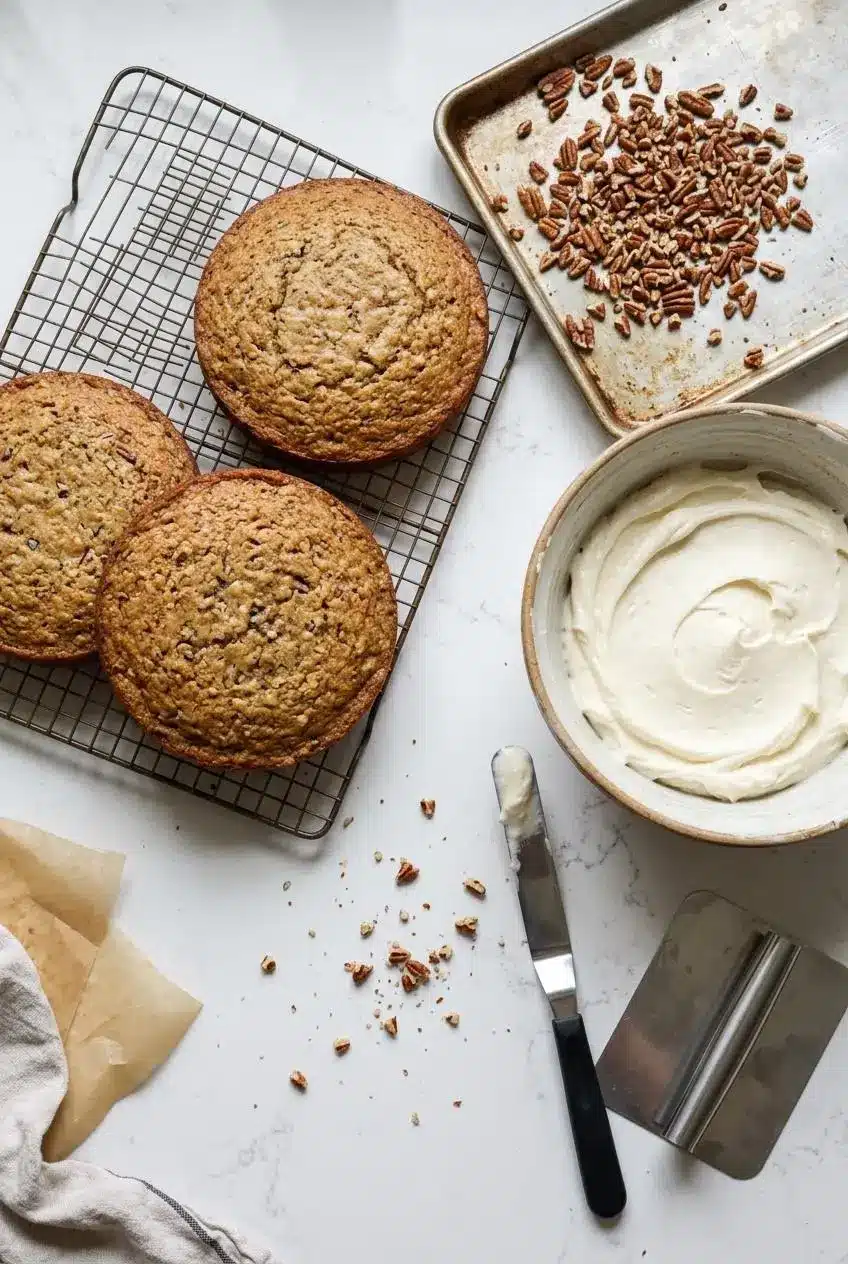
Finish the hot preparation first, then let everything cool before mixing and stacking. The layer bake is only one part of the project, so leave room for the cooling and crumb-coat chill.
Prep: 30 minutes · Cook: 40 minutes · Cooling: 2 hours · Total: 3 hours 10 minutes · Servings: 24 slices
Make the Hummingbird Cake
- Spread the chopped pecans across a lined baking sheet and toast at 300°F (149°C) for 6–8 minutes, giving the pan a shake halfway through.
Once fragrant, leave them to reach room temperature, about 10 minutes, before using them in the batter. - For optional roasted bananas, rinse and dry the unpeeled fruit, pierce the skins several times with a fork, and bake on a baking sheet at 350°F (177°C) for 12–15 minutes.
Look for shiny, dark brown to black skins, then let the fruit become comfortable to handle before peeling into a medium bowl, catching every juice, mashing with a fork, and cooling completely to room temperature, using the refrigerator to speed cooling if desired. - Bring the oven to 350°F (177°C), coat the sides of three 8-inch round cake pans with baking spray, and fit parchment into the bottoms.
The lined bases help the tender layers release without leaving cake behind. - Combine the flour, baking powder, baking soda, cinnamon, allspice, and salt in a medium bowl with a whisk, then set it aside.
The mixture should have an even appearance without concentrated patches of spice. - Whisk both sugars with the oil, eggs, and vanilla in a large bowl, incorporate the mashed banana and undrained pineapple, then use a silicone spatula to fold in the flour mixture in two additions followed by the cooled toasted pecans.
Stop each flour addition as soon as it blends in, leaving no dry streaks without repeatedly stirring the thick batter. - Distribute the batter evenly among the prepared pans and bake for 25–29 minutes, then leave the cakes in their pans for 5 minutes before turning them onto a wire rack to cool completely to room temperature.
Before removing them from the oven, check that a toothpick inserted into a center shows no wet batter, only a clean surface or a few moist crumbs.
Make the Cream Cheese Buttercream
- Beat the room-temperature butter and cream cheese with a stand mixer’s paddle on medium-high speed for about 5 minutes.
Continue until the mixture looks fluffy and evenly blended, with no cream cheese lumps. - Use low speed to incorporate the powdered sugar a few cups at a time, thoroughly blending each addition and scraping the bowl and paddle as needed, then mix in the vanilla and salt for another minute on low.
The finished buttercream should look smooth and uniform rather than streaky.
Assembly
- Secure the first completely cooled layer to a cardboard cake circle with a dab of buttercream, fill and stack the remaining layers, cover the cake with a thin crumb coat, and refrigerate for at least 30 minutes.
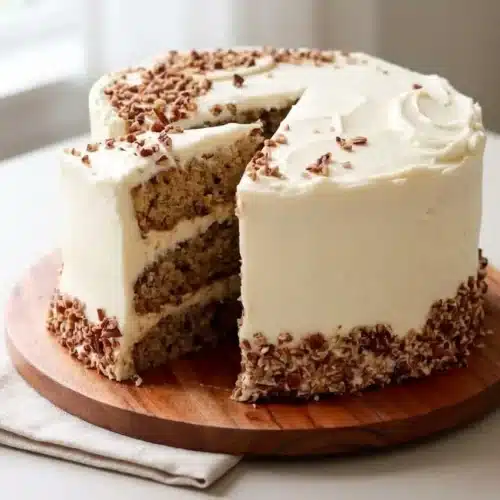
The chilled coating should feel firm enough to keep crumbs contained during the final frosting. - Apply the remaining buttercream, leave a rustic texture on top, smooth the sides with an icing smoother, and keep the upper edge uneven.
While the surface remains tacky, press toasted pecans around the bottom third and arrange the remaining nuts along half of the top edge.
Toasting the Pecans and Optional Banana Roasting
Use aroma as well as the timer for pecans. They should smell distinctly nutty, not scorched. Letting them cool keeps their heat out of the batter and makes them easier to handle.
Roasted bananas emerge soft and glossy beneath their dark skins, often with amber-colored juices. Catch those juices as you peel. Cool the mash completely before it meets the eggs; roasting belongs before batter preparation, not midway through mixing.
Mixing and Baking the Cake Layers
Whisk the sugars, oil, eggs, and vanilla into a uniform mixture before adding the fruit. Once the flour goes in, switch to folding by hand. Sweep the spatula along the bowl’s bottom and turn the batter over itself so hidden flour pockets blend in without vigorous beating.
Divide the batter evenly so the layers bake at a similar pace. Use the center-toothpick cue to distinguish a moist crumb from underbaked batter. After the initial cooling period, move the layers to a rack so they can cool throughout, not just on top.
Whipping the Cream Cheese Buttercream and Stacking
Get the butter and cream cheese lump-free before adding powdered sugar. Gradual additions make the sugar easier to incorporate, and scraping the paddle catches any cream cheese clinging there.
Don’t stack warm layers. A cake can feel cool at its edges while retaining warmth in the center. Complete cooling protects the buttercream’s texture, and the chilled crumb coat gives these substantial layers a firmer foundation for finishing.
Tips for Stable Frosting and Troubleshooting Common Mistakes
Temperature matters as much as mixing. Room-temperature butter and cream cheese should yield slightly under a fingertip while still holding their shape. Neither should look greasy, melted, or warm.
- Frosting looks soupy: A warm kitchen can soften buttercream excessively. Refrigerate it briefly, then check whether it spreads while holding a ridge before continuing; chilling may help warmth-related softness but won’t correct every moisture problem.
- Frosting stays loose: Check which cream cheese you used. Spreadable products can introduce excess moisture and behave differently from full-fat blocks, so use the specified brick-style cream cheese rather than relying on chilling alone.
- Layers slide: Warm cake or soft filling may be the cause. Let the layers cool completely and give the crumb coat its full chill before applying the final frosting.
- Crumb turns dense or rubbery: Too much mixing after adding flour can toughen the cake. Fold only until the flour disappears, then gently incorporate the nuts.
- Centers sink: Check ingredient measurements and use the supplied toothpick cue before removing the pans. Wet batter on the toothpick means the center hasn’t reached the intended doneness.
- Reduced-sugar frosting won’t support the cake: Powdered sugar contributes structure as well as sweetness. Keep the frosting formula intact rather than removing sugar arbitrarily.
Pan Options, Smaller Cakes, and Tropical Flavor Variations
The three-layer cake is the fully specified method here. Treat smaller batches and alternate pans as optional adaptations that need their own capacity and doneness checks.
How to Scale Down for Two 8-Inch Layers or Three 6-Inch Layers
- Scaling factor: The smaller-cake approach uses two-thirds of the full formula, with each ingredient scaled consistently rather than reducing only the flour or fruit.
- Two 8-inch layers: This format removes one layer from the full-size presentation, but it still needs a checked scaled formula and appropriate baking assessment.
- Three 6-inch layers: This creates a narrower cake, not an identical batter depth to the two-layer option.
No rounded spoon measurements or alternate bake times are provided for these formats. Calculate and check the entire scaled formula, including the eggs, before starting rather than estimating as you mix.
Baking in 9-Inch Pans, a 9×13 Sheet Pan, or a Bundt Pan
- Three 8-inch pans: Use the complete formula and the 25–29 minute layer-baking window, checking the centers for doneness.
- 9-inch pans: Wider pans change batter depth. Neither a two-pan nor three-pan arrangement has a confirmed conversion here.
- 9×13-inch sheet pan: A single rectangular cake offers a more casual presentation, but check capacity and use timing established for that format rather than borrowing the layer timing.
- Bundt pan: Capacity and the deeper shape affect baking substantially. Choose a formula with confirmed Bundt instructions instead of assuming this batter fits any fluted pan.
If a pineapple sheet cake is the main goal, do nothing cake offers another route without converting a stacked layer cake.
Nut-Free Options, Walnuts, Coconut, and Citrus Zest
- Pecan omission: As an optional adaptation, leave pecans out of the batter and garnish; the cake loses crunch but retains its fruit-and-spice character.
- Walnuts: Substitute toasted walnuts one-for-one for pecans if tree-nut allergies aren’t a concern.
- Coconut: Use shredded sweetened coconut as an optional exterior garnish for another tropical flavor, rather than adding an unmeasured amount to the batter.
- Citrus zest: Optionally stir finely grated fresh lemon or orange zest into the buttercream during its final mixing stage for aromatic contrast with the rich frosting.
For allergy-related preparation, check ingredient labels and avoid cross-contact on bowls, utensils, and work surfaces. Walnuts aren’t a nut-free substitute, and coconut isn’t automatically suitable for every allergy.
Making the Layers Ahead, Chilling the Cake, and Serving Soft Slices
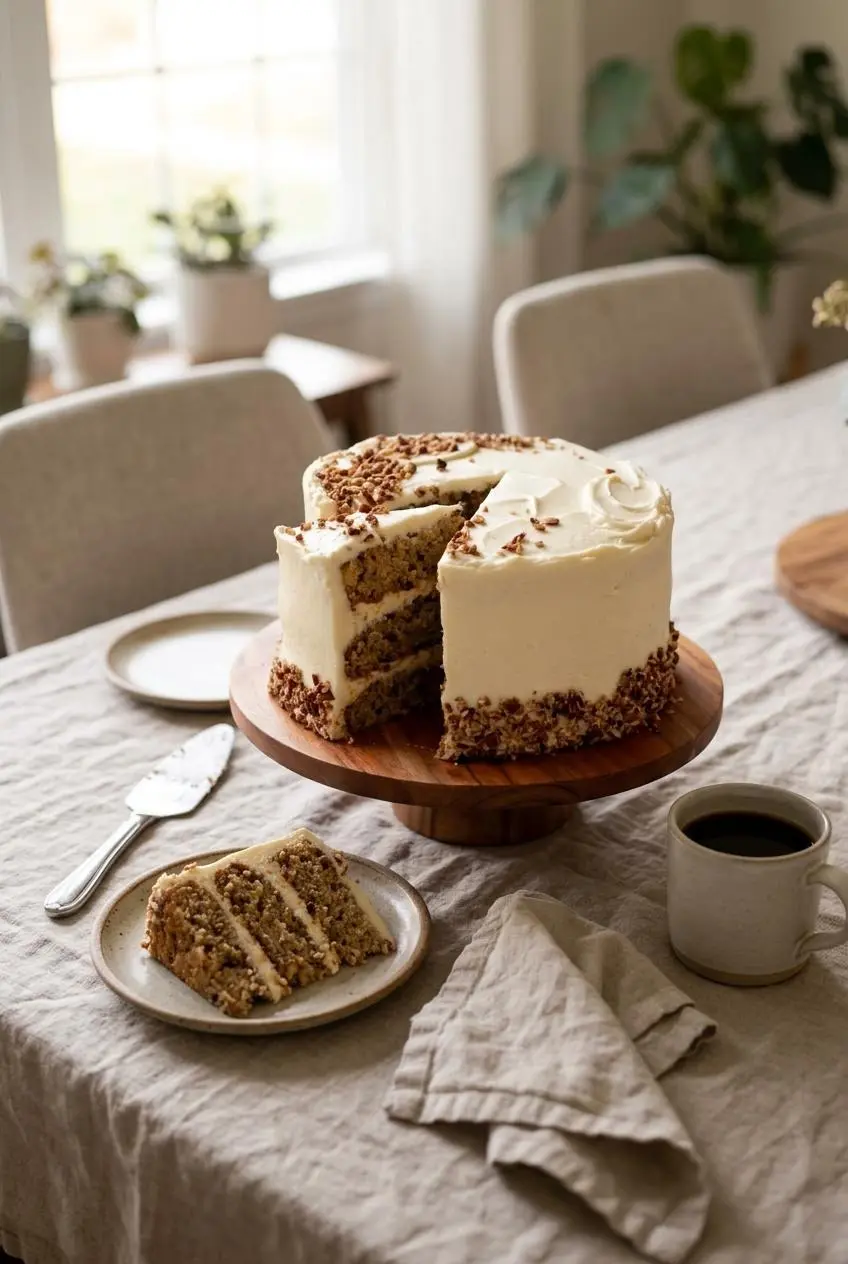
Plan around complete cooling and the crumb-coat chill rather than rushing straight from baking to decorating. For a pause between stages, wrap fully cooled unfrosted layers to protect their surfaces from drying, keeping them separate from the frosting.
Keep prepared cream cheese buttercream covered and chilled when you aren’t working with it. Cover and refrigerate the assembled cake as a cautious storage choice, protecting the finish with a cake container rather than pressing wrap against soft frosting.
For tidy portions, cut while the frosting is firm and wipe the knife between slices. Let the portions soften briefly before serving so the frosting feels creamy rather than stiff, keeping the cake chilled between serving periods, especially in a warm kitchen.
Black coffee or unsweetened iced tea makes a pleasant match for the rich fruit layers. Their less-sweet flavors leave room for the banana, pineapple, and tangy frosting to stand out.
Conclusion
Moist fruit-and-spice layers, toasted pecans, and cream cheese frosting give this cake its distinctive balance of soft crumb, crunch, sweetness, and tang.
Fold gently after adding the flour, cool every layer completely, and allow time for the crumb coat to firm up. Those habits make the final stacking and frosting much more relaxed.
Frequently Asked Questions
What Does a Hummingbird Cake Taste Like?
Sweet banana and bright pineapple give it a tropical character, a little like carrot cake’s fruitier cousin, without carrots. Cinnamon, allspice, toasted pecans, and tangy cream cheese frosting add warmth, crunch, and richness.
Why Do They Call a Hummingbird Cake a Hummingbird Cake?
The name connects to Jamaica’s national hummingbird, known locally as the Doctor Bird. The cake has Jamaican roots and later became especially popular in Southern American baking.
Do I Drain the Crushed Pineapple for Hummingbird Cake?
No. Use the specified 1 Cup (8oz) crushed pineapple, undrained, including its juice. Choose pineapple packed in juice rather than heavy syrup; draining removes liquid the batter needs.
What If I Do Not Want to Use Pecans or Need a Nut-Free Hummingbird Cake?
Omit pecans from both the batter and garnish as an optional adaptation. Walnuts are an alternative only when tree-nut allergies aren’t a concern; coconut is a separate garnish idea, not an automatic allergy-safe replacement. Check all ingredient labels and avoid cross-contact during preparation.
Can I Bake Hummingbird Cake in a 9×13 Pan or Bundt Pan Instead of Layers?
Those are possible adaptations, but this method specifies three 8-inch round pans. Alternate pan capacity, batter depth, and baking times need checking separately; don’t apply the layer timing unchanged.
Hummingbird Cake

Equipment
- 3 8-inch cake pans
Ingredients
Hummingbird Cake
- 1 Cup (120g) chopped pecans toasted plus more for garnish
- 1 1/2 Cup (345g) mashed banana (ripe and/or roasted) about 3 large bananas
- 3 Cups (375g) all-purpose flour
- 1 tsp baking powder
- 1 tsp baking soda
- 1 1/2 tsp ground cinnamon
- 1/2 tsp allspice
- 1 tsp salt
- 3 large eggs room temperature
- 1 Cup (240ml) vegetable oil
- 1 Cup (200g) brown sugar
- 1/2 Cup (100g) granulated sugar
- 2 tsp pure vanilla extract
- 1 Cup (8oz) crushed pineapple undrained
Cream Cheese Buttercream
- 1 Cup (226g) unsalted butter room temperature
- 16 Oz (452g) full-fat brick-style cream cheese room temperature NOT the spread
- 8 Cups (960g) powdered sugar
- 1 Tbsp pure vanilla extract
- 1/4 tsp salt or to taste
Garnish
- 1/2 Cup (60g) toasted chopped pecans
Instructions
Make the Hummingbird Cake
- Spread the chopped pecans across a lined baking sheet and toast at 300°F (149°C) for 6–8 minutes, giving the pan a shake halfway through. Once fragrant, leave them to reach room temperature, about 10 minutes, before using them in the batter.
- For optional roasted bananas, rinse and dry the unpeeled fruit, pierce the skins several times with a fork, and bake on a baking sheet at 350°F (177°C) for 12–15 minutes. Look for shiny, dark brown to black skins, then let the fruit become comfortable to handle before peeling into a medium bowl, catching every juice, mashing with a fork, and cooling completely to room temperature, using the refrigerator to speed cooling if desired.
- Bring the oven to 350°F (177°C), coat the sides of three 8-inch round cake pans with baking spray, and fit parchment into the bottoms. The lined bases help the tender layers release without leaving cake behind.
- Combine the flour, baking powder, baking soda, cinnamon, allspice, and salt in a medium bowl with a whisk, then set it aside. The mixture should have an even appearance without concentrated patches of spice.
- Whisk both sugars with the oil, eggs, and vanilla in a large bowl, incorporate the mashed banana and undrained pineapple, then use a silicone spatula to fold in the flour mixture in two additions followed by the cooled toasted pecans. Stop each flour addition as soon as it blends in, leaving no dry streaks without repeatedly stirring the thick batter.
- Distribute the batter evenly among the prepared pans and bake for 25–29 minutes, then leave the cakes in their pans for 5 minutes before turning them onto a wire rack to cool completely to room temperature. Before removing them from the oven, check that a toothpick inserted into a center shows no wet batter, only a clean surface or a few moist crumbs.
Make the Cream Cheese Buttercream
- Beat the room-temperature butter and cream cheese with a stand mixer’s paddle on medium-high speed for about 5 minutes. Continue until the mixture looks fluffy and evenly blended, with no cream cheese lumps.
- Use low speed to incorporate the powdered sugar a few cups at a time, thoroughly blending each addition and scraping the bowl and paddle as needed, then mix in the vanilla and salt for another minute on low. The finished buttercream should look smooth and uniform rather than streaky.
Assembly
- Secure the first completely cooled layer to a cardboard cake circle with a dab of buttercream, fill and stack the remaining layers, cover the cake with a thin crumb coat, and refrigerate for at least 30 minutes. The chilled coating should feel firm enough to keep crumbs contained during the final frosting.
- Apply the remaining buttercream, leave a rustic texture on top, smooth the sides with an icing smoother, and keep the upper edge uneven. While the surface remains tacky, press toasted pecans around the bottom third and arrange the remaining nuts along half of the top edge.