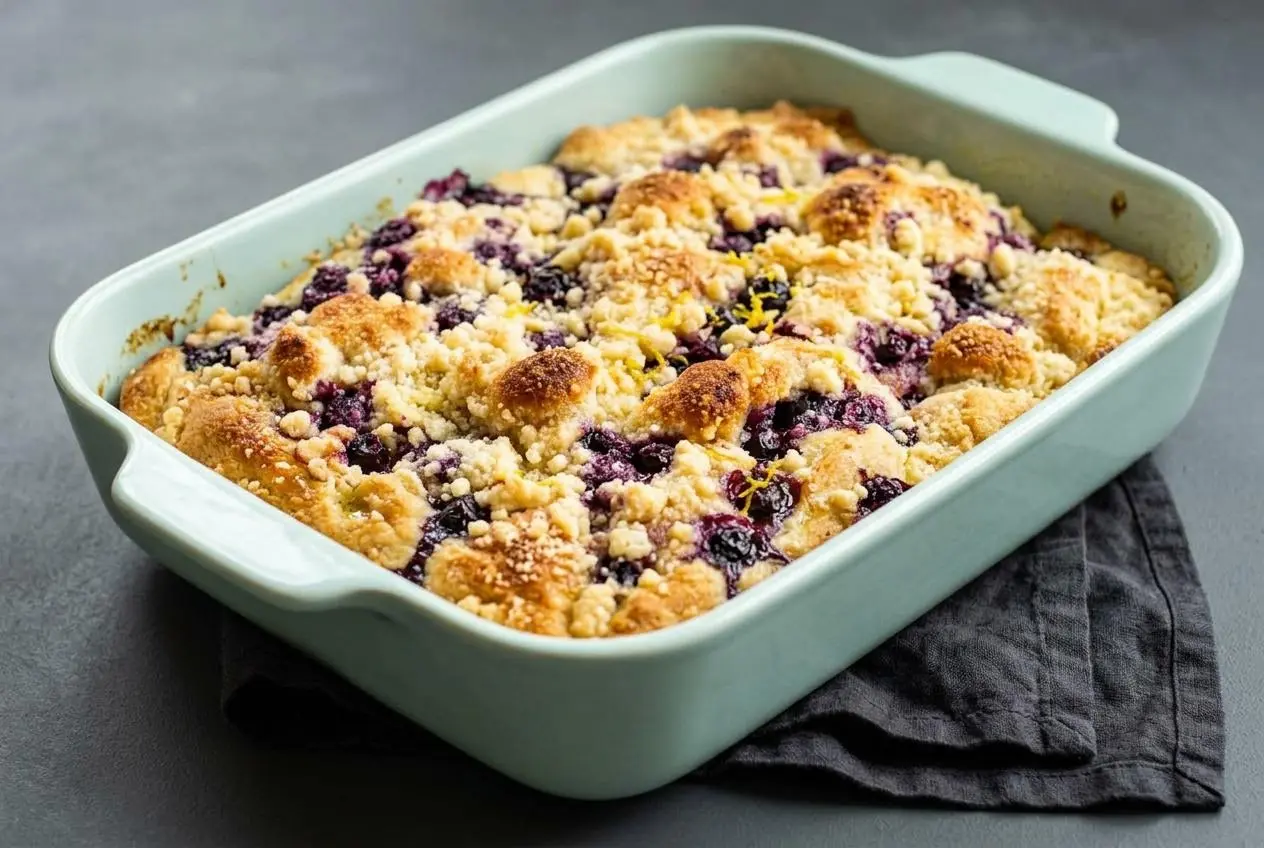
This lemon blueberry focaccia combines same-day yeast dough, thickened blueberry filling, and buttery lemon streusel. Gentle stretch-and-folds build a pillowy crumb, while cooked berries help control the moisture that can leave fruit-topped bread gummy.
Think of lemon blueberry focaccia as the meeting point between airy bread and a fruit-filled coffee cake. Cinnamon adds warmth beneath the citrus, and the topping brings a crumbly contrast to the soft dough.
Plan on about 5 hours overall, including the listed 4 hours of rising and resting, for 12 slices. This isn’t a quick bread, but the hands-on work comes in manageable stretches. The reward is in those buttery edges.
Set aside a 9×13-inch baking dish and keep the melted butter portions separate so the pan and topping each get their share.
Key Ingredients and Why Each One Matters
Flour gives the airy dough structure, yeast provides lift, and oil and butter add richness. Blueberries bring juicy fruit flavor, cornstarch controls their liquid, and lemon zest carries citrus aroma through the dough, filling, and crumbly topping.
Focaccia Dough
- 2¼ teaspoons active dry yeast (one packet)
- 2 tablespoons granulated sugar
- 1¾ cups warm water (between 105-115°F or 40-46°C)
- 2 tablespoons olive oil
- 1 Tablespoon lemon zest (from one medium lemon)
- 4 cups all purpose flour
- 1½ teaspoons salt (use fine sea salt or table salt)
- 1 teaspoon cinnamon
- 6 Tablespoons salted butter, melted, divided
Lemon Blueberry Filling
- 1½ cups fresh or frozen blueberries
- ¼ cup granulated sugar
- 1 tablespoon lemon zest (from one medium lemon)
- 1 tablespoon lemon juice, freshly squeezed (from about half a medium lemon)
- 1 teaspoon vanilla extract
- 1½ teaspoons cornstarch
Lemon Streusel Topping
- ½ cup all purpose flour
- ¼ cup granulated sugar
- 1 tablespoon lemon zest (from one medium lemon)
- 2 Tablespoons salted butter, melted
Yeast, water, and sugar: The initial rest lets you check for yeast activity before adding flour. Look for foam rather than assuming the mixture is ready because the timer rang.
Flour and olive oil: Flour builds the framework that holds rising bubbles. Olive oil adds richness to a dough that should remain wet and sticky, not turn into a firm kneadable ball.
Divided butter: Three tablespoons grease the dish, and the remaining three go over the dough. Butter against the pan helps develop golden edges; the separate streusel butter binds the flour and sugar into crumbs.
Fruit, cornstarch, and citrus: Cornstarch thickens the blueberry juices before they reach the bread. Fresh zest adds aroma without extra liquid, while lemon juice balances sweetness. Vanilla rounds out the filling, and cinnamon stays in the background.
I prefer to zest the lemons before squeezing them; a whole lemon is much easier to hold against a grater.
How to Make the Lemon Blueberry Focaccia Step by Step
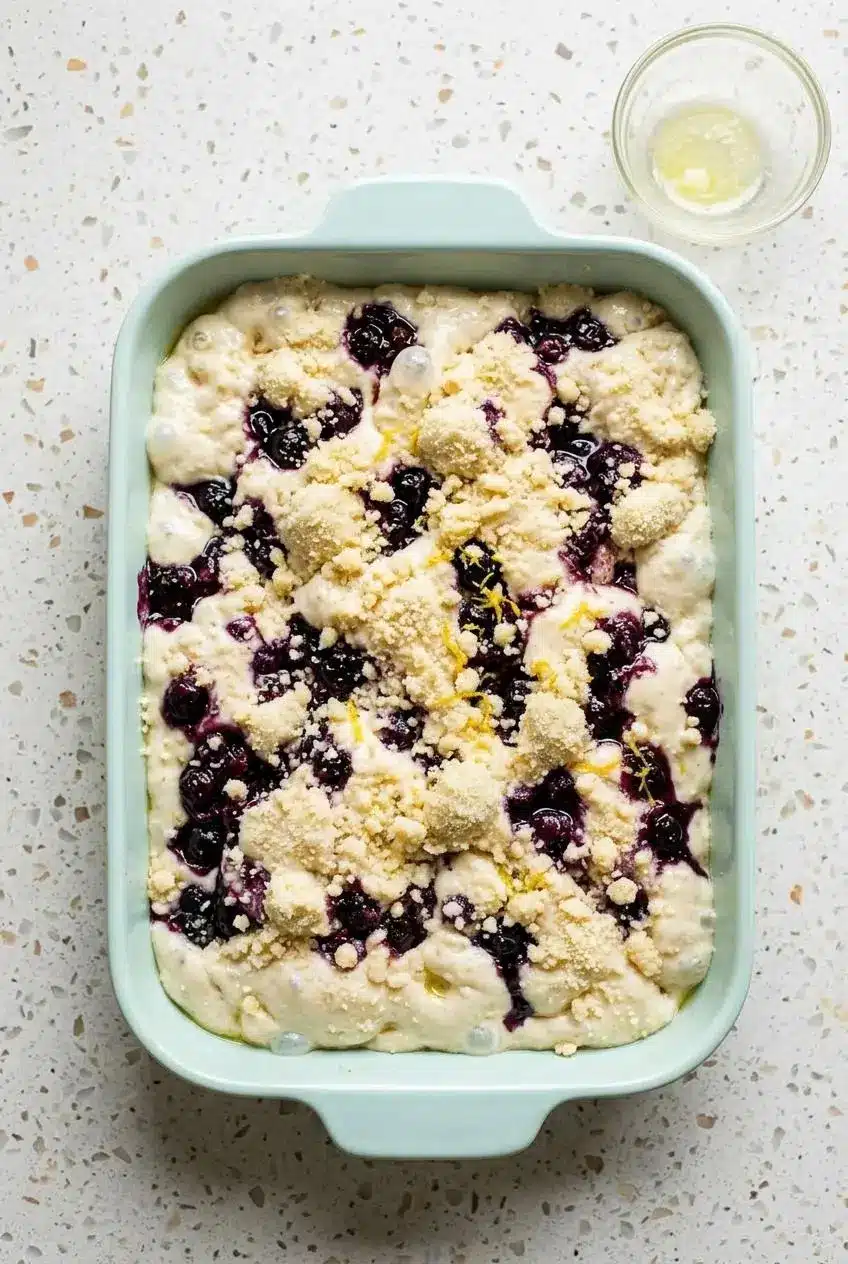
Follow the dough’s appearance as well as the resting times. The main changes to watch for are a foamy yeast mixture, increasingly elastic dough, surface bubbles, and a puffy final proof.
The final proof takes place with the dough in the buttered baking dish, rather than in the mixing bowl. One detail remains unresolved: the dough’s tablespoon of lemon zest has no confirmed incorporation point, so no mixing point for it is assigned below.
Mix and Rise the Dough
- Whisk the warm water, sugar, and yeast together in a large bowl, then leave undisturbed for 10 minutes.
A foamy layer indicates activity; an unchanged surface may mean the yeast is expired. - Stir the olive oil into the activated mixture.
The oil will disperse through the liquid. - Work in the flour, salt, and cinnamon with a wooden spoon or silicone spatula for about 1 minute.
Expect a loose, sticky mass rather than a smooth bread ball. - Place plastic wrap or a kitchen towel over the bowl and rest the dough for 30 minutes.
The dough should remain soft and moist beneath the cover. - Reach beneath one side of the dough, lift it gently without tearing, and lay it across the center; turn the bowl 90 degrees and repeat until all four sides have been folded.
These four directional folds make up the first folding set. - Cover the bowl again and allow a 30-minute rest.
The folded dough will relax back into the bowl. - Complete a second set of four directional folds, then cover and rest for 30 minutes.
Lift gently enough to preserve the dough’s developing elasticity. - Repeat the four-direction folding set a third time, followed by another covered 30-minute rest.
The dough should begin to feel more cohesive while remaining sticky. - Perform the fourth folding set, cover the bowl, and let the dough rise for 1 hour.
Look for roughly doubled volume and bubbles across the surface.
Make the Blueberry Lemon Filling
- Heat the blueberries, sugar, lemon zest, lemon juice, and vanilla in a small saucepan over medium heat, maintaining a simmer for 10 minutes.
The berries should soften and release their juices. - Stir in the cornstarch, keep the mixture boiling for 1 minute while stirring continuously, then set it aside to cool.
The filling should thicken rather than remain watery.
Shape, Fill, and Proof the Dough
- Distribute 3 tablespoons of melted butter across the interior of a 9×13-inch baking dish.
The dish should have a generous buttery coating. - Cover the dish containing the dough with plastic wrap and allow a room-temperature rise of 1 hour.
The dough is ready when it looks inflated and gently jiggles as you move the dish.
Make the Streusel Topping
- Use a fork or spoon to combine the topping’s flour, sugar, lemon zest, and melted butter in a small bowl, then set aside.
The mixture should form loose crumbs.
Bake the Focaccia
- Heat the oven to 450°F (230°C).
The oven should reach the set temperature before the dough goes in. - Spread the remaining 3 tablespoons of melted butter over the dough, distribute the cooled blueberry filling, and scatter the streusel across it.
Aim for an even spread of fruit and crumbs rather than concentrated piles. - Coat your fingers generously with olive oil or butter left in the melting bowl, then press through the dough to the bottom of the dish, pushing berries into the indentations.
Well-greased fingertips should release cleanly instead of pulling and tearing the dough. - Bake for 20-22 minutes, then leave the focaccia to cool for at least 30 minutes before cutting.
Both the bread and streusel should look golden brown when baking is complete.
Activating the Yeast and Mixing the Wet Dough
Use the warm-water range listed with the ingredients, then check the surface after the activation rest. Foam is the useful cue. Once you add flour, resist the urge to keep adding more until the dough feels dry; this focaccia relies on a soft, wet consistency.
Mastering the Four Stretch-and-Folds
There are four folding sets, with four directional folds inside each set. Gentle lifting builds structure without traditional kneading. Stop stretching before the dough tears, and keep the prescribed rests, including the longer rise after the final set.
Cooking the Thickened Lemon Blueberry Compote
Fresh and frozen berries follow the same cooked-filling method. Simmering softens the fruit, and the cornstarch boil thickens the released juice. Cool the filling before topping the dough rather than replacing it with raw berries, which would introduce uncontrolled liquid during baking.
Proofing in the Buttered Pan, Dimpling, and Baking
The buttered dish supports the final proof and helps brown the edges. Before topping, look for puffiness and a gentle wobble, not merely elapsed time. After adding butter, filling, and streusel in that order, press the dimples to the pan bottom with thoroughly greased fingers.
Don’t rush the cooling rest. Hot bread compresses easily under a knife, and the moist interior needs time to settle before slicing.
Tips and Troubleshooting for Perfect Sweet Focaccia
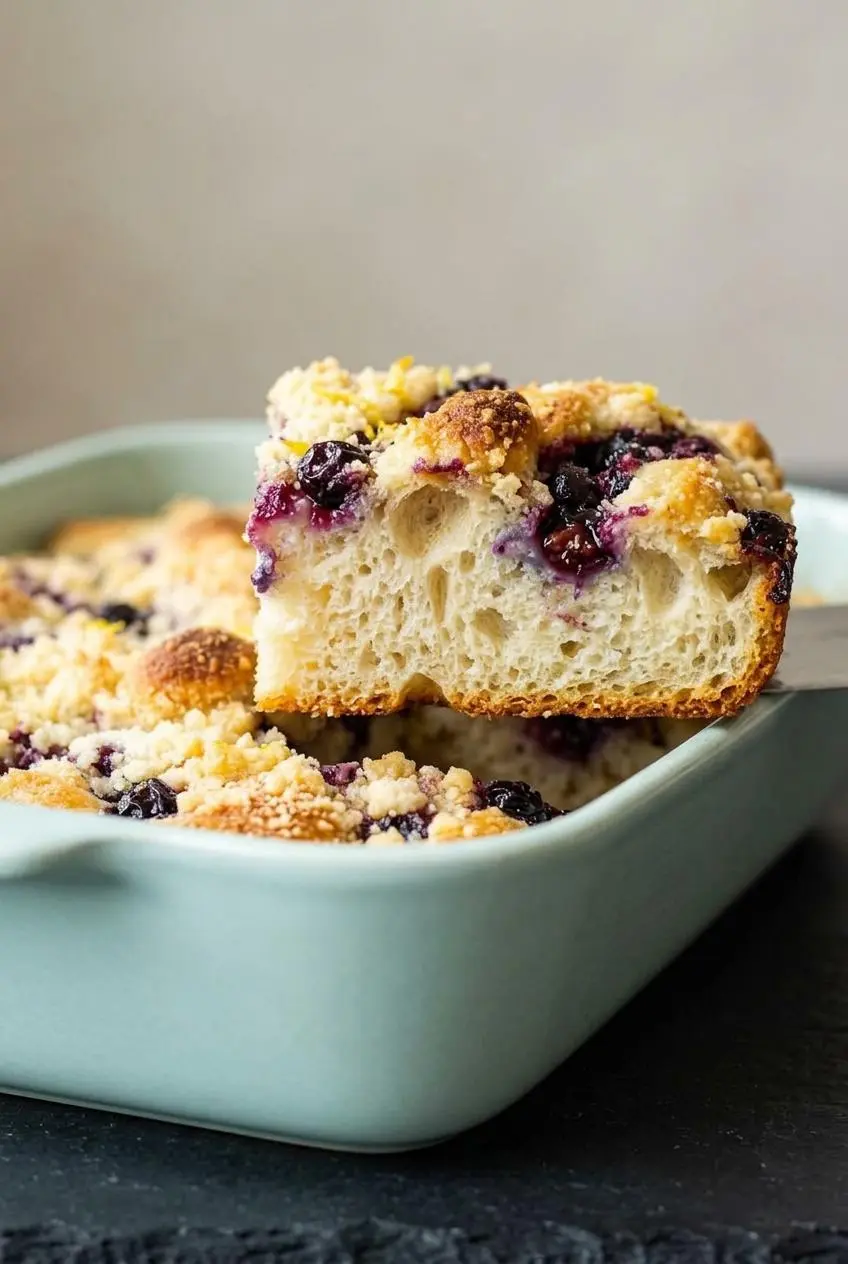
Sticky dough is expected here. The problems worth correcting are inactive yeast, tearing during dimpling, watery filling, and dough that hasn’t visibly risen.
- No yeast foam: If the surface remains unchanged after the activation rest, check the yeast’s freshness and water temperature before continuing.
- Dough follows your fingers: Too little grease makes dimpling difficult. Recoat your fingertips generously with the permitted oil or remaining butter.
- Thin blueberry filling: Excess juice can collect in wet pockets. Complete the simmer and stirred cornstarch boil, then let the filling cool.
- Flat-looking dough in the dish: The final proof hasn’t reached its intended cue. Look for both puffiness and a gentle jiggle before topping.
- Dark streusel or uneven browning: Check oven accuracy and watch the stated golden-color cue rather than relying on the timer alone.
- Compressed slices: Cutting while the bread is hot can flatten the crumb. Give it the full cooling rest before slicing.
Thickening the berries helps manage moisture, but it cannot compensate for insufficient proofing or baking. Keep those checks separate: bubbly dough, a puffy pan proof, golden bread, and a proper cooling rest all matter.
More Lemon Aroma Without Extra Liquid
For an optional streusel variation, rub its measured sugar and zest together with your fingertips before combining them with flour and butter. The rubbing releases fragrant peel oils without adding juice or changing the quantities.
The same flavor technique can pair sugar and zest, but it doesn’t establish the unresolved mixing point for the dough’s zest. Keep that distinction separate from the confirmed method.
Freshly squeezed lemon juice gives the filling a lively citrus flavor. Bottled products vary, so avoid assuming they will all taste identical to fresh juice.
Lemon Glaze, Dairy-Free Swaps, and Rise Options
Keep adaptations separate from the quantities and method above. Topping changes are more straightforward than changing the fermentation schedule.
- Crumbly finish: Keep the lemon streusel for buttery texture and a coffee-cake feel.
- Smooth citrus drizzle: Add an optional lemon glaze instead of or alongside the streusel.
- Dairy-free option: Replace salted butter throughout the pan, dough topping, and streusel with plant-based butter; check product labels for vegan suitability and expect possible differences in browning and texture.
- No sourdough required: Active dry yeast supplies the rise here; a starter version would need a separately developed fermentation schedule, not a direct swap.
Adding a Bright Lemon Glaze
Stir powdered sugar with freshly squeezed lemon juice, adding the juice gradually until the mixture can drizzle. This optional finish offers smooth sweetness and citrus tang, similar to the topping on a glazed lemon loaf, rather than the streusel’s crumbly texture.
Planning a Refrigerator Rise
A refrigerator rise would change the fermentation schedule, and a confirmed cold-proof method isn’t established here. For predictable timing, follow the same-day sequence above rather than treating refrigeration as a direct replacement for its room-temperature rests.
Serving, Storing, and Reheating Lemon Blueberry Focaccia
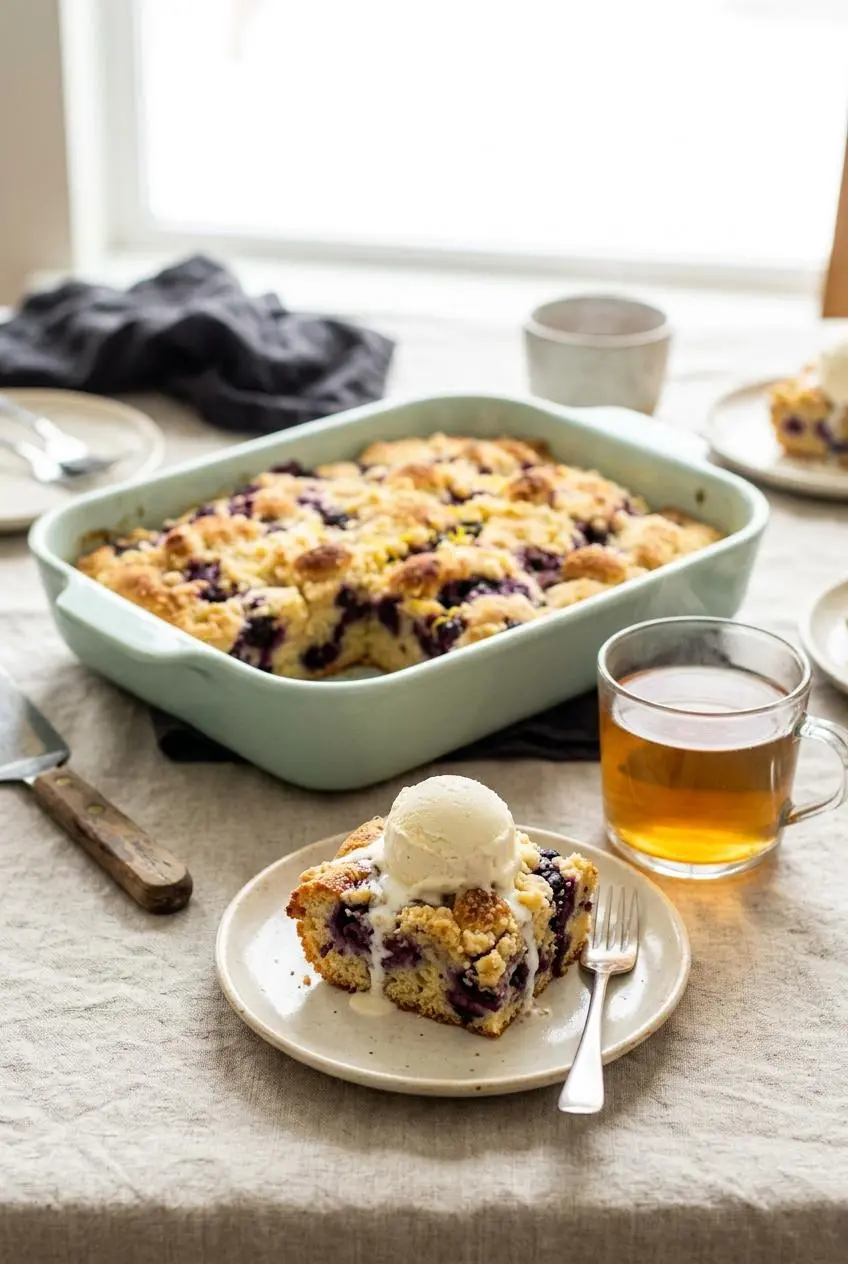
Serve slices once the cooling rest is complete, while the bread still has a little warmth. Coffee or warm lemon ginger tea fits a brunch spread; vanilla ice cream turns a square into a fruit dessert.
Let leftovers cool completely before wrapping or placing them in a covered container. Trapped steam softens the edges and streusel. With a moist fruit topping, a cautious approach is to keep leftovers chilled, particularly in a warm kitchen, rather than treating them like plain bread.
For texture, use dry oven heat to warm individual portions and help revive the edges. Avoid prolonged microwaving, which tends to soften the crumbly topping instead of restoring its contrast.
Conclusion
Pillowy bread, jammy blueberries, and buttery lemon streusel give this focaccia its brunch-to-dessert appeal. Fresh citrus keeps the rich topping bright.
Focus on the useful cues: thickened filling, puffy dough, generously greased fingers, and an unhurried cooling rest. Then cut yourself a square with a golden edge.
Frequently Asked Questions
Can I Use Fresh or Frozen Blueberries in Lemon Blueberry Focaccia?
Yes, either option appears in the ingredient list. Use the cooked filling method for both, including the cornstarch thickening step. Cool the filling before spreading it over the dough.
How Do I Keep Sweet Blueberry Focaccia From Getting Soggy in the Middle?
Simmer the berries for 10 minutes, then boil for 1 minute after adding cornstarch while stirring. Let the thickened filling cool before topping. Also follow the proofing, golden-browning, and cooling cues; thickener alone doesn’t ensure a well-baked center.
Can I Make Lemon Blueberry Focaccia Dough the Night Before?
A confirmed overnight schedule isn’t provided here, so the same-day method is the established option. A refrigerator adaptation needs its own fermentation guidance rather than an assumed replacement for the listed rests.
Do I Need Sourdough Starter to Make Lemon Blueberry Focaccia?
No, the dough uses 2¼ teaspoons active dry yeast. Four folding sets build structure during the same-day rise. Refrigerating yeast dough would not make it sourdough, and starter isn’t a direct substitute.
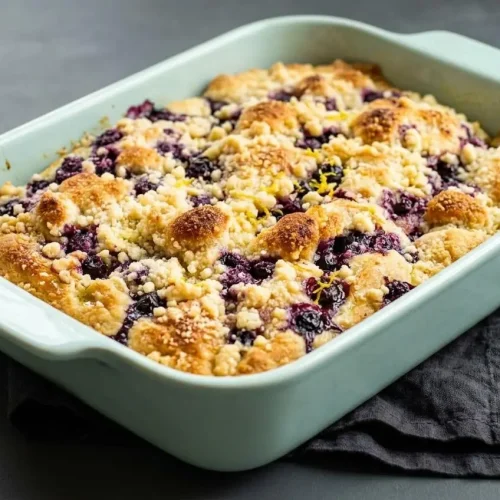
Lemon Blueberry Focaccia

Equipment
- 9×13 Baking Dish
Ingredients
Focaccia Dough
- 2¼ teaspoons active dry yeast (one packet)
- 2 tablespoons granulated sugar
- 1¾ cups warm water (between 105-115°F or 40-46°C)
- 2 tablespoons olive oil
- 1 Tablespoon lemon zest (from one medium lemon)
- 4 cups all purpose flour
- 1½ teaspoons salt (use fine sea salt or table salt)
- 1 teaspoon cinnamon
- 6 Tablespoons salted butter melted, divided
Lemon Blueberry Filling
- 1½ cups fresh or frozen blueberries
- ¼ cup granulated sugar
- 1 tablespoon lemon zest (from one medium lemon)
- 1 tablespoon lemon juice freshly squeezed (from about half a medium lemon)
- 1 teaspoon vanilla extract
- 1½ teaspoons cornstarch
Lemon Streusel Topping
- ½ cup all purpose flour
- ¼ cup granulated sugar
- 1 tablespoon lemon zest (from one medium lemon)
- 2 Tablespoons salted butter melted
Instructions
Mix and Rise the Dough
- Whisk the warm water, sugar, and yeast together in a large bowl, then leave undisturbed for 10 minutes. A foamy layer indicates activity; an unchanged surface may mean the yeast is expired.
- Stir the olive oil into the activated mixture. The oil will disperse through the liquid.
- Work in the flour, salt, and cinnamon with a wooden spoon or silicone spatula for about 1 minute. Expect a loose, sticky mass rather than a smooth bread ball.
- Place plastic wrap or a kitchen towel over the bowl and rest the dough for 30 minutes. The dough should remain soft and moist beneath the cover.
- Reach beneath one side of the dough, lift it gently without tearing, and lay it across the center; turn the bowl 90 degrees and repeat until all four sides have been folded. These four directional folds make up the first folding set.
- Cover the bowl again and allow a 30-minute rest. The folded dough will relax back into the bowl.
- Complete a second set of four directional folds, then cover and rest for 30 minutes. Lift gently enough to preserve the dough’s developing elasticity.
- Repeat the four-direction folding set a third time, followed by another covered 30-minute rest. The dough should begin to feel more cohesive while remaining sticky.
- Perform the fourth folding set, cover the bowl, and let the dough rise for 1 hour. Look for roughly doubled volume and bubbles across the surface.
Make the Blueberry Lemon Filling
- Heat the blueberries, sugar, lemon zest, lemon juice, and vanilla in a small saucepan over medium heat, maintaining a simmer for 10 minutes. The berries should soften and release their juices.
- Stir in the cornstarch, keep the mixture boiling for 1 minute while stirring continuously, then set it aside to cool. The filling should thicken rather than remain watery.
Shape, Fill, and Proof the Dough
- Distribute 3 tablespoons of melted butter across the interior of a 9×13-inch baking dish. The dish should have a generous buttery coating.
- Cover the dish containing the dough with plastic wrap and allow a room-temperature rise of 1 hour. The dough is ready when it looks inflated and gently jiggles as you move the dish.
Make the Streusel Topping
- Use a fork or spoon to combine the topping’s flour, sugar, lemon zest, and melted butter in a small bowl, then set aside. The mixture should form loose crumbs.
Bake the Focaccia
- Heat the oven to 450°F (230°C). The oven should reach the set temperature before the dough goes in.
- Spread the remaining 3 tablespoons of melted butter over the dough, distribute the cooled blueberry filling, and scatter the streusel across it. Aim for an even spread of fruit and crumbs rather than concentrated piles.
- Coat your fingers generously with olive oil or butter left in the melting bowl, then press through the dough to the bottom of the dish, pushing berries into the indentations. Well-greased fingertips should release cleanly instead of pulling and tearing the dough.
- Bake for 20-22 minutes, then leave the focaccia to cool for at least 30 minutes before cutting. Both the bread and streusel should look golden brown when baking is complete.