Turn 1 cup of unfed discard into soft, tangy sourdough tortillas in about an hour. Briefly knead the dough, rest it, roll it thin, and cook on a hot, dry skillet for blistered rounds that bend easily around your favorite fillings.
These flour tortillas get their gentle tang from sourdough discard, with baking powder helping create bubbles during cooking. You don’t need to feed the starter or wait for the dough to double.
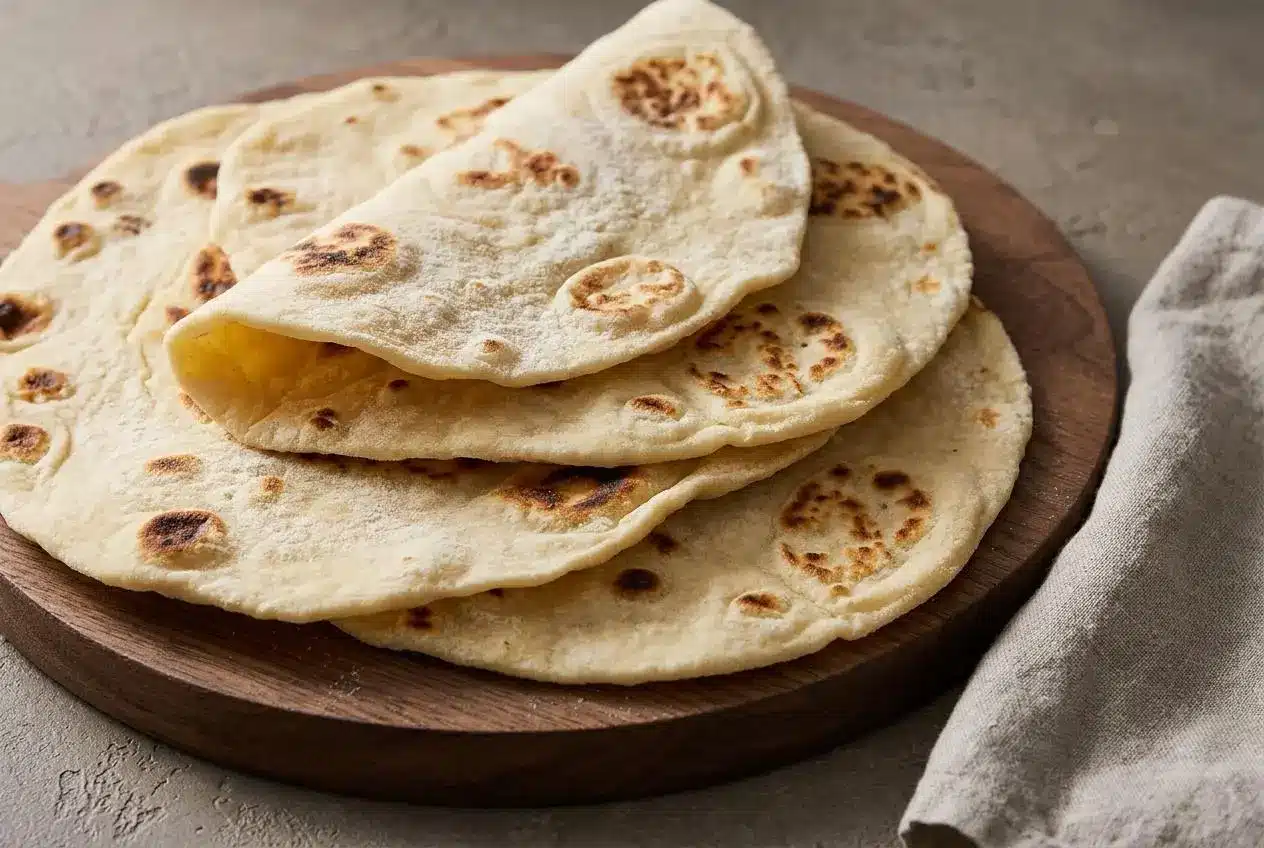
The reward is a warm stack with toasted spots, tender edges, and that fresh skillet aroma. Choose the fat that suits your meal, then pay attention to dough texture and pan heat. The towel wrap makes the difference.
Set a clean kitchen towel beside the skillet before cooking so each finished tortilla goes straight into the warm stack.
Ingredients You Need and Why They Work
Flour provides structure, starter adds tang and moisture, and fat keeps the tortillas tender. Baking powder encourages bubbling, salt balances the flavor, and hot water helps bring the dough together without making it unnecessarily stiff.
- 2 cups (240g) King Arthur Unbleached All-Purpose Flour, plus more as needed
- 1 teaspoon baking powder
- 1/2 teaspoon table salt
- 1/4 cup lard (57g), unsalted butter (57g), refined coconut oil (57g), or vegetable oil (50g)
- 1 cup (227g to 241g) sourdough starter, unfed/discard
- 4 to 6 tablespoons (57g to 86g) water, hot (about 110°F to 120°F)
The starter contributes both flour and water, so its consistency affects the finished dough. Thick discard may need more of the listed water; runny discard may need less. Start with 4 tablespoons rather than pouring in the full amount immediately.
Water at about 110°F to 120°F helps hydrate the flour as you mix. The first mixture should look rough and shaggy, with moist clumps rather than a smooth ball. Brief kneading brings those clumps together.
I prefer weighing the starter because a cup of thick discard and a cup of airy starter can hold noticeably different amounts.
Choosing Your Fat with Lard, Butter, Coconut Oil, or Vegetable Oil
Lard gives mild richness, unsalted butter adds buttery flavor, and refined coconut oil stays relatively neutral. Vegetable oil also tastes mild and needs no rubbing into the flour.
The mixing order depends on the fat’s form. Work solid fat into the dry mixture until visible pieces disappear. Add liquid oil with the starter and water instead. This distinction matters more than choosing one universally “best” fat.
Why All-Purpose Flour Beats Bread Flour
All-purpose flour gives these tortillas enough structure to fold without making the dough overly elastic. It’s the preferred choice for tender rounds that roll thin without much resistance.
Higher-protein bread flour can develop stronger gluten, producing more spring-back and chewiness. It can make tortillas, but it makes the texture and rolling goals here harder to achieve. Extra kneading won’t solve that resistance.
How to Make Sourdough Tortillas Step by Step
Plan on about 20 minutes of prep, 20 minutes of cooking, and a 20 to 30 minute rest. The batch makes eight 7 to 8-inch tortillas, with an overall time of about an hour depending on your cooking rhythm.
- Whisk the baking powder and salt through the flour in a medium mixing bowl.
An evenly blended dry mixture distributes the seasoning and leavening throughout the dough. - Rub your chosen solid fat into the flour with your fingertips or a pastry blender, reserving liquid oil for the next step.
Stop when you can no longer distinguish separate pieces of fat in the mixture. - Stir in the discard and 4 tablespoons (57g) hot water with a fork or dough whisk, including the oil now if using, then gradually add up to 2 tablespoons more water only as needed.
The mixture should form damp, shaggy clumps rather than remain loose and floury. - Bring the dough onto a lightly floured counter and knead only until it holds together, adding flour a dusting at a time if it remains very sticky.
The rough clumps should become one cohesive mass without a heavy coating of bench flour. - Shape eight portions of about 75g each into balls, press them slightly flatter, coat with nonstick spray, and cover for a 20 to 30 minute rest.
The protected dough stays moist while hydration and gluten relaxation make it easier to roll. - Heat a large dry cast iron skillet, cast iron griddle, or electric griddle to about 400°F over medium-high heat during the rest.
A sufficiently hot surface encourages quick bubbling and scattered toasted spots instead of slow drying. - Roll one portion into a thin 7 to 8-inch circle on the lightly floured counter, leaving the other portions covered and adding flour only where sticking occurs.
The round should lift from the counter without a thick flour coating, and an imperfect circle is fine. - Lay the rolled tortilla on the hot, dry cooking surface and cook for 60 to 80 seconds per side.
Look for opaque dough, raised bubbles, and scattered charred spots rather than a uniformly crisp surface. - Enclose each cooked tortilla in the kitchen towel immediately and roll the next portion while the current tortilla cooks, continuing until the batch is finished.
The covered stack holds warmth and a little steam, keeping the rounds flexible. - Serve the tortillas warm or at room temperature, allowing any leftovers to cool completely before wrapping tightly and refrigerating.
The finished rounds should bend around a filling rather than crack at the fold.
Keep the roll-one, cook-one rhythm manageable. If rolling takes longer than the skillet timing, finish cooking the current tortilla before returning to the counter. Watch the pan rather than trying to race it.
Tips for Soft Tortillas and Troubleshooting
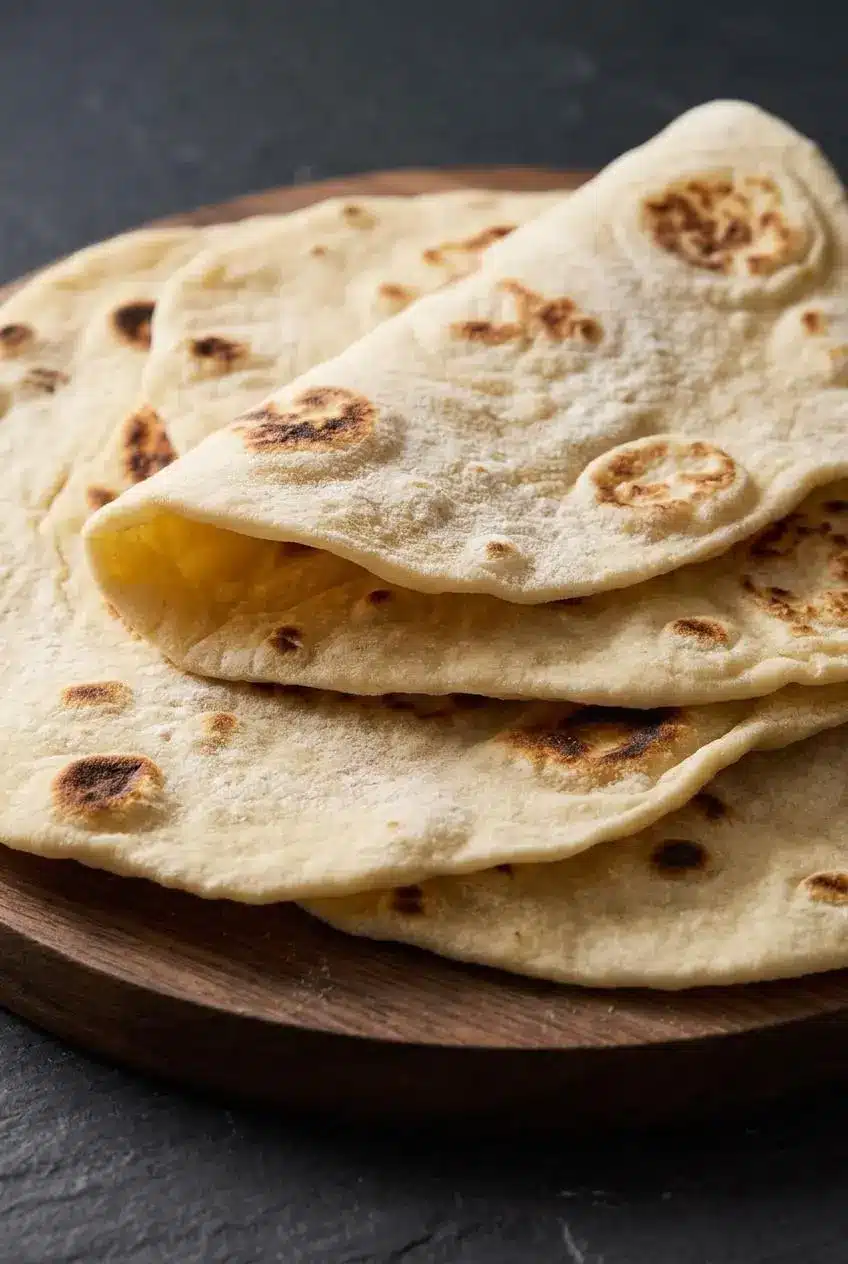
Use the dough’s behavior and the cooked surface to decide what needs adjusting. More flour isn’t the answer to every problem.
- Shaggy but not truly sticky: Knead briefly before changing the dough. Rough clumps often become cohesive once the moisture distributes through the flour.
- Very sticky dough: Add flour a dusting at a time while kneading. Stop once you can handle the dough; a heavily floured counter can leave the tortillas dry.
- Dry dough that won’t gather: Add the remaining hot water gradually within the listed 4 to 6 tablespoon range. Thick discard generally needs more help coming together than loose discard.
- Dough that shrinks back: Keep it covered and extend the rest, up to 90 minutes. Repeatedly forcing a resistant piece thinner can make rolling frustrating without fixing the underlying tension.
- Stiff, cracker-like tortillas: Check for a cool skillet, prolonged cooking, excessive flour, or uncovered cooling. Aim for about 400°F and the stated quick cooking time, then wrap immediately.
- Dark spots before the dough turns opaque: Ease the heat down as needed. Scattered char is welcome, but a burnt surface with translucent dough isn’t the goal.
Bubbles can vary from round to round. You don’t need a fully inflated balloon for success. Opaque dough, localized puffing, toasted spots, and a flexible finished tortilla are more useful cues.
Starter, Fat, and Size Choices for Your Tortillas
You can adapt the flavor and serving size without changing the discard-based ingredient list above. Keep these choices separate from hydration adjustments, which depend on how the dough feels.
Using Active Sourdough Starter vs Discard
Active starter is an optional substitute for unfed discard. Use the same supplied weight, 227g to 241g, rather than relying on a cup packed with bubbles.
Activity, age, and hydration can all affect tang and texture, so don’t expect a guaranteed increase in puffiness or a specific flavor change. Baking powder and skillet heat still do useful work here. If you’re building or maintaining a culture, this homemade sourdough starter guide is a useful starting point.
Butter, Lard, Coconut Oil, Vegetable Oil, or Olive Oil
- Butter: An included choice for a distinctly buttery tortilla; work it into the flour while solid.
- Lard: An included choice that adds mild richness without butter’s flavor.
- Refined coconut oil: An included choice with relatively neutral flavor; handle it according to whether it is solid or liquid.
- Vegetable oil: An included mild liquid option that joins the starter and water during mixing.
- Olive oil: An optional adaptation with more noticeable flavor, especially when extra virgin; no tested quantity is supplied here, and liquid oil belongs with the wet ingredients.
A Quick Rest or a Longer Rest
The standard 20 to 30 minute covered rest gives the flour time to absorb moisture and lets the dough relax. It’s worth keeping when you want easier rolling.
You can skip the rest when pressed for time, though the dough may resist stretching. You can also extend it up to 90 minutes. Treat that longer rest as rolling flexibility, not a promise of long-fermented flavor or improved digestibility.
Making 5-Inch Taco-Size Tortillas
Choose your size when dividing the dough, rather than dividing it twice.
- For folded wraps: Make 8 portions of about 75g each and roll to 7 to 8 inches.
- For smaller tacos: Make 12 portions of about 50g each and roll to about 5 inches.
- For cooking: Follow the same skillet directions for the smaller rounds, watching for opacity, bubbles, and toasted spots.
Keeping Tortillas Soft in the Fridge and When Reheating
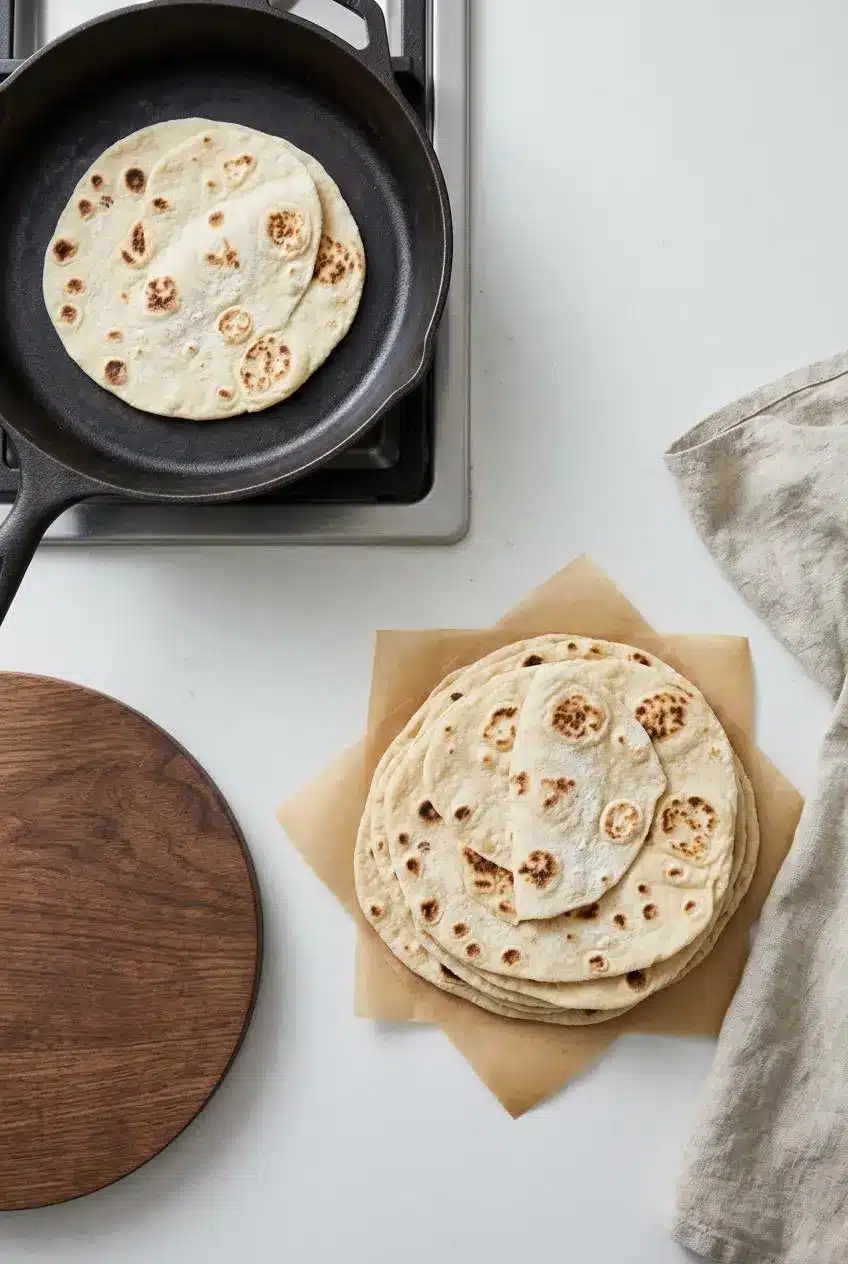
Towel wrapping protects tortillas during serving, but storage needs a different approach. Let leftovers cool completely before wrapping them tightly in plastic and placing them in the refrigerator.
Packing a warm stack traps condensation, which can leave damp patches on the tortillas. Keep the wrapping snug once they’re cool so the exposed edges don’t dry out.
To reheat, use a dry skillet until the tortilla warms through, or wrap it in a microwave-suitable kitchen towel and heat briefly, checking frequently. Stop when it feels warm and flexible. Continuing after that point can undo the softness you’re trying to restore.
Best Ways to Serve Your Skillet Tortillas
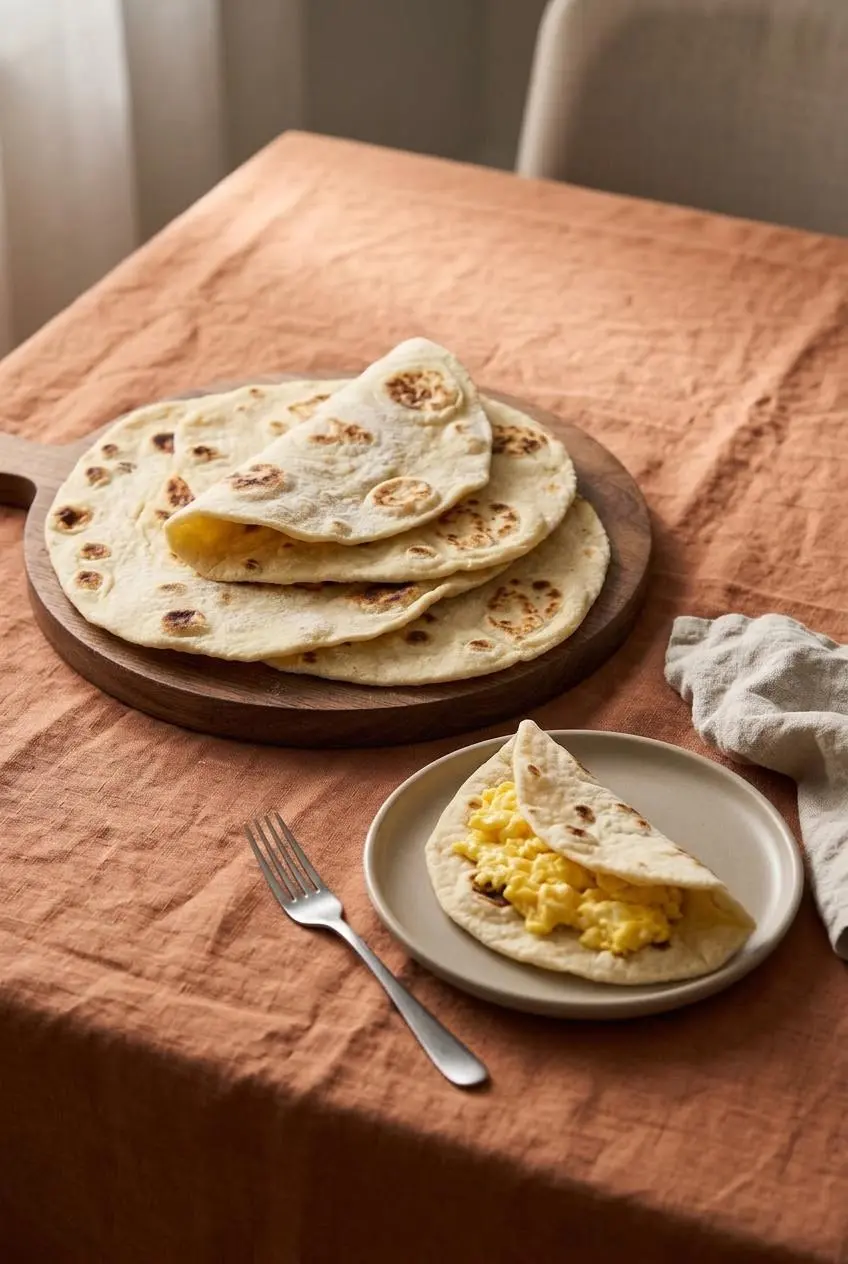
Match the tortilla size to the filling, and avoid overstuffing so the folds stay comfortable.
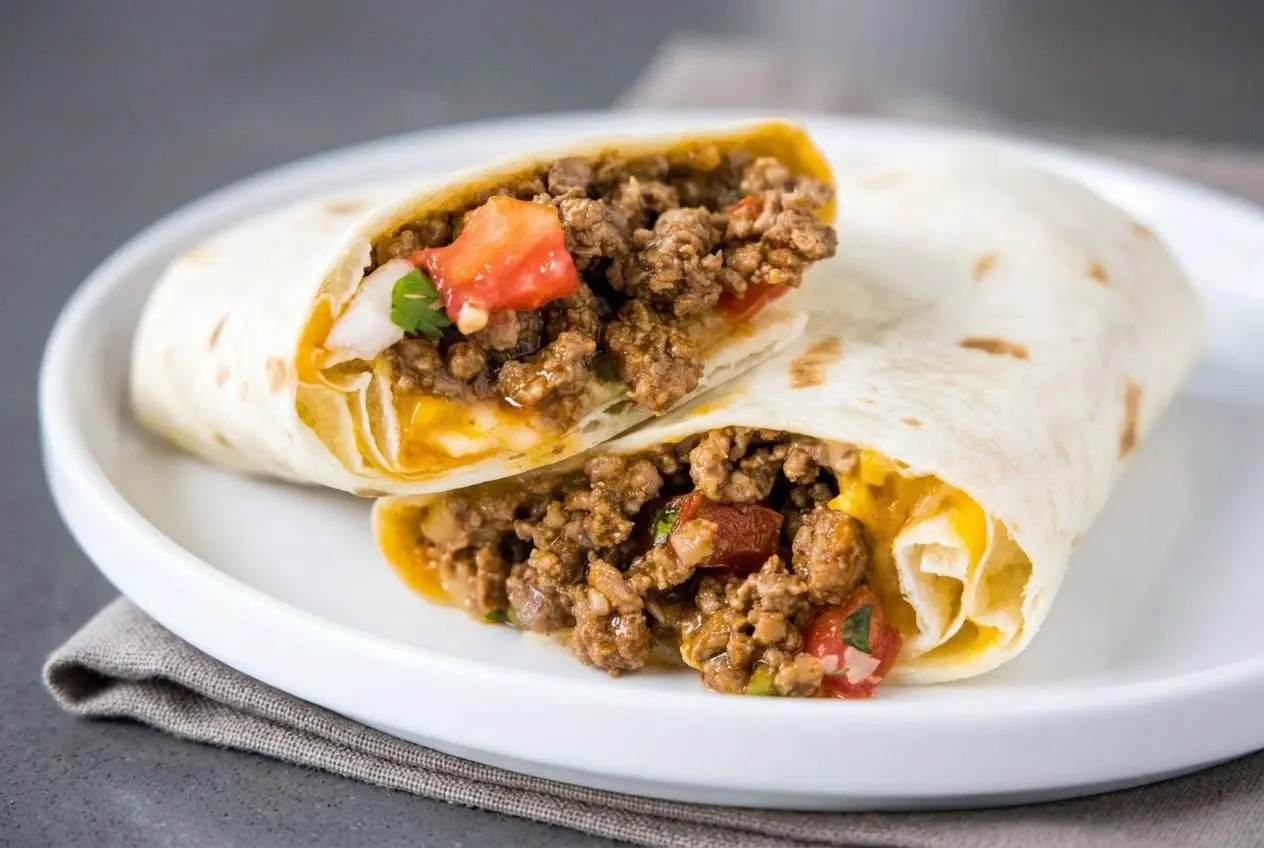
- Breakfast wraps: Fold the larger rounds around scrambled eggs for a warm, soft breakfast.
- Fajita-style meals: Pair with grilled chicken and fajita vegetables, letting everyone fill their own.
- Cheese quesadillas: Use cheddar and Monterey Jack for a melted center and a pan-crisped exterior.
- Small tacos: Fill the 5-inch rounds with smoky black beans or carnitas.
For another hearty filling, try sliced roast beef. Warm the tortillas before folding so their tender texture works with you.
Conclusion
Sourdough discard brings a gentle tang to homemade tortillas without requiring a long fermentation. The result is a stack of blistered, pliable rounds ready for breakfast wraps, quesadillas, or tacos.
Give the dough enough rest to roll comfortably, then cook quickly and tuck each tortilla into the towel. Keep that warm stack covered until everyone is ready to fill one.
Frequently Asked Questions
Can I Use Bread Flour to Make Sourdough Tortillas?
You can, but unbleached all-purpose flour is the preferred choice here. Bread flour’s higher protein can make the dough more elastic, harder to roll thin, and chewier after cooking. It isn’t an impossible substitution, just a less suitable match for this tender texture.
Are Sourdough Tortillas Better for You?
Not automatically. Their fit in your meals depends on ingredients, portions, and fillings. Making them at home lets you choose the fat, but this quick discard method shouldn’t be treated as equivalent to long fermentation or assumed to improve digestion or remove gluten.
Can I Make Sourdough Tortillas with Active Starter Instead of Discard?
Yes, as an optional adaptation. Substitute by the same weight, 227g to 241g, because bubbly starter makes volume measurements less dependable. Flavor and texture may differ with the starter’s hydration and activity; discard remains the ingredient used in the main recipe.
Why Are My Sourdough Tortillas Stiff Instead of Soft?
A cool skillet, prolonged cooking, excess flour, and uncovered cooling can all contribute. Use the hot-skillet timing in the method and wrap each tortilla immediately. If the dough already feels dry before rolling, correct its hydration during mixing rather than trying to fix it after cooking.
Sourdough Tortillas

Equipment
- Pastry blender
- dough whisk
- cast iron griddle
- Skillet
- electric griddle
- Kitchen towel
Ingredients
- 2 cups (240g) King Arthur Unbleached All-Purpose Flour plus more as needed
- 1 teaspoon baking powder
- 1/2 teaspoon table salt
- 1/4 cup lard (57g), unsalted butter (57g), refined coconut oil (57g), or vegetable oil (50g)
- 1 cup (227g to 241g) sourdough starter unfed/discard
- 4 to 6 tablespoons (57g to 86g) water hot (about 110°F to 120°F)
Instructions
- Whisk the baking powder and salt through the flour in a medium mixing bowl. An evenly blended dry mixture distributes the seasoning and leavening throughout the dough.
- Rub your chosen solid fat into the flour with your fingertips or a pastry blender, reserving liquid oil for the next step. Stop when you can no longer distinguish separate pieces of fat in the mixture.
- Stir in the discard and 4 tablespoons (57g) hot water with a fork or dough whisk, including the oil now if using, then gradually add up to 2 tablespoons more water only as needed. The mixture should form damp, shaggy clumps rather than remain loose and floury.
- Bring the dough onto a lightly floured counter and knead only until it holds together, adding flour a dusting at a time if it remains very sticky. The rough clumps should become one cohesive mass without a heavy coating of bench flour.
- Shape eight portions of about 75g each into balls, press them slightly flatter, coat with nonstick spray, and cover for a 20 to 30 minute rest. The protected dough stays moist while hydration and gluten relaxation make it easier to roll.
- Heat a large dry cast iron skillet, cast iron griddle, or electric griddle to about 400°F over medium-high heat during the rest. A sufficiently hot surface encourages quick bubbling and scattered toasted spots instead of slow drying.
- Roll one portion into a thin 7 to 8-inch circle on the lightly floured counter, leaving the other portions covered and adding flour only where sticking occurs. The round should lift from the counter without a thick flour coating, and an imperfect circle is fine.
- Lay the rolled tortilla on the hot, dry cooking surface and cook for 60 to 80 seconds per side. Look for opaque dough, raised bubbles, and scattered charred spots rather than a uniformly crisp surface.
- Enclose each cooked tortilla in the kitchen towel immediately and roll the next portion while the current tortilla cooks, continuing until the batch is finished. The covered stack holds warmth and a little steam, keeping the rounds flexible.
- Serve the tortillas warm or at room temperature, allowing any leftovers to cool completely before wrapping tightly and refrigerating. The finished rounds should bend around a filling rather than crack at the fold.