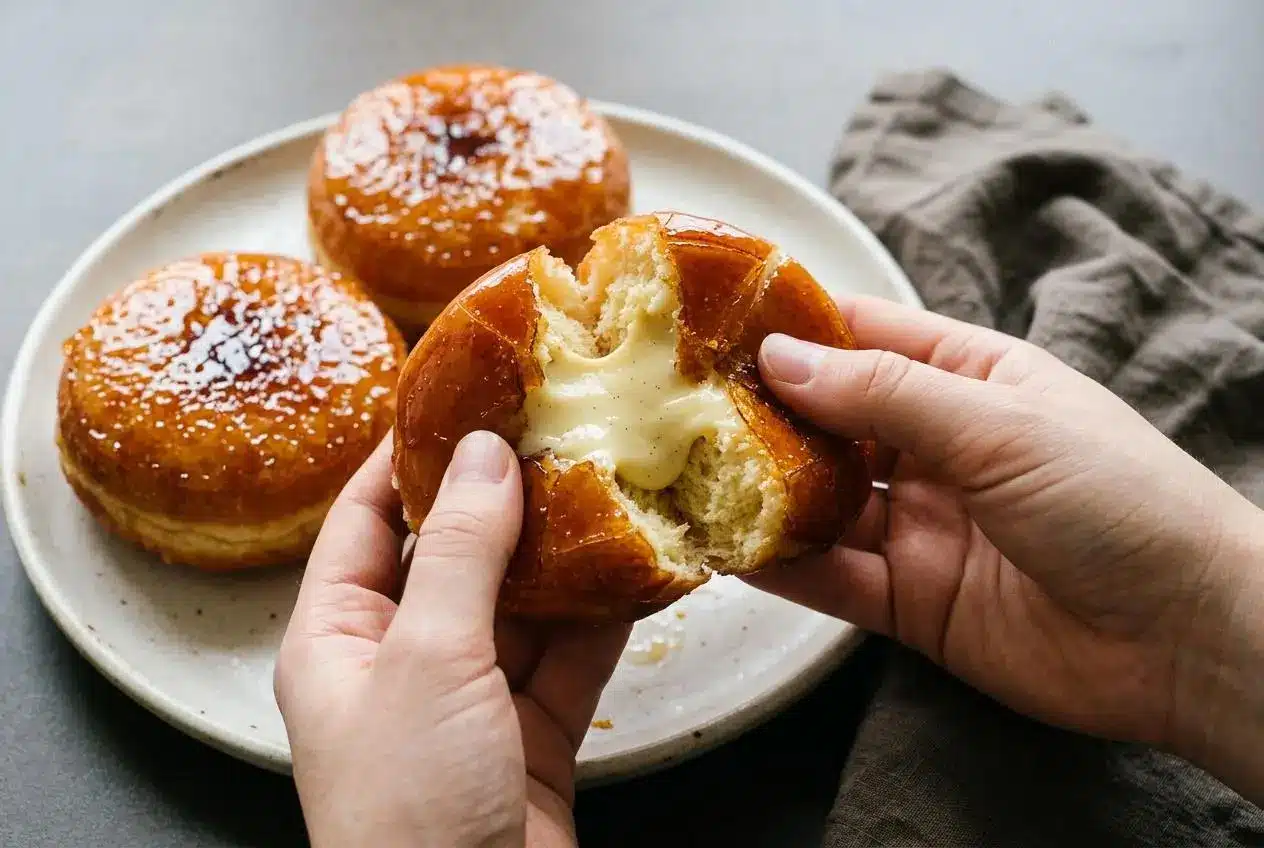
Crème brûlée donuts are yeast-raised fried donuts filled with chilled vanilla custard and dipped in amber caramel. The sugar sets into a thin, glass-like shell that cracks against the soft dough and cool, creamy filling. No kitchen torch needed.
These homemade creme brulee donuts bring together three distinct textures: airy dough, silky pastry cream, and brittle caramel. The filling cooks on the stovetop while the dough rises, so you can work on both components without rushing.
The recipe makes about 15 donuts and rewards a little patience with a bakery-style finish. You’ll knead, proof, fry, and fill before making the caramel topping. That final dip makes the crunch.
Set out your thermometer, piping bag, and draining plate before heating the frying oil.
What Makes Crème Brûlée Donuts So Special
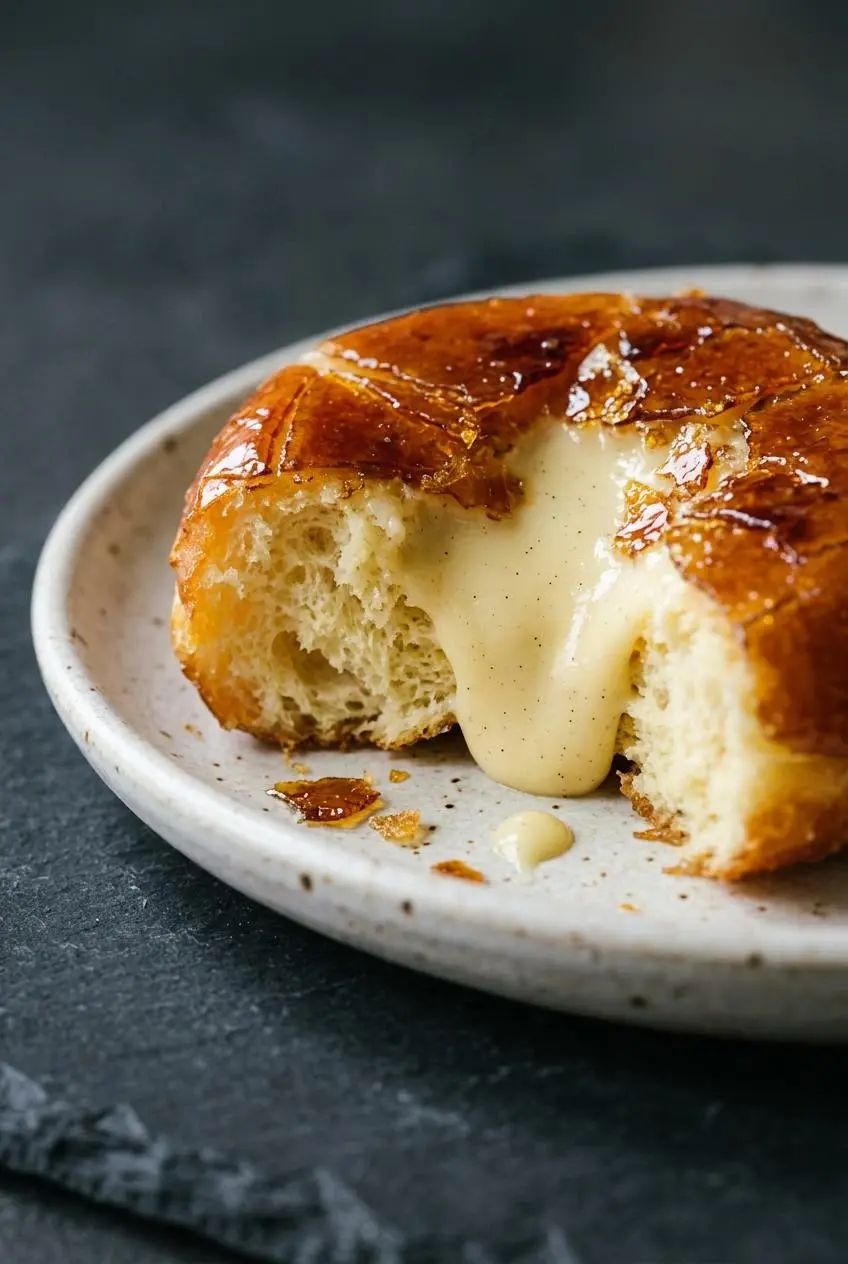
The contrast matters more than an elaborate finish: tender dough cushions the custard, while a thin caramel cap adds a clean snap and slightly bitter sweetness.
Like Tahitian vanilla creme brulee, these donuts pair vanilla custard with caramelized sugar. Here, though, the filling is pipeable pastry cream rather than baked ramekin custard.
Instead of torching loose sugar directly on fried dough, you cook sugar with water and dip the filled donuts into the liquid caramel. This coats the top evenly without scorching the bread underneath. Keep the coating thin so it cracks easily rather than forming a thick candy lid.
Key Ingredients and Why Each One Matters
Milk supplies moisture, yeast creates lift, and flour gives the dough structure. Yolks and butter add tenderness and richness, cornstarch helps the custard hold its shape, and caramelized sugar provides the crisp finish.
Donuts
- 1 cup milk lukewarm
- 1 tbsp active dry yeast
- 1/3 cup sugar granulated
- 3 egg yolks
- 1 tsp vanilla
- 4 tbsp butter softened
- 4 1/4 cups flour all-purpose
- 1 1/2 tsp salt or to taste
- vegetable oil for frying
Custard filling
- 1/2 cup sugar granulated
- 1/2 tsp salt or to taste
- 3 tbsp cornstarch
- 2 cups milk
- 4 egg yolks
- 2 tsp vanilla extract
- 2 tbsp butter unsalted
Brûlée
- 1 cup sugar granulated
- 1/4 cup water
For the Pillowy Yeast Donut Dough
Active dry yeast gives this enriched dough its lift. Blooming it in lukewarm milk lets you check its activity before adding the flour. Instant yeast also works in an equal amount.
The three yolks and softened butter produce a rich, brioche-like crumb without making the dough heavy when properly proofed. Whole milk gives the richest result, though 2% milk works too. Measure flour without packing it into the cup, since excess flour makes the dough stiff.
I check that the milk is lukewarm, around 110°F, before whisking in the yeast rather than guessing from steam.
For the Silky Vanilla Custard Filling
Four yolks give the pastry cream its richness and golden color. Cornstarch thickens the milk into a filling that stays inside the donut instead of running out when you bite.
Whisking in butter and vanilla after cooking adds gloss and aroma. The custard must cool completely before piping; warm filling feels loose and makes assembly harder. Pressing wrap against its surface prevents a leathery skin.
For the Crisp Caramel Brûlée Shell and Frying Oil
Water helps the sugar dissolve evenly before it caramelizes. As the water cooks away, the syrup takes on color and develops the toasted flavor that balances the sweet custard.
Choose a neutral oil intended for high-heat frying:
- Vegetable oil: the choice used here, with a mild flavor.
- Canola oil: another neutral option that lets the vanilla stand out.
- Refined peanut oil: suitable for frying when peanut ingredients fit your household’s needs.
- Refined sunflower oil: a mild alternative labeled for high-heat use.
Avoid butter for deep-frying because its milk solids scorch. Strongly flavored olive oil can compete with the custard, and oil unsuitable for high heat may smoke before you finish frying.
How to Make the Creme Brulee Donuts Step by Step
Plan for rising and chilling, not just hands-on work. The listed total time is about 2 hours 40 minutes, but a cool kitchen can slow the dough, so follow the doubling and texture cues rather than forcing the schedule.
Step 1: Activate the Yeast and Knead the Dough
Dough
- Combine the lukewarm milk, yeast, and 1 tsp of the measured sugar with a whisk, wait 10–15 minutes, then mix in the yolks and vanilla.
A creamy foam layer should develop before the eggs go in, showing that the yeast is active. - Use a stand mixer fitted with its dough hook to combine the yeast mixture, flour, softened butter, salt, and remaining sugar, beginning on low and increasing to medium for 5–10 minutes of kneading.
The finished dough should stretch readily and feel soft and slightly tacky rather than crumbly. - Move the dough into a large, lightly greased bowl, cover with plastic wrap or a clean towel, and leave in a warm spot away from drafts for 1–2 hours.
Look for roughly double the starting volume before moving on.
Step 2: Cook and Chill the Vanilla Custard
Custard
- Blend the sugar, salt, and cornstarch separately, then whisk them into smooth egg yolks in a medium bowl for about 1 minute.
The mixture should become evenly combined and pale yellow. - Bring the milk just to a simmer over medium-high heat, take it off the burner, and gradually whisk ladlefuls into the yolks before returning everything to the saucepan over medium heat.
Adding the milk slowly keeps the mixture smooth instead of creating cooked egg flecks. - Keep the whisk moving until the custard thickens and bubbles, then take the pan off the burner, incorporate the vanilla and butter, and scrape into a bowl.
Slow, heavy bubbles breaking through the surface signal a thoroughly thickened mixture. - Lay plastic wrap directly against the custard and refrigerate for 1–2 hours, or until completely cold.
Contact with the wrap prevents a skin, while chilling gives the filling its pipeable body.
Step 3: Cut, Proof, and Fry the Donuts at 360°F
Donuts
- Deflate the risen dough and roll it on a lightly floured work surface to about 1/2-inch thickness.
A consistent thickness helps the rounds cook evenly. - Stamp out rounds with a 3-inch biscuit or cookie cutter, then gather, knead, and reroll the scraps to cut additional rounds.
Keep the rounds intact rather than cutting center holes so they can hold the filling. - Arrange the rounds about 1 inch apart on a lightly greased baking sheet, cover with plastic wrap or a clean towel, and proof for 20–30 minutes.
They should look puffy and approximately doubled before frying. - Bring vegetable oil to 360°F in a large pot, fry the rounds in batches for 1–2 minutes on the first side and about 1 minute after turning, then lift them with a slotted spoon onto paper towels.
Both surfaces should be golden brown, with enough space around each donut to turn it comfortably.
Step 4: Pipe the Custard and Dip in Amber Caramel
Let the fried donuts cool before filling them. Hot caramel sticks to skin and can cause serious burns, so use dry, heat-resistant gloves suitable for hot sugar and keep your fingers away from the dipping surface.
Fill & Brûlée
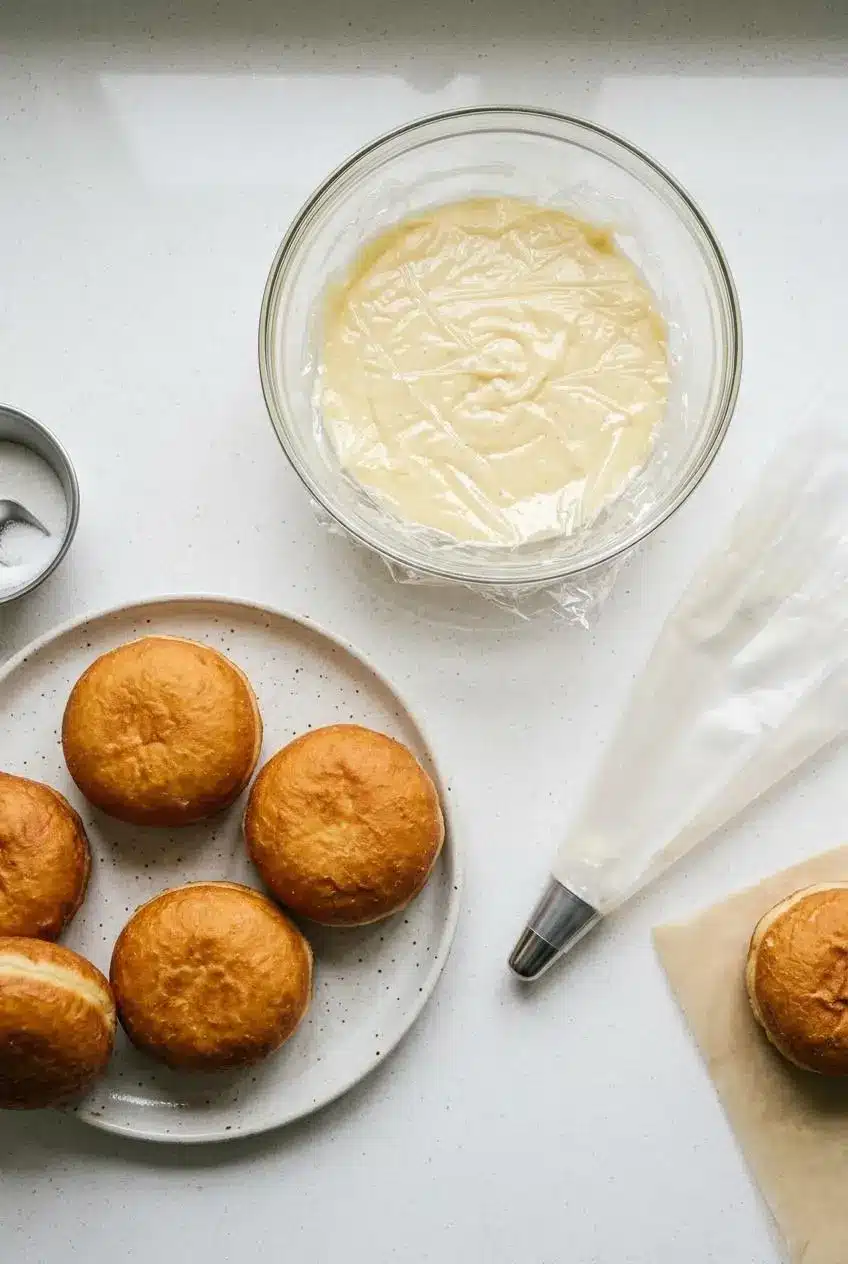
- Load the chilled custard into a piping bag fitted with a tip, make a cavity in each donut using a skewer or chopstick, and pipe through that opening.
The donut should grow heavier and expand gently in your hand without splitting. - Heat the brûlée sugar and water in a small saucepan over medium-high heat, reduce to medium when bubbling begins, and gently swirl until golden before removing from the burner and swirling again.
The color will deepen toward amber from residual heat, so stop before it becomes dark brown. - Protect your hands with suitable heat-resistant gloves, dip each donut’s top into the caramel, and lift and tilt it away from your fingers to drain excess before setting it down.
A thin, glossy coating will firm as it cools. - Continue coating the remaining donuts, returning the pan briefly to gentle heat and swirling whenever the caramel becomes too stiff.
It should flow freely enough to leave a thin cap rather than a heavy mound.
Pro Tips for Bakery-Quality Crème Brûlée Donuts
Control the oil and the caramel separately, and the whole process becomes much easier to manage.
- Clip a frying thermometer to the pot. Keep its tip in the oil without touching the bottom, and let the oil recover between batches.
- Check the first donut. Once it cools enough to handle, cut it open and check for an airy crumb without a wet, doughy center before frying the rest.
- Leave space in the piping bag. An overfilled bag is harder to squeeze evenly and encourages custard to escape from the top.
- Watch the filling opening. Stop piping when you feel resistance or see custard returning through the hole.
- Consider two sturdy skewers for dipping. Use them to support and control the donut only if it feels secure; keep hands well clear of the caramel and use protective gloves.
- Respect carryover heat. Caramel can go from pale gold to bitter quickly, even after the pan leaves the burner.
Troubleshooting Common Dough, Frying, and Caramel Issues
Most problems start with inactive yeast, excess flour, or heat that needs adjusting. Use the dough’s feel and the caramel’s color to guide the fix.
- The yeast didn’t foam. Old yeast or milk that is too hot or too cold can stall the bloom; start again with fresh yeast and lukewarm milk rather than adding flour to an inactive mixture.
- The dough is dry and crumbly. Packed flour and differences in flour absorption can leave it underhydrated; knead in small splashes of lukewarm milk until it becomes smooth and pliable.
- The dough is very sticky. Finish the kneading time before adding flour, since gluten development improves handling; if it still smears heavily, dust lightly rather than burying it in flour.
- The rounds shrink after cutting. Tight gluten needs a pause; cover the dough, let it relax briefly, and roll again without forcing it.
- The outside darkens before the center cooks. The oil may be too hot; lower the burner and verify the temperature before continuing.
- The donuts seem greasy. Crowding can drop the oil temperature; fry smaller batches and allow recovery between them.
- The caramel turns grainy. Stirring or stray sugar crystals can trigger crystallization; swirl gently instead, and use a damp pastry brush to dissolve crystals on the pan wall before they fall into the syrup.
- The caramel becomes too thick to dip. It has cooled; rewarm gently while swirling instead of forcing the donut into stiff sugar.
- The top becomes sticky. Caramel absorbs moisture from the air and the filled donut; dip close to serving rather than expecting the shell to stay brittle during storage.
Delicious Variations and Time-Saving Shortcuts
Keep these options separate from the main recipe so you can change the filling or format without changing the dough formula.
- Mini party donuts: use a smaller cutter and watch browning closely, since smaller rounds need less frying time.
- More pronounced vanilla: optionally use vanilla bean paste in the custard for visible vanilla flecks.
- A salty finish: optionally stir a little flaky sea salt into the warm custard, tasting carefully because the filling already contains salt.
Lighter Whipped Diplomate Cream Filling
Fold softly whipped heavy cream into completely chilled pastry cream for an airier diplomate filling. Loosen the custard with a whisk first, then fold gently so you preserve the cream’s volume. Stop while the mixture still holds enough body to pipe.
Strawberry Crème Brûlée Donuts
Whisk smooth strawberry preserves into the cooled custard for a fruity contrast. Add them gradually so the filling doesn’t become loose or overly sweet. Fresh citrus zest offers a brighter variation without adding much liquid.
For another fruit-and-cream filled donut, try peach cobbler cheesecake donuts.
Fast Bakery Donut Shortcut
Buy plain, unfilled yeast donuts and use the homemade custard and caramel to finish them. Choose donuts without glaze or powdered sugar so the caramel contacts a clean surface. This skips dough preparation while keeping the signature filling and crackly top.
Make-Ahead and Storage Guide
Protecting the crunch means keeping the components separate until you’re ready to assemble. Hard caramel draws in moisture, so refrigeration can soften the shell even though the custard-filled donuts need chilled storage.
- Custard: keep it refrigerated with wrap touching the surface, then whisk gently before filling if it has set firmly.
- Assembly: cool the fried donuts completely, fill with chilled custard, and make the caramel close to serving.
- Finished donuts: serve promptly rather than leaving custard-filled pastries out to preserve the topping.
- Leftovers: refrigerate in a covered container and expect the caramel to become sticky or syrupy.
Don’t trade proper chilling for a crisp shell. For a gathering, finish a manageable batch at a time and keep the remaining custard chilled until needed.
Best Serving Ideas and Pairings
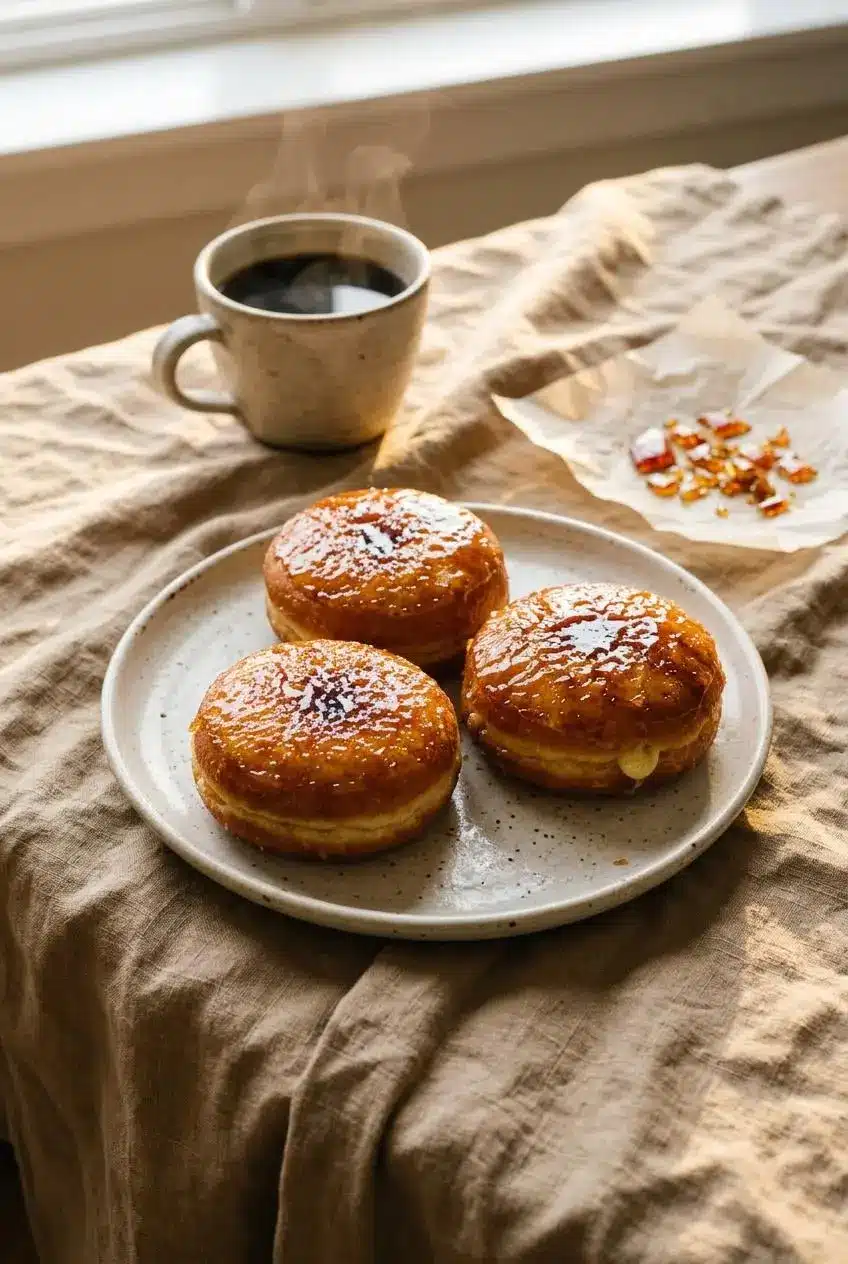
Serve these as the sweet centerpiece of weekend brunch, a holiday dessert spread, or a bridal shower platter. Hot black coffee, espresso, or unsweetened cold brew balances the rich filling and caramel sweetness.
For a dessert platter with another caramel-topped option, add creme brulee cheesecake bars.
The recipe leaves seven egg whites, which you can use for cooked meringues or an egg-white scramble. Pour leftover caramel carefully onto a parchment-lined, heatproof tray and let it harden completely before breaking it into candy pieces.
Conclusion
The reward is that first bite through brittle caramel, tender fried dough, and cool vanilla custard. Steady frying oil and a last-minute caramel dip make the biggest difference.
Keep the classic custard or try the lighter diplomate filling, then share how your batch turned out. Give the topping time to set before enjoying that first crack.
Frequently Asked Questions
What Is the Filling for Creme Brulee Donuts?
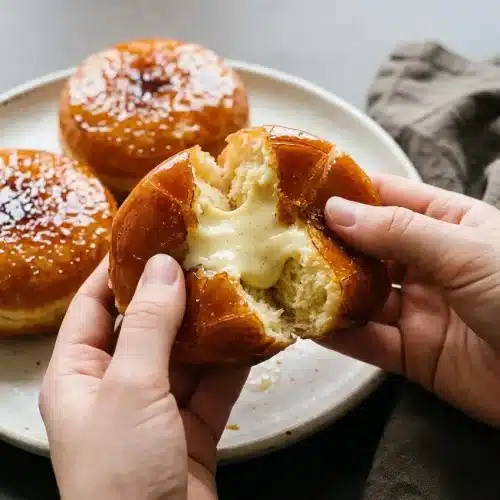
The filling is vanilla pastry cream, a thick stovetop custard made with milk, yolks, sugar, and cornstarch. Butter and vanilla finish it, and chilling makes it firm enough to pipe.
Can I Use Instant Yeast Instead of Active Dry Yeast?
Yes, substitute an equal amount of instant yeast. You can still bloom it in the lukewarm milk with the measured teaspoon of sugar to check its activity before mixing the dough.
Why Does the Caramelized Sugar Top Get Sticky or Melt the Next Day?
Caramel attracts moisture from the air and the donut underneath. Dip close to serving for the crispest shell, and refrigerate leftovers even though the topping will soften.
How Long Can the Custard Filling Last in the Fridge?
Keep the custard covered and refrigerated, with plastic wrap pressed against its surface, and use it promptly. A precise storage limit for this cooked filling isn’t established here, so avoid planning an extended holding period.
Why Did My Donut Dough Stay Dry and Crumbly?
Too much flour or differences in flour absorption can make the dough stiff. Knead in lukewarm milk a little at a time until it feels soft, smooth, and elastic rather than adding a large splash all at once.
Creme Brulee Donuts

Equipment
- Stand mixer
- Dough hook
- 3″ biscuit or cookie cutter
- candy/frying thermometer
- Slotted spoon
- Piping bag
- piping tip
- skewer or chopstick
Ingredients
Donuts
- 1 cup milk lukewarm
- 1 tbsp active dry yeast
- 1/3 cup sugar granulated
- 3 egg yolks
- 1 tsp vanilla
- 4 tbsp butter softened
- 4 1/4 cups flour all-purpose
- 1 1/2 tsp salt or to taste
- vegetable oil for frying
Custard filling
- 1/2 cup sugar granulated
- 1/2 tsp salt or to taste
- 3 tbsp cornstarch
- 2 cups milk
- 4 egg yolks
- 2 tsp vanilla extract
- 2 tbsp butter unsalted
Brûlée
- 1 cup sugar granulated
- 1/4 cup water
Instructions
Dough
- Combine the lukewarm milk, yeast, and 1 tsp of the measured sugar with a whisk, wait 10–15 minutes, then mix in the yolks and vanilla. A creamy foam layer should develop before the eggs go in, showing that the yeast is active.
- Use a stand mixer fitted with its dough hook to combine the yeast mixture, flour, softened butter, salt, and remaining sugar, beginning on low and increasing to medium for 5–10 minutes of kneading. The finished dough should stretch readily and feel soft and slightly tacky rather than crumbly.
- Move the dough into a large, lightly greased bowl, cover with plastic wrap or a clean towel, and leave in a warm spot away from drafts for 1–2 hours. Look for roughly double the starting volume before moving on.
Custard
- Blend the sugar, salt, and cornstarch separately, then whisk them into smooth egg yolks in a medium bowl for about 1 minute. The mixture should become evenly combined and pale yellow.
- Bring the milk just to a simmer over medium-high heat, take it off the burner, and gradually whisk ladlefuls into the yolks before returning everything to the saucepan over medium heat. Adding the milk slowly keeps the mixture smooth instead of creating cooked egg flecks.
- Keep the whisk moving until the custard thickens and bubbles, then take the pan off the burner, incorporate the vanilla and butter, and scrape into a bowl. Slow, heavy bubbles breaking through the surface signal a thoroughly thickened mixture.
- Lay plastic wrap directly against the custard and refrigerate for 1–2 hours, or until completely cold. Contact with the wrap prevents a skin, while chilling gives the filling its pipeable body.
Donuts
- Deflate the risen dough and roll it on a lightly floured work surface to about 1/2-inch thickness. A consistent thickness helps the rounds cook evenly.
- Stamp out rounds with a 3-inch biscuit or cookie cutter, then gather, knead, and reroll the scraps to cut additional rounds. Keep the rounds intact rather than cutting center holes so they can hold the filling.
- Arrange the rounds about 1 inch apart on a lightly greased baking sheet, cover with plastic wrap or a clean towel, and proof for 20–30 minutes. They should look puffy and approximately doubled before frying.
- Bring vegetable oil to 360°F in a large pot, fry the rounds in batches for 1–2 minutes on the first side and about 1 minute after turning, then lift them with a slotted spoon onto paper towels. Both surfaces should be golden brown, with enough space around each donut to turn it comfortably.
Fill & Brûlée
- Load the chilled custard into a piping bag fitted with a tip, make a cavity in each donut using a skewer or chopstick, and pipe through that opening. The donut should grow heavier and expand gently in your hand without splitting.
- Heat the brûlée sugar and water in a small saucepan over medium-high heat, reduce to medium when bubbling begins, and gently swirl until golden before removing from the burner and swirling again. The color will deepen toward amber from residual heat, so stop before it becomes dark brown.
- Protect your hands with suitable heat-resistant gloves, dip each donut’s top into the caramel, and lift and tilt it away from your fingers to drain excess before setting it down. A thin, glossy coating will firm as it cools.
- Continue coating the remaining donuts, returning the pan briefly to gentle heat and swirling whenever the caramel becomes too stiff. It should flow freely enough to leave a thin cap rather than a heavy mound.