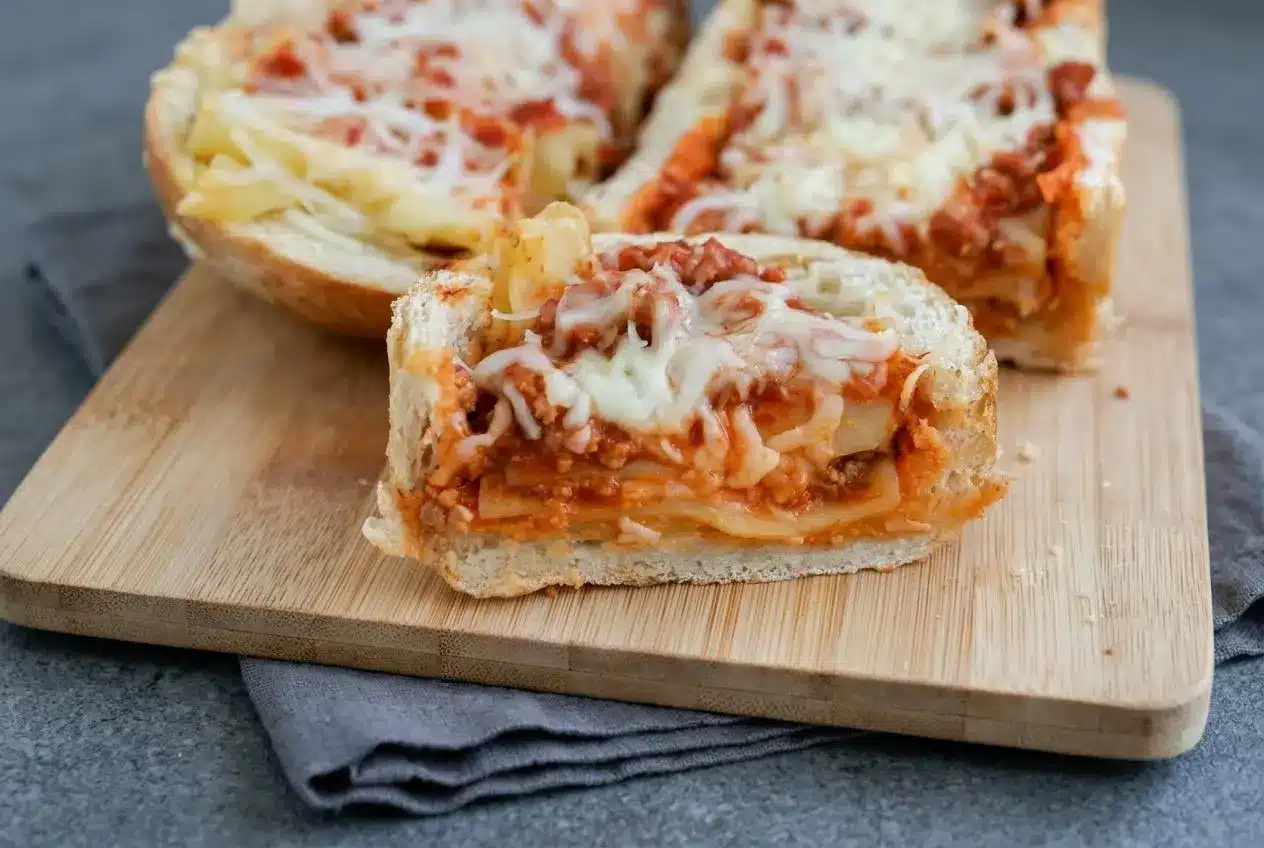
Make lasagna stuffed garlic bread by hollowing a lengthwise-halved French loaf, brushing it with garlic butter, and layering in al dente noodles, seasoned beef sauce, mozzarella, and Parmesan. Bake at 350°F for 15 to 20 minutes, until the bread turns golden and the cheese melts.
This lasagna stuffed garlic bread combines a crisp, garlicky shell with saucy pasta and gooey cheese. Each bread half becomes an open-faced boat that holds two layers of filling, ready to cut into hearty portions.
It’s a satisfying choice for a casual dinner or game-day spread, with 15 minutes of prep and a 35-minute total cooking plan using browned beef and cooked noodles. The trick is balancing the filling with enough bread to support it. Keep that crust standing tall.
Drain the cooked noodles well before assembling so clinging pasta water doesn’t soak into the bread.
Ingredients You Need and Why Each One Matters
The bread provides structure, garlic butter seasons the crumb, and noodles support the layers. Beef and tomato sauce bring savory richness and acidity, while mozzarella adds stretch and Parmesan supplies a salty, nutty finish.
- 1 French bread loaf
- 3 tablespoons butter, melted
- ½ teaspoon garlic powder
- ½ pound ground beef, browned
- 1 cup tomato sauce
- 1 teaspoon Italian seasoning
- 1 cup shredded mozzarella cheese
- ½ cup shredded Parmesan
- 4 lasagna noodles, cooked al dente
Choose a sturdy French loaf with a firm crust and enough depth to hold the filling. A very narrow baguette leaves little room for layering, while a soft, thin-walled loaf can sag once the sauce goes in.
Melted butter carries the garlic powder across the exposed crumb. Stir them together thoroughly so the garlic doesn’t collect in one heavily seasoned patch.
Browned beef gives the tomato sauce texture and savory flavor. Drain excess grease before measuring and combining it with the sauce; otherwise, that fat can collect beneath the noodles. Choose tomato sauce with some body rather than a watery consistency.
Low-moisture mozzarella works especially well here because it melts without releasing as much liquid as fresh mozzarella. Parmesan adds sharper flavor, so the cheese blend tastes rounded rather than simply rich.
Cook the noodles just to al dente. They should bend easily but still hold their shape when lifted, making them easier to tuck into the loaf without tearing.
I leave about a half-inch of bread along the sides and bottom when scooping; a sturdy shell matters more than squeezing in extra filling.
How to Make the Lasagna Stuffed Garlic Bread Step by Step
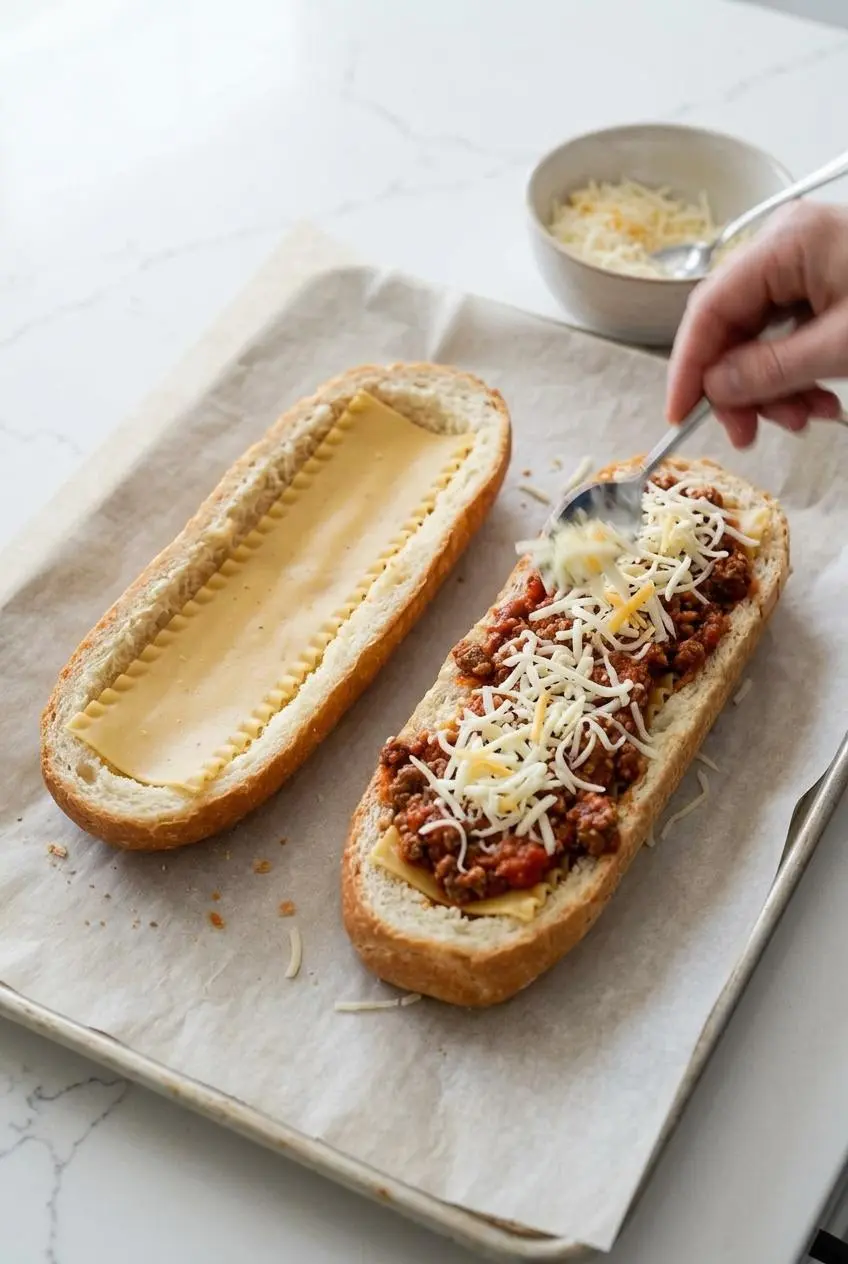
Have the browned beef and cooked noodles ready before assembly. This recipe makes 6 servings, and each bread half receives two layers of noodles, sauce, and cheese.
- Set the oven to 350°F before beginning assembly.
A fully heated oven helps the bread crisp while the cheese melts. - Cover a baking sheet with parchment to catch any escaping cheese.
Keep the parchment flat so both bread halves sit steadily. - Split the French loaf lengthwise and scoop the soft center from both pieces with a spoon, leaving about a half-inch along the bottom and sides.
Each shell should form a deep channel without holes or thin, floppy edges. - Arrange both bread shells cut-side up on the lined sheet.
Leave enough space between them to keep their sides from pressing together. - Stir the garlic powder into the melted butter in a small bowl.
The mixture should look evenly speckled rather than clumped. - Coat the exposed crumb inside both shells with the garlic butter.
A light, even sheen across the bottom and walls signals good coverage. - Fold the browned beef and Italian seasoning into the tomato sauce in a medium bowl.
The beef should remain evenly suspended in a thick, spoonable mixture. - Toss the Parmesan with the mozzarella in a separate small bowl.
An even blend distributes the stretchy cheese and sharper flavor throughout the filling. - Fit one cooked lasagna noodle along the bottom of each bread boat.
The pasta should lie comfortably inside the channel without pushing the bread walls outward. - Divide half the meat sauce between the two noodles, using ¼ of the full mixture for each boat.
Spread it along the length so neither end has a heavy mound of filling. - Cover each sauce layer with ¼ of the cheese blend, then repeat the noodle, sauce, and cheese layers using everything remaining.
Both boats should finish with cheese on top and evenly filled centers. - Bake for 15 to 20 minutes, then bring the bread to the table while hot.
Look for melted cheese, bubbling edges, and a golden crust with a toasted garlic aroma.
Pro Tips to Prevent Soggy Garlic Bread
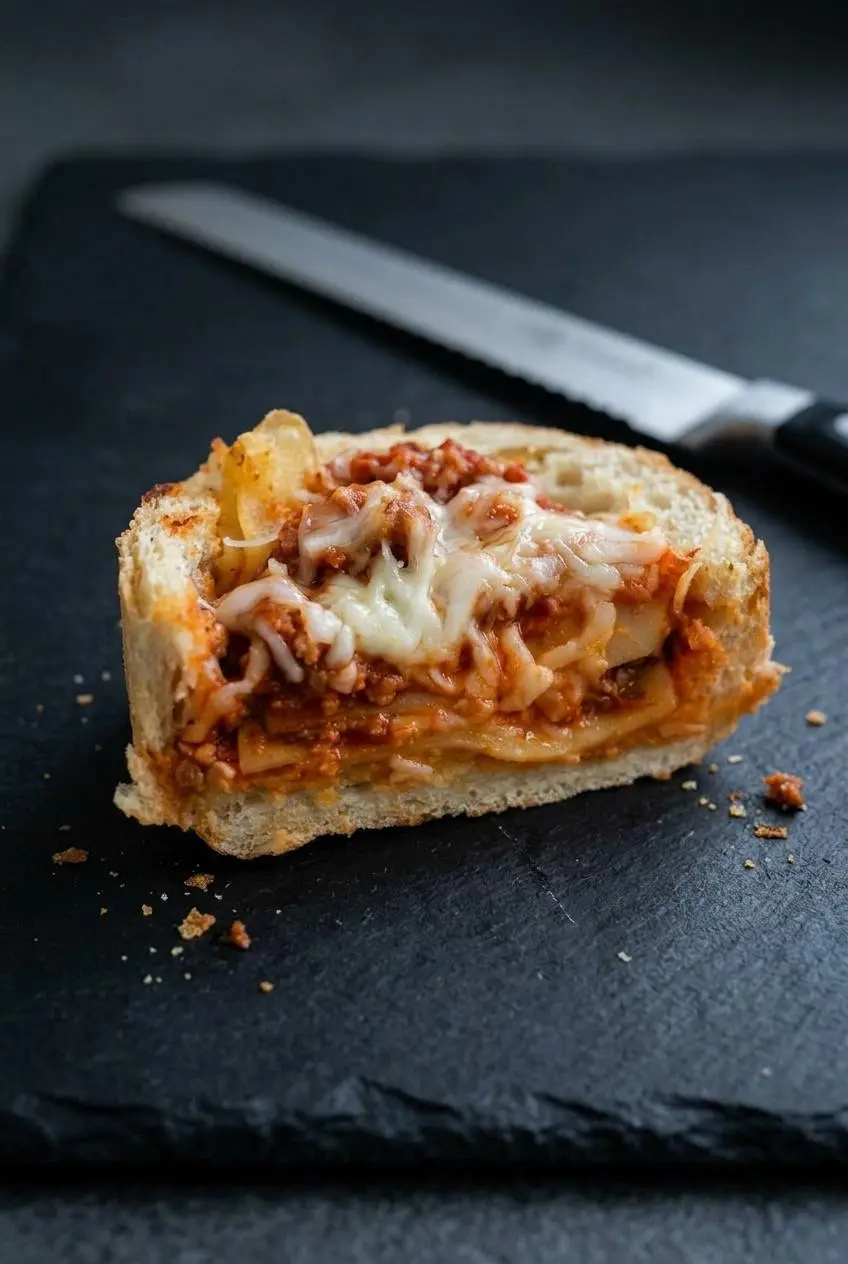
Excess moisture causes most texture problems here, but overfilling and rushed slicing can also undo a well-built bread boat.
- Soggy bottom: Watery sauce or poorly drained beef can soak the crumb; drain the meat thoroughly and use sauce that holds together on a spoon.
- Crunchy noodles: Dry oven-ready sheets may stay firm during this short bake; soften them before assembly rather than relying on the filling to hydrate them.
- Sliding layers: Molten cheese lets the filling shift; optionally rest the baked boats for 5 minutes before cutting, then use a serrated knife with gentle sawing strokes.
- Overbrowned edges: Exposed crust can brown before the center cheese melts; loosely tent the bread with foil if needed.
The Pre-Toast and Cheese Barrier Trick
For an optional head start on crispness, scatter a thin layer of Parmesan over the garlic-buttered interiors and toast the empty boats for 4 minutes before filling. Take that Parmesan from the measured cheese rather than adding another required ingredient.
Toasting firms the exposed crumb, while melted cheese creates a partial barrier that slows sauce absorption. It won’t waterproof the bread, so thick sauce and drained meat still matter. Keep the cheese layer thin enough that there’s room for the noodles.
Smart Ways to Use Leftover Hollowed Bread
Save the scooped centers for another useful part of dinner. Tear or cube them, toss with olive oil, garlic, and herbs, and bake until crisp for salad croutons.
Alternatively, pulse the pieces into homemade breadcrumbs, or blend some into tomato soup for a thicker texture. Add gradually so the soup doesn’t become pasty.
Delicious Variations and Cheese Upgrades
Keep optional additions thin and controlled. The bread has a fixed capacity, so replacing some filling works better than stacking more on top.
- Ricotta: Smooth and creamy, it spreads easily between the noodle and sauce layers.
- Cottage cheese: Lighter and more textured, it needs thorough draining to avoid a watery filling.
- Spinach béchamel: Rich and silky, it creates a white-lasagna-style filling but requires separate sauce preparation.
- Pre-seasoned garlic loaf: This shortcut replaces the homemade garlic-butter coating; follow its package preparation directions and choose a loaf sturdy enough to hold filling.
With Ricotta or Cottage Cheese
Spread a thin layer of whole-milk ricotta or drained small-curd cottage cheese over the noodles before adding sauce. Reduce the mozzarella slightly to make room rather than filling above the bread’s edges.
If the ricotta has visible pooled liquid, drain it first. For smoother cottage cheese, blend it after draining. Either option adds creaminess, but neither should form a thick mound that pushes the sauce out.
Italian Sausage and Creamy Spinach Bechamel
Replace the beef with cooked, crumbled Italian sausage for a more pronounced fennel flavor or spicy finish. Ground turkey or plant-based crumbles are other optional choices; prepare them fully before assembly.
For a creamy version, stir well-drained cooked spinach into a thick béchamel and use it instead of some or all of the tomato sauce. Sautéed mushrooms also fit, provided you cook off their released moisture. Avoid using full layers of both sauces, which can overwhelm the bread.
Individual Lasagna Garlic Bread Bowls
Small round boules of crusty sourdough bread or sturdy dinner rolls make individual portions. Remove the tops, scoop out the centers without piercing the bottoms, and brush the interiors with garlic butter.
Trim cooked noodles to fit, then alternate them with meat sauce and cheese. Bake at 350°F for 15 to 20 minutes, checking for melted cheese and golden bread; smaller vessels may brown differently from a full loaf.
What to Serve with Stuffed Lasagna Bread and How to Store Leftovers
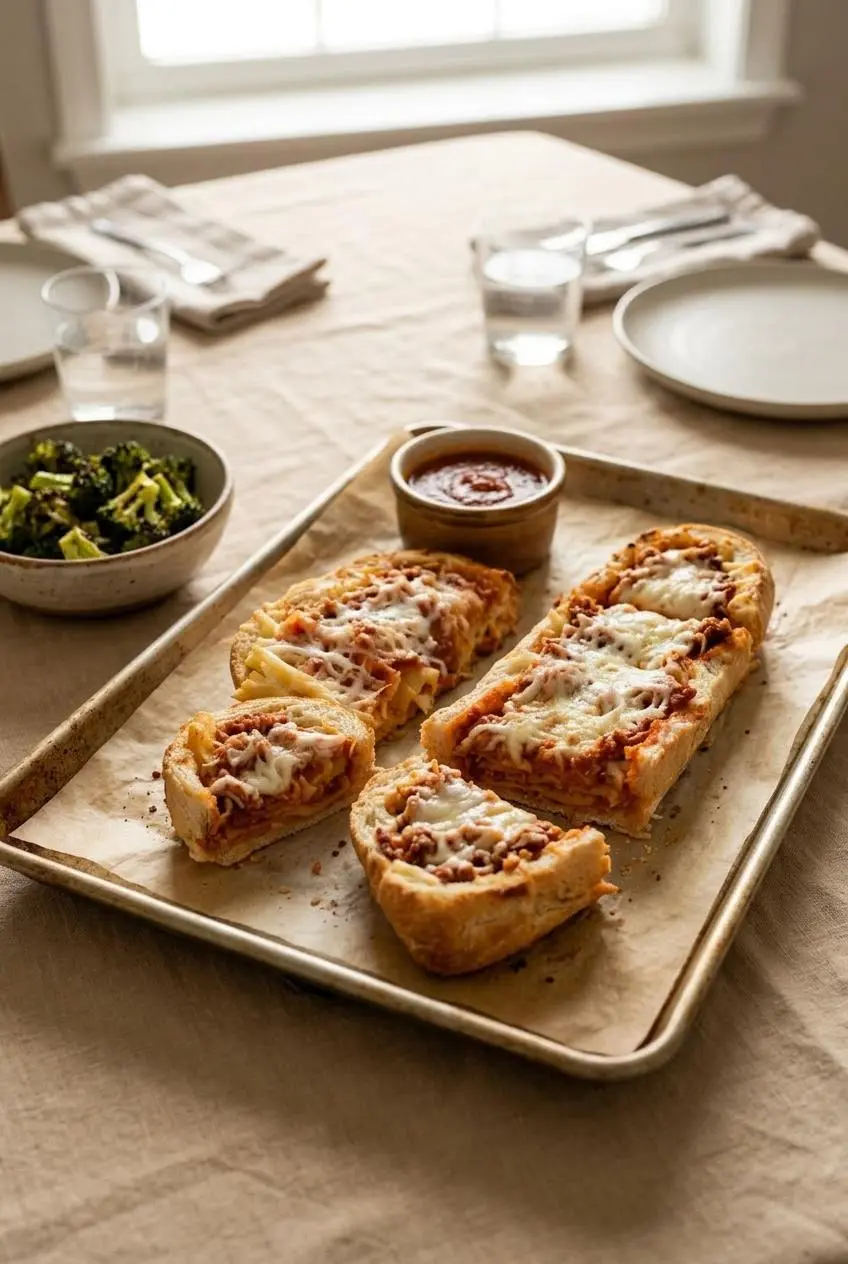
Cut the boats crosswise into thick pieces and serve with warm marinara for dipping. If you’ve made the creamy variation, extra béchamel works too, though a little goes a long way.
A crisp Caesar salad gives the rich filling a fresh contrast, especially with croutons made from the scooped bread. Roasted broccoli is another good choice when you want a warm vegetable alongside the bread.
For leftovers, divide the bread into manageable portions and refrigerate promptly in shallow, covered containers. Don’t leave the whole loaf sitting on the counter while you wait for it to cool completely. Store dipping sauce separately so it doesn’t soften the crust.
Reheat portions in an oven or air fryer rather than choosing the microwave when crispness matters. Leave space around each piece, protect the exposed cheese loosely with foil if it browns too quickly, and heat the filling thoroughly. Uncover toward the end if the crust needs more crisping, following your appliance’s directions for foil use.
Check the center as well as the crust. Bread can feel crisp outside while the dense noodle-and-cheese filling still needs heating.
Conclusion
A sturdy bread shell, well-drained filling, and even layers make this crispy, cheesy dinner easier to serve. Give the boats a brief rest if you want cleaner slices.
Try the optional Parmesan pre-toast when extra crunch is the priority. Set out the dipping sauce, cut generous pieces, and enjoy the bread while its edges are still crisp.
Frequently Asked Questions
How Do You Bake Lasagna in Garlic Bread Without Making It Soggy?
Leave about a half-inch of bread around the bottom and sides so the shell supports the filling. Drain the beef well and avoid watery tomato sauce. Optionally pre-toast the buttered boats for 4 minutes with a thin Parmesan layer before filling.
Can I Add Ricotta or Cottage Cheese to Lasagna Stuffed Garlic Bread?
Yes, spread whole-milk ricotta or drained small-curd cottage cheese thinly over the noodles. Reduce the mozzarella slightly to make room, keeping the filling below the bread’s edges.
Can I Use Oven-Ready No-Boil Noodles in Lasagna Bread?
Yes, but soften them first in hot water, following the package directions until they’re flexible. Drain well before layering; the short bake and limited sauce aren’t a good match for completely dry sheets.
How Do You Make Lasagna in Individual Garlic Bread Bowls?
Remove the tops from sturdy round rolls, hollow the centers, and brush the interiors with garlic butter. Layer trimmed cooked noodles, meat sauce, and cheese, then bake at 350°F for 15 to 20 minutes until golden and melted.
What Can I Do with the Leftover Hollowed-Out French Bread Pieces?
Toss torn pieces with olive oil and herbs, then bake until crisp for salad croutons. Pulse them into crumbs, or blend them gradually into tomato soup to thicken it.
Lasagna Stuffed Garlic Bread

Equipment
- Baking Sheet
- Parchment Paper
- Spoon
- Small bowl
- Medium bowl
Ingredients
- 1 French bread loaf
- 3 tablespoons butter melted
- ½ teaspoon garlic powder
- ½ pound ground beef browned
- 1 cup tomato sauce
- 1 teaspoon Italian seasoning
- 1 cup shredded mozzarella cheese
- ½ cup shredded Parmesan
- 4 lasagna noodles cooked al dente
Instructions
- Set the oven to 350°F before beginning assembly. A fully heated oven helps the bread crisp while the cheese melts.
- Cover a baking sheet with parchment to catch any escaping cheese. Keep the parchment flat so both bread halves sit steadily.
- Split the French loaf lengthwise and scoop the soft center from both pieces with a spoon, leaving about a half-inch along the bottom and sides. Each shell should form a deep channel without holes or thin, floppy edges.
- Arrange both bread shells cut-side up on the lined sheet. Leave enough space between them to keep their sides from pressing together.
- Stir the garlic powder into the melted butter in a small bowl. The mixture should look evenly speckled rather than clumped.
- Coat the exposed crumb inside both shells with the garlic butter. A light, even sheen across the bottom and walls signals good coverage.
- Fold the browned beef and Italian seasoning into the tomato sauce in a medium bowl. The beef should remain evenly suspended in a thick, spoonable mixture.
- Toss the Parmesan with the mozzarella in a separate small bowl. An even blend distributes the stretchy cheese and sharper flavor throughout the filling.
- Fit one cooked lasagna noodle along the bottom of each bread boat. The pasta should lie comfortably inside the channel without pushing the bread walls outward.
- Divide half the meat sauce between the two noodles, using ¼ of the full mixture for each boat. Spread it along the length so neither end has a heavy mound of filling.
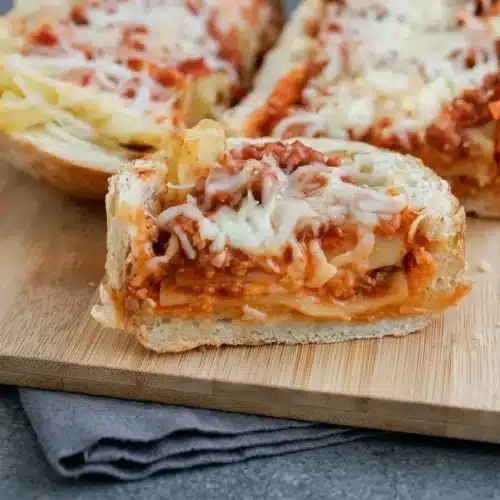
- Cover each sauce layer with ¼ of the cheese blend, then repeat the noodle, sauce, and cheese layers using everything remaining. Both boats should finish with cheese on top and evenly filled centers.
- Bake for 15 to 20 minutes, then bring the bread to the table while hot. Look for melted cheese, bubbling edges, and a golden crust with a toasted garlic aroma.