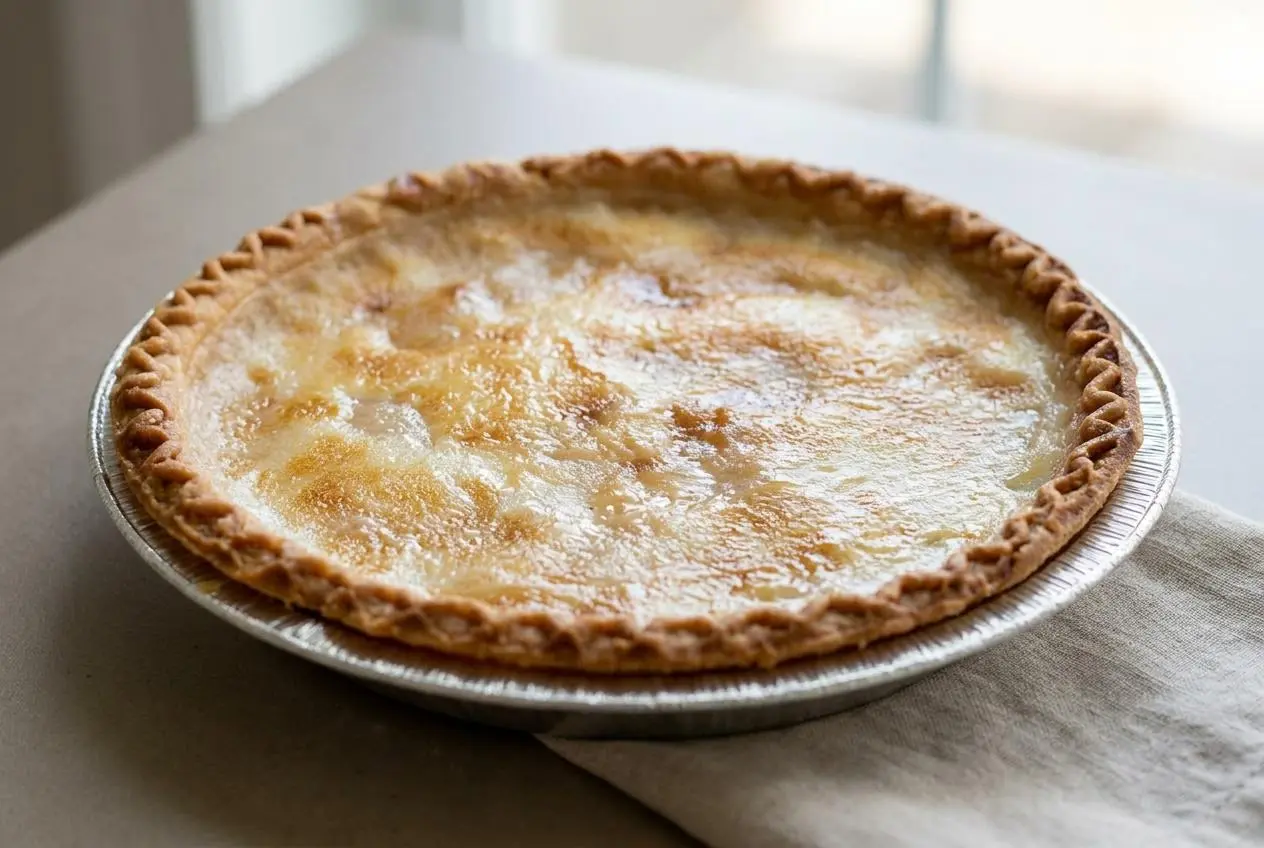
Water pie is a vintage dessert made by baking water, sugar, flour, butter, and vanilla in an unbaked crust without stirring, creating a delicate custard after it cools and chills.
Water pie seems almost too odd to work, which is part of its charm. The filling starts as clear water, then the oven fills the kitchen with the warm smell of butter and vanilla as it slowly transforms.
Expect a sweet, soft custard rather than a firm pudding. The patience happens after baking, when the wobbly center settles into slices. That golden butter layer is worth the wait.
Set the pie crust on a rimmed baking sheet before adding anything, since the liquid filling can slosh while you move it to the oven.
What Does Water Pie Taste Like?
Water pie tastes like buttery vanilla custard with the sweetness of a soft sugar cookie. The filling is delicate and silky, with a light gel-like body that melts quickly on the tongue rather than cutting like a dense baked custard.
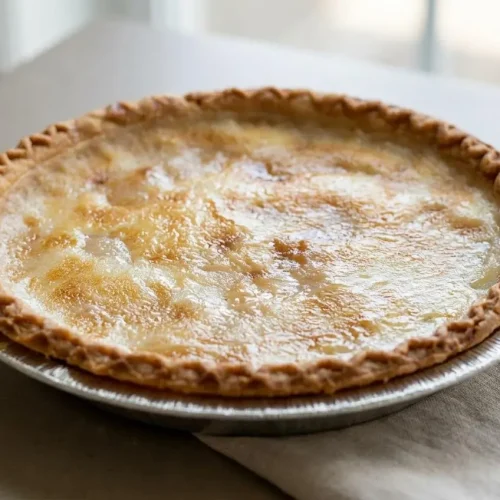
The top develops a thin, golden butter film that brings most of the richness. Underneath, the filling stays pale, glossy, and gently wobbly. Vanilla keeps the flavor from tasting flat, while the baked crust adds the familiar toastiness that makes the whole dessert feel like pie rather than a science experiment.
It is intentionally sweet. Serve small chilled wedges, especially if you prefer desserts with a balanced finish. Unsweetened whipped cream or tart berries make a welcome contrast without covering the pie’s unusual texture.
Water pie belongs to the broad family of resourceful American desserts sometimes called desperation pies or hard-times pies. Its story reaches back to nineteenth-century cooking, when rural households sometimes needed custard-like desserts without relying on milk. It later became associated with make-do cooking during the difficult years of the 1930s and found a new audience through viral baking videos in 2020.
If you enjoy old-fashioned desserts that turn familiar baking ingredients into something surprising, a vintage ritz torte offers another nostalgic route to a sweet, delicate finish.
Ingredients for Water Pie
Each ingredient contributes to the pie’s structure, sweetness, aroma, or rich finish: the crust holds the filling, flour thickens it, sugar adds body, vanilla perfumes it, and butter creates the golden top layer.
- 1 9-inch deep-dish pie crust, unbaked
- 1 1/2 cups water
- 4 tablespoons all-purpose flour
- 1 cup sugar
- 2 teaspoons vanilla extract
- 5 tablespoons butter, cut into 5 pieces
The crust needs to be unbaked so it can cook along with the filling. Use a deep-dish crust, since the water level starts high. Granulated sugar dissolves into the hot liquid and helps create the pie’s glossy, sweet center.
All-purpose flour provides the structure. Vanilla extract gives the filling its bakery-like aroma, and the butter pieces melt across the surface, creating a rich cap that lightly bastes the crust edge as the pie bakes.
I keep the butter cold until the last moment so the pieces sit neatly on the surface instead of sinking before the pie reaches the oven.
The Thickening Power of Flour and Water
The flour does the quiet but essential work here. As the pie bakes, heat activates the flour’s starches while the water dissolves the sugar. Together, they form a delicate suspension that thickens into a translucent custard as it cools.
Do not stir after the flour and sugar go into the crust. Leaving the dry mixture on top allows water to hydrate it gradually from below. Stirring can disrupt that settling pattern and leave the filling gummy or uneven instead of soft and smooth.
The filling will not look fully set while it is hot. It finishes thickening as the temperature drops, which is why a freshly baked pie can resemble soft flan with a pronounced wobble.
Butter and Vanilla for Classic Bakery Flavor
Butter placement matters more than it may seem. The pieces float on top, melt into puddles, and form a thin golden surface that carries buttery flavor through every bite. That layer also helps protect the exposed filling during the longer bake.
Vanilla extract gives water pie its familiar dessert aroma. As the pie bakes, the vanilla and butter scent becomes warmer and rounder, closer to a sugar cookie than a plain flour-thickened filling.
How to Make Water Pie Step by Step
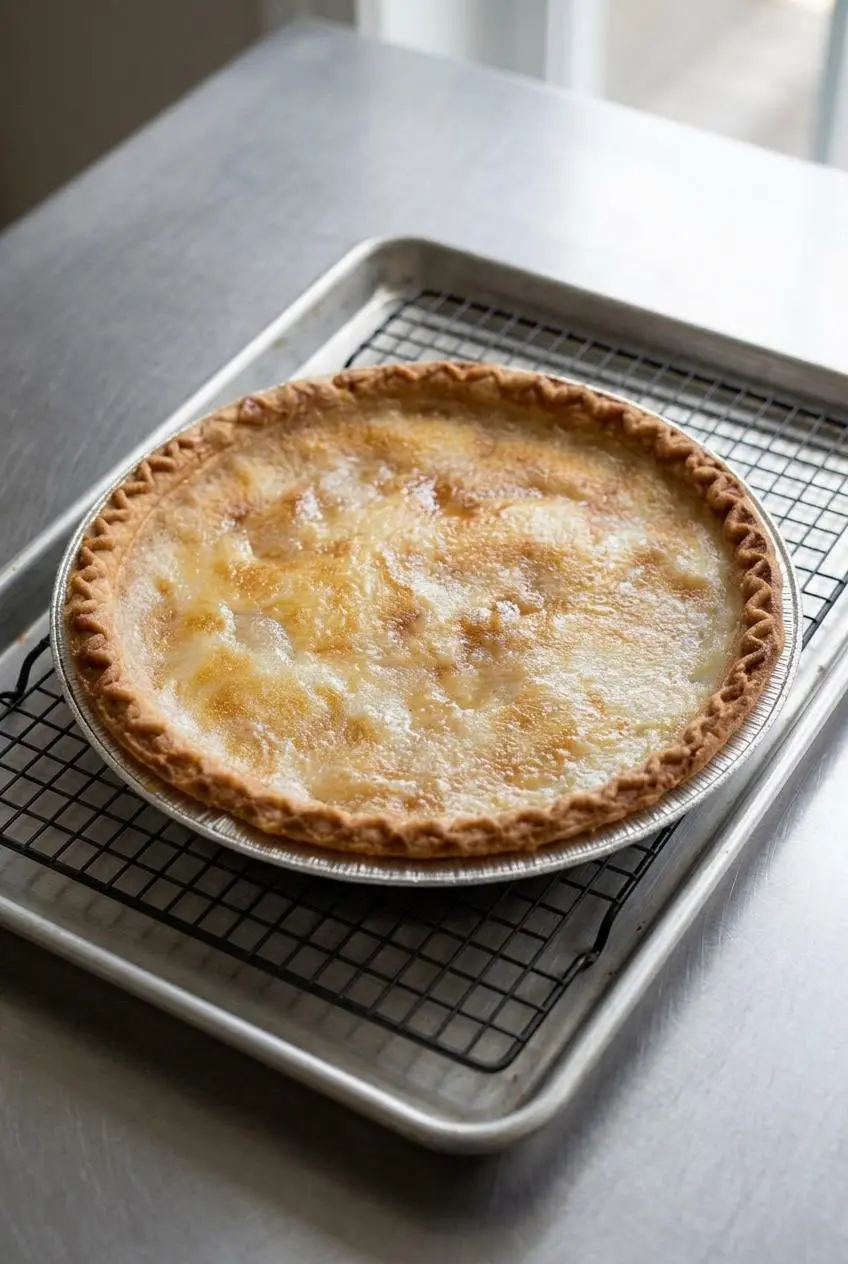
Keep the process calm and deliberate. The key is to layer the ingredients in the crust, then leave them alone while heat does the thickening work.
- Heat the oven to 400°F and place the empty unbaked pie crust on a rimmed baking sheet.
The sheet supports the soft crust and catches any filling that spills while transferring the pie. - Pour the 1 1/2 cups water directly into the pie crust.
The water should sit quietly in the crust without reaching over the rim. - Combine the flour and sugar in a small bowl, then scatter the mixture evenly across the water.
Leave the layers untouched so the flour can hydrate gradually and thicken without dense clumps. - Drizzle the vanilla extract over the surface and arrange the 5 pieces of butter on top.
The butter will float, melt, and form glossy pools across the filling. - Bake for 30 minutes at 400°F, then lower the oven temperature to 375°F and continue baking for 30 minutes.
Listen for gentle bubbling beneath the butter-slicked top, and shield the crust edge with foil if it browns too quickly. - Cool the pie completely, cover it, and refrigerate until thoroughly chilled before slicing.
It will look loose and very jiggly when hot, then become much more sliceable as it cools.
Place the baking sheet on a lower-middle oven rack when possible. That position helps the bottom crust receive steady heat while keeping the butter-topped surface from browning too aggressively.
Troubleshooting and Texture Success Secrets
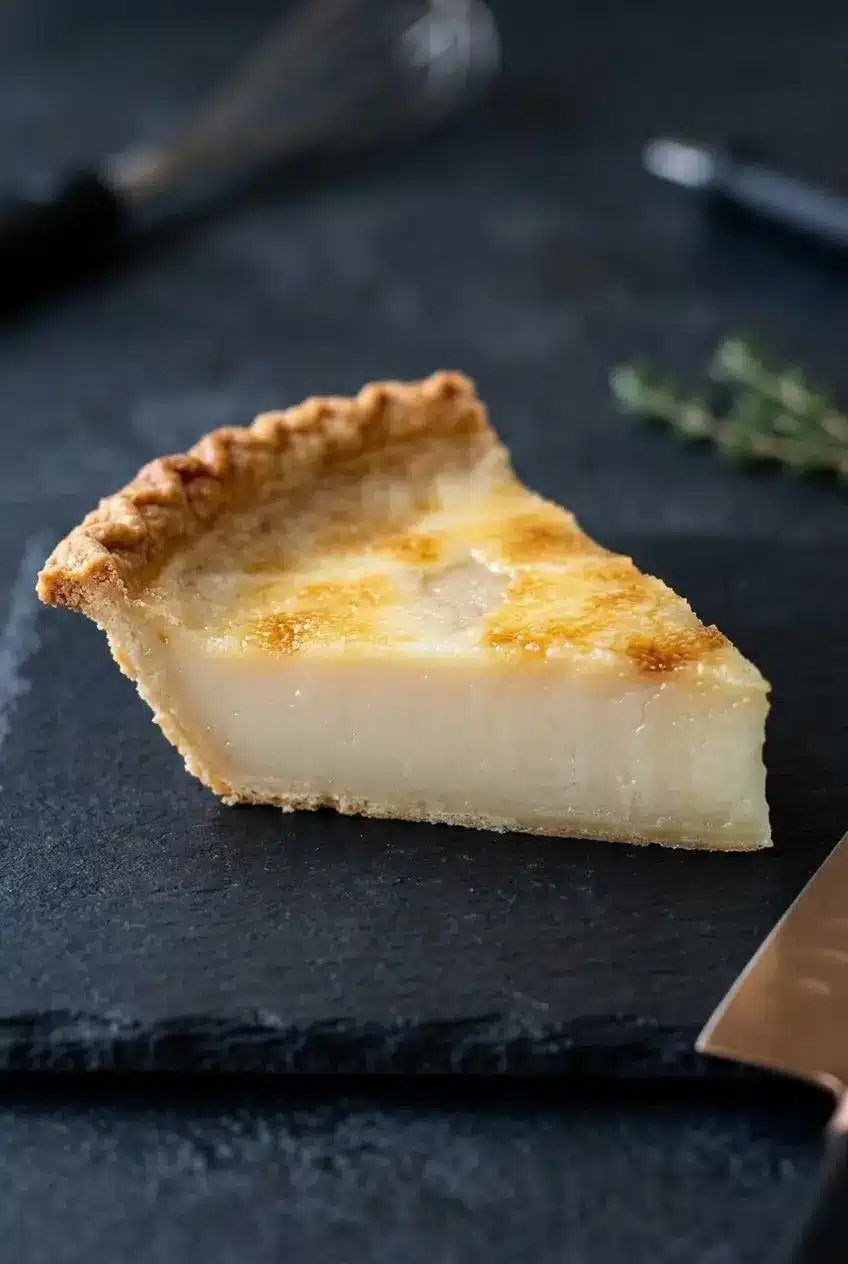
A water pie can look alarming before it is chilled, but its unusual appearance is usually part of the process. Use the texture cues below to tell the difference between a normal soft set and a problem worth correcting next time.
- The center looks liquid after baking: This is expected. The hot filling should jiggle and may bubble beneath a shiny, butter-puddled top. Let it cool fully before chilling, then wait until the custard feels firm enough to cut.
- The filling turned gummy or lumpy: Stirring is the usual culprit. Mix only the flour and sugar in the bowl, then sprinkle them over the water and leave the filling untouched.
- The crust edge is getting too dark: Cover the rim with foil during the second baking stage. The filling still needs the full bake, but the exposed crust may need protection.
- The bottom crust feels soft: Move the oven rack down one notch for the next pie and keep the crust on the rimmed baking sheet. The lower position encourages more direct heat beneath the pie plate.
- The slices tear through the top layer: Run a sharp knife under warm water, wipe it dry, and cut with one smooth downward motion. Warm the knife again between slices if the butter film starts dragging.
Cooling happens in two stages. First, leave the pie undisturbed until it reaches room temperature so the bubbling stops and the starches begin to settle. Then chill it thoroughly before cutting. Cutting while warm will cause the delicate filling to spread instead of holding a clean wedge.
Popular Water Pie Variations to Try
Keep the classic version as written for your first bake, then use these optional flavor ideas when you want a different character. Each variation changes the taste more than the pie’s basic creamy-soft texture.
The Viral Sprite Pie Variation
For a citrus-forward version, replace the plain water with chilled lemon-lime soda. The soda adds a brighter, sweeter flavor that leans toward lemon shortbread or a glazed citrus cookie. It is a fun change, but it is not necessary for the classic pie.
Vintage Spiced Water Pie With Nutmeg
A light dusting of nutmeg and cinnamon gives the filling an old-fashioned custard feel. Sprinkle the spices over the flour-sugar layer before baking, keeping the seasoning restrained so vanilla and butter remain the main flavors.
For another custard-inspired dessert with warm holiday spice, try this spiced eggnog pie.
- Brown sugar variation: Replace part of the white sugar with light brown sugar for a deeper caramel flavor and mild molasses notes.
- Maple-inspired sweetness: Use brown sugar as the main flavor direction, then keep vanilla in place for a warmer, bakery-style finish.
- Cinnamon finish: Add a very light cinnamon dusting over the butter before baking for gentle spice and a darker-looking top.
Storage, Serving, and Make-Ahead Tips
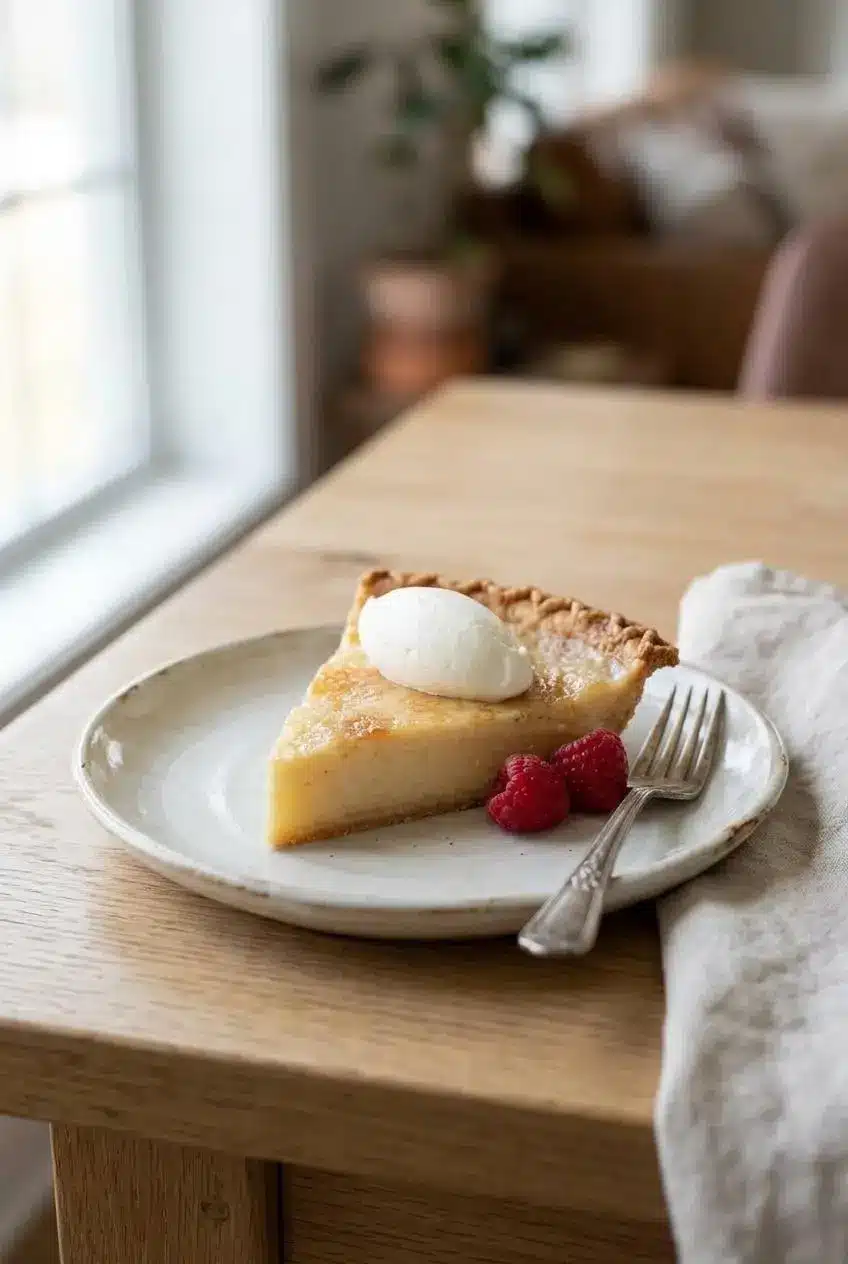
Keep leftover pie covered and chilled so the filling stays firm and the crust remains as fresh as possible. Because this dessert depends on a delicate starch set, its texture is best while cold rather than warmed.
Skipping freezing is wise for this pie. Ice crystals can disrupt the soft gel structure and leave the filling watery after it returns to room temperature. For the best texture, make the pie close to when you plan to serve it and keep it refrigerated once chilled.
Serve cold slices with any of these simple additions:
- Unsweetened whipped cream to soften the pie’s concentrated sweetness.
- Tart berries, such as raspberries or blackberries, for a fresh contrast.
- A small pinch of nutmeg over each slice for warm vintage flavor.
For neat portions, use the warmed-knife method and wipe the blade between cuts. The buttery top can cling to a cold knife, while a gently warmed blade glides through the chilled custard with much less tearing.
Conclusion
Water pie proves that a crust, flour, sugar, butter, vanilla, and water can become something unexpectedly comforting. Its flavor is sweet and buttery, while the texture lands somewhere between a soft custard and a delicate gel.
Give the pie enough time to cool and chill before slicing, and it will reward you with tidy wedges instead of a puddle. A dusting of nutmeg is a lovely optional finish for extra old-fashioned warmth.
Frequently Asked Questions
What Does a Traditional Water Pie Taste Like?
It tastes like sweet vanilla custard with a rich butter finish. The flavor can remind you of soft sugar cookie dough or a warm vanilla pastry. Its texture is silky and delicate rather than dense or creamy like a classic egg custard pie.
Why Do You Not Stir the Ingredients in a Water Pie?
Leaving the flour and sugar unstirred lets the water hydrate the starch gradually from underneath. The butter stays on top and melts into a golden layer instead of blending into the filling. Stirring can create dense lumps and a gummy texture rather than a smooth, tender gel.
Why Is My Water Pie Still Liquid When I Take It Out of the Oven?
A hot water pie naturally looks loose and jiggly when it first comes out of the oven. The filling continues to set as it cools, then firms further once thoroughly chilled. Wait until the pie is cold before slicing so the custard has time to hold its shape.
How Long Can You Store Leftover Water Pie?
Keep leftovers tightly covered in the refrigerator and serve them chilled. The filling is at its best while it remains firm and glossy, so avoid warming it in the microwave. Freezing is not a good choice because the thawed filling can separate and become watery.
Water Pie

Equipment
- 9-inch deep dish pie plate
- Baking Sheet
- Foil
Ingredients
- 1 9-inch deep-dish pie crust unbaked
- 1 1/2 cups water
- 4 tablespoons all-purpose flour
- 1 cup sugar
- 2 teaspoons vanilla extract
- 5 tablespoons butter cut into 5 pieces
Instructions
- Heat the oven to 400°F and place the empty unbaked pie crust on a rimmed baking sheet. The sheet supports the soft crust and catches any filling that spills while transferring the pie.
- Pour the 1 1/2 cups water directly into the pie crust. The water should sit quietly in the crust without reaching over the rim.
- Combine the flour and sugar in a small bowl, then scatter the mixture evenly across the water. Leave the layers untouched so the flour can hydrate gradually and thicken without dense clumps.
- Drizzle the vanilla extract over the surface and arrange the 5 pieces of butter on top. The butter will float, melt, and form glossy pools across the filling.
- Bake for 30 minutes at 400°F, then lower the oven temperature to 375°F and continue baking for 30 minutes. Listen for gentle bubbling beneath the butter-slicked top, and shield the crust edge with foil if it browns too quickly.
- Cool the pie completely, cover it, and refrigerate until thoroughly chilled before slicing. It will look loose and very jiggly when hot, then become much more sliceable as it cools.