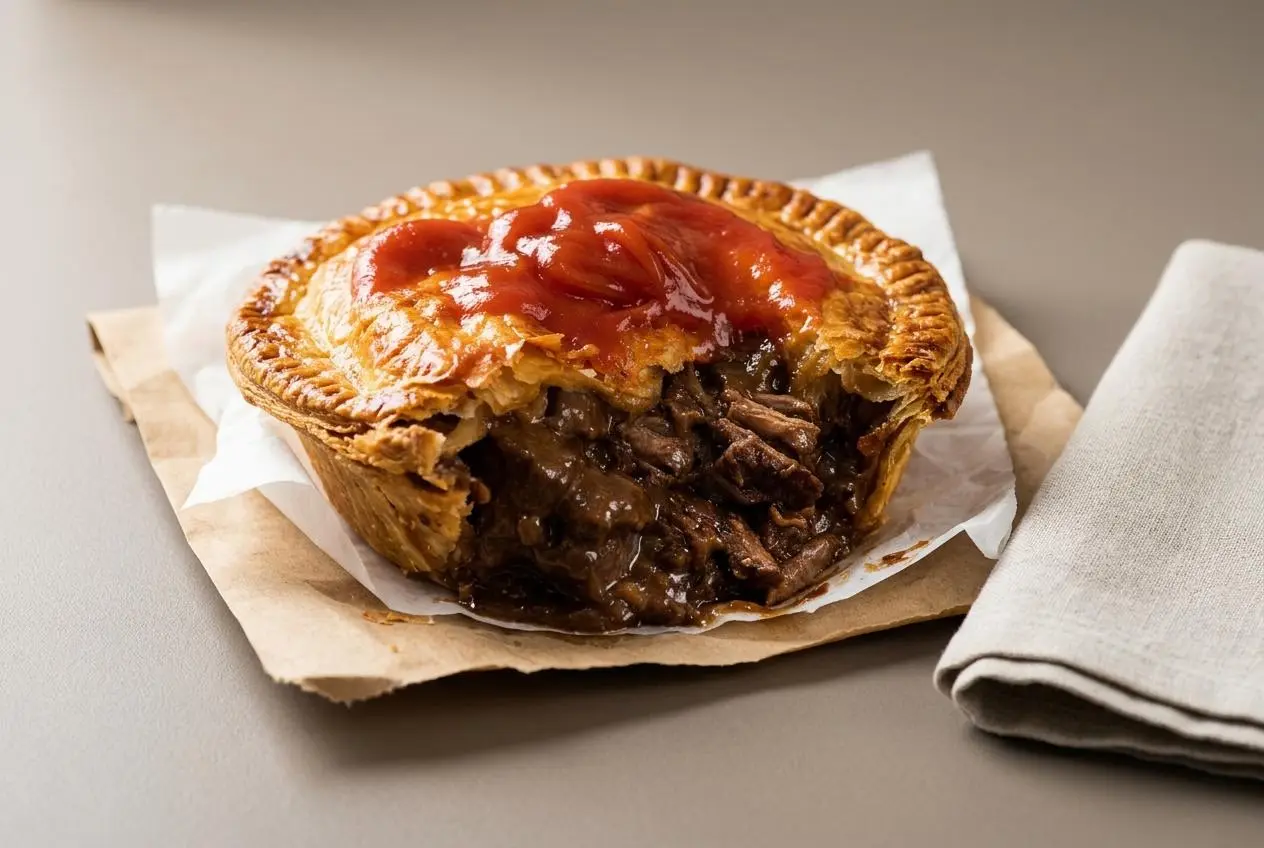
A bakery-style meat pie starts with tender braised beef in thick gravy, a blind-baked shortcrust shell, and a puff pastry lid baked until deeply golden.
This meat pie has chunky, slow-cooked beef and rich gravy beneath a crisp, buttery lid. The two-pastry approach gives each individual pie a sturdy base that can handle the filling.
As the beef simmers, the kitchen fills with the savory scent of wine, onion, and garlic. The real payoff is that shattering puff pastry top.
Set the puff pastry out only until pliable enough to cut, then keep it cool so its butter layers stay defined.
Essential Ingredients and Their Roles
Each ingredient builds a specific part of the finished pie: tender beef, glossy gravy, savory depth, a firm shell, or a flaky golden top.
Pie Base – Choose ONE
- 1 1/2 batches homemade shortcrust pastry
- 3 frozen shortcrust pastry sheets, thawed (300g/10oz)
- 2 refrigerated pie crusts (US/Can)
Pie Lid
- 3 frozen puff pastry sheets, just thawed (300g/10oz)
- 1 egg, lightly whisked
Filling
- 1.25 kg / 2.5lb beef chuck, 2.5cm/1″ cubes
- 1/2 tsp each salt & pepper
- 2 – 3 tbsp olive oil
- 1 onion, diced
- 4 garlic cloves, minced
- 5 tbsp flour, plain/all purpose
- 1 1/4 cups (315 ml) beef stock, low sodium
- 3 cups (750 ml) red wine, dry full bodied
- 2 tbsp tomato paste
- 1 tsp Worcestershire sauce
- 2 tsp black pepper, coarsely ground
- 2 bay leaves
Beef chuck has enough marbling to soften during a long simmer while adding body to the gravy. Flour thickens the cooking liquid, while tomato paste and Worcestershire sauce deepen its savory character. A dry, full-bodied red wine balances the beef’s richness rather than making the filling taste sweet.
The shortcrust pastry forms the firm, crisp foundation. Puff pastry belongs on top, where its butter layers can rise and separate into a light lid.
I look for chuck with visible fine streaks of fat throughout the meat, since those pieces become especially tender after the slow braise.
How to Make Meat Pie
The filling needs time to become fork-tender, then it must cool completely before it touches the pastry. That pause protects the crust and gives the gravy time to settle into a thick, spoonable texture.
Filling
- Season the beef chuck cubes with 1/2 tsp each salt and pepper.
Coat the pieces evenly so the seasoning stays with the meat through the braise. - Heat 1 tbsp oil in a large heavy-based pot over high heat, then brown one-third of the beef deeply on all sides and transfer it out.
Work in batches with more oil as needed, listening for a steady sizzle rather than a watery boil. - Lower the heat to medium-high and cook the onion and garlic for 3 minutes in the same pot.
The onion should soften and the garlic should smell fragrant without browning too quickly. - Stir the flour through the onion mixture until it coats the aromatics.
This flour layer will give the finished gravy a velvety thickness. - Pour in the beef stock slowly while stirring, then add the wine, tomato paste, Worcestershire sauce, coarsely ground pepper, and bay leaves.
Keep stirring until the flour dissolves and the liquid looks smooth rather than lumpy. - Return all browned beef and any collected juices to the pot, cover, and adjust the heat to maintain a gentle simmer.
Small, lazy bubbles keep the meat moist while it slowly softens. - Cook covered for 1 hr 45 minutes, then uncover, raise the heat slightly, and cook for 30 – 45 minutes, stirring regularly.
The beef is ready when a fork slides in easily and the gravy coats the back of a spoon while still coming just about up around the meat. - Remove the pot from the heat, cover the filling, and cool it completely before assembling the pies.
Chilled filling should be thick and mound easily in the pastry shell without flowing toward the rim.
Pastry
- Heat the oven to 180C/350F.
Allow the oven to come fully to temperature so the pastry begins setting as soon as it goes in. - Cut 6 rounds of shortcrust pastry and ease each round into a pie tin without pulling or stretching the dough.
Let the pastry relax into the corners, since stretched dough shrinks back during baking. - Place the pie tins on a baking tray, line each shell with a generous piece of parchment paper, and fill with pie weights.
The weights hold the sides upright and keep the bases flat. - Bake for 20 minutes, then lift out the parchment and pie weights using the paper overhang.
Handle the hot weights carefully and keep the shells in their tins. - Return the empty shells to the oven for 5 minutes.
The bases should feel dry and look light golden before they receive the filling.
Assemble Pies
- Spoon the cooled beef filling into the baked shells and press it down gently, leaving it slightly mounded.
Keep the filling below the rim so the lids can seal without gravy pushing out. - Cut puff pastry rounds slightly larger than the baked pastry bases while the puff pastry remains partially chilled.
Cool pastry cuts cleanly and keeps its laminated layers intact. - Brush the edge of each shortcrust shell with egg, place a puff pastry round over the filling, and press the edges together firmly.
A neat seal prevents the gravy from escaping as the pastry puffs. - Brush the tops with egg and cut a 1cm / 0.5″ slit in the center of each lid using a small knife.
The opening gives steam a path out while the tops turn glossy and golden. - Bake for 30 minutes.
The pies are ready when the puff pastry is high, deeply golden, and bubbling gently at the center vent. - Serve the pies hot and fresh with tomato sauce or ketchup if desired.
Let the bubbling settle briefly so the gravy stays inside the shell when cut.
The Dual-Pastry Method
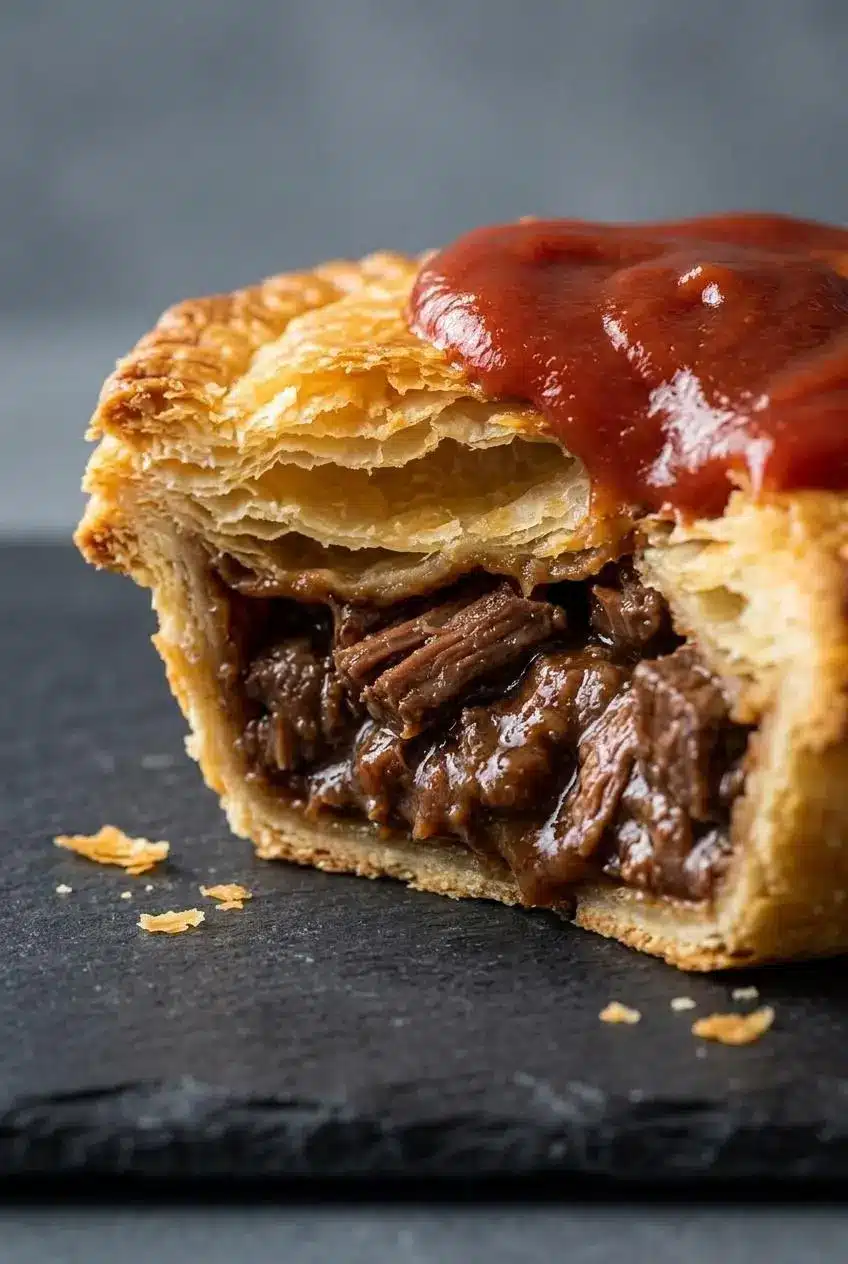
Using two pastries solves the main challenge of a gravy-filled pie: the bottom needs strength, while the top needs lift. Shortcrust stays firm enough to hold the filling by hand, and puff pastry expands into crisp, buttery layers.
Do not use puff pastry for the base shell. Its layers absorb the filling’s moisture from below, which can leave the bottom gummy and prone to leaking.
Shortcrust Base for Structural Strength
Shortcrust is compact and sturdy, making it the right choice for a filling with tender beef and thick gravy. Ease it loosely into the pie tins instead of stretching it across the rim. Dough that has been pulled tight tries to snap back in the oven, leaving you with shrunken sides and too little room for filling.
Puff Pastry Lid for Flaky Layers
Puff pastry rises because moisture turns to steam between its thin butter-and-dough layers. Keep it cool while cutting and fitting the lids, then let the hot oven do the lifting. The egg wash helps the top turn a deep mahogany gold and highlights the flaky ridges.
Blind Baking Without Shrinkage
Blind baking sets the shortcrust before the moist filling arrives. Parchment and pie weights support the sides for the first 20 minutes, then the extra 5 minutes without weights dries and colors the base. A properly baked shell feels firm when lightly pressed and gives the finished pie its crisp foundation.
Essential Tips for Crisp Pastry
Most pastry troubles come down to heat, moisture, or an overfilled shell. These fixes keep the base crisp and the gravy where it belongs.
Preventing Soggy Bottoms and Dough Shrinkage
- Soggy base: Warm filling melts pastry fat before the shell can stay crisp. Cool the braised beef completely, then fill only the dry, blind-baked shells.
- Shrunken sides: Dough that is stretched into the tins pulls back as it bakes. Drape it into place and press it gently into the corners.
- Soft underside: A pale shell has not dried enough to support gravy. Give it the full second bake until the base is light golden and firm.
- Runny filling: If the gravy still pools around the beef, continue reducing it before cooling. It should cling to the meat, not flood the shell.
Sealing Edges and Venting Steam
Brush egg wash around the cooked shortcrust rim before placing the puff lid on top. Press firmly around the edge, but do not crush the puff pastry layers. A secure seam helps the two pastries bond as they bake.
Cut the small center slit after brushing the lid with egg. This vent lets steam escape through the top instead of forcing gravy out through the edge. Avoid overfilling, since even a good seal cannot contain a pie packed above its rim.
Meat Pie Variations Across Cultures
The chunky beef version is deeply satisfying, but the same comfort-food idea takes different forms around the world. Treat these as optional directions rather than changes to the main method.
Everyday Ground Beef Mince Version
For a quicker weeknight-style pie, use lean ground beef in place of cubed chuck. Brown it thoroughly until no pink remains and let excess moisture cook off before building the gravy. Worcestershire sauce, or a small splash of dark soy sauce, adds the savory depth and dark color that slow-braised beef develops naturally.
French Canadian Tourtiere Style
Tourtiere usually combines ground beef and ground pork for a finer, more compact filling. Warm spices such as cinnamon, cloves, and allspice, along with sage, give it a holiday character. Mashed or grated potato can bind the savory juices and make slices hold together neatly.
Handheld Spiced Meat Pies
West African-style hand pies use seasoned minced beef with small diced potatoes, carrots, and curry powder inside a folded half-moon pastry. Crimp the edge with a fork and bake until crisp. Their portable shape makes them especially handy for lunchboxes or casual gatherings.
Brightening the Rich Gravy
If you want a little contrast against the beef and red wine, stir Dijon mustard and minced fresh thyme into the warm gravy before chilling it. The mustard’s gentle tang sharpens the filling without taking over, while thyme adds a fresh herbal edge.
Storage and Reheating Guidelines
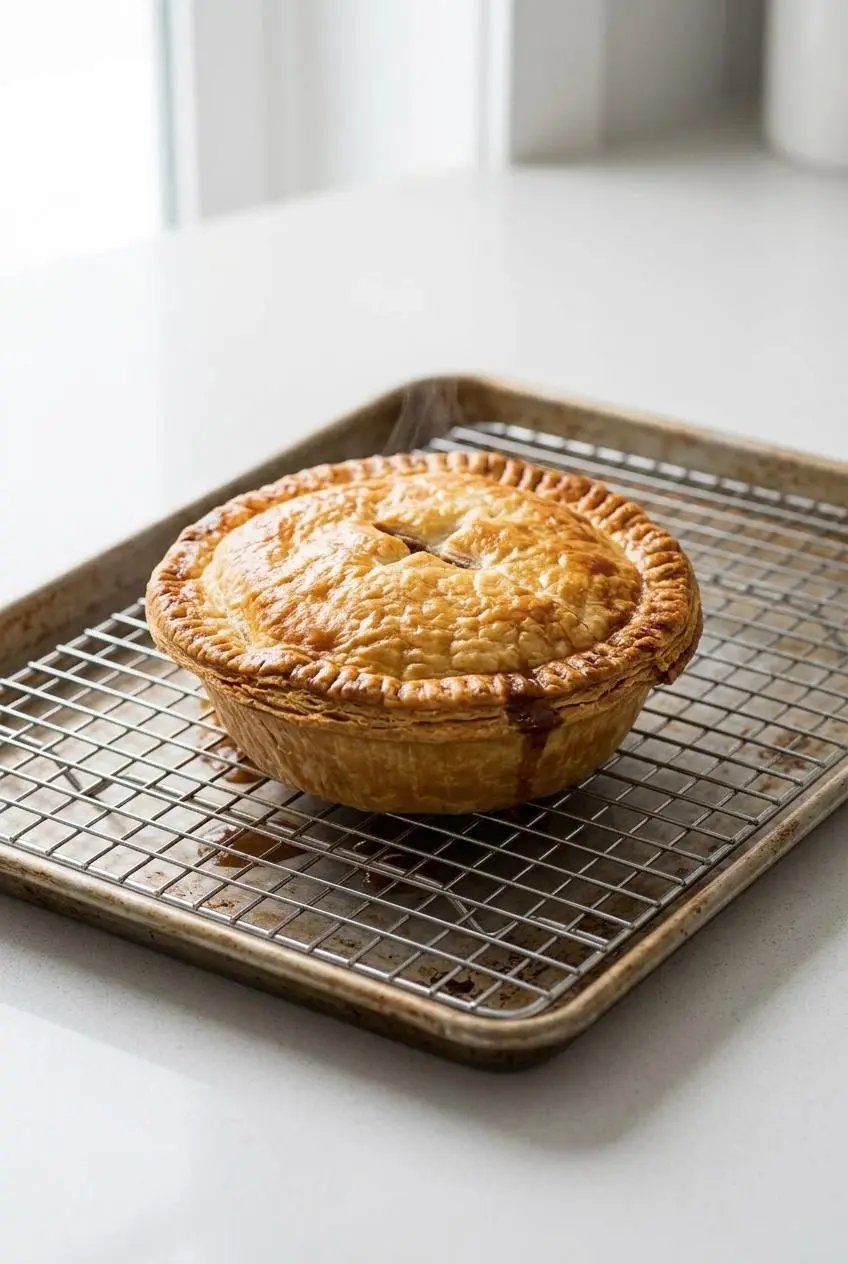
Cool the filling completely before covering it and placing it in the refrigerator. Keep baked pies covered and chilled, and avoid leaving them out longer than needed when serving.
Chilling and Planning Ahead
The beef filling can be cooked before pastry day, then covered and chilled until it is cold and thick. The method includes a long cooling period, and leaving the filling chilled overnight works especially well because the gravy sets around the beef and becomes easier to portion into each shell.
For best pastry texture, assemble the pies only when the filling is thoroughly cold. This keeps the raw pastry butter firm and makes it easier to press the lids securely around the edges.
Keeping Pies for Another Meal
Store cooled baked pies in a well-covered container in the refrigerator to protect the pastry from drying out and taking on refrigerator odors. Keep moisture away from the crust as much as possible, since condensation is the fastest route to a soft puff pastry lid.
If the filling and pastry need to wait separately, keep the filling covered and the pastry chilled. Assemble close to baking time for the crispest result.
Oven Crisping for the Flakiest Reheat
Reheat leftover pies in the oven rather than relying on the microwave alone. Oven heat restores the puff pastry’s crisp layers and helps the shortcrust firm back up while the filling warms through.
If the center is very cold, a brief microwave warm-up can take off the chill before oven reheating. Finish in the oven until the filling is hot throughout and the lid is crisp again.
Serving Suggestions for a Complete Meal
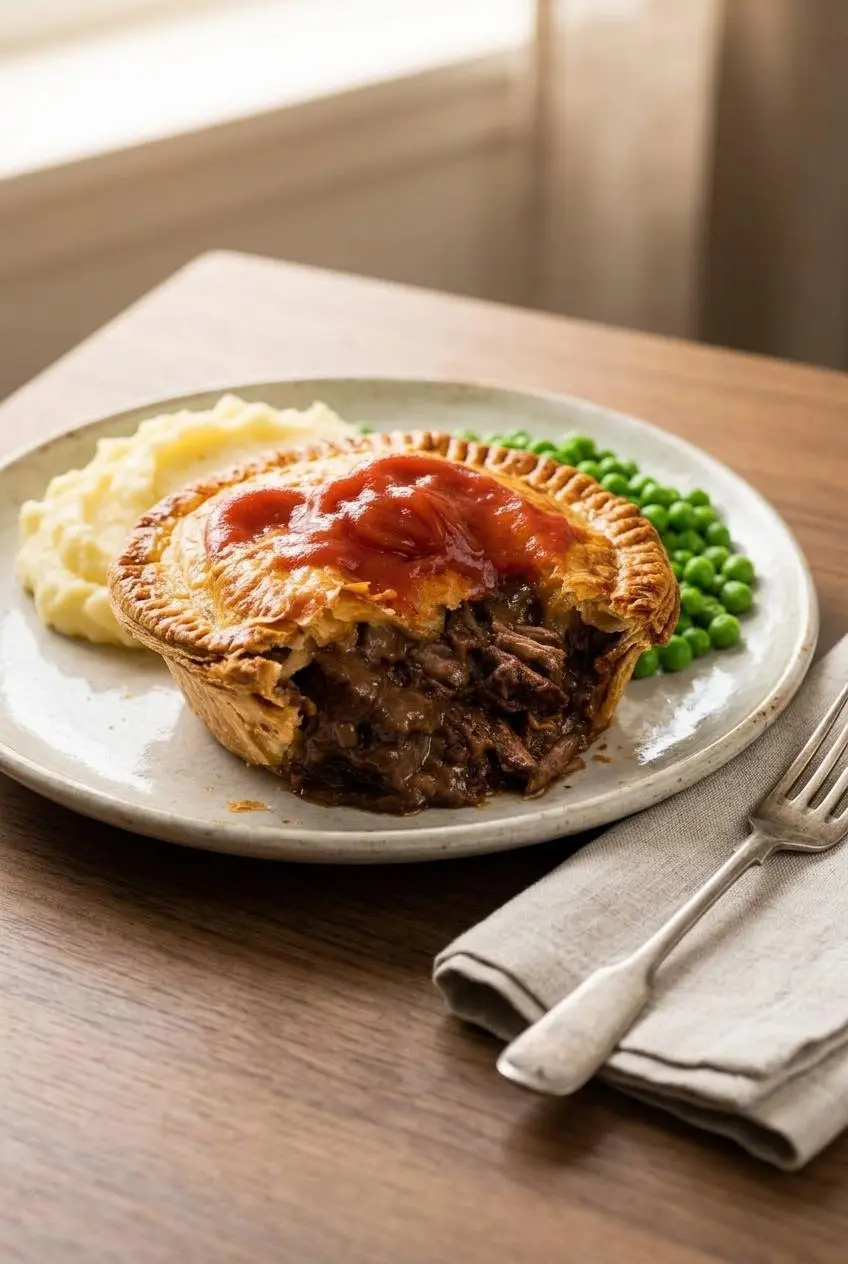
A hot pie needs little more than a spoonful of tomato sauce or seasoned ketchup over the lid. The tangy sweetness works beautifully with the dark, beefy gravy.
- Serve with buttery mashed potatoes for a cozy, fork-and-knife dinner.
- Add minted green peas for freshness against the rich pastry.
- Choose a crisp mixed green salad with a sharp vinaigrette when you want a lighter contrast.
Conclusion
A golden meat pie brings together tender braised chuck, glossy gravy, a crisp shortcrust base, and a puff pastry lid that breaks into flaky layers.
Blind bake the bottom shell and chill the filling completely before assembly, and the rest falls into place. Serve the pies while the pastry is still proudly crisp.
Frequently Asked Questions
Why Use Shortcrust for the Base and Puff Pastry on Top?
Shortcrust provides the firm structure needed to hold rich beef gravy without collapsing. Puff pastry is lighter and expands into crisp, flaky layers on top. Using puff pastry underneath the filling can leave the base soft and prone to leaks.
How Can I Keep the Bottom Crust Crisp and Sturdy?
Blind bake the shells with parchment and pie weights, then bake them again briefly without the weights until dry and light golden. Fill only with completely chilled beef gravy. A preheated baking sheet on a lower oven rack can also give the underside a stronger burst of heat.
Can I Make the Savory Meat Filling Ahead of Time?
Yes. Cooking the filling before pastry day gives it time to cool until thick and easy to handle. Chilled gravy makes it much easier to fill the shells neatly and seal the puff pastry lids without leaks.
What Is the Best Way to Reheat Leftover Meat Pies?
Use the oven to warm the filling and restore crispness to both pastries. Microwaving alone softens the butter layers and can make the crust rubbery. If needed, use a very brief microwave warm-up first, then finish the pies in the oven.
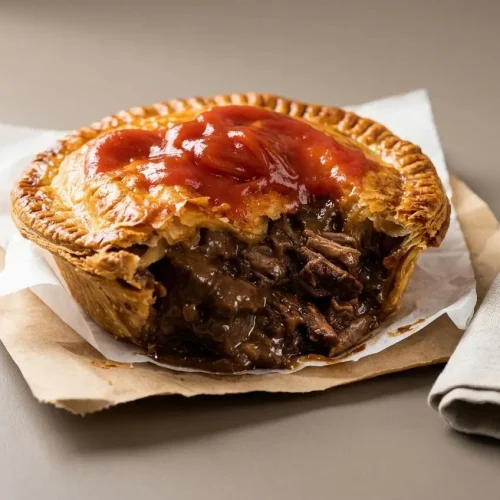
Meat Pie

Equipment
- Large heavy based pot
- Pie tins (10 cm / 4 inch)
- Pie Weights
- Parchment Paper
- Pastry brush
Ingredients
Pie Base – Choose ONE
- 1 1/2 batches homemade shortcrust pastry
- 3 sheets frozen shortcrust pastry thawed (300g/10oz)
- 2 refrigerated pie crusts US/Can
Pie Lid
- 3 sheets frozen puff pastry just thawed (300g/10oz)
- 1 egg lightly whisked
Filling
- 1.25 kg beef chuck 2.5lb, 2.5cm/1″ cubes
- 1/2 tsp each salt & pepper
- 2 – 3 tbsp olive oil
- 1 onion diced
- 4 cloves garlic minced
- 5 tbsp flour plain/all purpose
- 1 1/4 cups beef stock 315 ml, low sodium
- 3 cups red wine 750 ml, dry full bodied
- 2 tbsp tomato paste
- 1 tsp Worcestershire sauce
- 2 tsp black pepper coarsely ground
- 2 bay leaves
Instructions
Filling
- Season the beef chuck cubes with 1/2 tsp each salt and pepper. Coat the pieces evenly so the seasoning stays with the meat through the braise.
- Heat 1 tbsp oil in a large heavy-based pot over high heat, then brown one-third of the beef deeply on all sides and transfer it out. Work in batches with more oil as needed, listening for a steady sizzle rather than a watery boil.
- Lower the heat to medium-high and cook the onion and garlic for 3 minutes in the same pot. The onion should soften and the garlic should smell fragrant without browning too quickly.
- Stir the flour through the onion mixture until it coats the aromatics. This flour layer will give the finished gravy a velvety thickness.
- Pour in the beef stock slowly while stirring, then add the wine, tomato paste, Worcestershire sauce, coarsely ground pepper, and bay leaves. Keep stirring until the flour dissolves and the liquid looks smooth rather than lumpy.
- Return all browned beef and any collected juices to the pot, cover, and adjust the heat to maintain a gentle simmer. Small, lazy bubbles keep the meat moist while it slowly softens.
- Cook covered for 1 hr 45 minutes, then uncover, raise the heat slightly, and cook for 30 – 45 minutes, stirring regularly. The beef is ready when a fork slides in easily and the gravy coats the back of a spoon while still coming just about up around the meat.
- Remove the pot from the heat, cover the filling, and cool it completely before assembling the pies. Chilled filling should be thick and mound easily in the pastry shell without flowing toward the rim.
Pastry
- Heat the oven to 180C/350F. Allow the oven to come fully to temperature so the pastry begins setting as soon as it goes in.
- Cut 6 rounds of shortcrust pastry and ease each round into a pie tin without pulling or stretching the dough. Let the pastry relax into the corners, since stretched dough shrinks back during baking.
- Place the pie tins on a baking tray, line each shell with a generous piece of parchment paper, and fill with pie weights. The weights hold the sides upright and keep the bases flat.
- Bake for 20 minutes, then lift out the parchment and pie weights using the paper overhang. Handle the hot weights carefully and keep the shells in their tins.
- Return the empty shells to the oven for 5 minutes. The bases should feel dry and look light golden before they receive the filling.
Assemble Pies
- Spoon the cooled beef filling into the baked shells and press it down gently, leaving it slightly mounded. Keep the filling below the rim so the lids can seal without gravy pushing out.
- Cut puff pastry rounds slightly larger than the baked pastry bases while the puff pastry remains partially chilled. Cool pastry cuts cleanly and keeps its laminated layers intact.
- Brush the edge of each shortcrust shell with egg, place a puff pastry round over the filling, and press the edges together firmly. A neat seal prevents the gravy from escaping as the pastry puffs.
- Brush the tops with egg and cut a 1cm / 0.5″ slit in the center of each lid using a small knife. The opening gives steam a path out while the tops turn glossy and golden.
- Bake for 30 minutes. The pies are ready when the puff pastry is high, deeply golden, and bubbling gently at the center vent.
- Serve the pies hot and fresh with tomato sauce or ketchup if desired. Let the bubbling settle briefly so the gravy stays inside the shell when cut.