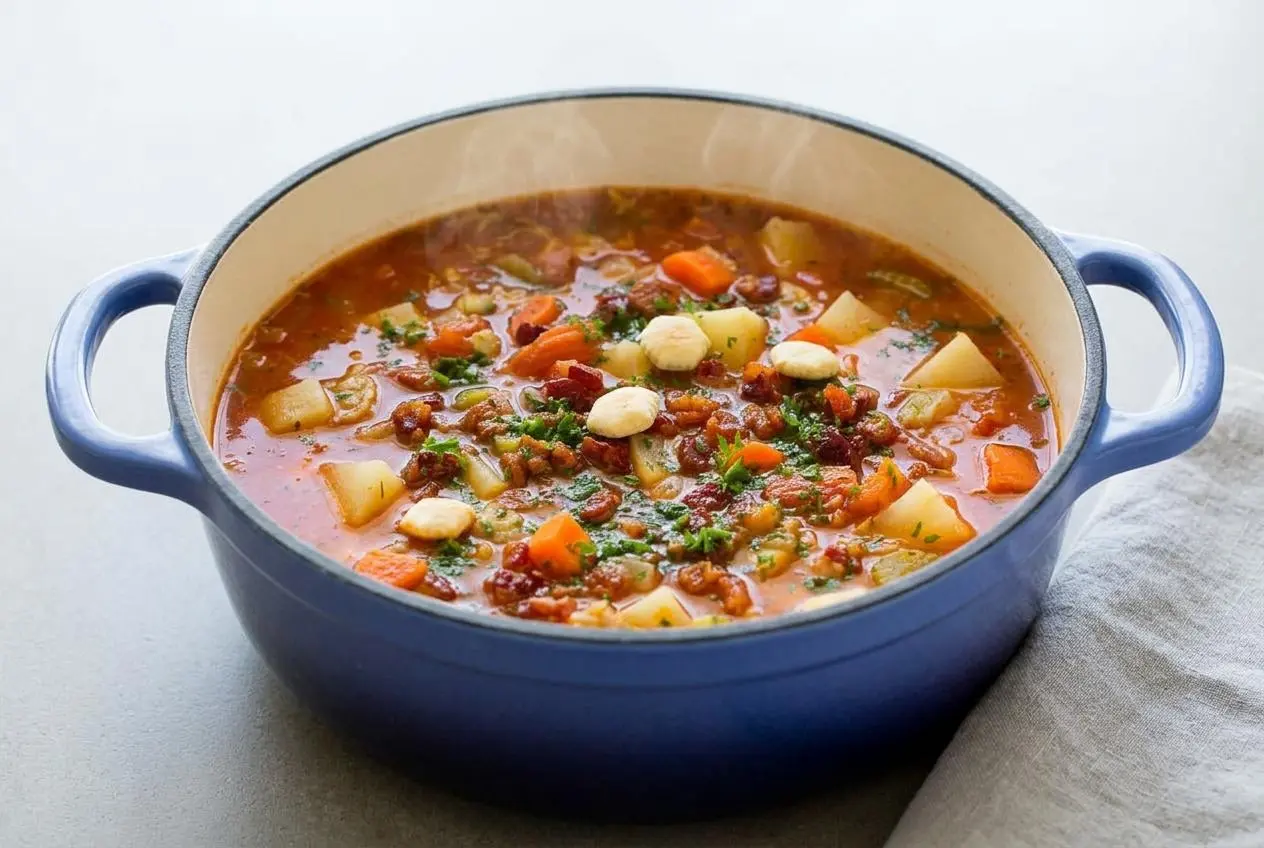
Manhattan clam chowder is a tomato-based seafood soup with tender clams, potatoes, carrots, celery, onion, and savory bacon in a briny, aromatic broth.
Manhattan clam chowder brings together smoky bacon, sweet vegetables, russet potatoes, and tomatoes for a red chowder with plenty of coastal character. The key is giving the potatoes time to soften before the tomatoes and clams go in.
Rendered bacon shifts the whole pot from ordinary to deeply savory. A gentle final simmer keeps the clams tender.
Dice the potatoes evenly so they soften at the same pace and give each bowl a balanced texture.
What Is Manhattan Clam Chowder?
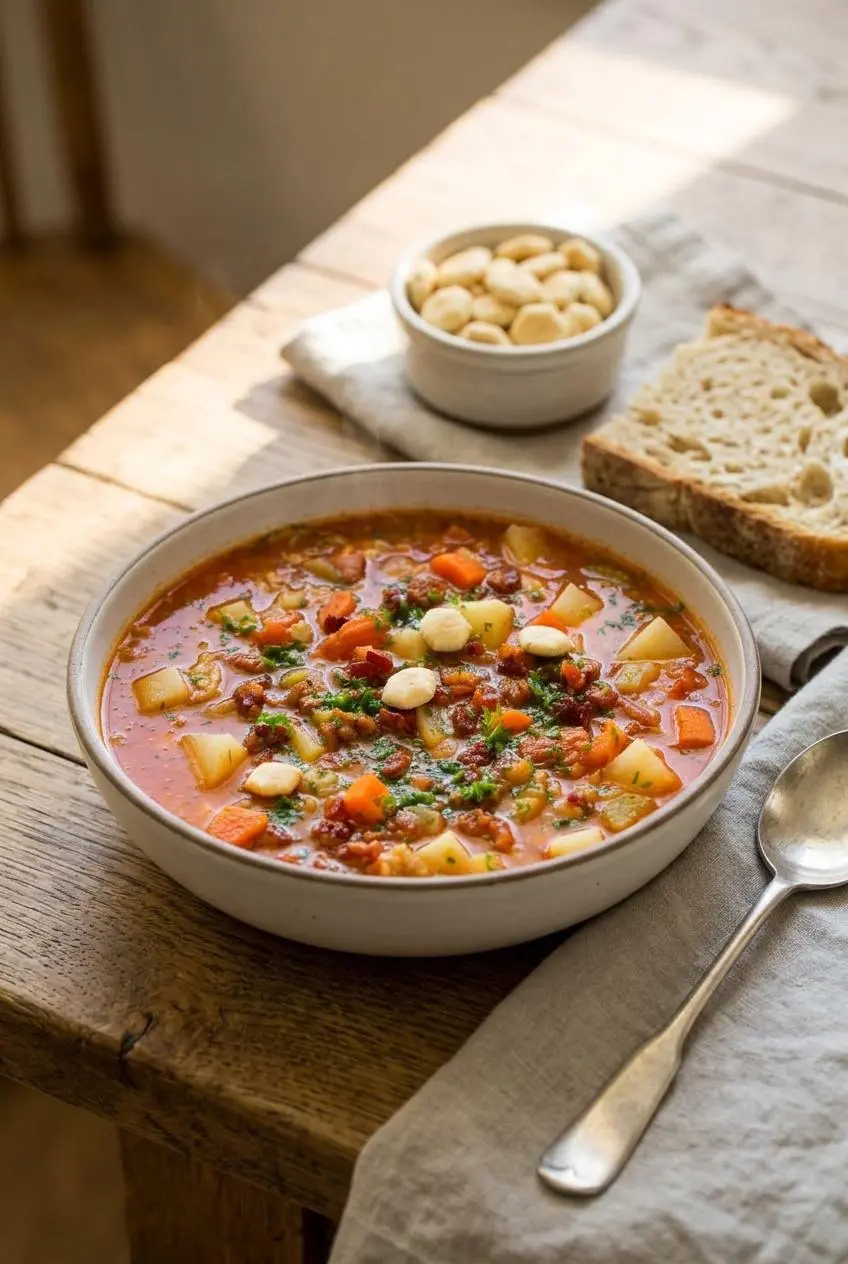
Manhattan chowder is the red, tomato-based branch of the clam chowder family. Its broth combines clam juice, chicken broth, tomato paste, and diced tomatoes, with bacon adding a smoky backbone and vegetables bringing sweetness and texture.
Unlike creamy New England chowder, this version has no milk or cream. That gives it a clearer broth and a brighter, more savory tomato flavor. The potatoes still lend body as they cook, but the finished soup stays brothy rather than thick and creamy.
Onion, carrots, and celery form a classic mirepoix that rounds out the clam flavor. Bell pepper is a common optional addition if you want a more vegetable-forward bowl, but it is not needed for the main recipe.
If you prefer a white, cream-based bowl, traditional clam chowder offers a very different texture and flavor direction. Manhattan style is lighter on the palate while still tasting substantial enough for dinner.
Essential Ingredients for Authentic Red Clam Chowder
Each ingredient earns its place: bacon builds richness, vegetables add sweetness, potatoes provide body, and tomatoes and clam juice create the chowder’s savory, briny balance.
- 6 slices bacon (chopped)
- 1/2 cup onion (diced)
- 2 carrots (peeled, quartered and sliced)
- 1/2 cup celery (sliced)
- 2 teaspoons minced garlic
- 1/4 cup tomato paste
- 1/2 teaspoon dried thyme
- 1 bay leaf
- 1 pound Russet potatoes (peeled and diced into 1/2 inch cubes)
- 2 8 ounce bottles clam juice
- 2 cups chicken broth
- 28 ounce can diced tomatoes (do not drain)
- 10 ounce can whole baby clams (drained)
- salt and pepper to taste
- 2 tablespoons chopped parsley
- oyster crackers and cooked bacon for serving (optional)
Bacon does more than provide a garnish. Its rendered fat cooks the vegetables and carries their flavor into the broth. Tomato paste adds concentrated sweetness and depth, while diced tomatoes bring acidity and the signature red color.
Russet potatoes are especially useful here because their edges soften slightly as they simmer, giving the broth a little natural body. They should be tender enough for a fork to slide in with only slight resistance before tomatoes are added.
I prefer to taste the clam juice before salting the pot because brands vary noticeably in brininess.
Fresh Clams vs Canned Clams: Selection and Prep
Canned baby clams make this chowder practical for a weeknight and fit the method perfectly. Drain the clams, use the bottled clam juice for the broth, and add the clams near the end so they stay plump rather than chewy.
Fresh littlenecks or cherrystones create a more pronounced ocean flavor, but they need extra preparation. Scrub the shells well under running water, discard any cracked clams, then steam the clams until they open. Set aside any that stay shut rather than adding them to the chowder.
Remove the meat from opened shells and chop it if needed. Pour the steaming liquid through a fine-mesh sieve before using it in the broth, since even clean-looking clams can leave behind sand. Keep fresh shellfish chilled until cooking; fresh seafood storage at 40 °F for no more than 1 to 2 days before cooking helps limit handling risks.
The Role of Rendered Bacon and Mirepoix
Start the bacon over medium heat and let the fat release gradually. Fast, high heat can scorch the drippings before they have a chance to flavor the vegetables.
Once the bacon is crisp, the onion, carrots, and celery cook in those drippings until tender. This is where the pot starts smelling rounded and savory rather than sharply tomato-forward. Garlic follows briefly so it perfumes the mixture without browning too much.
How to Make Manhattan Clam Chowder Step by Step
This stovetop method takes about 1 hour and 5 minutes from start to finish. Build flavor in layers, keep the potato simmer steady, and save the clams for the final stage.
- Warm a large pot over medium heat, then cook the chopped bacon until it turns crisp, stirring from time to time.
The bacon should be browned and the pot should hold a layer of fragrant rendered fat. - Lift the crisp bacon onto paper towels and leave the drippings in the pot.
Keeping the bacon aside protects its crunch until the chowder is nearly finished. - Add the onion, carrots, and celery, season with salt and pepper, and cook for 6 to 8 minutes.
Stir occasionally until the vegetables look softened and the onion loses its raw edge. - Stir in the garlic and cook for 30 seconds.
The garlic should smell aromatic without turning dark or sticking to the pot. - Add the tomato paste, thyme, bay leaf, clam juice, chicken broth, and potatoes, then stir and bring the liquid to a simmer.
The tomato paste will dissolve into the broth and give it a richer brick-red color. - Maintain a steady simmer for 10 to 15 minutes until the potatoes are tender.
A fork should slide through a potato cube easily, while the cube still holds its shape. - Fold in the undrained diced tomatoes and drained baby clams, then adjust the salt and pepper.
Keep the heat gentle so small bubbles rise without the chowder boiling hard. - Simmer for 5 minutes, then stir in the reserved bacon and finish with parsley.
The clams should be warmed through and tender, with the bacon still providing a little chew.
Let the chowder sit off the heat for a few minutes before ladling it into bowls. The broth settles, the flavors round out, and the potatoes absorb a little more of the tomato-clam richness.
For a slow cooker version, use a separately developed slow cooker formula rather than transferring the stovetop timing directly. The key principle stays the same: add clams only near the end, after the potatoes have softened.
Building the Savory Tomato Broth
Tomato paste is the flavor bridge between smoky bacon and bright diced tomatoes. When it hits the warm pot with the vegetables, stir it well so it coats them before the clam juice and broth loosen everything.
Thyme and bay leaf season the broth quietly in the background. The clam juice provides salinity and a coastal flavor, while chicken broth keeps the tomato base from tasting too sharp or one-dimensional.
Do not rush the potato stage. Acidic tomatoes can slow down potato softening, so the potatoes need their simmer in the broth before the diced tomatoes enter the pot.
Simmering Potatoes and Finishing With Clams
Check several potato cubes, especially the larger ones, before adding the tomatoes. A spoon can cut through a properly cooked cube easily, but it should not collapse into mush.
Whole baby clams are already tender, so they need only the final 5-minute simmer. Keep the chowder below a hard boil after they go in. Aggressive bubbling is the quickest route to clams with a rubbery bite.
Tips for Perfect Chowder Texture and Flavor Balance
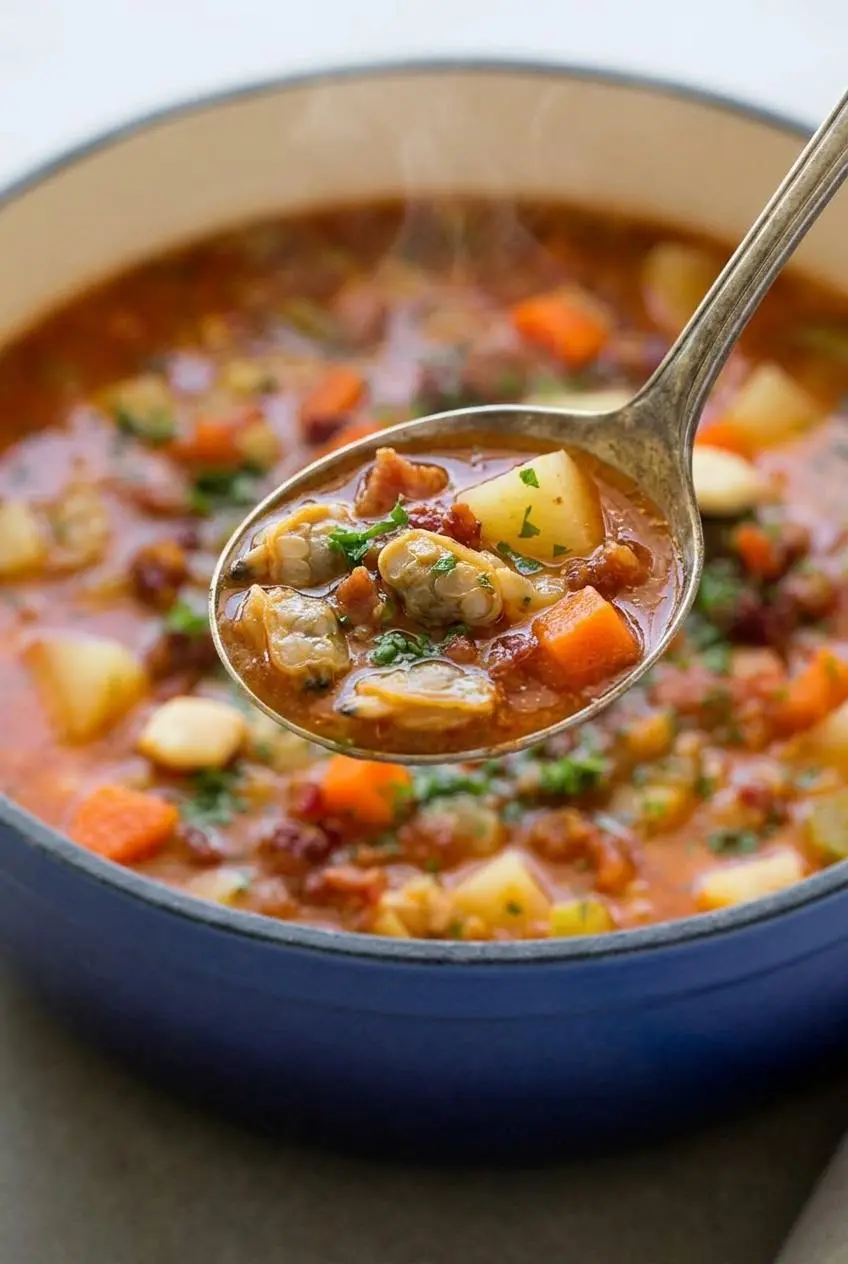
The best red chowder tastes savory, tomato-rich, and lightly briny without being overly salty or acidic. Taste near the end, after the tomatoes and clams have warmed through, because both influence the final seasoning.
- Chowder tastes too salty: Clam juice and bacon both contribute salt. Hold back on seasoning early, then add salt only after tasting the finished broth.
- Tomato flavor seems sharp: Let the tomato paste cook briefly with the warm vegetables before adding liquids. That caramelized edge brings out a gentler sweetness without changing the ingredient list.
- Potatoes are still firm: Keep simmering them in the broth before adding the diced tomatoes. Tomatoes are best added once the potatoes are fork-tender.
- Broth seems thin: Let the chowder rest briefly off heat. The potatoes will release a little starch naturally, giving the liquid more body without a heavy roux.
- Clams feel tough: Keep the final simmer quiet and brief. Clams need warming, not prolonged boiling.
For extra umami, optionally add a splash of Worcestershire sauce and a pinch of smoked paprika with the tomato paste. Both deepen the bacon-tomato base, but add them lightly so the clams remain the main flavor.
- For spicy chowder, add crushed red pepper flakes with the garlic for a steady background heat.
- For a sweeter pepper flavor, stir diced green bell pepper in with the onion, carrots, and celery.
- For a smoky, chile-forward soup on another night, try corn chowder with chilies.
Serve this chowder with oyster crackers for salty crunch or warm crusty sourdough for dipping. A cool, crunchy side such as a crisp Greek salad also works nicely with the warm tomato broth.
Storing and Reheating Tips
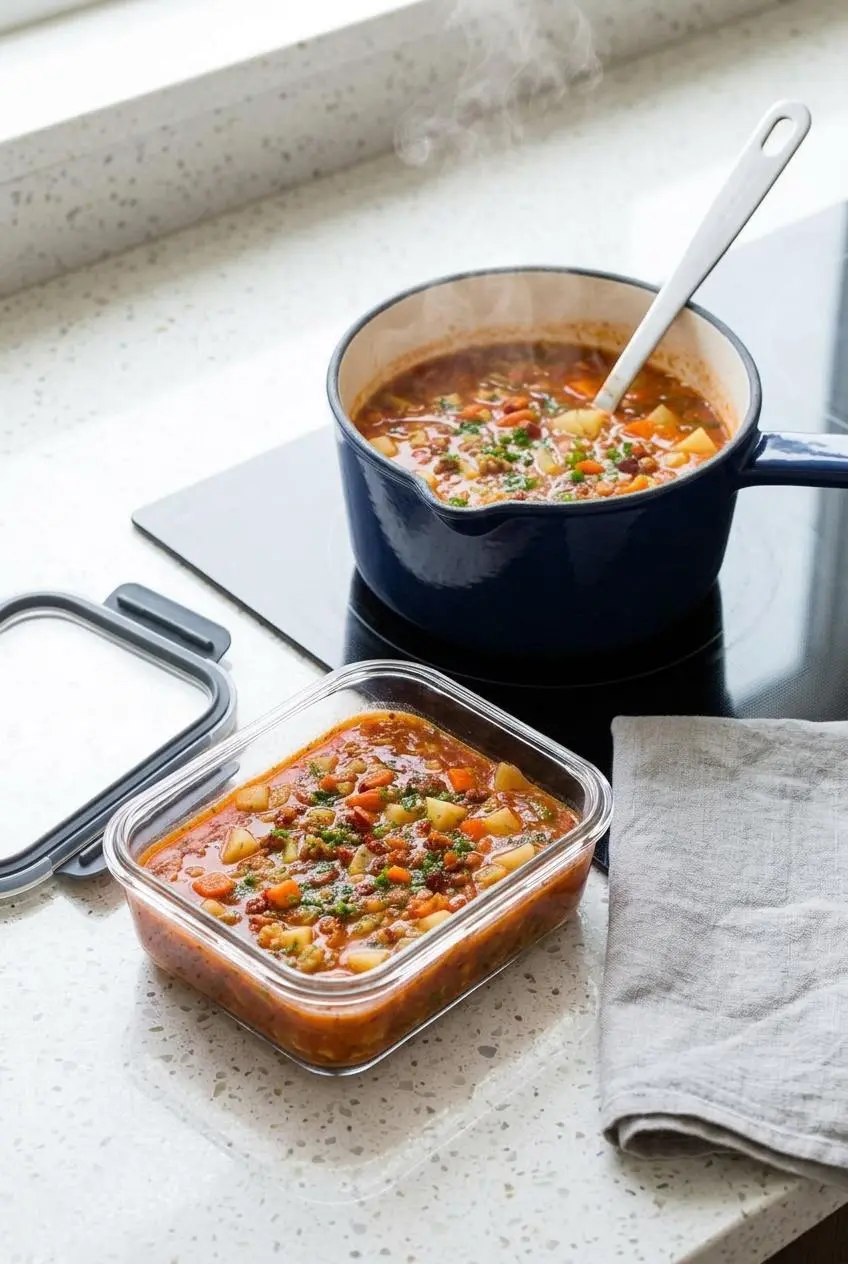
Cool leftover chowder promptly, transfer it to airtight containers, and keep it chilled. Store the oyster crackers separately so they remain crisp, and reserve any extra bacon for topping bowls just before serving.
Reheat only the portion you plan to eat in a pot over low heat, stirring occasionally until hot. Avoid a rapid boil, which can make the potatoes break apart and the clams turn firm. For leftover seafood dishes, reheating leftovers to 165 °F is a useful food-handling benchmark.
Freezing guidance was not included for this particular chowder, so it is better to prioritize chilled storage and gentle reheating for the best potato and clam texture.
Conclusion
This Manhattan clam chowder delivers a lively tomato broth, smoky bacon, tender potatoes, and briny clams without the heaviness of a cream base. The careful order of cooking keeps every element clear and balanced.
Ladle it hot into bowls, add parsley, bacon, and oyster crackers if desired, and bring crusty sourdough to the table for every last spoonful.
Frequently Asked Questions
What Is the Difference Between Manhattan and New England Clam Chowder?
Manhattan clam chowder has a seasoned tomato and vegetable broth with clams, potatoes, and bacon. New England clam chowder uses milk or cream, creating a pale, thick, rich soup. Manhattan style is brothy and bright, while New England style is creamy and mellow.
Can I Make Manhattan Clam Chowder With Canned Clams?
Yes. Canned whole baby clams work very well in this chowder. Use the clam juice in the broth, drain the clams, and stir them in with the diced tomatoes for the final 5 minutes of cooking.
How Do You Keep Clams From Getting Rubbery in Chowder?
Add the clams at the end and keep the chowder at a gentle simmer. They only need the final 5 minutes to warm through. Avoid vigorous boiling after the clams are added.
Can You Freeze Manhattan Clam Chowder?
Freezing directions were not included for this version, so chilled storage and gentle stovetop reheating are the better options for preserving the clams and potatoes. If you need a freezer meal, choose a chowder developed and tested specifically for freezing.
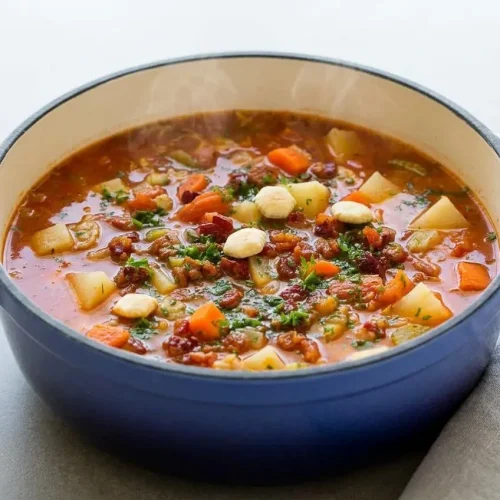
Manhattan Clam Chowder

Equipment
- Large Pot
- Paper towels
Ingredients
- 6 slices bacon chopped
- 1/2 cup onion diced
- 2 carrots peeled, quartered and sliced
- 1/2 cup celery sliced
- 2 teaspoons minced garlic
- 1/4 cup tomato paste
- 1/2 teaspoon dried thyme
- 1 bay leaf
- 1 pound Russet potatoes peeled and diced into 1/2 inch cubes
- 2 8 ounce bottles clam juice
- 2 cups chicken broth
- 28 ounce can diced tomatoes do not drain
- 10 ounce can whole baby clams drained
- salt and pepper to taste
- 2 tablespoons chopped parsley
- oyster crackers and cooked bacon for serving optional
Instructions
- Warm a large pot over medium heat, then cook the chopped bacon until it turns crisp, stirring from time to time. The bacon should be browned and the pot should hold a layer of fragrant rendered fat.
- Lift the crisp bacon onto paper towels and leave the drippings in the pot. Keeping the bacon aside protects its crunch until the chowder is nearly finished.
- Add the onion, carrots, and celery, season with salt and pepper, and cook for 6 to 8 minutes. Stir occasionally until the vegetables look softened and the onion loses its raw edge.
- Stir in the garlic and cook for 30 seconds. The garlic should smell aromatic without turning dark or sticking to the pot.
- Add the tomato paste, thyme, bay leaf, clam juice, chicken broth, and potatoes, then stir and bring the liquid to a simmer. The tomato paste will dissolve into the broth and give it a richer brick-red color.
- Maintain a steady simmer for 10 to 15 minutes until the potatoes are tender. A fork should slide through a potato cube easily, while the cube still holds its shape.
- Fold in the undrained diced tomatoes and drained baby clams, then adjust the salt and pepper. Keep the heat gentle so small bubbles rise without the chowder boiling hard.
- Simmer for 5 minutes, then stir in the reserved bacon and finish with parsley. The clams should be warmed through and tender, with the bacon still providing a little chew.