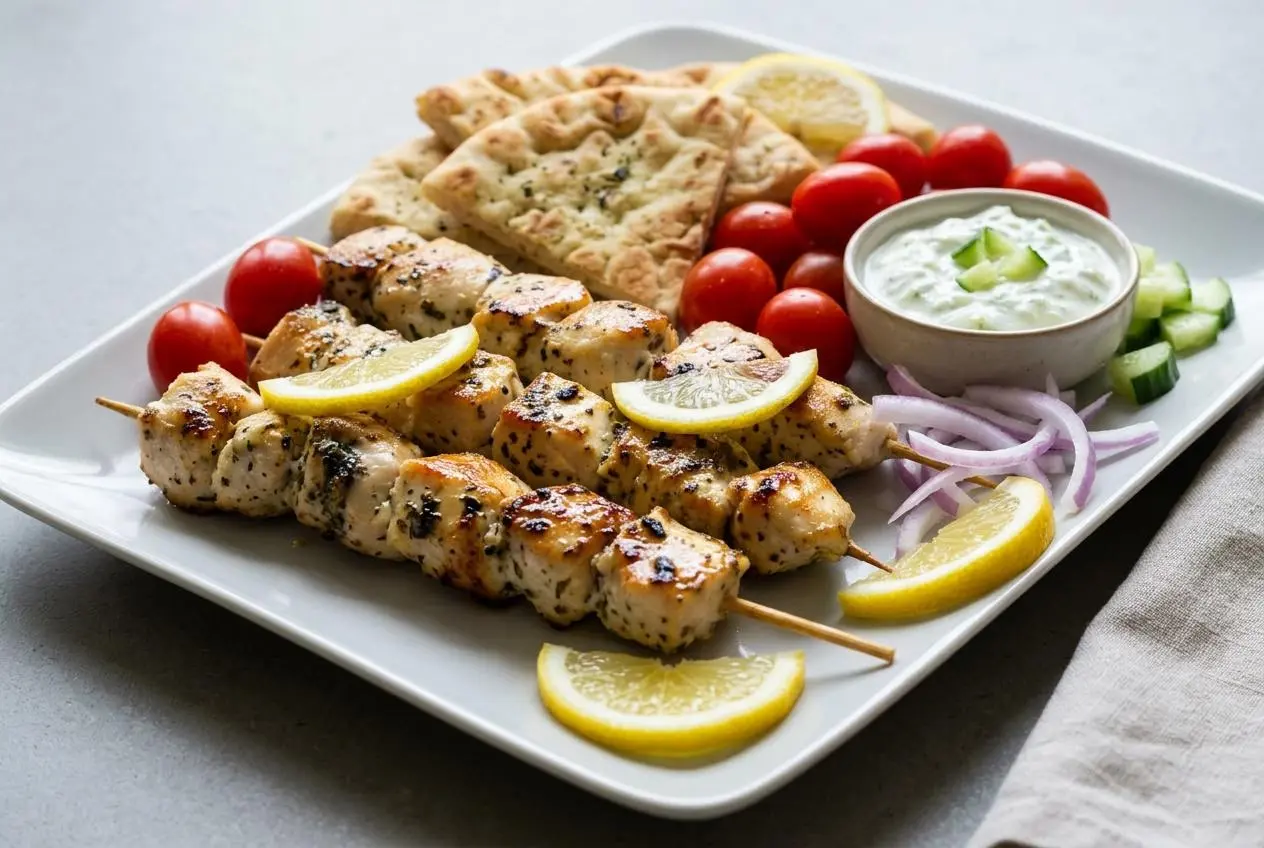
Chicken souvlaki is a Greek dish of bite-sized marinated chicken threaded onto skewers, cooked over high heat until browned and tender, and served with cold tzatziki, warm pita, tomatoes, and onion.
Chicken souvlaki gets its taverna-style flavor from lemon, garlic, olive oil, and oregano meeting a very hot cooking surface. The chicken cooks quickly, so the goal is a bronzed exterior while the center stays juicy.
That first sizzle tells you the heat is right. Cool, thick tzatziki is the finishing contrast.
Soak wooden skewers completely in water before threading the chicken, and leave a little space between pieces so heat can reach every side.
What Is Chicken Souvlaki and How It Differs from Gyros
Souvlaki means small pieces of marinated meat cooked on skewers over direct heat. For chicken, that means individual cubes that pick up browned edges, smoky flavor, and a lightly charred surface while remaining tender inside.
Gyros uses seasoned meat layered on a tall vertical rotisserie, where the outside cooks slowly and is shaved into thin slices. Souvlaki is chunkier, grilled faster, and stays on its skewer until serving. If you prefer the sliced rotisserie-style version, try homemade chicken gyros.
Both are popular Greek street foods. They are often tucked into warm pita with tzatziki, tomatoes, and red onion, sometimes with fries tucked inside the wrap for a hearty, messy-in-the-best-way meal.
Ingredients for Authentic Chicken Souvlaki
Each ingredient supports the final balance: olive oil carries the herbs, lemon brightens the chicken, oregano adds earthiness, and strained yogurt gives tzatziki its creamy body and cooling tang.
For the chicken souvlaki
- 4 boneless chicken breasts (approx. 1 kg/ 35 ounces )
- 4 tbsps olive oil
- juice of 1 lemon
- 1 clove of garlic, minced
- 2 tbsp dried oregano
- salt and freshly ground pepper
For the tzatziki sauce
- 1 cucumber
- 2 cloves of garlic, minced
- 1/4 of a cup extra virgin olive oil
- 500g of strained yogurt ( 18 ounces )
- 1 – 2 tbsps of red wine vinegar
- a pinch of salt
To serve
- 8 pita breads
- olive oil
- 1 – 2 tsps dried oregano
- 1 tomato sliced
- 1 red onion sliced
- fried potatoes (optional)
- romaine (cos) lettuce (optional)
- salt and freshly ground pepper
- 8 – 9 wooden skewers
Extra virgin olive oil helps oregano and garlic coat the chicken evenly and cushions lean breast meat against intense heat. Lemon brings fresh acidity, while garlic and oregano make the marinade unmistakably Greek. In tzatziki, strained yogurt and garlic create a thick, tangy foundation.
I grate the cucumber before mixing anything else, then squeeze it firmly in a clean kitchen towel until it feels noticeably drier.
Chicken Breast vs Chicken Thighs
Chicken breast is the classic choice here. Cut it evenly and cook it over high heat, and it stays lean with a clean, firm bite. It benefits from close attention because it can dry out if left over the heat after it is done.
Boneless, skinless chicken thighs are an optional swap for cooks who want a richer flavor and more forgiveness on the grill. Their extra fat keeps them succulent through a little extra cooking time, though they will have a softer, darker-meat texture than breast meat. Keep the marinade and serving ingredients the same.
The Traditional Greek Herb and Oil Base
Olive oil is more than a coating here. It carries the aroma of oregano and garlic across the chicken, while lemon gives the mixture a bright edge. As you mix, the oil and lemon become slightly cloudy and the sharp garlic scent softens into the herb mixture.
Greek dried oregano has a sturdy, savory character that holds up to grilling better than delicate fresh herbs. For an optional flavor variation, add fresh lemon zest for more citrus fragrance or a pinch of sweet paprika for a deeper golden color. Neither is needed for the classic result.
The Ultimate Greek Marinade and Flavor Secrets
The best souvlaki marinade stays focused: olive oil for richness, lemon for lift, garlic for bite, and oregano for its warm herbal backbone. Salt and pepper round out the flavors without covering the chicken.
Marinate the chicken in the refrigerator for 30 minutes to 2 hours. That window gives the seasonings time to reach the surface without changing the chicken’s texture too aggressively. Leaving lemon-marinated chicken much longer can make the outside feel soft or mealy rather than springy and tender.
Mix the chicken thoroughly so every piece is coated, but do not crush or mash the cubes. Even-sized pieces matter as much as the marinade because they cook at the same pace and are easier to turn without losing juices.
How to Make Chicken Souvlaki
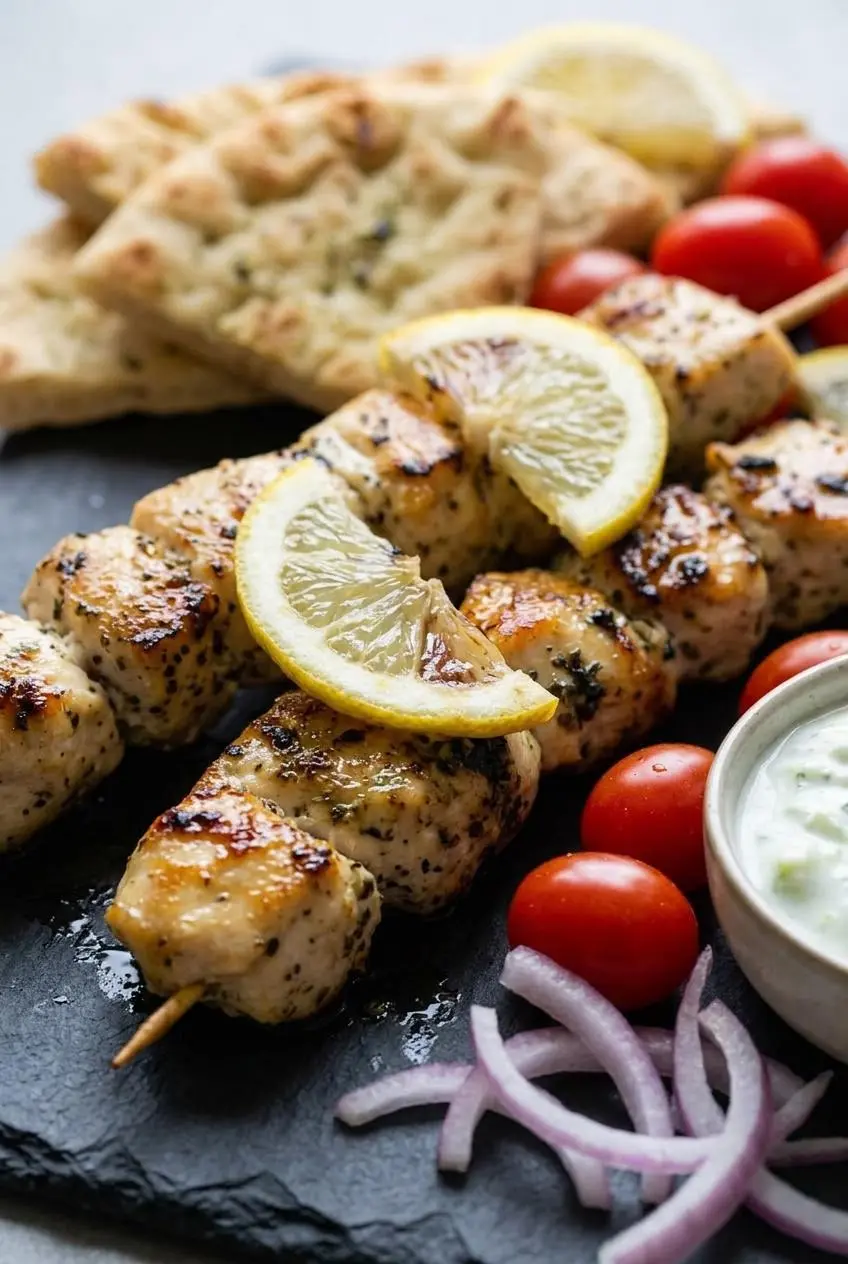
High heat creates the browned, smoky character that makes these skewers shine. Use an instant-read thermometer near the end of cooking: poultry reaches its minimum internal temperature at 165°F.
- Cut the chicken breasts into 2–3 cm pieces and combine them in a large bowl with the olive oil, lemon juice, garlic, oregano, salt, and pepper; cover and refrigerate for 30–60 minutes.
The chicken should look evenly coated and glossy, with oregano clinging to each piece. - Blend the tzatziki olive oil with the minced garlic, then grate the peeled and seeded cucumber into a bowl; season it and let it sit for 10 minutes before squeezing it dry in a towel.
Stir the cucumber with the garlic oil, strained yogurt, red wine vinegar, and salt until thick, then refrigerate the sauce until serving. - Trim the wooden skewers to fit the cooking surface if needed, soak them in water, and thread on the chicken without packing the pieces tightly.
Leave small gaps between the cubes so the surfaces can brown instead of steaming. - Heat a grill or griddle pan over high heat and cook the skewers for about 8–10 minutes, turning them regularly.
Look for golden-brown char marks on every side and firm but yielding chicken before removing the skewers from the heat. - Heat the oven to 250°C, brush the pita breads with olive oil, season with salt and oregano, and warm them on an upside-down baking tray for 2 minutes.
The pita should feel warm and flexible enough to fold without cracking. - Arrange the cooked skewers with sliced red onion, a drizzle of extra virgin olive oil, and lemon juice, then serve with warm pita and chilled tzatziki.
For wraps, spread tzatziki over pita and add chicken, tomato, onion, and fried potatoes if using before folding snugly.
Outdoor Charcoal or Gas Grilling
Heat the grill for direct high-heat cooking, then clean and lightly oil the grates before adding the skewers. This reduces sticking, especially with lean chicken breast and a lemony marinade.
Place the skewers over the hottest area and let them sear before moving them. Turn every 2–3 minutes so the chicken colors evenly. A deep sizzle and dark golden patches are your signals to rotate, not a pale surface that still clings to the grate.
Indoor Cast-Iron Griddle and Pan Searing
A heavy cast-iron skillet or ridged griddle pan gives you strong indoor browning. Preheat it over high heat until the surface is very hot and just beginning to give off a faint wisp of smoke, then add the skewers in a single layer.
Do not crowd the pan. Crowding traps steam and leaves the chicken gray instead of blistered and browned. Cook for the same 8–10 minute total range, turning as each side develops color. Work in batches if needed.
High-Heat Oven Broiling Method
For a broiler method, arrange the skewers on a wire rack set over a baking sheet and position the pan close to the upper heating element. Broil for 4–5 minutes per side, turning carefully after the first side has browned.
Watch closely because broilers vary. The chicken should have caramelized edges rather than blackened patches, and the centers should be fully cooked before a brief rest. Let the skewers sit for a couple of minutes so the juices settle back into the meat.
Authentic Tzatziki Sauce and Street-Style Assembly
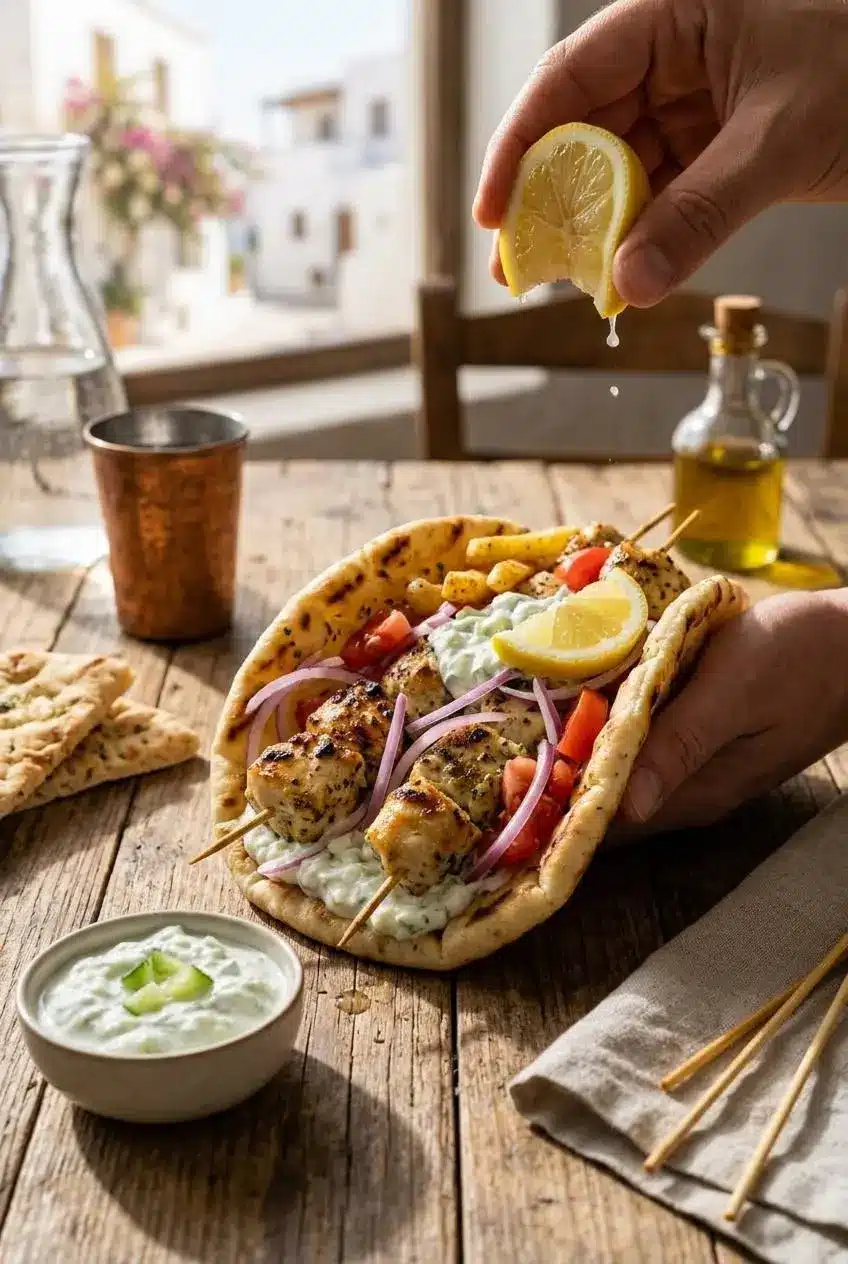
Cold tzatziki next to hot chicken gives each bite the contrast that makes a souvlaki wrap feel complete. Keep the sauce chilled until the skewers come off the heat, then assemble while the pita is still pliable.
The Secret to Thick Tzatziki
Cucumber holds far more moisture than it first appears to. After salting the grated cucumber and letting it stand, gather it in a clean dish towel or cheesecloth and squeeze firmly over the sink. The goal is a drier mound of cucumber, not a dripping one.
This step keeps the strained yogurt creamy and prevents the sauce from soaking through the pita. Blend the garlic with olive oil first so the garlic disperses evenly instead of landing in sharp little pockets throughout the tzatziki.
Warming Pita and Layering Street-Style Wraps
Brush the pita with olive oil and oregano, then warm it only until supple. Spread a layer of cold tzatziki down the center, add chicken removed from the skewers, then top with tomato and red onion. Add fried potatoes or romaine only if using.
Fold the lower edge upward first, then bring the sides around the filling without overpacking the pita. For a low-carb option, serve the chicken, tzatziki, tomatoes, onions, and lettuce as a platter or in Greek chicken bowls rather than pita.
Expert Tips for Juicy Skewers and Troubleshooting
- Wooden skewers scorch quickly: Soak them completely in water for at least 30 minutes before grilling. Keep exposed ends away from the hottest flare-ups when possible.
- The chicken steams instead of browning: The grill or pan is likely crowded or not hot enough. Cook in batches and wait for a loud sizzle before adding the skewers.
- The chicken sticks to the grill: Clean and lightly oil the grates, then let the chicken form a browned crust before trying to turn it. If it resists, give it another moment.
- The breast meat turns dry or rubbery: Use evenly cut pieces, stay within the marinating window, and remove the skewers as soon as the chicken is cooked through. Rest briefly before serving.
- The tzatziki is runny: Squeeze more liquid from the cucumber before stirring it into the strained yogurt. Watery cucumber is usually the culprit.
- The pita tears while wrapping: Warm it just until flexible, then use a moderate amount of filling. A packed pita has nowhere to fold.
Storage, Reheating, and Make-Ahead Meal Prep
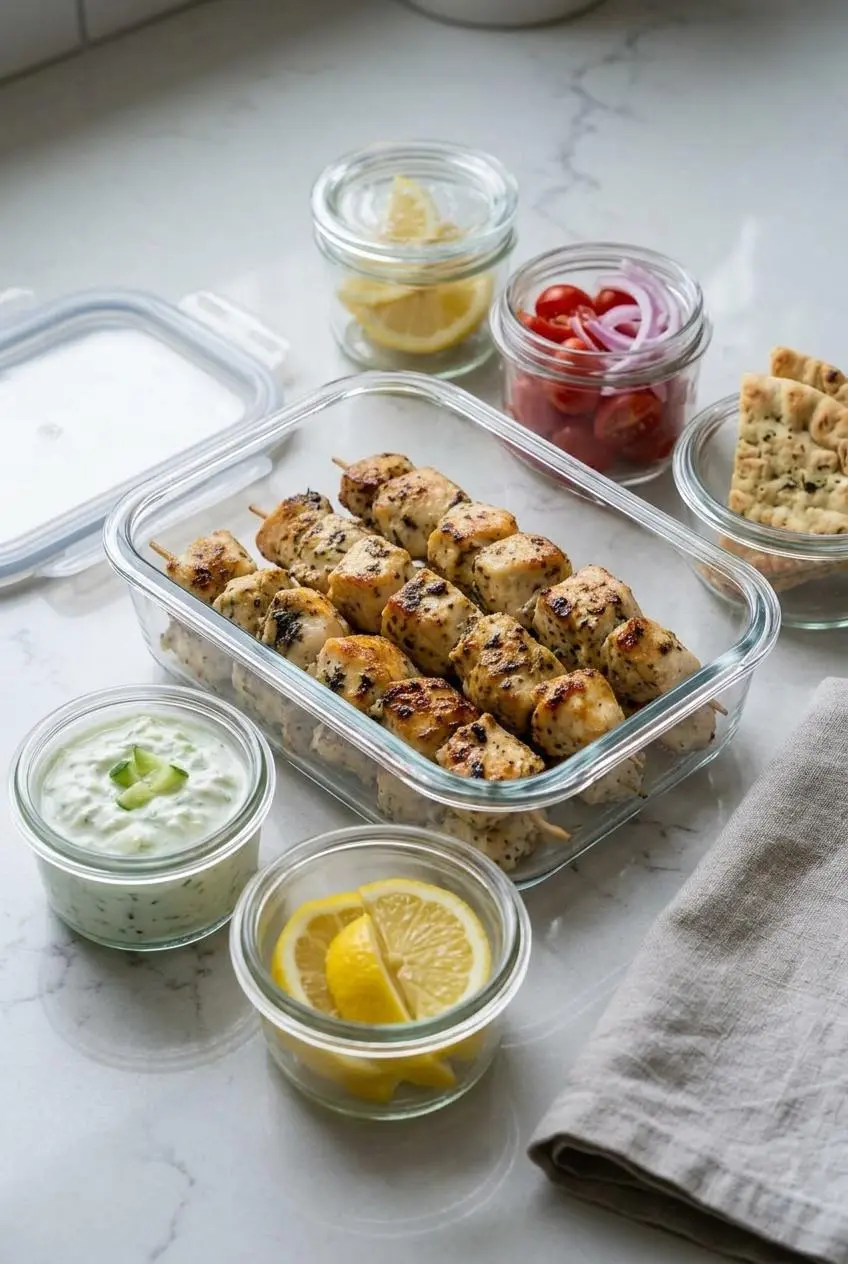
For the best texture, store cooked chicken separately from tzatziki, pita, tomatoes, and onions. Slide the chicken off the skewers and place it in an airtight container once cooled, then keep the sauce chilled in its own container so the cucumber does not water down the rest of the meal.
Raw marinated chicken should stay refrigerated at 40°F for no more than 1–2 days. Keep it covered and separated from ready-to-eat foods as part of safe raw poultry handling.
Rewarm cooked chicken gently in a covered skillet with a small splash of water or olive oil, just until hot. A low oven also works well. Avoid blasting the chicken for too long in the microwave, which can make breast meat tough. Warm pita separately and add cold tzatziki only at the table.
Conclusion
Great chicken souvlaki comes down to a quick lemon-oregano marinade, properly soaked skewers, and a hot cooking surface that gives the chicken real color before it dries out.
Pair those browned skewers with thick cold tzatziki and warm pita, and dinner has the bright, smoky comfort of a Greek street-food stop at home.
Frequently Asked Questions
What Is the Difference Between Chicken Souvlaki and Chicken Gyros?
Chicken souvlaki uses cubes of marinated chicken threaded onto skewers and grilled over direct heat. Chicken gyros uses stacked, seasoned meat cooked on a vertical rotisserie and sliced thinly. Both can be served in pita with tzatziki, tomato, and onion.
Should I Use Chicken Breast or Chicken Thighs for Souvlaki?
Both cuts work well. Chicken breast gives the classic lean, firm texture when cooked quickly over high heat. Boneless chicken thighs are an optional choice for richer flavor and extra protection against drying out. They are especially forgiving on a grill or stovetop pan.
How Long Should I Marinate Chicken Souvlaki?
Marinate the chicken for 30 minutes to 2 hours in the refrigerator. The flavor will develop without the lemon softening the exterior too much. Avoid leaving the chicken in the lemon-heavy marinade for much longer, since the texture can become mealy rather than tender.
How Do I Prevent Wooden Skewers From Burning on the Grill?
Submerge wooden or bamboo skewers in water for at least 30 minutes before threading the chicken. This slows scorching over direct heat. Metal skewers are another reusable option. With either type, keep the handles positioned away from the hottest flames when possible.
Chicken Souvlaki

Equipment
- Wooden Skewers
- grill or griddle pan
- Blender
Ingredients
For the chicken souvlaki
- 4 boneless chicken breasts (approx. 1 kg/ 35 ounces )
- 4 tbsps olive oil
- 1 juice of lemon
- 1 clove garlic minced
- 2 tbsp dried oregano
- salt and freshly ground pepper
For the tzatziki sauce
- 1 cucumber
- 2 cloves garlic minced
- 1/4 cup extra virgin olive oil
- 500 g strained yogurt ( 18 ounces )
- 1 – 2 tbsps red wine vinegar
- pinch salt
To serve
- 8 pita breads
- olive oil
- 1 – 2 tsps dried oregano
- 1 tomato sliced
- 1 red onion sliced
- fried potatoes (optional)
- romaine (cos) lettuce (optional)
- salt and freshly ground pepper
- 8 – 9 wooden skewers
Instructions
- Cut the chicken breasts into 2–3 cm pieces and combine them in a large bowl with the olive oil, lemon juice, garlic, oregano, salt, and pepper; cover and refrigerate for 30–60 minutes. The chicken should look evenly coated and glossy, with oregano clinging to each piece.
- Blend the tzatziki olive oil with the minced garlic, then grate the peeled and seeded cucumber into a bowl; season it and let it sit for 10 minutes before squeezing it dry in a towel. Stir the cucumber with the garlic oil, strained yogurt, red wine vinegar, and salt until thick, then refrigerate the sauce until serving.
- Trim the wooden skewers to fit the cooking surface if needed, soak them in water, and thread on the chicken without packing the pieces tightly. Leave small gaps between the cubes so the surfaces can brown instead of steaming.
- Heat a grill or griddle pan over high heat and cook the skewers for about 8–10 minutes, turning them regularly. Look for golden-brown char marks on every side and firm but yielding chicken before removing the skewers from the heat.
- Heat the oven to 250°C, brush the pita breads with olive oil, season with salt and oregano, and warm them on an upside-down baking tray for 2 minutes. The pita should feel warm and flexible enough to fold without cracking.
- Arrange the cooked skewers with sliced red onion, a drizzle of extra virgin olive oil, and lemon juice, then serve with warm pita and chilled tzatziki. For wraps, spread tzatziki over pita and add chicken, tomato, onion, and fried potatoes if using before folding snugly.