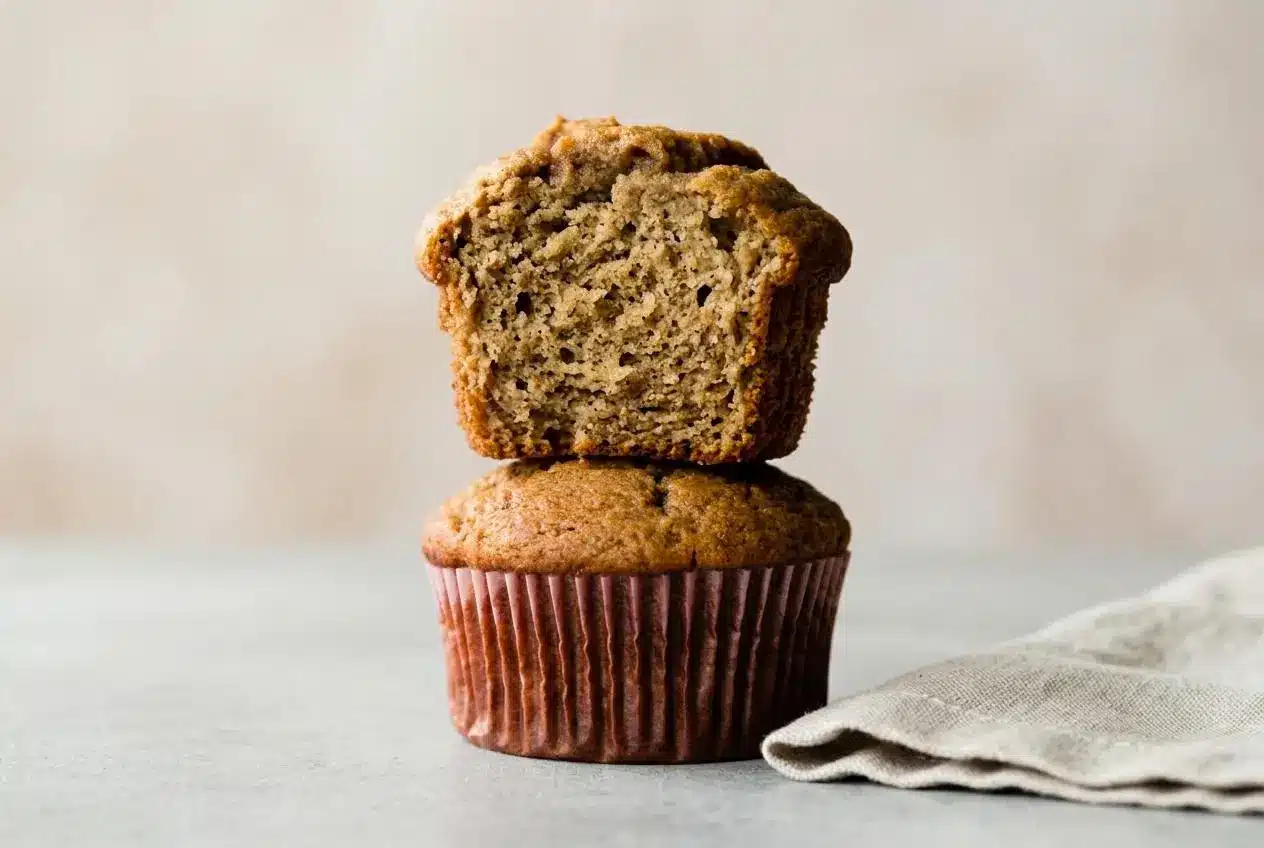
Classic banana muffins take 30 minutes from start to finish using ripe mashed bananas, melted butter, brown sugar, and warm spices. A brief initial bake at high heat creates tall bakery-style domes, giving you tender muffins with a soft, buttery crumb. There is something truly comforting about the rich aroma of sweet fruit, warm cinnamon, and melting butter drifting through the house on a quiet morning.
These homemade banana muffins deliver that authentic bakery experience without requiring a stand mixer or complicated steps. Using fruit with plenty of dark speckles guarantees natural sweetness and deep flavor in every single bite.
The real magic happens right when that initial burst of oven heat transforms simple batter into towering, golden crowns. Line your muffin pan with paper liners and fill each cup nearly to the brim so the batter climbs into rounded peaks instead of spreading flat.
Why This Banana Muffin Recipe Works
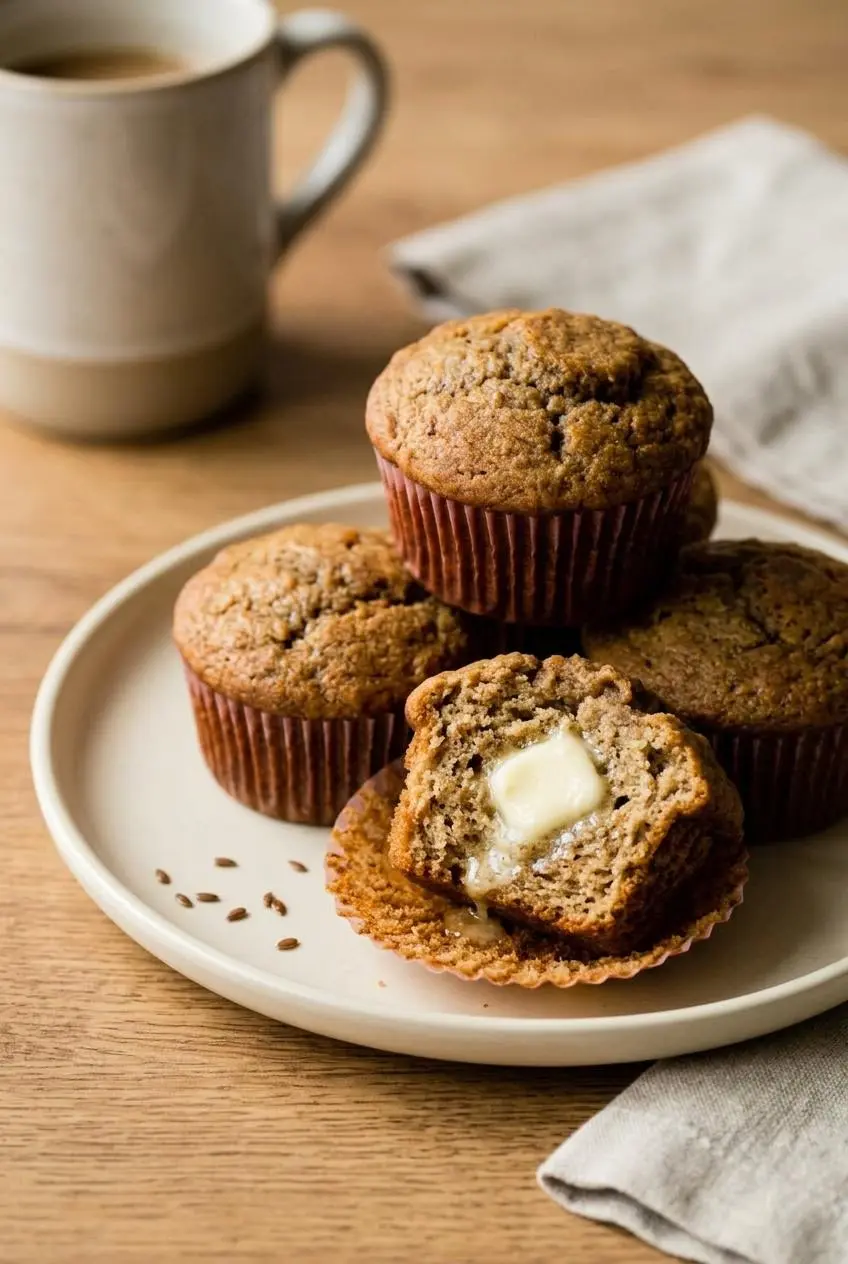
The balance between liquid and fat determines whether a muffin turns out light or unpleasantly heavy. This recipe uses the natural moisture of mashed bananas alongside melted butter, which yields a soft texture while preserving a sturdy, sliceable crumb. The butter adds richness, while the fruit keeps the baked muffin tender for days.
Brown sugar brings more than sweetness to the mixing bowl. Its natural molasses content provides a subtle caramel undertone and introduces a mild acidity that activates the baking soda. When baking soda reacts with acid, it generates carbon dioxide bubbles that lift the batter as it heats.
The two-temperature baking technique produces impressive height. Starting the muffins at a high temperature creates rapid steam expansion that thrusts the batter upward before the outer structure sets. Dropping the heat for the remaining time lets the center bake gently without over-browning the edges.
Key Ingredients and Smart Substitutions
Every ingredient in this recipe serves a specific functional purpose, balancing moisture, structural strength, leavening power, and comforting aromatic warmth.
- 1 and 1/2 cups (188g) all-purpose flour (spooned & leveled)
- 1 teaspoon baking powder
- 1 teaspoon baking soda
- 1/2 teaspoon salt
- 1 teaspoon ground cinnamon
- 1/4 teaspoon ground nutmeg
- 1 and 1/2 cups (345g) mashed bananas (about 4 medium or 3 large ripe bananas)
- 6 Tablespoons (85g) unsalted butter, melted (or melted coconut oil)
- 2/3 cup (135g) packed light or dark brown sugar (or coconut sugar)
- 1 large egg, at room temperature
- 1 teaspoon pure vanilla extract
- 2 Tablespoons (30ml) milk
- optional: 1 cup chopped walnuts, pecans, or chocolate chips
Combining both baking powder and baking soda guarantees an energetic rise and an even golden color. Brown sugar provides deep moisture, while ground cinnamon and a touch of nutmeg enhance the natural sweetness of the fruit.
If you enjoy experimenting with moist fruit bakes that use dairy to soften the crumb, exploring a Greek yogurt banana bread offers a similar tender texture.
I always mash the bananas with a standard dinner fork on a flat plate rather than in a deep bowl so I can easily judge the texture and keep small, flavorful fruit chunks intact.
Mashed Banana Ripeness and Prep
The ideal fruit for baking is heavily speckled with brown or black spots across the peel. As bananas ripen, starches convert into simple sugars, increasing moisture and aroma. Yellow bananas with green tips lack the necessary sweetness and yield dry, bland baked goods. Frozen bananas work wonderfully when fresh overripe fruit is not on hand.
Let them thaw completely in a colander set over a bowl. Gently discard the clear liquid that separates during thawing before you mash the fruit, which prevents excess water from throwing off the batter hydration.
Butter vs Oil for Crumb Texture
Melted unsalted butter delivers classic richness and encourages golden browning on top of each muffin dome. It creates a traditional bakery crumb that tastes fragrant and satisfying when served warm.
Melted coconut oil or neutral vegetable oil can replace butter at an equal ratio. Oil produces an exceptionally tender crumb that stays soft even after refrigeration, though it trades away the distinct flavor that dairy butter provides.
Flour Selection and Measuring Tips
Standard all-purpose flour provides the right amount of gluten to support the fruit without turning tough. Accurate measuring is critical because excess flour is the leading cause of dense, dry baked goods.
Always fluff your flour with a spoon, gently scoop it into your measuring cup, and level the rim with a flat edge. Scooping directly from the flour container packs down the powder, which can add up to twenty-five percent extra flour to your bowl.
How to Make Banana Muffins
- Set your oven to 425°F (218°C) and grease a 12-cup muffin tin or fit it with paper baking liners.
Preparing the pan ahead ensures the batter can go straight into the oven as soon as the leaveners are mixed. - Whisk the flour, baking powder, baking soda, salt, cinnamon, and nutmeg in a medium bowl until thoroughly blended, then set it aside.
Evenly dispersing the dry ingredients prevents clumps of leavening from creating bitter spots in the crumb. - Mash the ripe fruit in a separate large mixing bowl, then whisk in the melted butter, brown sugar, room-temperature egg, vanilla, and milk until smooth.
The wet mixture should look glossy, uniform, and slightly thickened with small fruit flecks. - Pour the dry ingredients into the wet mixture and stir gently with a spatula just until the flour streaks vanish, folding in any optional nuts or chocolate chips at the very end.
The finished batter will appear thick, rustic, and slightly lumpy rather than silky smooth. - Divide the batter evenly among the muffin cups, filling each liner all the way to the top.
Filling the cups completely gives the batter the volume needed to push upward into rounded crowns. - Bake at 425°F (218°C) for 5 minutes, then, without opening the oven door, lower the heat to 350°F (177°C) and bake for 16 to 18 minutes longer until a wooden toothpick inserted into the center comes out clean.
A sweet, buttery cinnamon aroma fills the kitchen around the fifteen-minute mark as the tops turn golden brown. - Rest the muffins in the pan for 5 minutes before lifting them onto a wire rack to finish cooling.
This short rest stabilizes the crumb while moving them to the rack stops steam from softening the bottoms.
Secrets to Tall Bakery-Style Muffin Domes
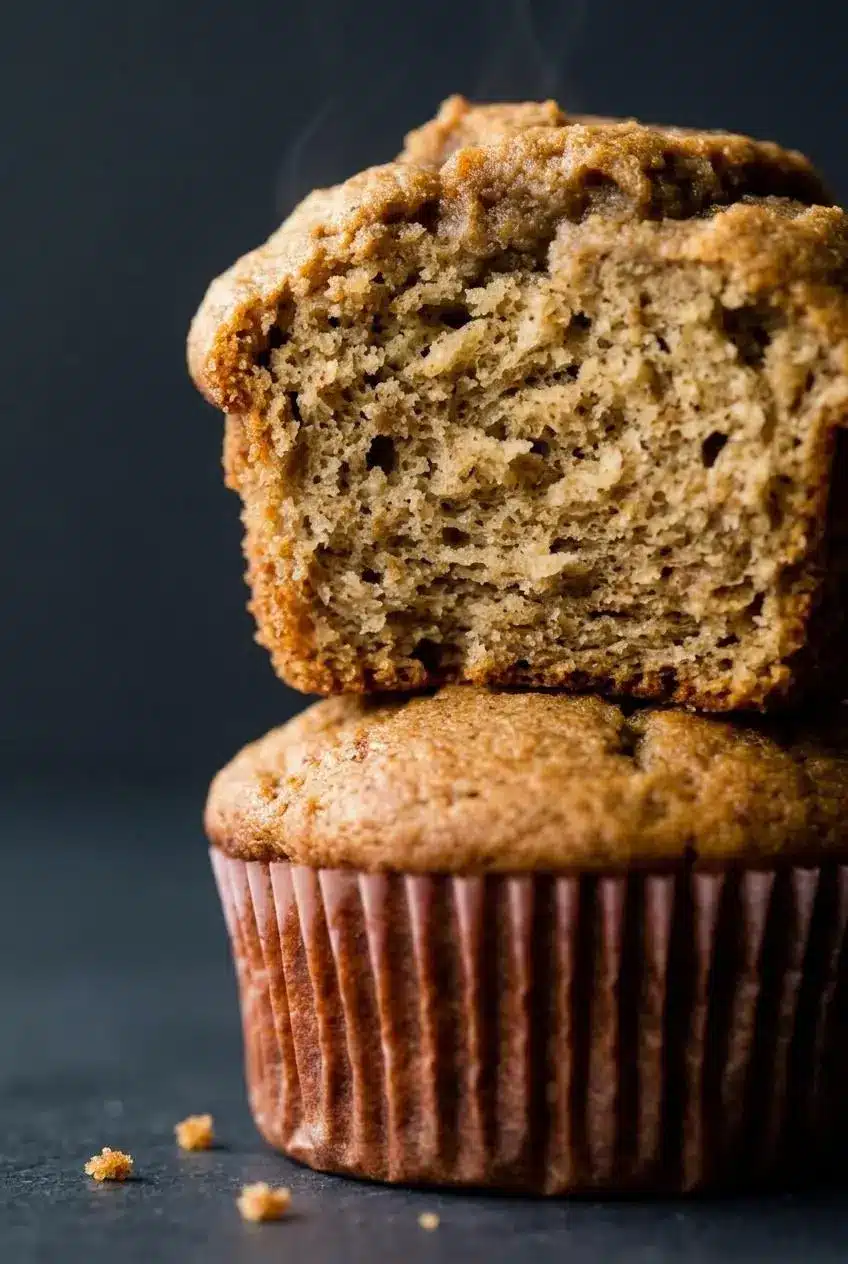
Bakery muffins stand out because of their impressive rounded crowns. Achieving that height at home relies entirely on heat management during the first few minutes of baking.
When the thick batter enters an oven heated to 425°F, moisture inside instantly converts into steam. This intense upward pressure forces the batter to rise rapidly before the delicate surface crust can firm up.
Dropping the oven temperature to 350°F allows the interior to cook through gently, preventing the outer edges from burning while the center sets. Keep the oven door completely shut during the temperature transition. Opening the door releases built-up heat, causing the rising batter to collapse in the center.
Tasty Variations and Mix-Ins
You can adapt this dependable recipe to suit whatever sweet or crunchy mix-ins you have in your kitchen. Browning the butter in a saucepan until nutty and amber before adding it to the wet ingredients adds a deeper toffee note.
For a sweet breakfast crunch, making banana streusel muffins with a spiced crumb topping creates great texture, while baking banana oatmeal muffins brings a hearty, whole-grain bite.
Banana Chocolate Chip Muffins
Fold one cup of semisweet or bittersweet chocolate chips into the batter during the final mixing stage. Reserve two tablespoons of chips to scatter over the filled muffin cups right before baking. For classic bakery style, checking the technique used for classic chocolate chip muffins helps distribute chocolate evenly so chips do not sink to the bottom.
Banana Walnut or Pecan Muffins
Stir in one cup of chopped walnuts or pecans for an earthy crunch. Lightly toasting the nuts in a dry skillet over medium heat for three minutes before folding them into the batter releases their natural oils and keeps them crisp inside the soft muffin.
Small-Batch Option for Two Bananas
When you only have two ripe bananas, cut all recipe quantities exactly in half to yield six standard muffins. Use one small egg or whisk a large egg and use half. Keep the initial 425°F bake at five minutes, then check the muffins after thirteen to fifteen minutes at 350°F.
Troubleshooting Common Banana Muffin Mistakes
- Dense, gummy texture: Caused by overmixing the batter or using too much flour. Stir wet and dry ingredients together just until no dry flour remains, leaving small lumps intact.
- Flat muffin tops: Happens when the oven is not hot enough at the start or when baking powder has lost its strength. Test baking powder in warm water before using and ensure the oven fully preheats.
- Soggy muffin bottoms: Caused by leaving the muffins in the hot metal pan too long after baking. Move them to a raised wire cooling rack after five minutes so air circulates freely underneath.
- Sunken centers: Occurs when the oven door is opened too early or if too much mashed banana is added. Measure the mashed fruit accurately with a measuring cup rather than guessing by whole banana count.
Storage, Freezing, and Reheating Guide
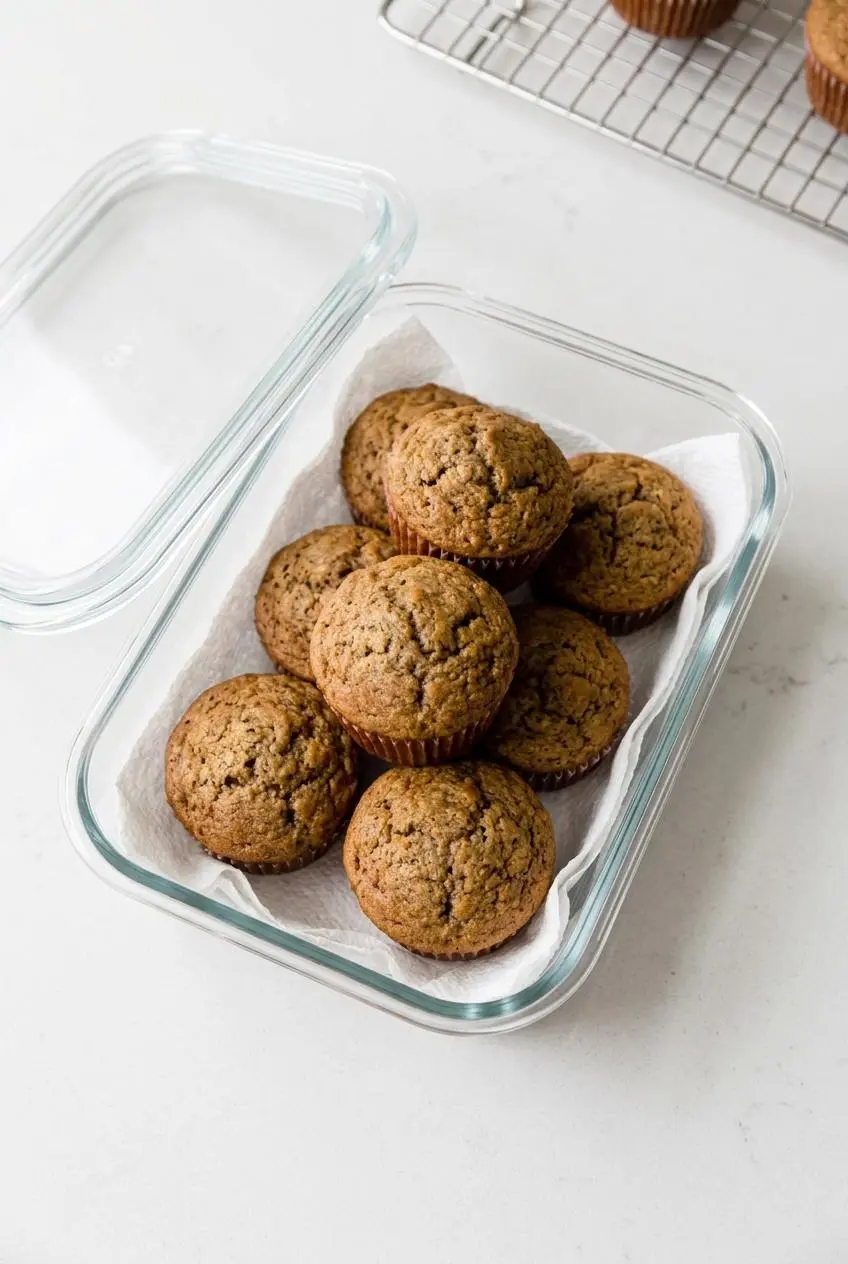
Proper cooling is the most critical step for keeping baked goods fresh. Let the muffins cool entirely to room temperature before packing them away, as any residual warmth will create condensation inside the storage container.
Line an airtight container with a clean paper towel, arrange the muffins in a single layer, and place a second paper towel over the tops before sealing the lid. The paper towels absorb excess surface humidity, keeping the muffin tops dry rather than sticky.
Muffins keep well at room temperature for several days or refrigerated for up to a week in an airtight container. For longer storage, wrap individual cooled muffins securely and store them in a heavy-duty container. Reheat a chilled muffin in a 300°F oven for five minutes or warm it in the microwave for fifteen seconds to revive its soft crumb.
Conclusion
Baking fresh banana muffins at home is a simple, satisfying way to transform speckled fruit into a breakfast treat. The combination of warm spices, melted butter, and a smart two-stage baking temperature ensures tall, golden domes with a light interior every time.
Serve these muffins warm from the oven, split open with a pat of salted butter or a drizzle of clover honey. They make morning routines feel special and provide a delicious, homemade snack whenever you need one.
Frequently Asked Questions
How ripe should bananas be for banana muffins?
Bananas should have peels that are deeply yellow and covered with heavy brown speckles or dark patches. Darker bananas contain more natural sugars and less starch, which gives the muffins strong flavor and a moist texture.
Can I use frozen bananas to bake banana muffins?
Yes, frozen bananas work well. Thaw them completely at room temperature and gently drain away any excess watery liquid that separates in the bowl before mashing to protect the batter consistency.
Why did my banana muffins turn out dense and heavy?
Dense muffins are usually caused by packing flour into measuring cups or overworking the batter after combining wet and dry ingredients. Spoon and level your flour and stir only until dry pockets disappear.
How do you get tall domed tops on homemade muffins?
Bake the muffins at 425°F for the first 5 minutes to trigger rapid steam rise, then lower the temperature to 350°F for the remaining bake time. Keep the oven door closed during the heat change.
Can I make banana muffins with oil instead of butter?
You can substitute melted coconut oil or a neutral cooking oil for the melted butter at a one-to-one ratio. Oil creates a very soft, moist crumb that holds up well at room temperature.
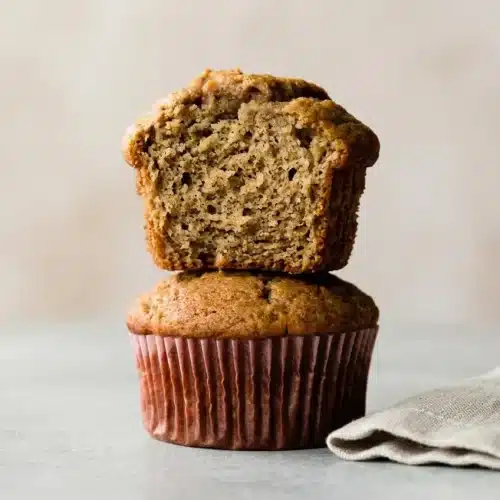
Banana Muffins

Equipment
- 12-count muffin pan
- Muffin liners
- Electric Mixer
- Glass Mixing Bowls
- Whisk
- Cooling Rack
Ingredients
- 1 1/2 cups all-purpose flour 188g, spooned & leveled
- 1 teaspoon baking powder
- 1 teaspoon baking soda
- 1/2 teaspoon salt
- 1 teaspoon ground cinnamon
- 1/4 teaspoon ground nutmeg
- 1 1/2 cups mashed bananas 345g, about 4 medium or 3 large ripe bananas
- 6 Tablespoons unsalted butter, melted 85g, or melted coconut oil
- 2/3 cup packed light or dark brown sugar 135g, or coconut sugar
- 1 large egg at room temperature
- 1 teaspoon pure vanilla extract
- 2 Tablespoons milk 30ml
- 1 cup chopped walnuts, pecans, or chocolate chips optional
Instructions
- Set your oven to 425°F (218°C) and grease a 12-cup muffin tin or fit it with paper baking liners. Preparing the pan ahead ensures the batter can go straight into the oven as soon as the leaveners are mixed.
- Whisk the flour, baking powder, baking soda, salt, cinnamon, and nutmeg in a medium bowl until thoroughly blended, then set it aside. Evenly dispersing the dry ingredients prevents clumps of leavening from creating bitter spots in the crumb.
- Mash the ripe fruit in a separate large mixing bowl, then whisk in the melted butter, brown sugar, room-temperature egg, vanilla, and milk until smooth. The wet mixture should look glossy, uniform, and slightly thickened with small fruit flecks.
- Pour the dry ingredients into the wet mixture and stir gently with a spatula just until the flour streaks vanish, folding in any optional nuts or chocolate chips at the very end. The finished batter will appear thick, rustic, and slightly lumpy rather than silky smooth.
- Divide the batter evenly among the muffin cups, filling each liner all the way to the top. Filling the cups completely gives the batter the volume needed to push upward into rounded crowns.
- Bake at 425°F (218°C) for 5 minutes, then, without opening the oven door, lower the heat to 350°F (177°C) and bake for 16 to 18 minutes longer until a wooden toothpick inserted into the center comes out clean. A sweet, buttery cinnamon aroma fills the kitchen around the fifteen-minute mark as the tops turn golden brown.
- Rest the muffins in the pan for 5 minutes before lifting them onto a wire rack to finish cooling. This short rest stabilizes the crumb while moving them to the rack stops steam from softening the bottoms.