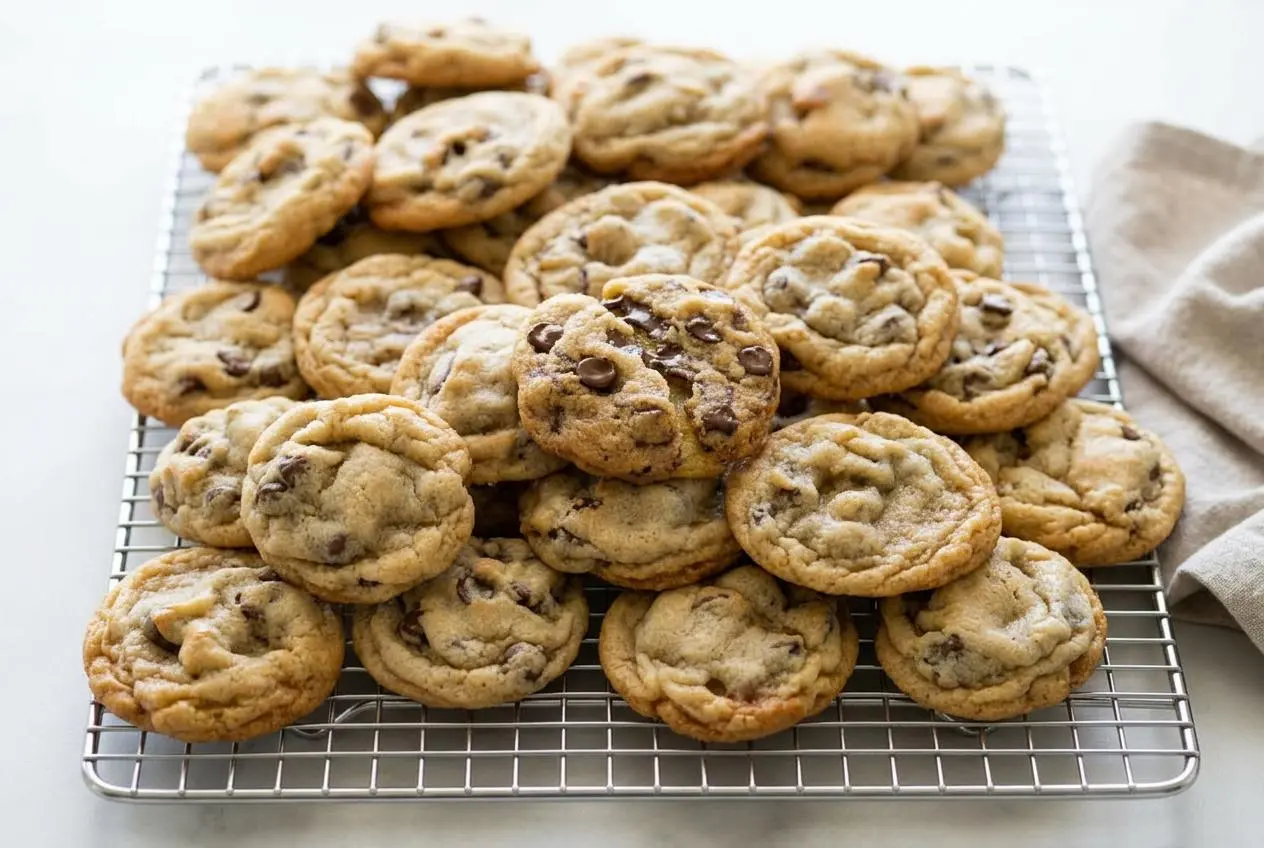
The classic Toll House chocolate chip cookie recipe combines creamed butter, granulated and brown sugars, eggs, vanilla, flour, baking soda, salt, and semi-sweet morsels baked at 375°F for 7 to 9 minutes to create crisp golden edges and chewy, gooey chocolate centers.
Few baked treats carry the warmth and nostalgia of a fresh batch of chocolate chip cookies straight from the oven. Baking this iconic toll house chocolate chip cookie recipe at home delivers that timeless bakery-style balance of buttery richness, caramelized sugar, and pools of melted semi-sweet chocolate morsels.
Whether you grew up enjoying these warm from a cooling rack or are making them for the first time, getting the texture just right comes down to a few fundamental baking mechanics. Understanding the interaction between softened butter, sugar types, and oven heat turns everyday dough into chewy perfection with unforgettable golden rings.
Always pull your baking sheet from the oven the moment the outer edges turn light golden, even if the center still appears soft and pale.
Key Ingredients and Measurements
Every ingredient in this formula serves a distinct structural and chemical purpose, balancing moisture, lift, spread, and rich caramelized flavor across every bite.
- 1 cup (222g) salted butter, softened
- 3/4 cup (173g) granulated sugar
- 3/4 cup (185g) packed brown sugar
- 1 tsp vanilla extract
- 2 eggs
- 2 1/4 cup + 2 tbsp (342g) all-purpose flour
- 1 tsp baking soda
- 1 tsp salt
- 2 cups (400g) nestle toll house semi-sweet chocolate morsels
- 1 cup (120g) chopped nuts (optional)
Granulated white sugar promotes crisp edges and surface spread, while dark or light packed brown sugar introduces molasses moisture and acidity that activates the baking soda. The eggs emulsify the fats and liquids while providing protein structure to hold the cookie together during the bake. Baking soda creates rapid browning through the Maillard reaction, ensuring a rich toffee-like aroma and deep golden color.
I always check that my softened butter leaves a slight thumb indentation without feeling greasy or slippery before creaming.
Understanding the Flour and Nut Ratio
The traditional packaging formula calls for 2 1/4 cups of flour when using a full cup of chopped walnuts or pecans. Nuts absorb surface oil and take up physical space within the dough matrix, naturally restricting how much the dough spreads across the hot baking sheet.
When you choose to omit the nuts, adding 2 extra tablespoons of all-purpose flour restores that missing structural density. Without those additional tablespoons, the excess moisture and fat cause the dough puddles to spread too thin, resulting in greasy edges rather than a thick, chewy center.
Butter Selection and Temperature
Using softened salted butter provides a balanced savory contrast that cuts through the intense sweetness of the sugars and semi-sweet chocolate. If you substitute unsalted butter, increase the added table salt by 1/4 teaspoon to maintain the same flavor profile.
Temperature control is critical during the initial mixing phase. Softened butter should sit at cool room temperature, roughly 65°F to 68°F. Never melt the butter in the microwave, as liquefied fat cannot aerate during creaming and causes the cookies to collapse into flat, oily wafers.
Optional Chocolate and Nut Variations
While classic semi-sweet morsels remain the gold standard, adjusting your mix-ins offers fun variety while keeping the base dough consistent:
- Combine semi-sweet morsels with butterscotch chips to make decadent butterscotch chocolate chip cookies that boast deep caramel undertones.
- Fold in chopped toasted walnuts or pecans to add an earthy crunch and balance sweet dough.
- Substitute roasted macadamia nuts or toasted hazelnuts along with bittersweet dark chocolate chunks for a gourmet twist.
- Swap a portion of the morsels for colorful candy pieces when baking for birthday parties or celebrations.
How to Make Toll House Chocolate Chip Cookies
- Set your oven to 375°F (190°C) and ensure the oven rack is centered.
The proper ambient heat ensures the edges set rapidly while the interior stays moist. - Beat the softened butter, granulated sugar, packed brown sugar, and vanilla extract together in a large mixing bowl until smooth and creamy.
The mixture should look pale and fluffy with no dense butter lumps remaining. - Crack the eggs into the creamed base one at a time, beating thoroughly after each addition.
A fully emulsified, glossy batter indicates the liquid and fat have properly bonded. - Gradually stir in the all-purpose flour, baking soda, and salt just until a uniform dough forms.
Stop mixing as soon as dry flour streaks vanish to keep the texture tender. - Gently fold in the semi-sweet chocolate morsels along with the chopped nuts if you choose to include them.
The mix-ins should appear evenly scattered throughout the stiff dough. - Drop rounded 1-tablespoon mounds of dough onto an ungreased baking sheet, spacing them roughly two inches apart.
Evenly shaped dough balls promote uniform spreading and identical bake times. - Bake at 375°F (190°C) for 7 to 9 minutes.
Remove the tray when the perimeter turns light golden brown while the center remains soft and pale. - Let the baked cookies rest on the hot pan for 2 minutes.
This short pan rest lets the fragile centers set before moving them. - Transfer the cookies to a wire rack to finish cooling.
The bottoms will firm up into a crisp foundation while the melted chocolate stays pleasantly gooey.
Essential Tips for the Best Texture
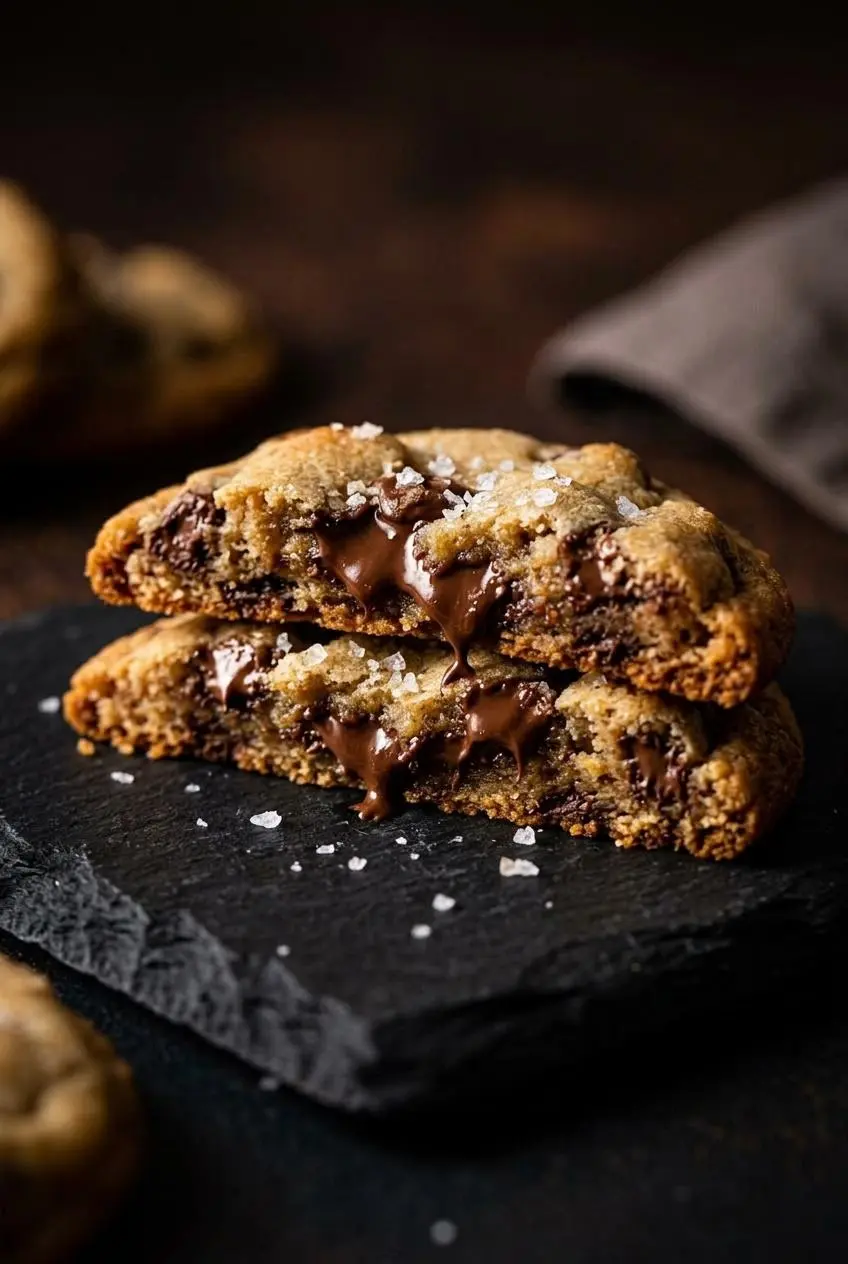
Achieving bakery-level cookie texture requires paying close attention to oven heat, dough temperature, and flour measurement accuracy.
Why Chilling the Dough Matters
If your kitchen is warm, letting the portioned dough balls rest in the refrigerator for 10 to 15 minutes before baking creates a significant texture improvement. Chilling solidifies the butterfat throughout the dough.
When chilled butter enters a 375°F oven, it melts more slowly than room-temperature butter. This delay allows the outer flour structure to bake and set before the center spreads completely outward, resulting in a noticeably thicker center and a chewier bite.
Preventing Flat and Greasy Cookies
Flat, spread-out cookies are the most common baking issue home cooks encounter. Addressing a few specific variables will keep your cookies thick and soft:
- Use a digital kitchen scale to measure your flour at 342 grams, as scooping flour directly with a measuring cup packs extra starch and dries out the dough.
- Ensure your baking sheets are completely cool between batches, because scooping raw dough onto a hot metal pan melts the butter before the cookie enters the oven.
- Check that your leavening agent is fresh, as expired baking soda prevents the slight upward lift needed for a tender crumb.
- Verify your oven temperature with an independent oven thermometer to prevent hot spots from melting the dough too quickly.
Finishing with Flaky Sea Salt
A light sprinkle of coarse mineral salt immediately after pulling the hot pan from the oven elevates the entire dessert. Much like classic salted chocolate chip cookies, the clean crunch of salt crystals cuts through rich cocoa butter and accentuates the caramelized notes of brown sugar.
Storing, Freezing, and Make-Ahead Instructions
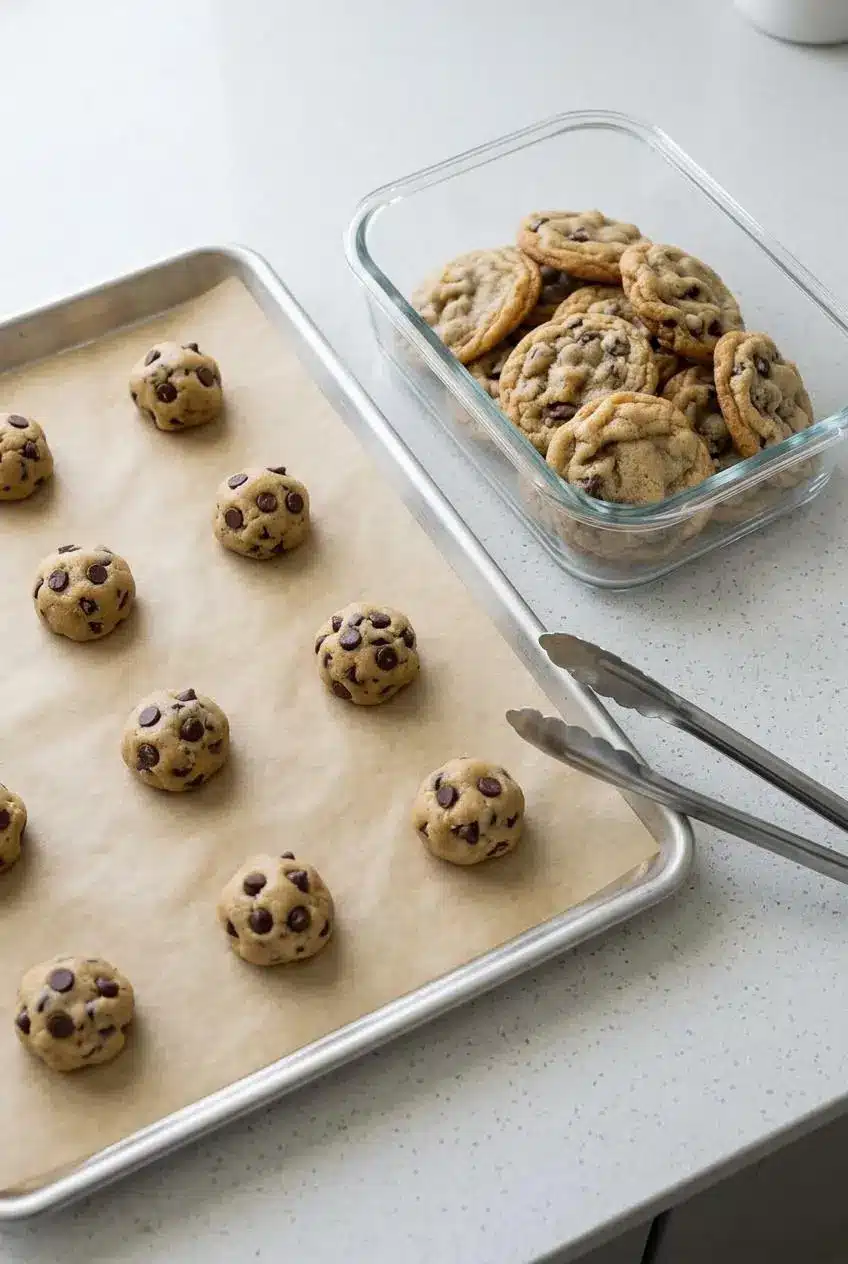
Planning ahead allows you to enjoy warm, freshly baked cookies on demand without having to mix a new batch from scratch every time.
Room Temperature Storage
Allow baked cookies to cool entirely to room temperature on a wire rack before packaging. Storing warm cookies traps residual steam inside the container, turning crisp edges soft and soggy.
Place the cooled cookies in an airtight container or a heavy-duty zip-top storage bag. Storing a small wedge of plain white bread inside the container helps maintain ideal moisture balance, as the cookies draw humidity from the bread to stay soft without altering their buttery flavor.
Freezing Raw Cookie Dough Balls
Freezing unbaked dough portions is an exceptional method for batch prep. Scoop 1-tablespoon rounds onto a parchment-lined tray and freeze until firm, then transfer the solid dough balls into an airtight freezer bag.
Bake the dough portions directly from frozen on an ungreased baking sheet at 375°F, adding an extra 1 to 2 minutes to the standard baking time. If you prefer smaller yields without freezing dozens of portions, preparing small batch chocolate cookies offers a convenient alternative for immediate snacking.
Serving Ideas
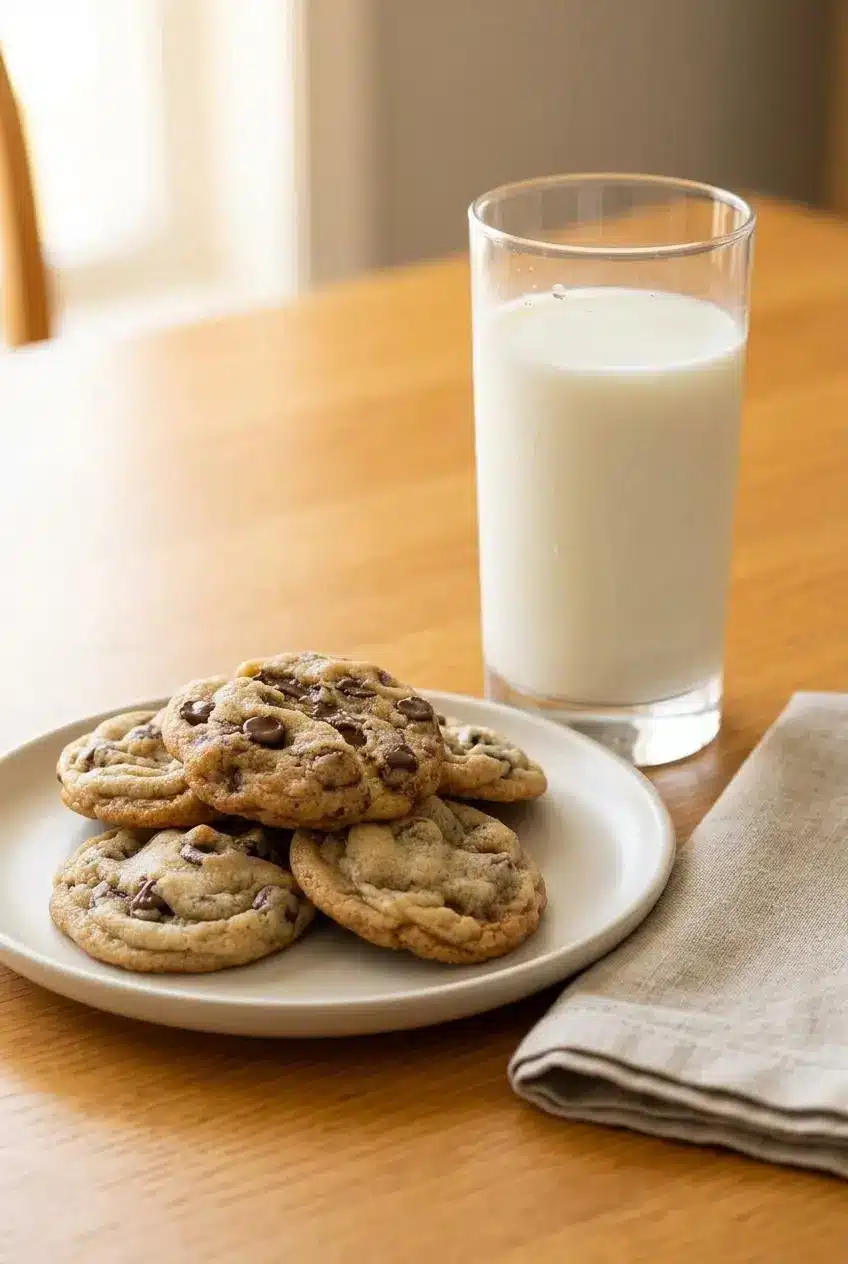
These classic cookies pair naturally with everyday desserts and casual family gatherings:
- Serve freshly baked cookies while still warm alongside a tall glass of ice-cold milk.
- Create homemade dessert sandwiches by placing a scoop of churned vanilla bean ice cream between two cooled cookies.
- Arrange warm cookies on a dessert platter alongside fresh strawberries and espresso for an effortless dinner party finish.
- Crumble over chocolate custard or warm pudding bowls to add a crisp, buttery topping.
Conclusion
Mastering this traditional cookie method provides a dependable foundation for all your home baking. By balancing softened butter, managing moisture with proper flour additions, and pulling the baking sheet the moment the outer ring turns golden, you achieve that coveted harmony of crisp edges and gooey centers every single time.
Warm your oven, measure your ingredients with care, and enjoy the comforting aroma of fresh chocolate chip cookies filling your kitchen.
Frequently Asked Questions
What is the original Toll House chocolate chip cookie recipe?
It is the historic combination of softened butter, granulated sugar, packed brown sugar, vanilla extract, eggs, all-purpose flour, baking soda, salt, and semi-sweet chocolate morsels. Baked at 375°F for 7 to 9 minutes, it produces distinct golden edges with a chewy chocolate center.
Why did my Toll House cookies spread so flat?
Excessive spreading typically happens when the butter is melted rather than gently softened, or when the baking sheet is still hot from a previous batch. It also occurs when omitting the chopped nuts without adding the recommended 2 extra tablespoons of all-purpose flour to maintain dough structure.
Should I chill Toll House cookie dough before baking?
While not strictly required, chilling portioned dough balls for 10 to 15 minutes firms the butterfat. This simple step slows down how fast the dough melts in the oven, creating a noticeably thicker cookie with a chewier texture.
How do I keep Toll House cookies soft for days?
Store fully cooled cookies in an airtight container at room temperature away from direct heat. Placing a small slice of plain sandwich bread in the container keeps the cookies moist, as the baked crumb absorbs ambient moisture from the bread.
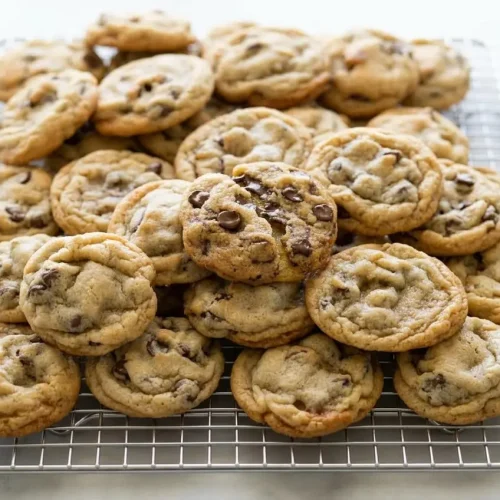
Toll House Chocolate Chip Cookie Recipe

Equipment
- Electric hand mixer or stand mixer
- Cookie sheet
- Wire cooling rack
Ingredients
- 1 cup salted butter softened (222g)
- 3/4 cup granulated sugar (173g)
- 3/4 cup packed brown sugar (185g)
- 1 tsp vanilla extract
- 2 eggs
- 2 1/4 cup all-purpose flour + 2 tbsp (342g)
- 1 tsp baking soda
- 1 tsp salt
- 2 cups nestle toll house semi-sweet chocolate morsels (400g)
- 1 cup chopped nuts (120g) (optional)
Instructions
- Set your oven to 375°F (190°C) and ensure the oven rack is centered. The proper ambient heat ensures the edges set rapidly while the interior stays moist.
- Beat the softened butter, granulated sugar, packed brown sugar, and vanilla extract together in a large mixing bowl until smooth and creamy. The mixture should look pale and fluffy with no dense butter lumps remaining.
- Crack the eggs into the creamed base one at a time, beating thoroughly after each addition. A fully emulsified, glossy batter indicates the liquid and fat have properly bonded.
- Gradually stir in the all-purpose flour, baking soda, and salt just until a uniform dough forms. Stop mixing as soon as dry flour streaks vanish to keep the texture tender.
- Gently fold in the semi-sweet chocolate morsels along with the chopped nuts if you choose to include them. The mix-ins should appear evenly scattered throughout the stiff dough.
- Drop rounded 1-tablespoon mounds of dough onto an ungreased baking sheet, spacing them roughly two inches apart. Evenly shaped dough balls promote uniform spreading and identical bake times.
- Bake at 375°F (190°C) for 7 to 9 minutes. Remove the tray when the perimeter turns light golden brown while the center remains soft and pale.
- Let the baked cookies rest on the hot pan for 2 minutes. This short pan rest lets the fragile centers set before moving them.
- Transfer the cookies to a wire rack to finish cooling. The bottoms will firm up into a crisp foundation while the melted chocolate stays pleasantly gooey.