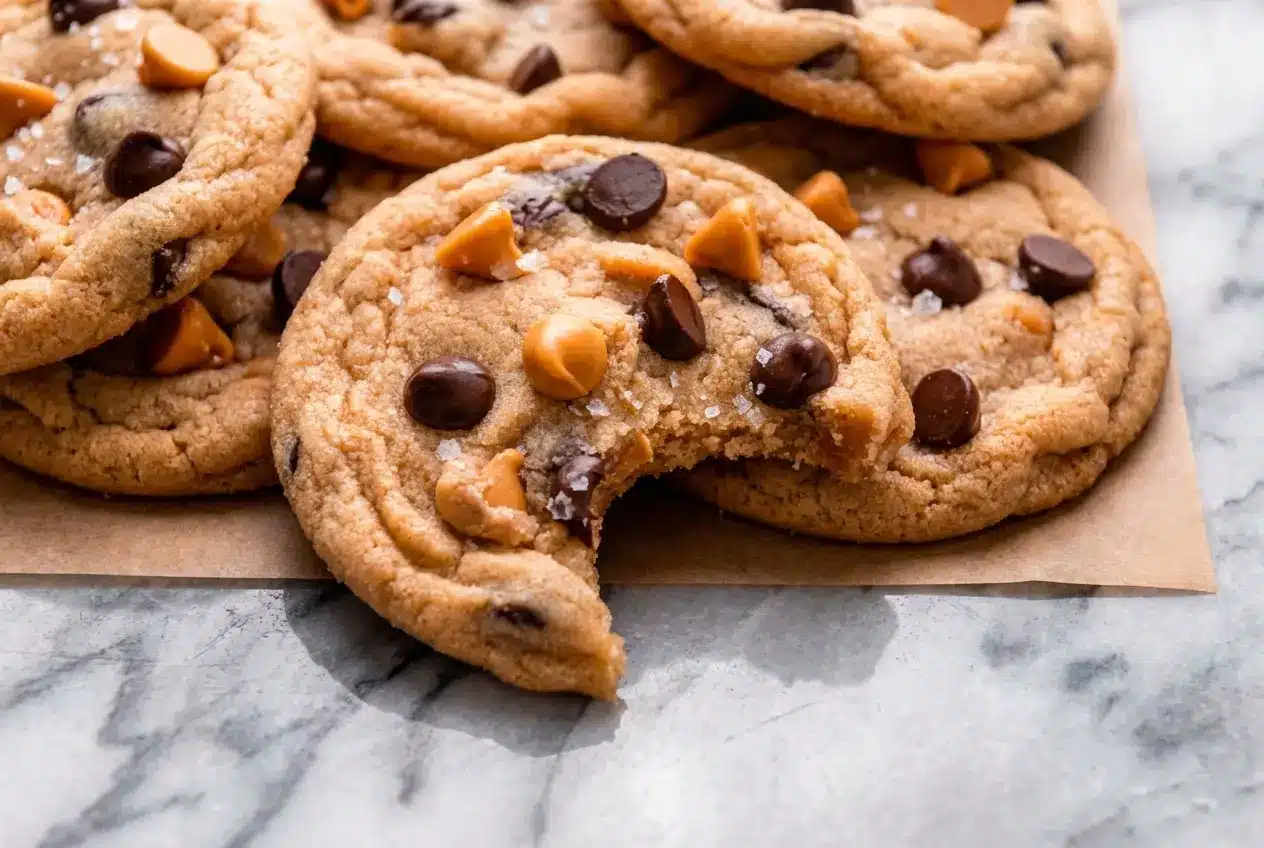
There is something about the butterscotch and chocolate pairing that always feels like home. In my kitchen, the smell of warm brown sugar, butter, and melting chips instantly brings back those cozy, late-afternoon baking sessions when everyone hovered near the oven waiting for the first tray.
These Butterscotch Chocolate Chip Cookies are for anyone who loves a chewy center, lightly crisp edges, and a cookie that tastes a little more special than the usual batch. The small twist of malted milk powder gives them a bakery-style depth, with toasty caramel notes that make every bite richer and more balanced.
Why You’ll Love This Recipe
Deep toasty flavor: I discovered that a little malted milk powder gives these cookies a warm, nostalgic backbone that makes the brown sugar and butterscotch chips taste fuller and more layered.
Chewy centers done right: The combination of egg yolks and the creaming method creates a dense, satisfying middle with edges that turn just lightly crisp, which is exactly what I want in a great cookie.
Balanced sweetness: Butterscotch can go from lovely to overly sweet in a hurry, but semi-sweet chocolate chips and flaky sea salt keep every bite from feeling heavy.
A bakery-style upgrade: If you already enjoy classic butterscotch cookies, this version feels like the grown-up cousin, thanks to the melted chips in the dough and the extra malted depth.
Ingredients and Substitutions
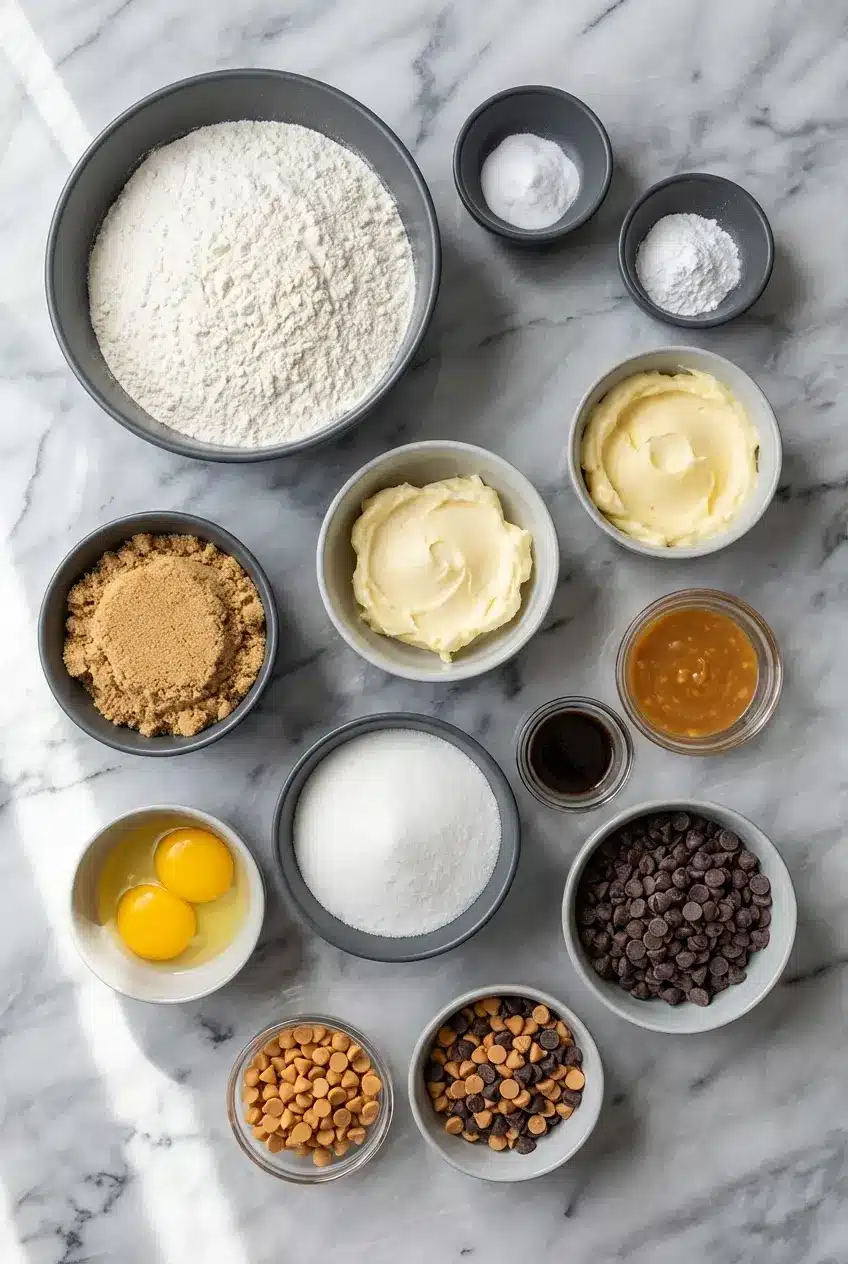
Each ingredient here has a job, from building chew to creating those rich caramelized notes that make these cookies memorable.
Ingredients
- 2 cups (250 g) all-purpose flour, spooned and leveled
- 1/2 tsp baking soda
- 1/2 tsp baking powder
- 1/2 tsp salt
- 3/4 cup (168 g) unsalted butter, softened
- 3/4 cup (165 g) light brown sugar, packed
- 1/4 cup (50 g) granulated white sugar
- 2 egg yolks, at room temperature
- 1 tbsp vanilla bean paste or vanilla extract
- 1/4 cup (50 g) butterscotch chips, melted
- 1/2 cup (100 g) butterscotch chips
- 1/2 cup (100 g) semi sweet chocolate chips
- flaky sea salt for sprinkling on top
- extra butterscotch and chocolate chips for sprinkling on top
Ingredient Notes & Substitutions
Vanilla bean paste: This is my favorite choice when I want those tiny vanilla specks and a fuller aroma in the finished cookie. Vanilla extract works beautifully too, but the paste gives the dough a slightly more luxurious flavor.
Unsalted butter: Using unsalted butter lets you control the seasoning from start to finish, especially since flaky sea salt goes on top while the cookies are still warm. That final sprinkle tastes cleaner and more intentional when the butter itself is not adding mystery salt.
Malted milk powder: This is the quiet hero of the recipe, even though it is mixed into the dry ingredients in a modest amount. If you cannot find it, you can leave it out, but the cookies will lose some of that toasty, old-fashioned depth that makes the butterscotch feel less one-note.
Brown sugar: Light brown sugar keeps the flavor soft and caramel-like, but dark brown sugar can step in if you want a deeper molasses edge. I like dark brown sugar in colder months when I want the cookies to taste a little moodier and richer.
All-purpose flour: Spoon and level it, or better yet weigh it, because too much flour is the fastest road to dry cookies. If you like playful variations, replacing 3/4 cup of the flour with old-fashioned oats gives you a Scotchie-style twist with more texture.
Butterscotch and chocolate chips: Butterscotch chips bring sweetness and buttery caramel flavor, while semi-sweet chocolate chips keep the cookies from tipping too far into candy territory. Chopped toasted pecans or walnuts can be folded in for a nuttier finish if you want a little crunch.
How to Make Butterscotch Chocolate Chip Cookies
Prep the Oven and Dry Mix
- Set the oven to 350°F and line two baking sheets with parchment paper so the cookies bake evenly and lift off cleanly later. In a medium bowl, whisk together the flour, malted milk powder, baking powder, baking soda, and salt until everything looks evenly blended and the malt gives off a faint sweet, toasty aroma.
Cream the Base
- In a large bowl, beat the softened butter with the brown sugar and granulated white sugar on high speed for 2 to 3 minutes. You are looking for a mixture that turns lighter in color and visibly fluffier, because this is where the dough gets the air that helps the cookies bake up with tender edges.
- Add the room temperature egg yolks and vanilla bean paste, then mix on medium speed for 1 to 2 minutes until the dough base looks pale, creamy, and almost silky. Scrape down the sides of the bowl as needed so the butter and sugar blend evenly instead of leaving dense streaks behind.
- Pour in the melted butterscotch chips and mix on medium speed just until incorporated. At this point the dough will take on a richer golden tint and smell noticeably more buttery and caramel-like.
Finish the Dough and Bake
- Add the dry ingredients gradually to the wet mixture and mix on low speed only until the last dry streak disappears. Stop as soon as the dough comes together, because overworking the flour can make the finished cookies tougher than they should be.
- Use a rubber spatula to fold in the remaining butterscotch chips and semi-sweet chocolate chips, making sure the mix-ins are spread throughout the dough without crushing the airy texture you just built.
- Scoop the dough with a large 2 tablespoon cookie scoop and place the portions 3 inches apart on the prepared baking sheets. Bake for 10 to 11 minutes, until the edges look light golden brown while the centers still appear a little soft and slightly underdone.
Cool and Finish
Let the cookies rest on the baking sheet for 5 minutes so carryover heat can gently finish the centers. While they are still warm, nudge them into neat rounds with a circular glass if you like that polished bakery look, then sprinkle on extra butterscotch chips, chocolate chips, and flaky sea salt before moving them to a wire rack to cool completely.
The Secret to Perfectly Toasty Butterscotch Cookies
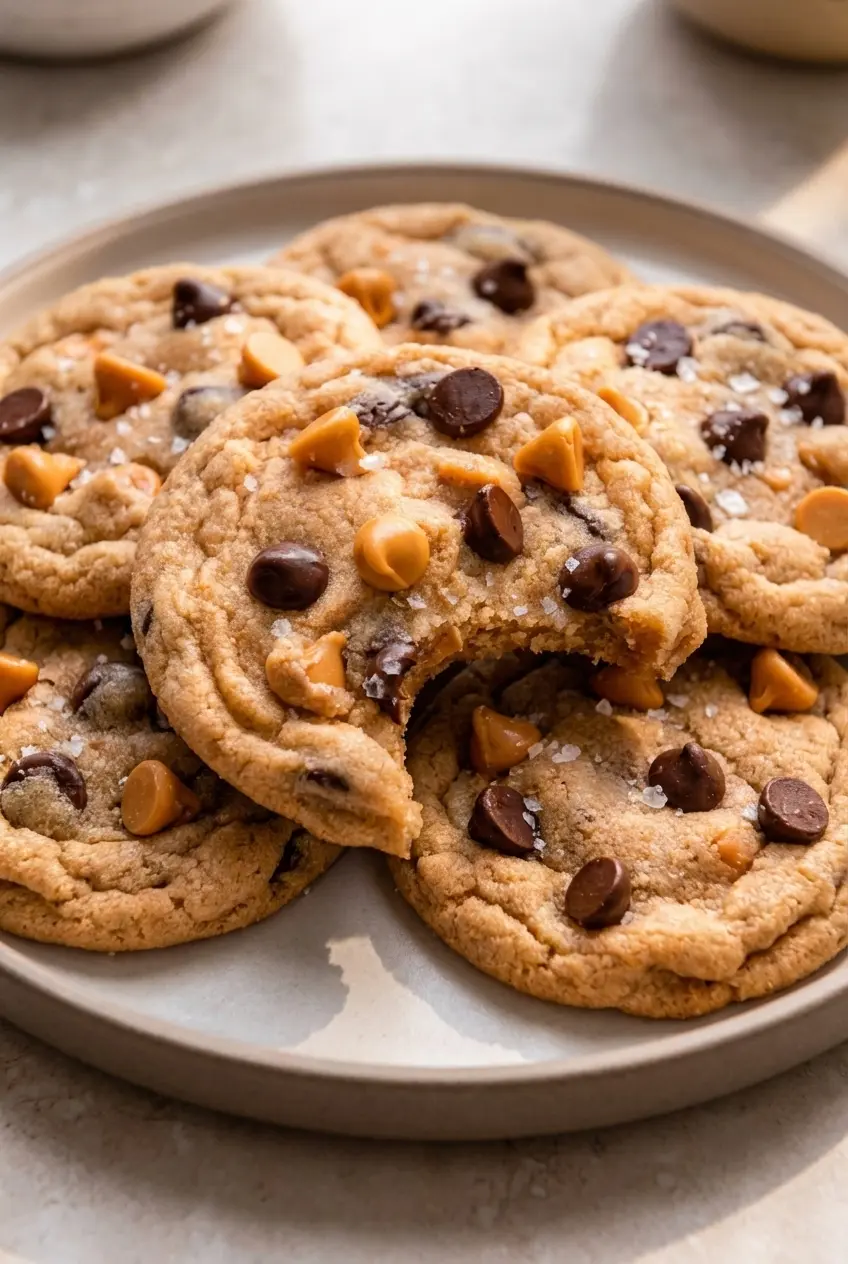
The magic here comes from a combination of brown sugar, butter, and malted milk powder, all of which lean into those deep, toasted notes we crave in a great cookie. As the dough bakes, the Maillard reaction helps create complex flavor compounds that taste nutty, buttery, and caramelized instead of simply sweet.
Melting part of the butterscotch chips directly into the dough is one of my favorite small tricks because it spreads that flavor through the entire cookie. Instead of getting butterscotch only in scattered pockets, every bite tastes warmly caramelized from edge to center.
Softened butter matters just as much as flavor. If the butter is properly softened, not greasy and not cold, it creams with the sugar into a fluffy base that traps air, while melted butter would make the dough heavier and change the spread in the oven.
The Science of Butterscotch vs. Chocolate in Baking
Butterscotch chips and chocolate chips may look similar in the bag, but they do not behave the same once heat hits them. Butterscotch chips usually have a higher melting point and a firmer structure, so they hold their shape more stubbornly and can become a little hard if the cookies bake even a minute too long.
Semi-sweet chocolate chips soften more readily, which is why they stay pleasantly melty while butterscotch chips can turn firmer as they cool. This is also why I always pull these cookies when the centers still look slightly soft, because the hot pan keeps cooking them for a few minutes after they come out of the oven.
That carryover cooking matters more than people think. If the edges are golden and the center looks just shy of fully set, the cookies will finish beautifully on the sheet instead of crossing into dry territory where the butterscotch chips seize up and lose that creamy bite.
Why Room Temperature Egg Yolks Create a Chewier Cookie
Room temperature yolks blend more smoothly into the creamed butter and sugar, which helps the dough stay cohesive and silky instead of broken or curdled. That smooth blending is tied to the role of Emulsification, and it is one of the main reasons the cookies bake with a more even texture.
Cold yolks can shock the butter mixture and make it harder for the fat and moisture to combine properly. In my kitchen, that usually shows up later as uneven spreading, patchy texture, or cookies that do not quite get that lovely chewy middle.
Using only yolks instead of whole eggs also changes the texture in a very delicious way. With less water and more richness, the dough bakes into a denser, fudgier cookie, much like the soft texture people chase in rich desserts such as gooey cookie bars.
Pro Tips & Troubleshooting
Pro Tips
- Use an oven thermometer if you have one, because butterscotch chips are far less forgiving than many bakers expect when the oven runs hot.
- Spoon and level the flour, or use a digital scale, to avoid dense or cakey cookies.
- For perfectly round cookies, place a large round cutter or drinking glass over each one right after baking and gently swirl it in a circle.
- Keep the egg yolks at room temperature so they mix in smoothly and support a chewier final texture.
Common Mistakes to Avoid
- Overmixing: Once the all-purpose flour goes in, mix only until combined. Too much mixing builds gluten and turns a tender cookie into a tougher one.
- Cold butter: Butter that is too firm will not cream properly with the sugar, so the dough will miss out on the aeration that helps with texture and spread.
- Overbaking: Pull the cookies when the centers still look a bit soft. The hot baking sheet keeps working after they leave the oven.
- Spreading issues: If the cookies spread too much, the butter was likely too warm. If they barely spread, the usual culprits are too much flour or a dough that was mixed too heavily.
Serving & Storage
Serving Ideas
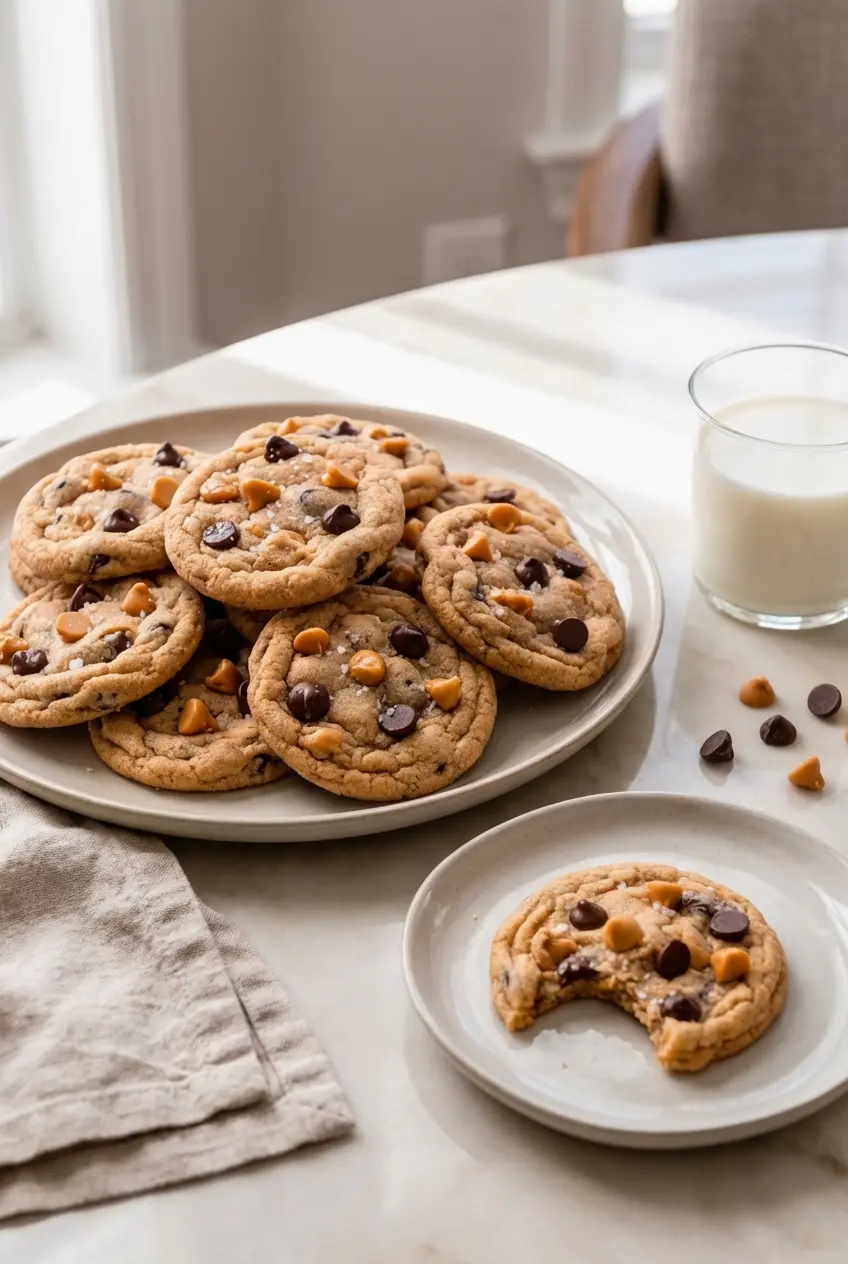
These cookies are at their best slightly warm, with a cold glass of whole milk to cut through the buttery richness. A pinch of Maldon or another flaky sea salt on top makes them taste like something from a really good neighborhood bakery.
For dessert-company energy, sandwich vanilla bean or salted caramel ice cream between two cookies and let them soften for a minute before serving. If you like a colder, creamy pairing, a vanilla bean frappuccino works beautifully alongside the sweet-salty, chewy profile of these cookies.
Storage & Make-Ahead Guide
Store baked cookies in an airtight container at room temperature for up to 5 days. I usually tuck in a slice of bread, because it helps the cookies stay soft without making them soggy.
For make-ahead baking, scoop the dough into balls and freeze them on a tray until firm, then transfer them to a freezer-safe container or bag for up to 3 months. You can bake them straight from frozen, just giving them about 1 extra minute if needed while still watching for those soft-looking centers.
To bring back that gooey middle, warm a cookie in the microwave for about 8 to 10 seconds, or in a low oven for a few minutes. The chips soften again and the edges relax just enough to taste fresh-baked.
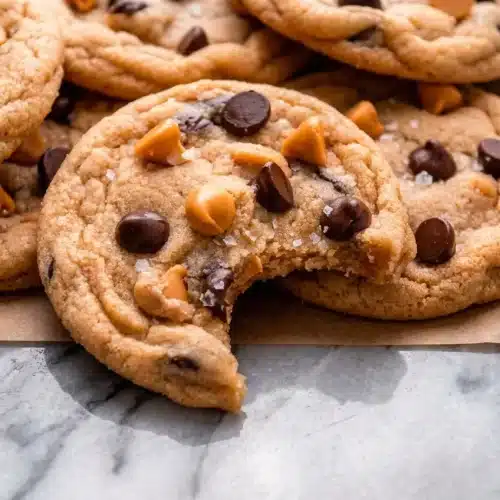
Butterscotch Chocolate Chip Cookies

Equipment
- Baking Sheets
- Parchment Paper
- Medium bowl
- large bowl
- Electric hand mixer or stand mixer
- Rubber spatula
- 2 tablespoon cookie scoop
- Wire cooling rack
Ingredients
- 2 cups (250 g) all-purpose flour, spooned and leveled
- 1/2 tsp baking soda
- 1/2 tsp baking powder
- 1/2 tsp salt
- 3/4 cup (168 g) unsalted butter, softened
- 3/4 cup (165 g) light brown sugar, packed
- 1/4 cup (50 g) granulated white sugar
- 2 egg yolks, at room temperature
- 1 tbsp vanilla bean paste or vanilla extract
- 1/4 cup (50 g) butterscotch chips, melted
- 1/2 cup (100 g) butterscotch chips
- 1/2 cup (100 g) semi sweet chocolate chips
- flaky sea salt for sprinkling on top
- extra butterscotch and chocolate chips for sprinkling on top
Instructions
Prep the Oven and Dry Mix
- Preheat your oven to 350°F and line two baking sheets with parchment paper. In a medium bowl, whisk together the all-purpose flour, baking powder, baking soda, and salt until well combined.
Cream the Base
- In a large bowl, cream the softened unsalted butter with the light brown sugar and granulated white sugar. Beat on high speed for 2 to 3 minutes until the mixture is light in color and fluffy.
- Mix in the room temperature egg yolks and vanilla bean paste. Beat on medium speed for 1 to 2 minutes until the dough base looks pale and silky. Scrape down the sides of the bowl to ensure even mixing.
- Pour the melted butterscotch chips into the bowl and mix on medium speed just until fully incorporated and the dough takes on a golden tint.
Finish the Dough and Bake
- Gradually add the dry ingredients to the wet mixture. Mix on low speed until the last dry streaks of flour disappear. Do not overmix.
- Using a rubber spatula, gently fold in the remaining butterscotch chips and semi-sweet chocolate chips until evenly distributed.
- Scoop the dough into portions using a 2 tablespoon cookie scoop. Place them 3 inches apart on the baking sheets. Bake for 10 to 11 minutes, pulling them out when the edges are light golden but the centers still look slightly soft.
Cool and Finish
- Let the cookies rest on the baking sheet for 5 minutes. While still warm, you can nudge them into perfect circles with a glass. Sprinkle with extra chips and flaky sea salt, then transfer to a wire rack to cool completely.
Notes
Conclusion
These cookies stand out because the malted milk powder and melted butterscotch chips do more than add sweetness, they build a deeper, toastier flavor that lingers after each bite. The result is chewy, buttery, caramelized, and just balanced enough to keep you reaching for another.
If you are in the mood to bake something familiar with a polished little twist, this is the batch I would make. Once you have the base down, it is easy to play with nuts, oats, or a darker brown sugar and make it your own.
Frequently Asked Questions
Why are my butterscotch chips hard after baking?
Can I use dark brown sugar instead of light brown sugar?
Do I need to chill the dough before baking?
Why do my butterscotch chocolate chip cookies turn out flat?
Can I freeze butterscotch cookie dough?
How do I keep my cookies soft for several days?
Is it better to use salted or unsalted butter for these cookies?
What can I use if I don’t have vanilla bean paste?