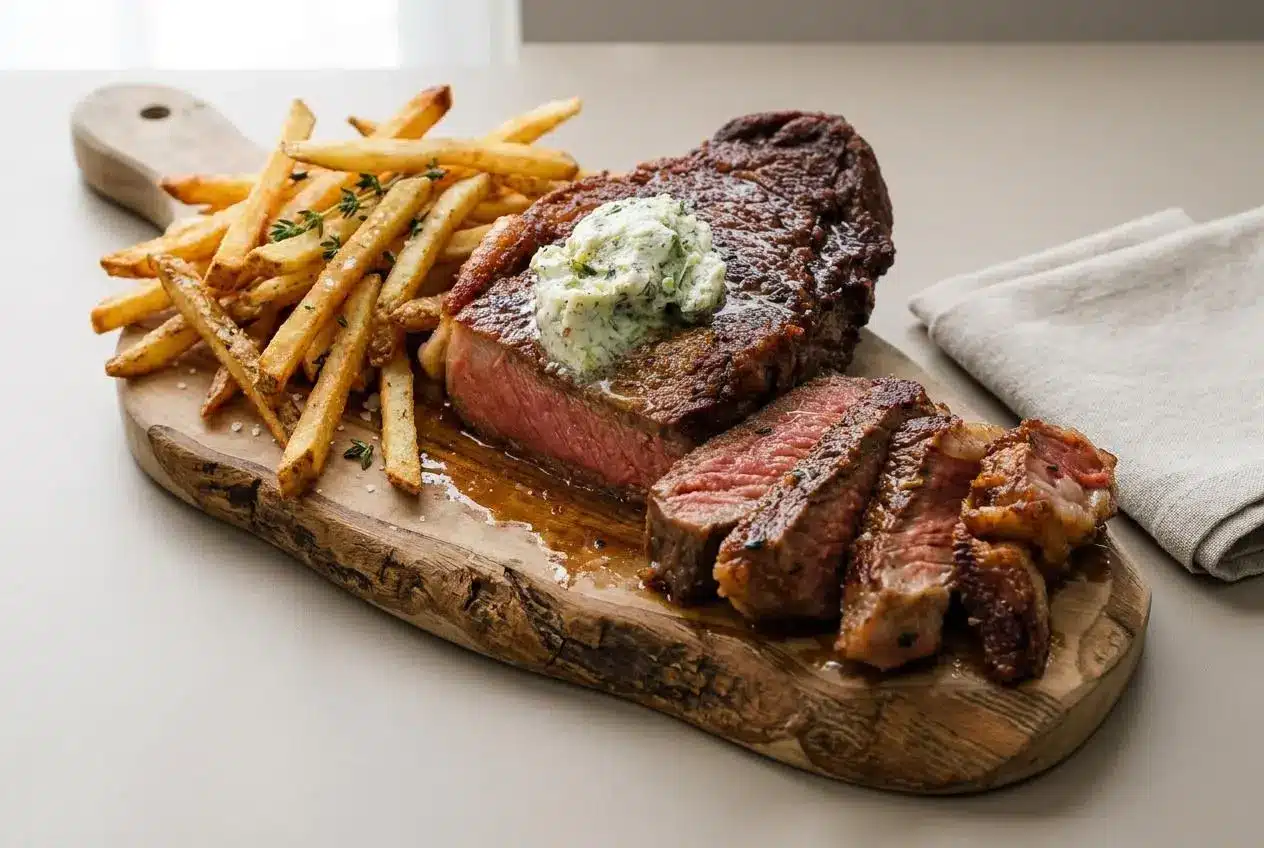
Steak frites is a classic French bistro dinner of pan-seared beef, twice-fried russet potatoes, and seasoned herb butter.
Steak frites brings together a deeply browned strip steak, crisp golden fries, and cool lemon herb butter that melts into every slice.
A hot skillet gives the beef its savory crust while the fries crackle at the edges. The timing trick comes next.
Start the first fry before the steak goes into the pan, so the potatoes are ready for their final crisp fry while the steak rests.
What Makes Classic Steak Frites Special
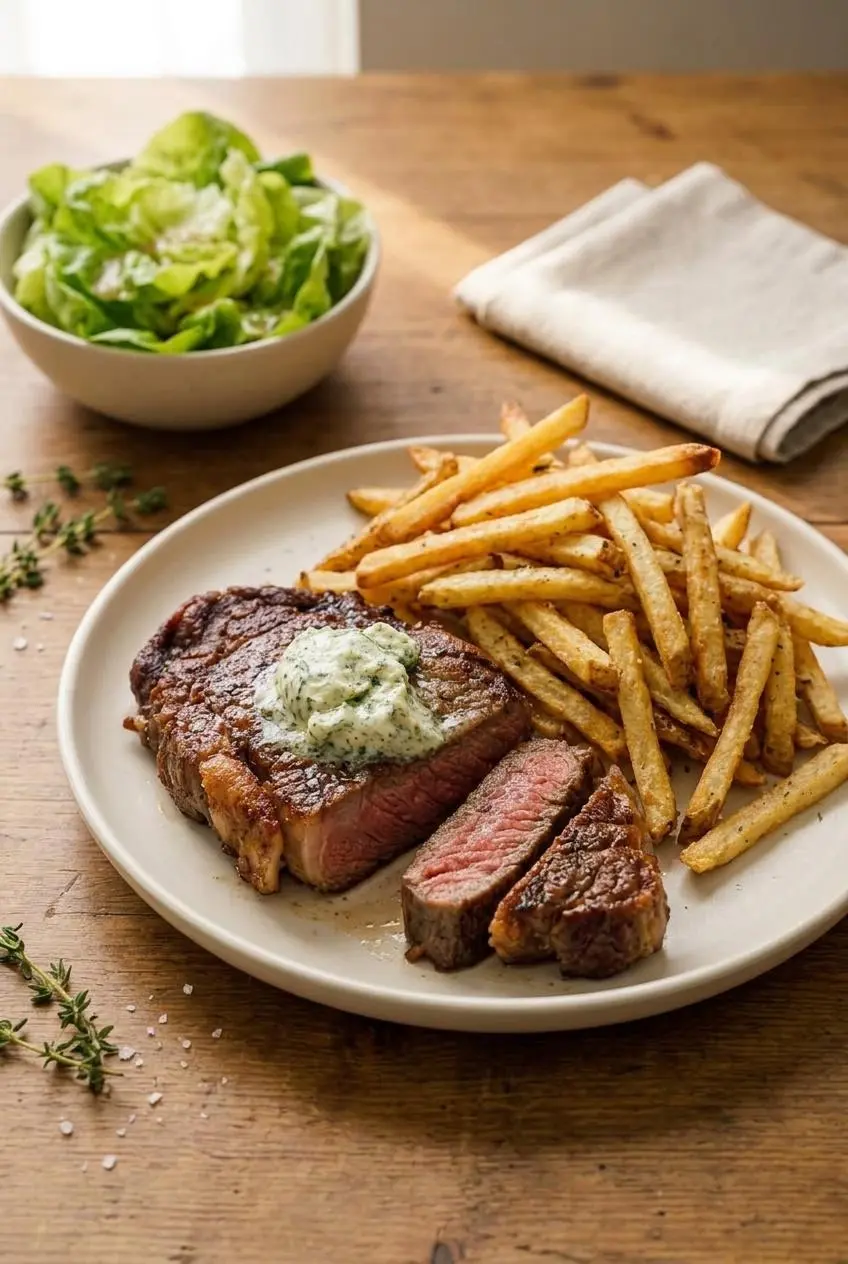
This dish works because every bite has contrast: tender beef, rich butter, sharp herbs, and airy fries with a crisp shell. The butter softens over the warm steak, while the fries catch the savory pan juices on the plate.
Keep the presentation relaxed and bistro-like. Slice the steak across the grain, pile the frites alongside it, and add a small spoonful of herb butter just before serving. A crisp green side helps cut through the richness, such as a fresh steak salad.
The goal is not complicated plating. It is serving the steak while the butter is still glossy and the fries are still loud when you bite into them.
Ingredients for Steak Frites
Each ingredient earns its place: potatoes create the crisp base, beef supplies richness, butter carries the herbs, and lemon keeps the finished plate bright and balanced.
For the Butter
- 3 softened unsalted sticks of butter
- 1 tablespoon minced fresh rosemary
- 2 tablespoons minced fresh thyme
- ¼ cup sliced green onions
- 2 finely minced cloves of garlic
- zest and juice of 1 lemon
- 2 teaspoons coarse salt
- ½ teaspoon pepper
For the Fries
- 3 russet potatoes cut into batonnet slices
- coarse salt to taste
For the Steak
- 2 12- ounce New York strip steaks
- 2 tablespoons olive oil
- 8-10 sprigs of fresh thyme
- 8-10 garlic cloves
- 4 tablespoons unsalted butter
- coarse salt and pepper to taste
Russet potatoes have the starch needed for a fluffy interior and crisp exterior. Olive oil tolerates the initial high heat, while unsalted butter lets you control seasoning. Fresh thyme and garlic perfume the butter as it coats the steak.
I let the butter soften until a finger leaves an easy indentation, which helps it whip up light instead of turning grainy or dense.
How to Make Steak Frites
Work in three parts: whip the butter first, blanch the potatoes, then sear the steak while the oil comes back up to temperature for the final fry.
Butter
- Beat the softened butter in a stand mixer fitted with the paddle on high speed for 5-7 minutes.
Stop when it looks paler, fuller, and noticeably fluffy. - Mix in the rosemary, thyme, green onions, garlic, lemon zest, lemon juice, salt, and pepper until evenly distributed.
The butter should look light and speckled with herbs, with no streaks of lemon juice remaining.
Fries
- Place the potato batonnets in cold water and swish them around with your hands.
The water will turn cloudy as surface starch loosens from the potatoes. - Drain the potatoes, rinse them once more, and drain away all excess water.
Dry potatoes help the oil stay steady instead of sputtering and steaming. - Fry the potatoes in a deep fryer or heavy pot of oil at 300°F for 3 minutes, then transfer them to a parchment-lined baking sheet.
They should look pale and cooked through, with active bubbling that begins to soften as moisture escapes. - Raise the oil to 350°F and fry the potatoes for 3-5 minutes just before serving.
When they are well browned and crisp, toss them with coarse salt in a large bowl.
Steak
- Season both sides of the strip steaks with coarse salt and pepper.
The surface should be dry and evenly coated so the seasoning can form part of the crust. - Heat the olive oil in a large frying pan over high heat until it smokes, add the steaks, then reduce the heat to medium and press them down for 15 to 20 seconds.
Leave the steaks undisturbed for 2-3 minutes so a dark golden crust can develop. - Turn the steaks, add the thyme, garlic, and butter, then spoon the foaming butter over the meat for 2-4 minutes.
The foam shifts from white to nutty golden and smells deeply aromatic when the basting is on track. - Move the steaks off the heat and rest them for 3-4 minutes before slicing and serving with the butter and fries.
A rested medium-rare steak gives slightly under gentle finger pressure and holds onto more of its juices.
Essential Ingredients and Cut Selection
New York strip is a strong choice because it has enough marbling for flavor while keeping a firm, beefy bite. The fat cap also helps build a handsome crust in the pan.
Choosing the Right Cut: Strip, Ribeye, or Hanger
New York strip is the featured cut and delivers the classic steakhouse-style balance of tenderness and chew. Ribeye is an optional swap when you want more marbling and a richer, softer texture. Hanger steak is another flavorful option with a looser grain and more mineral character.
- New York strip: best for a defined steak shape, full beef flavor, and a reliable pan sear.
- Ribeye: richer and more forgiving because of its generous marbling, though it renders more fat.
- Hanger steak: bold and tender when sliced thinly across the grain after resting.
For a leaner, marinade-forward dinner, this marinated flank steak is a useful alternative meal, but flank cooks and slices differently from the strip steaks used here.
Why Russet Potatoes Are Essential
Russets are the right potato for frites because their high starch content creates a soft, almost fluffy center after the first fry. The second fry dries and crisps the outside into a fragile shell.
Waxy potatoes hold their shape well, but they retain more moisture and can turn dense or limp in this style of fry. Cut the russets evenly so they cook at the same pace and finish together.
Two-Stage Frying Technique for Crisp Frites
Double frying separates cooking the potato interior from crisping the exterior. The first fry builds the tender center; the hotter second fry creates the browned crunch.
Starch Removal and Blanching at 300 Degrees
Cold water rinsing removes loose surface starch that can make fries stick together and brown too quickly. An ice bath is optional if you already have one prepared, but cold water and a thorough rinse handle the same practical job here.
At 300°F, the potato cooks without taking on much color. Keep the pot uncrowded, because too many potatoes at once can pull down the oil temperature and leave the frites greasy rather than crisp.
After the 3-minute blanch, spread the potatoes on the parchment-lined sheet instead of piling them in a bowl. Steam needs room to escape, or it softens the exterior you worked to prepare.
The Final Crisp Fry at 350 Degrees
The 350°F finish turns the pale blanched fries deep golden and crisp. Listen for the bubbling to become quicker and sharper near the end, a useful sign that surface moisture is nearly gone.
Salt the hot fries in a wide bowl, not over the fryer basket. Tossing gives each fry a more even coating and keeps salt out of the oil.
- Oven-roasted option: Toss soaked, thoroughly dried potato batonnets with oil and roast them on a preheated baking sheet at 425°F until browned and crisp. The texture will be different from fried frites, but it is a good lower-oil alternative.
How to Sear and Butter Baste the Steak
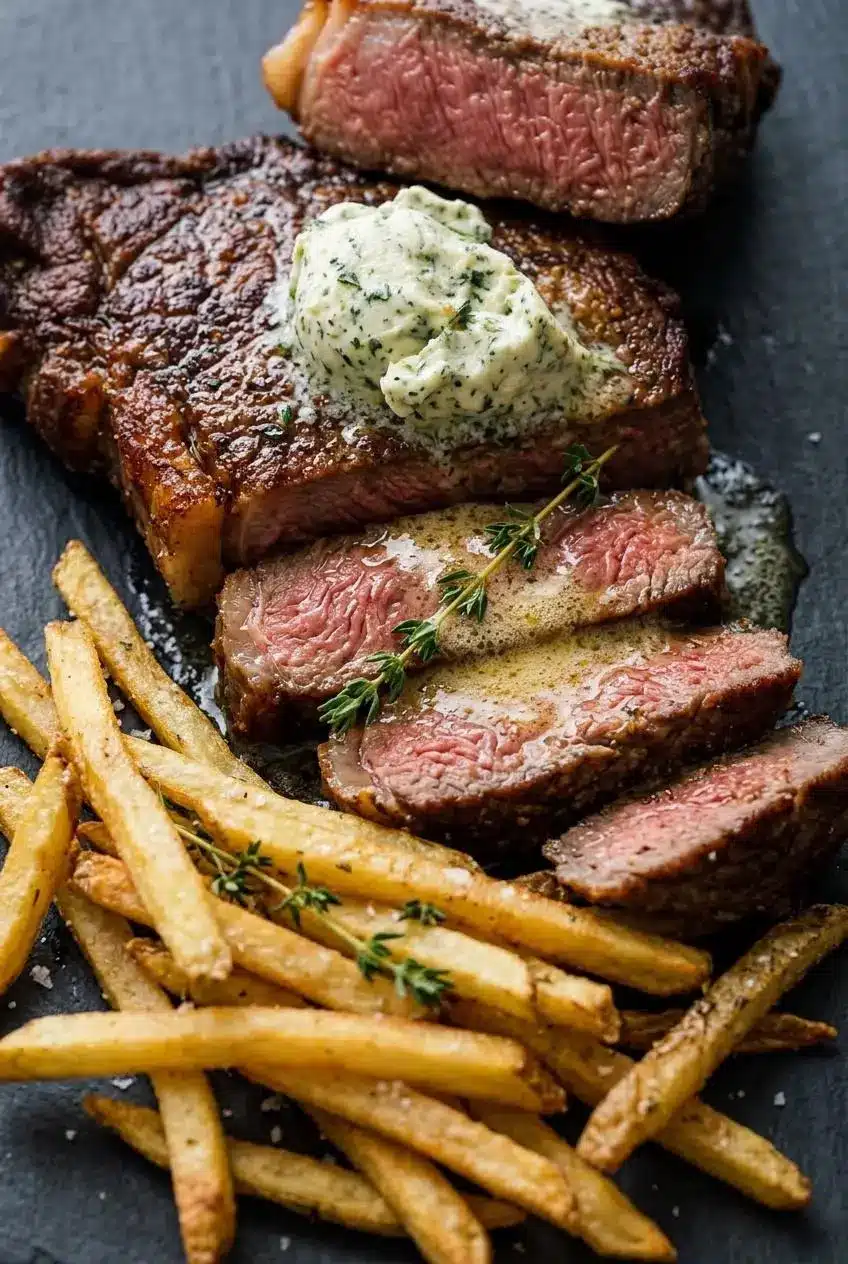
A great pan-seared steak needs dry meat, hot oil, and a quick heat adjustment before the butter goes in. That sequence builds crust without scorching the garlic or thyme.
The Screaming Hot Pan Sear
Pat the steaks completely dry before seasoning. Moisture on the surface has to evaporate before browning can begin, which is why wet steak often looks gray instead of deeply seared.
Heat the olive oil until it smokes, then add the steak and press it down for the first 15 to 20 seconds. That brief pressure creates full contact with the pan, especially if the steak has a slightly uneven surface.
Once the steak is in the skillet, reduce the heat to medium as directed. You still have enough heat to brown the beef, but the pan becomes much friendlier to butter, garlic, and herbs.
Basting With Butter, Garlic, and Thyme
Spoon basting, often called arrosé, gives the steak a glossy, savory finish. Tilt the pan slightly, gather the foaming butter with a spoon, and repeatedly pour it over the steak while the garlic and thyme scent the fat.
Watch the butter closely. Pale foam is normal at first; a nutty golden color and toasted aroma mean it is ready to flavor the meat. If the garlic darkens too quickly, pull the pan slightly off the heat before it becomes bitter.
That same fast garlic-butter flavor works beautifully in garlic butter steak bites, though the whole steaks here need their undisturbed sear first.
Internal Temperatures and Carryover Cooking
Use a digital thermometer when you want a specific center: 125°F for rare, 130-135°F for medium-rare, and 140-145°F for medium. Remove the steak slightly before your preferred finish because carryover heat continues to cook the center as it rests.
Resting is part of the cooking process, not dead time. It gives the juices a chance to settle while you complete the 350°F fry, which keeps both parts of the plate hot together.
Bistro Compound Butters and Sauces
The lemon herb butter is meant to melt over warm steak, adding brightness without covering the beef. Use it generously at the table, where its light whipped texture softens quickly against the sliced meat.
Whipped Lemon Herb Butter
Whipping room-temperature unsalted butter before adding herbs creates a lighter finish than simply stirring everything together. Lemon zest brings aroma, lemon juice adds tang, and rosemary, thyme, garlic, and green onions give the butter a clean savory edge.
For a different optional direction, make a Maitre d’Hotel-style butter with parsley and lemon, or use roasted garlic butter for a softer, sweeter garlic flavor. Keep these changes separate from the main preparation so the original balance stays intact.
Classic Garlic Aioli Alternative
Garlic aioli is a classic dipping sauce for hot frites and works especially well when you want the herb butter to remain focused on the steak. Serve it in a small ramekin alongside the fries so their crisp surface stays intact.
A creamy aioli and bright lemon butter can share the plate, but use each with intention. Dip fries in the aioli, then let the steak keep its buttery herb finish.
Timing Guide and Kitchen Troubleshooting
The easiest way to serve everything hot is to complete the first fry before you start the steak. Once the potatoes are blanched and waiting on the sheet pan, the last few minutes become much calmer.
- Start with the butter: Whip and season it first so it is ready to serve when the steak comes off the heat.
- Blanch the fries: Fry at 300°F for 3 minutes, then keep them spread out on the parchment-lined sheet.
- Sear and baste the steak: Build the crust, lower the heat, then baste with butter, garlic, and thyme.
- Finish the fries during the rest: Drop the potatoes into 350°F oil while the steak rests for 3-4 minutes.
- Limp fries: The oil was likely crowded or not hot enough. Fry in smaller batches and wait until the oil returns to 350°F before the final fry.
- Bitter pan drippings: Butter and garlic cooked too hard. Lower the pan to medium after the initial sear, then baste with golden foam rather than dark brown butter.
- Gray steak: The surface was damp or the pan was not hot enough. Dry the beef well and wait for smoking oil before adding it.
- Steak sticks to the pan: Give it time. A well-browned crust releases more easily than a steak moved too soon.
Serving and Storing Leftover Steak Frites
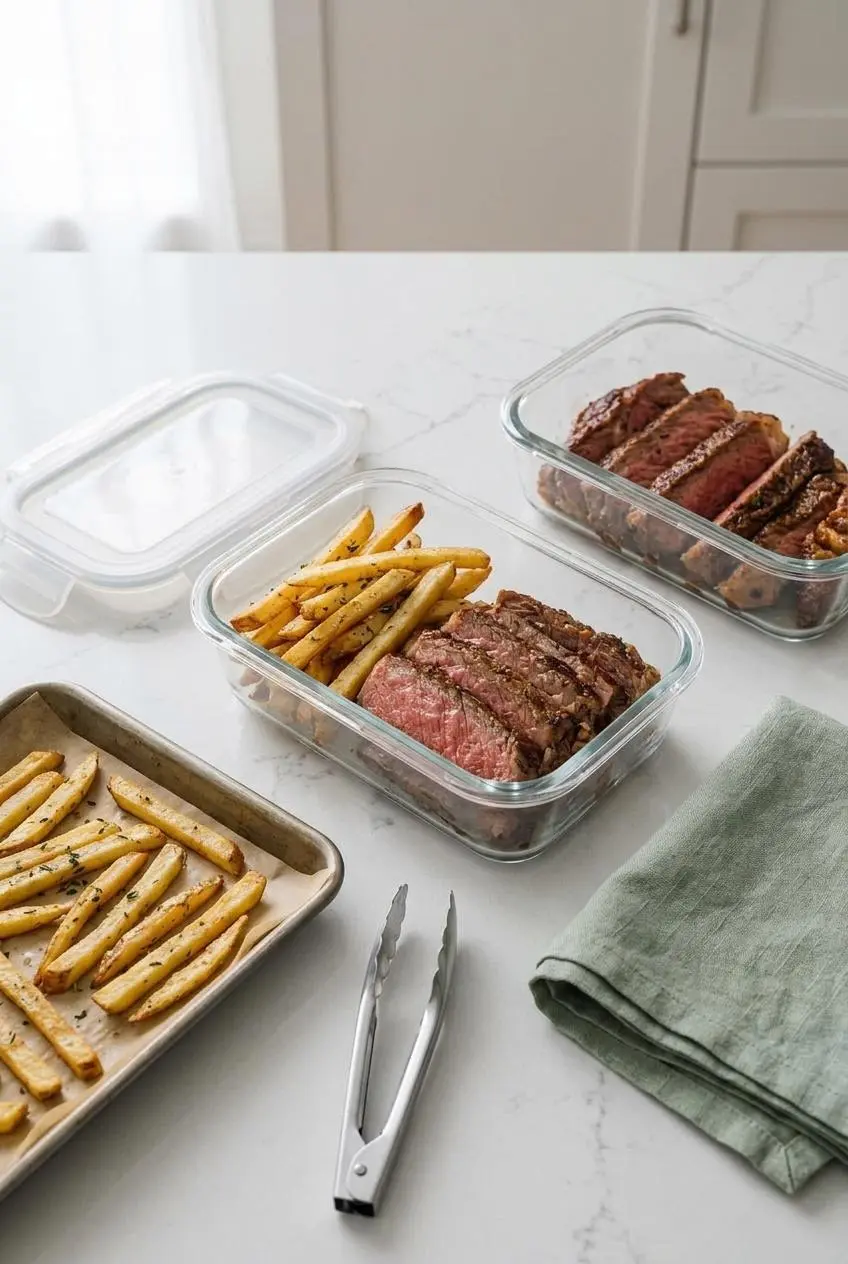
Serve steak frites on a large platter or warm dinner plates, with sliced steak, a pile of frites, and a generous spoonful of lemon herb butter. A butter lettuce salad with a sharp Dijon vinaigrette brings welcome crunch and acidity beside the rich beef.
Cool leftovers promptly, then keep steak and fries in separate airtight containers in the refrigerator. Reheat the fries in a hot oven or air fryer for the best chance at restoring crisp edges, and warm steak gently in a skillet with butter so it does not overcook.
Conclusion
The bistro effect comes from a few well-timed moves: blanching then crisping the russets, searing dry steak in hot oil, and lowering the heat before the butter baste.
Bring the final fry and steak rest together, then serve while the butter is melting and the frites are at their crispest. That is a very good dinner.
Frequently Asked Questions
What Cut of Beef Is Best for Steak Frites?
New York strip is an excellent choice because it is tender, richly flavored, and easy to sear in a skillet. Choose ribeye for more marbling and a richer bite. Choose hanger steak for bold beef flavor and a looser texture. Slice any cut across the grain after resting for the most tender result.
Why Must French Fries Be Double Fried?
The first fry at 300°F cooks the potato interior until tender without heavy browning. The second fry at 350°F dries and crisps the exterior, giving you the contrast that makes bistro frites so satisfying.
How Do You Synchronize Cooking Steak and Fries So Both Are Hot?
Blanch the fries first, then sear and baste the steak. Start the final 350°F fry while the steak rests for 3-4 minutes, then slice and plate everything immediately.
How Long Should Steak Rest Before Slicing?
Rest the steak for 3-4 minutes before slicing. This brief pause lets the juices settle into the meat instead of spilling across the cutting board.
Can Steak Frites Be Reheated Without Getting Soggy?
Yes, reheat the components separately. Use a hot oven or air fryer for the fries, then warm the steak gently in a skillet with a little butter to protect its texture.
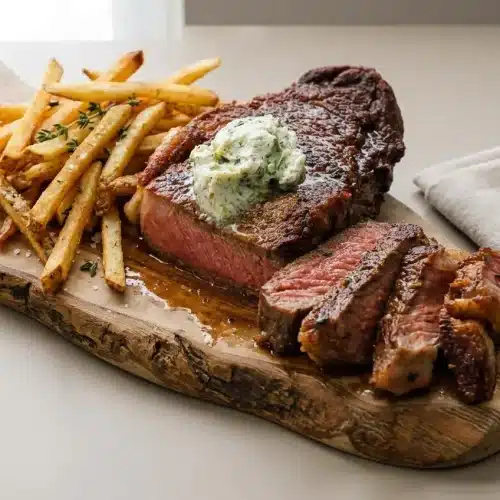
Steak Frites

Equipment
- Stand mixer with paddle attachment
- Deep fryer or heavy pot
- Large heavy frying pan
- Baking sheet with parchment paper
- Tongs
Ingredients
For the Butter
- 3 sticks softened unsalted butter
- 1 tablespoon minced fresh rosemary
- 2 tablespoons minced fresh thyme
- ¼ cup sliced green onions
- 2 cloves garlic, finely minced
- 1 zest and juice of lemon
- 2 teaspoons coarse salt
- ½ teaspoon pepper
For the Fries
- 3 russet potatoes cut into batonnet slices
- coarse salt to taste
For the Steak
- 2 12-ounce New York strip steaks
- 2 tablespoons olive oil
- 8-10 sprigs fresh thyme
- 8-10 cloves garlic
- 4 tablespoons unsalted butter
- coarse salt and pepper to taste
Instructions
Butter
- Beat the softened butter in a stand mixer fitted with the paddle on high speed for 5-7 minutes. Stop when it looks paler, fuller, and noticeably fluffy.
- Mix in the rosemary, thyme, green onions, garlic, lemon zest, lemon juice, salt, and pepper until evenly distributed. The butter should look light and speckled with herbs, with no streaks of lemon juice remaining.
Fries
- Place the potato batonnets in cold water and swish them around with your hands. The water will turn cloudy as surface starch loosens from the potatoes.
- Drain the potatoes, rinse them once more, and drain away all excess water. Dry potatoes help the oil stay steady instead of sputtering and steaming.
- Fry the potatoes in a deep fryer or heavy pot of oil at 300°F for 3 minutes, then transfer them to a parchment-lined baking sheet. They should look pale and cooked through, with active bubbling that begins to soften as moisture escapes.
- Raise the oil to 350°F and fry the potatoes for 3-5 minutes just before serving. When they are well browned and crisp, toss them with coarse salt in a large bowl.
Steak
- Season both sides of the strip steaks with coarse salt and pepper. The surface should be dry and evenly coated so the seasoning can form part of the crust.
- Heat the olive oil in a large frying pan over high heat until it smokes, add the steaks, then reduce the heat to medium and press them down for 15 to 20 seconds. Leave the steaks undisturbed for 2-3 minutes so a dark golden crust can develop.
- Turn the steaks, add the thyme, garlic, and butter, then spoon the foaming butter over the meat for 2-4 minutes. The foam shifts from white to nutty golden and smells deeply aromatic when the basting is on track.
- Move the steaks off the heat and rest them for 3-4 minutes before slicing and serving with the butter and fries. A rested medium-rare steak gives slightly under gentle finger pressure and holds onto more of its juices.