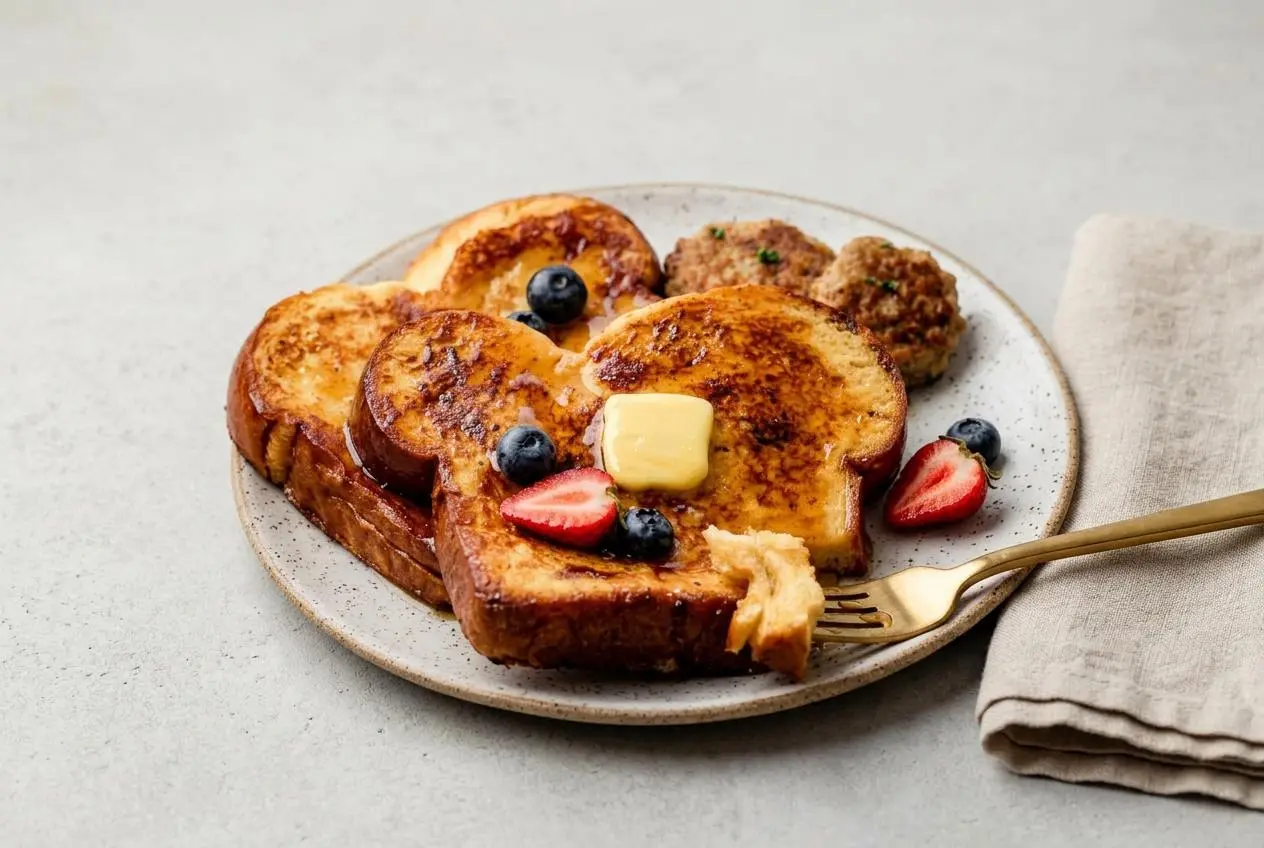
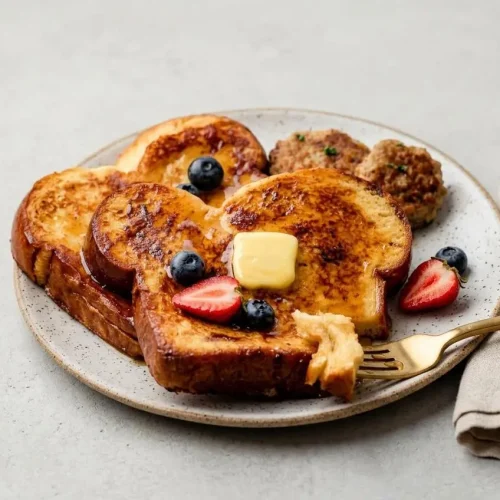
Cook thick brioche slices after a quick 5 to 10 second dip per side in cinnamon custard, then brown them in foaming butter over medium-low heat for a golden crust and tender center.
Brioche bread french toast brings together buttery, egg-rich bread and a lightly sweet custard for a breakfast that feels special without being fussy. Thick slices hold their shape while the middle stays plush instead of wet.
The kitchen smells like warm cinnamon as the butter settles into a gentle sizzle. The key is patience with the pan. Crisp edges are close.
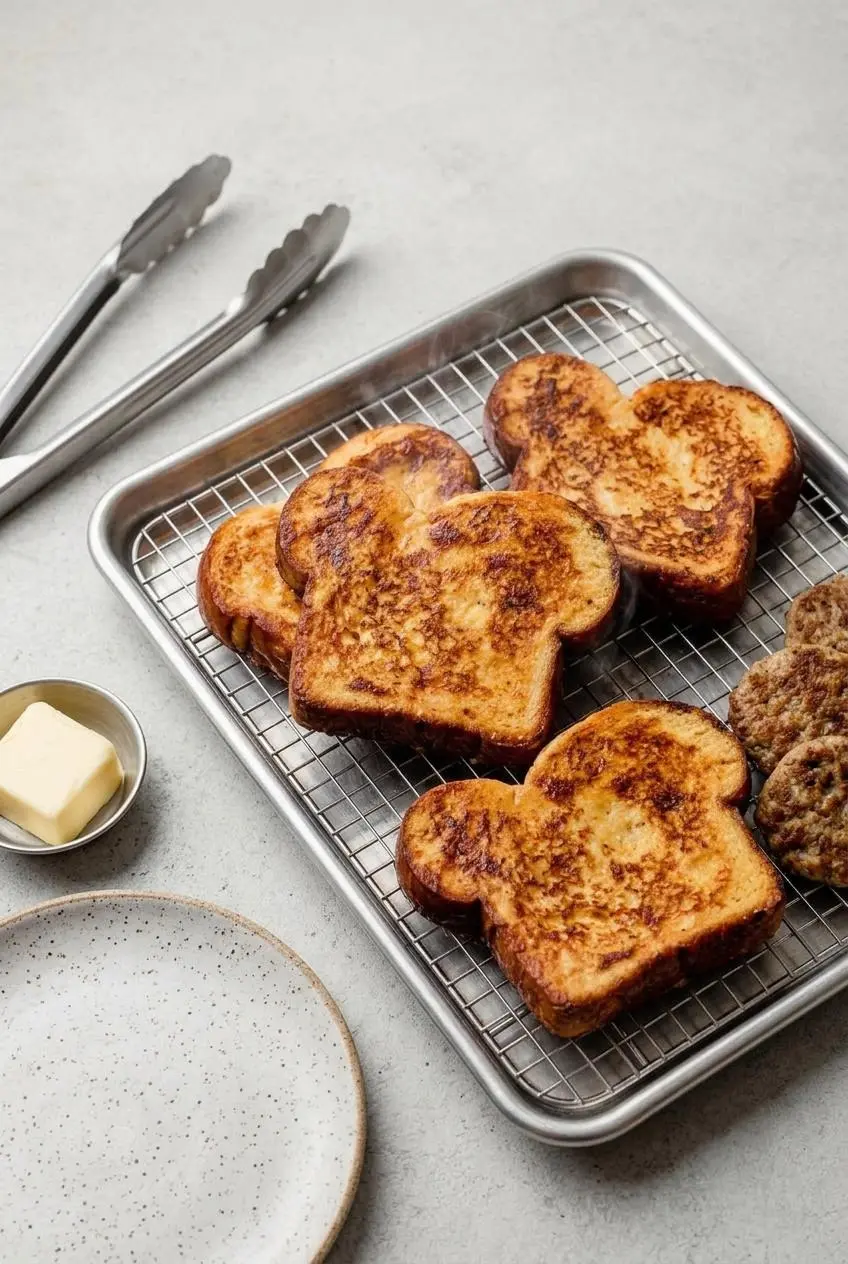
Set out a wire rack and sheet pan before cooking if you plan to make several batches, so finished slices stay lifted rather than steaming on the pan.
Why Brioche Makes the Ultimate French Toast
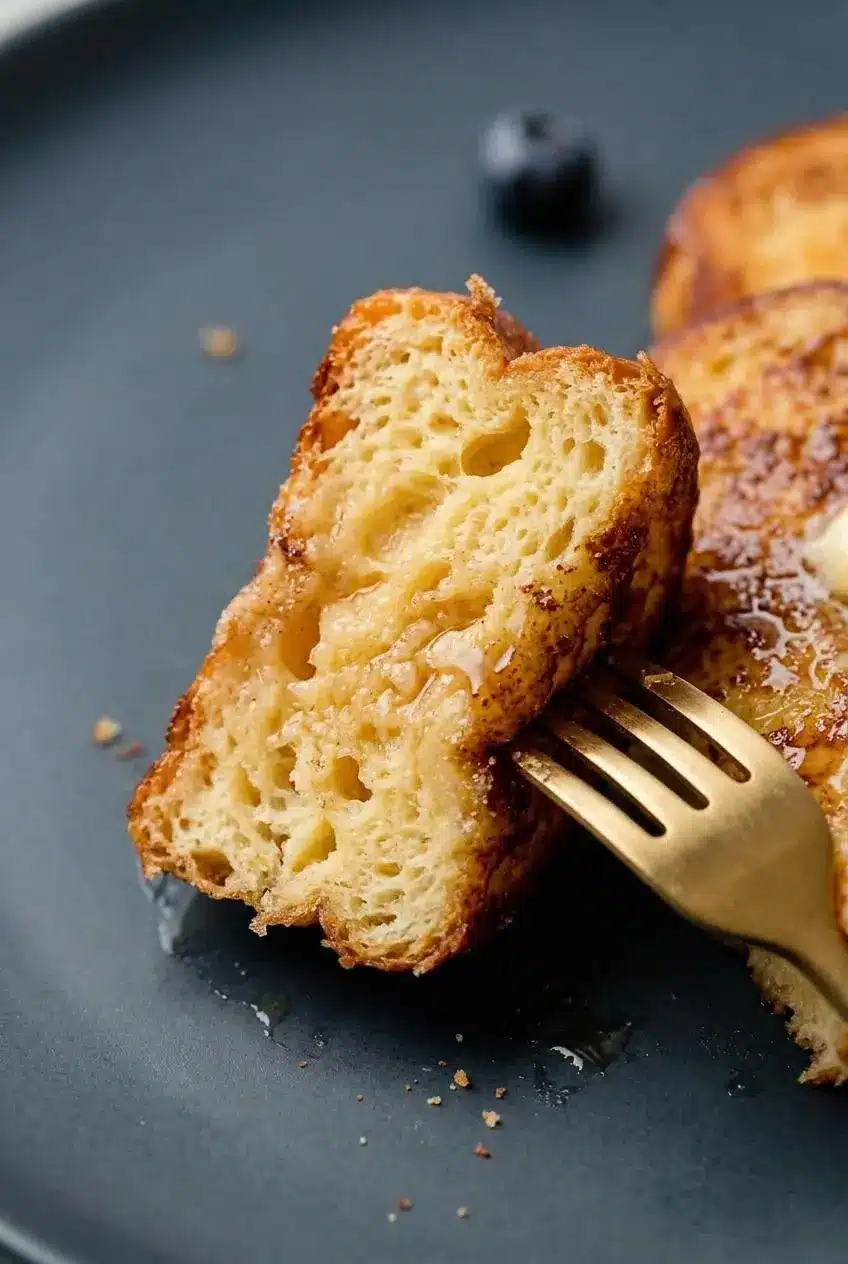
Brioche is an excellent French toast bread because its enriched dough contains butter, eggs, and milk. That richness creates a soft, pastry-like crumb, while its structure can take in custard without immediately collapsing.
Regular thin sandwich bread tends to go limp once it meets the custard. Brioche has more body, especially when it is slightly stale, so it gives you that pleasing contrast between a browned exterior and a softly custardy middle.
The Anatomy of Enriched Brioche Bread
Cut brioche into 1-inch-thick slices. That thickness gives the bread enough structure to absorb the egg custard while leaving room for a fluffy center. Thin slices soak through too quickly and are more likely to tear when lifted.
Day-old brioche is especially useful because a little moisture has evaporated from the crumb. The bread still feels tender, but it can drink in the custard at a controlled pace rather than turning heavy and saturated.
How to Stale or Oven-Dry Fresh Slices
If the loaf is very fresh and soft, arrange the 1-inch slices in one layer on a baking sheet. Dry them in a 300°F oven for 10 to 15 minutes, until the surfaces feel lightly dry but have not browned.
This quick drying step firms the outside of each slice while keeping the interior tender. Let the bread cool briefly before dipping so it does not pull apart in the custard.
Ingredients for Brioche French Toast
Each ingredient supports the final texture and flavor: brioche provides structure, eggs and milk create custard, sugar encourages browning, and vanilla and cinnamon bring warmth to the buttery crust.
- 1 loaf (about 14–16 ounces/400–450g) store-bought or homemade brioche (slightly stale)
- 4 large eggs
- 1 cup (240g/ml) whole milk
- 1 Tablespoon maple syrup, brown sugar, or granulated sugar
- 1 teaspoon pure vanilla extract
- 1/4 teaspoon–1/2 teaspoon ground cinnamon
- 1–2 Tablespoons (14–28g) unsalted butter, for cooking
Optional Toppings
- Cinnamon butter or honey butter
- Maple syrup
- Confectioners’ sugar
- Whipped cream
- Fresh berries
- Raspberry sauce, blueberry sauce topping, or strawberry sauce topping
Whole milk gives the custard a creamy body, while the eggs help it set as the toast cooks. Brown sugar or maple syrup helps the surface develop deeper color, and pure vanilla plus cinnamon soften the eggy flavor. Unsalted butter brings clean, nutty richness to the skillet.
I whisk the custard until it looks pale and completely smooth, with no loose strands of egg white hiding around the edge of the bowl.
The Perfect Egg-to-Milk Ratio
The four eggs and one cup of whole milk create a custard that coats brioche without flooding it. Too much milk can leave the center damp and weak, while too much egg can make the finished toast taste firm and overly egg-forward.
Once warmed gently in the skillet, this balance produces a soft interior that springs back lightly when pressed. The bread should feel tender and substantial, not squishy or dry.
Spices and Sweeteners for Custard Balance
Pure vanilla and ground cinnamon give the custard a warm bakery aroma that works naturally with buttery brioche. Whisk the cinnamon thoroughly so it is evenly distributed rather than gathered in dark, bitter patches.
One tablespoon of maple syrup, brown sugar, or granulated sugar adds subtle sweetness and helps the surface brown. Keep the heat moderate because sugar and milk solids can darken fast in butter.
How to Make Brioche Bread French Toast
- Cut the brioche loaf into slices that are 1 inch thick.
Each slice should feel sturdy enough to lift with one hand without bending at the center. - Whisk the eggs in a medium bowl, then blend in the milk, maple syrup, brown sugar, or granulated sugar, vanilla, and cinnamon before pouring the custard into a shallow dish.
The mixture should look creamy and uniform, with the cinnamon dispersed throughout. - Lay one brioche slice in the custard for 5 to 10 seconds, turn it over, and soak the second side for 5 to 10 seconds.
Lift it when both surfaces are coated and the slice still holds its shape. - Melt 1 Tablespoon of butter in a large skillet over medium-low heat, then cook the dipped slices in uncrowded batches for 3 to 4 minutes on the first side and 2 to 3 minutes after flipping.
The toast is ready to turn when it slides freely under a spatula, and the finished center should feel gently puffed beneath a golden crust. - Move cooked slices to a baking sheet in a 200°F oven while finishing the remaining batches.
Keep the slices spaced apart so their bottoms do not soften from trapped steam. - Serve the French toast immediately with any desired toppings.
Maple syrup, confectioners’ sugar, berries, whipped cream, blueberry sauce topping, or strawberry sauce topping all work well with the warm cinnamon custard.
The Quick Custard Dip Technique
Keep the dip brief: 5 to 10 seconds per side is enough for brioche. Its open crumb absorbs liquid quickly, so a longer soak can leave the middle too wet and make the slice difficult to handle.
Use a shallow pie plate or baking dish so you can turn each slice without forcing it down into the custard. If the bread starts tearing as you lift it, it has absorbed more liquid than it can comfortably hold.
Skillet Heat Control and Foaming Butter
Medium-low heat gives the custard time to cook through before the butter burns. Wait until the butter melts, foams, and the foam begins to settle before adding the dipped bread. You want a lively sizzle, not an aggressive crackle.
Between batches, check the skillet for dark milk solids. Wipe out any browned residue with a paper towel, then add fresh butter before the next slices go in. This prevents a bitter, scorched flavor from building up across the batch.
A cast iron skillet offers steady heat and a deep crust, while a nonstick skillet makes delicate slices easier to release. Whichever pan you use, avoid crowding it. Too many slices cool the surface and leave the edges soft.
Keeping Batches Warm in the Oven
For brunch service, place a wire rack inside a rimmed baking sheet and warm it in a 200°F oven. Transfer each finished slice to the rack rather than laying it flat on the sheet pan.
Air can circulate under the toast, which helps preserve the crisp underside. This small setup makes a real difference when everyone is waiting for breakfast at once.
Troubleshooting Common French Toast Mistakes
A few small adjustments can rescue the texture before the next batch reaches the skillet.
- Soggy or wet centers: The bread was likely too fresh, sliced too thin, soaked too long, or cooked over heat that browned the outside too quickly. Use lightly dried 1-inch slices, limit the dip, and let the toast cook steadily over medium-low heat until the center has a little spring.
- Scorched crust: The skillet is too hot or the butter has darkened from an earlier batch. Lower the heat, wipe away the browned residue, and begin again with fresh butter.
- Rubbery texture: High heat can tighten the egg custard before the bread warms through. Whisk until smooth, then cook gently so the center stays tender.
- Egg-heavy flavor: Cinnamon may have clumped, or the custard was not mixed evenly. Whisk the vanilla, sweetener, and cinnamon thoroughly into the eggs and milk before dipping.
- Toast sticks or tears while flipping: Give the first side more time. When the crust has formed, the slice releases cleanly instead of dragging across the skillet.
Storage and Crisp Reheating
Let any leftover slices cool on a wire rack before placing them in an airtight container. Refrigerate perishable leftovers within 2 hours and keep the refrigerator at 40°F or below for proper cold food storage.
For the best texture, reheat individual slices in a toaster oven or a dry skillet until the center is hot and the edges regain their crispness. A microwave can make the bread limp and rubbery, so it is better reserved for situations where texture is not the priority.
If you want to streamline brunch morning, slice the brioche and whisk the custard ahead, then keep them separate and chilled until you are ready to cook. Dip the bread only when the skillet is hot so the crust has the best chance to form quickly.
Delicious Variations and Serving Suggestions
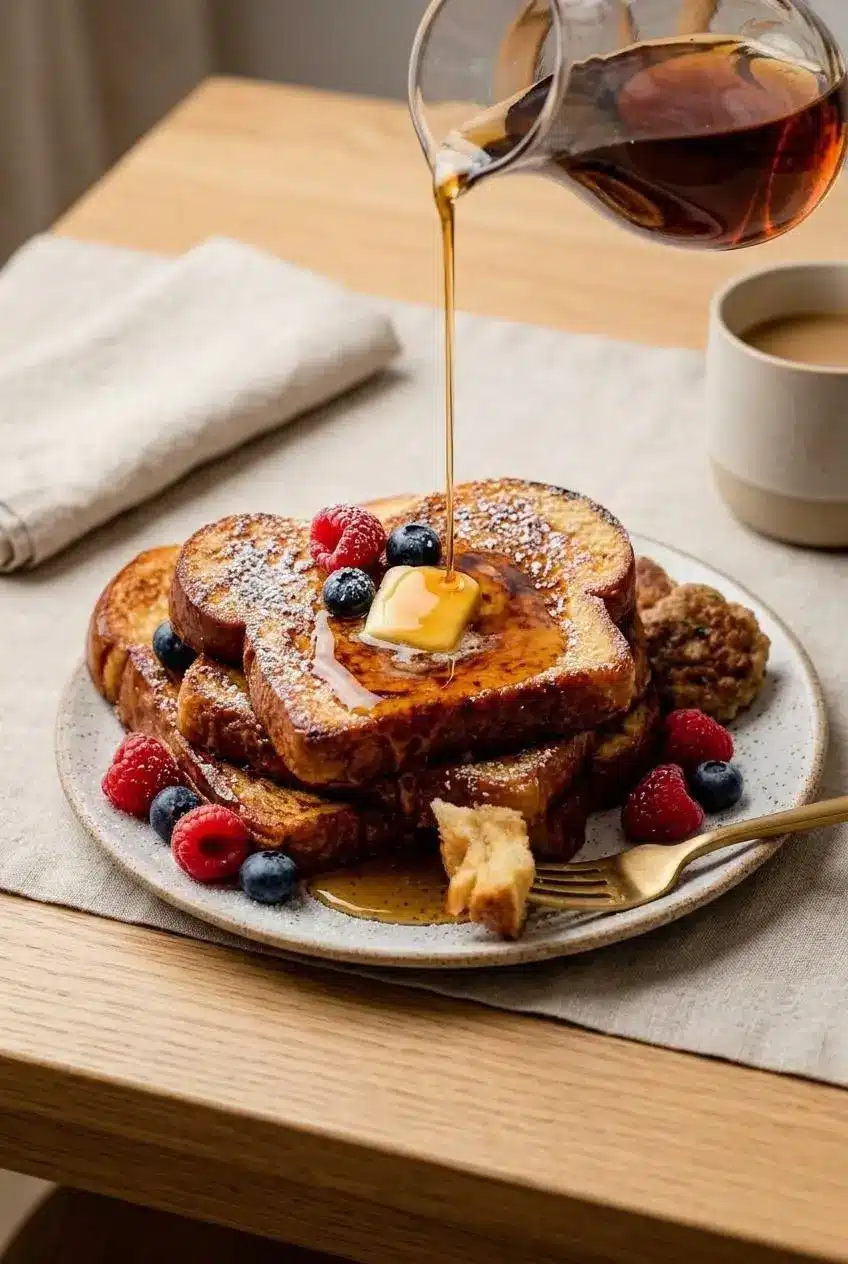
Keep the cinnamon-vanilla version as written, then change the mood with optional flavors and toppings. These ideas stay separate from the main method, so you can choose what suits the occasion.
Citrus and Spiced Cardamom
Add finely grated orange zest and a pinch of ground cardamom to the custard for a fragrant variation. The citrus brightens the rich butter and egg flavors, while cardamom adds a gentle floral warmth.
For seasonal warmth, add pumpkin spice to the custard in place of some of the cinnamon. It gives the toast a cozy, spiced character that pairs especially well with maple syrup and pecans.
For a dairy-free option, choose a brioche loaf that suits your dietary needs, replace the whole milk with oat milk or almond milk, and cook the slices in plant-based butter or coconut oil. The custard will taste different, but medium-low heat still matters for a soft center.
Baked Brioche French Toast Casserole
For a hands-off brunch variation, cube stale brioche, place it in a greased baking dish, pour the cinnamon-vanilla custard over it, and bake at 350°F until puffed and golden. The result is spoonable and soft inside, with crisp peaks on top.
If a decadent make-ahead bake is what you are after, this creme brulee French toast offers a richer custard-style direction for a special brunch table.
Decadent Syrups, Compound Butters, and Fruit
- Warm pure maple syrup with raspberries and blueberries adds bright tartness against the buttery bread.
- Cinnamon butter or honey butter melts into the crust and adds a glossy, fragrant finish.
- Confectioners’ sugar with strawberry, raspberry, or blueberry sauce makes the plate feel dessert-like without changing the toast itself.
- Crispy bacon, breakfast sausage, or softly cooked eggs add a savory counterpoint to the sweet custard.
Conclusion
Great brioche French toast comes down to two rules: cut the bread 1 inch thick and dip it for only 5 to 10 seconds per side. Those details protect the airy crumb while giving the custard just enough time to settle in.
Keep the skillet at medium-low, refresh the butter between batches, and wait for that easy spatula release before flipping. The reward is a warm stack with buttery crunch outside and a soft center worth lingering over.
Frequently Asked Questions
Why Is Brioche Bread the Best Choice for French Toast?
Brioche is enriched with butter, eggs, and milk, giving it a tender but structured crumb. It absorbs custard readily while keeping its shape better than thin sandwich bread. Its natural richness also creates a soft, pastry-like center and a deeply buttery aroma once the slices hit the skillet.
How Long Should You Soak Brioche Bread in Custard?
Soak brioche for 5 to 10 seconds per side. The bread absorbs the egg-and-milk mixture quickly, so longer soaking can create a heavy, soggy center. Lift the slice as soon as it is coated and still feels strong enough to hold together.
How Do You Dry Out Fresh Brioche Quickly if It Is Not Stale?
Arrange 1-inch slices in one layer on a baking sheet and dry them at 300°F for 10 to 15 minutes. The goal is a slightly dry surface, not browned toast. That brief oven time helps fresh brioche take in custard without becoming fragile.
How Do You Reheat Leftover Brioche French Toast So It Stays Crisp?
Use a toaster oven or dry skillet to warm the slices until heated through and crisp at the edges. This restores the contrast between the crust and soft center more effectively than a microwave. Reheat only the portions you plan to serve so the remaining slices stay in better condition.
Can I Make Dairy-Free Brioche French Toast?
Yes, if the brioche itself fits your dietary needs. Use oat milk or almond milk in place of whole milk and cook with plant-based butter or coconut oil. The flavor will be less dairy-rich, but the same quick dip and gentle skillet heat will help the toast hold together.
Brioche Bread French Toast

Equipment
- Mixing Bowl (preferably with a pour spout)
- Whisk
- Electric Griddle, Griddle Pan, or Shallow Skillet /Frying Pan
- Baking Sheet
Ingredients
- 1 loaf store-bought or homemade brioche about 14-16 ounces/400-450g, slightly stale
- 4 large eggs
- 1 cup whole milk 240g/ml
- 1 Tablespoon maple syrup, brown sugar, or granulated sugar
- 1 teaspoon pure vanilla extract
- 1/4-1/2 teaspoon ground cinnamon
- 1-2 Tablespoons unsalted butter 14-28g, for cooking
Optional Toppings
- Cinnamon butter or honey butter
- Maple syrup
- Confectioners’ sugar
- Whipped cream
- Fresh berries
- Raspberry sauce, blueberry sauce topping, or strawberry sauce topping
Instructions
- Cut the brioche loaf into slices that are 1 inch thick. Each slice should feel sturdy enough to lift with one hand without bending at the center.
- Whisk the eggs in a medium bowl, then blend in the milk, maple syrup, brown sugar, or granulated sugar, vanilla, and cinnamon before pouring the custard into a shallow dish. The mixture should look creamy and uniform, with the cinnamon dispersed throughout.
- Lay one brioche slice in the custard for 5 to 10 seconds, turn it over, and soak the second side for 5 to 10 seconds. Lift it when both surfaces are coated and the slice still holds its shape.
- Melt 1 Tablespoon of butter in a large skillet over medium-low heat, then cook the dipped slices in uncrowded batches for 3 to 4 minutes on the first side and 2 to 3 minutes after flipping. The toast is ready to turn when it slides freely under a spatula, and the finished center should feel gently puffed beneath a golden crust.
- Move cooked slices to a baking sheet in a 200°F oven while finishing the remaining batches. Keep the slices spaced apart so their bottoms do not soften from trapped steam.
- Serve the French toast immediately with any desired toppings. Maple syrup, confectioners’ sugar, berries, whipped cream, blueberry sauce topping, or strawberry sauce topping all work well with the warm cinnamon custard.