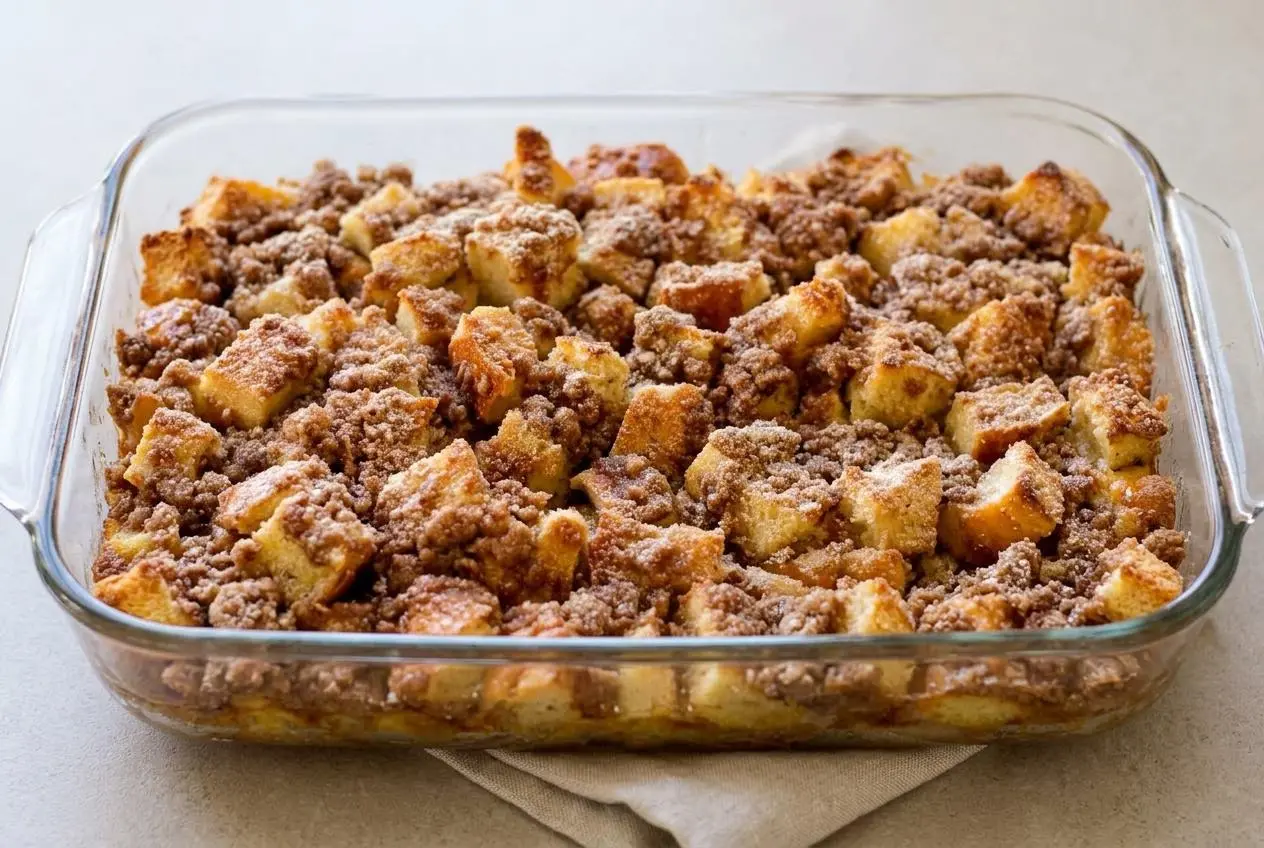
French toast casserole is a make-ahead breakfast bake of custard-soaked bread finished with a crisp cinnamon streusel. Chill the bread and custard before baking for a soft center, golden top, and easy brunch timing.
This french toast casserole turns a sturdy loaf, vanilla custard, and buttery crumble into warm, sliceable breakfast squares. The bread absorbs the custard slowly, so each bite stays plush rather than wet.
The cinnamon butter aroma is reason enough to preheat the oven.
For the cleanest slices, grease the baking dish thoroughly, especially in the corners where brown sugar topping can stick.
Essential Ingredients and Bread Selection
Each ingredient supports the contrast that makes this bake work: bread provides structure, eggs set the custard, dairy adds richness, and cold butter creates a crisp cinnamon topping.
French Toast
- 1 (24-ounce) loaf sourdough bread (or brioche, challah or French bread)
- 8 large eggs
- 2 cups milk
- ½ cup heavy cream
- 1 tablespoon vanilla extract
- ¾ cup sugar
Topping
- ½ cup all-purpose flour
- ½ cup packed light brown sugar
- 1 teaspoon ground cinnamon
- ¼ teaspoon salt
- ½ cup cold unsalted butter, (cut into pieces)
Sourdough gives the casserole a pleasantly chewy structure and a subtle tang that keeps the sweetness balanced. Brioche and challah make a softer, richer bake, while French bread offers a sturdy middle ground. Eggs firm the custard, milk keeps it fluid enough to soak in, and heavy cream gives the center a silkier finish. Vanilla rounds out the egg flavor rather than letting it take over.
The topping works because cold butter stays in small pieces as it is cut into the flour and brown sugar. In the oven, those pieces melt slowly and leave behind craggy, crisp crumbs scented with cinnamon.
I keep the butter cold until the last moment because softened butter blends in too completely and gives the topping less crunch.
Choosing the Right Bread Texture
Day-old bread is the best starting point because it can drink in custard without collapsing. Dense sourdough, challah, brioche, and French bread all hold their shape better than ultra-soft sandwich bread, which tends to break down and leave a soggy center.
If the loaf is very fresh, cube it first and spread the cubes in a single layer on a baking sheet. Dry them in a 300°F oven for 10 to 15 minutes, stirring once if needed, until the surfaces feel dry but the centers are not hard. Let the cubes cool before adding custard.
If you enjoy a richer pastry-style breakfast bake, this croissant breakfast casserole uses a different bread texture but follows the same useful principle: rich bread needs enough custard to hydrate it without turning it to paste.
Custard Ratio and Flavor Balance
The eggs, milk, and heavy cream create a custard that sets into the bread rather than pooling beneath it. Milk keeps the mixture light enough to soak evenly, while heavy cream adds enough fat for a tender, luxurious interior. Sugar sweetens the custard and helps the top brown, while vanilla softens the eggy edge with a warm bakery flavor.
Whisk until the eggs are fully blended and no streaks of white remain. A smooth custard moves easily through the bread cubes and reaches the center of the dish during chilling.
How to Make French Toast Casserole
Give the bread time to absorb the custard before baking. The separate chilled topping is the small detail that keeps the finished casserole custardy underneath and crisp on top.
- Grease a 9-x-13-inch baking dish, then fill it with 1-inch bread cubes arranged in an even layer.
Leave the cubes loosely settled so the custard can flow into the spaces between them. - Whisk the eggs, milk, heavy cream, vanilla extract, and sugar in a medium bowl until smooth, then pour the mixture across the bread.
The bread should look evenly moistened, with no large dry patches on top. - Cover the dish with plastic wrap and refrigerate it for at least 4 hours or overnight.
As it rests, the bread cubes will swell slightly as the custard reaches their centers. - Combine the flour, brown sugar, cinnamon, and salt in a medium bowl, then cut in the cold butter until the mixture forms coarse crumbs.
Transfer the crumbs to a small resealable plastic bag and refrigerate them overnight so the butter stays firm. - Heat the oven to 350°F when you are ready to bake.
Let the oven come fully to temperature so the topping begins browning evenly from the start. - Remove the plastic wrap and scatter the chilled cinnamon crumbs evenly over the soaked bread.
Cover the surface from edge to edge for a consistent golden crust. - Bake uncovered for 45 to 60 minutes, choosing the shorter end for a softer center and the longer end for a firmer slice.
The casserole is ready when the top is golden and the center looks puffed rather than liquid.
A deep golden streusel and the smell of caramelized cinnamon butter are strong signs that the bake is close. Letting the dish stand briefly after baking also helps the custard settle, making it easier to spoon or slice.
Troubleshooting Common Baking Issues
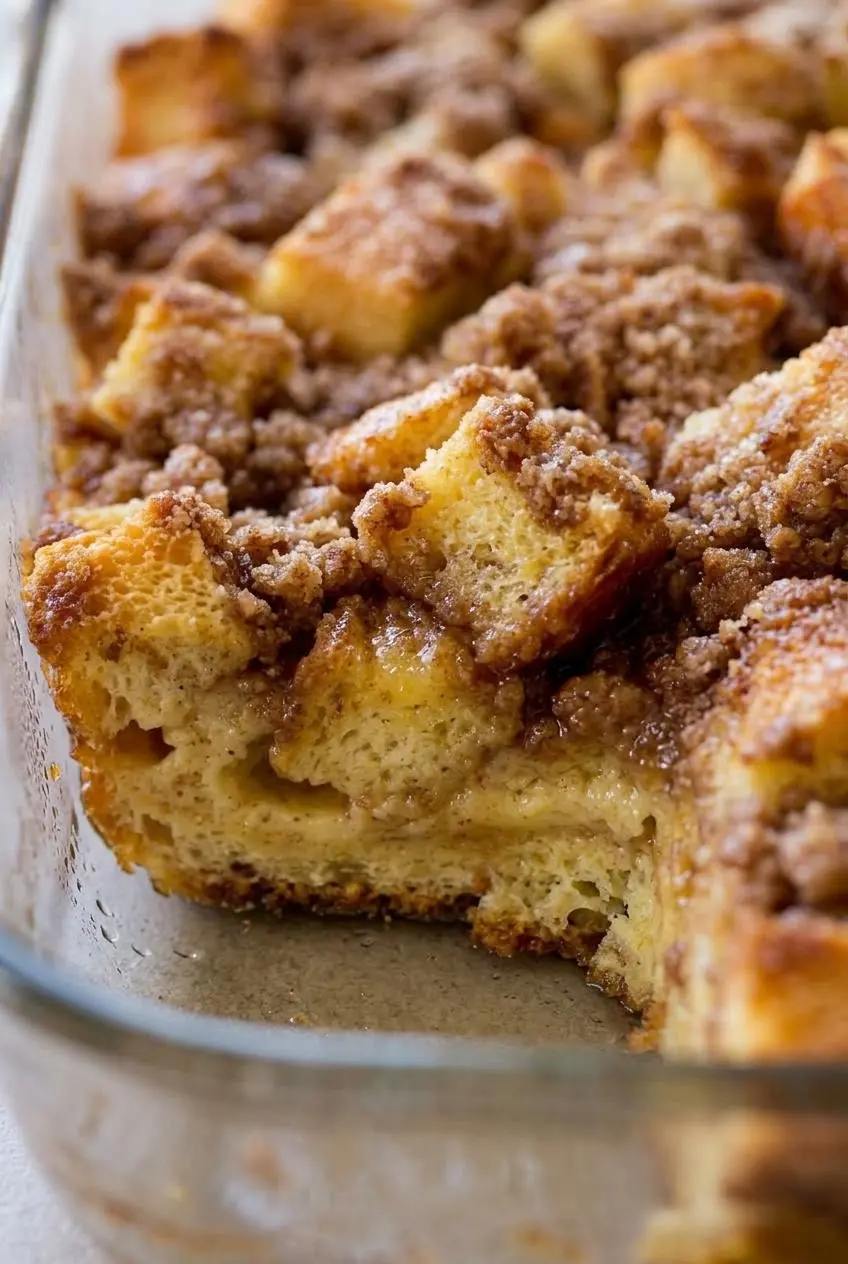
Most texture problems come down to bread moisture, custard absorption, or a center that needs more oven time. Watch the middle of the casserole, not just the browned topping.
Preventing Sogginess and Checking Center Doneness
- Soggy center: Fresh or very soft bread can release moisture instead of holding custard. Use day-old bread or dry fresh cubes in the oven before assembling.
- Wet-looking middle: The casserole likely needs more baking time. Continue baking until the center has puffed lightly and offers gentle springy resistance when pressed.
- Uncertain doneness: Slide a thin knife into the center and check that it comes out without loose custard clinging to it. For an egg-based casserole, the center should reach 160°F for cooked egg dishes.
- Dense or uneven patches: Pour the custard slowly over the entire dish and press any dry-looking cubes down gently before chilling so they can absorb the liquid.
Do not judge doneness only by the edges. They set first, while the center needs enough time to become creamy, springy, and sliceable.
Protecting Streusel and Thermal Baking Safety
If the streusel browns faster than the custard sets, loosely tent the dish with foil for the remaining bake. Keep the foil high enough that it does not press into the topping, then remove it near the end if the crumbs need more color.
A chilled glass baking dish should sit at room temperature for about 15 to 20 minutes before it goes into a hot oven. This gentler transition helps avoid sudden temperature stress on the dish while the oven finishes heating.
Make-Ahead and Reheating Guide
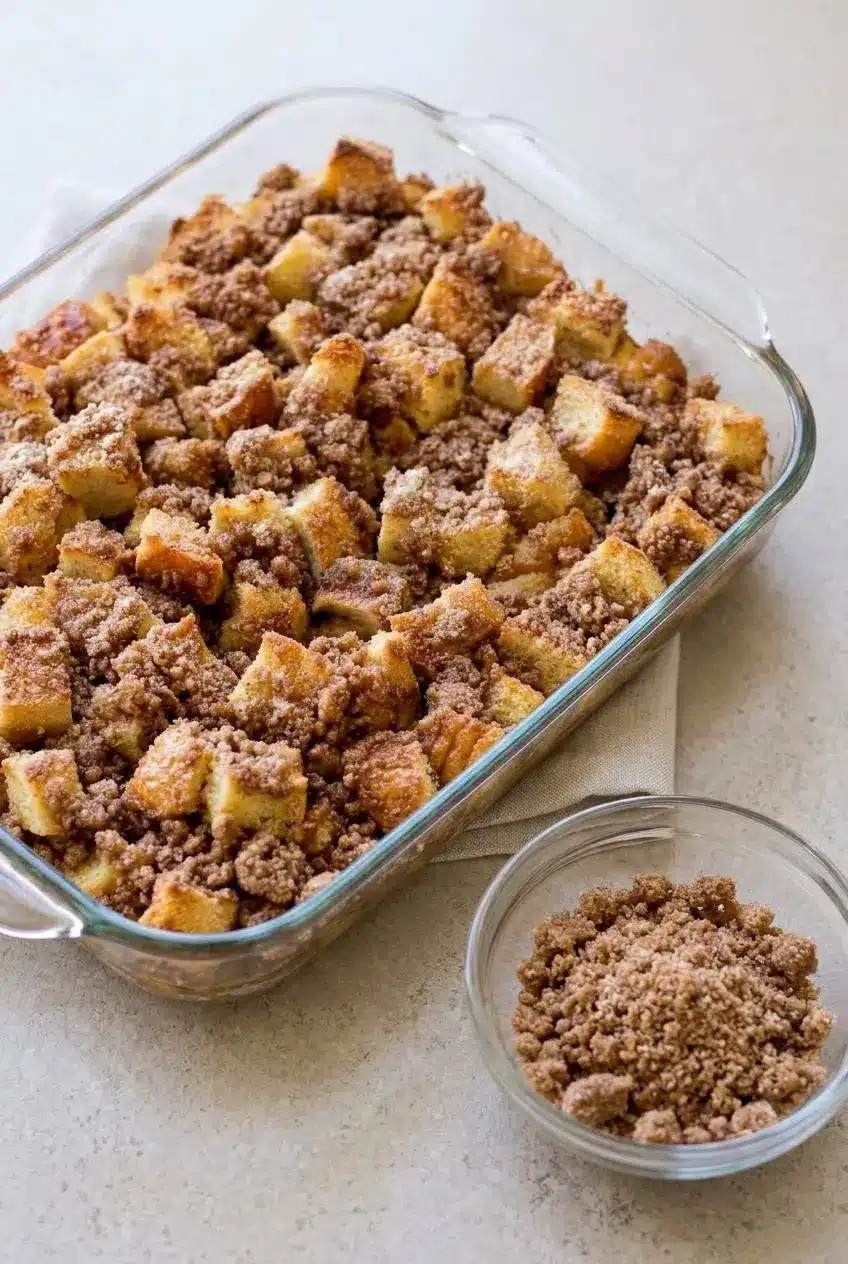
This casserole is especially helpful for holiday mornings because the hands-on work happens before breakfast. Keep the custard-soaked bread covered in the refrigerator, and keep the crumble in its own sealed bag until baking time.
Overnight Chilling and Freezing Instructions
Assemble the bread and custard, cover the dish, and refrigerate it for at least 4 hours or overnight. This resting period gives the custard time to soak through the cubes, which is the key to a creamy center without dry pockets.
Freezing instructions are not included here, so the most dependable make-ahead approach is refrigerated chilling followed by baking. Keep the topping separate until the dish is ready for the oven, since brown sugar crumbs soften if they sit on the damp bread.
For another brunch option built around a chilled custard soak, try creme brulee French toast. It is a useful choice when you want the same prepare-ahead rhythm with a different finish.
Reheating for Maximum Streusel Crispness
Warm leftover portions in an oven or toaster oven rather than relying only on a microwave. Dry oven heat refreshes the topping and warms the custard more evenly, while microwave heat can soften the streusel.
Place slices on a baking sheet or use the original dish for a larger portion. Heat until the center is hot and the cinnamon crumbs feel crisp again, covering loosely with foil only if the topping begins to darken too quickly.
Flavor Variations and Serving Suggestions
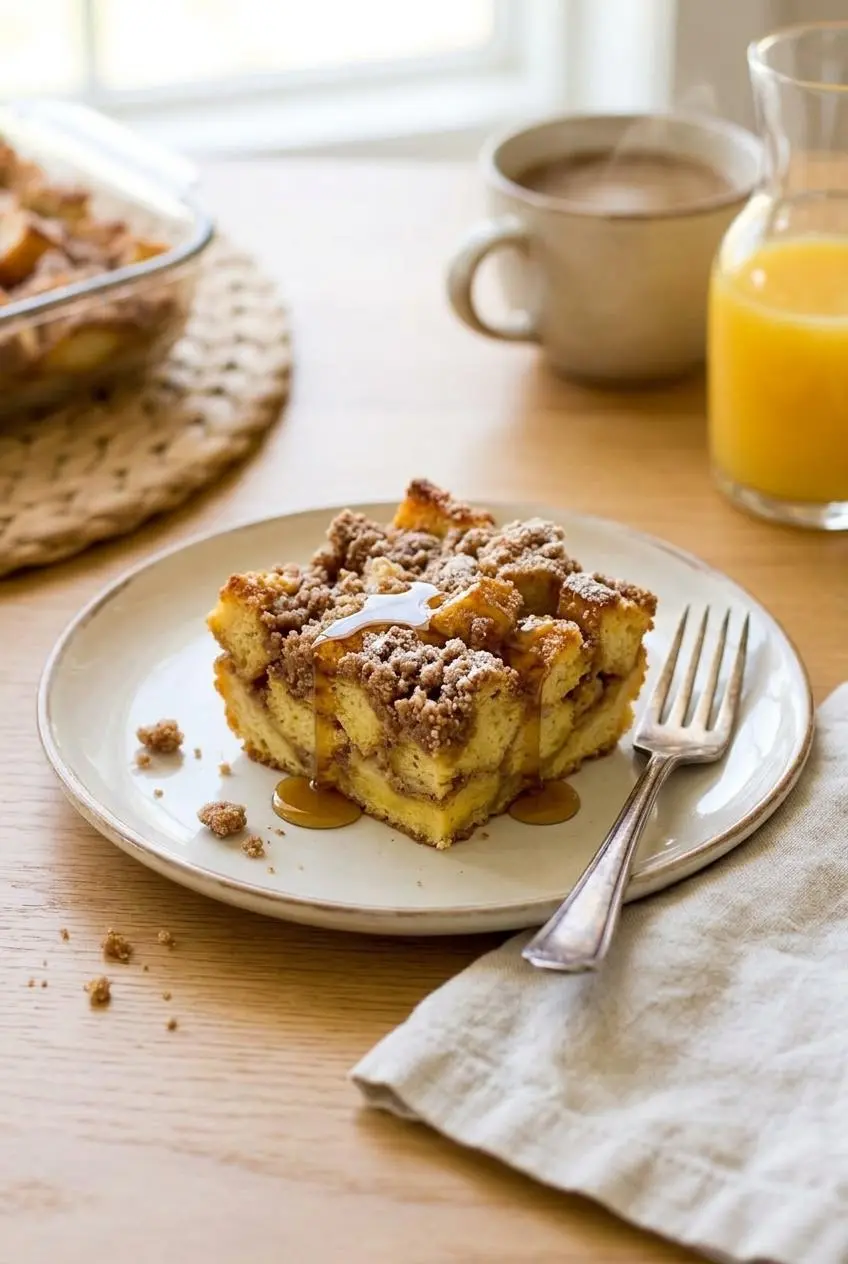
Keep the main custard and streusel method intact, then add optional layers or flavor accents that suit the occasion. These changes belong between the bread cubes or in the topping, not in the official ingredient list.
Berry and Cream Cheese Add-Ins
- Blueberries: Scatter fresh blueberries between layers of bread for juicy pockets that brighten the rich custard.
- Sliced apples: Layer thin apple slices among the cubes for an apple-cinnamon feel and a little gentle bite.
- Cream cheese: Tuck small cream cheese cubes between the bread for soft, tangy pockets that resemble stuffed French toast.
- Orange zest and cardamom: Fold fresh orange zest and a pinch of ground cardamom into the custard for a fragrant citrus-spice variation.
Use fruit sparingly enough that the bread remains the foundation of the casserole. Very juicy additions can make the center take longer to set.
Pecan Praline Streusel Twist
For a nutty holiday-style topping, add chopped pecans or walnuts to the flour, cinnamon, and brown sugar mixture. The nuts toast as the butter melts, adding a praline-like crunch and deeper roasted flavor.
If cinnamon-forward breakfasts are your favorite, cinnamon roll French toast is another warm, brown-sugar-scented option for a weekend brunch spread.
Balanced Morning Serving Ideas
- Drizzle warm squares with pure maple syrup for extra sweetness and shine.
- Add a light dusting of powdered sugar just before serving.
- Balance the richness with citrus segments, mixed berries, or a bright fruit salad.
- Serve crispy bacon or breakfast sausage alongside the casserole for a sweet-and-savory plate.
For a fuller brunch menu, a savory egg-and-potato side such as this hashbrown breakfast casserole gives the table a welcome contrast to the soft, sweet custard.
Conclusion
This make-ahead breakfast bake delivers a custardy center, sturdy bread texture, and a crisp cinnamon topping in every scoop. Chilling the bread and keeping the streusel separate are the two habits that make the difference.
Set it up before a weekend or special morning, then enjoy the warm, golden bake without a rush.
Frequently Asked Questions
What Type of Bread Works Best for French Toast Casserole?
Sturdy, day-old bread works best. Choose sourdough, brioche, challah, or French bread because each can absorb the custard while still holding its shape. Avoid very soft sandwich bread, which is more likely to break down.
How Do I Keep French Toast Casserole From Turning Soggy?
Start with dry or day-old bread and allow the custard to soak in the refrigerator for at least 4 hours. Bake uncovered until the center is lightly puffed and set, not shiny or loose. If the center still looks wet, continue baking before serving.
Can I Make French Toast Casserole Ahead of Time and Freeze It?
You can make it ahead by assembling the bread and custard, then chilling it covered for at least 4 hours or overnight. Keep the streusel in a separate sealed bag until baking. Freezing directions are not included, so refrigerated preparation is the most reliable option here.
How Do I Reheat Leftover French Toast Casserole to Keep It Crisp?
Use an oven or toaster oven to warm individual portions until heated through and the streusel feels crisp again. A microwave can warm the custard quickly, but it tends to soften the brown sugar topping.
Can I Bake French Toast Casserole Right Away Without Chilling?
Let the assembled casserole rest for at least 30 minutes if you need to bake it the same day. The bread needs time to absorb the custard. An overnight chill gives the most even, custardy texture.
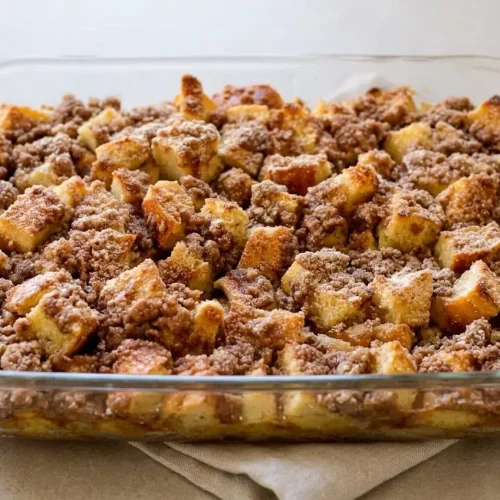
French Toast Casserole

Equipment
- 9 x 13 inch baking dish
- Medium bowl
- Resealable Plastic Bag
Ingredients
French Toast
- 1 loaf sourdough bread (24-ounce) (or brioche, challah or French bread)
- 8 large eggs
- 2 cups milk
- ½ cup heavy cream
- 1 tablespoon vanilla extract
- ¾ cup sugar
Topping
- ½ cup all-purpose flour
- ½ cup packed light brown sugar
- 1 teaspoon ground cinnamon
- ¼ teaspoon salt
- ½ cup cold unsalted butter (cut into pieces)
Instructions
- Grease a 9-x-13-inch baking dish, then fill it with 1-inch bread cubes arranged in an even layer. Leave the cubes loosely settled so the custard can flow into the spaces between them.
- Whisk the eggs, milk, heavy cream, vanilla extract, and sugar in a medium bowl until smooth, then pour the mixture across the bread. The bread should look evenly moistened, with no large dry patches on top.
- Cover the dish with plastic wrap and refrigerate it for at least 4 hours or overnight. As it rests, the bread cubes will swell slightly as the custard reaches their centers.
- Combine the flour, brown sugar, cinnamon, and salt in a medium bowl, then cut in the cold butter until the mixture forms coarse crumbs. Transfer the crumbs to a small resealable plastic bag and refrigerate them overnight so the butter stays firm.
- Heat the oven to 350°F when you are ready to bake. Let the oven come fully to temperature so the topping begins browning evenly from the start.
- Remove the plastic wrap and scatter the chilled cinnamon crumbs evenly over the soaked bread. Cover the surface from edge to edge for a consistent golden crust.
- Bake uncovered for 45 to 60 minutes, choosing the shorter end for a softer center and the longer end for a firmer slice. The casserole is ready when the top is golden and the center looks puffed rather than liquid.