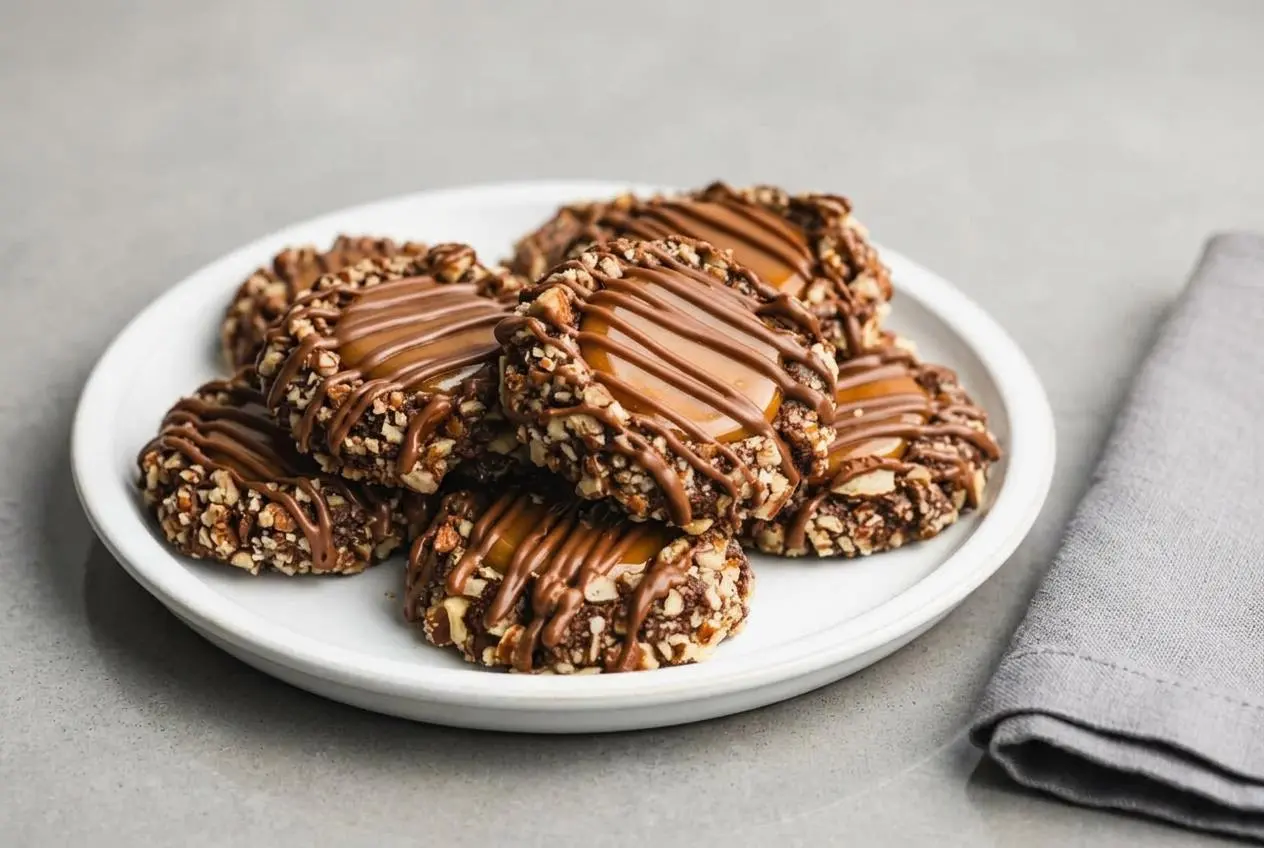
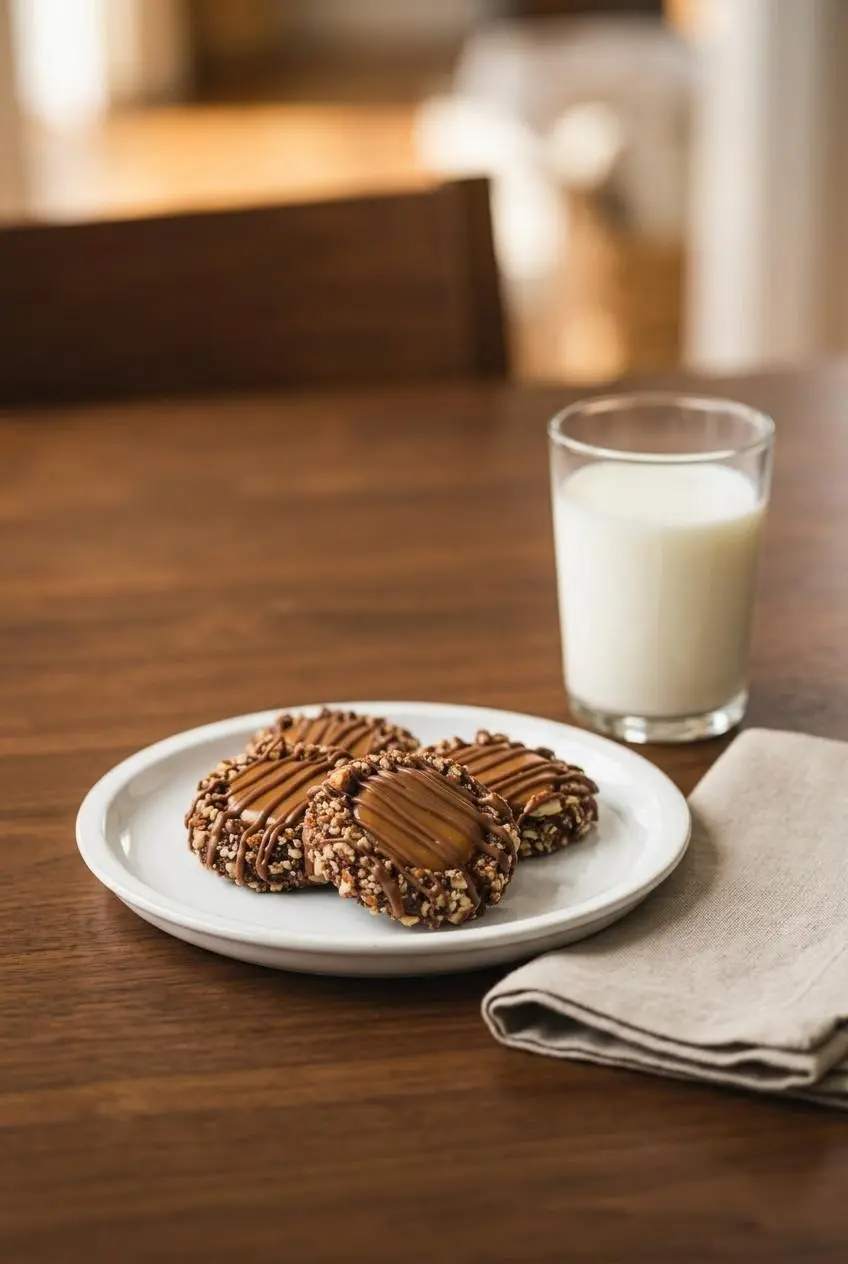
Turtle cookies are chocolate thumbprint cookies rolled in pecans and filled with caramel, often finished with a little melted chocolate. This version bakes up chewy, rich, and just soft enough in the center to hold that gooey caramel well.
Turtle cookies take everything people love about Turtle candy and turn it into a bakery-style cookie. You get chocolate, caramel, and pecans in one bite, with clear steps that help you avoid flat cookies or hard caramel.
The best part is the contrast between the crisp nut coating and the soft middle.
Chill the dough until it feels firm and easy to handle, not sticky.
What Are Turtle Cookies?
Turtle cookies are inspired by classic Turtle candies, the chocolate, caramel, and pecan treats with that unmistakable sweet-salty richness. In cookie form, they’re usually a chocolate base with pecans on the outside and a soft caramel center pressed into the top.
Key Ingredients for Turtle Cookies
Each ingredient pulls its weight here, building chocolate depth, tender texture, nutty crunch, and a caramel center that stands out in every bite.
- 1 cup all-purpose flour ((125 grams))
- 1/3 cup unsweetened cocoa powder ((28 grams))
- 1/4 teaspoon salt
- ½ cup butter ((113 grams))
- 2/3 cup granulated sugar ((134 grams))
- 1 large egg, separated
- 2 Tablespoons milk
- 1 teaspoon vanilla extract
- 1 cup pecans, finely chopped
- 2/3 cup Kraft Caramel Bits (or regular caramels, melted)
- 1/2 teaspoon water
- 2 oz Semi-sweet chocolate
Cocoa powder gives these cookies their deep chocolate flavor without making the dough too loose. Butter keeps the crumb tender, while the egg yolk enriches the dough and the egg white acts like glue so the pecans actually stay put. The milk softens the dough slightly, which helps the centers stay chewy instead of dry.
I always chop the pecans quite finely so they coat the dough evenly and don’t fall off after baking.
Choosing the Best Caramel for Your Cookies
The caramel makes or breaks this recipe, so it helps to know how each option behaves. Caramel bits are convenient and melt quickly, but they can set a little firmer once the cookies cool. Soft caramel squares usually give a smoother, softer center, especially if you melt them gently.
Caramel sauce is tasty, but it’s often too loose for a neat thumbprint filling and can soak into the cookie instead of sitting in the center. For the most dependable soft bite, soft caramel squares melted with a little heavy cream tend to stay chewier than caramel melted with water. If you love baking caramel-forward cookies, that softer style is especially worth trying here.
Pecans are traditional because they echo the candy, but walnuts can work if that’s what you have. If you need a nut-free version, skip the coating altogether and leave the outside plain or roll the dough lightly in coarse sugar for texture.
How to Make Turtle Cookies
This recipe comes together in clear stages: mix the dough, chill it well, coat and shape the cookies, then bake and fill. The thumbprint method is classic for cookies with a center filling, and it gives the caramel a neat little pocket instead of letting it run.
- Whisk together the flour, cocoa powder, and salt in one bowl, then beat the butter and sugar in a separate bowl for 2 to 3 minutes before mixing in the egg yolk, milk, and vanilla.
The butter and sugar should look lighter in color and fluffy, which means you’ve incorporated air for a softer texture. - Add the dry mixture to the wet mixture and stir just until the dough comes together.
Stop as soon as no dry streaks remain so the cookies stay tender instead of getting tough. - Cover and chill the dough in the refrigerator for 1 hour.
After chilling, the dough should feel firm, cool, and easy to roll without sticking to your hands. - Heat the oven to 350 °F and line a baking sheet with parchment paper.
Having the pan ready before shaping keeps the chilled dough from warming up too much on the counter. - Lightly whisk the egg white in a bowl until frothy and place the finely chopped pecans in a second shallow bowl, then roll the dough into 20 small balls.
The egg white should be foamy rather than stiff, which helps the nuts cling without making the coating heavy. - Dip each dough ball in the frothy egg white, roll and press it in the pecans, and arrange the coated balls on the prepared baking sheet.
Press gently so the nuts adhere well and form an even crust around the outside. - Use the back of a small measuring spoon to press an indentation into the center of each ball.
Make the well deep enough to hold caramel, but avoid pressing all the way through the dough. - Bake for about 10 to 12 minutes, then remove the cookies and gently press the centers again with a small spoon while they’re still warm.
The edges will look set and dry, but the center may still seem slightly underbaked, which is exactly what keeps them chewy. - Combine the caramel bits and water in a microwave-safe bowl and heat in 30-second bursts, stirring after each one, until melted, about 1 to 2 minutes total.
The caramel should be smooth and spoonable, not bubbling furiously or scorched around the edges. - Spoon small amounts of caramel into each indentation, then melt the semi-sweet chocolate and drizzle it over the tops if you like.
Let the chocolate flow in thin lines and give the caramel a minute to settle neatly into the centers.
Pro Tips for the Best Texture and Flavor
- Chill the dough fully before shaping. Cold dough keeps the butter firm, which helps the cookies hold their shape instead of spreading into flat rounds.
- Cream the butter and sugar until truly light and fluffy. That extra minute or two improves texture more than people expect.
- Measure the flour carefully. Too much flour can make the dough stiff and the finished cookies dry.
- Don’t overbake. Pull the cookies when the edges are set and the centers still look a touch soft.
- Re-press the indents right after baking. The centers puff in the oven, and reshaping them while warm gives the caramel room to sit nicely.
- Use a large round cutter to gently scoot the warm cookies into a cleaner circle if you want a bakery-style finish.
- For extra visual contrast, press a few more pecan pieces onto the outside before baking.
- If you’re always chasing that chewy, gooey texture, err on the side of slightly underbaked rather than fully firm.
Troubleshooting Common Cookie Problems
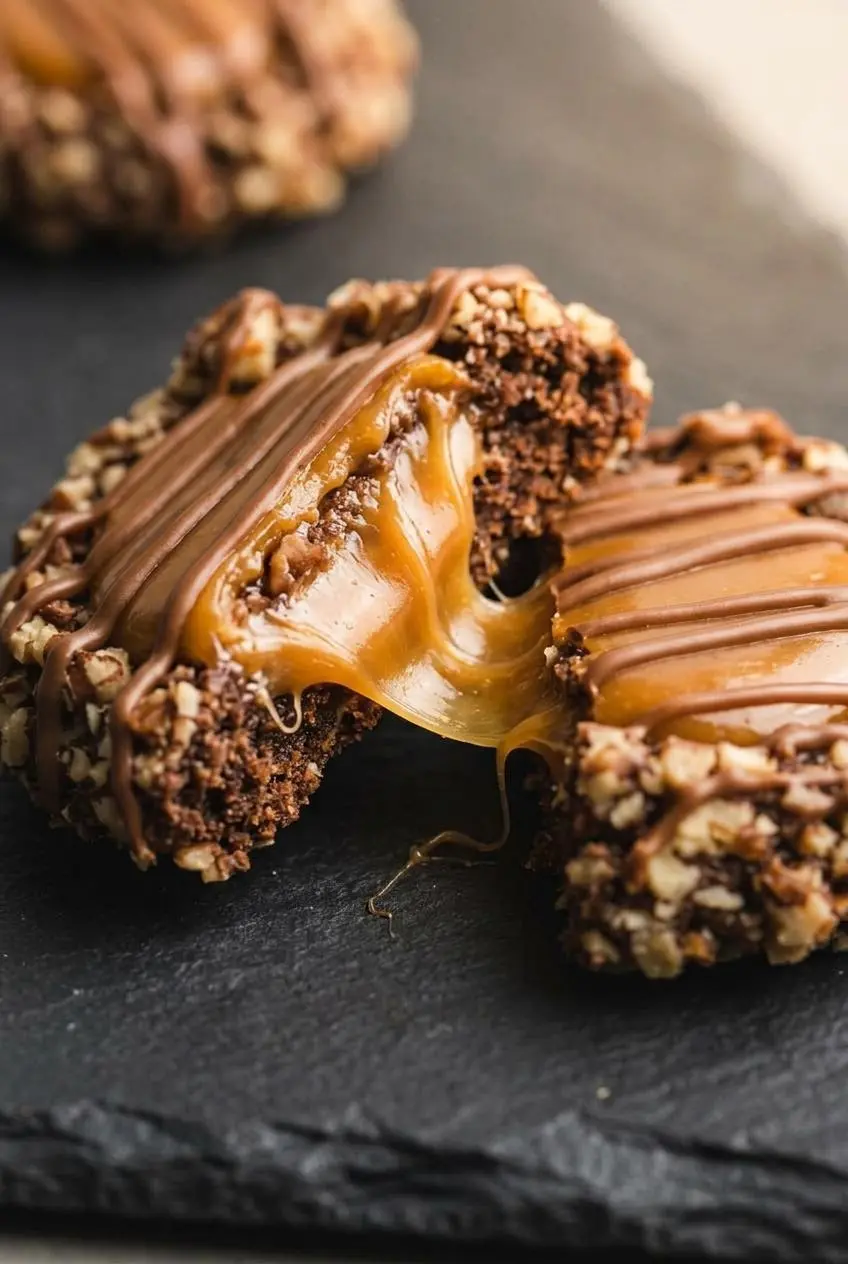
- My caramel is rock-hard. This usually happens when the caramel gets too hot or is melted with water alone. For a softer center, melt soft caramels gently with a little heavy cream so the filling stays more chewy after cooling.
- My cookies spread out and turned flat. The dough likely warmed up too much, or the flour was overmeasured one time and undermixed another. Chill the dough the full hour, keep the butter from getting overly soft before mixing, and measure flour by spooning it into the cup and leveling it off.
- My cookies are dry. Overbaking is the usual culprit. Take them out when the edges look set and the middle still looks a little soft, because they continue to firm up on the hot baking sheet.
- My dough is crumbly. A crumbly dough often means the flour was packed too tightly into the measuring cup. Let the mixed dough sit for a minute, then press it together gently and chill it, which usually helps it hydrate and roll more easily.
- My pecans won’t stick. The egg white may not have been whisked enough, or the nuts may be too coarse. Whisk until frothy and use finely chopped pecans so they cling in an even layer.
- My caramel sank or looked messy. The indent may have been too shallow, or the caramel may have been too thin. Re-press the center as soon as the cookies come out of the oven, then fill with warm caramel that’s thick but still spoonable.
Variations to Try
The classic thumbprint style is the one to make first, but there are a few fun directions if you want something quicker or a little more extra.
Easy Drop Cookie Style
If you want less shaping, turn this into a drop cookie. Fold chopped pecans, caramel pieces or bits, and chocolate chips into the dough, then drop spoonfuls onto the baking sheet and bake as regular cookies. You lose the neat caramel center, but you gain speed and a more casual, chunky cookie. If you like cookies with candy tucked inside, Rolo Cookies are another fun route.
Thumbprint cookies give you a cleaner caramel pocket and more classic Turtle candy flavor in each bite. Drop cookies are faster and a little more rustic, with caramel and nuts scattered throughout.
Quickest 3-Ingredient Shortcut
For a very fast version, use refrigerated chocolate cookie dough, make a small indent, bake, and press a whole Turtle candy into the warm center. It won’t taste quite like the from-scratch version, but it absolutely works when you need a quick holiday baking tray filler.
Gourmet Brown Butter & Salted Caramel
For a richer twist, brown the butter before mixing the dough, then let it cool before using it. When it’s ready, it will smell nutty and rich and the milk solids will look golden rather than pale. Finish the filled cookies with a tiny pinch of flaky sea salt over the caramel for that salty-sweet contrast.
If that flavor combo is your thing, salted brownie cookies lean into the same deep chocolate and salt balance in a different form.
Another playful option is to stuff a small caramel inside the dough ball before baking, then still add a thumbprint and drizzle on top. And if you grew up with the old-fashioned turtle-shaped style made to look like little turtles, that can be a fun kid-friendly spin, even though it’s a different cookie altogether.
Storing, Freezing, and Make-Ahead
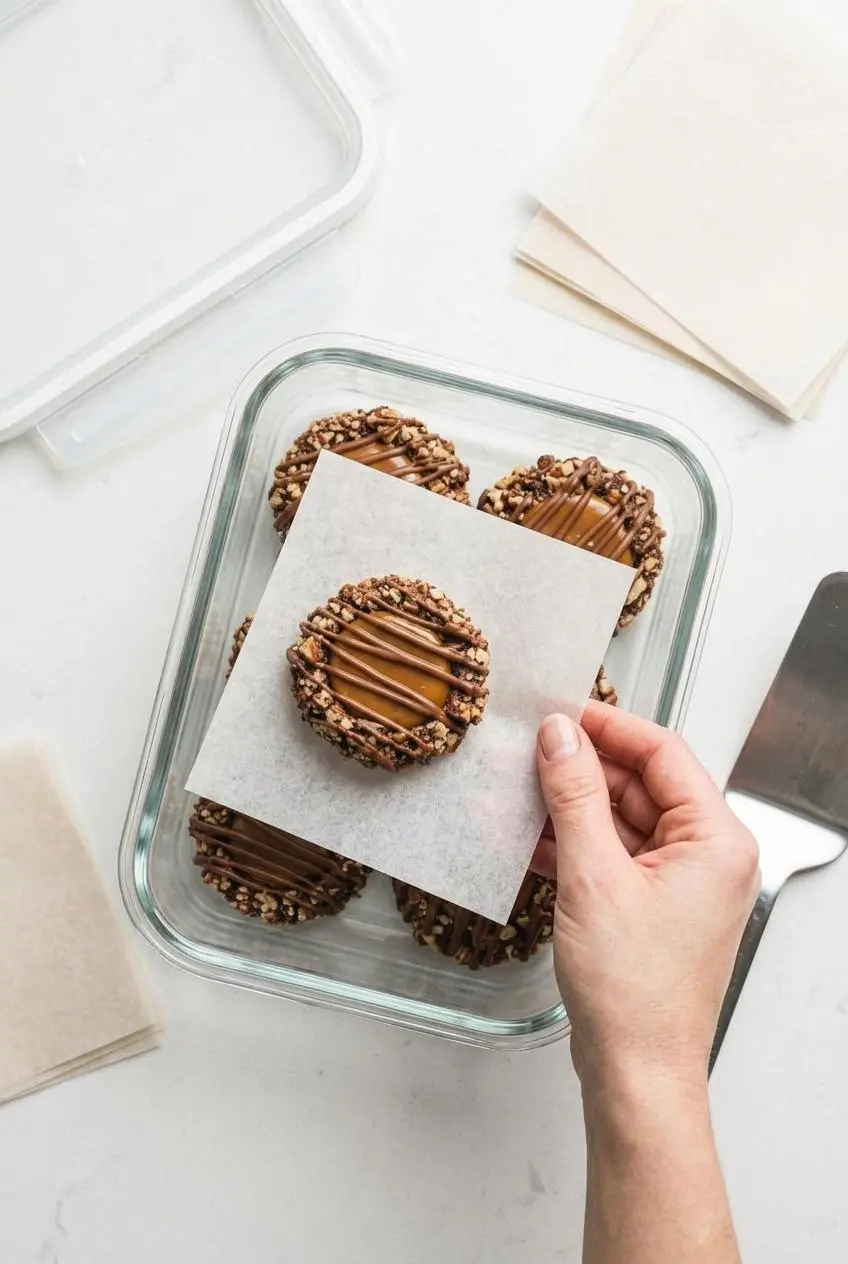
These cookies keep best when they’re completely cool before storing, especially once the caramel has settled. Place them in a single layer in an airtight container, or separate layers with parchment paper so the caramel doesn’t glue the tops together.
If you use a caramel filling that includes cream, keep the cookies chilled rather than leaving them out too long, since the FDA notes that dairy ingredients should stay refrigerated and that refrigerators should be kept at or below 40 °F for dairy foods.
You can also make the dough ahead and refrigerate it before shaping and baking. Since this dough already benefits from a full chill, making it earlier in the day fits naturally into the recipe.
Freezing can work for either shaped dough balls or fully baked cookies if you want to prep for holiday baking. For the best texture, freeze them well wrapped and keep parchment between layers so the caramel and chocolate stay neater when thawed.
Conclusion
These cookies hit the full Turtle candy trifecta: chewy chocolate, crunchy pecans, and a caramel center that makes each bite feel a little special.
If you remember just one thing, don’t overbake them. Keep the centers soft, give the caramel a proper pocket, and you’ll end up with cookies worth making again.
Frequently Asked Questions
What is the secret to making caramel that doesn’t get hard on cookies?
The key is adding fat while melting the caramel. Melt soft caramels with a little heavy cream instead of water when possible. The added fat helps the caramel stay softer and chewier as it cools. Heat it gently, just until smooth, so it doesn’t tighten up from overheating.
Can I freeze turtle cookies?
Yes, you can. Freeze them once the cookies are fully cooled and the caramel is set enough to handle. Start in a single layer so they hold their shape better. Then pack them with parchment between layers to reduce sticking.
How do you keep turtle cookies from spreading?
Chilling the dough is the biggest fix. Refrigerate the dough for the full 1 hour before shaping. Keep the butter from getting overly soft before mixing. Measure flour carefully by spooning and leveling instead of packing it into the cup.
Can I make turtle cookies without pecans?
Absolutely. Skip the pecan coating and leave the outside plain for a nut-free version. You can roll the dough in coarse sugar if you still want a little texture. The cookies will still have the chocolate-caramel flavor that makes them feel like a Turtle treat.
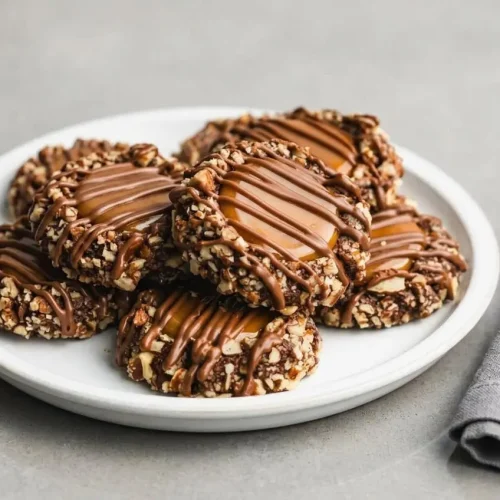
Turtle Cookies

Equipment
- Baking Sheet
- Parchment Paper
- Mixing Bowls
- Electric Mixer
- Measuring spoons
- Microwave-safe Bowl
Ingredients
- 1 cup all-purpose flour (125 grams)
- 1/3 cup unsweetened cocoa powder (28 grams)
- 1/4 teaspoon salt
- ½ cup butter (113 grams)
- 2/3 cup granulated sugar (134 grams)
- 1 large egg, separated
- 2 Tablespoons milk
- 1 teaspoon vanilla extract
- 1 cup pecans, finely chopped
- 2/3 cup Kraft Caramel Bits (or regular caramels, melted)
- 1/2 teaspoon water
- 2 oz Semi-sweet chocolate
Instructions
- Whisk together the flour, cocoa powder, and salt in one bowl, then beat the butter and sugar in a separate bowl for 2 to 3 minutes before mixing in the egg yolk, milk, and vanilla. The butter and sugar should look lighter in color and fluffy.
- Add the dry mixture to the wet mixture and stir just until the dough comes together. Stop as soon as no dry streaks remain.
- Cover and chill the dough in the refrigerator for 1 hour. After chilling, the dough should feel firm, cool, and easy to roll.
- Heat the oven to 350 °F and line a baking sheet with parchment paper.
- Lightly whisk the egg white in a bowl until frothy and place the finely chopped pecans in a second shallow bowl, then roll the dough into 20 small balls.
- Dip each dough ball in the frothy egg white, roll and press it in the pecans, and arrange the coated balls on the prepared baking sheet.
- Use the back of a small measuring spoon to press an indentation into the center of each ball. Make the well deep enough to hold caramel, but avoid pressing all the way through.
- Bake for about 10 to 12 minutes, then remove the cookies and gently press the centers again with a small spoon while they’re still warm. The edges will look set and dry, but the center may still seem slightly underbaked.
- Combine the caramel bits and water in a microwave-safe bowl and heat in 30-second bursts, stirring after each one, until melted, about 1 to 2 minutes total. The caramel should be smooth and spoonable.
- Spoon small amounts of caramel into each indentation, then melt the semi-sweet chocolate and drizzle it over the tops if you like.