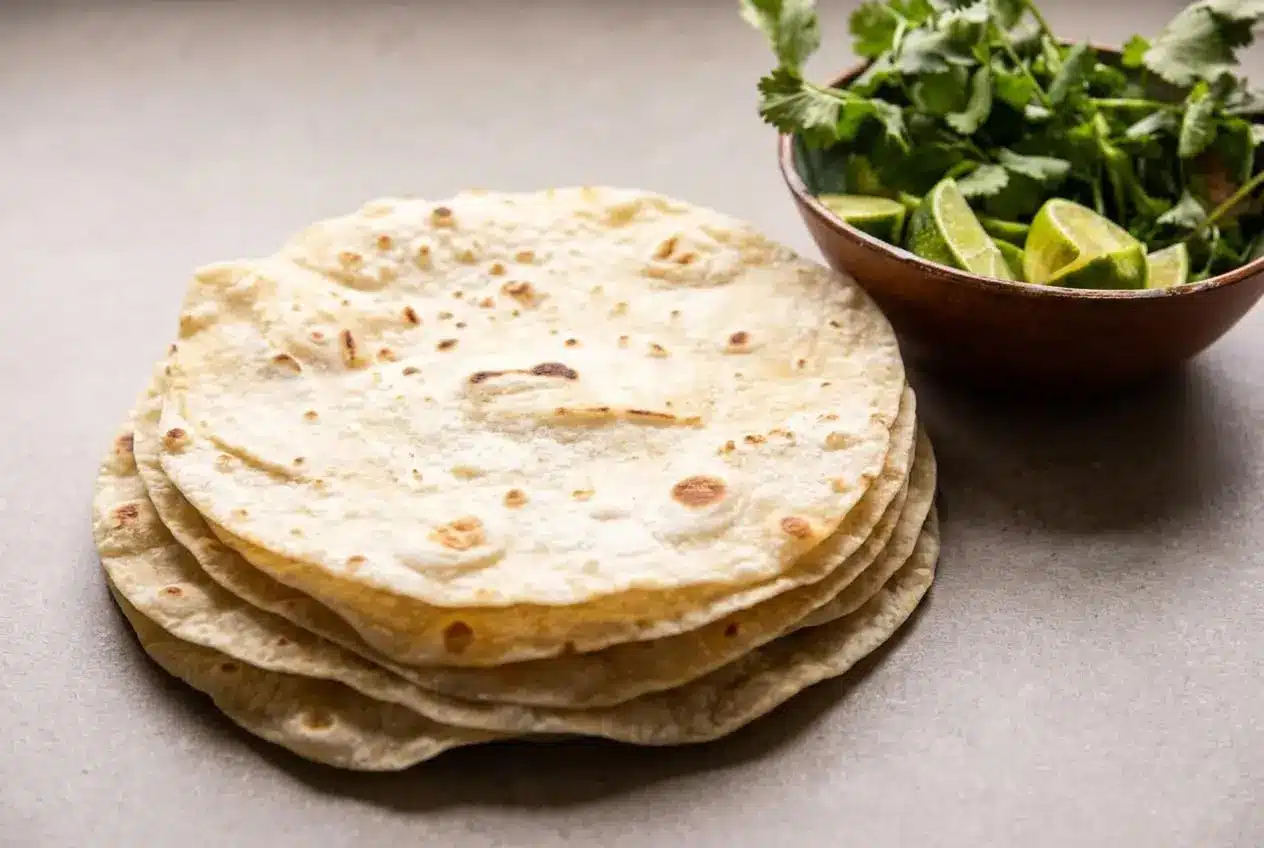
Flour tortillas are easy to make at home with flour, butter, baking powder, salt, and hot water. This method gives you soft, chewy tortillas with clear cues for mixing, resting, rolling, and cooking so they stay pliable instead of stiff.
Fresh homemade tortillas feel completely different from packaged ones. They’re warmer, softer, and more flexible, with a buttery flavor that makes even a plain taco taste better.
This version keeps the method straightforward while explaining the little things that make the biggest difference, like hot water, a short rest, and a properly heated skillet. The towel trick matters more than you think.
Keep a towel ready before you start cooking so each hot tortilla can go straight onto the stack and steam itself soft.
Why You’ll Love This Flour Tortilla Recipe
- It uses a practical 5-ingredient dough that comes together quickly.
- The tortillas cook fast and stay soft, chewy, and pliable when stacked under a towel.
- Butter gives the dough rich flavor without making the method complicated.
- You get clear cues for every stage, from shaggy dough to bubbling skillet.
- They work for tacos, burritos, quesadillas, wraps, and warm snacking straight from the pan.
Ingredients for Perfect Homemade Tortillas
Each ingredient has a real job here, from building structure to creating tenderness and helping the tortillas puff lightly in the skillet.
- 3 cups all purpose flour
- 2 teaspoons baking powder
- 1 1/2 teaspoons kosher salt
- 5 tablespoons salted butter, at room temperature ((or coconut oil))
- 1 cup hot water
I like using very hot tap water here because it helps the butter blend into the flour more evenly, which makes the dough softer and easier to roll.
The Role of Each Ingredient
Flour gives the tortillas their structure and chew. Baking powder helps create some lift and those light bubbles on the skillet. Salt keeps the flavor from tasting flat. Butter adds richness and tenderness. Hot water hydrates the flour quickly and helps bring the dough together into a smooth, easy-to-handle ball.
The Great Fat Debate: Butter vs. Lard vs. Oil
The fat you choose changes both flavor and texture, so it helps to know what each one does before you swap.
- Butter: This recipe’s choice. It gives the tortillas the richest flavor and a soft texture with a little chew.
- Lard or vegetable shortening: These give a more traditional result with a tender, slightly flakier bite. The dough often feels very supple and rolls easily.
- Oil: Oil makes very soft, flexible tortillas, though the flavor is usually less rich than butter or lard.
If you want the most classic tortillas de harina feel, lard is a strong option. If flavor is your top priority, butter is hard to beat.
How to Make Flour Tortillas Step-by-Step
- Whisk the flour, baking powder, and salt in a bowl, then work in the butter and pour in the hot water while stirring to form the dough.
The mixture should look rough and shaggy at first, with no dry pockets of flour left at the bottom. - Move the dough to a lightly floured counter and knead it for 1 to 2 minutes until it comes together into one smooth ball.
It should feel soft and elastic, almost like modeling clay, rather than sticky or crumbly. - Cover the dough with a damp towel and let it rest for 10 minutes.
After resting, it should feel more relaxed and much less springy when pressed. - Divide the dough into 12 to 14 equal wedges, shape each piece into a ball, and roll each one into an 8-inch circle with a rolling pin or tortilla press.
Roll from the center outward so the round stays thin and even instead of thick in the middle. - Set a skillet over medium-high heat and add a small drizzle of olive oil before laying in one tortilla.
The pan is ready when the dough gives a faint, immediate sizzle instead of sitting quietly. - Cook the tortilla for 30 to 60 seconds, then flip it when small bubbles start to form across the surface.
The underside should have light golden spots, not deep brown patches. - Cook the second side for about 30 seconds, then transfer the tortilla to a plate and cover it with a towel before repeating with the remaining dough.
The stack will soften as it steams, which is what keeps the tortillas warm and pliable. - Serve the tortillas warm or cool them before storing in an airtight container.
They should bend easily without cracking when the dough was rested and the skillet stayed hot.
The skillet temperature is one of the biggest make-or-break details. Too cool, and the tortillas dry out before they blister. Too hot, and they char before the inside cooks through.
Tips for the Softest, Chewiest Tortillas
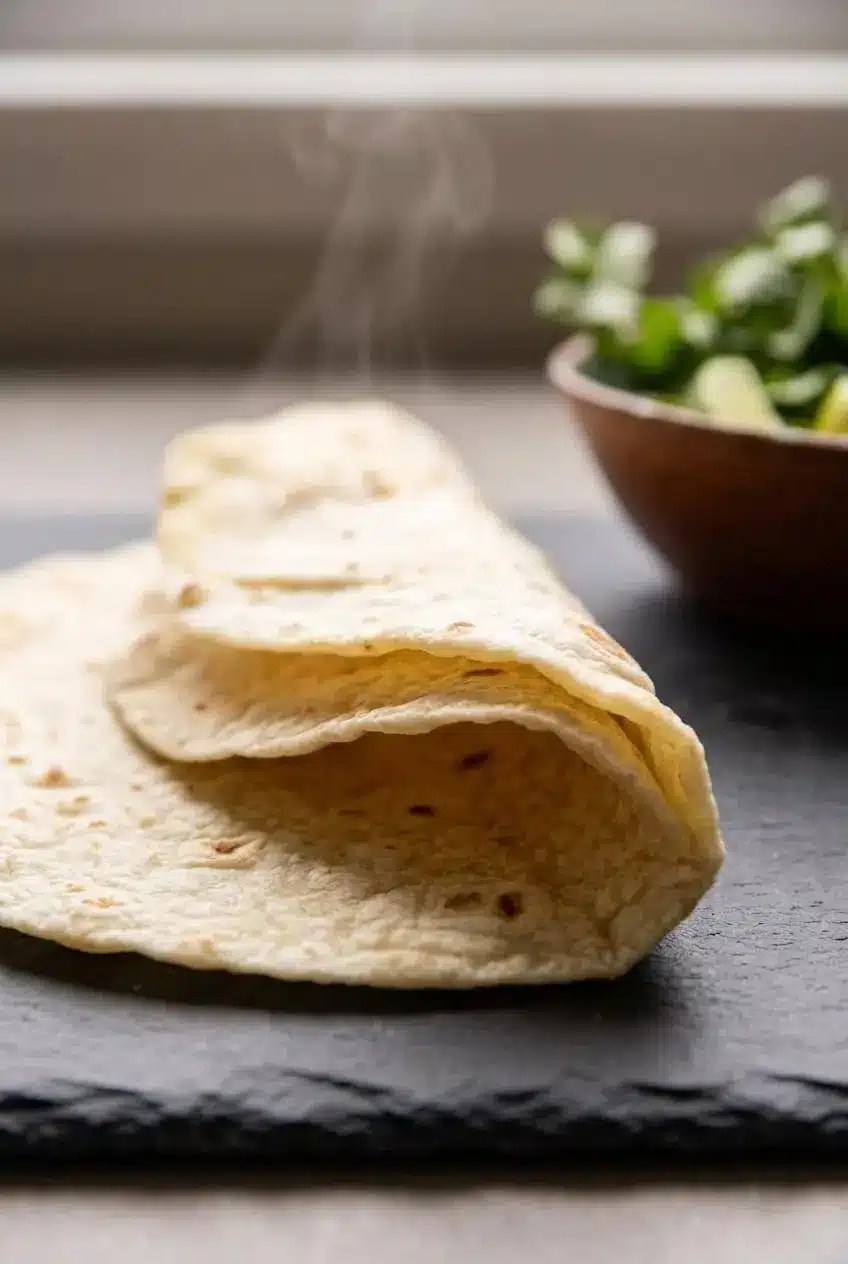
If you want tortillas that fold easily and stay tender, focus on heat, dough texture, and timing more than anything else.
- Use hot water: Hot water helps the fat blend into the dough and hydrates the flour quickly, which leads to a softer tortilla.
- Don’t over-knead: One to two minutes is enough. Knead until smooth, then stop before the dough gets too tight.
- Rest the dough: This step is essential. Resting relaxes the gluten so the dough rolls out thinly without fighting back.
- Cook quickly on medium-high heat: Fast cooking helps the tortillas puff in spots and keeps them from turning dry and rigid.
- Roll evenly: Thin, even rounds cook more consistently and puff better than thick-centered ones.
- Stack and cover: The trapped steam softens the tortillas after cooking, which is the trick behind that flexible, foldable texture.
Troubleshooting Common Tortilla Problems
Most tortilla problems come down to heat, resting, or extra flour. The good news is they’re very fixable.
Why are my tortillas hard or stiff?
- Likely cause: They cooked too long. Fix: Pull them as soon as each side has a few golden spots instead of letting them crisp.
- Likely cause: The skillet wasn’t hot enough. Fix: Preheat the pan well so the tortilla starts cooking right away and doesn’t sit there drying out.
- Likely cause: Too much flour was used while rolling. Fix: Use only enough flour to prevent sticking.
- Likely cause: They were left uncovered after cooking. Fix: Stack them immediately under a towel so they can steam and soften.
Why does my dough shrink back when I roll it?
- Likely cause: The gluten is still tight. Fix: Cover the dough and let it rest longer before rolling again.
- Likely cause: The dough was overworked. Fix: Next time, knead only until smooth and stop there.
- Likely cause: You’re trying to force it too quickly. Fix: Roll gently from the center outward, then pause if it keeps snapping back.
Why aren’t my tortillas puffing up?
- Likely cause: The skillet heat is too low. Fix: Use a properly hot pan so steam forms quickly inside the dough.
- Likely cause: The tortillas are rolled too thick. Fix: Aim for a thinner, more even circle.
- Likely cause: The baking powder has lost strength. Fix: Use fresh baking powder if your tortillas stay flat.
A tortilla does not need to puff perfectly from edge to edge to be good. A few bubbles and soft texture matter more than dramatic ballooning.
Recipe Variations: From Authentic to Texas-Style
The main dough is a great everyday version, but a couple of small swaps can move it toward different regional styles and textures.
Traditional Tortillas with Lard
For a more traditional tortilla, swap the butter 1:1 with lard or vegetable shortening. This style is especially common in northern Mexican and Sonoran-style tortillas, and it gives a more tender, slightly flaky bite with less buttery flavor.
Texas-Style Tortillas with Milk
Replace the hot water with warm milk for a richer, softer tortilla. Milk tends to make the dough feel a little more tender and the finished tortillas slightly plush, which fits the thicker, softer style many people associate with Texas flour tortillas.
No Baking Powder (Sonoran Style)
Leave out the baking powder if you want a flatter, denser, chewier tortilla. This version usually puffs less and has a more streamlined texture, which many cooks prefer for a traditional Sonoran-style feel.
How to Store and Reheat Tortillas
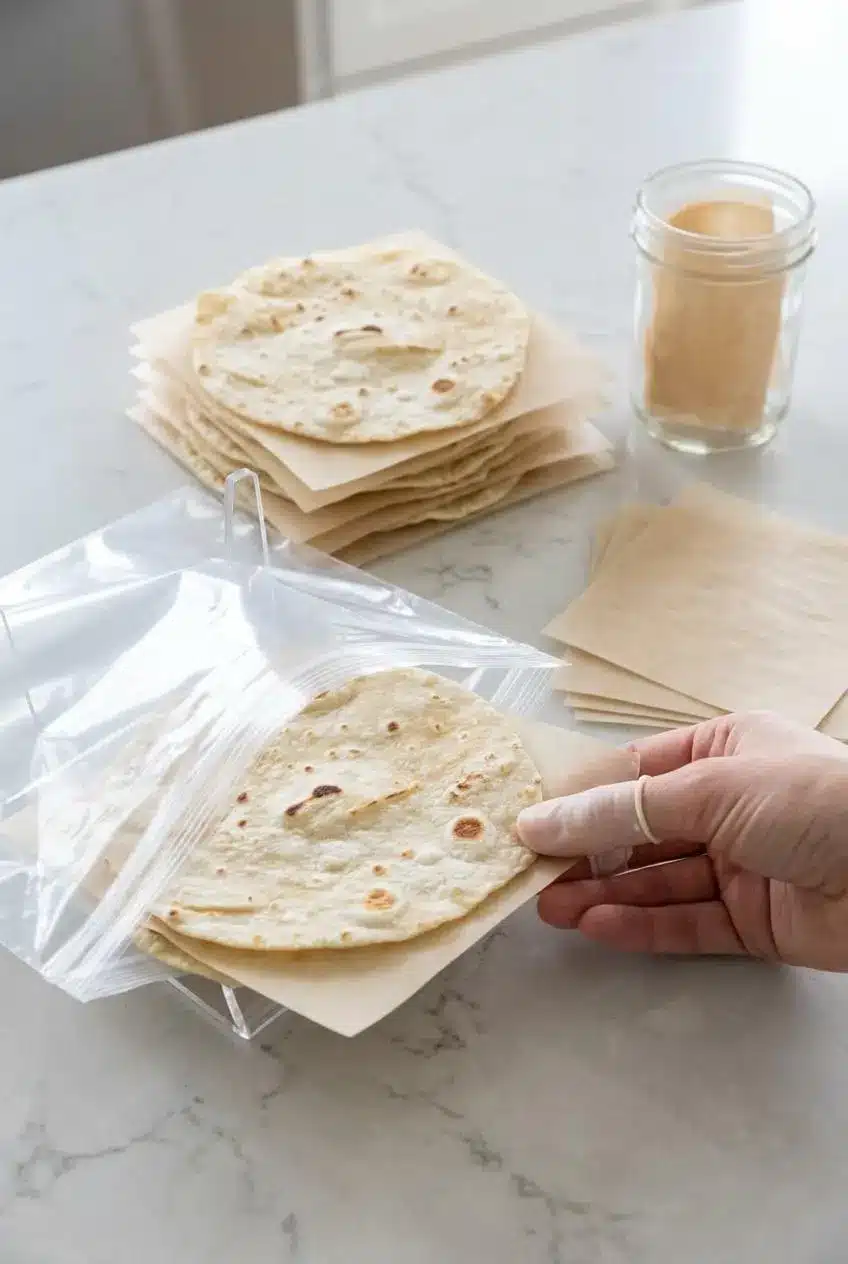
Let the tortillas cool before storing so trapped steam does not turn them damp. Keep them in an airtight container or bag, and for longer keeping, chill them rather than leaving them out.
If you make the dough ahead, shape it into balls, keep them lightly coated so they do not dry out, and refrigerate them in an airtight container. Let the dough lose its chill and relax before rolling so it does not spring back as much.
Reheat tortillas briefly in a hot, dry skillet until warm and flexible again. If you have a gas burner, a few quick passes over the flame can add light char, but stay close because they heat fast.
Serving Suggestions
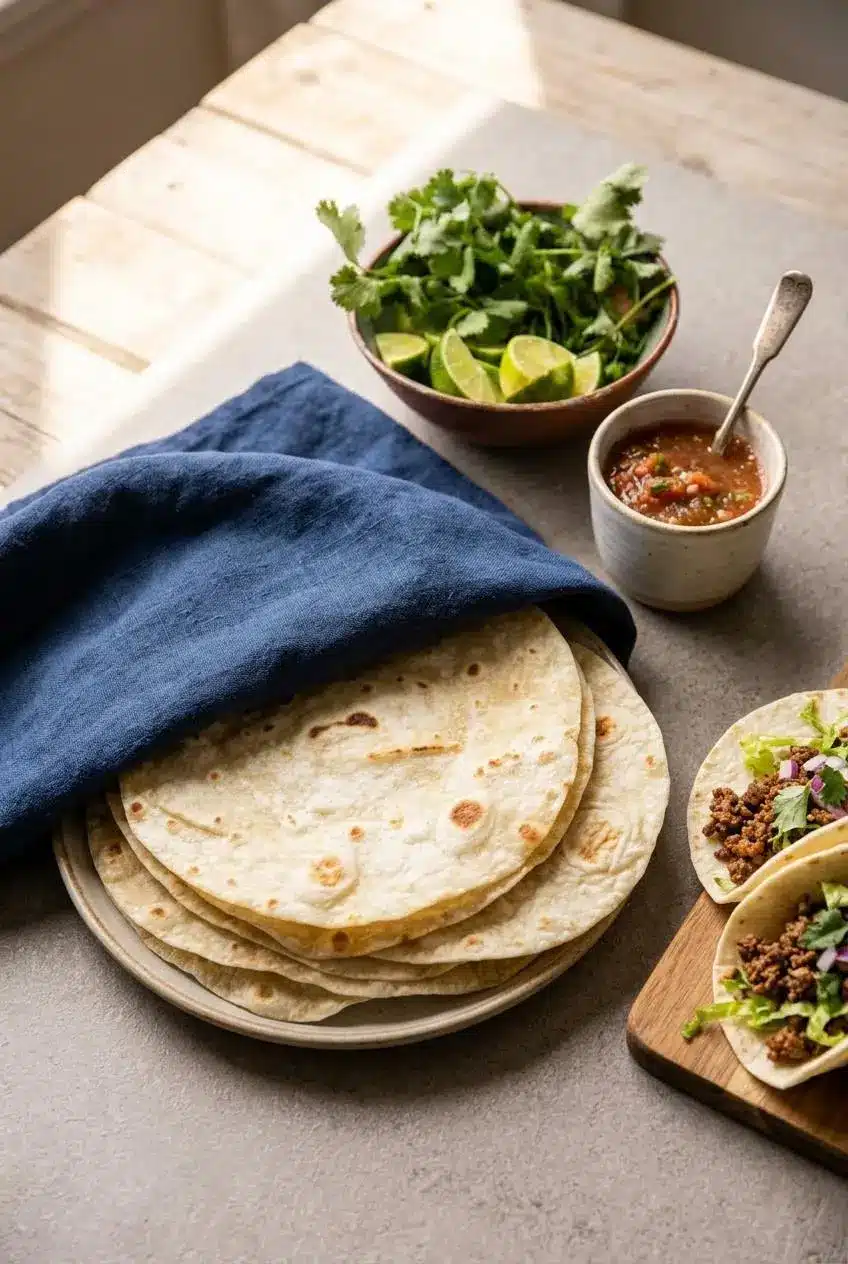
Fresh tortillas are useful well beyond taco night, and warm ones disappear quickly.
- Serve them warm with butter and a pinch of salt.
- Use them for tacos with easy Blender Salsa on the side.
- Fill them for burritos, quesadillas, or sandwich wraps.
- Pair them with fish or chicken tacos and a spoonful of fresh Mango Salsa.
- Cut them into wedges and cook until crisp for homemade chips.
- Turn them into quick mini pizzas with sauce, cheese, and toppings.
Conclusion
Homemade tortillas are one of those small kitchen projects that pay you back immediately. The dough is quick, the cooking is fast, and the texture is miles better than most store-bought packs.
If you remember one thing, let the dough rest and keep the finished tortillas covered. That little bit of steam is what keeps them soft enough to fold around dinner.
Frequently Asked Questions
What is the best fat to use for flour tortillas?
It depends on the result you want. Lard gives the most traditional, flaky, tender texture. Butter gives the best flavor and a great balance of richness and softness. Oil makes very soft, pliable tortillas with a lighter flavor.
Why did my tortillas come out hard?
They were likely cooked too long. The pan may not have been hot enough, which dries them out instead of puffing them quickly. Too much flour during rolling can make them tough. Cover them right after cooking so they steam and soften.
Can I make the dough ahead of time?
Yes, this dough can be made ahead. Shape it into balls and keep them lightly coated so the surface does not dry out. Store them in an airtight container in the refrigerator. Let the dough warm up a bit before rolling so it relaxes and handles more easily.
Do I really need to let the dough rest?
Yes, absolutely. Resting relaxes the gluten, which makes the dough much easier to roll thin. Without a rest, the rounds tend to shrink back and feel stubborn. Even a short rest makes a noticeable difference in texture.
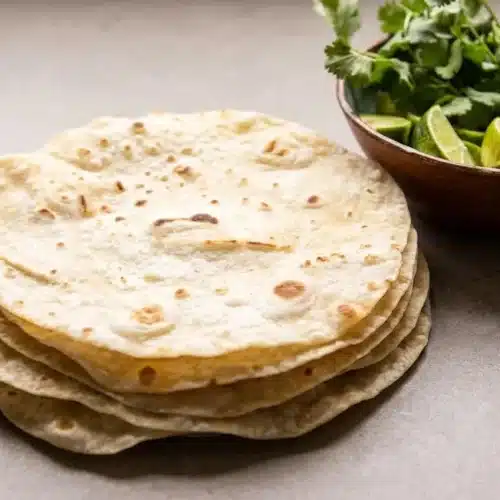
Flour Tortillas

Equipment
- bowl
- Rolling pin or tortilla press
- Skillet
Ingredients
- 3 cups all purpose flour
- 2 teaspoons baking powder
- 1 1/2 teaspoons kosher salt
- 5 tablespoons salted butter, at room temperature (or coconut oil)
- 1 cup hot water
Instructions
- Whisk the flour, baking powder, and salt in a bowl, then work in the butter and pour in the hot water while stirring to form the dough. The mixture should look rough and shaggy at first, with no dry pockets of flour left at the bottom.
- Move the dough to a lightly floured counter and knead it for 1 to 2 minutes until it comes together into one smooth ball. It should feel soft and elastic, almost like modeling clay, rather than sticky or crumbly.
- Cover the dough with a damp towel and let it rest for 10 minutes. After resting, it should feel more relaxed and much less springy when pressed.
- Divide the dough into 12 to 14 equal wedges, shape each piece into a ball, and roll each one into an 8-inch circle with a rolling pin or tortilla press. Roll from the center outward so the round stays thin and even instead of thick in the middle.
- Set a skillet over medium-high heat and add a small drizzle of olive oil before laying in one tortilla. The pan is ready when the dough gives a faint, immediate sizzle instead of sitting quietly.
- Cook the tortilla for 30 to 60 seconds, then flip it when small bubbles start to form across the surface. The underside should have light golden spots, not deep brown patches.
- Cook the second side for about 30 seconds, then transfer the tortilla to a plate and cover it with a towel before repeating with the remaining dough. The stack will soften as it steams, which is what keeps the tortillas warm and pliable.
- Serve the tortillas warm or cool them before storing in an airtight container. They should bend easily without cracking when the dough was rested and the skillet stayed hot.