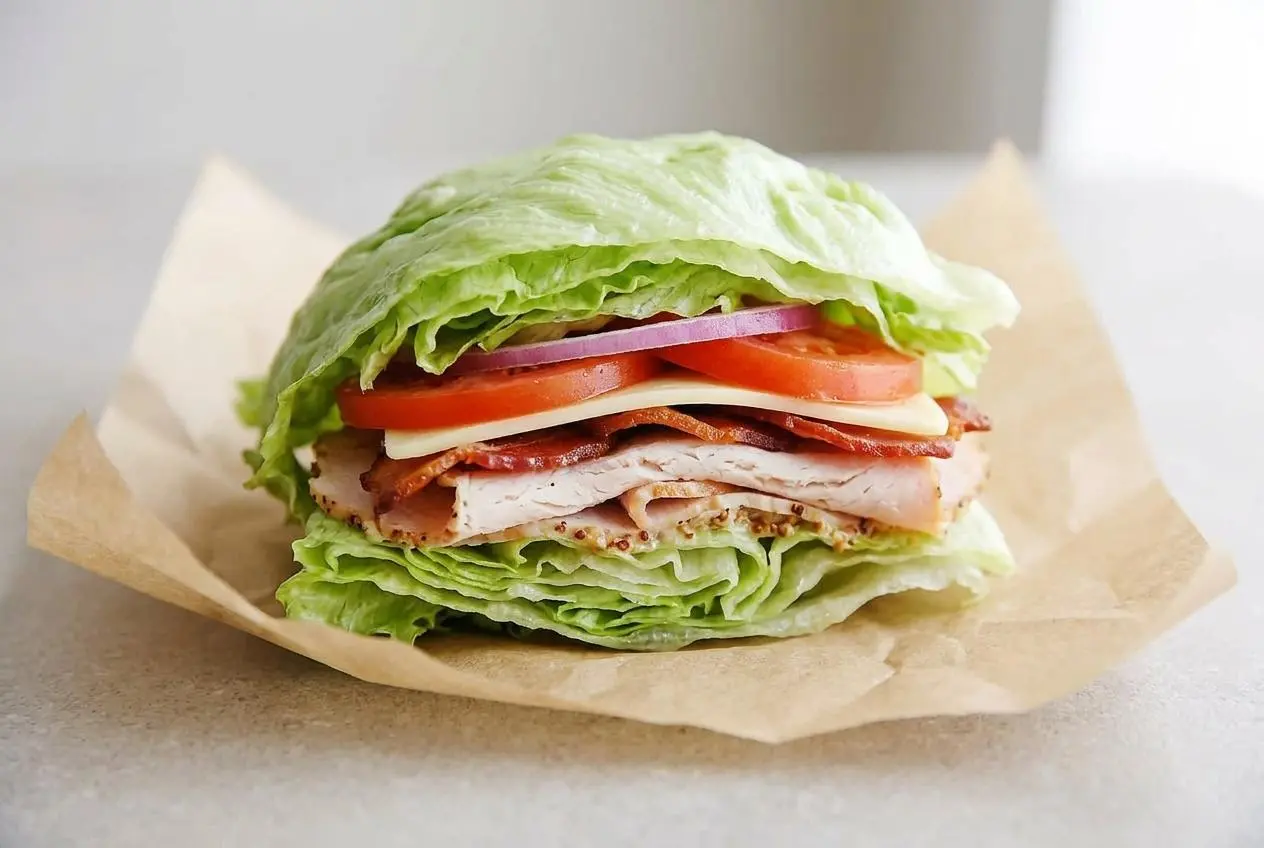
A Lettuce Sandwich can mean two things: a low-carb wrap made with lettuce instead of bread, or a classic sandwich on bread with lettuce as the main filling. This guide shows you how to make both, with the wrap version first.
Lettuce Sandwich is one of those recipes that sounds almost too simple until you bite into a really good one. When the lettuce is cold and crisp, the whole thing tastes fresh, crunchy, and surprisingly satisfying.
The wrap version is especially great for lunch because it feels light but still eats like a real sandwich. The trick is getting that tight roll and clean bite, and that part is easier than it looks.
Use the biggest, driest iceberg leaves you can find because they give you the best snap and the strongest wrap.
Lettuce Sandwich: The Two Types Explained
This recipe name trips people up because it usually means one of two very different sandwiches.
The first is the lettuce wrap, sometimes called an unwich, where large lettuce leaves replace bread. It is crisp, portable, and especially popular when you want a low-carb or gluten-free sandwich without losing that stacked sandwich feel.
The second is the classic lettuce sandwich on bread, usually built with good bread, mayonnaise, plenty of crisp lettuce, and a little salt and pepper. It sounds modest, but when the ingredients are fresh, it is genuinely good.
You will find both versions here, so you can choose the wrap for structure and crunch or the bread version for old-school sandwich comfort.
Ingredients for a Lettuce Wrap Sandwich
Each ingredient has a job here, from building crunch and structure to adding richness, salt, freshness, and a little sharp bite.
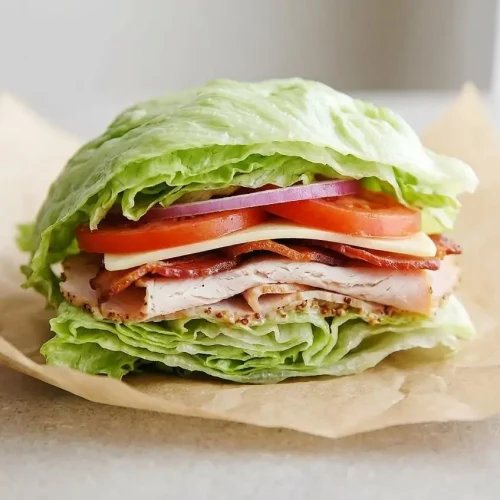
- 1 head lceberg lettuce (cored and outer leaves removed)
- 1 tablespoon grainy mustard
- 4 slices organic turkey
- 2 strips bacon (cooked and cut in half)
- 1 slice cheese (cut in half)
- 2 slices tomato
- 1 thin slice red onion
- 1 piece of parchment paper (14″ x 14″)
Iceberg lettuce matters most here because it gives the wrap its shape. The leaves are sturdy, very crisp, and flexible enough to overlap into a solid base instead of tearing the second you roll.
Parchment paper is just as important. It helps you pull the wrap tight as you roll, which keeps the fillings compact and makes the finished sandwich much easier to slice and hold.
I always wash and spin-dry the lettuce until it feels almost squeaky dry because that is the easiest way to keep the wrap crisp instead of watery.
How to Make a Lettuce Wrap Sandwich
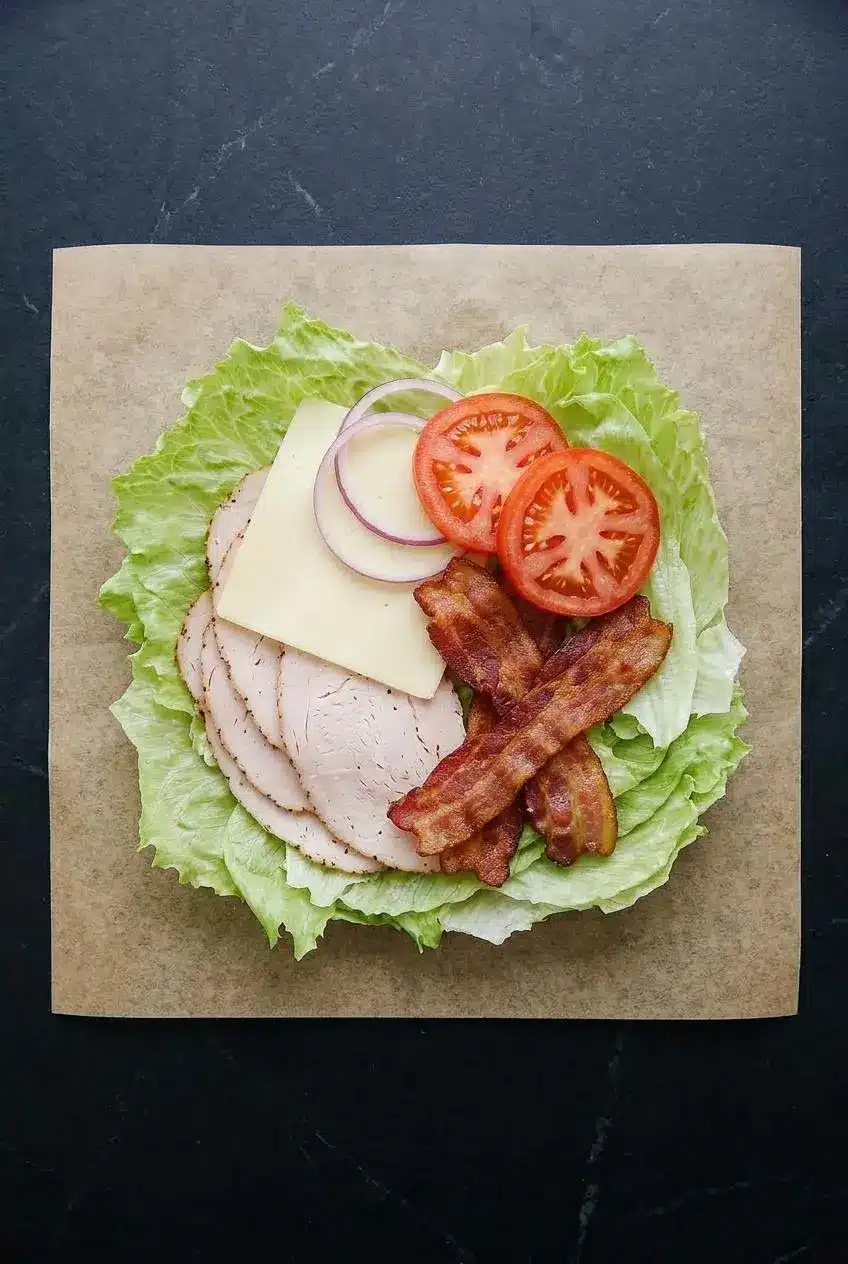
- Set the 14″ x 14″ piece of parchment paper flat on your work surface.
The parchment should sit smooth and open so you can use it to guide and tighten the roll later. - Arrange 5 to 8 large lettuce leaves in the center, overlapping them until you have a base about 9″ by 10″.
If a few leaves crack, patch the gaps with smaller pieces so the filling has a solid, gap-free layer underneath. - Spread the grainy mustard across the middle of the lettuce base.
Keep it centered so the edges stay cleaner and the wrap closes more easily. - Layer the turkey, cheese, bacon, tomato, and red onion over the mustard.
Stack the fillings in the middle rather than spreading them too wide so the wrap stays compact. - Lift the edge of the parchment closest to you and start rolling the lettuce forward over the filling.
Pull gently but firmly as you go so the roll begins tight instead of loose. - Tuck both sides inward once the wrap starts to take shape.
This burrito-style fold helps keep the filling from slipping out the ends. - Keep rolling forward, using the parchment to press and shape the sandwich into a firm cylinder.
The wrap should feel compact and secure in your hands before you stop rolling. - Wrap the remaining parchment around the outside of the lettuce roll.
A snug paper wrap helps the sandwich hold its shape and makes it easier to handle. - Cut through the wrap with a serrated knife, stopping just before you slice through the bottom layer of parchment.
Leaving that last bit of paper attached helps the sandwich stay together while you eat it.
If you want another warm, hearty breadless option later, a Lettuce Wrap Burger uses the same idea with a totally different filling.
Choosing the Best Lettuce
The lettuce decides whether your sandwich stays crisp and sturdy or turns floppy fast, so it helps to match the type to the job.
Lettuce Comparison: Best for Wraps vs. Bread
| Lettuce Type | Best For |
|---|---|
| Iceberg | Wraps and bread sandwiches, sturdy and very crunchy |
| Romaine | Both, good crunch but can split more easily when rolled |
| Butter | Bread sandwiches, soft and delicate for wraps |
| Green Leaf | Bread sandwiches, flexible but softer and less structured |
For wraps, iceberg wins because the leaves are broad, cold, and sturdy. A fresh leaf should give a clean snap when you bend it. For bread sandwiches, you have more room to play, since the bread is doing the structural work.
Tips for the Perfect Lettuce Wrap
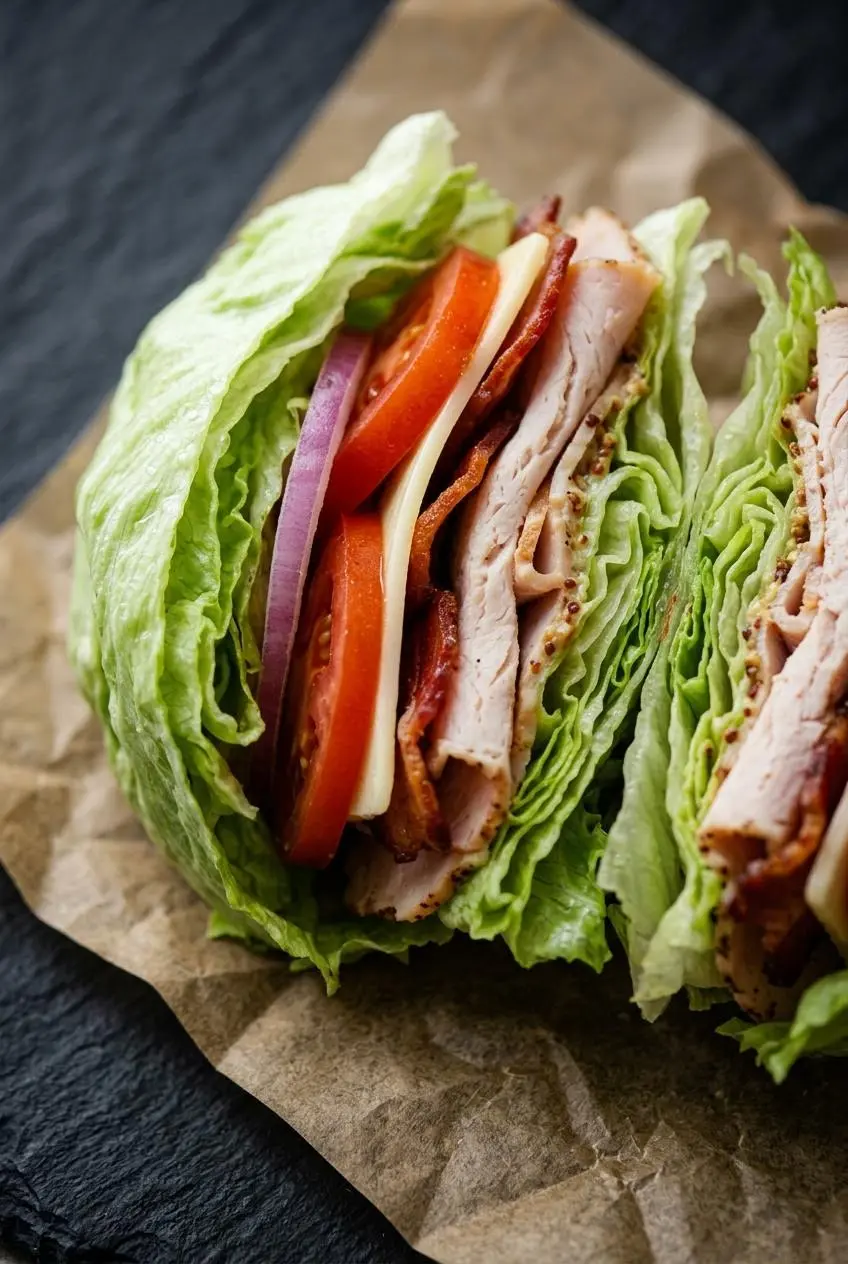
This is where a good wrap becomes a great one. A few small choices make the difference between a neat, satisfying lunch and a pile of escaped fillings.
The Secret to Rolling a Perfect Wrap
Start with more overlap than you think you need. If the leaves barely touch, the wrap will split as soon as you add pressure. If they overlap generously, they act like one big flexible sheet.
Keep the filling centered and compact. Then use the parchment as a tool, not just a wrapper. Lift the paper, pull it back slightly against the filling, and let that tension help you shape the roll. Tuck the sides in once the front edge is folded over, then keep rolling as tightly as you can without crushing the tomato.
The best cue is in your hands. Before slicing, the roll should feel firm and compact, not loose or hollow.
How to Prevent a Soggy Sandwich
First, dry the lettuce thoroughly. Wet leaves are the fastest route to a slippery, soggy wrap. Washing produce under running water and keeping it separate from raw meat during prep are smart habits for fresh ingredients, as outlined in safe washing and handling practices for fresh produce.
Second, build in moisture control. Put wetter ingredients like tomato between drier layers such as cheese, turkey, or bacon. That small barrier helps keep the lettuce crisp longer and stops juices from pooling right against the leaves.
Troubleshooting Common Problems
| Problem | Likely Cause | Fix |
|---|---|---|
| My wrap is tearing | The lettuce is too delicate or the leaves do not overlap enough | Use iceberg and layer extra leaves anywhere you see weak spots |
| My fillings are falling out | The wrap was rolled too loosely | Use the parchment to pull the roll tighter as you go and tuck in the ends early |
| The wrap feels watery | The lettuce was not fully dried or the tomato touched the leaves directly | Dry the leaves well and sandwich the tomato between meat or cheese layers |
Filling and Flavor Variations
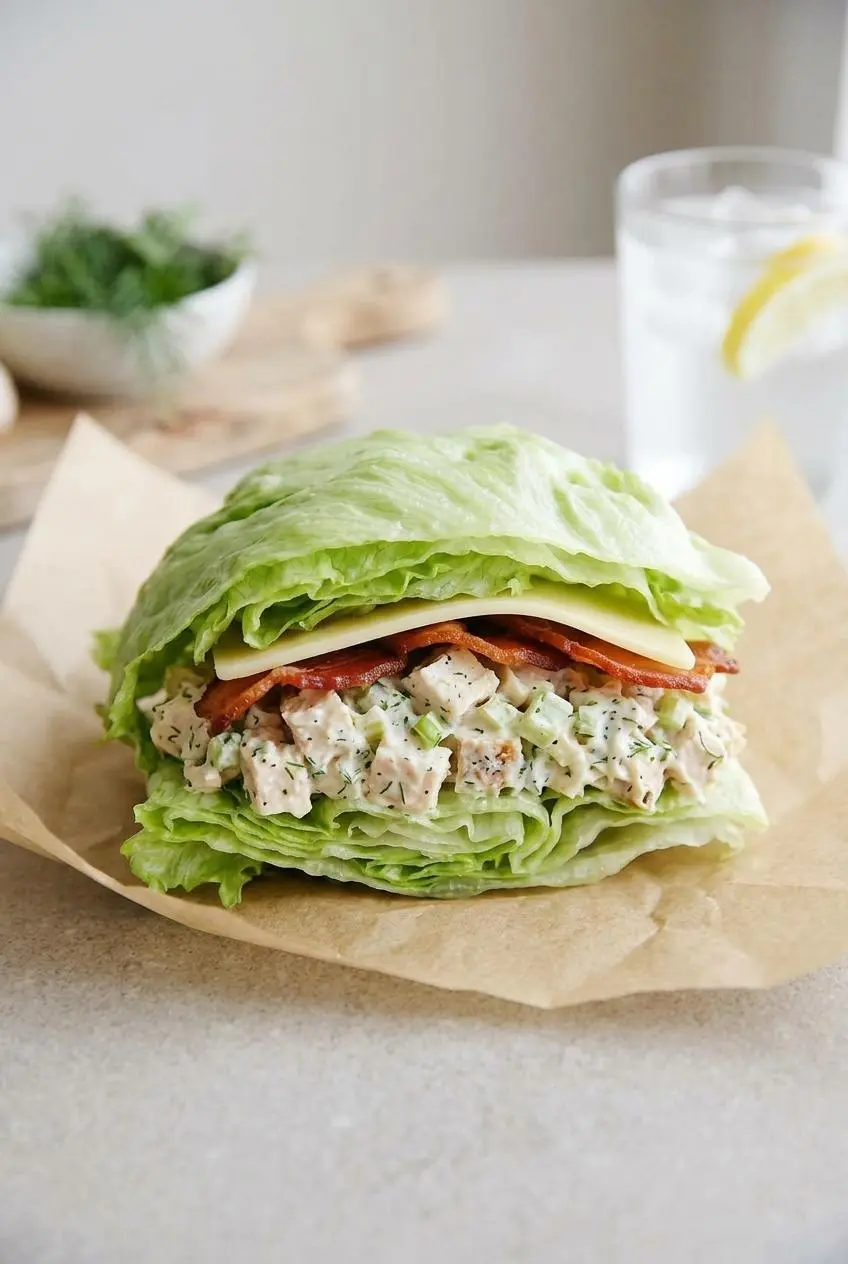
Once you know how to roll the base wrap, the filling options open up fast. Deli-style combinations work well, but so do salad-style fillings, stronger spreads, and meat-free builds.
Build-Your-Own Lettuce Wrap Ideas
Use this table as a mix-and-match guide rather than a fixed formula.
| Protein | Cheese | Veggies | Spreads |
|---|---|---|---|
| Turkey | Provolone | Cucumber | Hummus |
| Ham | Cheddar | Bell peppers | Herbed cream cheese |
| Chicken salad | Swiss | Sprouts | Pimiento cheese |
| Chickpeas | Swiss | Cucumber | Hummus |
If you like big flavor in a lettuce-based lunch, Thai Chicken Lettuce Wraps are a great next step.
Classic Club and BLT Style
The main recipe is already very close to a club. Turkey, bacon, cheese, tomato, and onion give it that familiar layered deli feel with plenty of crunch.
For a BLT lettuce wrap, keep the bacon, lettuce, and tomato, then swap the mustard for mayonnaise. It is a great choice if you want something simpler and a little juicier.
Vegetarian and Vegan Ideas
For a vegetarian wrap, try sliced cheese, avocado, cucumber, bell peppers, sprouts, and a swipe of hummus. You still get crunch, creaminess, and enough substance to feel like lunch.
For a vegan version, skip the cheese and meat, then build with hummus, grated carrots, cucumber, avocado, bell peppers, and seasoned chickpeas. A tight roll matters even more here because softer fillings shift around more easily.
Flavorful Spreads and Sauces
A creamy spread helps in two ways: it boosts flavor and gives the fillings a little grip so they stay put. Herbed cream cheese with chives is especially good because it adds richness without making the wrap heavy.
Hummus works well for a nutty, savory layer, and pimiento cheese adds a sharp Southern-style kick. If that flavor is your thing, a pimento chicken sandwich shows how well it plays in sandwich form. Bacon jam is another option if you want a sweeter, smoky edge for the bread version.
The Classic Lettuce Sandwich (with Bread)
This is the simpler, older-school version of the idea, and it deserves more credit than it gets. Use good bread, mayonnaise, very crisp lettuce leaves, salt, and pepper. Spread mayo on the bread, pile the lettuce on generously, season lightly, and press the sandwich together just enough to make it easy to bite.
The key is freshness. Thin, limp lettuce makes this sandwich feel flat. Cold, crisp lettuce gives it real texture, especially against soft bread and creamy mayo. If you want to upgrade the bread itself, starting with homemade sandwich bread makes a noticeable difference.
How to Elevate the Classic Lettuce Sandwich
Toast the bread if you want more contrast. That little bit of crunch keeps the sandwich from feeling too soft.
You can also switch up the mayonnaise. Pesto mayo, sriracha mayo, or a little dill stirred into plain mayo all work well. Add a ripe tomato slice if you want more juiciness, or tuck in a few basil or dill leaves for a fresher finish.
Storage and Make-Ahead Guide
Lettuce wraps are best when freshly assembled. That is when the leaves are coldest, the bacon still has some bite, and the whole sandwich feels the most crisp and compact.
For meal prep, wash and dry the lettuce, cook the bacon, and slice the fillings ahead of time, then keep everything separate and chilled until you are ready to build the wrap. If you need to pack it for later the same day, wrap it very tightly in parchment so it stays together better, though the crunch will soften some over time.
For the bread version, hold off on assembling until close to serving if you want the bread to stay at its best.
Conclusion
A great lettuce sandwich really comes down to texture and structure. Keep the lettuce cold and dry, build the filling in the center, and roll with confidence.
Whether you want the low-carb wrap or the classic bread version, this is an easy lunch that feels much better when the details are right. Start with crisp lettuce, and the rest gets much easier.
Frequently Asked Questions
What’s the Best Lettuce to Use for a Wrap Sandwich?
Iceberg lettuce is the best choice for a wrap sandwich. Its leaves are large, sturdy, and crisp, so they hold up better during rolling and give the finished wrap that satisfying crunch.
How Do I Keep My Lettuce Wrap from Getting Soggy?
Dry the lettuce leaves completely first. Then place wetter ingredients like tomato between drier layers such as cheese, turkey, or bacon so the moisture does not sit directly against the lettuce.
Can I Make Lettuce Sandwiches Ahead of Time?
They are best fresh. You can prep all the components ahead and assemble right before eating, which gives you the best texture. If you need to assemble the wrap earlier in the day, wrap it tightly in parchment and expect a little less crunch by the time you eat it.
Is a Lettuce Wrap Healthier Than a Bread Sandwich?
That depends on what you want from lunch, but generally yes if your goal is cutting back on carbs or keeping the meal lighter. A lettuce wrap uses leaves instead of bread, so it is usually lower in carbohydrates while still giving you the feel of a full sandwich.
Lettuce Sandwich

Equipment
- Parchment Paper
- Serrated Knife
Ingredients
- 1 head lceberg lettuce (cored and outer leaves removed)
- 1 tablespoon grainy mustard
- 4 slices organic turkey
- 2 strips bacon cooked and cut in half
- 1 slice cheese cut in half
- 2 slices tomato
- 1 thin slice red onion
- 1 piece parchment paper (14″ x 14″)
Instructions
- Set the 14″ x 14″ piece of parchment paper flat on your work surface. The parchment should sit smooth and open so you can use it to guide and tighten the roll later.
- Arrange 5 to 8 large lettuce leaves in the center, overlapping them until you have a base about 9″ by 10″. If a few leaves crack, patch the gaps with smaller pieces so the filling has a solid, gap-free layer underneath.
- Spread the grainy mustard across the middle of the lettuce base. Keep it centered so the edges stay cleaner and the wrap closes more easily.
- Layer the turkey, cheese, bacon, tomato, and red onion over the mustard. Stack the fillings in the middle rather than spreading them too wide so the wrap stays compact.
- Lift the edge of the parchment closest to you and start rolling the lettuce forward over the filling. Pull gently but firmly as you go so the roll begins tight instead of loose.
- Tuck both sides inward once the wrap starts to take shape. This burrito-style fold helps keep the filling from slipping out the ends.
- Keep rolling forward, using the parchment to press and shape the sandwich into a firm cylinder. The wrap should feel compact and secure in your hands before you stop rolling.
- Wrap the remaining parchment around the outside of the lettuce roll. A snug paper wrap helps the sandwich hold its shape and makes it easier to handle.
- Cut through the wrap with a serrated knife, stopping just before you slice through the bottom layer of parchment. Leaving that last bit of paper attached helps the sandwich stay together while you eat it.