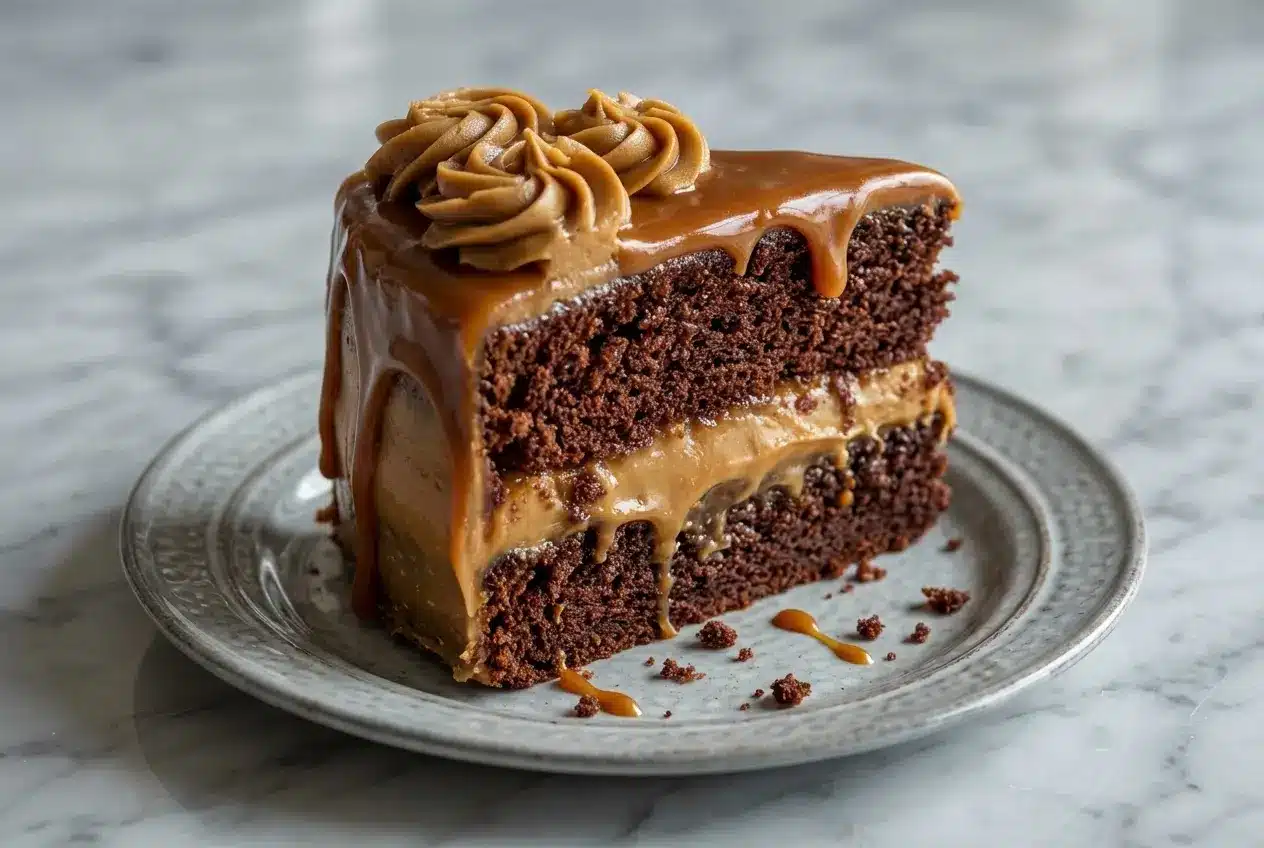
There is something about the smell of coffee and butter on a gray afternoon that makes the whole kitchen feel like a neighborhood cafe. When I want a dessert that feels a little grown-up but still wonderfully comforting, this Gooey coffee caramel cake is the one I pull out.
It is perfect for coffee lovers who want more than a basic sheet cake. You get a soft, moist crumb, deep caramel richness, and a finish that feels bakery-worthy without asking you to do anything fussy.
Why You’ll Love This Recipe
Pure coffeehouse comfort: In my kitchen, the combination of brewed coffee, vanilla extract, and buttery caramel creates the kind of aroma that makes people wander in before the cake even cools. It tastes rich and velvety without being overly heavy.
The secret twist: The Salted Espresso Toffee Crunch Topping is what takes this cake from good to unforgettable. Those crisp toffee bits and a spark of flaky salt cut through the sweetness and make the gooey crumb feel even more luxurious.
Easy, but impressive: I love that the method leans on simple pantry ingredients like all-purpose flour, brown sugar, and buttermilk, yet the finished cake looks like something from a specialty bakery. If you enjoy the soft, plush texture of an ooey gooey cake, this coffee-caramel version hits that same indulgent note with a more sophisticated flavor profile.
Ingredients and Substitutions
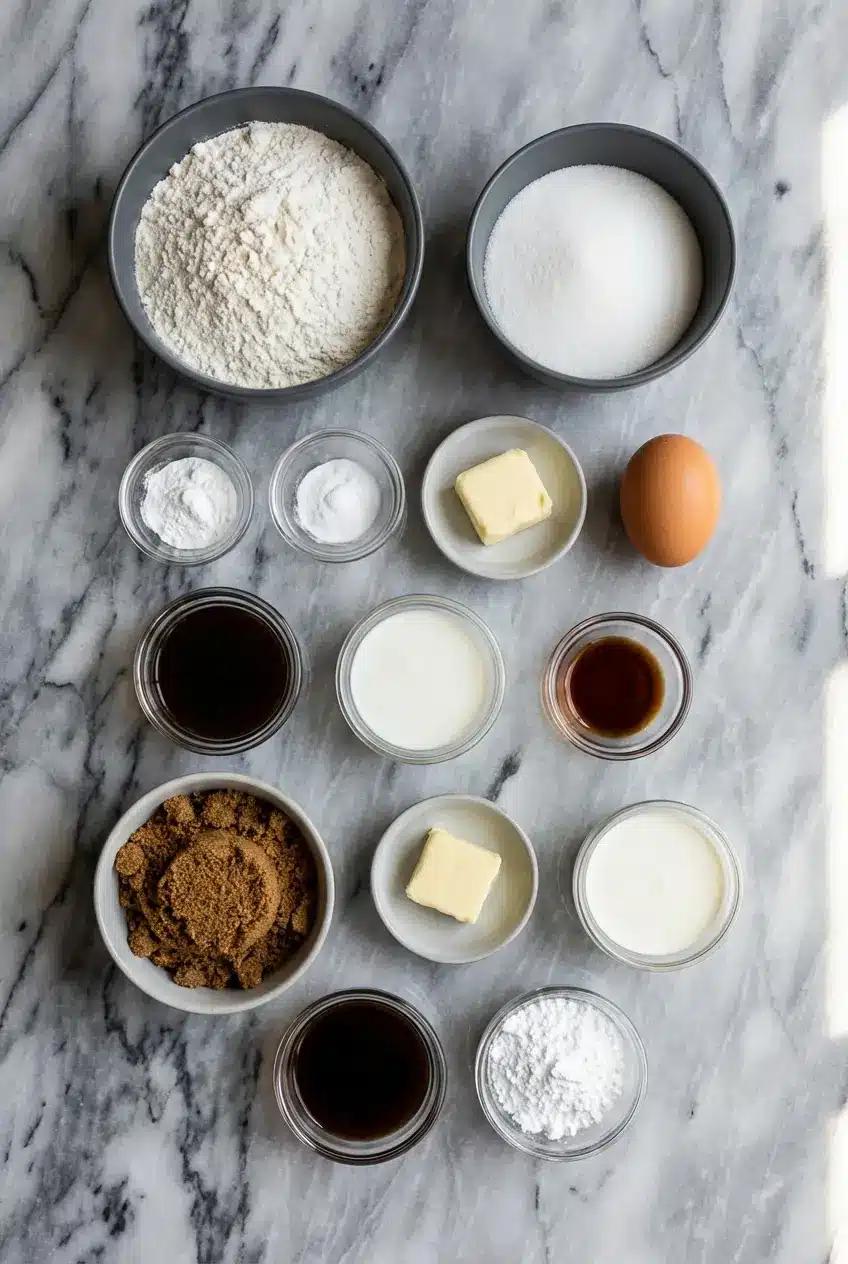
Each ingredient has a job here, from building a tender crumb to creating that glossy caramel soak that gives the cake its signature gooey finish.
Ingredients
For the Cake:
- 1 1/2 cups all-purpose flour
- 1 cup granulated sugar
- 1 teaspoon baking powder
- 1/2 teaspoon baking soda
- 1/2 teaspoon salt
- 1/2 cup unsalted butter, softened
- 1 large egg
- 1/2 cup brewed coffee, cooled
- 1/2 cup buttermilk
- 1 teaspoon vanilla extract
For the Caramel Sauce:
- 1 cup brown sugar, packed
- 1/2 cup unsalted butter
- 1/4 cup heavy cream
- 1 teaspoon vanilla extract
- Pinch of salt
For the Coffee Drizzle:
- 2 tablespoons brewed coffee
- 1 tablespoon powdered sugar
Ingredient Notes & Substitutions
Brewed Coffee: A medium roast is my favorite here because it brings depth without turning bitter once baked. If you do not have brewed coffee, dissolve 1 to 2 tablespoons of instant coffee or espresso powder in 1/2 cup warm water, then let it cool completely before adding it to the batter.
Buttermilk: This is one of the keys to a tender crumb because its acidity works with the baking soda and keeps the cake soft. If the carton is missing from your fridge, stir 1 1/2 teaspoons of lemon juice or white vinegar into 1/2 cup milk and let it sit for 5 to 10 minutes until it looks slightly thickened.
Milk Alternatives: For a dairy-free direction, oat milk gives the richest result and behaves more like traditional buttermilk once acid is added. Almond milk works too, though it is a little thinner, so the cake may be slightly less plush.
Butter and Cream: Use good unsalted butter if you can, because the caramel flavor depends on it. I also like full-fat heavy cream for the sauce since it gives a smoother finish and keeps the caramel from tasting flat.
Flavor Variations: If you enjoy a mocha edge, whisk 1/3 cup cocoa powder into the dry ingredients. For a warmer bakery-style flavor, a teaspoon of cinnamon or a pinch of cardamom slips beautifully into the batter without overpowering the coffee.
How to Make Gooey coffee caramel cake
Prepare the Pan and Build the Batter
- Heat your oven to 350°F (175°C). Grease and flour a 9×9-inch baking pan, or line it with parchment paper so the cake lifts out neatly later, which is especially helpful once the caramel has soaked in.
- In a medium bowl, whisk together the all-purpose flour, granulated sugar, baking powder, baking soda, and salt until the mixture looks evenly blended and airy. This quick step helps prevent pockets of leavening agents and gives the batter a more even rise.
- In a larger bowl, beat the softened butter and egg with an electric mixer for about 2 minutes, until the mixture looks lighter in color and a little fluffy. That extra air is what helps create a tender, soft crumb instead of a dense one.
- Mix in the cooled brewed coffee, buttermilk, and vanilla extract. If the mixture looks slightly curdled, do not worry, that is a normal reaction when the dairy and coffee meet the fat, and it smooths out once the dry ingredients go in.
- Add the dry mixture to the wet ingredients a third at a time, stirring only until no dry streaks remain. The batter should look smooth, smell faintly like a fresh latte, and feel thick but easy to spread.
Bake the Cake and Make the Caramel
- Spread the batter into the prepared pan and bake for 25 to 30 minutes. The top should spring back lightly when touched, and a toothpick inserted in the center should come out clean, with maybe a few moist crumbs but no wet batter.
- Let the cake rest in the pan for exactly 10 minutes. While it is still warm, use a skewer to poke holes across the surface so the sauce can slip inside and create those gooey pockets throughout the crumb.
- As the cake cools, combine the brown sugar, butter, and heavy cream in a saucepan over medium heat. Stir steadily until everything melts together and the mixture reaches a gentle simmer.
- Keep stirring frequently and let the caramel simmer for 3 to 4 minutes, until it thickens enough to coat the back of a spoon. Take it off the heat, then stir in the vanilla extract and a pinch of salt for that rounded, buttery finish.
Soak and Finish
- Pour the warm caramel over the warm cake while it is still in the pan. Give it a minute to settle into the holes and seep below the surface, leaving glossy little veins of caramel throughout.
- Right after the caramel goes on, scatter crushed espresso-flavored toffee bits over the top and finish with flaky sea salt. The residual warmth softens the edges of the toffee just enough, while the centers keep a delicate crunch.
- Whisk the brewed coffee and powdered sugar together until smooth, then drizzle it over the cake in a loose zig-zag just before serving. That last touch makes the top look polished and adds one more gentle hit of coffee flavor.
Secrets for a Perfect Gooey Texture
The magic of this cake comes from contrast. Soft crumb, silky caramel, and crisp espresso toffee all work together, and the flaky salt keeps the brown sugar sweetness from feeling one-note, much like the balance you get in well-made salted caramel cupcakes.
I have found that the best moment to pour the sauce is when the cake is warm, not piping hot. If the cake is too hot, the crumb can collapse into mush, and if it is too cool, the caramel sits on top instead of sinking in where you want it.
For bakers at high altitude, this moisture-heavy cake benefits from a small adjustment. Add 1 to 2 tablespoons of extra flour and reduce the baking powder by 1/8 teaspoon, which helps the structure hold without drying out the center.
The espresso toffee is not just decorative. Salt sharpens the caramel flavor, and the coffee in the toffee reinforces the brewed coffee in the batter, which can soften a little during baking.
The Science of the Poke-and-Pour Method
This is the step that transforms a standard coffee cake into a truly gooey coffee caramel cake. By poking holes in the warm cake, you give the sauce a direct path past the surface crust and into the inner crumb, where it changes the texture from light and cakey to plush and almost pudding-like in spots.
Temperature matters more than most people think. Warm cake and warm caramel meet in the middle, which encourages absorption without breaking the cake apart or leaving the sauce pooled on top.
The sauce itself gets its complexity from both caramelization and the Maillard reaction. As the butter, brown sugar, and heavy cream simmer together, they build deeper toasted notes that taste far richer than plain sweetness, which is why even a short 3 to 4 minute simmer makes such a difference.
Choosing the Best Coffee and Milk for Baking
For this cake, medium roast is the sweet spot. It gives enough roasty depth to stand up to caramel without turning harsh, and the flavor stays balanced once sugar and vanilla join the mix. The differences in medium roast vs. dark roast are especially noticeable in baking, where darker beans can sometimes push the cake toward bitterness rather than richness.
Buttermilk does more than add tang. Its acidity activates the baking soda, helps the cake rise evenly, and keeps the crumb tender instead of tight, which is especially important in a recipe that will later be soaked with caramel.
If you need a non-dairy swap, oat milk is my first choice because it has enough body to mimic the richness of dairy better than thinner nut milks. Almond milk can work in a pinch, but oat milk produces a softer, moister slice with a more luxurious mouthfeel.
Pro Tips & Troubleshooting
Pro Tips
- Use room temperature butter and egg so the batter emulsifies smoothly and traps air more easily. In my experience, this gives the finished cake a finer, more tender crumb.
- Choose a medium roast brewed coffee for the best balance of richness and bitterness. It supports the caramel instead of fighting with it.
- Pull the caramel from the heat while it still seems a little thinner than you want. It thickens noticeably as it cools, and stopping at the right point keeps it silky.
- Pour the sauce over the cake while the cake is warm, not hot. That timing is what creates those glossy caramel channels without turning the center soggy.
Common Mistakes to Avoid
- Using hot coffee in the batter: Hot liquid can partially cook the egg and throw off the batter texture before the cake ever hits the oven.
- Overmixing after adding the flour: Too much stirring develops gluten, which turns a soft, gooey cake into something tougher and heavier than it should be.
- Boiling the caramel too long: Keep the simmer to exactly 3 to 4 minutes. If it goes much farther, the sauce can tighten into a candy-like texture instead of staying pourable.
- Skipping the skewer step: Without those holes, the caramel mostly sits on top and you lose the signature soaked interior that makes this dessert special.
Serving & Storage
Serving Ideas
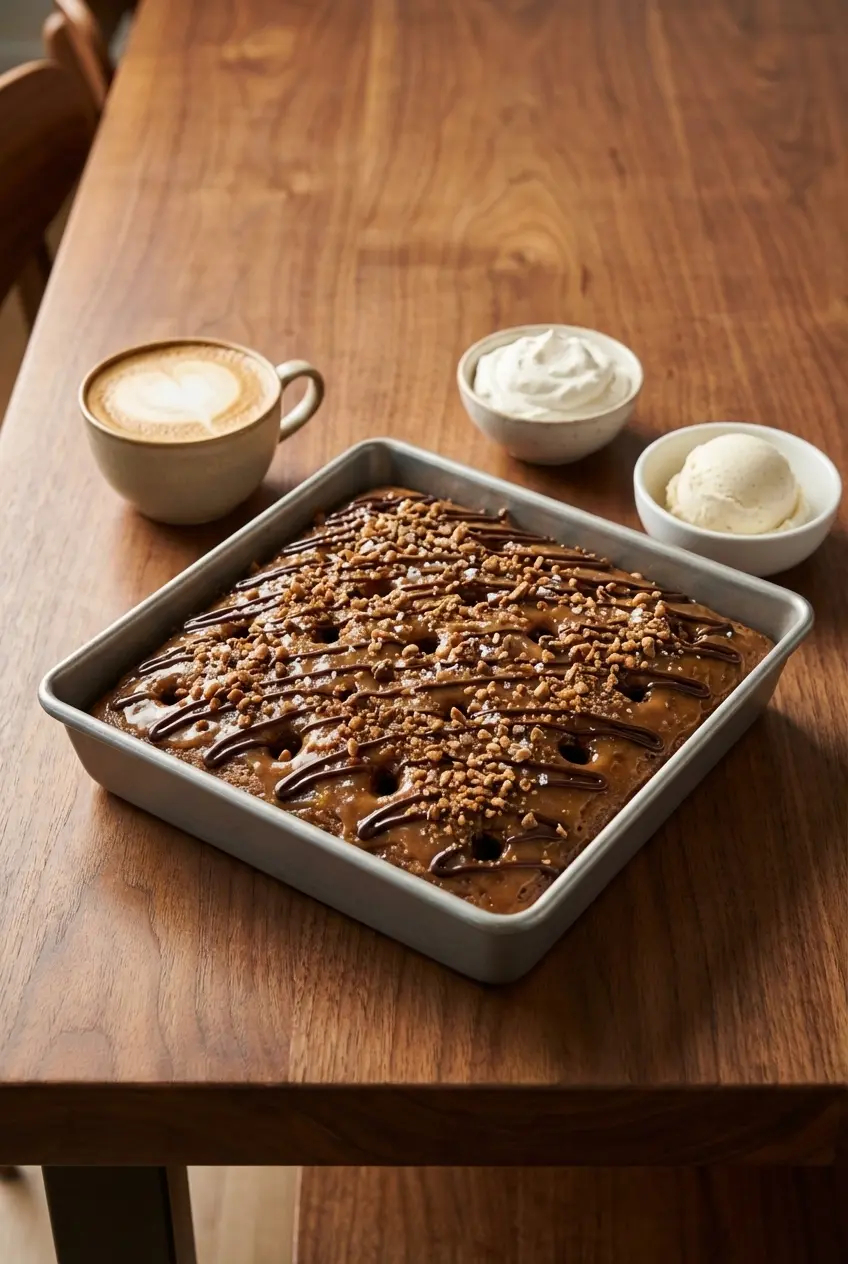
I love serving this cake slightly warm, when the caramel turns glossy again and the crumb feels especially soft. A scoop of vanilla bean ice cream or a spoonful of lightly sweetened whipped cream makes the coffee notes taste even deeper.
If you are setting out a dessert spread, this cake pairs beautifully with cappuccino or a latte, especially because the espresso toffee topping echoes those cafe flavors. For the same kind of comforting, high-moisture dessert appeal, a creamy banana cake also fits right into the table without feeling repetitive.
Storage & Reheating
To keep the cake from becoming soggy over 48 hours, cover it well and store it in an airtight container at room temperature for up to 2 days. After that, move it to the fridge so the caramel and crumb stay pleasant instead of overly wet.
For the best texture, warm individual slices in the microwave for 15 to 20 seconds. That brief reheating softens the caramel just enough and brings back the gooey center without drying out the edges.
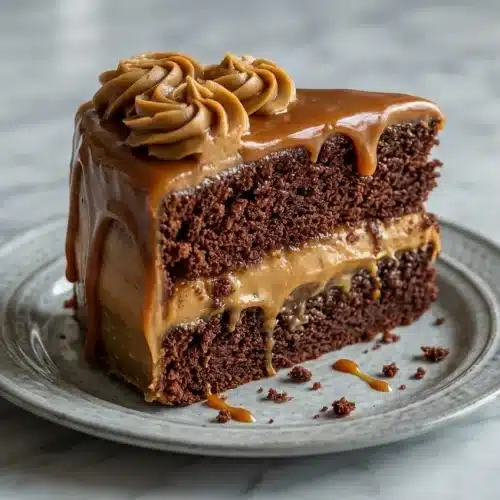
Gooey Coffee Caramel Cake

Equipment
- 9×9-inch baking pan
- Electric Mixer
- Medium bowl
- large bowl
- Saucepan
- Skewer
Ingredients
For the Cake:
- 1 1/2 cups all-purpose flour
- 1 cup granulated sugar
- 1 teaspoon baking powder
- 1/2 teaspoon baking soda
- 1/2 teaspoon salt
- 1/2 cup unsalted butter, softened
- 1 large egg
- 1/2 cup brewed coffee, cooled
- 1/2 cup buttermilk
- 1 teaspoon vanilla extract
For the Caramel Sauce:
- 1 cup brown sugar, packed
- 1/2 cup unsalted butter
- 1/4 cup heavy cream
- 1 teaspoon vanilla extract
- Pinch of salt
For the Coffee Drizzle:
- 2 tablespoons brewed coffee
- 1 tablespoon powdered sugar
Instructions
Prepare the Pan and Build the Batter
- Heat your oven to 350°F (175°C). Grease and flour a 9×9-inch baking pan or line it with parchment paper for easy removal.
- In a medium bowl, whisk together the all-purpose flour, granulated sugar, baking powder, baking soda, and salt until evenly blended.
- In a separate large bowl, beat the softened butter and egg with an electric mixer for approximately 2 minutes until the mixture is light and fluffy.
- Stir in the cooled brewed coffee, buttermilk, and vanilla extract. Do not worry if the mixture looks slightly curdled at this stage.
- Gradually add the dry ingredients to the wet mixture in three parts, stirring only until no dry streaks remain.
Bake the Cake and Make the Caramel
- Spread the batter into the pan and bake for 25 to 30 minutes. The cake is ready when the top springs back and a toothpick comes out clean.
- Let the cake rest in the pan for exactly 10 minutes. Use a skewer to poke holes across the entire surface of the warm cake.
- Prepare the caramel by combining brown sugar, butter, and heavy cream in a saucepan over medium heat, stirring until it reaches a gentle simmer.
- Simmer the sauce for 3 to 4 minutes until thickened. Remove from heat and stir in the vanilla and salt.
Soak and Finish
- Pour the warm caramel sauce over the warm cake, allowing it to settle into the holes and seep into the crumb.
- Immediately scatter crushed espresso toffee bits and flaky sea salt over the caramel layer.
- Whisk together the remaining brewed coffee and powdered sugar, then drizzle over the cake just before serving.
Notes
Nutrition
Conclusion
This cake brings together everything I want in a coffee dessert, a soft espresso-kissed crumb, buttery caramel woven through the center, and that salted toffee crunch on top that keeps every bite interesting. It feels special, but the method is friendly enough for an everyday baking mood.
If you are in the mood to play a little, a pinch of cinnamon, a mocha variation, or even decaf coffee can make it your own. It is the kind of dessert that begs to be shared around the table, preferably while the coffee is still hot.
Frequently Asked Questions
Can I use instant coffee instead of brewed coffee?
What is the best way to reheat the cake for maximum gooeyness?
My caramel is too thin, how do I fix it?
What can I use if I don’t have buttermilk?
Can I bake this in a Bundt pan?
Can I make this cake without coffee?
Can I use decaf coffee for this recipe?
Why did my caramel sauce separate?