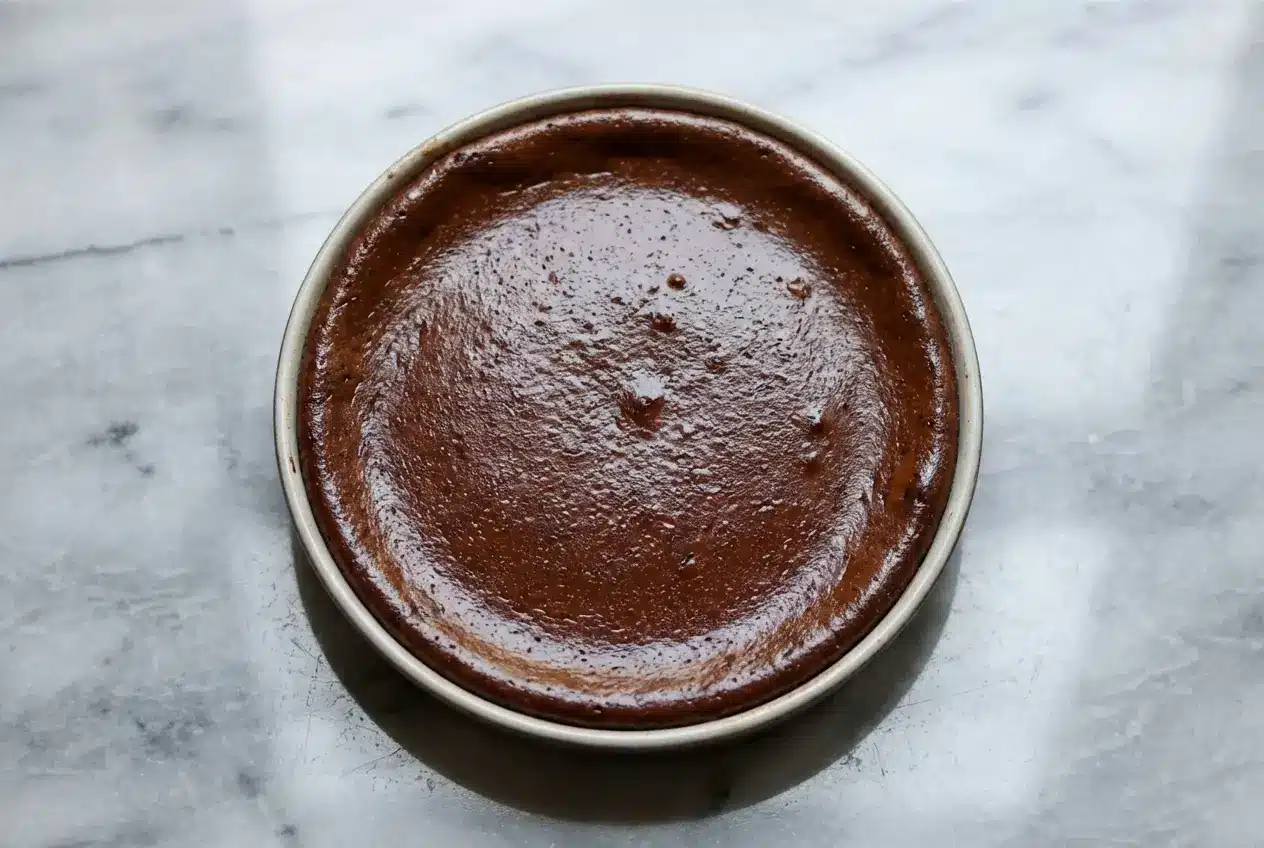
Step into any Paris neighborhood bakery around midafternoon and you will spot thick slices of Flan Pâtissier waiting behind the glass, ready for goûter with a tiny espresso or a cup of tea. In my kitchen, this French Chocolate Flan captures that same old-world comfort, but with a darker, more luxurious mood that feels made for serious chocolate lovers.
Unlike the classic vanilla version, this one leans into deep cocoa flavor, a buttery cocoa crust, and a silky custard that slices cleanly after a long chill. It is perfect for home bakers who want a true French pastry-shop texture, but also appreciate clear guidance and a few bakery tricks that make the whole process feel far less intimidating.
Why You’ll Love This Recipe
Deep chocolate flavor: This is not a sweet, flat chocolate custard. The 70% Dark Chocolate gives the filling a grown-up richness, and the result tastes closer to a refined Parisian pastry than a casual pudding pie.
The secret twist: In my kitchen, I discovered that steeping crushed espresso beans in the milk and cream makes the chocolate taste fuller and more layered. It does not turn the flan into mocha, it simply sharpens the dark notes and makes every bite more complex.
Texture worth the wait: The contrast between the crumbly cocoa-hazelnut Shortcrust pastry and the dense, glossy Crème Pâtissière-style center is what makes this French Chocolate Flan unforgettable. You get a clean slice, a silky bite, and just enough firmness to feel bakery-made.
Helpful for US bakers: I always appreciate a recipe that respects both French technique and American practicality. This one keeps the classic Flan Pâtissier structure, while clearly noting that 170°C is about 340°F and why details like freezing the shell really matter.
Ingredients and Substitutions
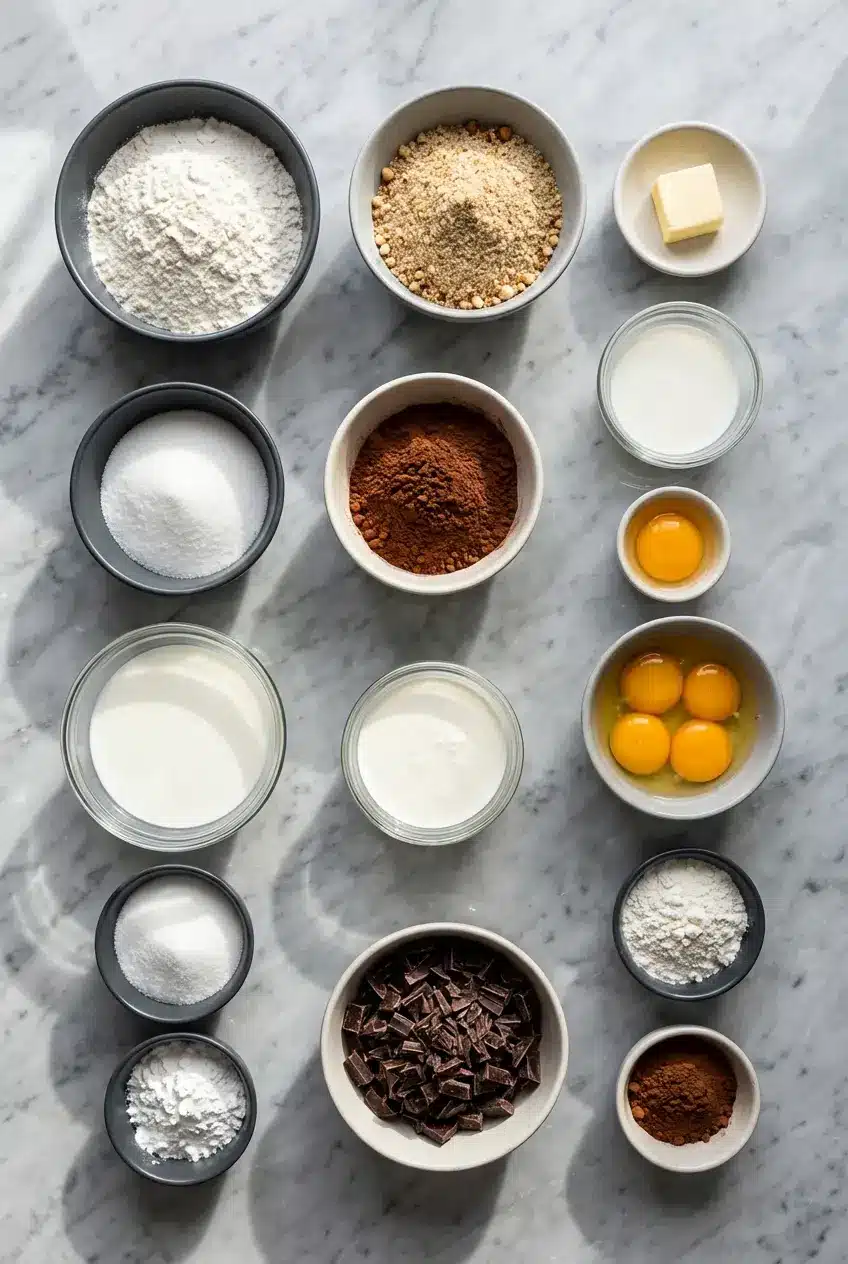
Each ingredient here has a specific job, from the tender cocoa crust to the custard’s dense, silky set. Keep the ratios as written, and the texture lands right where a proper French flan should.
Ingredients
Cocoa pastry dough:
- 160 g all-purpose flour
- 20 g roasted hazelnut meal
- 110 g butter
- 30 g sugar
- 1 pinch of salt
- 20 g cocoa powder
- 35 g milk
- 1 egg yolk
Chocolate Custard filling:
- 500 g milk
- 150 g heavy whipping cream
- 120 g egg yolks
- 130 g sugar
- 20 g all-purpose flour
- 20 g cornflour
- 160 g dark chocolate 70%
- Cocoa powder for decoration
Ingredient Notes & Substitutions
Dark chocolate: A good bar makes a visible difference here, especially in the way the filling emulsifies into a smooth, glossy Pastry Cream. I like a high-quality 70% chocolate such as Valrhona when I want that polished bakery finish and a deep, balanced flavor.
70% cocoa solids: This is the sweet spot for both taste and structure. Go much lower and the filling can feel sweeter and softer, go much higher and the flan may lose some of its creamy balance and taste too stern.
Hazelnut meal: Roasted hazelnut meal brings warmth and a lightly toasted aroma that pairs beautifully with cocoa. If you prefer, you can swap it for almond meal, or replace it with the same amount of all-purpose flour for a nut-free crust.
Cocoa powder: Use an unsweetened cocoa powder with a full chocolate aroma, since it flavors both the crust and the final dusting. A dull cocoa gives you a flat finish, while a fragrant one makes the whole tart smell like a proper pastry counter.
Milk and cream: The combination matters. Milk keeps the custard from feeling too heavy, while cream rounds it out and gives the filling that dense, silky body that makes Flan Pâtissier so distinctive.
How to Make French Chocolate Flan
Make and chill the cocoa crust
- In the bowl of a stand mixer, combine the flour, roasted hazelnut meal, butter, sugar, salt, and cocoa powder until the mixture looks sandy and smells faintly nutty from the hazelnuts and cocoa. Add the milk and egg yolk, then mix just until the dough gathers into one ball.
- Turn the dough out onto your work surface and knead it briefly, only until it looks smooth and evenly blended. You want it cohesive, not overworked, so the crust stays tender rather than tough.
- Dust the dough lightly with flour, set it between two sheets of parchment, and press it into a flat disk. Refrigerate for 2 hours so the butter firms up and the dough becomes easy to roll cleanly.
Shape the shell and prepare the custard base
- Roll the chilled dough to 3 mm thick, then line a 20 cm ring mold that is 4 to 5 cm high, keeping the sides neat and straight for that classic French bakery look. Trim any excess, then freeze the lined ring for 30 minutes so the walls hold their shape once the hot filling goes in.
- Preheat your oven to 170°C, about 340°F. This moderate heat gives the custard time to set evenly without pushing it into a rubbery texture.
- For the espresso twist, warm the milk and cream in a medium saucepan with crushed espresso beans until the mixture reaches a gentle simmer, not a rolling boil. Let it sit off the heat for 10 minutes so the coffee perfumes the dairy, then strain out the beans.
- In a large bowl, whisk the egg yolks and sugar until the mixture turns creamy and a shade lighter. Add the all-purpose flour and cornflour and whisk until smooth, with no dry pockets hiding at the bottom of the bowl.
- Slowly stream in about one-third of the hot infused dairy while whisking constantly. This is how you temper eggs safely and smoothly, raising their temperature little by little so they do not scramble.
Cook the chocolate custard and bake
- Pour the tempered mixture back into the saucepan with the remaining dairy and cook over the heat, stirring constantly so nothing catches on the bottom. Bring it all the way to a boil, and you will feel the custard tighten as the starches gelatinize and the mixture turns thick and glossy.
- Take the pan off the heat and add the chopped dark chocolate, stirring until it melts completely into a dark, smooth Crème Pâtissière. For the silkiest filling, I like to pass the hot custard through a fine-mesh strainer at this point if I suspect even the smallest lump.
- Set the frozen pastry-lined ring on a parchment-lined baking sheet, pour in the hot chocolate filling, and smooth the top. Bake for 45 to 50 minutes, until the surface is set and feels firm to the touch, while the center still has that subtle, proper jiggle rather than a loose wobble.
Cool, chill, and finish
- Let the baked flan cool fully at room temperature before moving it to the refrigerator. Chill it overnight, at least 8 hours, so the fats and starches settle into that dense, clean-cut texture every good French Chocolate Flan needs.
- Before serving, dust the top with cocoa powder and let the flan sit out for 15 minutes. That short rest takes the chill off and brings back the custard’s creamy mouthfeel.
The Secrets to a Professional Finish
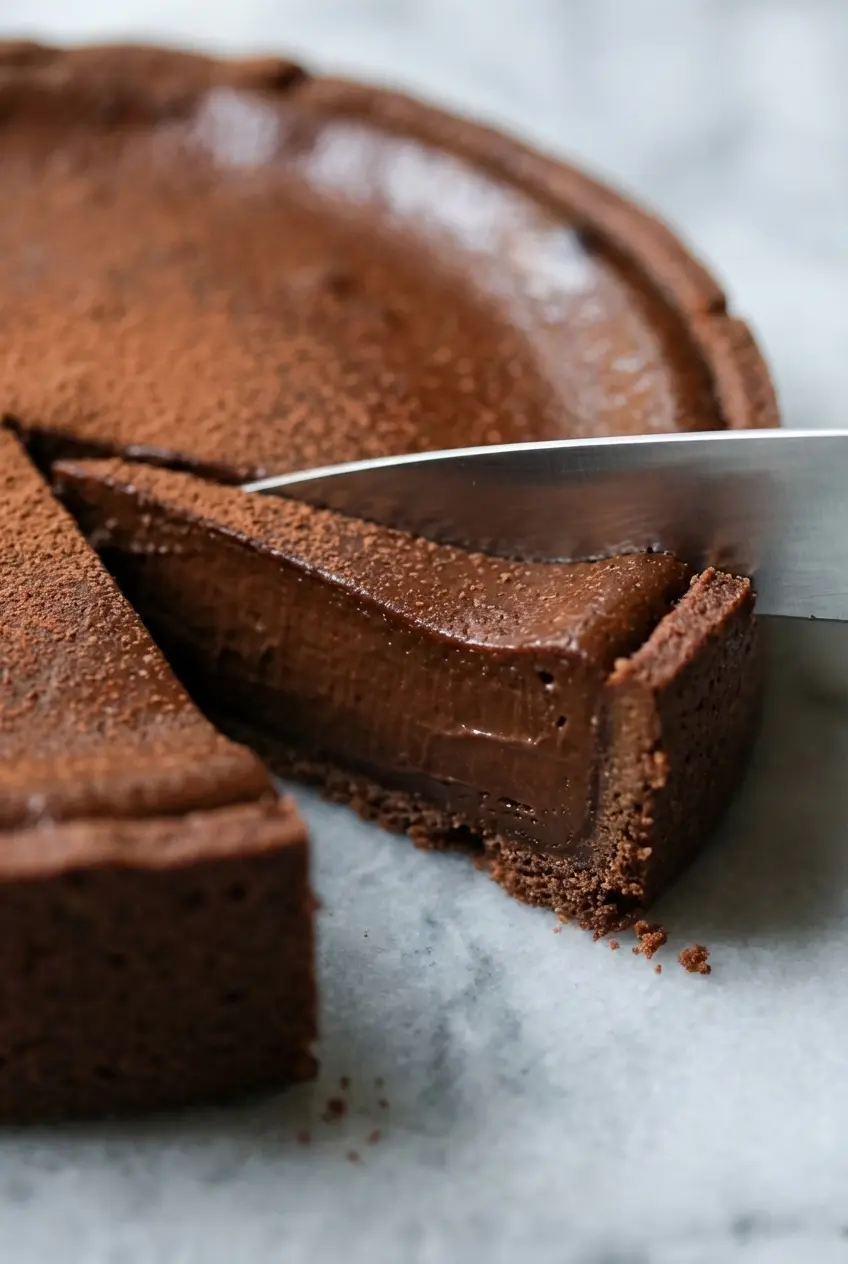
One detail I always call out for US bakers is the oven conversion, because it gets skipped far too often in French pastry recipes. Here, 170°C translates to about 340°F, and that steady temperature is gentle enough to set the custard without pushing the edges too far ahead of the center.
The mousse ring matters more than it may seem. Unlike a standard pie dish, it gives you the tall, straight sides that define a true Flan Pâtissier, and that vertical profile helps the slice look clean and dramatic once chilled.
There is also a clever bit of pastry science in pouring the hot custard into a frozen shell. The heat starts sealing the inner surface of the Shortcrust pastry right away, which helps protect the base from turning soggy during the bake.
If you want that pristine pastry-shop finish, grease the inside of the ring lightly even though the dough is rich with butter. After baking, a quick pass with a microplane along the top edge shaves off any rough bits and leaves the crust looking crisp, even, and professional.
Understanding the French Flan Pâtissier Tradition
French flan and Mexican flan may share a name, but on the plate they are completely different desserts. Flan Pâtissier is a baked custard tart, usually set inside a crust and stabilized with starch, while Mexican flan is a crustless caramel custard that is typically much silkier, looser, and unmolded from its caramel-lined dish.
In French pastry, the shell is often based on pâte à foncer, a sturdier cousin to the American pie crust. It is less flaky, more durable, and better suited to holding a thick layer of Pastry Cream or Crème Pâtissière without slumping.
That is why this dessert feels so at home in a bakery case beside fruit tarts and éclairs. It is not meant to eat like a soft pudding, but rather as a sliceable custard tart with structure, clean edges, and a firm, creamy bite built for a proper goûter.
The Role of Starch and Temperature in Custard Science
The texture of a French Chocolate Flan depends on a careful balance between egg yolks, dairy, chocolate, and starch. Using both all-purpose flour and cornflour gives the custard a dense yet creamy set, because the flour adds body and stability while the cornflour brings finer, silkier Cornstarch thickening.
Tempering matters because eggs alone can seize if they are shocked by heat. When you slowly whisk hot dairy into the yolks, then return everything to the pan and bring it to a full boil, the eggs and starches stabilize together, creating a custard that thickens smoothly instead of turning grainy.
I see a similar principle in other custard-based desserts. A treat like creme brulee bars also relies on that balance of richness and structure, where eggs provide tenderness and starch or gentle heat control keeps the filling sliceable rather than runny.
This is also why cocoa powder cannot fully replace bar chocolate in the filling. Real chocolate brings cocoa butter, and that fat contributes both flavor and body, helping the custard set into a luxurious texture instead of a chalkier one.
Pro Tips & Troubleshooting
Pro Tips
- Pass the hot custard through a fine-mesh strainer before filling the shell if you want an especially smooth, lump-free finish.
- Use a microplane or zester to tidy the top edge of the baked crust once it has cooled, which gives the flan that polished bakery-style outline.
- Lightly grease the inside of your mousse ring with butter or baking spray for easier release and cleaner sides.
- Dock the base well if you ever use puff pastry as a variation, so the bottom does not puff up and displace the custard.
Common Mistakes to Avoid
- Cracked top: This usually points to over-baking or cooling the flan too fast in a drafty kitchen. The surface should feel set, but the center should still have a restrained jiggle when it comes out of the oven.
- Collapsing sides: This almost always happens when the dough was not frozen long enough, or the shell was not lined neatly with straight walls. Freezing for 30 minutes is the insurance policy that keeps the crust standing tall.
- Liquid middle: Most often, the flan was under-baked or sliced before it had its full 8 to 12 hour chill. Custard desserts reward patience, much like creme brulee toast, which also improves when it has ample time to rest and settle overnight.
- Scorched or split dairy: Keep the milk and cream at a gentle simmer, not an aggressive boil. Too much heat too quickly can dull the flavor and make the mixture harder to emulsify with the chocolate.
Serving & Storage
Serving Ideas
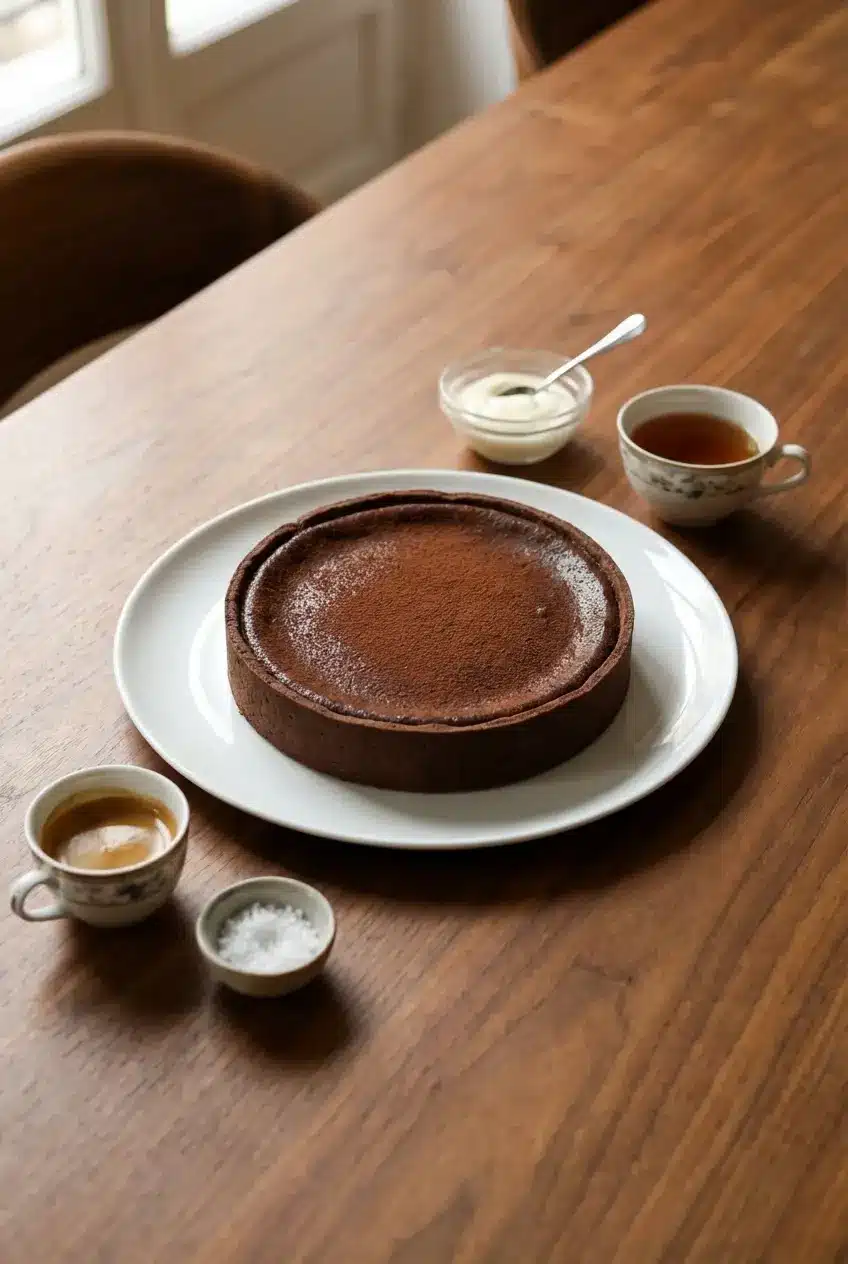
A light dusting of cocoa powder is classic, but I love adding a tiny pinch of fleur de sel over the top just before serving. That little contrast wakes up the dark chocolate and makes the custard taste even deeper.
If you want to balance the richness, a spoonful of unsweetened crème fraîche on the side works beautifully. For a more polished pastry-shop look, brush the surface lightly with simple syrup while the flan is still a touch warm, which leaves a subtle shine once cooled.
For the full boulangerie mood at home, I like serving a slice with French hot chocolate when the weather turns chilly. The pairing is unapologetically rich, but in a very Paris café sort of way, especially if the flan is served in slim, cold slices.
Storage and the 48-Hour Rule
This flan is best after it has chilled for 12 to 24 hours, when the custard is fully set and the crust still has a bit of crispness. Keep it refrigerated the whole time, loosely covered once fully cold.
After about 48 hours, moisture starts migrating from the custard into the pastry. The flavor still holds up, but the crust softens and loses that essential contrast between silky filling and crisp shell, so I always plan to serve it within the first two days.
I do not recommend reheating it. Instead, remove it from the fridge 15 minutes before serving, which softens the custard just enough for the texture to feel creamy rather than firm and cold.
Classic French Chocolate Flan

Equipment
- 20 cm ring mold (4-5 cm high)
- Stand mixer
- Medium saucepan
- Fine mesh strainer
- Baking Sheet
- Parchment Paper
Ingredients
Cocoa pastry dough:
- 160 g all-purpose flour
- 20 g roasted hazelnut meal
- 110 g butter
- 30 g sugar
- 1 pinch of salt
- 20 g cocoa powder
- 35 g milk
- 1 egg yolk
Chocolate Custard filling:
- 500 g milk
- 150 g heavy whipping cream
- 120 g egg yolks
- 130 g sugar
- 20 g all-purpose flour
- 20 g cornflour
- 160 g dark chocolate 70%
- Cocoa powder for decoration
Instructions
Make and chill the cocoa crust
- In a stand mixer bowl, combine the flour, roasted hazelnut meal, butter, sugar, salt, and cocoa powder until the mixture reaches a sandy texture. Add the milk and egg yolk, mixing just until the dough forms a ball.
- Turn the dough onto a work surface and knead briefly until smooth. Flatten into a disk between two sheets of parchment paper and refrigerate for 2 hours.
Shape the shell and prepare the custard base
- Roll the chilled dough to 3 mm thickness. Line a 20 cm ring mold, trim the edges, and freeze the lined mold for 30 minutes to ensure structural stability.
- Preheat your oven to 170°C (340°F). For an extra layer of flavor, warm the milk and cream with crushed espresso beans to a simmer. Remove from heat, let steep for 10 minutes, and strain.
- In a large bowl, whisk the 120g egg yolks with sugar until creamy and light. Whisk in the flour and cornflour until no dry spots remain.
- Slowly stream one-third of the hot milk mixture into the egg mixture while whisking constantly to temper the eggs without scrambling them.
Cook the chocolate custard and bake
- Return the tempered mixture to the saucepan with the remaining dairy. Cook over medium heat, stirring constantly, until it reaches a boil and becomes thick and glossy.
- Remove from heat and stir in the chopped dark chocolate until fully melted. Pass the custard through a fine-mesh strainer into a bowl to ensure it is perfectly smooth.
- Pour the hot chocolate filling into the frozen pastry shell. Bake for 45 to 50 minutes until the surface is set but the center still has a subtle jiggle.
Cool, chill, and finish
- Allow the flan to cool completely at room temperature. Transfer to the refrigerator and chill overnight (at least 8 hours) to set the texture.
- Dust with cocoa powder and let sit at room temperature for 15 minutes before slicing to allow the custard to soften slightly for a creamier mouthfeel.
Notes
Conclusion
The espresso infusion is the quiet little trick that makes this flan shine, because it deepens the chocolate without stealing the spotlight. What you get is a slice of French Chocolate Flan that feels elegant, dense, and wonderfully balanced.
Once you cut into that perfectly set center and hear the gentle crackle of the cocoa crust, the long chill feels entirely worth it. Bake it once, then make it your own with tiny finishing touches and the kind of confidence that grows with every beautiful slice.
Frequently Asked Questions
How long does French chocolate flan need to set?
What kind of chocolate is best for a French flan?
Why do I need to freeze the dough before filling it?
Can I use cornstarch instead of flour to thicken the custard?
Is French flan supposed to be served cold or at room temperature?
Can I use cocoa powder instead of dark chocolate in the filling?
Why is my chocolate flan liquid in the middle?
What is the difference between French flan and Mexican flan?
Can I make French chocolate flan without a crust?
Why did my pastry sides collapse during baking?