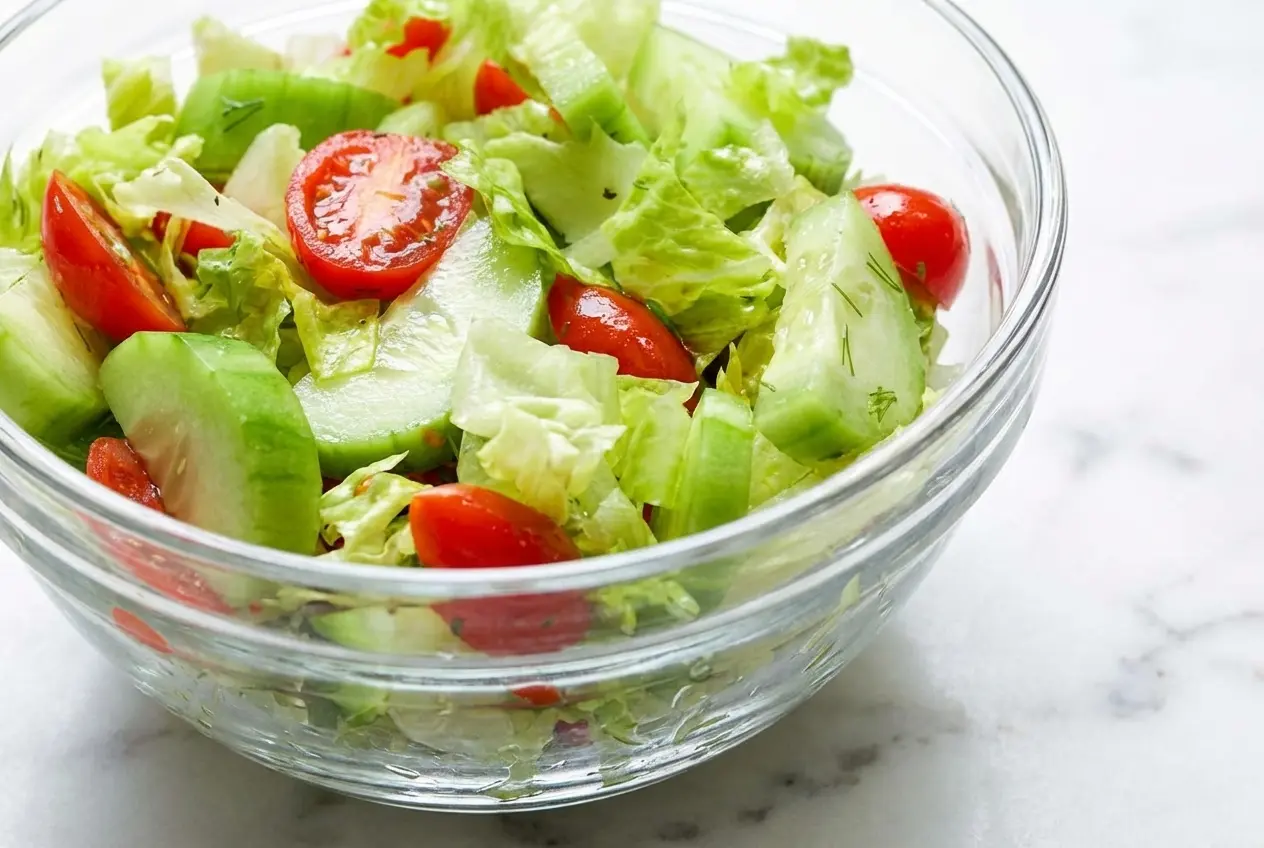
When summer cookouts are in full swing, I always come back to a simple lettuce tomato and cucumber salad because it is the side dish everyone actually wants on the table. It is cool, crunchy, quick to make, and, with one smart trick, it stays bright instead of turning into a watery bowl of disappointment.
In my kitchen, this is the salad I reach for when grilled meats are resting and the table still needs something fresh. The real payoff is a built-in vinaigrette made right in the bowl, so you get juicy garden flavor without soggy lettuce.
Why You’ll Love This Recipe
Fast and unfussy: This summer salad comes together in 15 minutes, which is exactly what I want when the grill is hot and nobody is in the mood for extra dishes.
The secret twist: I discovered that lightly salting the cherry tomatoes with a splash of red wine vinegar for 5 minutes creates a natural tomato-juice vinaigrette. Once the extra virgin olive oil goes in, it coats every leaf far better than plain oil ever could.
Crisp, bright texture: Because the moisture starts with the tomatoes instead of flooding the whole bowl, the romaine lettuce stays snappy and the cucumbers keep their clean crunch.
Real garden flavor: Fresh dill, ripe tomatoes, and cool cucumbers give this side dish that just-picked taste that feels right at home next to any backyard meal.
Ingredients and Substitutions
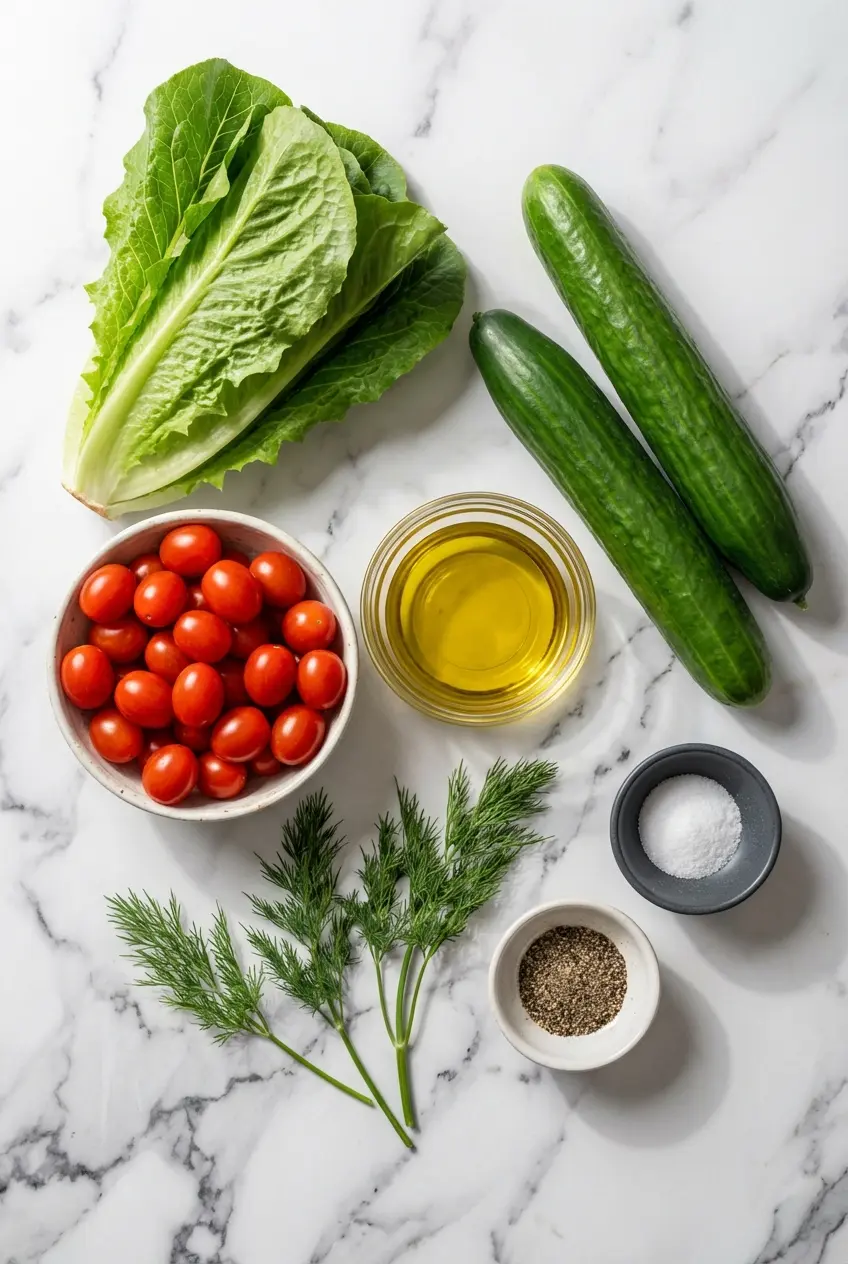
These are simple, everyday ingredients, but each one pulls its weight. The lettuce brings crunch, the tomatoes build the vinaigrette, and the dill gives the whole bowl a fresh, lively finish.
Ingredients
- 1 bunch romaine lettuce or any other lettuce
- 2 large cucumbers
- 1 cup cherry tomatoes or 2-3 large tomatoes
- 2 Tablespoons extra virgin olive oil
- 2-3 sprigs fresh dill
- 1/4 teaspoon salt
- 1/4 teaspoon black pepper
Ingredient Notes & Substitutions
Romaine lettuce: This is my first choice because the ribs stay crisp even after tossing with juicy vegetables. If you need a substitute, iceberg works for crunch, while softer lettuces are best only if you plan to serve the salad right away.
Cucumbers: Persian cucumbers are excellent here because they are extra crisp and their thin skin can stay on. Standard slicing cucumbers are perfectly fine too, but if the peel feels thick or waxy, I peel them before slicing.
Tomatoes: Heirloom tomatoes are wonderful in peak season, but cherry tomatoes are often the best bet for dependable sweetness, especially in colder months. They also hold their shape nicely and release just enough juice for the vinaigrette.
Extra virgin olive oil: Use one with a fresh, grassy flavor, not one that tastes heavy or flat. The chef’s twist also needs a small splash of red wine vinegar, which balances the oil and helps the tomato juices turn into a proper vinaigrette.
Fresh dill: Dill gives this salad its cool, summery personality, though parsley also works beautifully if that is what you have on hand. I would not skip fresh herbs altogether because they make the difference between ordinary and truly memorable.
Easy variations: Thinly sliced red onion or scallions add a sharper bite if you like more zip. For a Greek-inspired version, I often add Kalamata olives and feta, and for an Eastern European feel, a creamy dressing with sour cream, a little mayo, and minced garlic is delicious.
How to Make lettuce tomato and cucumber salad
Wash and Prep the Vegetables
- Rinse the cucumbers, tomatoes, romaine lettuce, and fresh dill well under cool water, then dry everything thoroughly. If your cucumbers have a thick, waxy skin, peel them first so the texture stays clean and pleasant in every bite.
- Cut the cucumbers into rounds or half-rounds, depending on their size. Chop the lettuce into bite-size pieces and finely chop the dill so it spreads evenly through the salad instead of clumping in one spot.
Build the Tomato-Juice Vinaigrette
- Slice the cherry tomatoes in half, or chop large tomatoes into small pieces, and place them in your salad bowl first. Sprinkle in the 1/4 teaspoon salt and add a splash of red wine vinegar, then let the tomatoes sit for 5 minutes so they soften slightly and release their flavorful juices.
- By the end of those 5 minutes, you should see a little glossy liquid collecting in the bowl. That is exactly what you want, because it becomes the base of the vinaigrette instead of turning into a puddle after the salad is dressed.
Toss and Serve
Add the cucumbers, chopped lettuce, and dill to the bowl with the tomatoes. Finish with the 1/4 teaspoon black pepper and the 2 Tablespoons of extra virgin olive oil, then toss well until the tomato juices, vinegar, and oil lightly cling to the leaves and vegetables. Serve right away for maximum crunch, or chill for 1 hour before serving if you want it extra cold and refreshing.
Secrets For A Perfectly Crisp Salad
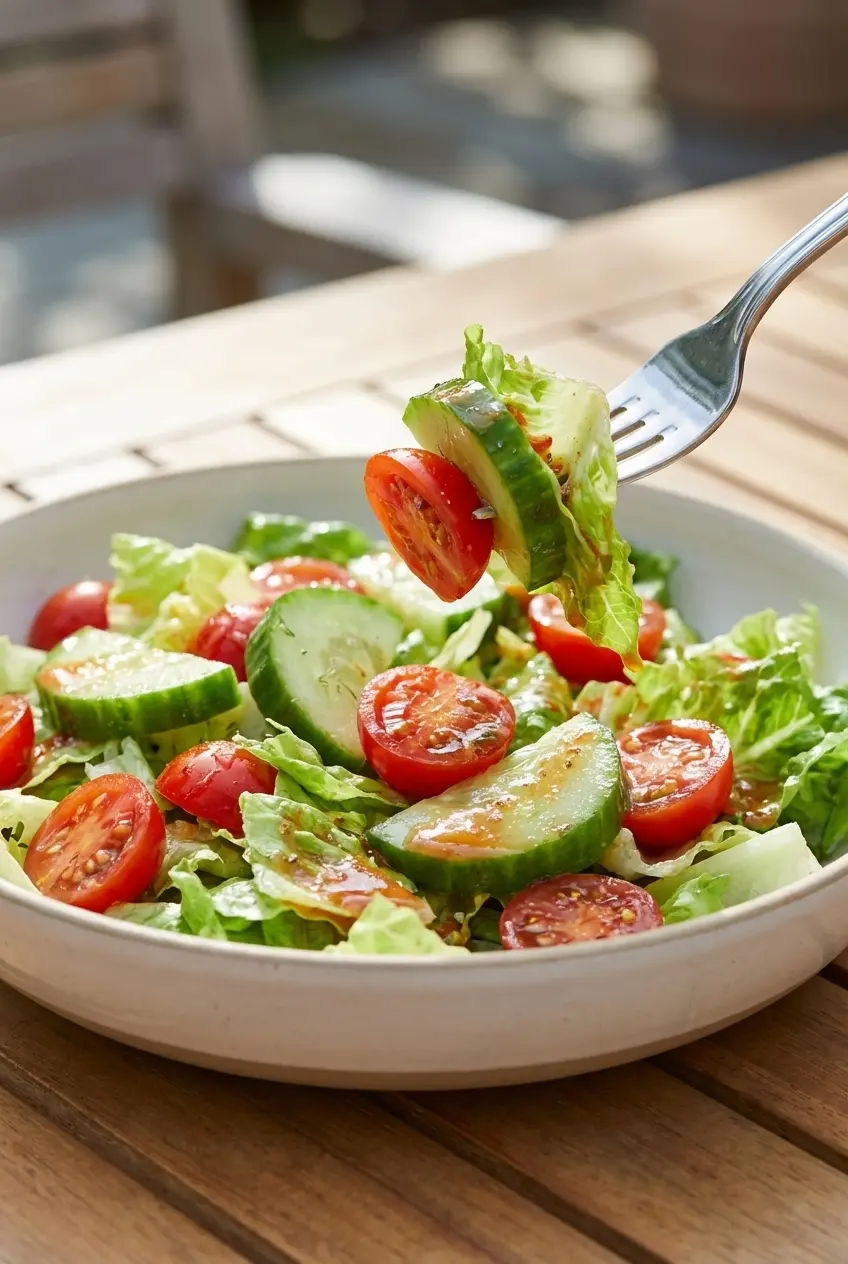
The biggest flavor fix in a raw vegetable salad is balance. Olive oil on its own can taste rich but dull, so I like a simple working ratio of about 1 part acid to 3 or 4 parts oil, and in this recipe that acid comes from both the red wine vinegar and the natural juice from the tomatoes.
That little bit of acidity wakes up the cucumbers, makes the tomatoes taste sweeter, and keeps the whole bowl from feeling heavy. Without it, the oil tends to slide around the vegetables instead of actually seasoning them.
The other secret is learning to use tomato moisture as a strength. Instead of fearing those juices, I draw them out on purpose and turn them into a vinaigrette that hugs the lettuce, rather than leaving a watery layer sitting at the bottom of the bowl.
The Science Of Preventing A Watery Salad Bowl
A watery salad usually comes down to osmosis, the natural movement of water out of high-moisture vegetables once salt is added. The food science of osmosis explains why cucumbers and tomatoes quickly release liquid when salted, especially after they are cut.
That is why I never salt the entire bowl early unless I am serving it immediately. By putting the salt on the tomatoes first, and letting them stand for 5 minutes before the cucumbers and lettuce go in, you control where the moisture is released and turn it into flavor instead of sacrificing crunch.
Choosing The Best Lettuce For Heavy Moisture
Romaine lettuce is the star here because it has sturdy ribs and a crisp bite that stands up well to juicy tomatoes and sliced cucumbers. It stays upright after tossing, which is exactly what you want in a salad with a built-in vinaigrette.
Iceberg is also crunchy and refreshing, and it is terrific in an iceberg lettuce salad, but romaine has a little more structure and character in this particular bowl. Butter lettuce is tender and lovely, though it wilts much faster once moisture hits it, so I save it for gentler dressings.
Pro Tips & Troubleshooting
Pro Tips
- Dry the lettuce extremely well before chopping. A salad spinner is one of my favorite kitchen tools because wet leaves repel dressing, and any extra well-dried greens can be tucked into the fridge for quick chicken lettuce wraps the next day.
- Cut the tomatoes and cucumbers into similar bite sizes so each forkful tastes balanced and feels neat instead of clunky.
- Use cherry tomatoes or flavorful heirloom tomatoes whenever possible. In the off-season, cherry tomatoes usually have the best sweetness and least disappointment.
- Leave the skin on Persian cucumbers for extra crunch and color, but peel standard cucumbers if the skin is thick or waxy.
Common Mistakes to Avoid
- Do not salt the entire salad early if it is going to sit around. That is the quickest path to a soggy puddle at the bottom of the bowl.
- Do not skip the fresh herbs. Dill or parsley adds that aromatic lift that makes a simple garden salad taste polished and complete.
- Do not use bland, mealy slicing tomatoes when better options are available. Weak tomatoes bring extra water but very little flavor.
- Do not toss the salad with wet lettuce. Even the best vinaigrette will taste watered down if the greens are not properly dried.
Serving & Storage
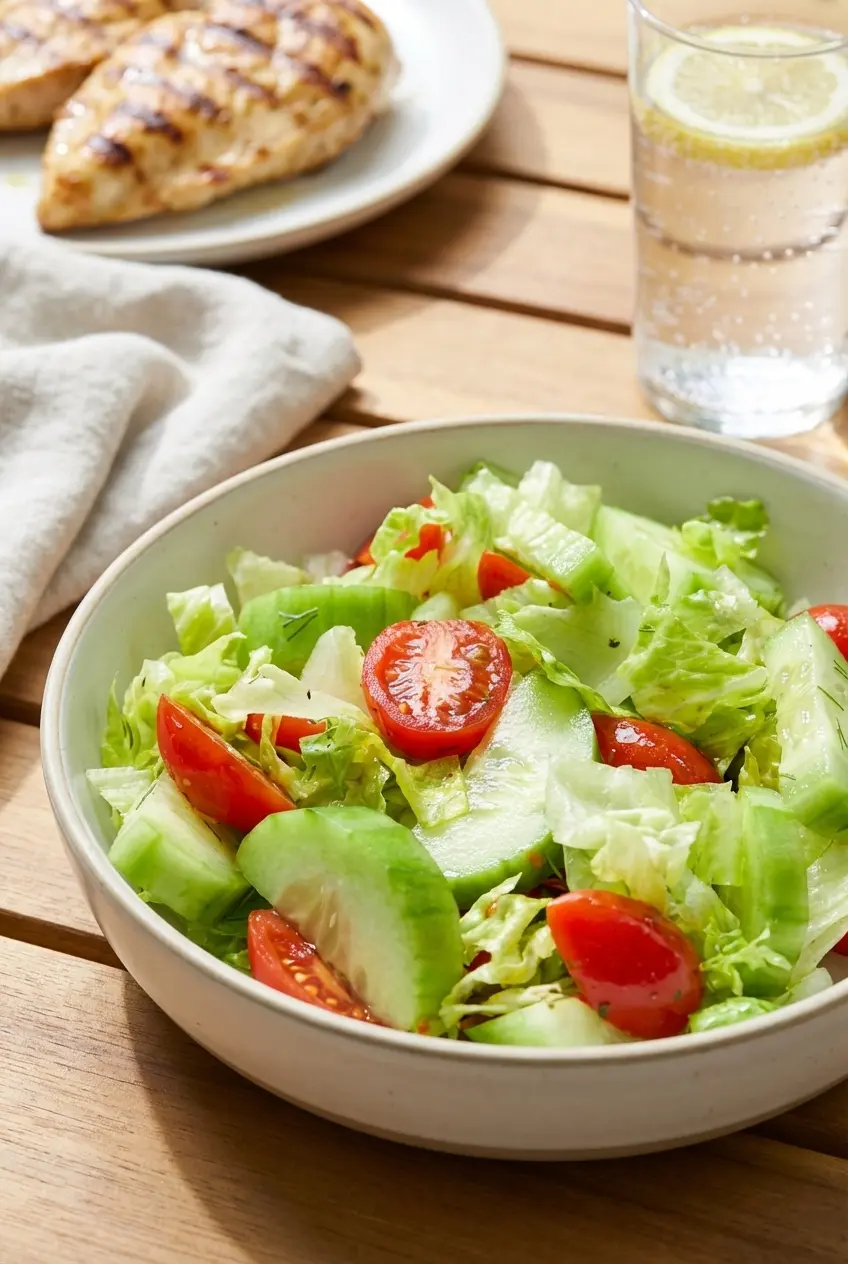
Serving Ideas
This crisp side dish belongs next to hearty mains, especially grilled chicken kabobs, pork chops, baked salmon, or even rich slices of smoked turkey. The cool cucumbers, bright tomatoes, and fresh dill cut through heavier foods beautifully and make the whole meal feel more balanced.
For extra texture, I like to scatter homemade garlic croutons, toasted pumpkin seeds, or sunflower seeds over the top just before serving. That last-minute crunch makes the salad feel a little more special without taking away from its easy, everyday charm.
Storage & Make-Ahead
If you want to prep ahead, chop the lettuce and herbs and store them separately from the cucumbers and tomatoes. Keep the salt, vinegar, and olive oil off the vegetables until just before serving so the salad stays crisp.
Leftovers are best the same day, but they can hold up in the refrigerator for about 1 day. After that, the lettuce starts to soften, though the flavor is still nice if you do not mind a less crisp texture.
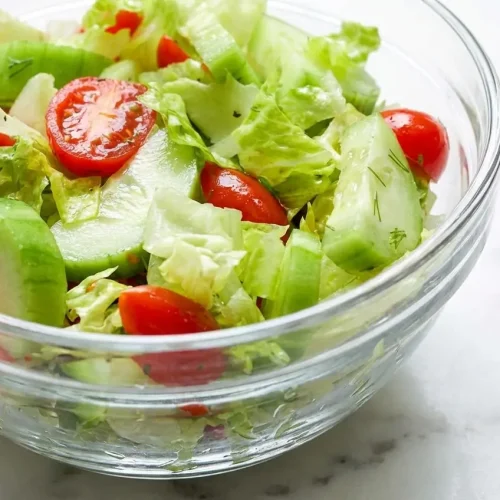
Crisp Lettuce Tomato And Cucumber Salad

Equipment
- Salad spinner
- Salad bowl
- Chef’s knife
Ingredients
- 1 bunch romaine lettuce or any other lettuce
- 2 large cucumbers
- 1 cup cherry tomatoes or 2-3 large tomatoes
- 2 Tablespoons extra virgin olive oil
- 2-3 sprigs fresh dill
- 1/4 teaspoon salt
- 1/4 teaspoon black pepper
Instructions
Wash and Prep the Vegetables
- Rinse the cucumbers, tomatoes, romaine lettuce, and fresh dill well under cool water, then dry everything thoroughly. If your cucumbers have a thick or waxy skin, peel them first to keep the texture clean and pleasant.
- Cut the cucumbers into rounds or half-rounds. Chop the lettuce into bite-size pieces and finely chop the dill so it spreads evenly through the salad instead of clumping.
Build the Tomato-Juice Vinaigrette
- Slice the cherry tomatoes in half (or chop large tomatoes into small pieces) and place them in your salad bowl first. Sprinkle in the 1/4 teaspoon of salt and add a splash of red wine vinegar, then let the tomatoes sit for 5 minutes so they soften and release their natural juices.
- By the end of the 5 minutes, you should notice a glossy liquid collecting at the bottom of the bowl. This is the flavorful base of your vinaigrette.
Toss and Serve
- Add the sliced cucumbers, chopped lettuce, and dill to the bowl with the tomatoes. Finish with the 1/4 teaspoon of black pepper and 2 Tablespoons of extra virgin olive oil. Toss well until the tomato juices, vinegar, and oil lightly coat all the vegetables. Serve immediately for maximum crunch, or chill for 1 hour if you prefer it extra cold.
Notes
Conclusion
This salad proves that a handful of everyday garden vegetables can taste far more exciting than they look. Once you try the tomato-juice vinaigrette trick, the whole bowl comes together with better flavor, better texture, and none of that sad watery mess.
I hope this becomes one of those back-pocket sides you make all summer long. Play with the herbs, add a few olives or onions if the mood strikes, and let this simple bowl of crunch do what it does best.