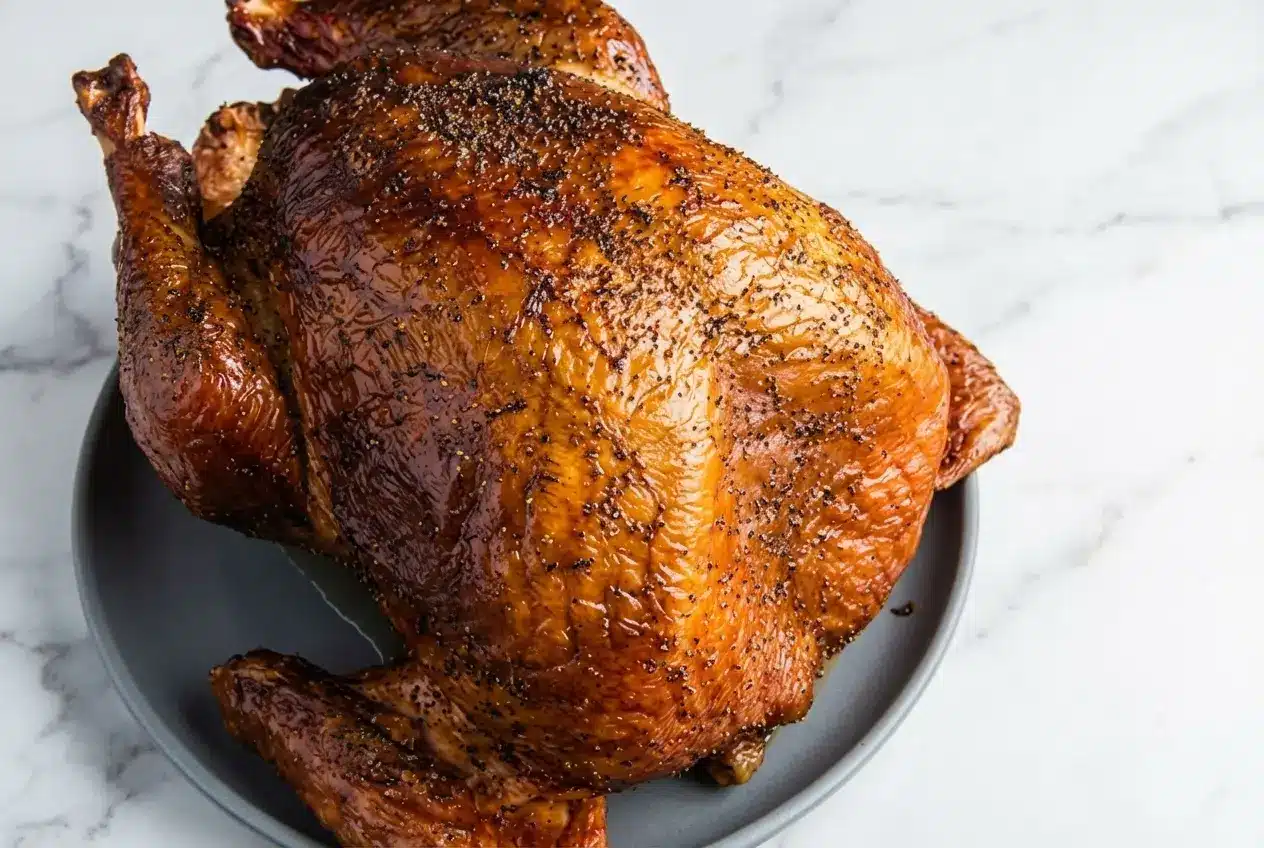
Thanksgiving always seems to bring the same big question into my kitchen, how do you get a smoked turkey that tastes deeply savory, stays juicy from edge to center, and still lands on the table with crisp, crackly skin? After plenty of holiday testing, this is the method I trust when I want a showpiece bird without the stress of babysitting the smoker all day.
This smoked turkey recipe is perfect for hosts who want classic holiday flavor with a little more smoke, a lot more texture, and far less guesswork than traditional roasting. I’ll walk you through everything, from dry brining and spatchcocking to timing, carving, and saving those drippings for gravy.
Why You’ll Love This Recipe
Crispy skin that actually stays crispy: In my kitchen, the biggest game changer was ditching the wet brine and using a dry brine with a little baking powder. It helps the skin dry out properly, which is exactly what a smoker recipe needs if you want that bronzed, glassy finish instead of a rubbery bite.
Better turkey flavor: A wet brine can waterlog the bird and mute its natural richness. A dry brine seasons the meat more directly, so the turkey breast and dark meat taste more like turkey, only juicier and better seasoned all the way through.
Spatchcocking makes life easier: Once you flatten the bird, all that skin gets exposed to the heat and smoke at the same time. That means more even cooking, a shorter cook on the pellet grill, and a much better shot at hitting the ideal internal temperature without drying out the white meat.
Ingredients and Substitutions
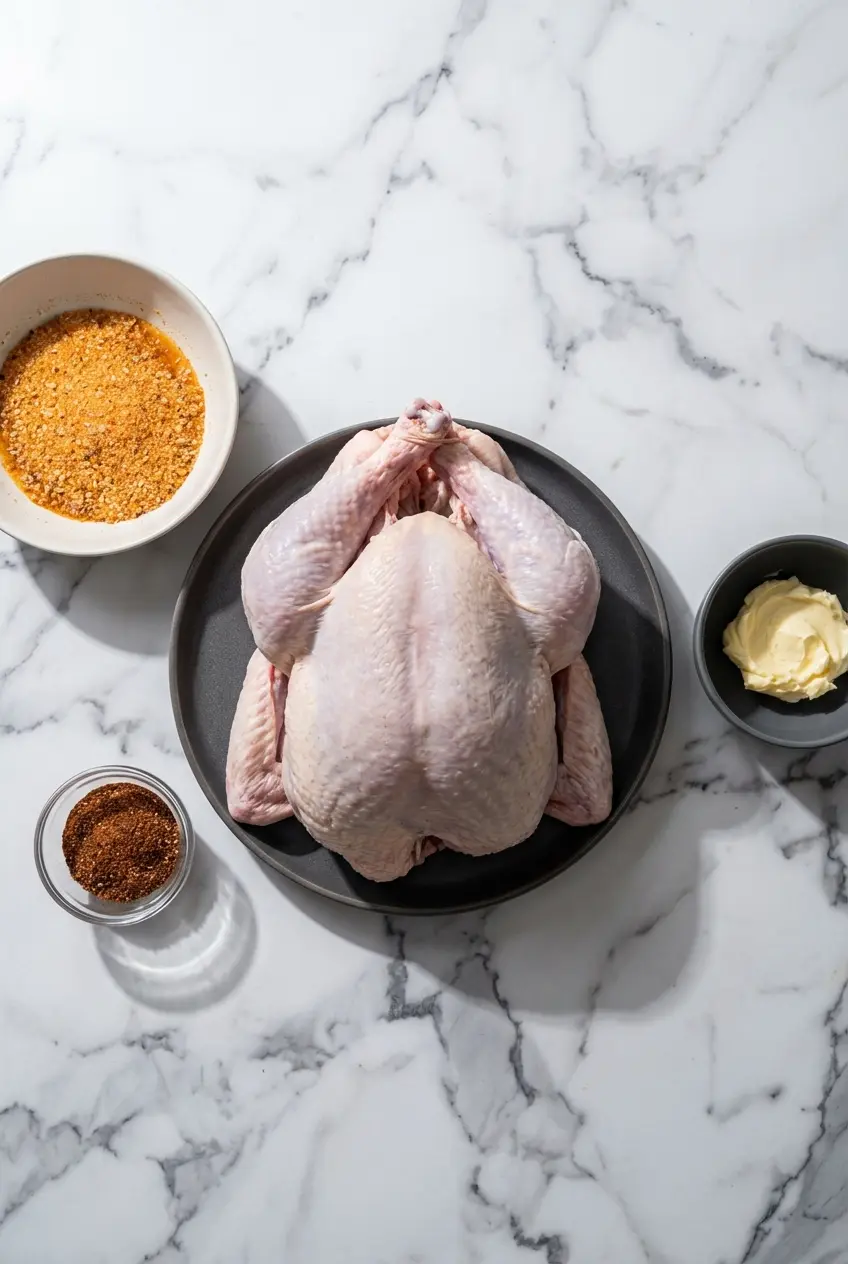
You only need a handful of key ingredients here, and each one earns its place. The turkey, rubs, and butter work together to build deep flavor, juicy meat, and beautifully crisp skin.
Ingredients
- 1 Whole (18-20 lb) turkey, thawed if frozen, giblets removed
- 1 Orange Brine & Turkey Rub
- 1/2 Cup Pork & Poultry Rub
- 1/2 Pound Unsalted butter, softened
Ingredient Notes & Substitutions
Orange Brine & Turkey Rub: For this method, I use it as the base of a dry brine instead of a wet brine. Mix in 1 tablespoon of baking powder and kosher salt as needed, then rub it all over the spatchcocked turkey so the seasoning works directly on the meat and skin.
Baking Powder: This is the quiet hero of crispy smoked turkey skin. It changes the skin’s surface pH and helps break down proteins so the exterior dries and browns more efficiently, which is especially useful at lower smoking temperatures.
Unsalted Butter: Use a good-quality unsalted butter so you stay in control of the salt level after dry brining. Since the bird is already heavily seasoned, salted butter can push the final flavor too far.
Whole Turkey: An 18 to 20 pound bird is ideal for a big Thanksgiving recipe, but you can use a smaller turkey if needed. Just follow the same method and watch your meat thermometer closely, because a lighter bird will move through the smoking stages faster.
Pork & Poultry Rub: This adds color and savory depth on the outside and underside of the bird. If you use another poultry rub, choose one with balanced herbs and a moderate salt level so it supports the dry brine instead of overpowering it.
How to make smoked turkey
Prep the Bird
- The day before cooking, spatchcock the turkey by removing the backbone and pressing the bird flat. In a bowl, combine the Orange Brine & Turkey Rub with 1 tablespoon of baking powder and kosher salt as needed, then coat the turkey thoroughly with this dry brine mixture, making sure you get into every nook and cranny. Leave it uncovered in the refrigerator for 24 hours so the skin dries and the seasoning has time to sink in.
- Season the underside of the spatchcocked bird, or the inside cavity area, with 2 tablespoons of Pork & Poultry Rub. This layer gives the meat flavor from the bottom up, not just on the skin.
- Gently loosen the skin over the breasts with your hands to form a pocket, then spread the softened butter underneath in an even layer, about 1/4 inch thick. Finish by rubbing the outside of the turkey with the remaining Pork & Poultry Rub so the surface is fully coated and ready to brown.
- Return the turkey to the refrigerator for at least 1 hour, though the full 24-hour dry brine is where the magic really happens. By then, the skin should look slightly tightened and dry to the touch, which is exactly what you want.
Start Low for Smoke Flavor
- Take the turkey from the refrigerator and lay it flat in a roasting pan, since a spatchcocked bird does not need trussing. The flatter shape helps the breasts and dark meat cook more evenly and gives the smoke better access to the whole surface.
- Preheat your pellet grill or smoker to 225℉ with the lid closed for 15 minutes. If your cooker has a Super Smoke setting, this is the time to use it, and I strongly recommend apple wood pellets for a gentle, slightly sweet smoke that flatters poultry instead of overpowering it.
- Insert a meat thermometer probe into the thickest part of the turkey breast, making sure the tip is centered in the meat and not touching bone. Set the roasting pan on the grill grates, close the lid, and smoke until the internal temperature reaches 100 to 110℉.
Finish Hot for Crisp Skin
- Raise the grill temperature to 350℉ and continue cooking until the internal temperature reaches 160℉. This usually takes about 4 hours more, though spatchcocking often speeds things up, and weather, bird size, and your smoker’s airflow all play a part.
- Once the turkey hits temperature, take it off the grill and let it rest for at least 30 minutes before carving. During that rest, carryover cooking will bring the bird up to a safe 165℉, and the juices will settle back into the meat instead of spilling onto the cutting board.
Secrets for Perfection
The two-stage cooking method is the reason this bird tastes like a holiday centerpiece instead of just smoky poultry. Starting at 225℉ gives the turkey time to pick up clean wood flavor without squeezing out its moisture, then finishing at 350℉ renders the fat under the skin and turns that surface beautifully crisp.
Baking powder is the trick I wish I had learned sooner for smoker recipes. Because a pellet grill runs lower and gentler than a hot oven for much of the cook, the skin often struggles to crisp, but this small addition helps create that dry, blistered finish people usually think is impossible on a smoked turkey.
The meat thermometer matters more than the clock, every single time. Turkey size, outdoor temperature, and even wind can change the pace of the cook, so I always trust internal temperature over any per-pound estimate if I want juicy turkey breast and tender dark meat.
A Stress Free Thanksgiving Day Smoker Timeline
If dinner is at 4 PM, I like to work backward so nothing feels rushed. Around 8:30 AM, pull the dry-brined turkey from the fridge while you clear space, gather the roasting pan, and get the pellet grill ready for the day.
By 8:45 AM, preheat the smoker to 225℉ with the lid closed for 15 minutes. The turkey can go on around 9:00 AM, which gives it a long, steady low-smoke phase to build flavor before the higher-heat finish.
Plan for the bird to reach 100 to 110℉ sometime around late morning or early afternoon, then raise the temperature to 350℉. For a big Thanksgiving recipe like this, I like to leave a little cushion in the schedule because weather and turkey size can shift the timing more than most people expect.
If the turkey comes off the smoker at 3:00 PM, that 30-minute rest is not downtime, it is your secret weapon. It is also a handy oven window for a quick side like garlic roasted carrots, which slides nicely onto the table while the bird finishes settling.
By 3:30 PM, carve the turkey and warm the gravy. That last half hour always feels calmer when the main event is already done and you are simply arranging the platter instead of racing the clock.
Carving Your Bird and Perfecting Smoked Gravy
A spatchcocked turkey is actually easier to carve than a whole trussed bird. Start by removing the legs where the thigh joint naturally gives way, then take off the wings, and finally slice the breast meat against the grain into even pieces so every serving stays tender and neat.
When you look at the breast, you will see the grain running in long lines from one end to the other. Cut across those lines, not with them, and the slices will look clean and feel tender rather than stringy.
For gravy, the drippings need a little protection from harsh smoke. I like to add a shallow layer of broth to the roasting pan before the turkey goes on, which softens the drippings as they fall and keeps them from scorching into something bitter.
If your smoker runs especially smoky, loosely tent just the liquid area of the pan with foil while leaving the bird fully exposed. That way the turkey still takes on color and smoke, but the drippings stay mellow enough to turn into a rich gravy instead of tasting like ash.
Pro Tips & Troubleshooting
Pro Tips
- Cook to internal temperature, not by the clock. Pull the turkey breast at 160℉ and let carryover cooking bring it to 165℉ while it rests.
- Use mild woods like apple, cherry, or pecan so the smoke supports the bird’s natural flavor instead of overpowering it.
- Slide softened butter directly under the skin so the breast meat bastes as it cooks and the skin browns faster.
- Keep the smoker lid closed as much as possible. Every peek drops heat and can stretch the cook longer than you expect.
Common Mistakes to Avoid
- Basting during the cook, which sounds helpful but usually lets out heat, slows everything down, and can leave the meat drier.
- Skipping the resting period, because carving too soon sends those precious juices straight onto the board.
- Following time per pound without using a meat thermometer. Smoked turkey is far too variable for timing alone to be reliable.
Serving & Storage
Serving Ideas
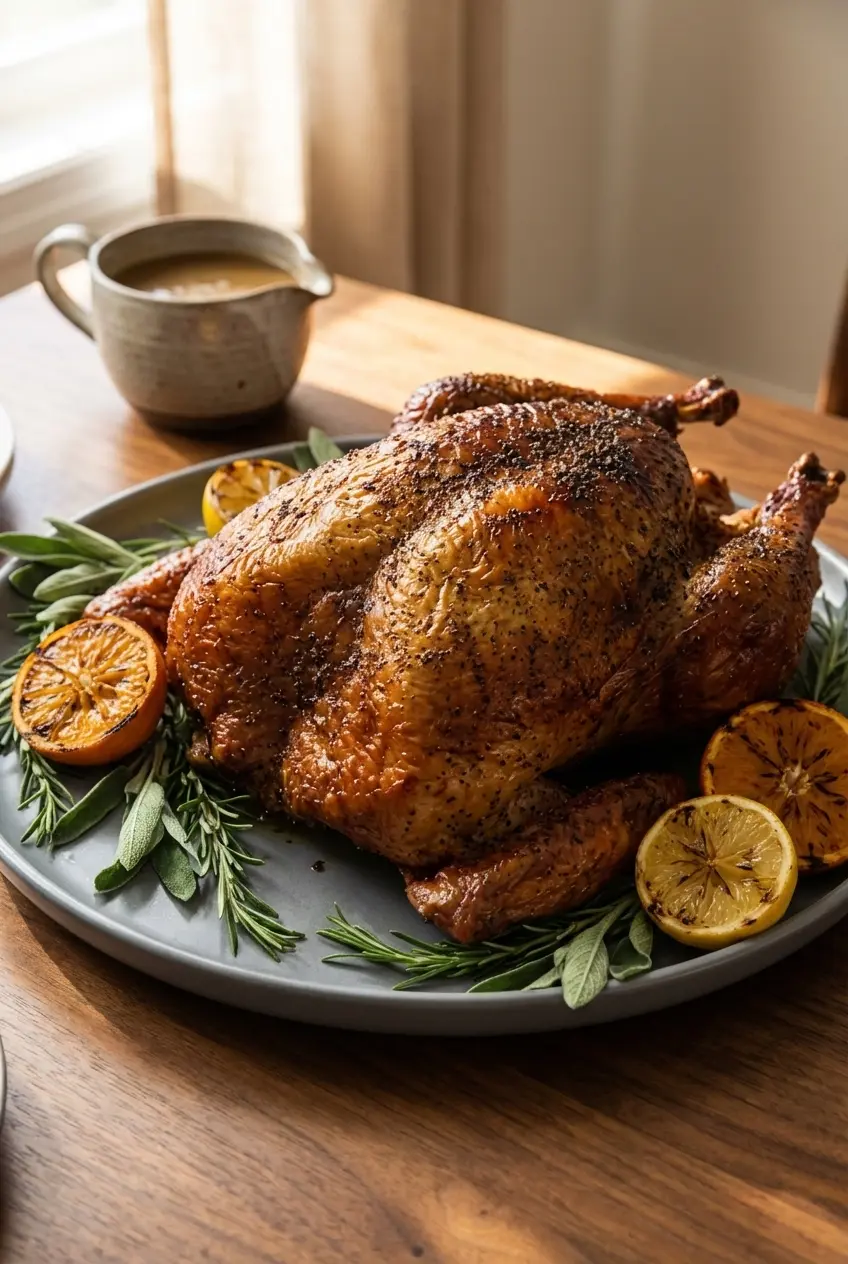
This turkey loves all the classic Thanksgiving companions, especially smoked giblet gravy, buttery stuffing, tart cranberry sauce, and plenty of roasted vegetables. On a holiday platter, I like to scatter rosemary and sage around the sliced meat and tuck in a few charred citrus halves for color and a little brightness.
For sides, the smoky richness pairs especially well with sweet-savory vegetables like maple roasted vegetables. If you want something a little playful alongside the gravy, mashed potato puffs bring a crisp, golden contrast that works beautifully with tender slices of turkey.
Storage & Make-Ahead
Leftover smoked turkey keeps well when packed into airtight containers and chilled promptly. For food-safe timing, you can store leftovers in airtight containers in the fridge for up to 3-4 days, which lines up with the window I use in my own kitchen after the holiday meal.
For longer storage, freeze the meat in well-wrapped portions with a little broth or gravy to protect it from drying out. When reheating, use gentle heat and add a splash of broth, then cover the dish so the turkey warms through without turning tough.
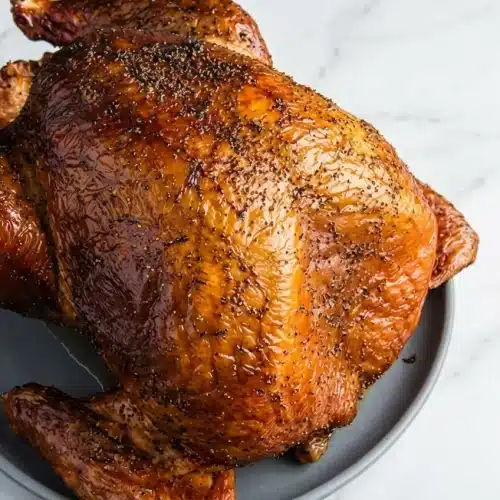
Juicy Smoked Turkey

Equipment
- Pellet Grill or Smoker
- Meat Thermometer
- Roasting pan
Ingredients
- 1 Whole (18-20 lb) turkey, thawed if frozen, giblets removed
- 1 Orange Brine & Turkey Rub
- 1/2 Cup Pork & Poultry Rub
- 1/2 Pound Unsalted butter, softened
Instructions
Prep the Bird
- The day before cooking, spatchcock the turkey by removing the backbone and pressing the bird flat. In a bowl, combine the Orange Brine & Turkey Rub with 1 tablespoon of baking powder and kosher salt as needed. Coat the turkey thoroughly with this dry brine mixture, ensuring you get into every crevice. Leave it uncovered in the refrigerator for 24 hours to let the skin dry and the seasoning sink in.
- Season the underside of the spatchcocked bird with 2 tablespoons of the Pork & Poultry Rub. This gives the meat flavor from the bottom up.
- Gently loosen the skin over the breasts with your hands to form a pocket, then spread the softened butter underneath in an even layer, about 1/4 inch thick. Rub the outside of the turkey with the remaining Pork & Poultry Rub so the surface is fully coated.
Start Low for Smoke Flavor
- Take the turkey from the refrigerator and lay it flat in a roasting pan. The flatter shape helps the meat cook evenly and gives the smoke access to the entire surface.
- Preheat your pellet grill or smoker to 225 F with the lid closed for 15 minutes. Apple wood pellets are highly recommended for a gentle, slightly sweet smoke.
- Insert a meat thermometer probe into the thickest part of the turkey breast, ensuring the tip is centered in the meat and not touching bone. Set the roasting pan on the grill grates, close the lid, and smoke until the internal temperature reaches 100 to 110 F.
Finish Hot for Crisp Skin
- Raise the grill temperature to 350 F and continue cooking until the internal temperature reaches 160 F. Expect a total cooking time of about 6 hours, though variables like weather and turkey size can shift the timing.
- Once the turkey hits 160 F, remove it from the grill and let it rest for at least 30 minutes before carving. Carryover cooking will safely bring the bird up to 165 F, and the juices will settle back into the meat.
Notes
Conclusion
This dry-brined, spatchcocked method turns smoked turkey into the kind of holiday main dish people remember, juicy in the center, deeply seasoned, and crowned with crisp skin that actually crackles. Once you try the low-and-slow start with the hot finish, it is hard to go back to the old way.
I hope this becomes one of those Thanksgiving traditions that makes the whole day feel easier and a whole lot tastier. Pour the gravy, carve with confidence, and enjoy every smoky, golden bite.