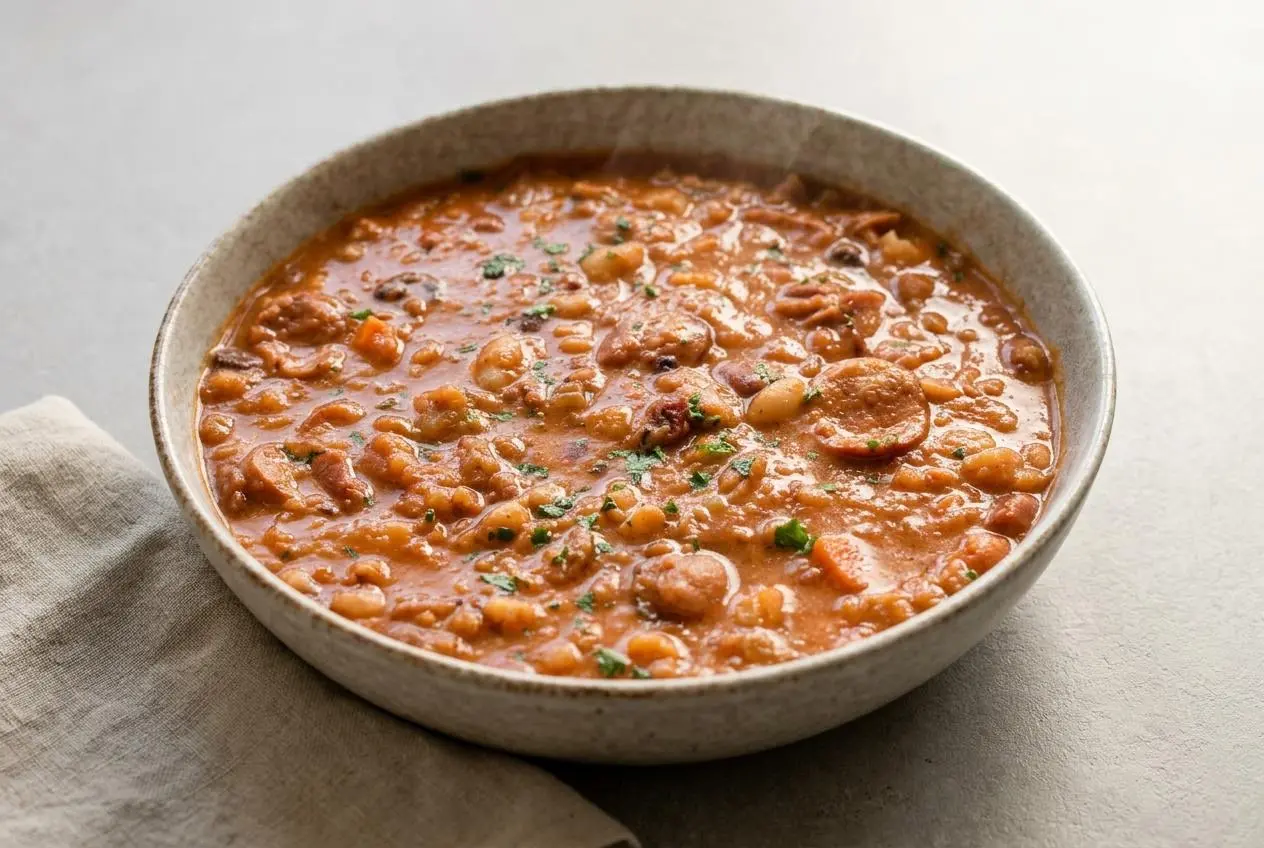
Make this hearty soup by soaking the dried beans, browning kielbasa with aromatic vegetables, then gently simmering everything with a smoked ham hock until the beans are tender and the broth is rich.
This 15 bean soup recipe turns a colorful mix of legumes into a smoky, savory pot of comfort food. A gentle simmer keeps the small lentils from disappearing too quickly while larger beans become creamy and tender.
The kitchen starts smelling especially good when the sausage browns and the onion, carrot, and celery soften in its flavorful drippings. The late addition of tomatoes is the trick that keeps the beans tender.
Use a roomy Dutch oven so the beans have space to circulate and stay covered with liquid as they cook.
Key Ingredients and Flavor Foundations
Each component builds either body, smoky depth, sweetness, or savory balance, creating a broth that tastes layered rather than flat.
- 1 pound dried 15 bean mix
- 1 tablespoon neutral oil
- 7 ounces kielbasa, sliced
- 1 medium onion, chopped
- 2 medium carrots, diced
- 2 ribs celery, diced
- 3 cloves garlic, minced
- 1 smoked ham hock or ham bone
- water
- 3 bay leaves
- 14 ounces crushed or diced tomatoes
- 1 tablespoon mild chili powder
- 1 tablespoon dijon mustard
- 1 tablespoons Worcestershire sauce
- salt, as needed
The 15 bean mix brings different shapes and cooking rates to the pot. Small lentils and split legumes soften first and release starch, which gives the broth a naturally velvety texture. Larger beans, including lima beans, add creamy bites and make the soup feel substantial.
Kielbasa brings browned, savory edges, while the smoked ham hock slowly enriches the cooking liquid and contributes tender shreds of meat near the end. Onion, carrot, celery, and garlic make a sweet, aromatic mirepoix that rounds out the smokiness.
Dijon mustard and Worcestershire sauce work quietly in the background. They sharpen the savory flavor without making the soup taste mustardy or overly tangy. Hold the salt until the end because both smoked pork cuts can season the broth as they simmer.
I look for kielbasa with a firm casing and visible seasoning, since it keeps its shape better after browning and adds more flavor to the pot.
How to Make 15 Bean Soup on the Stovetop
Cook the soup at an active but controlled simmer. A hard boil can split the smaller legumes before the larger beans have time to soften.
The night before
- Spread the dried beans out, remove any stones or damaged beans, then place them in a large bowl or pot and cover with tap water by at least 2 inches.
Leave the beans to soak overnight, or for at least 8 hours, until they look plumper and more evenly hydrated.
Making the soup
- Pour off the soaking liquid and drain the beans well.
The discarded liquid will look cloudy, while the soaked beans should feel firm but swollen. - Heat the oil in a 5.5 to 7 quart soup pot or Dutch oven over medium heat.
When the oil shimmers across the bottom of the pot, it is ready for the sausage. - Add the sliced kielbasa and cook for about 5 minutes, turning the pieces as they brown.
Stop when the edges turn golden and the sausage releases a sweet, smoky aroma. - Stir in the onion, carrots, celery, and garlic, then cook for about 5 minutes.
The vegetables should soften and smell sweet, with browned bits beginning to collect on the bottom of the pot. - Make room in the center of the pot and nestle in the ham hock, keeping it below the rim.
The hock should sit securely among the vegetables rather than sticking above the cooking liquid. - Add the drained beans around the ham hock.
The mixed legumes should settle into an even layer around the meat. - Pour in 6 cups of water and add the bay leaves, making sure the beans are fully covered.
Bring the pot to a boil, then lower the heat to an active simmer and skim away any gray foam that rises at first. - Set the lid partially over the pot and simmer for a total of 2 hours, stirring every 30 to 40 minutes and adding water as needed to keep the beans submerged.
Maintain steady, gentle bubbles rather than a rapid boil, and watch for the broth to gradually turn more opaque. - When 30 minutes remain, lower the heat to a gentle simmer, remove the bay leaves, and stir in the tomatoes, mustard, chili powder, and Worcestershire sauce.
The broth will turn a deeper red and smell fuller, while the beans continue softening without the acidity slowing them too early. - Turn off the heat and move the ham hock to a bowl until cool enough to handle, then pull away the edible meat and return it to the soup.
Discard the bone and any tough gristle so only tender shreds go back into the pot. - Mash a bean against the side of the pot to check for tenderness, then season with salt as needed.
A large lima bean should flatten easily, and the broth should look lightly thickened from the softened legumes.
Soaking and Sorting Dried Beans
Sorting and soaking help the different beans cook more evenly. Soaking is helpful, but it is not the only path to a good pot of soup if you have more time for simmering.
Overnight Cold Soak vs Quick Hot Soak
An overnight cold soak, or at least 8 hours, gives the most even result because the larger beans have time to hydrate before cooking. Drain the soaking liquid before the beans go into the pot, then begin with fresh water for a cleaner-tasting broth.
When time is tight, use a quick hot soak instead. Cover the sorted beans with water, bring them to a boil for 2 minutes, then remove the pot from the heat and let the beans rest in the hot water for 1 hour before draining. This does not replace the official overnight method, but it can help start the hydration process.
You can also cook unsoaked beans, but expect them to need more water and a longer simmer. Check the larger beans often, since they determine when the pot is truly ready.
Sorting and Rinsing for Quality
Spread the dry bean mix over a rimmed baking sheet or light-colored plate before soaking. Small stones, shriveled beans, and bits of field debris are much easier to spot when the beans are in a single layer.
After sorting, rinse the beans under cool running water before soaking. Give the onion, carrots, celery, and garlic a rinse before chopping as well, keeping fresh produce separate from raw meat handling.
Some 15 bean blends include barley. Check the package if you need to avoid gluten, because the exact bean blend can vary by brand.
Building Rich Flavor Without a Seasoning Packet
Deep flavor comes from cooking in stages rather than adding a packet of seasoning at the end. Browning the kielbasa first leaves flavorful drippings and browned bits in the pot, which the vegetables loosen as they cook.
The smoked ham hock works more slowly. As it simmers, it gives the broth a fuller pork flavor and enough richness to balance the earthy beans. If bone-simmered soups are your kind of comfort food, this ham and bean soup is another cozy option for the dinner rotation.
Mustard and Worcestershire add savory contrast after the beans have had time to soften. The mustard brightens the smoky meat, while Worcestershire adds depth behind the tomatoes and chili powder. Add salt last so you can judge the broth after the ham hock and kielbasa have finished seasoning it.
Troubleshooting Common Bean Soup Mistakes

Most bean soup problems have a clear cause, and small adjustments can bring the pot back into balance.
- Beans are still hard: Tomatoes or another acidic ingredient may have gone in too early, which can slow softening. Keep acidic ingredients until the final cooking stage, and consider using filtered water if mineral-heavy tap water regularly gives you tough beans.
- Broth is too thin: Scoop up a ladle of fully tender beans and broth, then mash the beans against the pot wall before stirring them back in. The released starch thickens the soup naturally without flour or cornstarch.
- Broth is too salty: Smoked ham and kielbasa can add more salt than expected. Add unsalted water or unsalted broth, then simmer gently until the flavor evens out. A peeled potato can also simmer in the pot to soften the salty edge before being removed.
- Beans are breaking apart: The heat is too high. Lower the burner until the surface has steady, relaxed bubbles instead of vigorous rolling movement.
- Flavor seems dull: Wait until the beans are tender, then taste for salt. A small adjustment at the end often wakes up the chili powder, mustard, and smoky meat.
The same natural thickening principle gives classic split pea soup its creamy body: softened legumes do the work without a heavy slurry.
Flavor Variations for Slow Cookers, Greens, and Vegetarian Meals
These options change the character of the soup while keeping the stovetop version as the main method. Treat them as separate approaches rather than additions to the pot above.
Slow Cooker Staged Method
For a slow cooker version, brown the kielbasa and soften the mirepoix in a skillet first. Transfer them to the slow cooker with soaked beans, the ham hock, water, and bay leaves, then cook until the beans are tender and the ham hock meat pulls away easily.
Add tomatoes, mustard, chili powder, and Worcestershire only near the end, once the beans have softened. Keep the cooker hot enough to maintain steady cooking, and add more water if the beans are no longer covered.
Southern Style With Smoked Turkey and Collard Greens
Swap smoked turkey wings or drumsticks for the ham hock if you want a Southern-style pot with a slightly lighter smoke. Remove the cooked turkey near the end, shred the meat, and return only the tender pieces to the soup.
Stir chopped collard greens into the pot during the final stretch of cooking, when the beans are nearly tender. The greens need enough time to soften, but adding them too early can leave them faded and overly soft. Kale works well when collards are unavailable.
Smoky Vegetarian and Vegan Adaptation
For a meatless version, use vegetable broth in place of the pork-based cooking liquid and add smoked Spanish paprika for a campfire-like aroma. Diced sweet potatoes or mushrooms give the soup more heft and a satisfying contrast to the creamy beans.
Skip the kielbasa, ham hock, and Worcestershire sauce unless you choose a plant-based version. For another meatless bowl with bold, smoky character, try this smoky black bean soup.
What to Serve With Hearty 15 Bean Soup
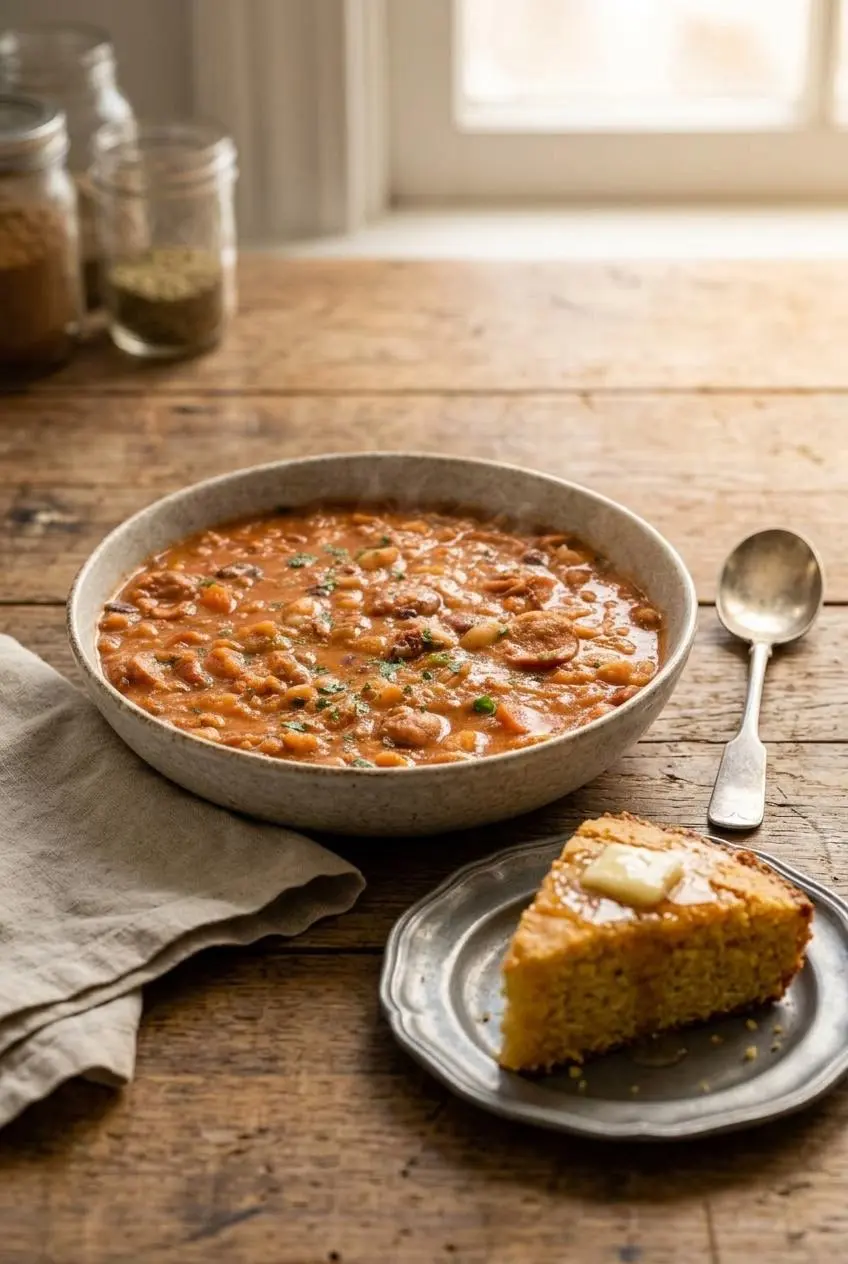
Rich bean soup benefits from something warm for dipping and something crisp to cut through the smoky broth.
- Serve warm skillet cornbread with honey butter for a sweet, golden contrast.
- Add crusty sourdough or a country loaf for catching the tender beans and thickened broth.
- Pair the soup with a crisp green garden salad and tangy vinaigrette to brighten the meal.
If the soup is part of a bigger family meal, set out extra black pepper and hot sauce at the table so everyone can adjust their own bowl without changing the whole pot.
Storing and Reheating Leftovers
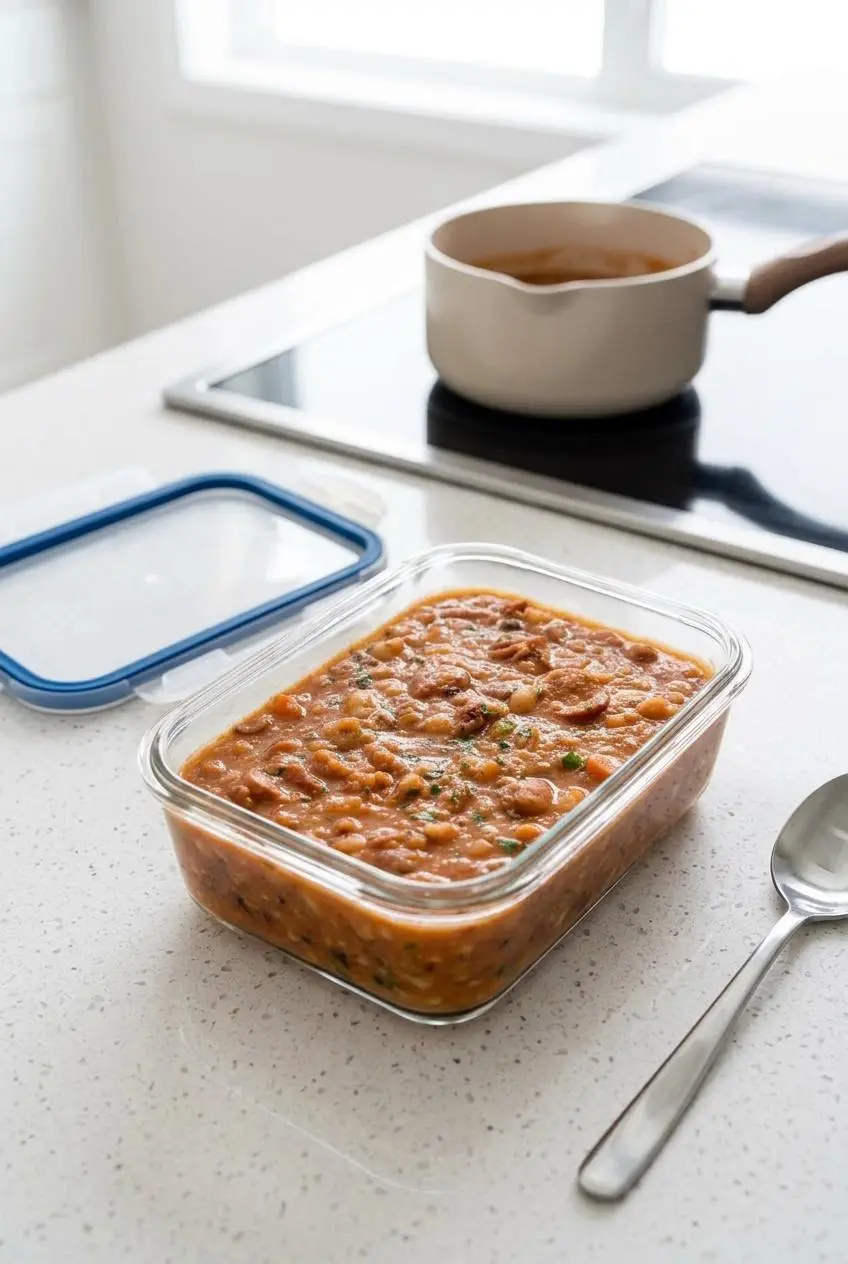
Let the soup cool in shallow containers, then keep it covered in airtight containers in the refrigerator. The flavor often becomes deeper after it rests chilled because the smoky pork, tomato, and spices have more time to settle together.
Reheat only the portion you plan to serve in a saucepan over medium-low heat. Beans absorb liquid as the soup rests, so loosen the broth with a splash of water or broth and stir gently until hot throughout.
For the best texture, avoid repeatedly reheating the entire pot. Portioning makes it easier to preserve the beans’ shape and keep the broth from reducing too far.
Conclusion
This soup delivers tender mixed beans, smoky pork, sweet vegetables, and a naturally thickened broth in every bowl. Brown the kielbasa well, keep the simmer gentle, and wait until the final stretch to add the tomatoes.
Once the largest beans mash easily against the side of the pot, dinner is ready. Bring the cornbread and enjoy the cozy bowl.
Frequently Asked Questions
Do You Have to Soak 15 Bean Soup Mix Before Cooking?
No, soaking is not strictly required if you are willing to simmer the beans longer and add water as needed. An overnight soak gives the most even tenderness across beans of different sizes and helps the larger beans catch up with the smaller lentils. A quick hot soak can help when you do not have time for the full soak. Drain the soaking liquid before cooking and begin the soup with fresh water.
Why Are My Beans Still Hard After Simmering for Hours?
Early acid is a common reason. Tomatoes, lemon juice, vinegar, and similar acidic ingredients can slow bean softening, so wait until the beans are nearly tender before adding them. Hard water can also keep bean skins firm. If this happens often, try filtered water and make sure the soup stays at a steady simmer rather than a weak, barely warm bubble.
Can I Make This Recipe Vegetarian or Vegan?
Yes. Replace the ham hock and kielbasa with vegetable broth, smoked Spanish paprika, and hearty vegetables such as sweet potatoes or mushrooms. Use a plant-based Worcestershire sauce if you want that same savory depth. The soup will taste less porky, of course, but the smoky paprika, tomatoes, mustard, and naturally creamy beans still create a full-bodied bowl.
How Do You Thicken 15 Bean Soup If It Is Too Watery?
Mash a cup of tender beans and broth against the inside of the pot, then stir the mixture back in. You can also blend a small scoop and return it to the soup. Let the pot simmer gently after mashing so the bean starch can blend into the broth. This keeps the flavor pure and avoids the pasty texture that flour thickeners can create.

15 Bean Soup Recipe

Equipment
- 5.5 to 7 quart soup pot or Dutch oven
- Tongs
- Spatula
- Chef knife
- Cutting board
Ingredients
- 1 pound dried 15 bean mix
- 1 tablespoon neutral oil
- 7 ounces kielbasa, sliced
- 1 medium onion, chopped
- 2 medium carrots, diced
- 2 ribs celery, diced
- 3 cloves garlic, minced
- 1 smoked ham hock or ham bone
- water
- 3 bay leaves
- 14 ounces crushed or diced tomatoes
- 1 tablespoon mild chili powder
- 1 tablespoon dijon mustard
- 1 tablespoons Worcestershire sauce
- salt, as needed
Instructions
The night before
- Spread the dried beans out, remove any stones or damaged beans, then place them in a large bowl or pot and cover with tap water by at least 2 inches. Leave the beans to soak overnight, or for at least 8 hours, until they look plumper and more evenly hydrated.
Making the soup
- Pour off the soaking liquid and drain the beans well. The discarded liquid will look cloudy, while the soaked beans should feel firm but swollen.
- Heat the oil in a 5.5 to 7 quart soup pot or Dutch oven over medium heat. When the oil shimmers across the bottom of the pot, it is ready for the sausage.
- Add the sliced kielbasa and cook for about 5 minutes, turning the pieces as they brown. Stop when the edges turn golden and the sausage releases a sweet, smoky aroma.
- Stir in the onion, carrots, celery, and garlic, then cook for about 5 minutes. The vegetables should soften and smell sweet, with browned bits beginning to collect on the bottom of the pot.
- Make room in the center of the pot and nestle in the ham hock, keeping it below the rim. The hock should sit securely among the vegetables rather than sticking above the cooking liquid.
- Add the drained beans around the ham hock. The mixed legumes should settle into an even layer around the meat.
- Pour in 6 cups of water and add the bay leaves, making sure the beans are fully covered. Bring the pot to a boil, then lower the heat to an active simmer and skim away any gray foam that rises at first.
- Set the lid partially over the pot and simmer for a total of 2 hours, stirring every 30 to 40 minutes and adding water as needed to keep the beans submerged. Maintain steady, gentle bubbles rather than a rapid boil, and watch for the broth to gradually turn more opaque.
- When 30 minutes remain, lower the heat to a gentle simmer, remove the bay leaves, and stir in the tomatoes, mustard, chili powder, and Worcestershire sauce. The broth will turn a deeper red and smell fuller, while the beans continue softening without the acidity slowing them too early.
- Turn off the heat and move the ham hock to a bowl until cool enough to handle, then pull away the edible meat and return it to the soup. Discard the bone and any tough gristle so only tender shreds go back into the pot.
- Mash a bean against the side of the pot to check for tenderness, then season with salt as needed. A large lima bean should flatten easily, and the broth should look lightly thickened from the softened legumes.