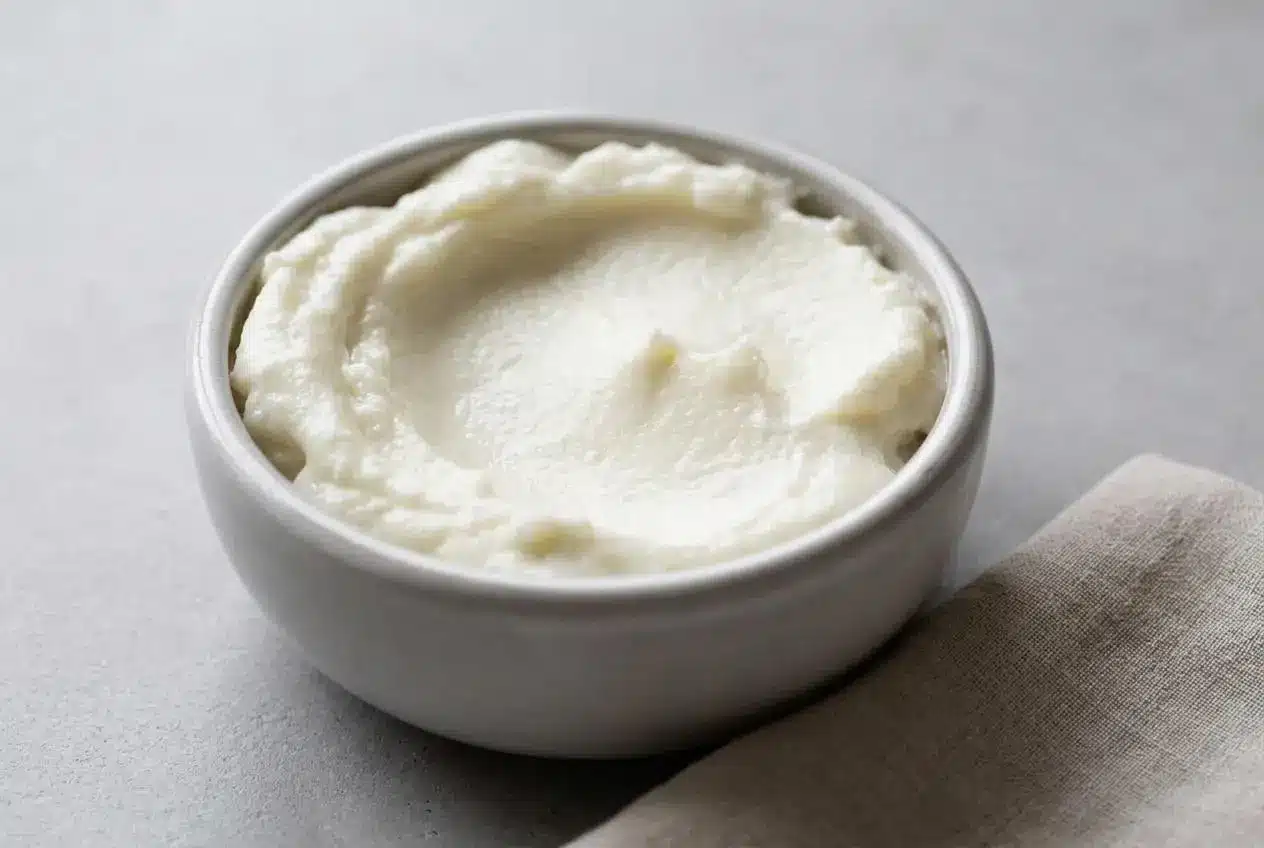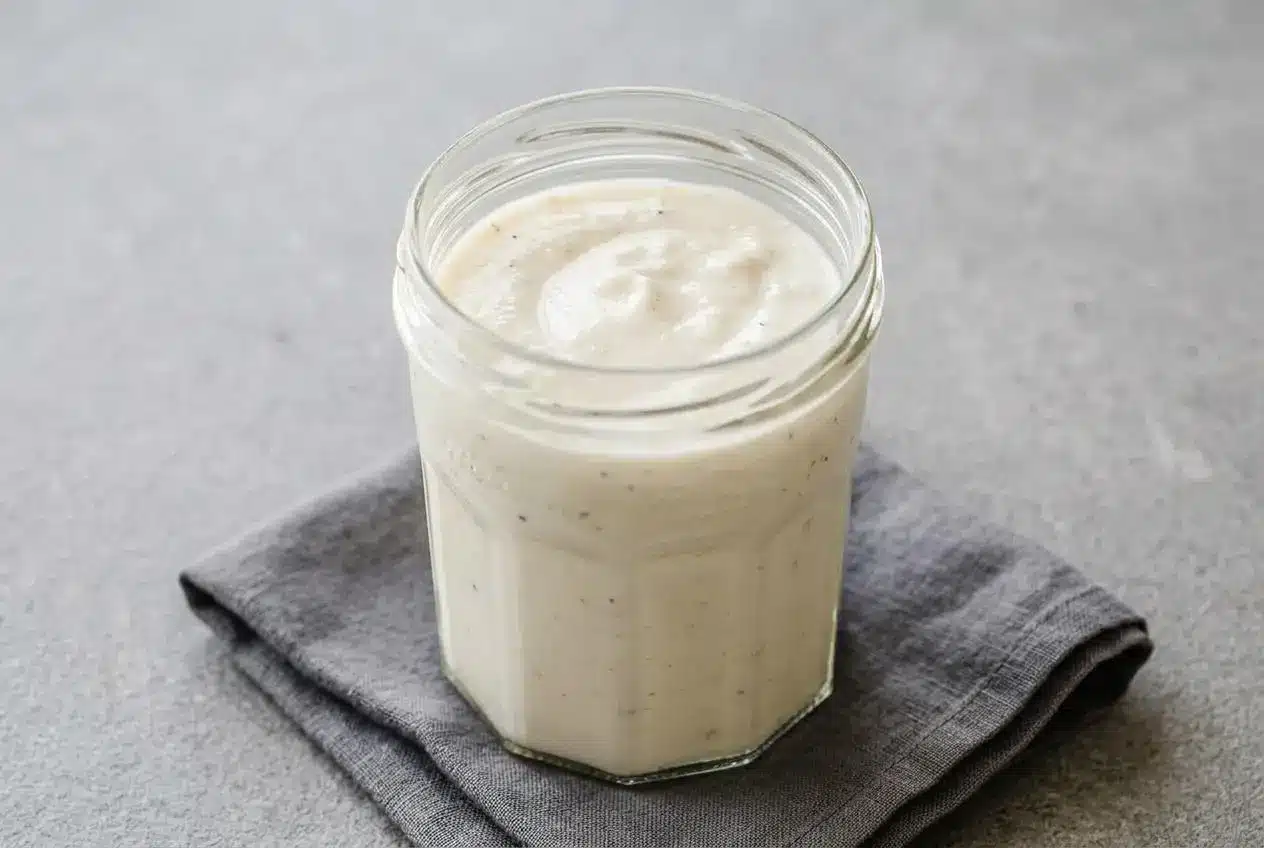
White pizza sauce is a creamy garlic and parmesan sauce made from a quick butter and flour roux with milk. It cooks in about 5 minutes and gives pizza a rich, silky alternative to red sauce.
This White Pizza Sauce Recipe is really a béchamel-style pizza sauce with fresh garlic, milk, and parmesan. It spreads easily, bakes up creamy, and tastes mellow but still savory.
You get that warm butter aroma first, then the sweet smell of softened garlic, then a glossy cheese finish. The key is one small move that keeps it smooth.
Let the sauce cool a bit before spreading it on dough so it stays creamy instead of soaking into the crust.
Essential Ingredients Explained
Each ingredient earns its place here, building body, richness, aroma, seasoning, and that smooth white finish that makes the sauce spread well on pizza.
- 2 Tbsp unsalted butter
- 2 Tbsp all-purpose flour
- 1 1/4 cup milk (2% or whole milk)
- 1/4 tsp sea salt
- 1/8 tsp black pepper
- 2 garlic cloves (pressed or finely grated)
- 1/4 cup parmesan cheese (shredded)
Butter starts the sauce with richness and helps the flour turn into a roux, which is what gives the sauce structure instead of making it run across the pizza. Flour thickens the milk and keeps the texture spreadable rather than soupy. Milk brings the creamy body. Whole milk tastes richer, while 2% still works and keeps the sauce a little lighter.
Sea salt and black pepper keep the sauce from tasting flat. Fresh garlic gives it that unmistakable white pizza flavor, but because it cooks briefly in the hot sauce, it softens into a mellow savory bite instead of tasting harsh. Parmesan adds saltiness, nuttiness, and a glossy finish when it melts in.
I always reach for a wedge of parmesan and fresh garlic here because the flavor is cleaner and the sauce stays much smoother.
Sautéed Garlic vs Roasted Garlic
This sauce uses pressed or finely grated garlic added during cooking, which gives you a sharper, more classic white pizza flavor. The garlic should smell fragrant and a little sweet once it hits the hot sauce, never dark or bitter.
If you want a softer, sweeter version, roasted garlic is a great optional swap. Mashed roasted cloves bring a mellow, caramelized depth that tastes rounder and less punchy than sautéed garlic. It is especially good if you like white pizza with chicken, spinach, or mushrooms.
Milk vs Heavy Cream: Choosing Your Base
A milk-based roux makes a true white pizza sauce that is creamy but still easy to spread in a thin layer. That matters on pizza, because a sauce that is too heavy can sit thickly on the dough and weigh everything down.
Heavy cream creates a richer, looser reduction with more of an Alfredo feel. It tastes lush, but it is heavier and less balanced for everyday pizza. For this recipe, milk gives better control, a cleaner garlic flavor, and a texture that stays pizza-friendly once cooled.
Many home cooks mix up white pizza sauce and Alfredo. The simplest difference is the base: white pizza sauce usually starts with a roux and milk, while Alfredo relies more on cream, butter, and cheese.
The Case for Fresh Parmesan
Freshly grated parmesan melts more cleanly into the sauce and helps it finish silky instead of sandy. Bagged pre-shredded cheese often contains anti-clumping additives, and those can leave the sauce with a gritty texture once heated.
This is one of those small choices that changes the whole result. When the cheese is freshly grated, it melts into a smooth, glossy sauce that coats the whisk and spreads neatly over dough.
How to Make White Pizza Sauce Step by Step
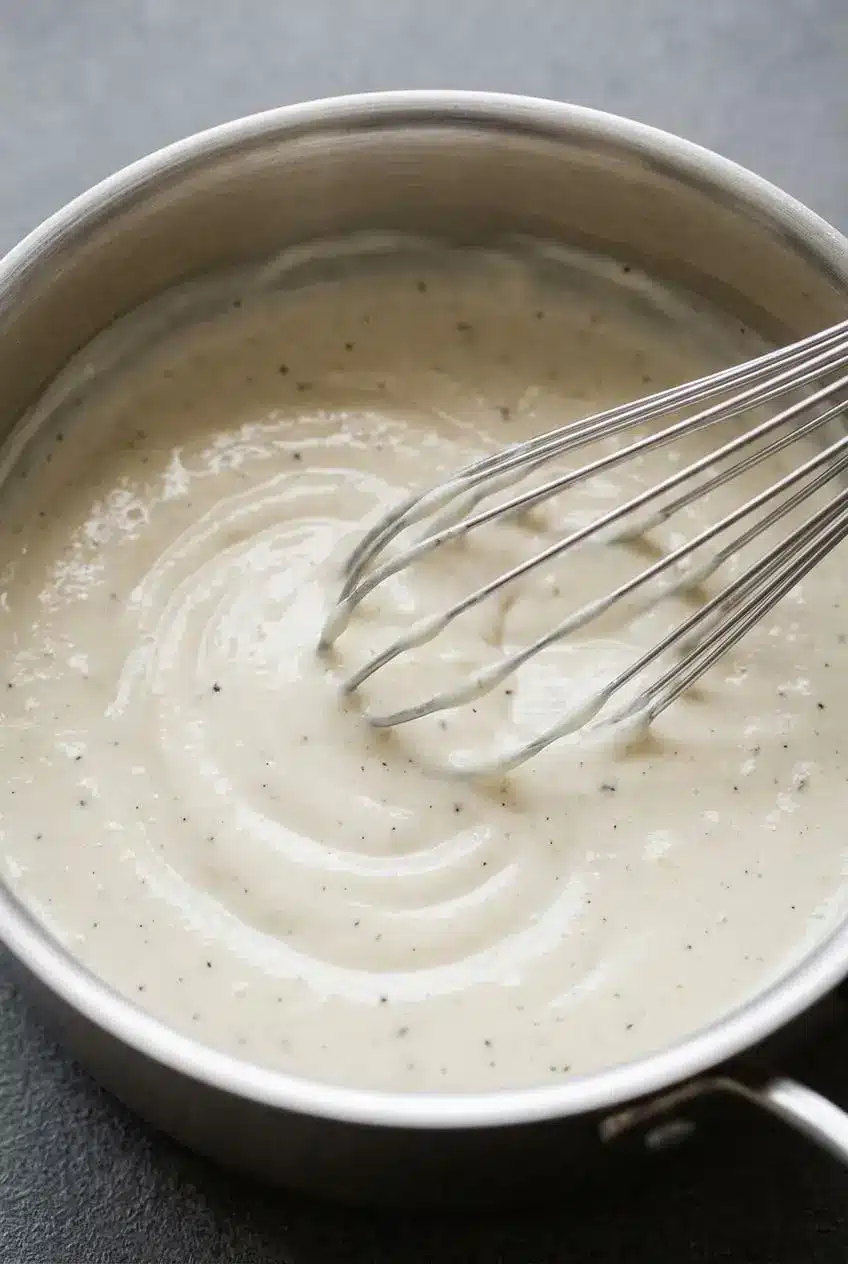
This method is quick, but the order matters. Keep the roux pale, add the milk gradually, and take the pan off the heat before the parmesan goes fully in if you want the smoothest finish.
- Melt the butter in a small saucepan over medium heat, then whisk in the flour and cook for 1 to 2 minutes.
The butter should look foamy and the roux should stay pale yellow, thick, and smooth without taking on any brown color. - Pour in the milk slowly while whisking the whole time so the roux loosens evenly.
The mixture will go from thin and milky to creamy and bubbly as it thickens, with no visible lumps. - Whisk in the sea salt, black pepper, and garlic until fully combined.
The sauce should smell fragrant and garlicky, with the garlic softened but not sharp or raw-smelling. - Add the parmesan and whisk for about 30 seconds, then take the saucepan off the heat and keep whisking just until the cheese melts.
The finished sauce should look glossy and smooth, and it should cool before you spread it on pizza.
If you need a crust to pair with it, this sauce works especially well on homemade pizza dough because you can control the thickness and avoid a soggy center.
The two biggest mistakes happen right at the end. Do not let the roux brown, or the sauce loses its pearly color. Do not boil the sauce after the cheese is added, or the dairy can separate and turn oily.
Cold sauce will firm up as it sits, which is normal. Once slightly warmed, it loosens back into a spreadable texture.
Dairy-Free and Gluten-Free Alternatives
If you need to adapt the sauce, you can keep the same general idea without changing the main recipe itself. The goal is still a smooth, spreadable white sauce with enough body to sit on dough without running.
For a dairy-free version, use an unsweetened plain plant milk and cook it gently so the texture stays stable. Oat milk gives a neutral flavor, while unsweetened cashew milk tastes a little richer. A dairy-free cashew cream sauce is another good option if you want a fuller mouthfeel. Blend soaked cashews with water until smooth, then use that creamy mixture as the liquid base for an optional variation outside the core recipe.
For a gluten-free version, a cup-for-cup gluten-free flour blend can replace the all-purpose flour at a 1:1 ratio. Cornstarch also works, but mix it with cold milk first before adding heat so it does not clump on contact with the hot pan.
- Plant milk too thin: simmer gently a little longer until the sauce coats the whisk.
- Cornstarch clumping: whisk it into cold liquid first, then heat.
- Cashew cream too thick: loosen it gradually with more liquid until it becomes spreadable.
Troubleshooting Split or Lumpy Sauce
White sauce is fast, but dairy can be fussy. Most problems come from rushing the milk, overheating the cheese, or trying to fix texture with more heat when the sauce actually needs less.
- Lumpy sauce usually means the milk went in too quickly. Pull the pan off the heat and whisk hard until smooth again.
- If stubborn lumps remain, blend the warm sauce for about 10 seconds. That is often enough to bring it back.
- A separated or oily surface usually means the sauce got too hot after the cheese went in. Remove it from the heat and whisk in a small splash of warm milk until it looks smooth again.
- Sauce too thick after cooling is normal. Warm it gently and whisk until it loosens back to a spreadable consistency.
- Sauce too thin means it did not simmer long enough after the milk was added. Keep whisking over gentle heat until it bubbles and thickens.
The science is simple enough to remember while cooking: flour thickens the milk, but cheese is happiest with gentler heat. Once parmesan goes in, think warm and smooth, not boiling and aggressive.
Flavor Variations to Customize Your Pie
Once you know the base sauce, small optional changes can shift it from classic to extra cozy pretty quickly. Keep these as add-ons, not as part of the core recipe.
Sautéed Garlic vs Roasted Garlic
The standard version has a more direct garlic bite, which works well with mozzarella and salty toppings. Roasted garlic gives a sweeter, softer flavor with a deeper almost buttery feel.
To use roasted garlic, mash the soft cloves into a paste and stir it into the sauce near the end. It blends in smoothly and makes the whole sauce taste more rounded.
Infusing Fresh Herbs and Aromatics
Fresh herbs can give the sauce a more layered flavor without making it busy. Add rosemary, thyme, or oregano during the simmer so the milk picks up their aroma, then remove any woody pieces before using the sauce.
A tiny pinch of fresh grated nutmeg can make the cream taste fuller, and a few drops of fresh lemon juice at the end can brighten a rich pizza. Go lightly. White sauce should taste elegant, not like a spice cabinet had a wild afternoon.
The Ultra-Rich Cream Cheese Option
If you want a thicker, richer white sauce, whisk in a tablespoon of cream cheese as an optional variation. It makes the sauce extra velvety and pushes it closer to an Alfredo-style texture.
This version works best when you want hearty toppings such as chicken, bacon, or caramelized onions. Keep the heat low so the texture stays smooth.
Storage and Reheating Rules
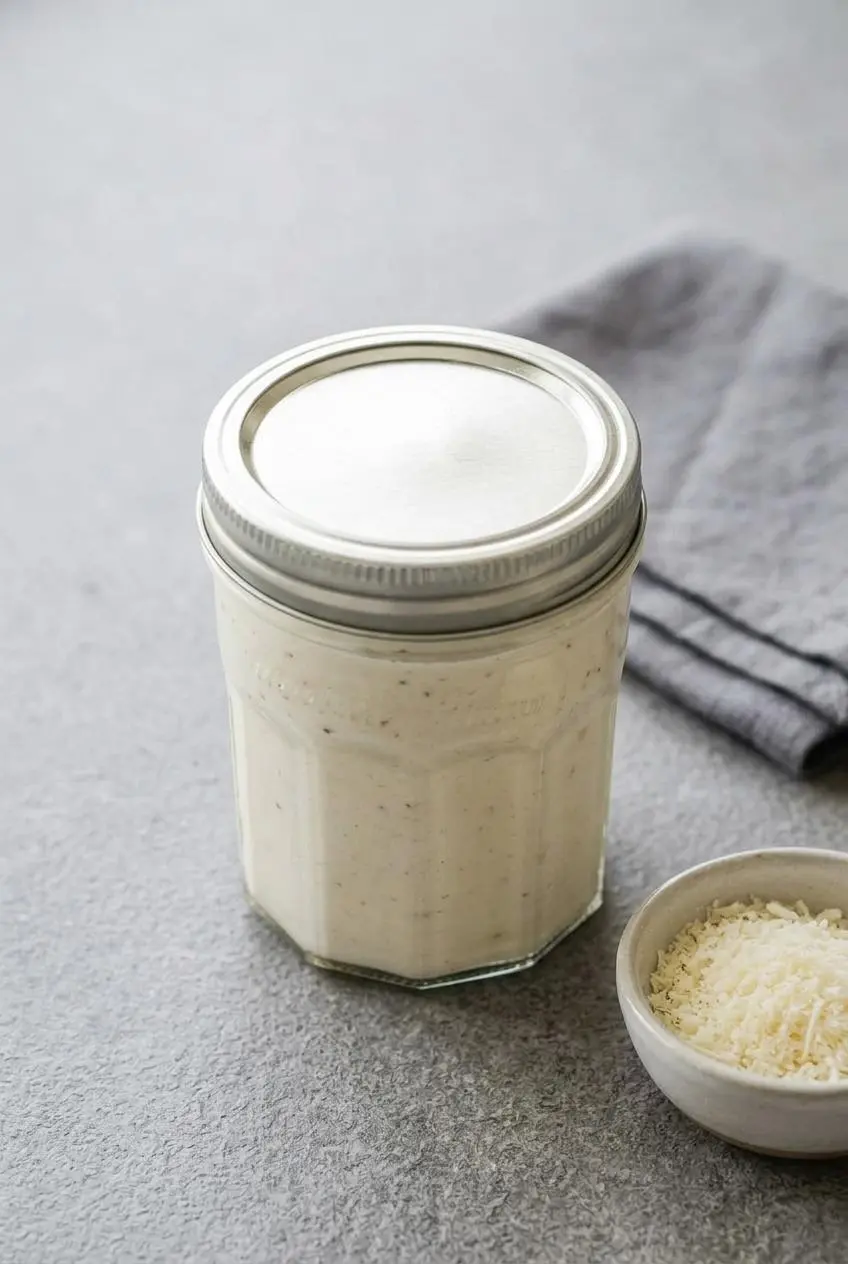
Leftover sauce keeps well when handled gently. Let it cool fully, transfer it to a clean airtight container, and keep it chilled. The official recipe allows refrigeration for up to 5 days.
Because this is a dairy-based sauce, cold storage matters. Keep perishable dairy ingredients refrigerated at 40 °F or below for safer handling, as explained in USDA refrigeration guidance for perishable foods.
Freezing is not the best choice here. Creamy sauces often separate after thawing, and this one can turn watery or grainy.
To reheat, warm the sauce slowly over low heat and whisk often. If it seems too thick, add a splash of warm milk until it smooths out. Avoid blasting it in the microwave on high, which tends to make the cheese and milk break apart.
Best White Pizza Topping Combinations
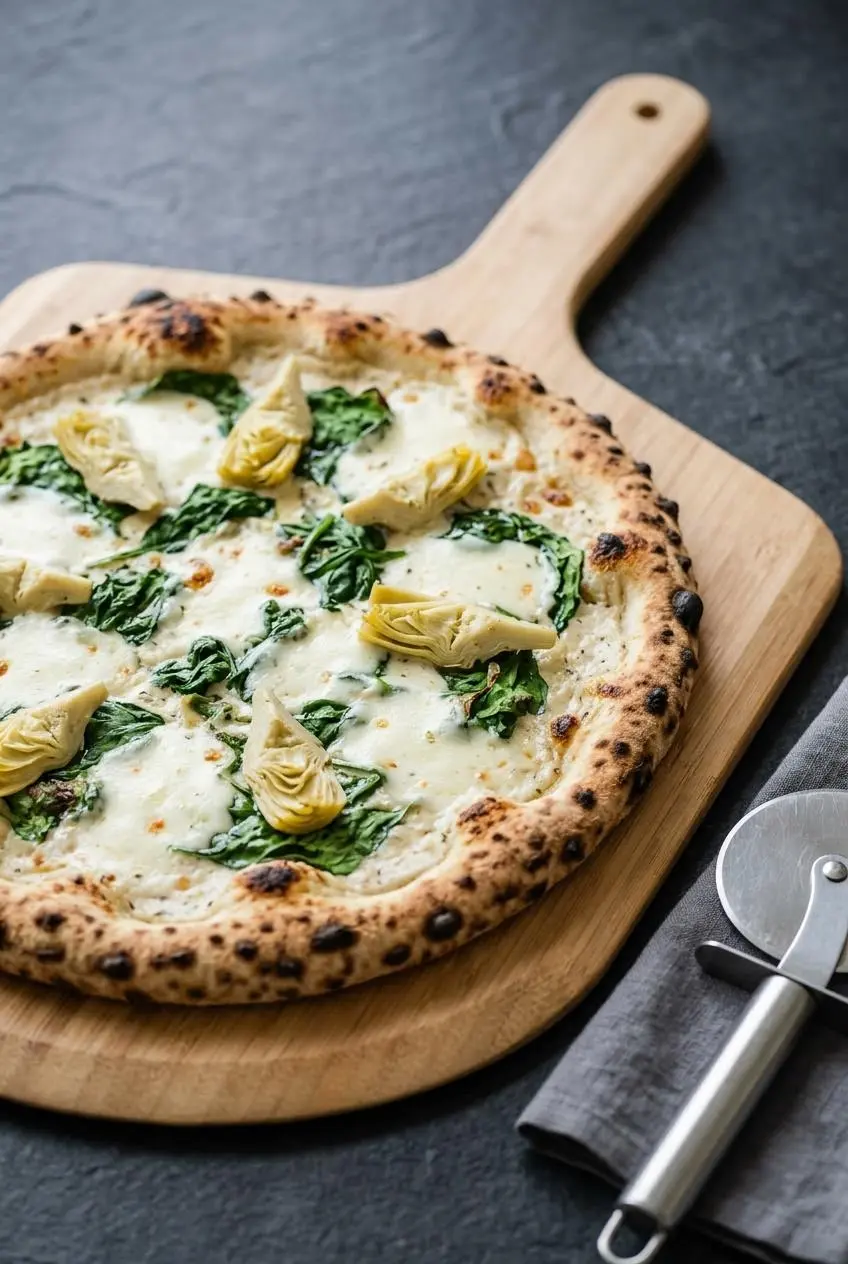
White sauce loves toppings with contrast. Think something creamy, something salty, and something with freshness so the pizza does not taste heavy from edge to edge.
Fresh mozzarella is a great finishing cheese over the sauce because it melts softly and adds moisture without competing with the parmesan base. Just be sure watery toppings like spinach or mushrooms are cooked first so they do not release liquid onto the pizza.
The Classic Spinach and Artichoke
This combination plays beautifully with garlic cream. Use wilted spinach, chopped artichoke hearts, and fresh mozzarella for a white pizza that tastes rich but still bright.
If you already love that green-and-creamy profile, a spinach pesto pizza is another tasty direction to try on a different night.
The Savory Bacon and Chicken
Grilled chicken and crumbled bacon bring savory depth, while caramelized onions add sweetness that balances the garlic. Finish with a little parsley to wake everything up.
Prosciutto also works if you want a saltier, lighter meaty topping. Keep the topping layer balanced so the sauce still gets to do its job.
Creative Ways to Repurpose Leftovers
Extra sauce does not need to stay locked into pizza night. Its creamy texture makes it useful in a few other easy dinners and snacks.
Stir it into a pasta bake as a creamy binder, spoon it over roasted vegetables, or warm it for dipping garlic breadsticks. It also makes a great base for quick french bread pizza when you want something fast and extra cheesy.
Conclusion
This sauce comes together fast, tastes fresher than jarred versions, and gives you much more control over garlic, salt, and texture. The biggest win is how easily it turns basic pizza toppings into something creamy and restaurant-worthy.
Keep the roux pale, add the milk slowly, and take the pan off the heat before the cheese fully settles in. That small habit makes all the difference.
Frequently Asked Questions
Can I freeze homemade white pizza sauce?
Freezing is not recommended for the best texture. The dairy emulsion can break after thawing, which makes the sauce watery or grainy. It is better to use it fresh or keep leftovers chilled and reheat them gently.
Why did my sauce turn out lumpy and how do I fix it?
Lumps usually happen when the milk goes into the hot roux too fast. Take the pan off the heat and whisk vigorously right away. If needed, blend the warm sauce for about 10 seconds until smooth.
Can I use gluten-free flour to thicken the sauce?
Yes, you can. A cup-for-cup gluten-free flour blend works well as a direct swap. Cornstarch also works if you whisk it into cold milk before heating.
What is the difference between white pizza sauce and Alfredo sauce?
White pizza sauce is usually a roux-based sauce, while Alfredo is richer and more cream-forward. White pizza sauce starts with butter and flour, then uses milk for a spreadable texture. Alfredo typically leans on cream, butter, and cheese without the same béchamel-style structure.
White Pizza Sauce Recipe

Equipment
- Small saucepan
- Whisk
Ingredients
- 2 Tbsp unsalted butter
- 2 Tbsp all-purpose flour
- 1 1/4 cup milk 2% or whole milk
- 1/4 tsp sea salt
- 1/8 tsp black pepper
- 2 garlic cloves pressed or finely grated
- 1/4 cup parmesan cheese shredded
Instructions
- Melt the butter in a small saucepan over medium heat, then whisk in the flour and cook for 1 to 2 minutes. The butter should look foamy and the roux should stay pale yellow, thick, and smooth without taking on any brown color.
- Pour in the milk slowly while whisking the whole time so the roux loosens evenly. The mixture will go from thin and milky to creamy and bubbly as it thickens, with no visible lumps.
- Whisk in the sea salt, black pepper, and garlic until fully combined. The sauce should smell fragrant and garlicky, with the garlic softened but not sharp or raw-smelling.
- Add the parmesan and whisk for about 30 seconds, then take the saucepan off the heat and keep whisking just until the cheese melts. The finished sauce should look glossy and smooth, and it should cool before you spread it on pizza.