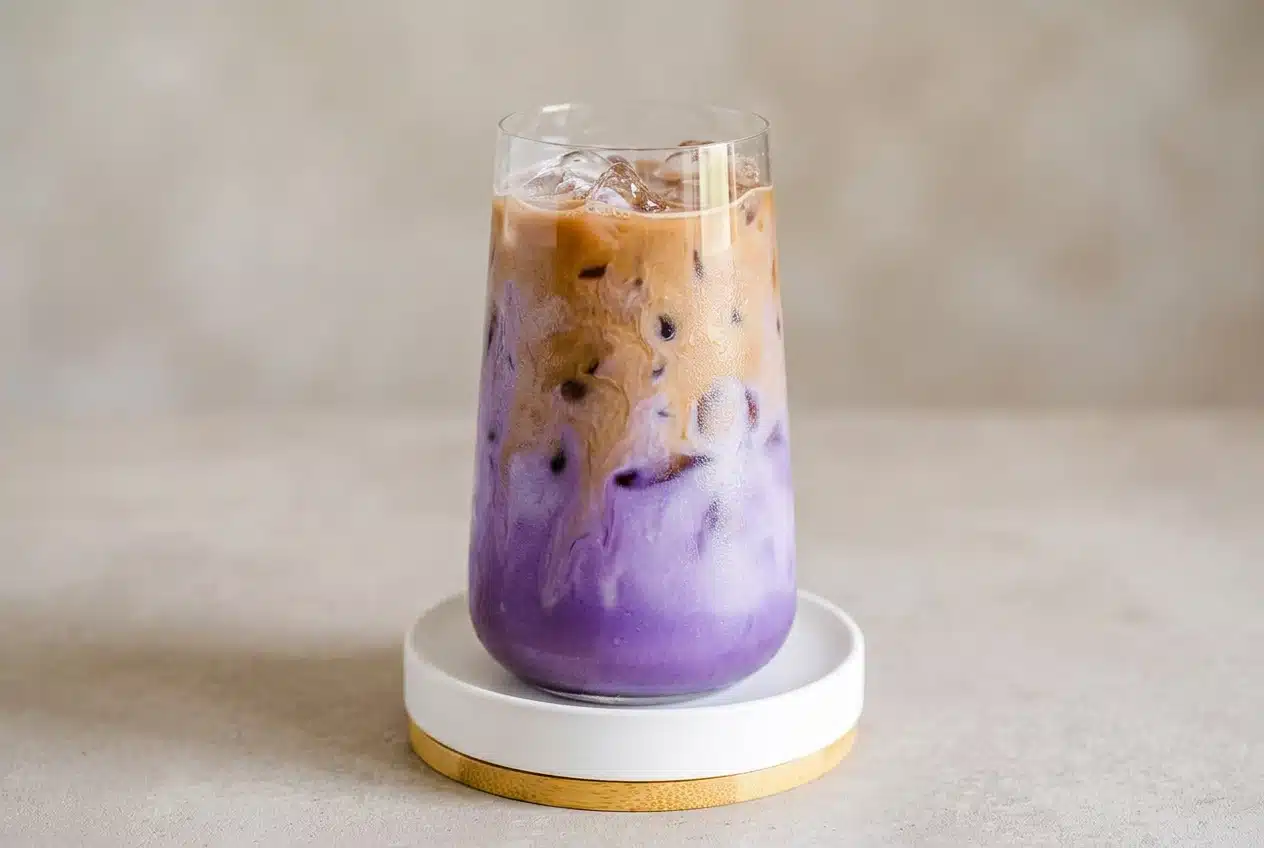
This iced ube latte recipe pairs the earthy, vanilla-like flavor of ube, a purple yam used in Filipino cooking, with roasted coffee. Stir liquid ube extract into chilled almond milk over ice, then finish with espresso or prepared instant coffee.
It takes 5 minutes to make one glass. Espresso gives the drink a bold coffee flavor, but if you have instant coffee at home, there’s no need to pull a shot.
The unsweetened almond milk lets you decide how sweet you want your latte. With or without sugar, you still get that creamy purple swirl.
I use a spoon long enough to reach the bottom of the glass, where the extract can pool beneath the ice.
Ingredients for an Iced Ube Latte
Ube extract flavors the almond milk, ice keeps it cold, and coffee brings a roasted edge to the mellow yam flavor. The optional sugar softens the coffee’s bitterness if you like a sweeter latte.
- 1 tsp ube extract
- 1 cup ice
- ½ cup unsweetened almond milk (chilled)
- 1 tsp sugar (optional)
- 2 shots espresso ( or ½ cup of instant coffee)
Choose espresso if you want the coffee to stand out against the milk. Instant coffee can give you a gentler roast flavor, depending on how strongly you make it. The ½ cup refers to prepared instant coffee, not dry granules. Strong brewed coffee is another option if you’re adapting the drink, though it generally tastes less concentrated than espresso.
Ube Extract, Powder, or Halaya?
For this latte, look for a bottle labeled ube extract. If the package says taro, it’s a different root vegetable, even if the drink on the label is purple. Check the product name and ingredients rather than choosing by color.
- Liquid ube extract distributes through cold milk with a spoon, adding flavor without thickening the drink. A deeper shade of purple doesn’t necessarily mean a stronger ube flavor.
- Pure ube powder lists purple yam rather than a blend of drink ingredients. Unlike extract, it needs preparation to avoid a grainy texture. Check the package directions before using it in a latte.
- Sweetened ube drink mix already contains sweetener. A purple powder labeled “latte mix” will give a different balance of sweetness and yam flavor than pure powder.
- Ube halaya is purple yam jam. Its spoonable texture adds body, and the jam may bring sweetness of its own. Choose it for a thicker drink, rather than as a spoon-for-spoon replacement for extract.
How to Make an Iced Ube Latte
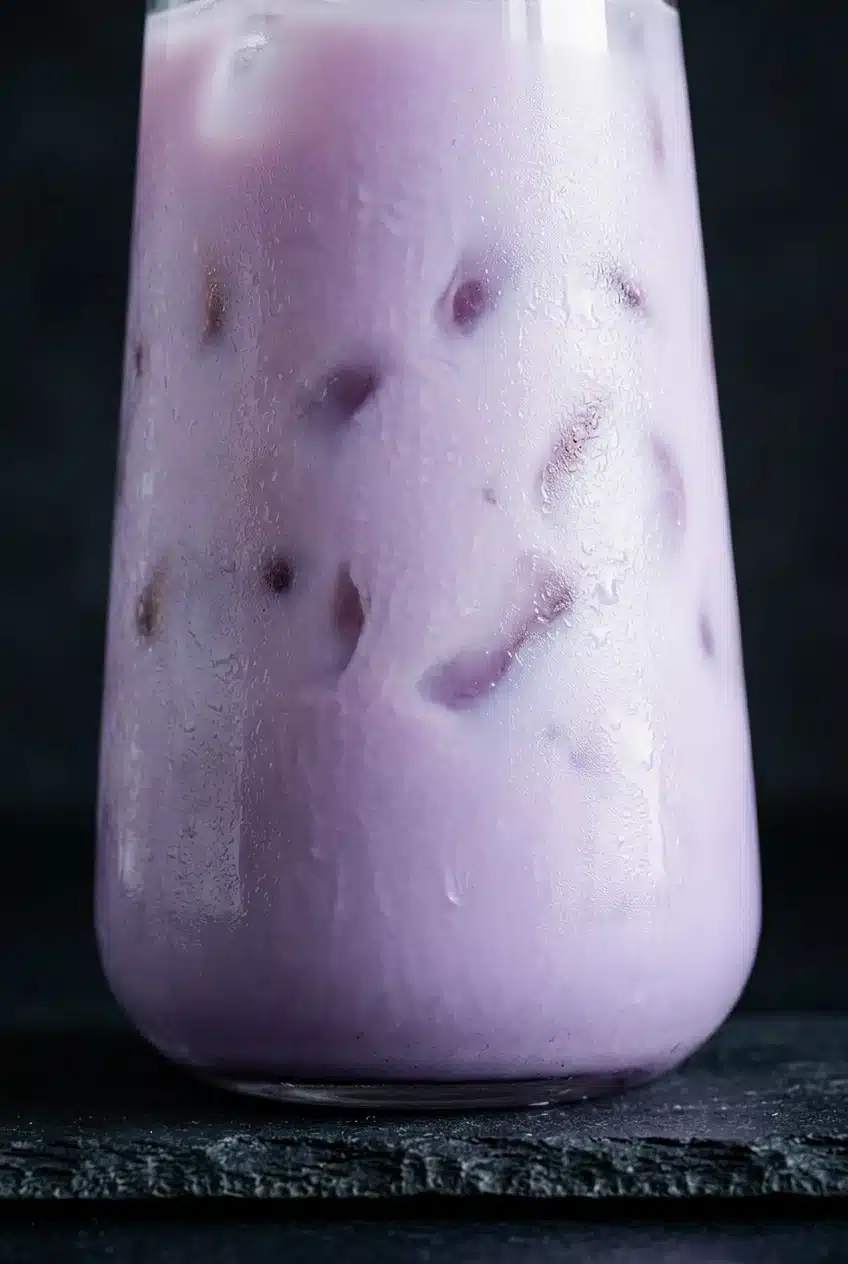
Build the drink from the bottom up: extract first, then ice and milk. Save the coffee for last so you can see when the ube has mixed evenly into the milk.
- Measure the ube extract directly into your drinking glass.
The concentrated purple liquid will sit at the bottom. - Lower the ice cubes into the glass over the extract.
Leave enough room above the cubes for both the milk and the coffee. - Add the cold almond milk and sweep a spoon around the bottom and between the cubes.
Look for an even purple color with no dark streak underneath the ice. - If using sugar, dissolve it in the hot espresso or prepared instant coffee, then pour the coffee over the purple milk.
The sweetened coffee should have no visible sugar crystals left before you pour. - Enjoy the latte as soon as you finish the pour.
The ice should still be solid and the coffee flavor distinct.
Fix a Watery or Gritty Ube Latte
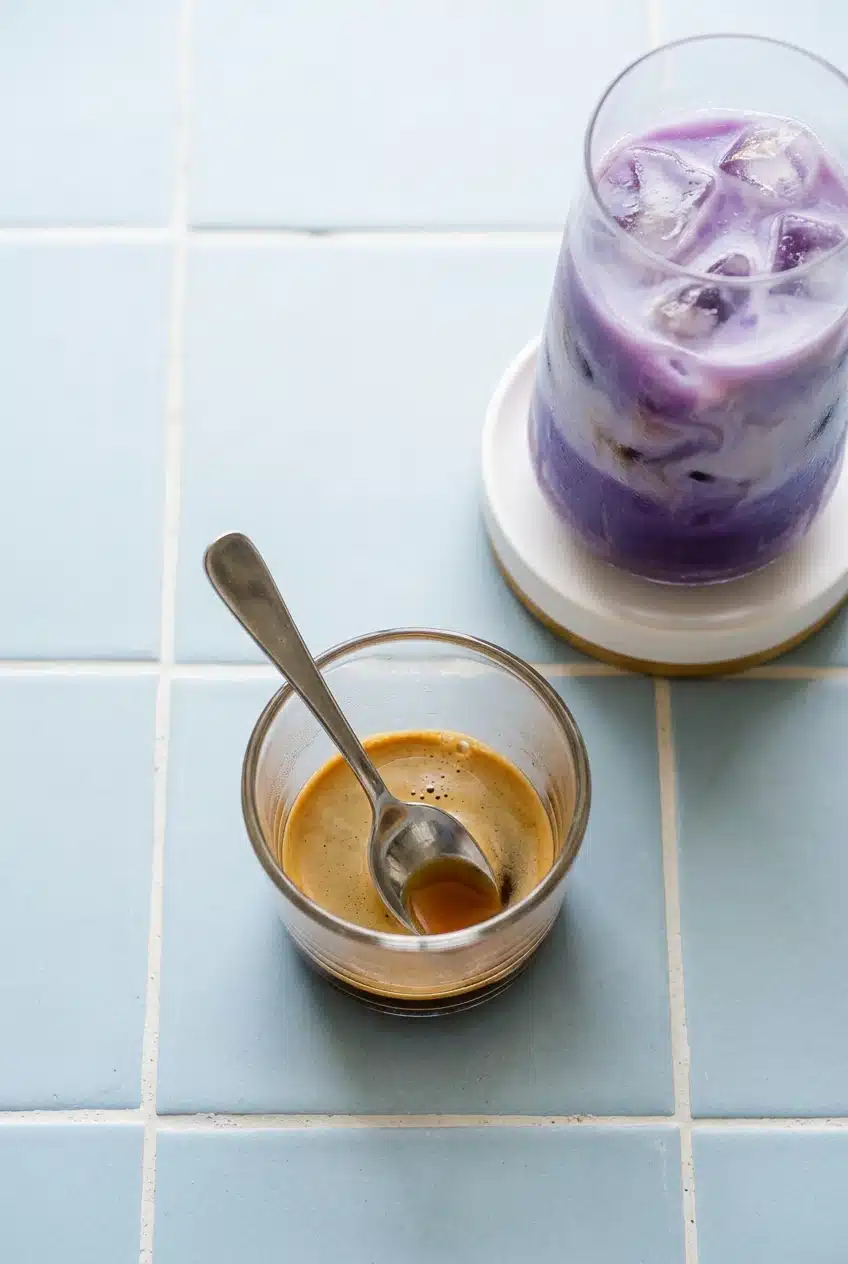
- The first sip tastes good, but the rest tastes thin. Melting ice dilutes both the coffee and the ube milk. Hot coffee speeds that up. For less dilution, let the coffee cool before pouring it over the ice, then serve the finished drink right away.
- The last sip is crunchy and extra sweet. Sugar crystals have settled at the bottom. Next time, stir the sugar into the coffee while it’s hot and check the bottom of the cup before pouring. Skip stirring dry sugar into the iced milk.
- The milk is pale with a dark purple streak. Some extract is still sitting under the cubes. Draw it up from the bottom with your spoon before adding the coffee. More extract would intensify the flavor without fixing the uneven mix.
- The milk looks evenly purple but feels grainy. If you used powder, the color can spread before the particles soften. Follow the preparation directions for that powder, or choose liquid extract for a smooth, stir-in version.
Hot, Oat Milk, and Coffee-Free Variations
Hot Ube Latte
For a warm coffeehouse-style drink, choose a hot ube latte with frothed milk instead of ice. The soft cap of foam gives the first sip a different texture from the cold, silky milk in the iced version.
Iced Ube Oat Latte
If you prefer a fuller mouthfeel, oat milk can give the iced latte more body than almond milk. It can also taste a little sweeter, so consider the flavor of your chosen milk before deciding on the optional sugar.
Iced Ube Milk Without Coffee
Skip the coffee if it’s the ube flavor you’re after. Iced ube milk tastes creamier and more distinctly of purple yam without the roasted finish. For a different coffee-free drink that still has a toasty flavor, try a hojicha latte made with roasted tea.
Make-Ahead and Serving Tips
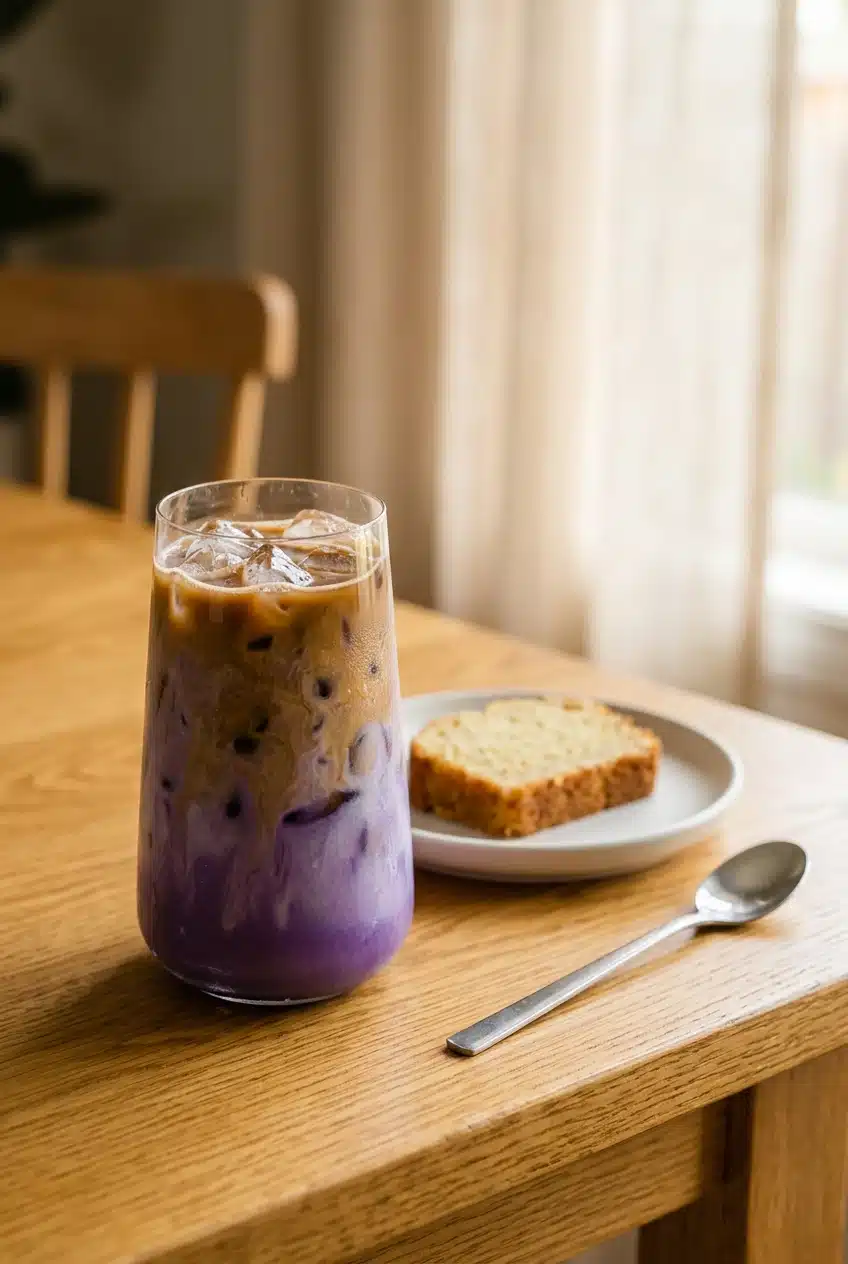
Set out the glass, measuring spoon, and extract ahead of serving. Keep the almond milk chilled and reserve the ice and coffee for final assembly. That way, the cubes won’t sit melting in the glass while you get everything together.
A clear glass lets you see the dark coffee curling into the purple milk. Leave the layers alone for presentation, then stir just before sipping if you want coffee and ube in every mouthful. For an afternoon snack, a slice of lemon loaf brings a bright citrus contrast.
Bring the Ube Coffee Shop Flavor Home
Liquid extract makes it easy to get that earthy ube flavor into an iced latte without changing the texture of the almond milk. Espresso or instant coffee adds the roasted finish.
Before the final pour, glance at the bottom of the glass. Once the last purple streak blends into the milk, it’s ready for coffee and that first cold sip.
Frequently Asked Questions
What Is an Ube Latte?
It’s a milk drink flavored with ube, a Filipino purple yam with an earthy, vanilla-like flavor. This iced version includes coffee and uses liquid extract for the ube flavor.
Can I Use Ube Powder or Halaya Instead of Ube Extract?
Use them for a variation rather than as direct substitutes. Powder needs to be prepared until smooth, while halaya adds thickness and may already be sweetened.
Can I Make an Ube Latte Without an Espresso Machine?
Yes. Use ½ cup of prepared instant coffee in place of the espresso shots. If you prefer brewed coffee, a strong brew is an optional alternative that can hold its flavor better over ice than a mild cup.
How Do I Keep an Iced Ube Latte From Tasting Watery?
Start with chilled milk and let the coffee cool before pouring if your ice tends to melt quickly. Assemble the drink when you’re ready to sip.
Can I Make an Ube Latte Without Coffee?
Yes. Leave out the coffee and enjoy the purple milk over ice. You’ll taste the ube more clearly without the espresso’s bitterness.
Can I Make the Ube Milk Ahead?
For this single serving, mix the extract and chilled milk at serving time rather than storing a prepared batch. You can measure the extract into your glass first and leave the ice, milk, and coffee for assembly.

Ube Latte Recipe

Equipment
- drinking glass
- Measuring spoon
- Measuring cup
- Long spoon
Ingredients
- 1 tsp ube extract
- 1 cup ice
- ½ cup unsweetened almond milk (chilled)
- 1 tsp sugar (optional)
- 2 shots espresso ( or ½ cup of instant coffee)
Instructions
- Measure the ube extract directly into your drinking glass. The concentrated purple liquid will sit at the bottom.
- Lower the ice cubes into the glass over the extract. Leave enough room above the cubes for both the milk and the coffee.
- Add the cold almond milk and sweep a spoon around the bottom and between the cubes. Look for an even purple color with no dark streak underneath the ice.
- If using sugar, dissolve it in the hot espresso or prepared instant coffee, then pour the coffee over the purple milk. The sweetened coffee should have no visible sugar crystals left before you pour.
- Enjoy the latte as soon as you finish the pour. The ice should still be solid and the coffee flavor distinct.