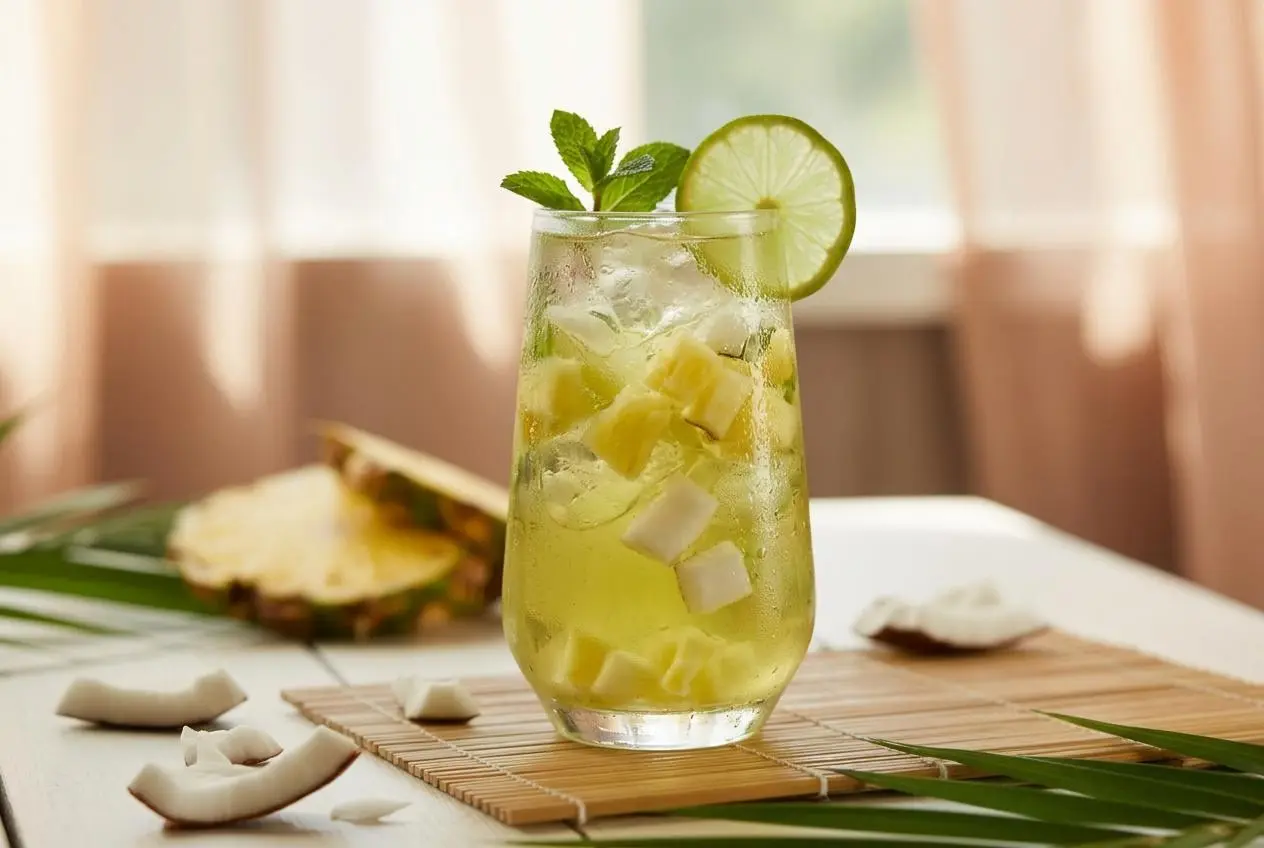
This Tropical Iced Green Tea Recipe is an easy, fruity iced drink made with green tea, coconut water, mango juice, and pineapple bits for a sweet tart tropical sip that tastes bright, chilled, and reliable every time.
Tropical Iced Green Tea Recipe gives you a simple pitcher drink with a clean tea base and juicy tropical flavor. It feels like classic iced tea with a beachy upgrade.
You’ll love how fast it comes together and how easy it is to tweak once you taste your fruit. The trick is keeping the tea smooth from the start. That part matters.
Let the brewed tea cool fully before you mix in the fruit and ice, or the flavor gets flatter and the drink can turn a little cloudy.
Ingredients
This ingredient list is short, but each piece pulls its weight, especially the green tea and fruit.
- 2 Cup Water
- 2 Green tea bags
- 1 Cup Coconut Water
- 1/2 Cup Mango Juice
- 1/2 Cup Pineapple Bits
- Ice Cubes
In my kitchen, I like a mango juice that tastes ripe and a little floral instead of candy-sweet. Coconut water keeps the pitcher light, while pineapple brings little pops of tang and texture that make the drink feel more alive.
Which green tea gives the cleanest iced flavor
If you want the freshest, cleanest glass, choose a gentle green tea. Tea bags are easy and work perfectly here, especially if you want a quick pitcher without fuss. Loose leaf green tea can taste a little more delicate, but it needs good straining before you mix it in.
I personally like mild green teas for iced drinks because they stay pale yellow-green instead of turning dark and murky. Stronger or smokier teas can push this drink away from tropical and into sharp territory fast. If you enjoy experimenting with other tea bases, a fruit-forward raspberry iced tea gives you a totally different vibe.
Fresh, frozen, or bottled fruit, what works best here
Pineapple bits add texture and a brighter tart note, while mango juice brings most of the sweetness. Coconut water softens the whole thing so it drinks lighter than a straight juice blend.
Fresh pineapple usually tastes brightest, but frozen pineapple works well too if that’s what you have. Bottled mango juice is convenient and consistent, which honestly helps when you want the same pitcher every time. Just know that fruit sweetness can vary, so give the tea a quick taste after chilling.
How to Make Tropical Iced Green Tea Recipe
This method is simple, and the biggest win is controlling the tea so it stays smooth instead of bitter.
- I start by bringing 2 cups of water to a boil, then I take it off the heat before adding the green tea bags and steeping them for 3–5 minutes, depending on how strong I want the tea.
That short off-heat steep keeps the flavor cleaner, and I always pull the bags before the tea gets too deep in color, then let it cool completely. - Once the tea is cool, I pour it into a large pitcher and add the coconut water, mango juice, and pineapple bits, then stir gently until everything is combined.
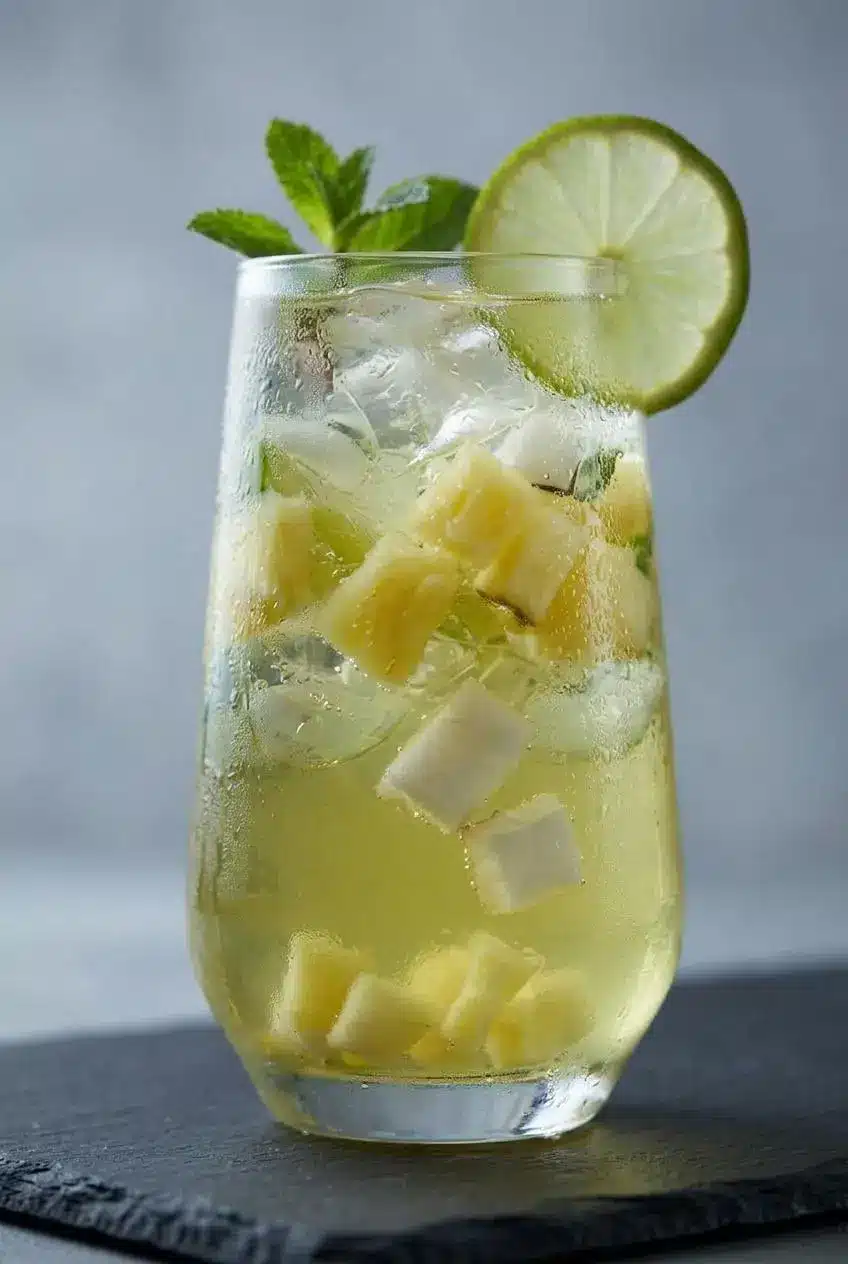
You’ll see the color turn softly golden with little pineapple pieces floating through it, which is exactly what I want. - Then I slide the pitcher into the refrigerator and chill it for at least 30–60 minutes.
This resting time really helps the flavors settle together, and the tropical notes taste rounder and less separate. - When I’m ready to serve, I fill glasses with ice and pour the tea over the top.
If I have fresh pineapple slices around, I use them as garnish, but the drink is already plenty cheerful without extra fuss.
A simple way to add more tart tropical flavor
If you want the drink to lean more tangy than sweet, a little passion fruit puree or passion fruit juice can push it in that direction. Keep it as a finishing tweak after the base recipe is made so you can taste the balance first.
How to keep green tea smooth, never bitter or cloudy
This is where most iced green tea goes sideways, and luckily the fixes are easy.
Green tea gets bitter when it’s treated too aggressively. Pouring boiling water straight over it and leaving it to steep too long can give you a harsher, more puckery taste. For this recipe, the better move is exactly what the method does: boil the water, remove it from the heat, steep for 3 to 5 minutes, and then cool the tea fully before mixing or icing it.
Cloudiness usually shows up when warm tea hits ice too soon or when the tea goes into the fridge before it has cooled enough. It still tastes fine, but the pitcher looks less fresh. I wait until the tea is completely cool because the final drink stays brighter and cleaner that way.
| Problem | Likely cause | Simple fix |
|---|---|---|
| Bitter tea | Steeped too long or too hot | Pull the bags within 3–5 minutes and steep off the heat |
| Weak tea | Steeped too briefly | Go closer to the full steeping range next time |
| Cloudy tea | Tea was still warm when chilled or iced | Cool it completely before mixing and serving |
A lot of home cooks ask why their iced tea tastes dull after adding fruit. Usually it comes down to warm tea melting ice and thinning everything out. Tiny detail, big difference.
Hot brew or cold brew, which method tastes better here
The base recipe uses a hot brew, and that’s the fastest way to get this pitcher on the table.
Hot brewing gives the tea a brighter, grassier note that stands up well to mango juice and pineapple. It also makes sense when you want the drink the same day. As long as you remove the tea bags on time and cool the tea fully, the flavor stays clean and lively.
Cold brew is a nice alternate method if you prefer a softer tea base. Instead of steeping in hot water, you can let green tea sit in cold water in the fridge overnight, then strain or remove the tea before mixing with the coconut water, mango juice, and pineapple. The result is usually smoother and gentler, with less edge. Honestly, it’s the low-stress option for people who always seem to oversteep tea.
| Method | What it tastes like | Best for |
|---|---|---|
| Hot brew | Brighter, more classic green tea flavor | Quick prep and a more pronounced tea note |
| Cold brew | Softer, smoother, less sharp | A mellow pitcher and easy make-ahead prep |
If you’re in the mood to branch out beyond tropical flavors, a chilled herbal berry iced tea is another fun homemade tea to keep in your rotation.
How to balance sweet and tart fruit flavors
The final flavor depends a lot on your fruit, so this is the section that saves the pitcher.
Mango juice usually brings the sweetness. Pineapple brings tartness and a little bite. Coconut water pulls the whole thing back toward light and refreshing, which is why this drink never feels like straight fruit punch.
If your tea tastes too tart, the pineapple is probably leading the room. Give the pitcher more chilling time first, because the flavors often settle and blend better once cold. If it still feels too sharp, you can sweeten each glass to taste with a little honey, agave, stevia, or monk fruit. Keep that adjustment optional and small so the tea still tastes like tea.
If the drink tastes flat or not sweet enough, the mango juice may be mild rather than ripe-tasting. In that case, a touch of sweetener can help, but I’d rather do that at serving time than change the whole pitcher blindly. You can always add more. You cannot politely remove it.
Making a pitcher for parties without watering it down
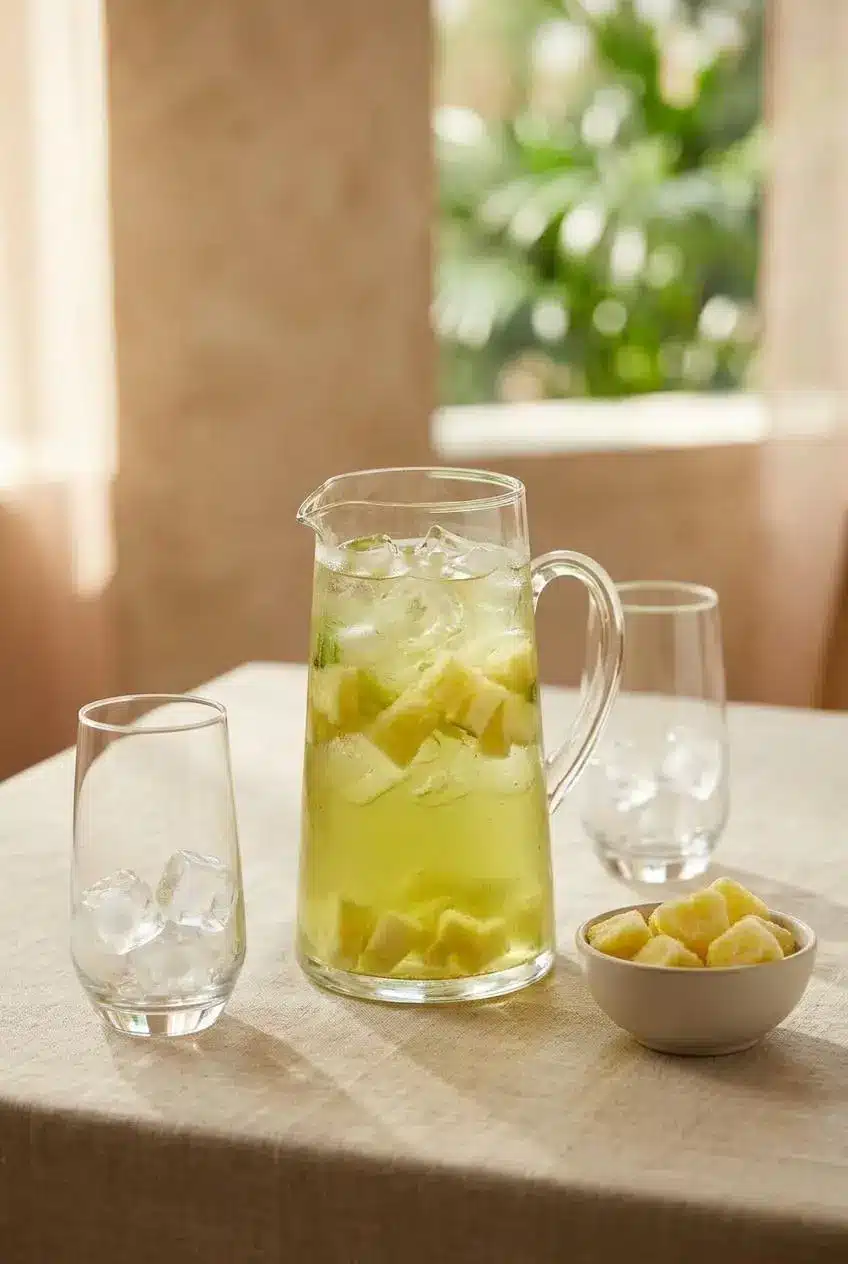
This recipe already works well as a pitcher, and it’s especially good for warm-weather gatherings.
For parties, make the tea ahead and keep the pitcher chilled until serving time. Add ice to individual glasses instead of the whole pitcher so the drink stays punchy and doesn’t fade as it sits. Frozen pineapple is a smart trick here too, since it keeps the tea cold while adding more flavor instead of watering it down.
For snacks, I like serving it with something bright and fresh such as fresh mango salsa. If you want to lean into the tropical theme, it also pairs nicely with grilled foods or simple fruit platters.
How long it keeps and the best make ahead plan
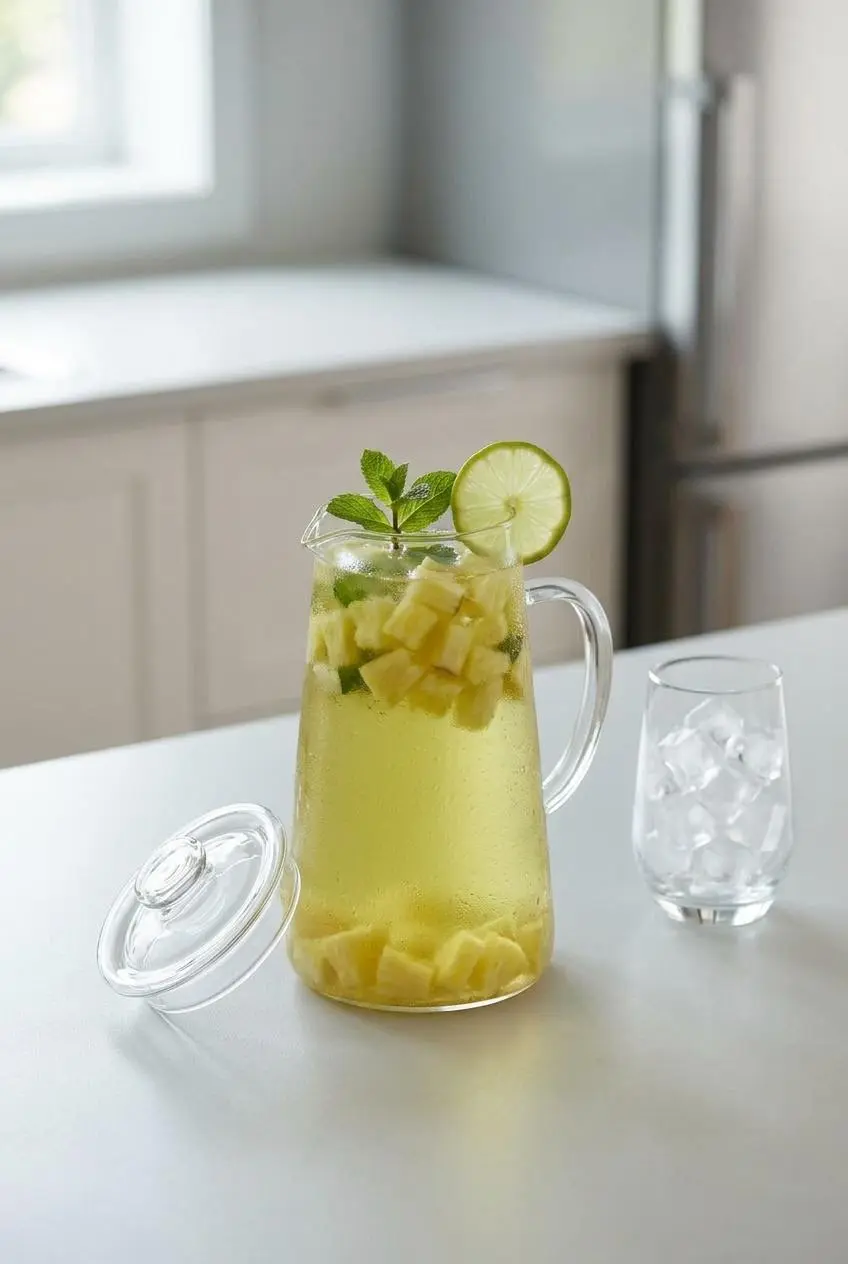
This tea is a good make-ahead drink because the chilled rest helps the flavors come together.
For the freshest taste, keep it in the refrigerator in a covered pitcher or container and serve it cold. I add ice only when serving, since ice sitting in the pitcher will gradually dilute the flavor and mute the fruit.
If you’re making it ahead for guests, prepare the tea base, mix in the coconut water, mango juice, and pineapple, then chill until needed. Use your senses here: if the tea loses its bright aroma or the fruit starts tasting tired, it’s time to make a fresh batch. For general food handling basics with homemade drinks and cut fruit, follow standard guidance from FoodSafety.gov.
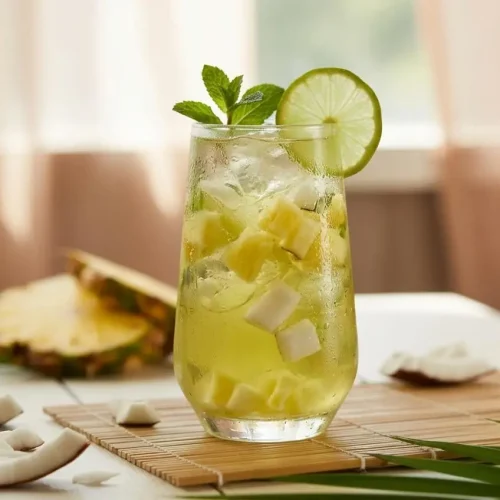
Tropical Iced Green Tea Recipe

Ingredients
- 2 Cup Water
- 2 Green tea bags
- 1 Cup Coconut Water
- 1/2 Cup Mango Juice
- 1/2 Cup Pineapple Bits
- Ice Cubes
Instructions
- I start by bringing 2 cups of water to a boil, then I take it off the heat before adding the green tea bags and steeping them for 3–5 minutes, depending on how strong I want the tea.
That short off-heat steep keeps the flavor cleaner, and I always pull the bags before the tea gets too deep in color, then let it cool completely. - Once the tea is cool, I pour it into a large pitcher and add the coconut water, mango juice, and pineapple bits, then stir gently until everything is combined.
You’ll see the color turn softly golden with little pineapple pieces floating through it, which is exactly what I want. - Then I slide the pitcher into the refrigerator and chill it for at least 30–60 minutes.
This resting time really helps the flavors settle together, and the tropical notes taste rounder and less separate. - When I’m ready to serve, I fill glasses with ice and pour the tea over the top.
If I have fresh pineapple slices around, I use them as garnish, but the drink is already plenty cheerful without extra fuss.
Notes
Nutrition
Conclusion
This is the kind of iced tea that feels easy but still a little special, with sweet mango, tangy pineapple, and a clean green tea base that keeps it refreshing.
The biggest success tip is simple: don’t oversteep the tea, and let it cool before you mix and pour. If you want a brighter tropical edge, a little passion fruit is a lovely finish.
FAQ
How do I make iced green tea that isn’t bitter?
Steep the green tea for only 3 to 5 minutes, and add the bags after the boiled water is off the heat. Then cool the tea before adding ice or mixing in the fruit. Most bitterness comes from steeping too long or treating green tea too harshly.
Can I make tropical iced tea ahead of time, and how long does it last?
Yes, this works well as a make-ahead pitcher drink. Chill it before serving so the flavors blend, keep it refrigerated, and add ice only when you pour each glass for the best flavor.
Can I use loose leaf tea instead of tea bags?
Yes. Loose leaf green tea can give you a fresher taste, but strain it well before mixing. Gentle green teas work best here, and they can still turn bitter if you steep them too long.
What should I do if my iced tea tastes too sour or bitter?
If it tastes bitter, the tea likely steeped too long or too hot. If it tastes too sour, the fruit balance is probably leaning tart. Chill it a bit longer first, then sweeten by the glass if needed.
Is it okay to use frozen fruit in this recipe?
Yes, frozen fruit can work well here. It helps chill the drink with less dilution than extra ice, though flavor can vary a bit by brand and ripeness. Keep the main ingredient list the same and use frozen pineapple as a practical swap in the pitcher.
What’s the difference between hot brewing and cold brewing for this recipe?
Hot brew is faster and matches the main recipe, with a brighter green tea flavor. Cold brew takes longer but gives a smoother, softer tea base. Either way, chill the tea well before serving for the best result.