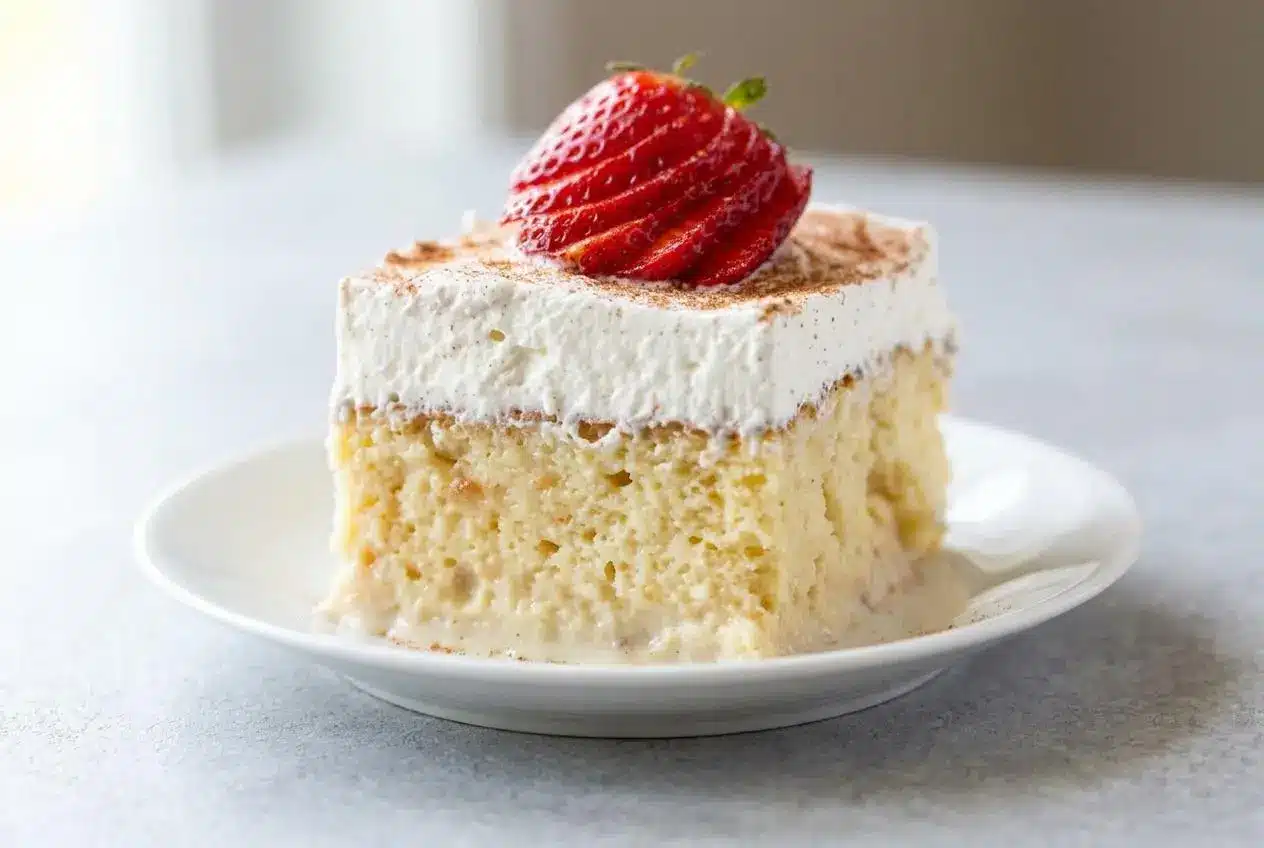
Tres leches cake is a traditional Latin American sponge cake soaked with evaporated milk, sweetened condensed milk, and whole milk, then topped with whipped cream and cinnamon.
This tres leches cake recipe creates a light, tender crumb that absorbs the sweet milk blend without collapsing into mush. The finished cake is chilled, creamy, and soft enough to melt on your fork.
The key is treating the sponge gently, from glossy egg whites to a slow, even soak. Those tiny air pockets do the delicious work.
Set out three clean mixing bowls before separating the eggs so no trace of yolk reaches the whites.
Essential Ingredients for Authentic Tres Leches Cake
Each ingredient supports the cake’s airy structure, milk absorption, sweetness, aroma, or creamy finish, so the layers stay balanced from the first slice to the last.
- 1 cup all-purpose flour ((120 g))
- 1 1/2 teaspoons baking powder ((6 g))
- 1/4 teaspoon salt
- 5 large eggs (, separated)
- 1 cup granulated sugar (, divided (200 g))
- 1/3 cup whole milk ((80 ml))
- 1 teaspoon vanilla extract ((5 ml))
- 12 ounce can evaporated milk ((354 ml))
- 14 ounce can sweetened condensed milk ((396 ml))
- 1/4 cup whole milk ((60 ml))
- 1 pint heavy whipping cream ((475 ml))
- 3 Tablespoons powdered sugar ((24 g))
- 1/2 teaspoon vanilla extract ((2.5 ml))
- ground cinnamon (, for topping)
The Sponge Cake Essentials
The sponge gets its lift from separated eggs rather than butter or oil. Whipped yolks bring richness and color, while stiff egg whites hold air in the batter. That creates an open, springy crumb with room for the milk soak instead of a dense, greasy cake that resists it.
Flour gives the cake structure, baking powder adds a little extra lift, and salt keeps the sweetness from tasting flat. Granulated sugar is divided because part strengthens the yolk mixture and the rest helps the whites form stable, glossy peaks.
I prefer using pure vanilla extract here because its warm aroma keeps the dairy sweetness tasting rounded rather than overly sugary.
The Traditional Three-Milk Blend
Evaporated milk adds concentrated dairy flavor without making the soak too heavy. Sweetened condensed milk provides sweetness and body, while whole milk loosens the blend so it flows into the sponge evenly. Keep these three milks in their intended roles rather than swapping them at random, since their balance is what gives pastel de tres leches its signature texture.
Fresh Whipped Cream Topping
Heavy whipping cream forms the cloudlike topping, while powdered sugar dissolves smoothly and vanilla adds a gentle finish. Ground cinnamon brings a warm, lightly spiced contrast over the chilled cream.
How to Make Tres Leches Cake Step by Step
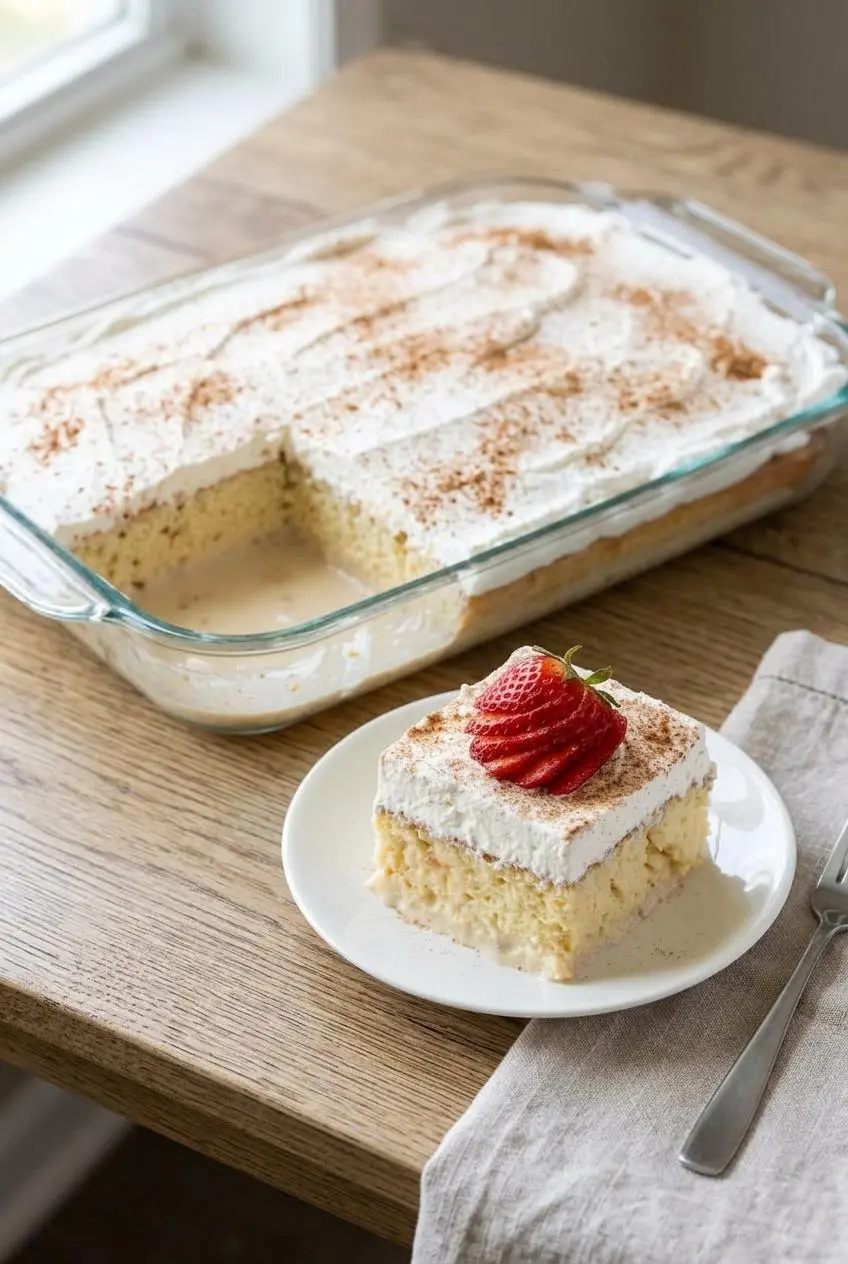
Gentle mixing matters more than speed once the flour and whipped whites enter the bowl. Protecting the trapped air gives the sponge enough height and structure to welcome the milk later.
- Heat the oven to 350 °F.
Have an ungreased baking pan ready so the sponge can grip the sides as it rises. - Whisk the flour, baking powder, and salt in a medium bowl, then place the egg yolks and whites in separate mixing bowls.
Keep the whites free of yolk so they can whip to full volume. - Beat the yolks with 3/4 cup sugar on high until thick, pale, and able to fall in a slow ribbon, then mix in 1/3 cup milk and vanilla.
Fold the yolk mixture into the dry ingredients only until no dry flour remains. - Whip the egg whites on high, gradually adding the remaining 1/4 cup sugar as they build volume.
Stop at glossy stiff peaks that stand upright, then fold them into the batter from the bottom upward. - Spread the batter evenly in the ungreased pan and bake for 25 to 35 minutes.
The top should feel springy and dry to the touch, and a toothpick in the center should come out clean. - Cool the cake completely, then stir together the evaporated milk, sweetened condensed milk, and 1/4 cup whole milk.
A fully cooled sponge stays intact when the liquid reaches its air pockets. - Use a fork to pierce the entire cake, then slowly pour the milk mixture over the top, including the edges.
Refrigerate for at least 1 hour or overnight so the sponge can absorb the soak. - Whip the heavy cream with powdered sugar and vanilla until stiff peaks form, then spread it over the chilled cake and finish with cinnamon.
The cream should hold soft, defined swirls rather than slide across the surface.
Do not grease the pan sides. A sponge cake needs traction to climb upward, and greased walls can leave you with a shorter, denser layer. Also, resist overmixing after the flour goes in. A few gentle folds preserve far more lift than vigorous stirring.
Soaking and Chilling for the Perfect Texture
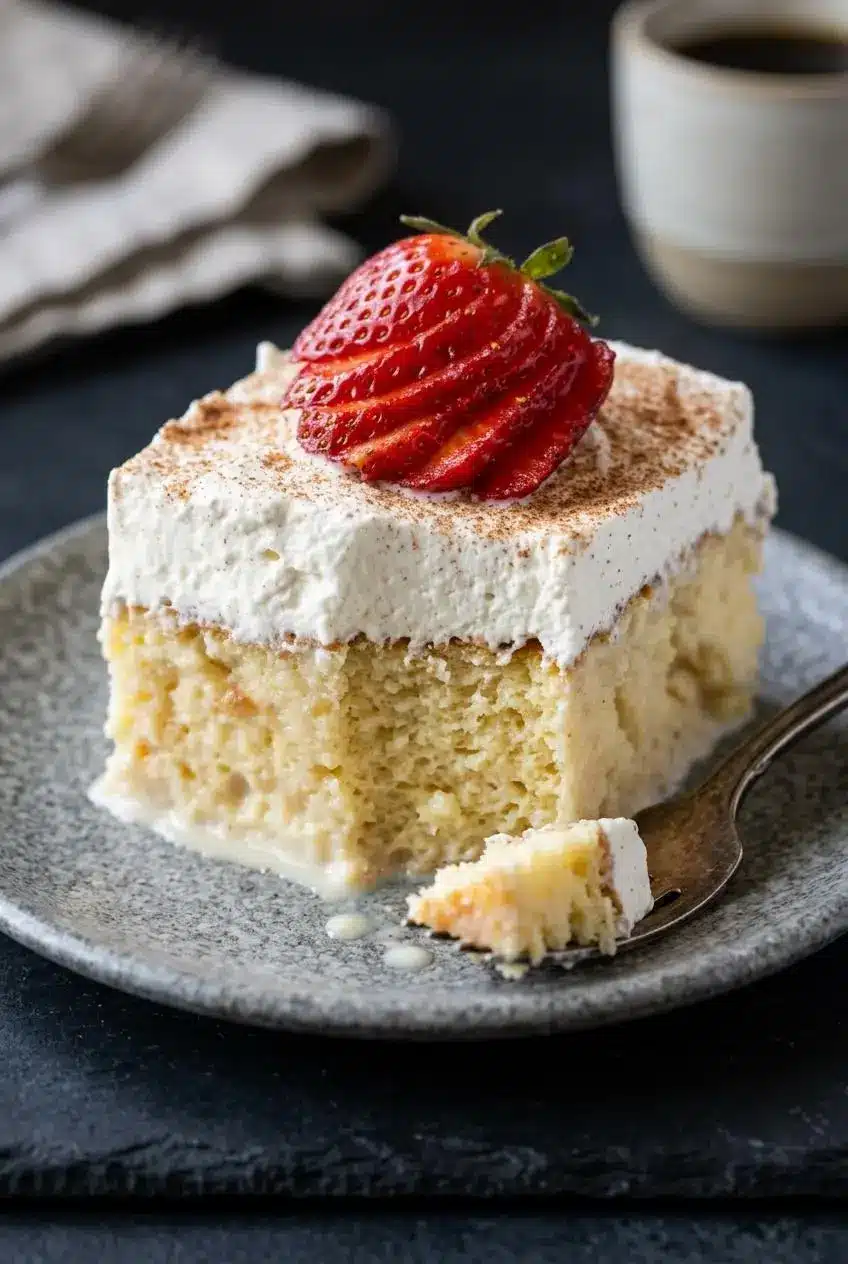
The difference between creamy and soggy comes down to how the milk enters the cake. Poke deep, closely spaced holes across the center, corners, and edges so every area has a path for the soak.
Pour about half of the milk blend slowly over the whole surface, rather than sending it into one corner. Let it sit for a couple of minutes while the sponge drinks it in, then add the remaining milk in the same steady pattern. This pause helps prevent liquid from pooling around the edges while the center stays dry.
Chill the cake for at least 1 hour before topping. An overnight rest gives the milks more time to settle through the crumb, producing neater slices and a more unified creamy flavor. Keep the whipped topping for after the soak, so it stays light and defined.
If you enjoy other aromatic milk-soaked desserts, a rose milk cake uses a similarly delicate sponge-and-soak approach with a floral finish.
Expert Tips and Troubleshooting for Flawless Results
Most tres leches problems are easy to trace to one stage: egg volume, baking, or milk distribution. Use these fixes before changing the ingredients.
- Dry center: The fork holes were likely too shallow or too widely spaced. Pierce deeply across the middle and pour milk over the center as carefully as the edges.
- Milk pooling around the pan: The soak went on too quickly. Pause between two pours and let the sponge absorb the first round before adding the rest.
- Dense or rubbery sponge: The flour may have been overmixed, or the whites lost volume during folding. Fold with a broad, upward motion and stop as soon as the batter looks uniform.
- Deflated egg whites: Start with a clean, dry, oil-free bowl. Whip until the peaks are stiff and glossy, then fold instead of stirring.
- Eggy aroma: Beat the yolks until pale and thick, and use the vanilla as directed. Properly whipped yolks taste smoother and less assertive after baking.
- Overbaked cake: Light aluminum pans usually bake predictably within the stated range. Glass Pyrex dishes retain heat longer, so begin checking the center a few minutes earlier and remove the cake once the toothpick is clean.
A cinnamon-topped dessert table also pairs nicely with cinnamon churro cupcakes when you want a second dessert with a contrasting, cake-like bite.
Make-Ahead Guidelines and Storage Tips
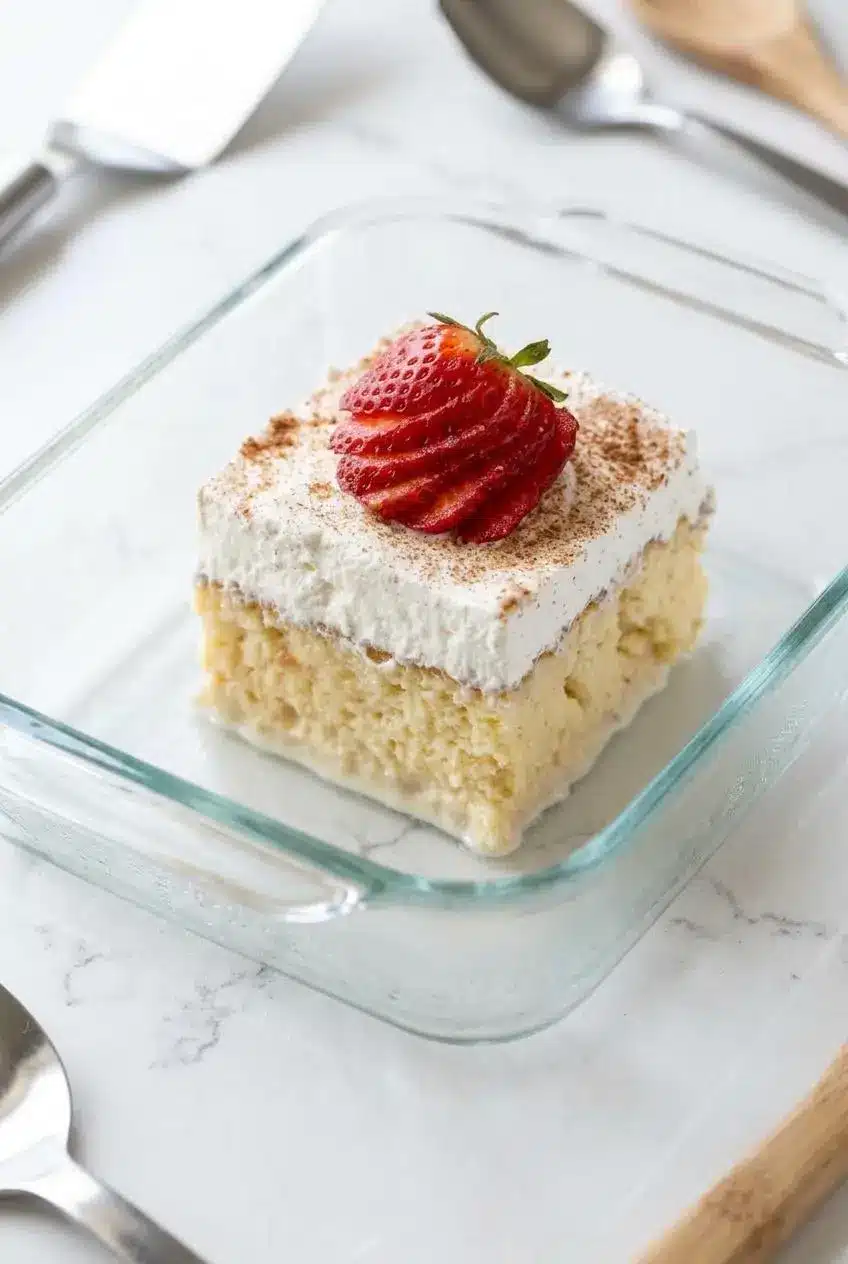
This dessert works well for entertaining because the sponge needs a chilling period after the milk soak. Assemble the cake through the soaking stage, keep it covered in the refrigerator, and add the whipped cream closer to serving if you want the cleanest finish.
Because the cake contains milk and cream, keep it chilled in a covered dish. Perishable dairy foods should stay at 40 °F or below, and dairy items exposed to 40 °F or warmer for more than two hours should be discarded, as outlined for refrigerated dairy storage during a power outage.
The soaked cake is at its best when served chilled, with the cream protected from refrigerator odors by a snug cover. The supplied method does not include freezer directions, so refrigerating the finished cake is the better choice for preserving its soft, creamy crumb.
Delicious Flavor Variations to Try
Keep the classic version intact, then use one of these optional flavor directions when you want a different finish.
Toasted Coconut Tres Leches
Replace the whole milk in the soaking mixture with coconut milk for a tropical note, then scatter toasted coconut flakes over the whipped cream. For another coconut-forward dessert, try this toasted coconut cake.
Caramel Dulce de Leche Tres Leches
Drizzle warm dulce de leche over the whipped topping just before serving, or gently swirl caramelized milk spread into the soak. It makes the cake richer and deeper, so a light hand keeps the dairy flavors from becoming too heavy.
Fresh Fruit Layered Tres Leches
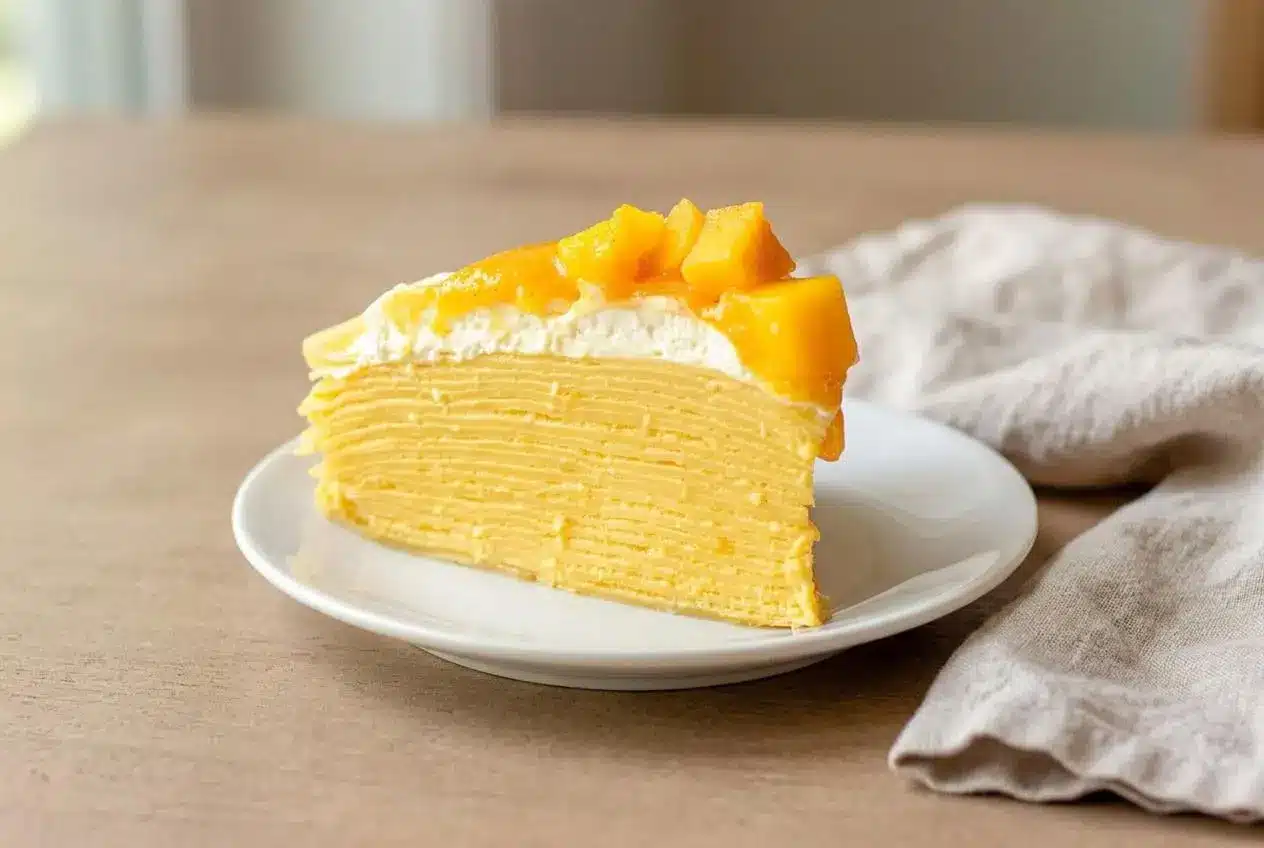
Layer sliced strawberries, ripe peaches, or mango between sponge slabs for a special presentation, or arrange the fruit across the whipped topping. Juicy fruit brings welcome freshness against the sweet milk soak.
Citrus and Cardamom Infusion
Whisk fresh lime zest and a tiny pinch of ground cardamom into the three-milk mixture for a bright, fragrant variation. The citrus lifts the richness, while cardamom adds a gentle floral warmth.
Conclusion
Tres leches cake rewards careful handling more than complicated technique. Whip the whites to true stiff peaks, use an ungreased pan, and cool the sponge completely before it meets the milk.
Give the cake time to chill, then serve it cold with cinnamon and a thick layer of whipped cream. That tender, milk-soaked slice is well worth the wait.
Frequently Asked Questions
Why Does Tres Leches Cake Use No Butter or Oil?
Butter and oil would make the crumb richer but less absorbent. This sponge depends on air whipped into the eggs, especially the whites, to create tiny pockets that hold the three-milk blend while keeping the cake light.
How Far in Advance Can I Make Tres Leches Cake?
Make and soak the cake ahead of serving so it has time to chill and absorb the milk mixture. An overnight rest works especially well for a firmer, more evenly soaked slice, while the whipped topping is best added closer to serving.
Why Is My Tres Leches Cake Dry in the Center?
The center usually stays dry when it has too few fork holes or receives less milk than the edges. Poke deeply across the whole surface and pour the soak in two slow rounds, paying attention to the middle.
Can I Save Tres Leches Cake for Later?
Keep the finished cake covered and chilled to protect its dairy topping and tender texture. The soaked sponge is designed for refrigerator storage rather than freezer storage, which can change the creamy crumb after it returns to room temperature.
Can I Bake This Cake in a Glass Pyrex Dish Instead of Metal?
Yes. Glass works well for baking, soaking, and serving, but it retains heat longer than light aluminum. Start checking the cake center a few minutes before the earliest stated baking time and remove it once a toothpick comes out clean.
Tres Leches Cake Recipe

Equipment
- electric beaters
- Mixing Bowls
- Fork
- Baking pan
Ingredients
- 1 cup all-purpose flour (120 g)
- 1 1/2 teaspoons baking powder (6 g)
- 1/4 teaspoon salt
- 5 large eggs , separated
- 1 cup granulated sugar , divided (200 g)
- 1/3 cup whole milk (80 ml)
- 1 teaspoon vanilla extract (5 ml)
- 12 ounce can evaporated milk (354 ml)
- 14 ounce can sweetened condensed milk (396 ml)
- 1/4 cup whole milk (60 ml)
- 1 pint heavy whipping cream (475 ml)
- 3 Tablespoons powdered sugar (24 g)
- 1/2 teaspoon vanilla extract (2.5 ml)
- ground cinnamon , for topping
Instructions
- Heat the oven to 350 °F. Have an ungreased baking pan ready so the sponge can grip the sides as it rises.
- Whisk the flour, baking powder, and salt in a medium bowl, then place the egg yolks and whites in separate mixing bowls. Keep the whites free of yolk so they can whip to full volume.
- Beat the yolks with 3/4 cup sugar on high until thick, pale, and able to fall in a slow ribbon, then mix in 1/3 cup milk and vanilla. Fold the yolk mixture into the dry ingredients only until no dry flour remains.
- Whip the egg whites on high, gradually adding the remaining 1/4 cup sugar as they build volume. Stop at glossy stiff peaks that stand upright, then fold them into the batter from the bottom upward.
- Spread the batter evenly in the ungreased pan and bake for 25 to 35 minutes. The top should feel springy and dry to the touch, and a toothpick in the center should come out clean.
- Cool the cake completely, then stir together the evaporated milk, sweetened condensed milk, and 1/4 cup whole milk. A fully cooled sponge stays intact when the liquid reaches its air pockets.
- Use a fork to pierce the entire cake, then slowly pour the milk mixture over the top, including the edges. Refrigerate for at least 1 hour or overnight so the sponge can absorb the soak.
- Whip the heavy cream with powdered sugar and vanilla until stiff peaks form, then spread it over the chilled cake and finish with cinnamon. The cream should hold soft, defined swirls rather than slide across the surface.