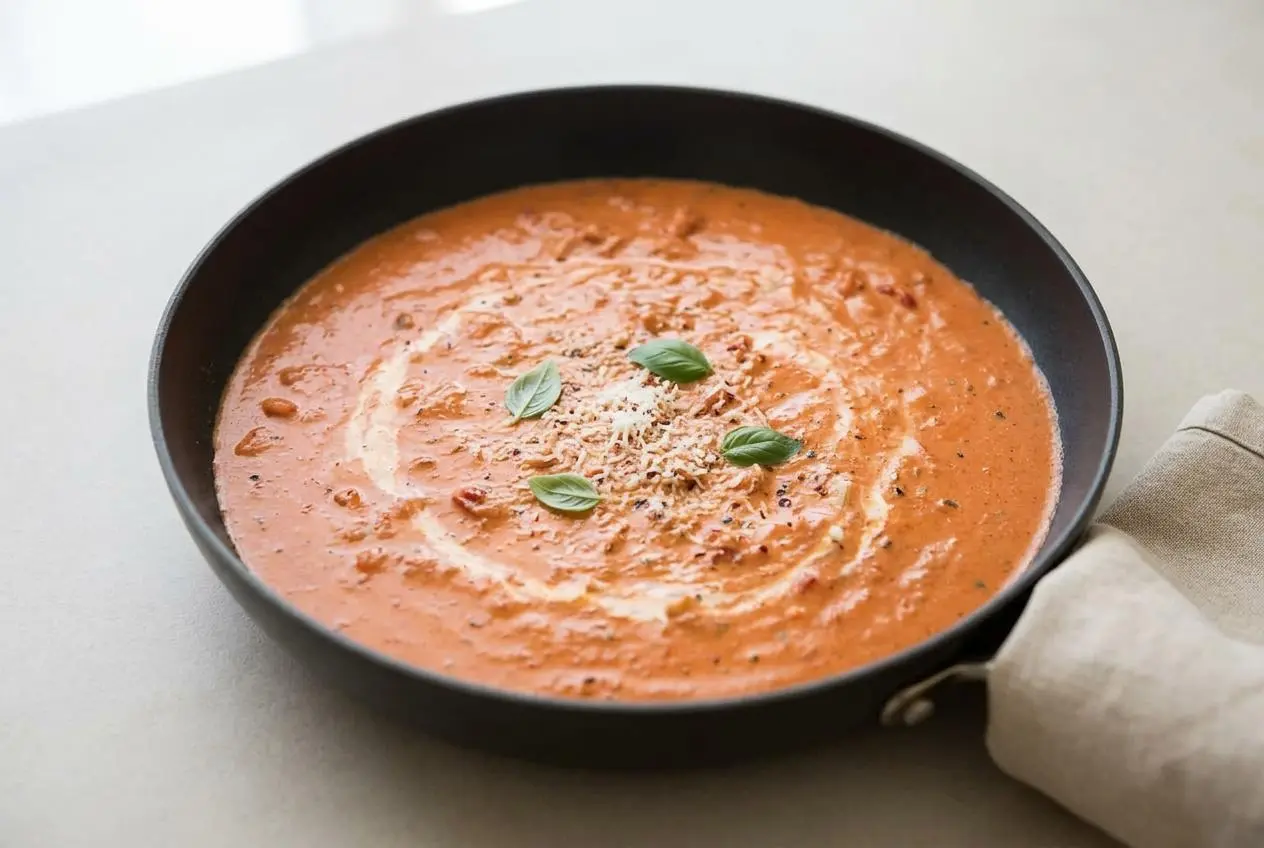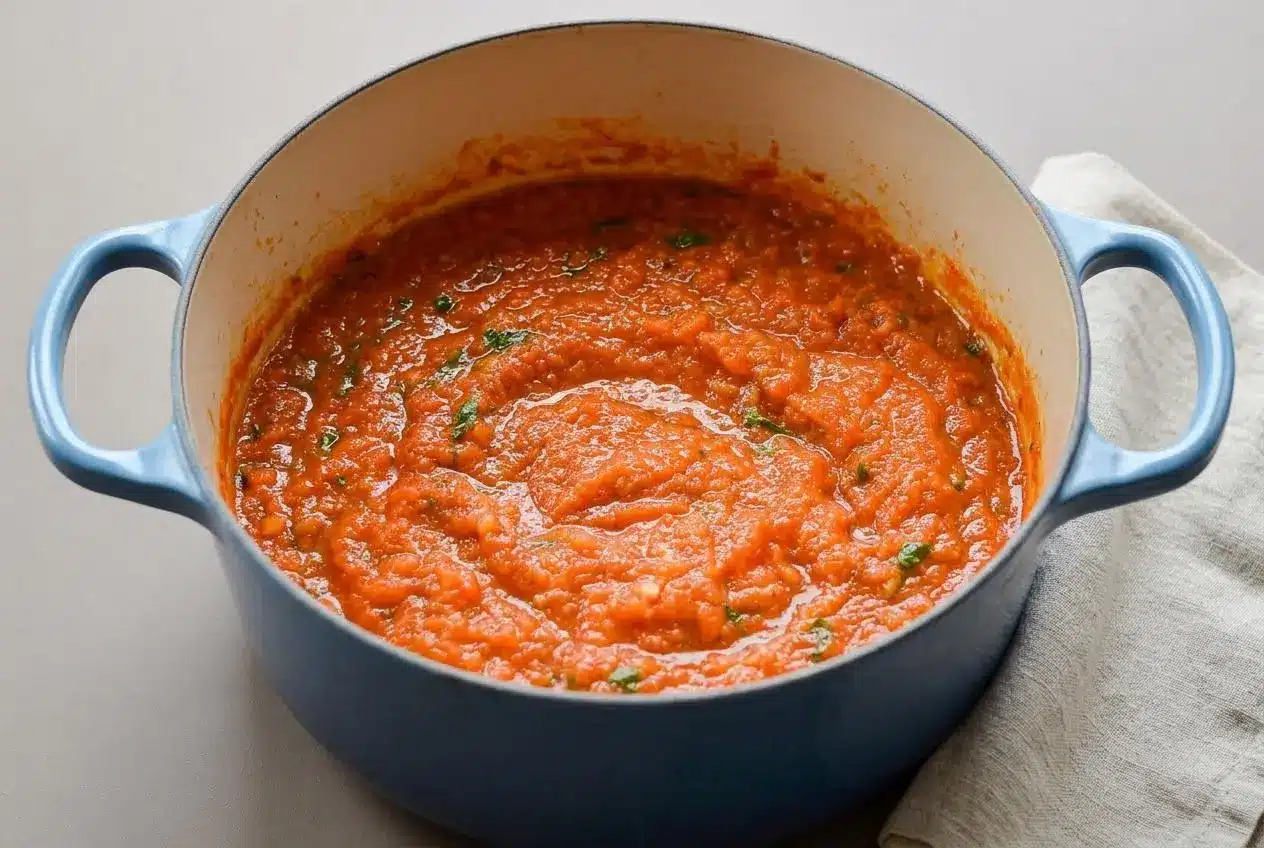
Make a classic homemade sauce by simmering plum tomatoes with butter, olive oil, onion, garlic, salt, and sugar until thick, then stirring in fresh basil at the end.
This tomato sauce cooks slowly into a rich, velvety pot of deep red flavor. Use ripe fresh plum tomatoes in season or whole peeled canned tomatoes when you want dependable body.
As it simmers, the sharp tomato scent softens into something sweet and savory. The glossy finish is worth the wait.
Keep the heat low once the sauce begins to bubble so the garlic stays mellow rather than turning sharp or bitter.
Essential Ingredients for Homemade Tomato Sauce
Each ingredient has a clear job: tomatoes create body, fats bring sheen and balance, onion and garlic add savory depth, and basil provides fresh aroma at the finish.
- 4 lb plum tomatoes ((or two 28-oz/794-g cans whole peeled plum tomatoes))
- 6 tablespoons unsalted butter
- 4 tablespoons olive oil
- 2 medium yellow onions, (peeled and cut in half)
- 4 cloves garlic, (peeled and smashed)
- 1¼ teaspoons salt
- 1 teaspoon sugar
- 2 tablespoons chopped fresh basil
Plum tomatoes have firm flesh and less excess water than many slicing tomatoes, helping the sauce reduce into a thicker texture. The halved onions flavor the pot gently and can be removed later, while smashed garlic releases its flavor without needing to brown.
Butter rounds out tart notes, olive oil adds fruitiness, and the salt and sugar keep the flavor balanced. Stir basil in at the end so its clean, peppery aroma stays bright instead of cooking away.
I look for fresh plum tomatoes with deep red skin and a slight give when pressed before peeling them.
Choosing Between Fresh Plum and Canned Whole Tomatoes
Fresh garden plum tomatoes bring lively summer flavor, especially when they are fully ripe. They need blanching and peeling first, but their sweetness can be wonderful in a long simmer.
For cooking outside tomato season, canned whole tomatoes offer reliable flavor and break down smoothly. Whole peeled plum tomatoes, including San Marzano-style tomatoes, are packed soft enough to crush as they simmer. Diced canned tomatoes often contain calcium chloride, a firming agent that helps pieces hold their shape but can leave the finished sauce stubbornly chunky.
The Magic of Butter and Olive Oil
Butter and olive oil do different work in the pot. Butter softens the sauce’s sharper edges, while olive oil carries tomato flavor and gives the finished sauce a satiny sheen. As the sauce reduces, stir and mash occasionally to help the fats blend into the tomato juices instead of sitting in a separate layer.
This combination is why the sauce tastes rounded without relying on lots of refined sugar. The listed teaspoon of sugar supports the tomatoes, but slow cooking does most of the balancing.
How to Make Classic Homemade Tomato Sauce Step by Step
Gentle heat and an uncovered pot are the keys to a concentrated sauce. The goal is steady reduction, not a hard boil that can scorch the natural sugars along the sides of the pan.
- For fresh tomatoes, bring a large pot of water to a rolling boil and prepare a large bowl half-filled with ice cubes and cold water; cut a ¼-in (6-mm) deep X into the bottom of each tomato.
Boil the tomatoes for 1 to 2 minutes, stopping when the skins wrinkle and begin to split but the tomatoes still feel firm. - Lift the tomatoes out with a slotted spoon and place them in the ice water for a few minutes, then peel away the loosened skins.
The cold bath cools them enough to handle, and the skins should slip off without pulling away much flesh. - Remove the cores, cut the tomatoes into ½-in (13-mm) pieces, and put them with every bit of juice into a Dutch oven or saucepan.
The tomato pieces will look loose and watery at this stage, which is exactly right before reduction begins. - Add the butter, olive oil, onion halves, smashed garlic, salt, and sugar, then bring the mixture just to a gentle boil.
Lower the heat as soon as bubbles reach the surface so the sauce settles into a quiet, steady simmer. - Simmer uncovered for 1½ to 2½ hours, stirring occasionally and pressing the softening tomatoes against the pan with a wooden spoon or potato masher.
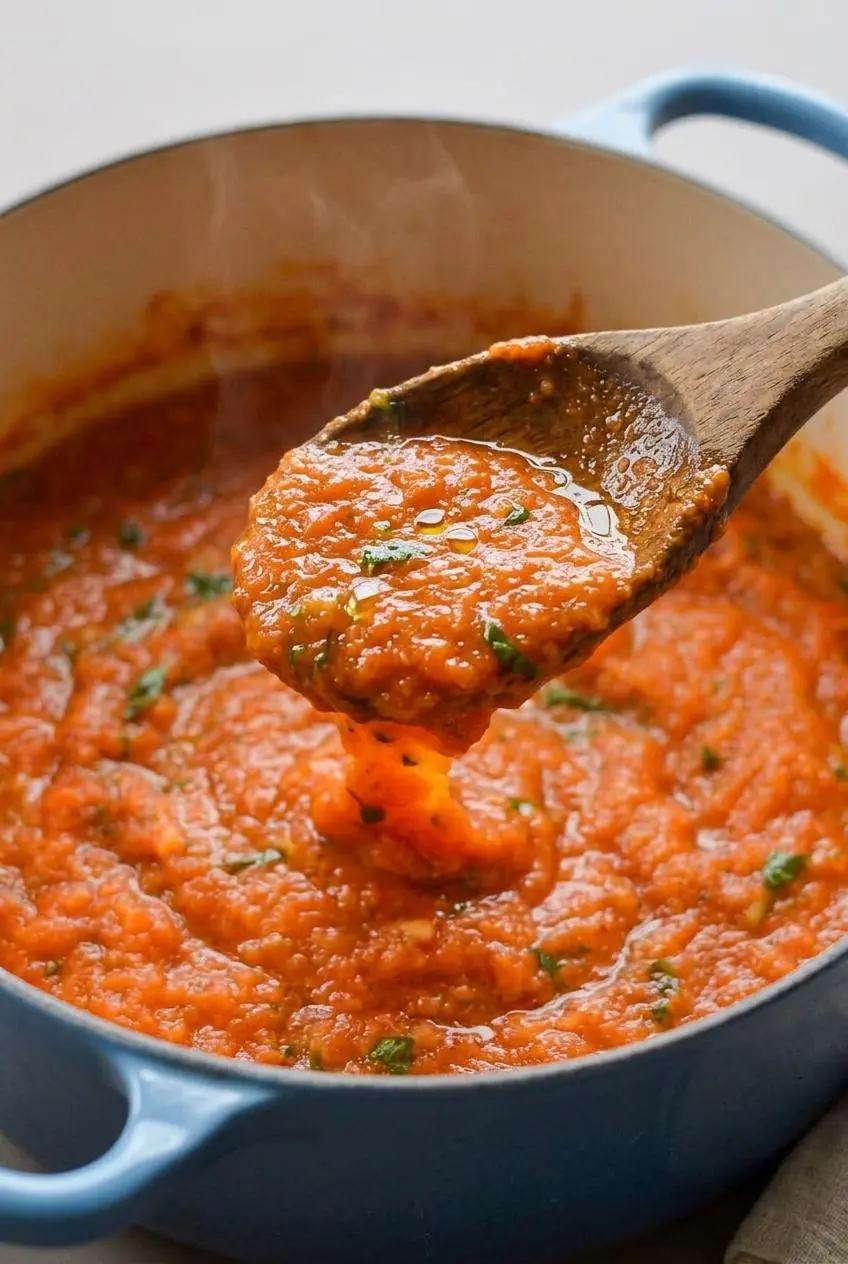
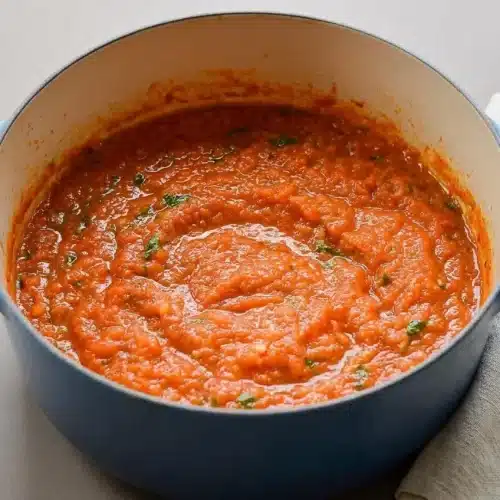
The sauce is ready when watery bubbling has changed to glossy, thick tomato ribbons that mound briefly on the spoon. - Remove and discard the onions, mash any remaining large pieces of tomato and garlic, then taste and adjust the seasoning before stirring in the basil.
The finished sauce should be slightly rustic yet spreadable, with a sweet, softened tomato aroma and basil that smells fresh.
Expert Tips for Rich Flavor and Velvety Texture
A good simmer fixes more than most seasoning adjustments. Watch how the sauce behaves in the pan, then make small changes only after it has had time to reduce.
- If the sauce is watery: Keep it uncovered at a low simmer. Evaporation concentrates the tomato flavor, and the sauce should gradually leave a clear trail when you drag a spoon across the bottom of the pot.
- If it tastes too tart: Let it simmer longer before adding anything. If the acidity still feels sharp, stir in another small pat of butter and taste again. A tiny pinch of sugar can help with especially sour out-of-season tomatoes, but too much can make the flavor flat.
- If the garlic tastes harsh: The heat was likely too high early on. Keep the pot at a quiet simmer and stir from the bottom so the garlic stays submerged and softens with the tomatoes.
- If the texture is too chunky: Use a potato masher or wooden spoon near the end of cooking. This keeps the sauce rustic while breaking down pieces that would otherwise sit heavily on pasta.
- If the sauce will not cling to pasta: Toss it with hot al dente noodles and a splash of reserved starchy pasta cooking water. The starch helps the sauce coat each strand instead of pooling at the bottom of the bowl.
- For deeper savory flavor: An optional Parmesan rind or a small dash of aged balsamic vinegar can simmer with the tomatoes. Remove the rind before serving, and add the vinegar sparingly so it does not dominate the basil.
Storage and Reheating Instructions
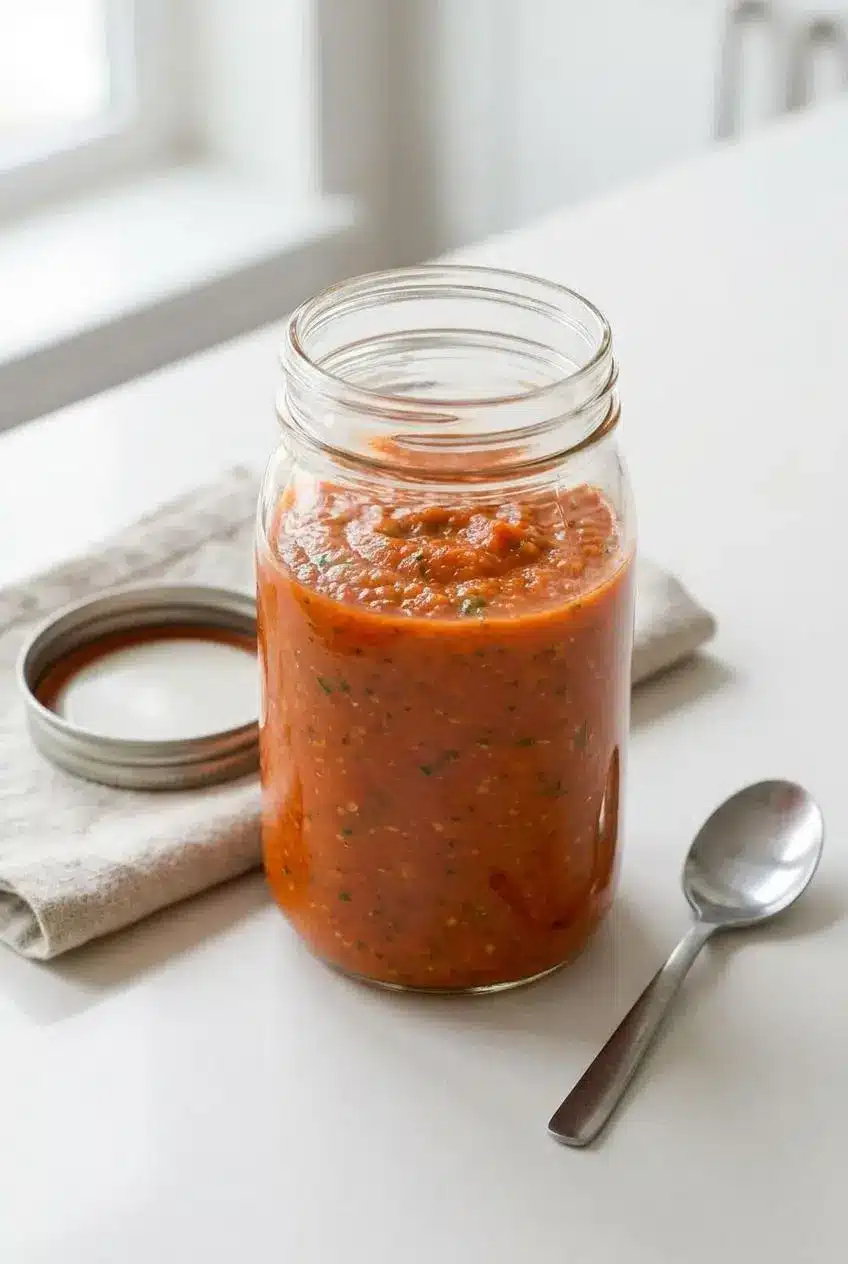
Cool the sauce completely, transfer it to a sealed container, and keep it chilled. For the best texture, reheat only the portion you plan to serve in a saucepan over low heat, stirring often until the butter and olive oil blend back into the sauce.
Do not pour hot sauce into a glass container. Let the heat settle first, and leave room at the top of any container because sauces can expand as their temperature changes. If the sauce looks separated after chilling, warm it slowly and stir rather than blasting it over high heat.
Delicious Ways to Serve and Customize Tomato Sauce
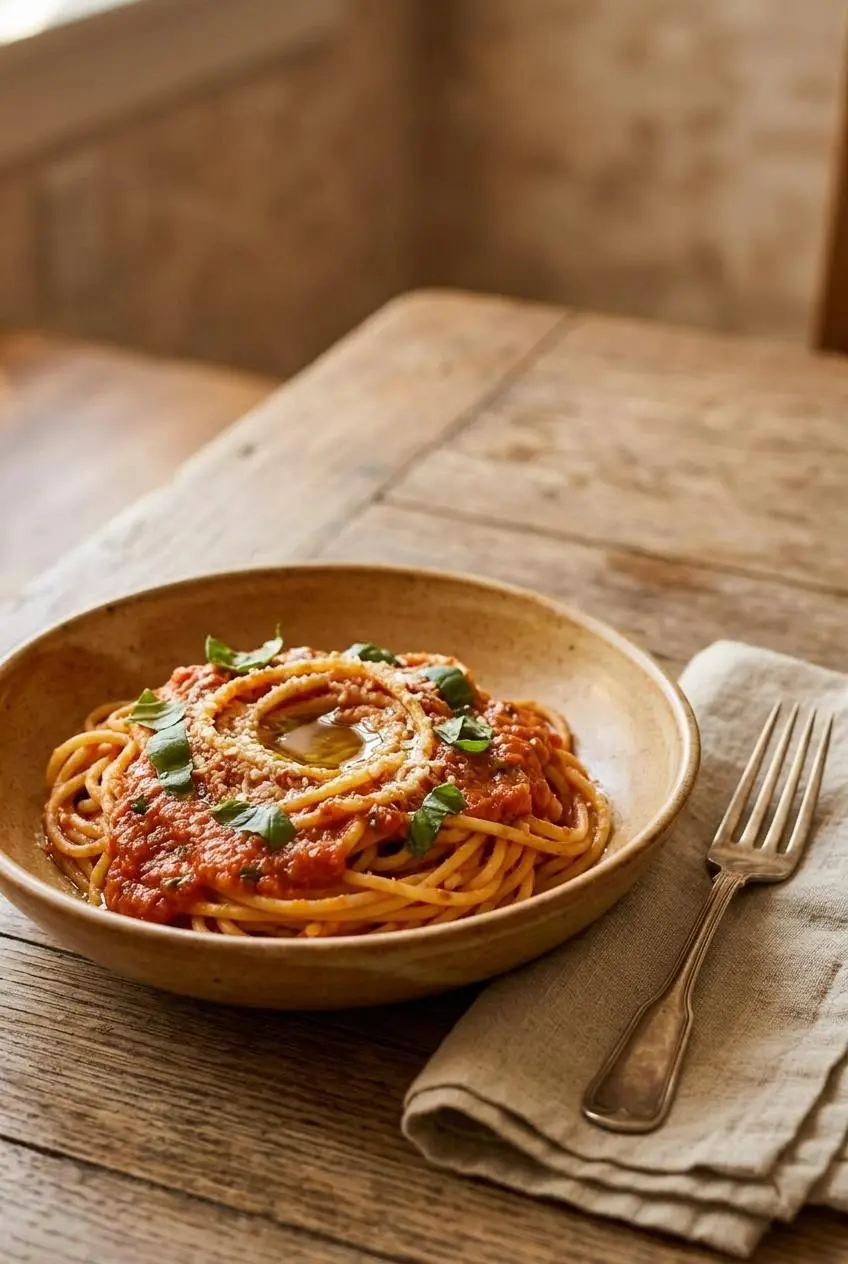
This sauce has enough body for pasta but stays flexible enough for easy dinner projects. Spoon it over spaghetti, linguine, bucatini, rigatoni, penne, or shells, choosing tubular shapes when you want sauce to collect inside every bite.
- Use it as the red layer in eggplant Parmesan or beneath crisp chicken cutlets.
- Spread a thicker portion across pizza dough for a bright, buttery pizza base.
- Spoon it over creamy polenta, then finish with basil and grated Parmesan.
- Turn it into a fuller pasta dinner with hearty spaghetti sauce when you want a more robust, protein-forward meal.
The Box Grater Method for Fresh Tomatoes
When garden tomatoes are ripe and you want a faster fresh sauce, skip the blanching pot. Cut each tomato in half crosswise, then rub the cut side over the large holes of a box grater set over a bowl. The juicy flesh falls into the bowl while the skin stays in your hand.
This creates a quick fresh tomato purée with a lighter, more immediate texture than the slow-simmered version. It is an optional summer approach, not a replacement for the longer method above.
Spicy Arrabbiata and Herb Variations
- Spicy arrabbiata style: Add extra garlic and crushed red pepper flakes for a sharper, warming sauce. Keep the heat optional so the tomato flavor remains the main event.
- Herb marinara style: Add dried oregano during the simmer for a more herb-forward finish, then keep the fresh basil for the end. For a dedicated version, try this classic marinara sauce.
- Roasted tomato option: For a sweeter, more concentrated seasonal variation, make roasted cherry tomato sauce with ripe cherry tomatoes.
Conclusion
Slow-simmered tomato sauce rewards patience with deep flavor, a velvety texture, and enough flexibility for pasta, pizza, or baked dishes. Fresh plum tomatoes shine in summer, while whole canned tomatoes keep the method dependable all year.
Make a pot when you want dinner to feel especially comforting, then warm it gently when another meal needs a little help. That glossy basil finish makes even an ordinary bowl of pasta feel cared for.
Frequently Asked Questions
What Is the Secret to a Rich Homemade Tomato Sauce?
Simmer the sauce uncovered over low heat so excess water can evaporate slowly. Wait for the tomatoes to turn from thin and bubbly to thick, glossy, and naturally sweet. Use butter and olive oil to create a smooth emulsion that softens sharp acidity. Add basil at the end so its aroma stays fresh.
Should I Use Fresh or Canned Tomatoes for Pasta Sauce?
Choose ripe plum tomatoes during peak summer for bright, fresh flavor. Choose whole canned plum tomatoes for dependable sweetness and rich body during the rest of the year. Avoid diced canned tomatoes when you want a smooth sauce because they may stay firm as they cook.
Do I Need to Add Sugar to Balance Tomato Acidity?
Usually, no. A slow simmer naturally concentrates the tomatoes’ sweetness and softens raw acidity. Butter also helps create a rounder flavor. If out-of-season tomatoes still taste unusually sharp, a small pinch of sugar can help. Add it gradually and taste before adding more.
How Long Can Homemade Tomato Sauce Be Stored in the Freezer?
This method does not establish a validated freezer timeline. For make-ahead portions, cool the sauce completely, keep it in a tightly sealed container, and reheat it gently over low heat to preserve its velvety texture.
Tomato Sauce

Equipment
- Dutch oven or saucepan
- wooden spoon or potato masher
- Slotted spoon
- Large Pot
- large bowl
Ingredients
- 4 lb plum tomatoes (or two 28-oz/794-g cans whole peeled plum tomatoes)
- 6 tablespoons unsalted butter
- 4 tablespoons olive oil
- 2 medium yellow onions peeled and cut in half
- 4 cloves garlic peeled and smashed
- 1¼ teaspoons salt
- 1 teaspoon sugar
- 2 tablespoons chopped fresh basil
Instructions
- For fresh tomatoes, bring a large pot of water to a rolling boil and prepare a large bowl half-filled with ice cubes and cold water; cut a ¼-in (6-mm) deep X into the bottom of each tomato. Boil the tomatoes for 1 to 2 minutes, stopping when the skins wrinkle and begin to split but the tomatoes still feel firm.
- Lift the tomatoes out with a slotted spoon and place them in the ice water for a few minutes, then peel away the loosened skins. The cold bath cools them enough to handle, and the skins should slip off without pulling away much flesh.
- Remove the cores, cut the tomatoes into ½-in (13-mm) pieces, and put them with every bit of juice into a Dutch oven or saucepan. The tomato pieces will look loose and watery at this stage, which is exactly right before reduction begins.
- Add the butter, olive oil, onion halves, smashed garlic, salt, and sugar, then bring the mixture just to a gentle boil. Lower the heat as soon as bubbles reach the surface so the sauce settles into a quiet, steady simmer.
- Simmer uncovered for 1½ to 2½ hours, stirring occasionally and pressing the softening tomatoes against the pan with a wooden spoon or potato masher. The sauce is ready when watery bubbling has changed to glossy, thick tomato ribbons that mound briefly on the spoon.
- Remove and discard the onions, mash any remaining large pieces of tomato and garlic, then taste and adjust the seasoning before stirring in the basil. The finished sauce should be slightly rustic yet spreadable, with a sweet, softened tomato aroma and basil that smells fresh.