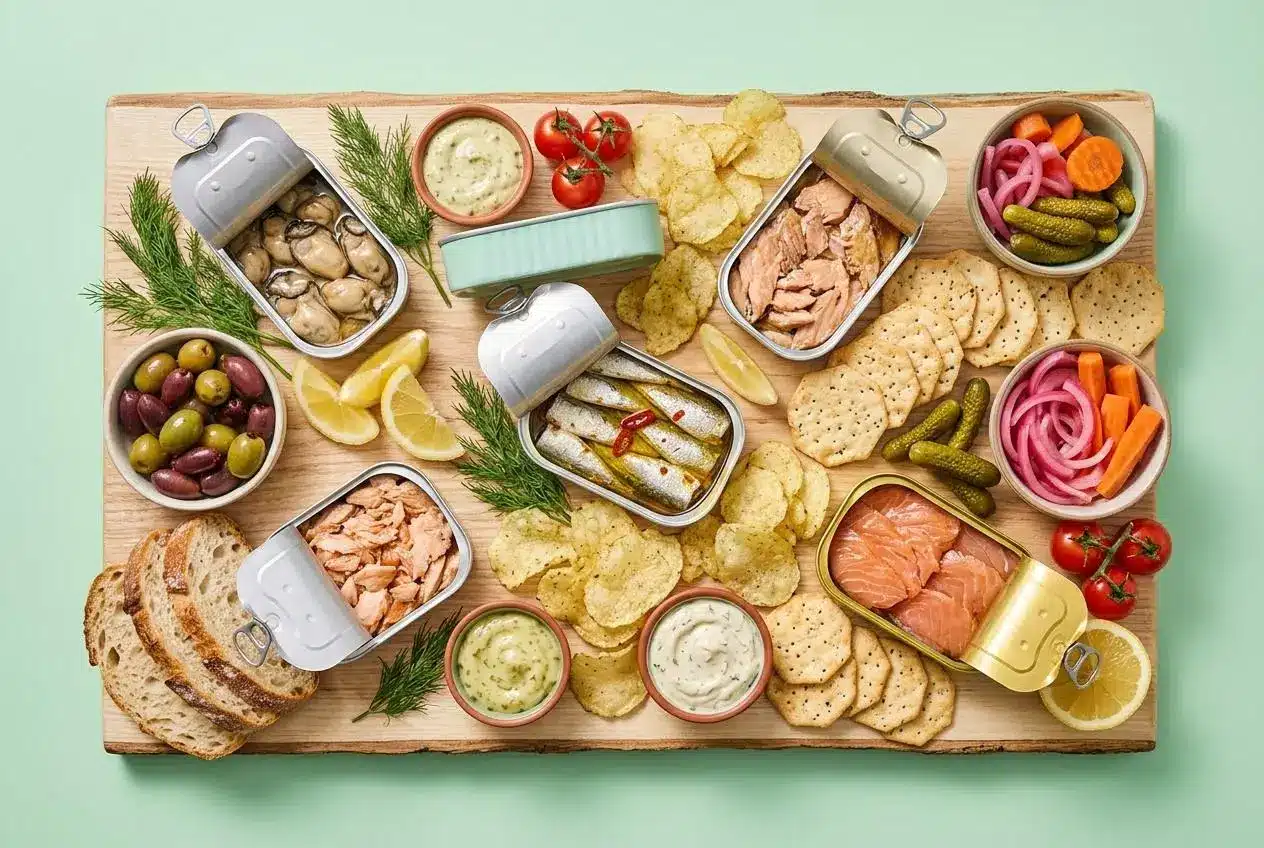
A tinned fish charcuterie board combines rich canned seafood with crunchy bread and crackers, sharp pickles, fresh vegetables, and creamy dips for a grazing spread that feels beautiful, easy, and full of contrast.
A good tinned fish charcuterie board works best when you balance mild and bold seafood, keep the crunchy pieces sturdy, and give every rich bite something bright to cut through it.
Peeling back a fresh tin of smoked trout gives that soft hiss and savory briny aroma that makes the whole board feel instantly party-ready. The garlic toast trick is worth it.
Drain off a little excess oil from very full tins before they hit the board so your crackers stay crisp instead of soggy.
The Art of Selecting Your Conservas
The best board starts with contrast, not quantity. Pick a mix of textures and strengths so guests can ease in with something mild, then build toward bolder flavors if they want to.
For an entry point, smoked trout and smoked salmon are the friendliest choices. They feel familiar, flaky, and rich without being too intense. Sardines in olive oil bring deeper savoriness and a more assertive finish, while smoked oysters add a softer, almost buttery bite with a bit more brine.
A simple way to think about it is this:
- Start mild with smoked salmon or trout for hesitant guests.
- Add one richer tin like sardines for classic conservas flavor.
- Finish with something distinctly briny, such as oysters, for variety.
Oil-packed tins usually taste fuller and feel silkier on the board. Water-packed fish can work, but it tends to feel leaner and less luxurious in this kind of spread. Smoked options are especially useful because the smoky note bridges the fish with toast, chips, pickles, and creamy dips.
When shopping, look for tins labeled with the fish species, packing liquid, and harvest or sourcing details. If sustainability matters to you, choose brands that clearly explain catch methods and sourcing standards on the label or website rather than relying on vague buzzwords.
Essential Ingredients for a Seafood Board
Each part of this board has a job, from rich seafood and sturdy crunch to bright acids, fresh color, and creamy elements that tie the bites together.
Tinned Seafood
- Ekone smoked oysters
- Sardines in olive oil
- Fishwife smoked rainbow trout
- Smoked Atlantic salmon
Crunch and Contrast
- Sourdough bread slices
- Crackers
- Dill pickle potato chips
- Assorted crudites like bell peppers, cucumbers, and cherry tomatoes
- Fermented pickles, vegetables, and olives
- Carolina Peanut Factory Dill Pickle Peanuts
Finishing and Dips
- Ayoh! Dill Pickle Mayo
- Davis & Davis Dill Pickle Dip Mix
- Fresh fruit such as grapes, lemon slices, and fresh herbs for garnish
The seafood brings the rich, smoky, briny base. Bread, crackers, and chips give structure and crunch. Crudites and fruit lighten the board, while pickled elements and lemon sharpen each bite so the fish never feels heavy.
I like to tilt oily tins slightly and spoon off just a bit from the surface before serving, keeping enough for flavor while avoiding puddles on the board.
Curated Seafood Tins
Use a range of fish rather than several tins that all taste alike. Smoked rainbow trout and smoked Atlantic salmon are mild, flaky, and welcoming. Sardines are firmer, oilier, and more savory. Smoked oysters bring a softer texture that feels a little more luxurious on a cracker.
If you have guests who are unsure about canned fish, lead with trout or salmon first. Those two feel closest to familiar smoked fish spreads and usually disappear fastest.
The shift from water-packed to oil-packed matters too. Oil-packed fish tends to stay moister on the board and holds up better once opened, while water-packed options can feel drier and less integrated with the rich dips and crunchy carriers.
Carbs and Crucial Accoutrements
Your carriers should support the fish, not compete with it. Plain crackers, sea salt crackers, and toasted sourdough slices are the best choices because they let the smoky, savory flavor stay front and center.
Sourdough is especially useful because it can handle heavier toppings. If you want a little structure help from familiar board-building basics, the layout ideas from a classic charcuterie board translate very well here, just with seafood standing in for cured meat.
Avoid heavily seasoned crackers. They can flatten the flavor differences between salmon, trout, sardines, and oysters. If you need a gluten-free option, add a plain gluten-free cracker with a neutral flavor and crisp snap.
Those dill pickle potato chips and dill pickle peanuts are more than snacks around the edge. They add salty crunch and a sharp, punchy contrast that keeps each bite lively.
Acids, Pickles, and Dips
This is the section that keeps the board balanced. Rich fish needs acid, crunch, and a little cool creaminess to feel fresh from the first bite to the last.
Fermented pickles, vegetables, and olives bring brightness and salt. Lemon slices wake up oily fish instantly. Dill pickle mayo and dill dip add creaminess, but they still echo the sharp pickle notes, which makes them feel connected instead of heavy.
Cornichons, pickled onions, and capers are all excellent optional additions if you already have them around. Their job is simple: cut through the oil, reset your palate, and make the next bite taste just as vivid as the first.
Step-by-Step Board Assembly Guide
Assembly goes faster when you build from the center out. Anchor the board with the tins first, then add bowls, then layer in crunch and color without crowding the space.
Assembly
- Open the tins carefully and leave the lids partially attached where possible, then set them near the center of a large wooden serving board.
The partly peeled lids make the board look polished and also help keep delicate fish pieces in place. - Arrange small ramekins of dill pickle mayo and dill dip mix around the tins, leaving enough space for forks and cheese knives to rest comfortably.
When the bowls are spaced evenly, the board looks organized and guests can reach condiments without knocking into the seafood. - Toast the sourdough bread slices until crisp, then rub the warm surfaces lightly with fresh garlic halves before placing them on the board.
The toast should look golden and shatter cleanly under a forkful of sardine instead of bending or turning soft. - Add crackers, dill pickle potato chips, crudites, fermented pickles, vegetables, olives, and dill pickle peanuts around the anchors, filling open spots without piling everything too tightly.
You want the board to look full and colorful, but each section should still be easy to grab from. - Finish with fresh fruit such as grapes, lemon slices, and fresh herbs for garnish, then serve so everyone can build their own bites with bread, fish, pickles, and dips.
The final board should have clear contrast in color, texture, and shape, with no soggy patches or crowded corners.
Partially opening the tins matters more than it seems. It shows off the fish neatly, contains some of the oil, and gives the board that old-school conservas charm without looking messy.
Keep hot toast warm, not steaming. If it is too hot, it can soften crackers nearby and warm the fish more than you want. A few minutes of cooling after toasting is enough.
Radishes work beautifully here as an optional gap-filler if you have them. Their peppery crunch adds color and a clean snap between richer bites.
Gourmet Crostini Flavor Combinations
This board becomes much easier for first-timers when you suggest a few ready-made bite ideas. Once one good combination clicks, the rest of the board makes instant sense.
- Smoked rainbow trout on garlic-rubbed sourdough with dill pickle mayo and a cucumber slice. This is the gentlest place to start and has a cool, crisp finish.
- Sardines in olive oil on toast with a swipe of dip mix, a pickle, and a squeeze of lemon. The acid cuts the richness and keeps the bite from feeling heavy.
- Smoked Atlantic salmon on a cracker with dill dip and a grape on the side. The salty-smoky fish and fresh fruit play especially well together.
Choosing Cheeses for Seafood Boards
Cheese can work here, but it needs restraint. The fish already brings salt, richness, and strong aroma, so the best cheeses are the ones that support rather than dominate.
Choose mild goat cheese, cream cheese, or a gentle white cheddar if you want to round out the board. Soft, tangy cheeses pair especially well with smoked trout and salmon because they echo the creaminess of the dips without drowning out the fish.
Skip very strong cheeses like blue cheese. They tend to bulldoze the delicate differences between the tins and make everything taste like one loud bite.
Building the Ultimate Crunch and Contrast
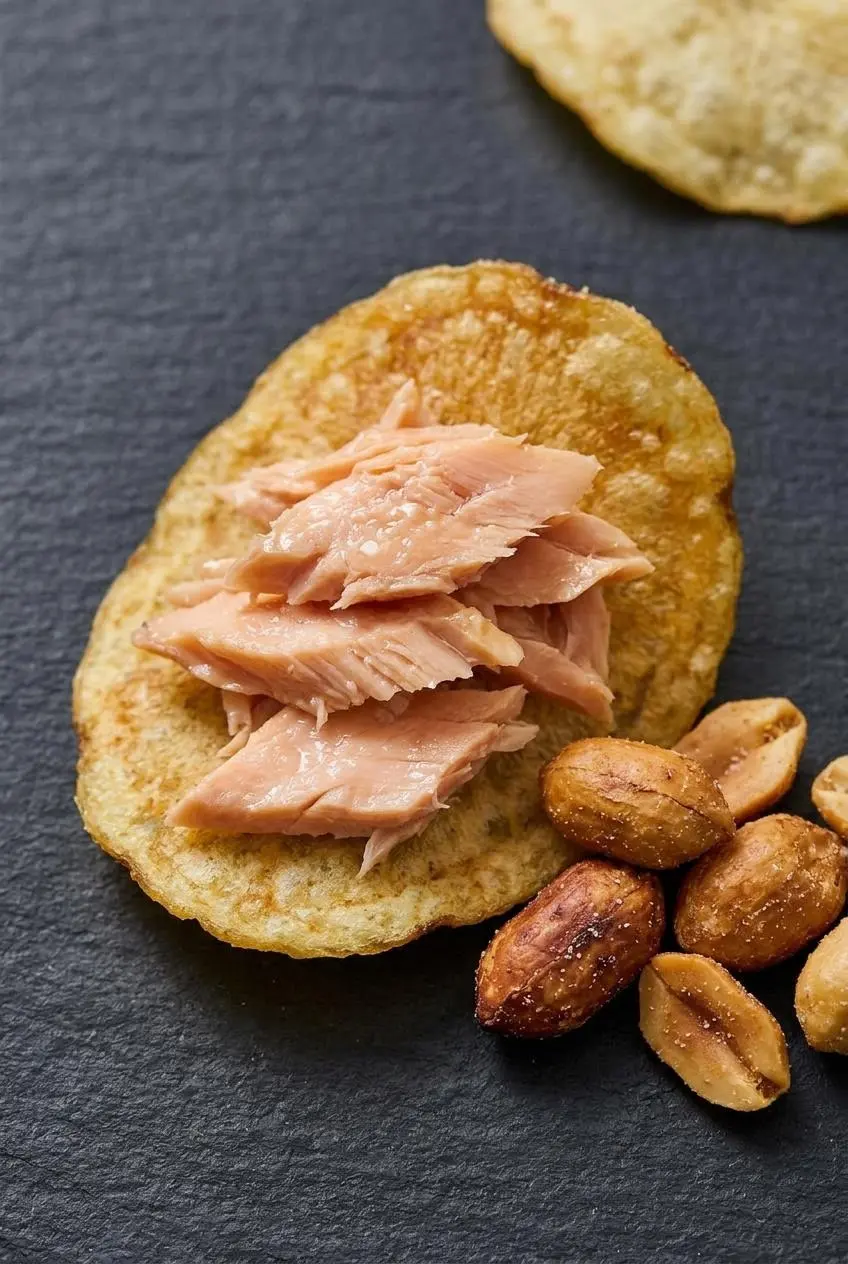
A seafood board really shines when every rich bite meets something crisp, fresh, or sharp. Without that contrast, the whole spread can start to feel oily halfway through.
Dill pickle potato chips bring thin, salty crackle. Dill pickle peanuts add a sturdier, earthy crunch that lasts longer on the palate. Crudites keep the board fresh and juicy, while pickles and olives bring the bright snap that resets your mouth between bites.
The key is variety in texture as much as flavor:
- Use toast for sturdy, composed bites.
- Use plain crackers for delicate toppings like salmon or oysters.
- Use chips and peanuts around the edges to add fast, snackable crunch.
- Use cucumbers, peppers, and tomatoes to lighten the board and keep it from feeling too salty.
If something tastes too salty, pair it with cucumber, lemon, or a creamy dip instead of adding more fish to the same bite. That small reset makes a huge difference.
Pro Tips for Serving Tinned Fish Elegantly
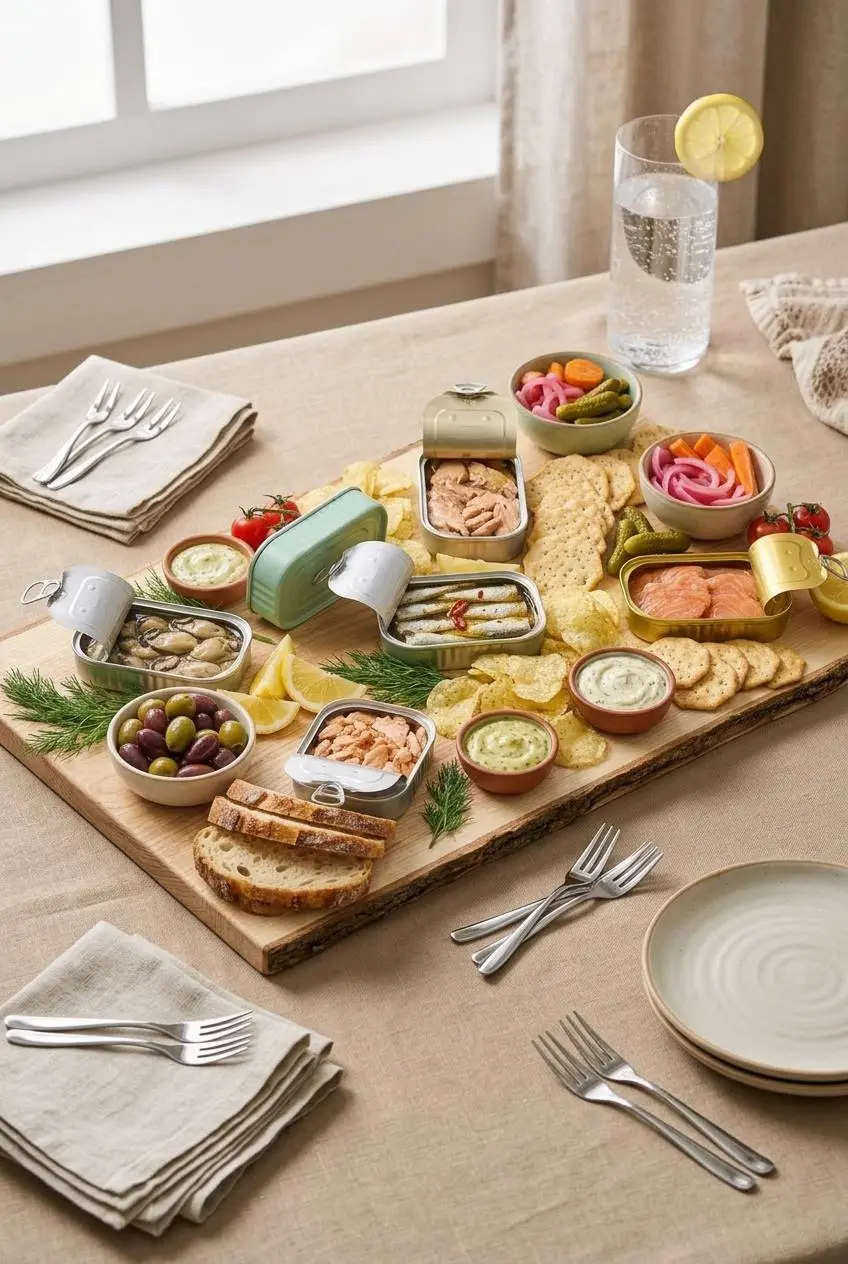
The little logistics matter here. A seafood board feels relaxed when guests can build neat bites without juggling oil, crackers, and slippery fish with their hands.
Set out seafood forks, cheese knives, and small spoons from the start. Ramekins keep dips from spreading, and cocktail napkins or wet wipes save everyone from shiny fingertips by the second round.
Use one utensil per tin if you can. That keeps flavors distinct and helps the smoked trout stay like smoked trout instead of turning into a sardine-and-pickle mash.
The flavorful oil left in the tins is worth keeping in play. Drizzle a little over the garlic-rubbed sourdough, or spoon it into a container and use it later to start a savory pasta sauce, warm beans, or a quick vinaigrette.
For drinks, crisp nonalcoholic sparkling water with lemon works beautifully, and a DIY Bloody Mary setup makes sense if you are serving this at brunch since the pickles and lemon slices already pull double duty. Dry, acidic white wines can also cut through the fish oils nicely if that suits the occasion.
Mediterranean and Regional Variations
This board is easy to adapt as long as the core balance stays the same: rich seafood, sturdy crunch, bright acid, and something creamy or fresh to round it out.
The Mediterranean Conservas Board is a natural variation. Keep the main structure, then swap the accents toward kalamata olives, marinated feta, cucumbers, pita bread, and hummus for a lighter, sunnier feel.
- For a Mediterranean direction, use hummus and pita with olives and cucumbers for a softer, earthier bite.
- For a Spanish-style conservas feel, think about paprika-forward seafood, olives, and extra pickled elements as optional add-ons.
- For parties where a shared board feels awkward, the same idea can be turned into individual charcuterie cups so each guest gets a compact mix of crunch, acid, and seafood.
Keep all of those as optional serving paths. The main board already has everything it needs.
Food Safety and Leftovers
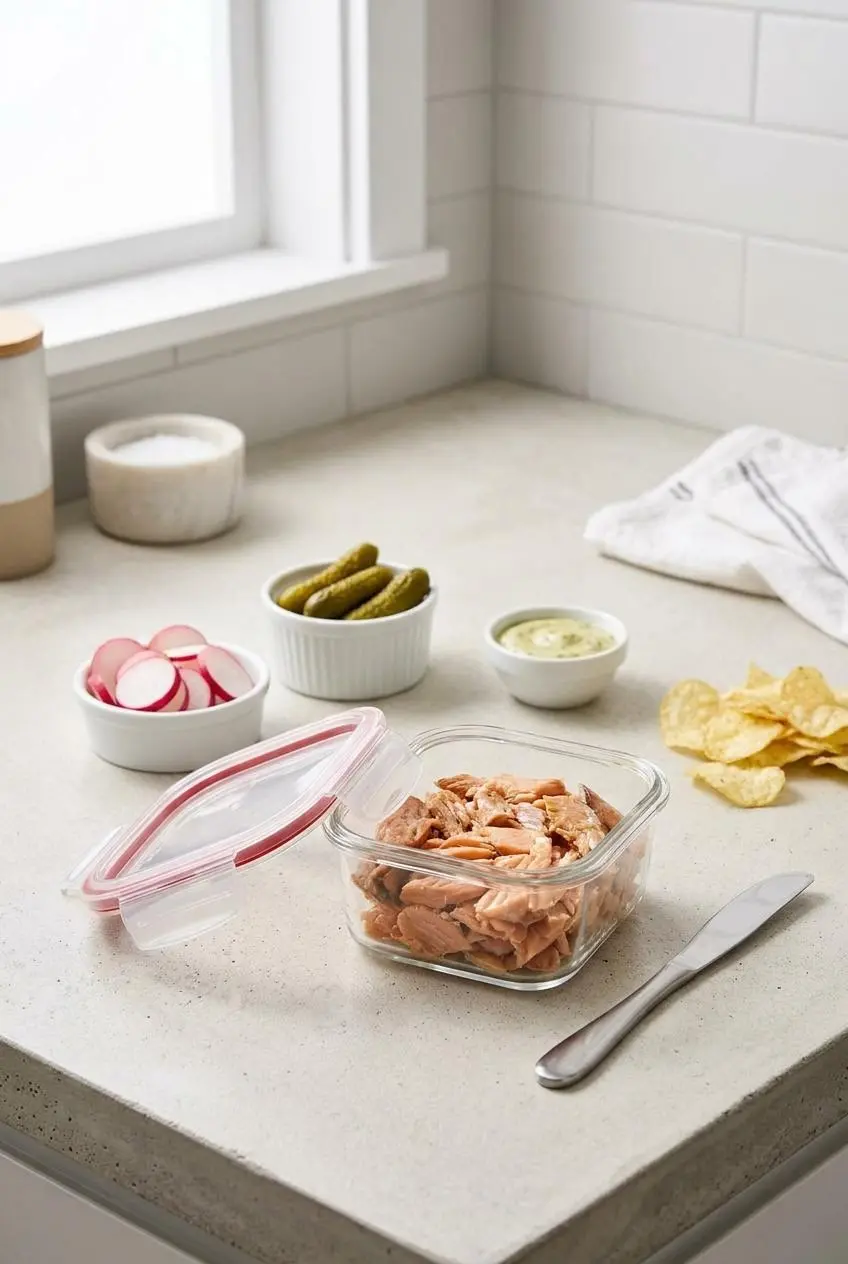
Once the tins are open, treat the seafood like any other ready-to-eat fish. Keep the board chilled as much as practical, avoid leaving opened seafood out too long, and move leftovers into clean airtight containers rather than storing them in the opened tins.
For a U.S. audience, safe handling and storage of fish and shellfish includes prompt refrigeration and careful storage after serving. If the board has been sitting out through a long party, it is better to be cautious with any remaining fish.
Store crunchy items separately so they stay crisp, and keep dips, vegetables, and seafood in their own containers. That preserves texture and prevents the fish oils from soaking into everything else in the fridge.
Conclusion
A great tinned fish board is really a balance game. Rich, smoky seafood needs bright pickles, sturdy toast, and plenty of crunch to feel lively and easy to keep eating.
Once you set the tins in the center and build outward with contrast, the whole thing comes together fast and looks far fancier than the effort suggests. Start with the garlic toast and you are already halfway there.
Frequently Asked Questions
What to Put on a Tinned Fish Charcuterie Board?
Choose 2 or 3 seafood tins with different textures, such as trout, sardines, oysters, or salmon. Add toasted sourdough or plain crackers so guests have sturdy bases for building bites. Include pickles, radishes or other crisp vegetables, lemon slices, and creamy dips for balance. Finish with fresh herbs and fruit for color and a lighter counterpoint.
How Do You Eat Tinned Fish From a Board?
Start with toast or a cracker as the base. Add a spread like dill pickle mayo or dill dip. Lay on a piece of fish, then top with something bright like a pickle or cucumber slice. Use a small fork or spoon so the fish stays intact and the oils stay off your fingers.
What Are the Best Crackers for Tinned Fish?
Plain water crackers are excellent because they stay neutral and crisp. Sea salt crackers work well when you want a little more flavor without crowding the fish. Toasted sourdough slices are best for heavier toppings like sardines or smoked trout. Avoid heavily seasoned crackers that compete with the seafood.
How Long Can Open Tinned Fish Sit Out?
Try not to leave opened tinned fish out longer than needed for serving. If the board has been out for a while, it is better to be cautious and refrigerate or discard leftovers promptly. Transfer leftover fish to a clean airtight container instead of storing it in the opened tin. Keep crunchy items separate so they do not absorb moisture and oil.
Tinned Fish Charcuterie Board

Equipment
- Large wooden serving board
- Small ramekins
- Cheese knives
- Seafood forks
Ingredients
Tinned Seafood
- Ekone smoked oysters
- Sardines in olive oil
- Fishwife smoked rainbow trout
- Smoked Atlantic salmon
Crunch and Contrast
- Sourdough bread slices
- Crackers
- Dill pickle potato chips
- Assorted crudites like bell peppers, cucumbers, and cherry tomatoes
- Fermented pickles, vegetables, and olives
- Carolina Peanut Factory Dill Pickle Peanuts
Finishing and Dips
- Ayoh! Dill Pickle Mayo
- Davis & Davis Dill Pickle Dip Mix
- Fresh fruit such as grapes, lemon slices, and fresh herbs for garnish
Instructions
Assembly
- Open the tins carefully and leave the lids partially attached where possible, then set them near the center of a large wooden serving board. The partly peeled lids make the board look polished and also help keep delicate fish pieces in place.
- Arrange small ramekins of dill pickle mayo and dill dip mix around the tins, leaving enough space for forks and cheese knives to rest comfortably. When the bowls are spaced evenly, the board looks organized and guests can reach condiments without knocking into the seafood.
- Toast the sourdough bread slices until crisp, then rub the warm surfaces lightly with fresh garlic halves before placing them on the board. The toast should look golden and shatter cleanly under a forkful of sardine instead of bending or turning soft.
- Add crackers, dill pickle potato chips, crudites, fermented pickles, vegetables, olives, and dill pickle peanuts around the anchors, filling open spots without piling everything too tightly. You want the board to look full and colorful, but each section should still be easy to grab from.
- Finish with fresh fruit such as grapes, lemon slices, and fresh herbs for garnish, then serve so everyone can build their own bites with bread, fish, pickles, and dips. The final board should have clear contrast in color, texture, and shape, with no soggy patches or crowded corners.