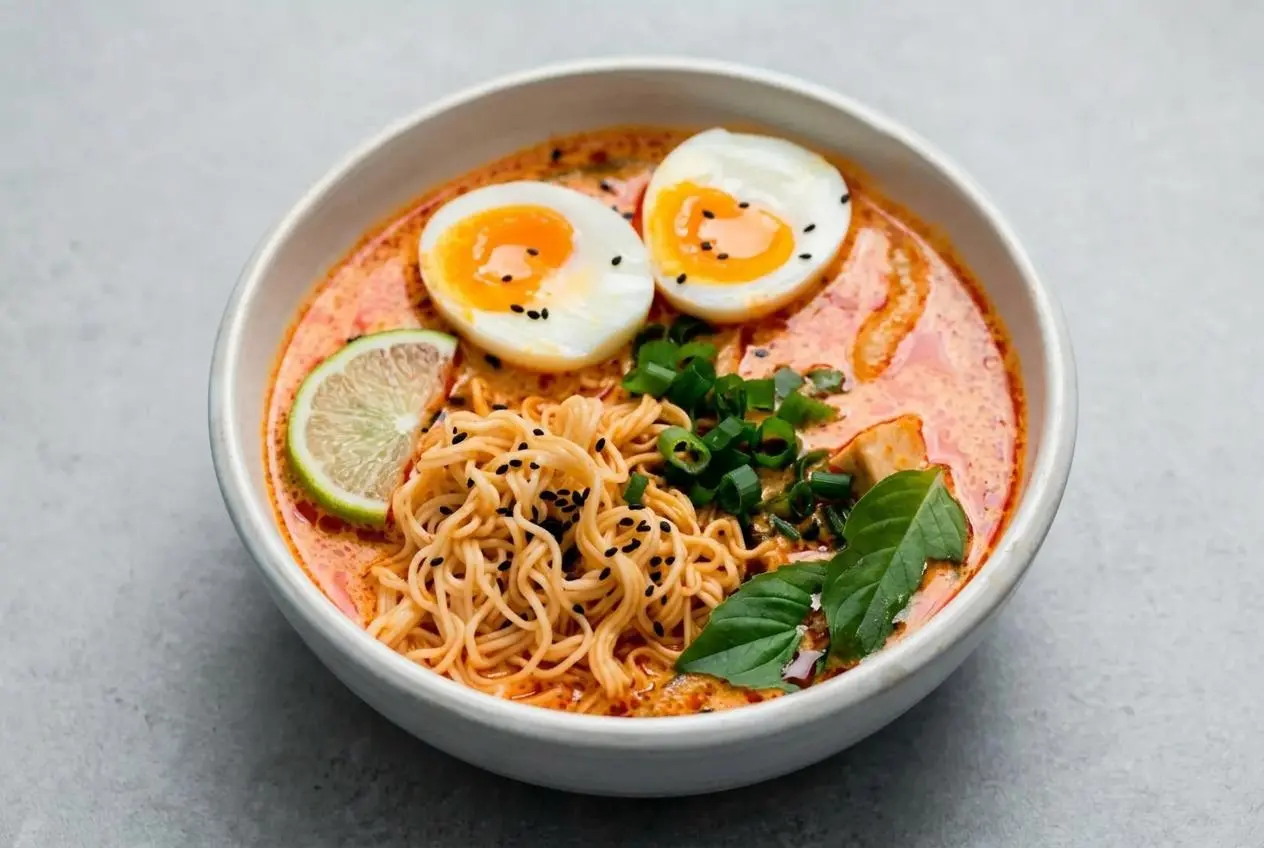
Thai red curry ramen is a fast, cozy noodle soup with chicken, mushrooms, and a creamy coconut broth that’s spicy, savory, and bright with lime, ready in about 30 minutes.
This bowl lands somewhere between weeknight shortcut and deeply comforting soup. You get tender chicken, fragrant aromatics, and a broth that tastes layered instead of rushed.
The best part is what happens when the curry paste hits the hot pan and turns darker and intensely fragrant. That smell is your first sign dinner is going very well.
Crush the lemongrass well with the back of your knife before it goes into the wok so the broth picks up more of its citrusy aroma.
Why You’ll Love This Thai Red Curry Ramen
- Fast enough for a weeknight: the full bowl comes together in about 30 minutes.
- Rich, creamy broth: coconut cream gives the soup body without making it feel too heavy.
- Big flavor: red curry paste, fish sauce, lime, and palm sugar create that classic balance of spicy, salty, sour, and lightly sweet.
- Easy to customize: you can change the noodles, protein, and toppings without losing the soul of the dish.
Key Ingredients for Thai Red Curry Ramen
Each ingredient pulls its weight here, building aroma, richness, brightness, texture, and the orange red color that makes the broth so inviting.
Ramen
- 1/4 cup olive oil
- 1 small yellow onion, finely chopped
- 8oz boneless skinless chicken thighs, cut into bite-sized pieces
- salt
- 4oz shiitake mushrooms, sliced
- 1 inch piece ginger, crushed
- 2 large cloves garlic, crushed
- 1 whole shallot, chopped
- 3 1-inch pieces lemongrass, crushed
- 2 tbsp red curry paste
- 1 cup coconut cream
- 4 cups chicken broth
- 1 tbsp lime juice
- 1 tsp lime zest
- 1 tbsp fish sauce
- 1 tbsp palm sugar
- 4oz Chinese wheat noodles
Garnish
- soft boiled egg, halved
- Thai basil
- green onions, chopped
- black sesame seeds
- lime slices
Chicken thighs work especially well because they stay tender in hot broth and bring more flavor than leaner cuts. Shiitakes add earthy depth, while fish sauce brings salty umami that makes the broth taste fuller almost instantly.
Palm sugar rounds out the heat and sharp edges without making the soup taste sugary. Lime juice and zest wake everything up at the end, so the broth tastes bright instead of flat.
I always take an extra few seconds to really bruise the lemongrass before adding it, because that small step gives the finished broth a much livelier aroma.
Choosing the Best Thai Red Curry Paste
The curry paste is the flavor base, so this choice matters more than any other shortcut or upgrade. If you enjoy exploring Thai flavors beyond this bowl, another Thai curry is worth trying too.
| Brand | Spice Level | Key Feature |
|---|---|---|
| Mae Ploy | Hot | Bold, authentic flavor with stronger chile heat |
| Thai Kitchen | Mild | Widely available and easy for a gentler bowl |
| Aroy-D | Medium | Balanced flavor and often a good vegan-friendly option |
If you are spice-sensitive, start with less paste and adjust the broth after it simmers. Some brands are dramatically hotter than others.
Coconut Cream vs. Coconut Milk
Coconut cream is thicker and richer, while coconut milk has more liquid and a lighter texture. For this ramen, coconut cream gives the broth a silkier body and helps the curry paste bloom properly.
If you use canned full-fat coconut milk instead, scoop in the thick cream from the top first and fry the paste in that. Light coconut milk tends to make the broth look paler and taste thinner.
What Noodles Are Best for Curry Ramen?
Chinese wheat noodles are the official choice here, and they hold up nicely in the broth. Fresh ramen noodles are also excellent if you want a springier bite.
Dry noodles work well too, but watch the timing closely so they do not soften too much. Instant ramen blocks are a very practical swap, and you should discard the seasoning packet since the broth already has plenty going on.
How to Make Thai Red Curry Ramen
This method moves quickly, so it helps to have the aromatics chopped and the broth ingredients ready before the wok gets hot.
- Set a large wok over medium-high heat and pour in the oil.
The oil should look fluid and shimmer lightly before you add anything else. - Add the chopped onion and cook for 2 to 3 minutes, stirring often.
It should start to soften and smell sweet without taking on much color. - Add the chicken with a generous pinch of salt and cook for 3 to 4 minutes with the onion.
The pieces should lose their raw look on the outside while still finishing in the broth. - Stir in the shiitake mushrooms, ginger, garlic, shallot, lemongrass, and red curry paste.
As the paste fries, it should become deeply fragrant and a shade darker. - Keep sautéing for 3 to 4 minutes, stirring so the paste coats everything well.
This blooming step builds a stronger broth and keeps the curry flavor from tasting flat. - Pour in the coconut cream and chicken broth, then stir to loosen any flavorful bits from the bottom of the wok.
The liquid should turn a vibrant orange-red as everything blends together. - Add the lime juice, lime zest, fish sauce, and palm sugar, then bring the broth to a boil.
You should see small droplets of chili oil on the surface and smell sweet citrus and spice together. - Add the noodles and cook for 3 minutes.
The noodles should be tender but still have some chew, not slumping into softness. - Take the wok off the heat and divide the ramen between 2 large bowls.
The chicken should be fully cooked through, and for safer handling it should reach 165°F as described in USDA poultry temperature guidance. - Finish each bowl with soft boiled egg, Thai basil, green onions, black sesame seeds, and lime slices.
The final bowl should look bright, glossy, and loaded with contrast from creamy broth to fresh herbs and crunchy seeds.
Tips for the Best Curry Ramen
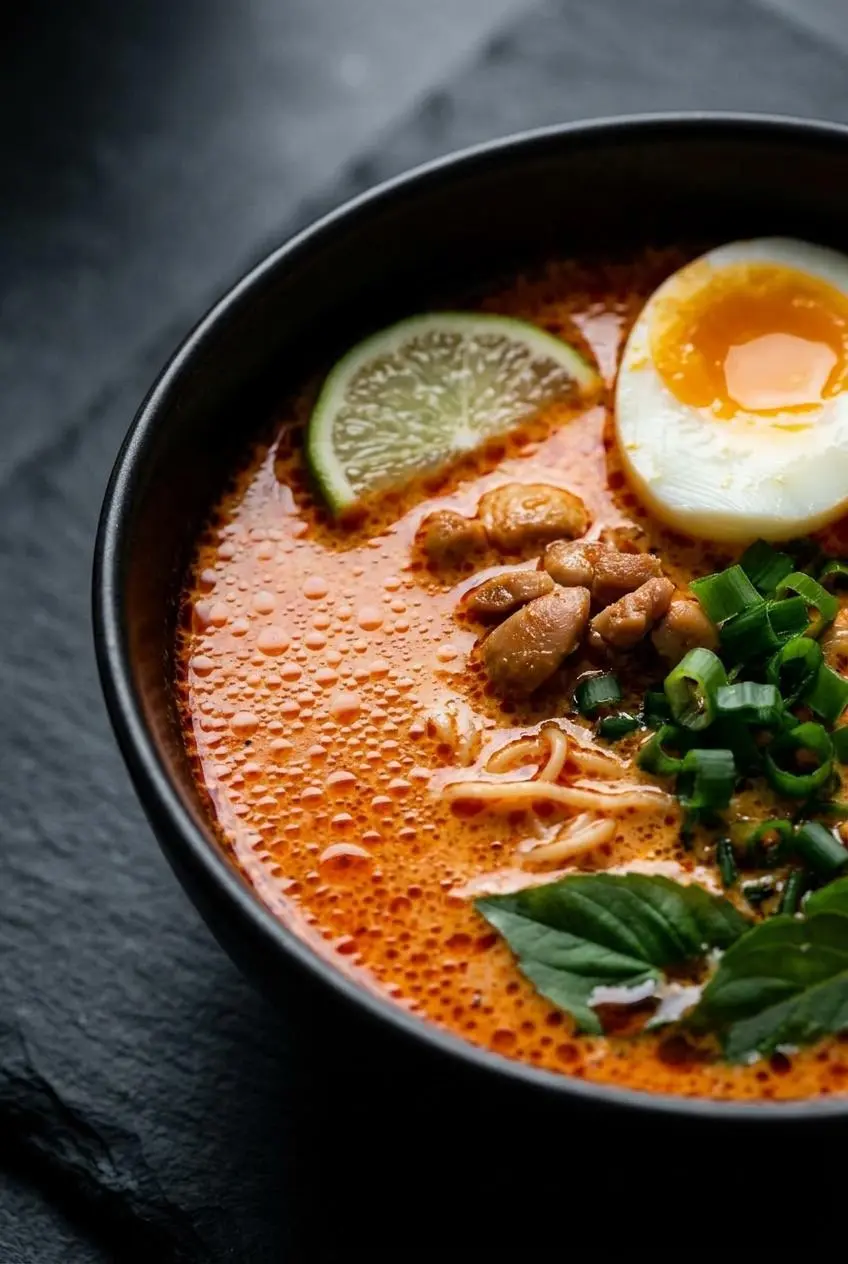
- Bloom the curry paste first: frying it in the hot wok before adding liquid deepens the flavor and makes the whole kitchen smell incredible.
- Use full-fat coconut cream or milk: this gives the broth the body it needs. Lighter versions can leave it watery.
- Taste for balance near the end: if the broth feels dull, it usually needs one of three things, a touch more fish sauce for salt, lime for brightness, or palm sugar to soften sharp heat.
- Watch the noodles closely: if you like a firmer texture, stop cooking as soon as they turn tender since they keep softening in the hot broth.
- Do not rush the aromatics: ginger, garlic, shallot, and lemongrass need a couple of minutes in the pan to flavor the oil and broth properly.
Recipe Variations to Try
The main version is built around chicken and Chinese wheat noodles, but this is also a very flexible bowl when you want to change the protein or speed things up.
Vegetarian & Vegan Thai Curry Ramen
For a plant-based version, swap the chicken broth for vegetable broth and replace the chicken with pan-fried firm tofu or extra mushrooms. Use soy sauce, tamari, or a vegan fish sauce alternative in place of fish sauce, then taste and adjust because the saltiness can vary.
If you use tofu, press it first and brown it in a pan until the edges are golden before adding it to the broth. That way it keeps its shape and brings some texture instead of disappearing into the soup. If you want another cozy plant-based dinner for a curry night, try this vegetarian chickpea curry.
Instant Pot Method
Use the Sauté function to cook the onion, chicken, and aromatics, then bloom the curry paste before adding the coconut cream, broth, and seasonings. Once the broth is in, pressure cook briefly just until the chicken and flavors come together.
Cook the noodles separately rather than in the pot. It keeps the texture better and gives you more control, especially if you plan to save extra broth.
Using Different Proteins
A few swaps work especially well, so this quick comparison makes them easier to choose.
| Protein | How to Use It | Result |
|---|---|---|
| Shrimp | Add near the end of cooking | Sweet, tender, and quick to finish |
| Tofu | Press and pan-fry before adding | Better texture and less crumbling |
| Rotisserie chicken | Stir in after the broth is hot | Fastest shortcut with solid flavor |
If you bought ramen noodles and end up wanting a totally different dinner later in the week, a ramen stir-fry is a smart change of pace.
Instant ramen blocks are also fair game here. Use the noodles only, skip the flavor packet, and add them at the end so they stay pleasantly chewy.
A Guide to Toppings
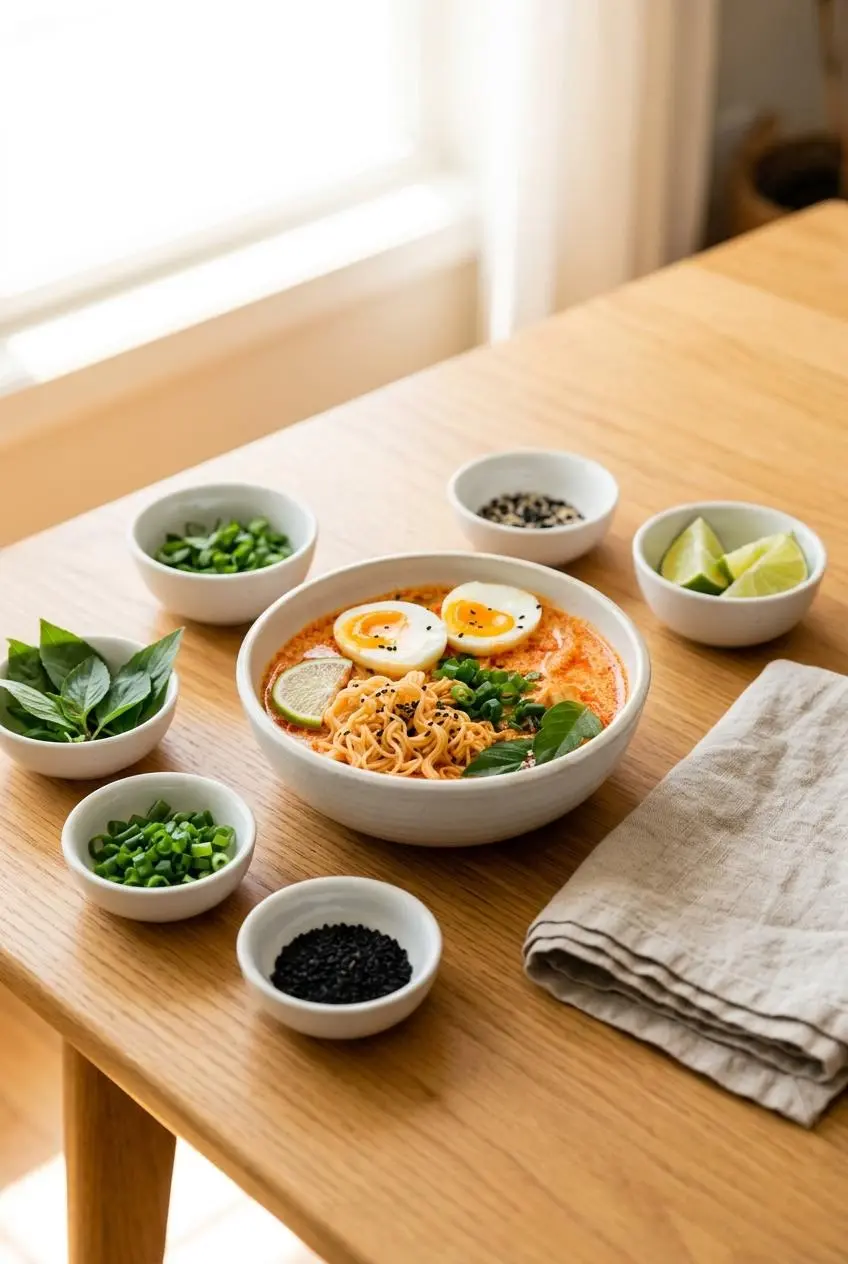
This is where the bowl really becomes your own. The classic finish here is soft boiled egg, Thai basil, green onions, black sesame seeds, and lime slices, and that combination already covers richness, freshness, crunch, and brightness.
If you like extra heat and texture, add a spoonful of crispy chili garlic oil right before serving. The crunchy bits and spicy oil are a serious upgrade for a creamy broth.
A simple toppings bar works well if everyone wants to build their own bowl. For a full Thai flavored dinner, Thai chicken lettuce wraps make an easy side.
| Topping Group | Options | What It Adds |
|---|---|---|
| Fresh Herbs | Thai basil, cilantro, mint | Freshness and aroma |
| Crunch | Crispy fried shallots, sesame seeds, chopped peanuts | Texture and contrast |
| Richness | Jammy soft-boiled egg, swirl of coconut cream | Body and comfort |
| Heat & Acidity | Sriracha, chili oil, fresh lime wedges | Lift and sharper flavor |
Storage and Reheating
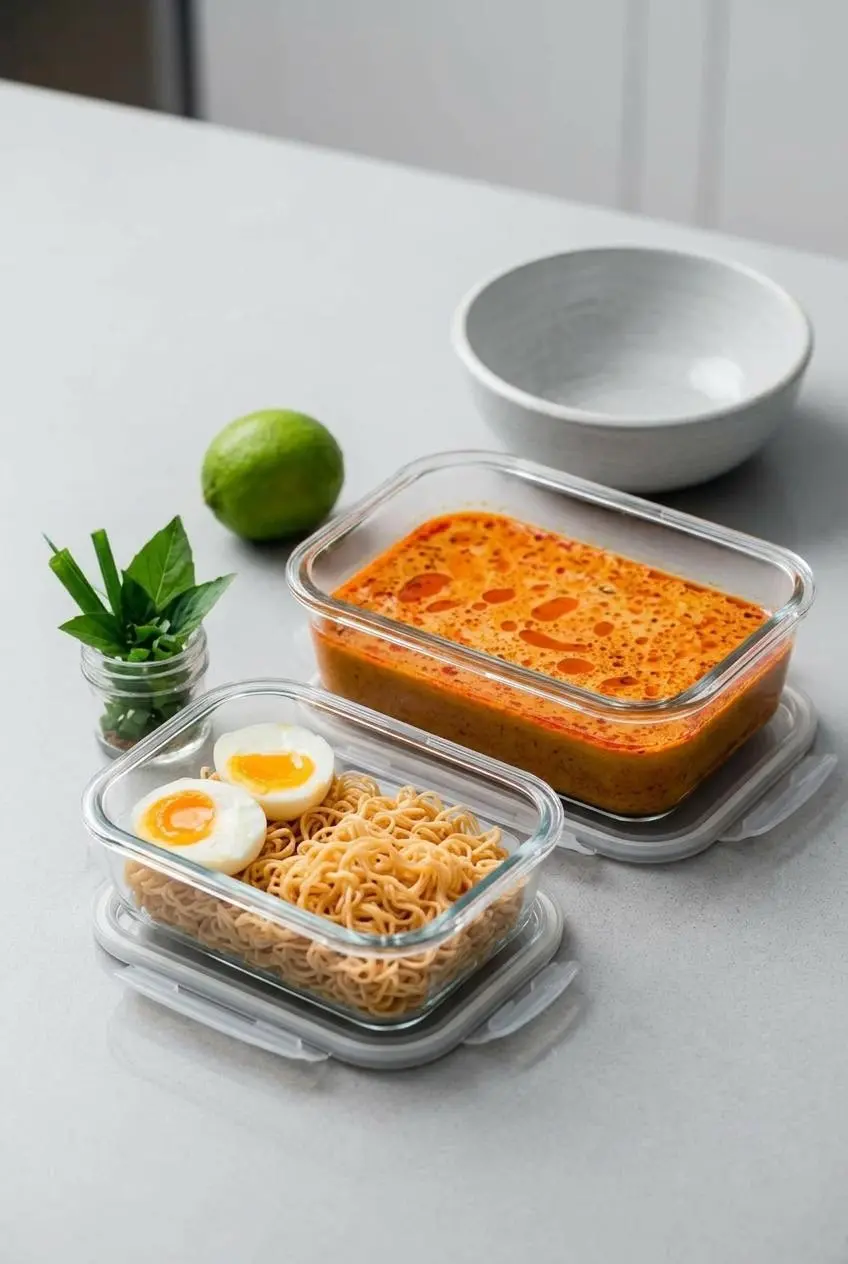
If you expect leftovers, the best move is to keep the broth and noodles in separate airtight containers once cooled. That helps protect the noodle texture and keeps the broth from disappearing into them.
You can also make the broth ahead, chill it, and cook fresh noodles when you are ready to eat. Reheat the broth gently on the stove until hot, then add the noodles to the bowl rather than simmering them for long in the pot.
For leftover chicken ramen, refrigerate it promptly after cooking as part of safer handling, as covered in USDA leftovers and food safety guidance. Fresh herbs, lime, and sesame seeds are best added right before serving.
Troubleshooting Common Issues
Most problems here are easy to fix once you know what caused them.
| Problem | Likely Cause | Fix |
|---|---|---|
| Broth is too thin | Light coconut milk or too much liquid for the amount of curry base | Use coconut cream next time, or whisk in a small cornstarch slurry while the broth simmers |
| Broth tastes bland | Curry paste was not bloomed long enough or the final balance is off | Add a bit more fish sauce, lime juice, or palm sugar until the broth tastes lively |
| Noodles are mushy | They cooked too long in the broth or sat in it too long after cooking | Cook noodles separately or add them at the last minute and serve right away |
If you love creamy noodle bowls in general, creamy chicken ramen is another comforting option with a completely different flavor direction.
Conclusion
This is the kind of dinner that feels special without asking much from you. The broth is creamy, spicy, fragrant, and bright, and it comes together fast enough for a busy night.
If you remember one thing, make it this: fry the curry paste before adding the liquids. That single step gives the whole bowl its depth, and it makes the first spoonful much more satisfying.
Frequently Asked Questions (FAQ)
What Brand of Red Curry Paste Is Best for Ramen?
Mae Ploy is a great pick if you want stronger, more authentic heat. Thai Kitchen is milder and easier to find in many U.S. stores. Aroy-D is another solid option and is often suitable for vegan cooking, though labels can change.
How Can I Make My Curry Broth Creamier?
Use full-fat canned coconut milk or coconut cream, and make sure to include the thick cream from the top of the can. For an even richer finish, swirl in a little extra coconut cream right before serving.
My Noodles Got Mushy, What Did I Do Wrong?
They likely spent too long in the hot broth. For better texture, cook the noodles separately or add them only at the very end, then serve the bowls right away. Leftover noodles should stay separate from the broth when possible.
Can I Use Something Other Than Fish Sauce?
Yes. Soy sauce, tamari, or a vegan fish sauce alternative all work. Start with a little less than you think you need, then taste and adjust since each one brings a different level of salt and depth.
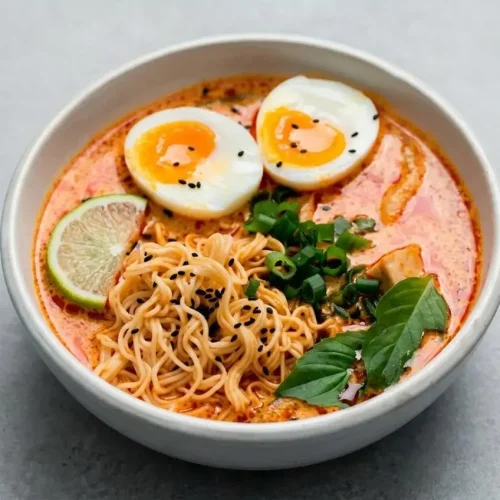
Thai Red Curry Ramen

Equipment
- wok
Ingredients
Ramen
- 1/4 cup olive oil
- 1 small yellow onion, finely chopped
- 8 oz boneless skinless chicken thighs, cut into bite-sized pieces
- salt
- 4 oz shiitake mushrooms, sliced
- 1 inch piece ginger, crushed
- 2 large cloves garlic, crushed
- 1 whole shallot, chopped
- 3 1-inch pieces lemongrass, crushed
- 2 tbsp red curry paste
- 1 cup coconut cream
- 4 cups chicken broth
- 1 tbsp lime juice
- 1 tsp lime zest
- 1 tbsp fish sauce
- 1 tbsp palm sugar
- 4 oz Chinese wheat noodles
Garnish
- soft boiled egg, halved
- Thai basil
- green onions, chopped
- black sesame seeds
- lime slices
Instructions
- Set a large wok over medium-high heat and pour in the oil. The oil should look fluid and shimmer lightly before you add anything else.
- Add the chopped onion and cook for 2 to 3 minutes, stirring often. It should start to soften and smell sweet without taking on much color.
- Add the chicken with a generous pinch of salt and cook for 3 to 4 minutes with the onion. The pieces should lose their raw look on the outside while still finishing in the broth.
- Stir in the shiitake mushrooms, ginger, garlic, shallot, lemongrass, and red curry paste. As the paste fries, it should become deeply fragrant and a shade darker.
- Keep sautéing for 3 to 4 minutes, stirring so the paste coats everything well. This blooming step builds a stronger broth and keeps the curry flavor from tasting flat.
- Pour in the coconut cream and chicken broth, then stir to loosen any flavorful bits from the bottom of the wok. The liquid should turn a vibrant orange-red as everything blends together.
- Add the lime juice, lime zest, fish sauce, and palm sugar, then bring the broth to a boil. You should see small droplets of chili oil on the surface and smell sweet citrus and spice together.
- Add the noodles and cook for 3 minutes. The noodles should be tender but still have some chew, not slumping into softness.
- Take the wok off the heat and divide the ramen between 2 large bowls. The chicken should be fully cooked through, and for safer handling it should reach 165°F as described in USDA poultry temperature guidance.
- Finish each bowl with soft boiled egg, Thai basil, green onions, black sesame seeds, and lime slices. The final bowl should look bright, glossy, and loaded with contrast from creamy broth to fresh herbs and crunchy seeds.