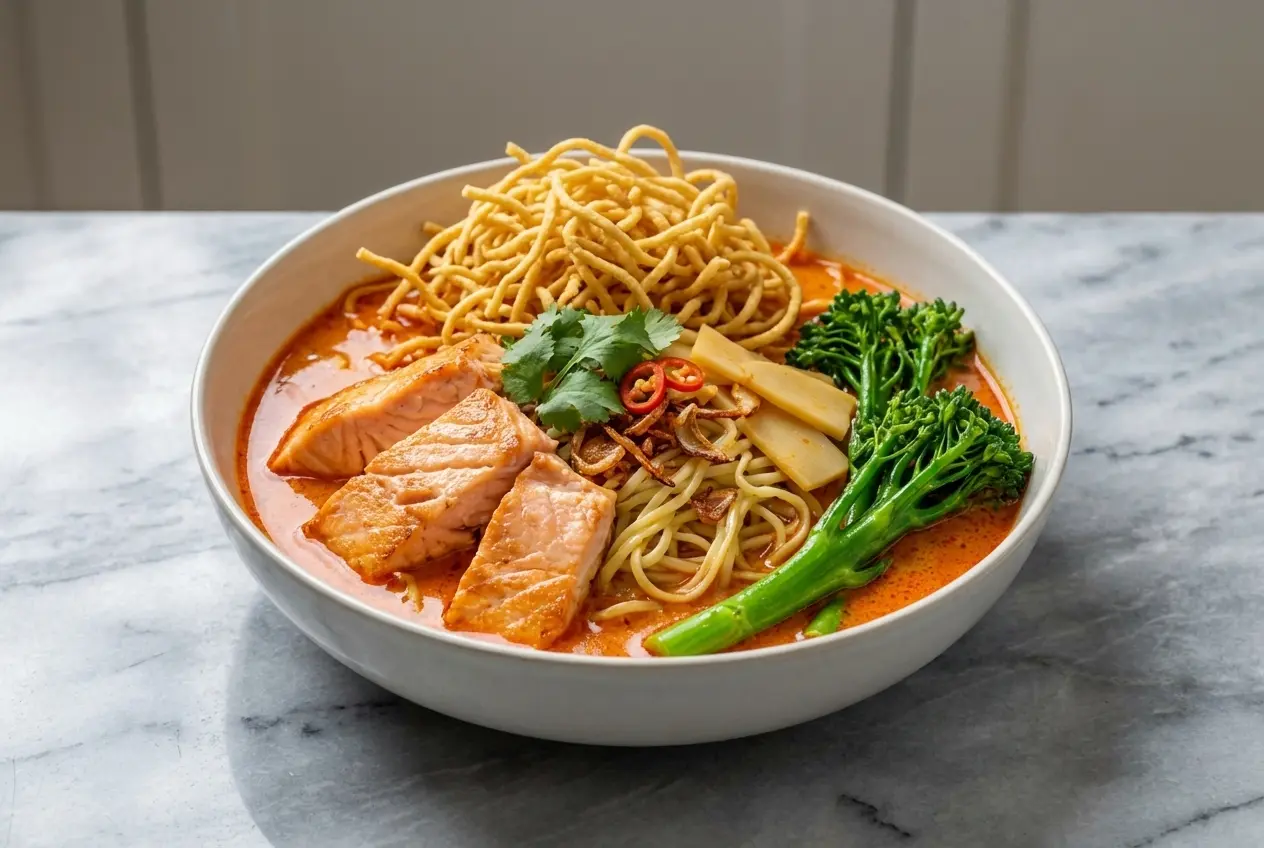
There is something about a steaming bowl of Thai noodle soup that feels like the best kind of weeknight rescue, fragrant, lively, and just a little bit dramatic when it hits the table. In my kitchen, Thai Red Curry Noodle Soup is the sort of meal I make when I want takeout flavor with better texture, fresher toppings, and that cozy restaurant feel without leaving the house.
This version is built for home cooks who want a creamy broth, tender salmon, and noodles that stay silky instead of turning soft and swollen. The little trick that makes it memorable is the crispy double-noodle finish, a handful of fried noodles on top that crackle against the rich Coconut Milk broth like something you would get from a really good noodle shop.
Why You’ll Love This Thai Red Curry Noodle Soup
The double-noodle crunch: I discovered that frying a small portion of the cooked egg noodles gives the bowl the kind of contrast people remember. You get soft, slurpable noodles underneath and a golden, brittle topping that shatters beautifully with every bite.
Deep, bold flavor: When Thai Red Curry Paste is bloomed properly, the broth tastes layered instead of one-note. Add pan-seared salmon and Fish Sauce, and the whole pot develops that savory, almost addictive umami depth.
Better than takeout texture: In my kitchen, the biggest win is keeping the noodles separate from the broth until serving. That one habit keeps the soup glossy and clean tasting, never cloudy or gummy.
A full sensory payoff: The steam smells of Shallots and warm spice, the broth turns a gorgeous sunset red, and the finish is creamy, spicy, savory, and bright all at once. If you enjoy the comfort of a good Thai chicken curry, this salmon version brings the same cozy spirit with a richer, silkier feel.
Ingredients and Substitutions
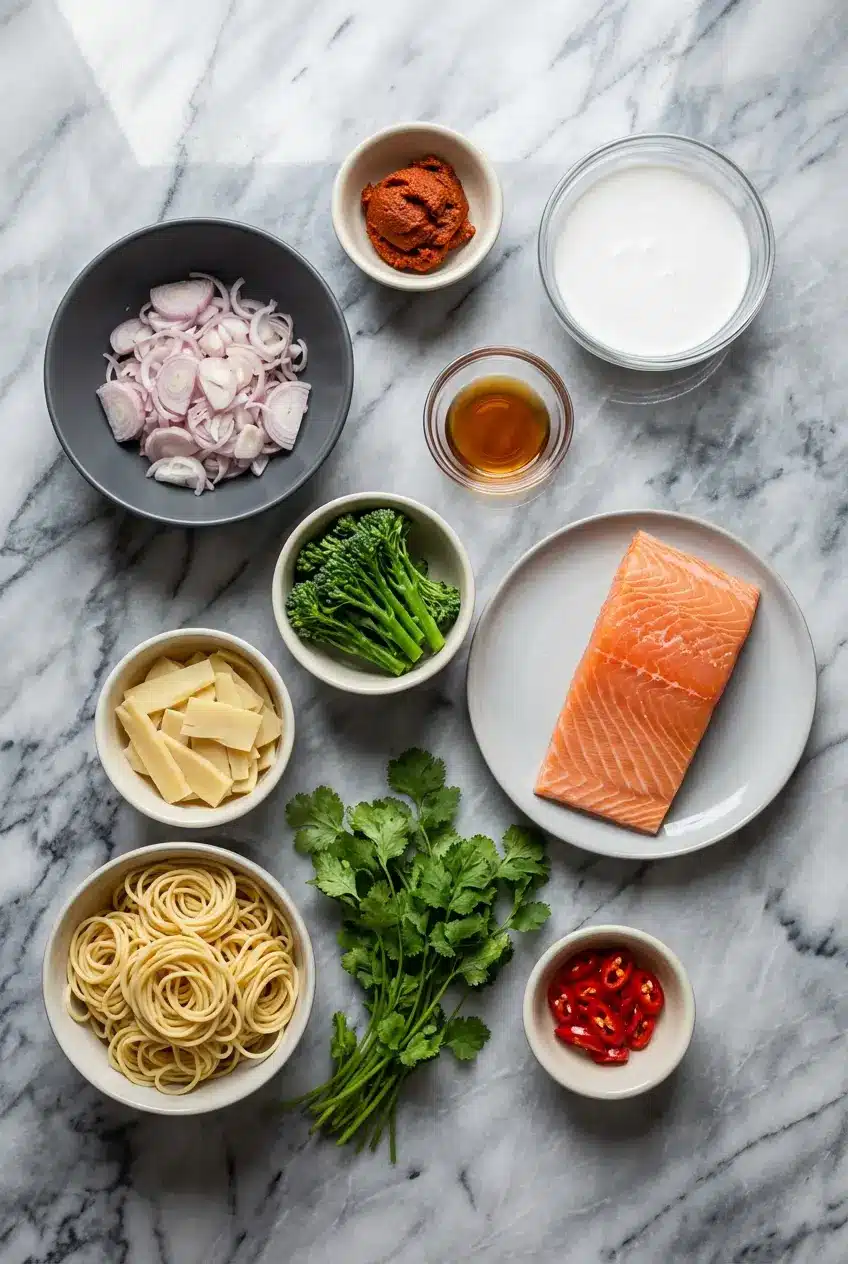
A short ingredient list does all the heavy lifting here, from the aromatic curry base to the fresh toppings that wake up every bowl.
Ingredients
For the crispy shallots:
- 1 cup of shallots, finely sliced
- 1 cup of oil, for frying
For the curry noodle soup:
- 1 tbsp of red curry paste
- 1 can of coconut milk (14oz/400g)
- 2 tbsp of fish sauce
- 1 cup of broccolini stems
- 1 can of bamboo shoot slices (7oz/200g), drained
- 11 oz of salmon fillet, skin off
- 11 oz of egg noodles
- 1 bunch of cilantro, for garnish
- 1 Thai chilli, sliced for garnish
Ingredient Notes & Substitutions
Red curry paste: A good paste makes all the difference, and I usually reach for Maesri or Aroy-D because they taste more rounded and less harshly salty than many grocery store brands. These pastes often include aromatics such as lemongrass, galangal, and kaffir lime leaves, which is where that true Thai depth begins.
Coconut milk: Full-fat canned Coconut Milk gives the broth its velvety body and that luscious restaurant-style finish. Carton coconut milk or lite versions tend to make the soup thinner and less satisfying.
Egg noodles: This recipe uses egg noodles for a Khao Soi-style feel, especially because they fry up so well for the crispy topping. If you need a different texture, rice noodles can work in the broth, but they will not give you quite the same crunchy finish on top.
Salmon: Salmon brings richness and a beautifully crisp edge when seared in shallot oil. If you want a different protein, chicken works nicely, and for a vegetarian bowl, pressed tofu or chickpeas are both good options, just be sure to press the tofu for at least 15 minutes so it can brown instead of steam.
Fish sauce: Fish Sauce adds salty depth that is hard to fake, but if you avoid it, soy sauce or coconut aminos with a small pinch of salt can stand in. I add these gradually, because commercial curry pastes vary a lot in sodium.
Fresh garnishes: Cilantro and Thai chilli wake up the creamy broth right at the end. If you love an anise-like finish, Thai Basil is a beautiful swap, and a squeeze of lime just before serving makes the whole bowl taste lighter and brighter.
How to Make Thai Red Curry Noodle Soup
Prepare the crispy shallots
- Pour the oil into a pan and warm it until it is hot but not smoking. Slide in the sliced shallots and let them cook gently, stirring now and then, until they turn evenly browned and crisp with a sweet, toasty aroma, taking care not to let them tip into bitterness.
- Scoop the shallots out with a sieve, keeping the oil for later, then spread them over paper towels. As they cool, they will firm up into delicate, crunchy bits that are worth every extra minute.
Build the curry broth and cook the noodles
- In a large pan or wok, heat 2 tbsp of the reserved shallot oil over medium heat. Add the red curry paste along with half of the coconut milk, bring it to a gentle simmer, and cook for 3 to 4 minutes until the mixture smells deeply fragrant and you can see the red oil beginning to separate from the paste.
- Pour in the remaining coconut milk, the fish sauce, and 3 cups of water. Bring the broth to a boil, then lower the heat and let it simmer for 5 minutes so the flavors settle into each other without becoming heavy.
- Meanwhile, cook the egg noodles in a separate pot according to the package directions. Drain them well, rinse under cold water to stop the cooking, and set them aside so they stay springy and do not shed starch into the soup.
Sear the salmon and finish the soup
- Heat another 2 tbsp of the shallot oil in a non-stick frying pan. Cook the salmon for 1 to 2 minutes on each side, just until the outside is browned and lightly crisp while the inside stays tender and moist, then move it to a plate.
- Bring the curry broth back to a simmer and add the broccolini stems and bamboo shoots. Cook them for 2 minutes, just long enough for the vegetables to turn tender-crisp while keeping their fresh bite.
Assemble the bowls
- Place the cooked noodles in a sieve and pour boiling water over them to warm and loosen them. Divide the noodles among serving bowls so they are hot and ready for the broth.
- Ladle the hot curry broth, broccolini, and bamboo shoots over the noodles. Flake the salmon into large pieces over the top, then finish generously with the crispy shallots, fresh cilantro, and sliced Thai chilli before serving right away.
Secrets for Restaurant-Quality Curry Soup
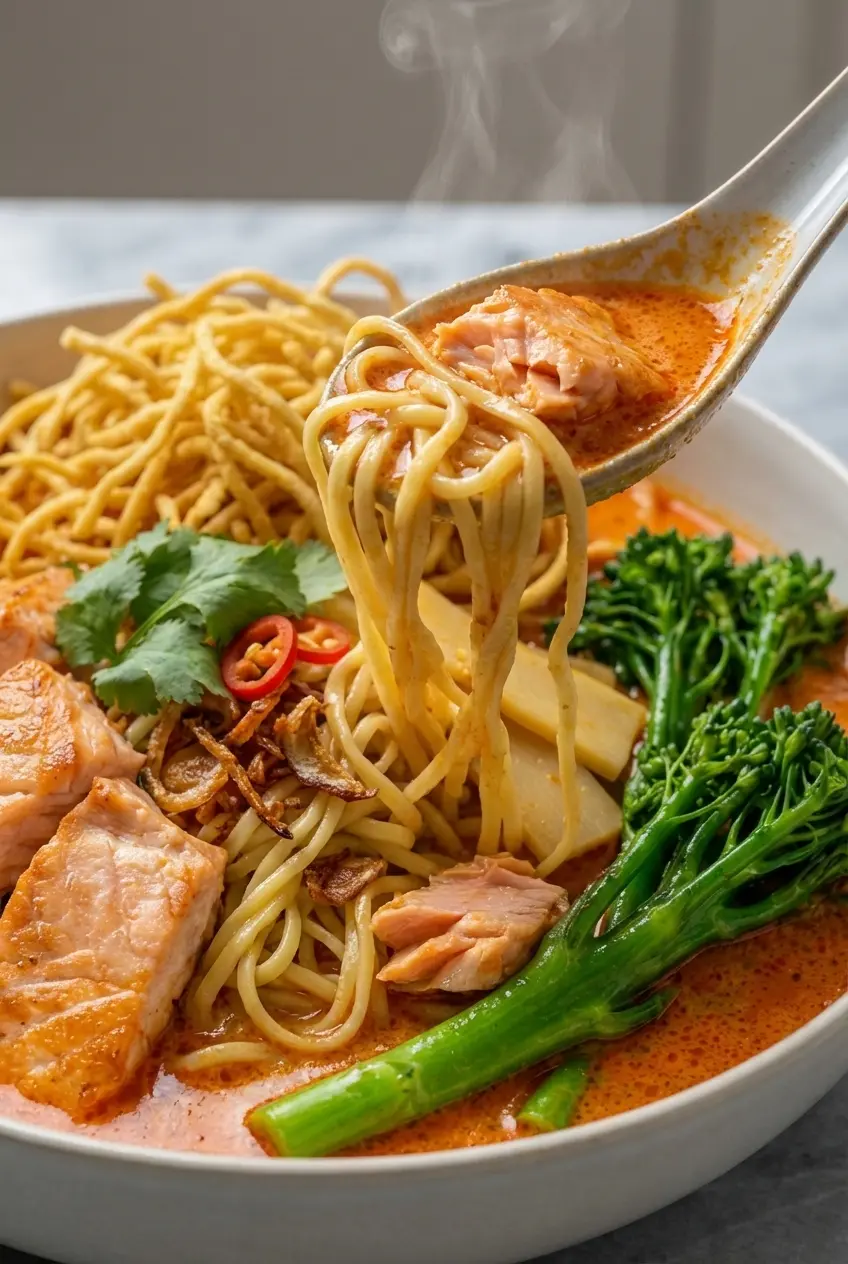
The most important step is blooming the curry paste in fat before the broth is fully diluted. When the paste cooks with shallot oil and part of the coconut milk, the fat-soluble flavors open up, the raw edge disappears, and the soup tastes deeper and rounder instead of sharp and unfinished.
I also keep the heat gentle once the broth is built. A hard boil after adding all the Coconut Milk can make the soup look split and slightly greasy, while a calm simmer keeps it silky and cohesive.
Balance matters as much as technique. If your curry paste tastes extra fiery or a little aggressive, a pinch of palm sugar can soften the edges, while extra fresh chili can lift the heat for people who like a bolder bowl.
Commercial pastes and broths can vary a lot in saltiness, so I prefer building this soup with water unless I know exactly how seasoned my base is. That gives me more control over the final broth, especially once the Fish Sauce goes in.
The Science of Perfect Noodle Texture
Noodles and broth are happiest when they are cooked separately. If you simmer noodles directly in the soup, they release starch into the liquid, turning the broth cloudy and thick while the noodles continue to soften far past their best point.
That is why I cook the egg noodles on their own, rinse them cold, and only reheat them right before serving. The same principle applies across soup bowls, and if you have ever worked with chicken ramen noodles, you already know how quickly great texture can disappear when noodles sit too long in hot liquid.
For leftovers, separate storage is not optional, it is the secret. Keep the broth in one container and the noodles in another, because overnight the noodles will drink up the curry and lose their pleasant chew.
Mastering Thai Red Curry Paste Customization
Not all red curry pastes behave the same way, even when the jar labels look similar. Some are heavy on salt, some lean hotter, and some bring more lemongrass, galangal, or kaffir lime leaves to the front, so I always taste the broth before making final adjustments.
If you want a milder soup, reduce the bite with a little palm sugar and keep the garnish chili light. If you want more punch, stir in extra sliced fresh chilies at the end rather than overloading the broth too early, which can flatten the other flavors.
For sodium control, water is often the smartest liquid base because it lets the curry paste, Fish Sauce, and coconut milk speak clearly without stacking salt on salt. If you do use broth, a low-sodium version keeps the seasoning easier to manage.
Pro Tips & Troubleshooting
Pro Tips
- Bloom the curry paste in oil and coconut milk until the red oil starts to separate. That is the moment the broth begins to taste full and aromatic rather than raw.
- Use full-fat canned coconut milk for the richest texture and the glossiest finish in the bowl.
- Add a squeeze of fresh lime juice right before serving. It cuts through the richness and makes the spices feel brighter.
- If you are making a vegetarian version, press tofu well before cooking so it crisps instead of releasing water into the pan.
Common Mistakes to Avoid
- Cooking the noodles in the broth is the fastest way to end up with a cloudy soup and soft, bloated noodles.
- Skipping the blooming step leaves the Thai Red Curry Paste tasting flat and unfinished, no matter how good the garnish is.
- Boiling the soup too aggressively after the coconut milk goes in can make the broth look curdled and a little greasy.
- Letting the salmon sit too long in the hot broth can dry it out, so I prefer flaking it over the bowls just before serving.
Serving & Storage
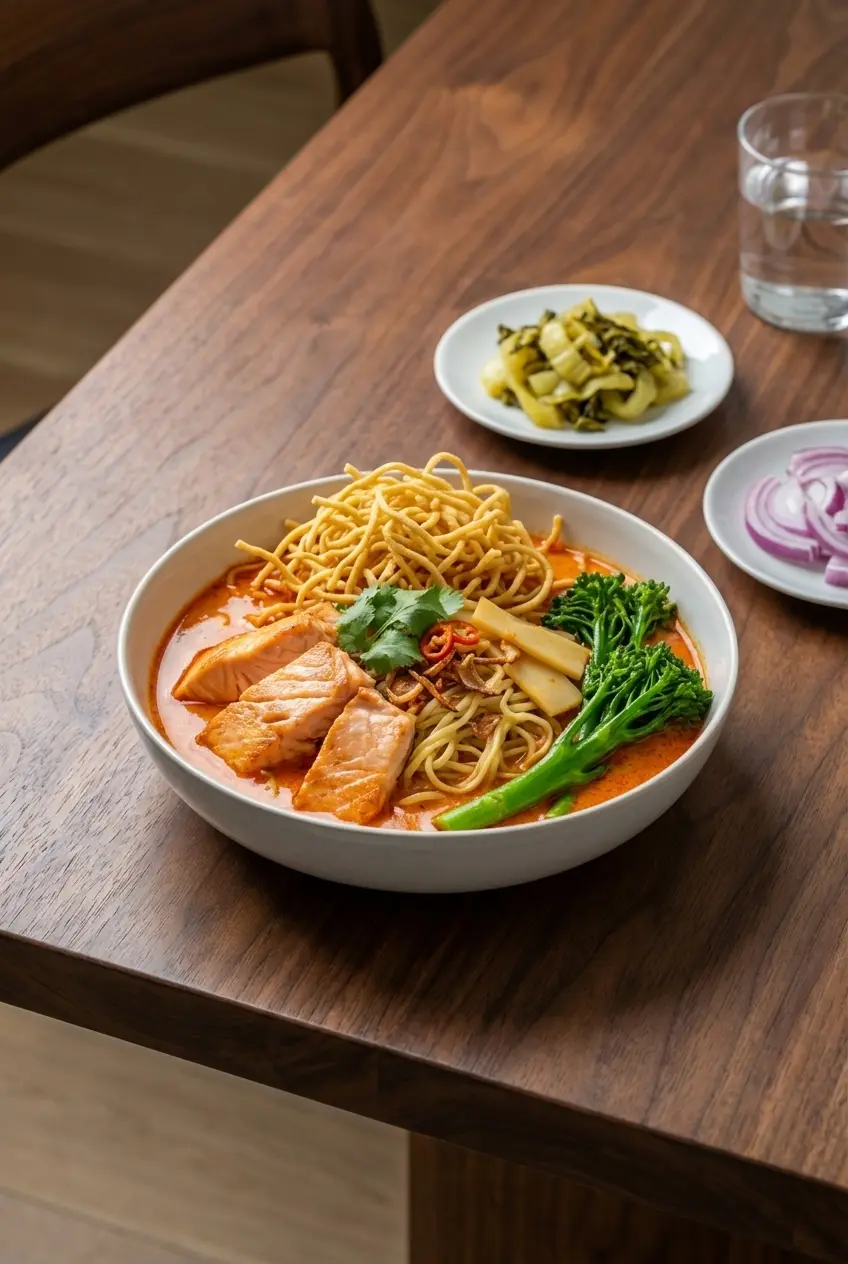
Serving Ideas
This soup loves bold, fresh toppings. I often add Thai Basil for its sweet anise aroma, and a jammy 6-minute egg if I want the bowl to feel even more generous.
For a Northern Thai mood, a little plate of pickled mustard greens and raw red onion on the side makes every bite brighter. If you want a lighter starter before the rich curry broth, chicken lettuce wraps fit beautifully because they bring crunch and freshness without competing with the soup.
If you are building out a fuller dinner spread, a simple side of air fryer rice works surprisingly well for guests with bigger appetites. I keep the portion small, though, because the noodles and coconut broth already make this dish feel quite satisfying.
Storage & Reheating
Store the broth and noodles in separate containers in the fridge for up to 3 days. That one step keeps the noodles from soaking up the liquid and losing their bounce overnight.
The curry base freezes well, but the noodles and vegetables do not hold up nearly as nicely. If I am planning ahead, I freeze only the broth, then cook fresh noodles and add vegetables when reheating.
To reheat, warm the broth gently on the stovetop until hot and fragrant. Refresh cold noodles by dipping them into boiling water for about 30 seconds, then drain and assemble the bowls with fresh garnishes.
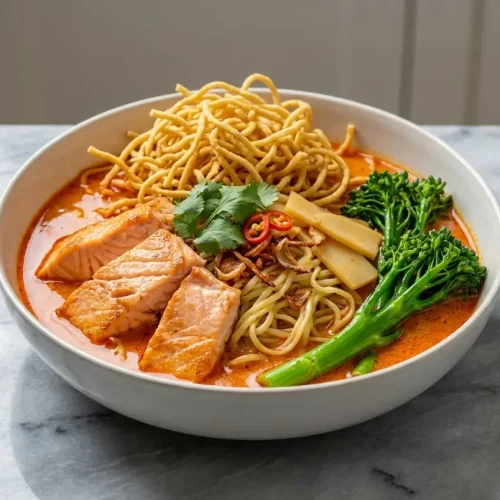
Thai Red Curry Noodle Soup

Equipment
- Large pan or wok
- Non-stick frying pan
- Sieve or slotted spoon
Ingredients
For the crispy shallots:
- 1 cup shallots, finely sliced
- 1 cup oil, for frying
For the curry noodle soup:
- 1 tbsp red curry paste
- 1 can coconut milk (14oz/400g)
- 2 tbsp fish sauce
- 1 cup broccolini stems
- 1 can bamboo shoot slices (7oz/200g), drained
- 11 oz salmon fillet, skin off
- 11 oz egg noodles
- 1 bunch cilantro, for garnish
- 1 Thai chilli, sliced for garnish
Instructions
Prepare the crispy shallots
- Heat the oil in a pan until hot. Add the sliced shallots and fry gently, stirring occasionally, until they turn golden brown and crisp, then remove with a sieve and drain on paper towels.
Build the curry broth and cook the noodles
- In a large pan or wok, heat 2 tablespoons of the reserved shallot oil. Add the red curry paste and half of the coconut milk, simmering for 3 to 4 minutes until the red oil separates and the mixture is fragrant.
- Pour in the rest of the coconut milk, fish sauce, and 3 cups of water. Bring to a boil, then reduce heat and simmer for 5 minutes.
- Cook the egg noodles in a separate pot according to package instructions. Drain and rinse under cold water to keep them firm and prevent sticking.
Sear the salmon and finish the soup
- Heat 2 more tablespoons of shallot oil in a non-stick pan. Cook the salmon for 1 to 2 minutes on each side until seared but tender inside, then set aside on a plate.
- Bring the broth back to a simmer and stir in the broccolini and bamboo shoots. Cook for 2 minutes until the vegetables are tender but still have a bite.
Assemble the bowls
- Loosen the noodles by pouring boiling water over them in a sieve, then divide among serving bowls.
- Ladle the hot broth and vegetables over the noodles. Flake the salmon over the top and garnish with plenty of crispy shallots, fresh cilantro, and sliced chilli.
Notes
Conclusion
This is the kind of bowl that proves a few smart techniques can turn a simple dinner into something special. The creamy broth, crisp-edged salmon, and that irresistible double-noodle crunch bring real restaurant energy to a home kitchen.
If you give it a try, do not be afraid to tweak the heat, swap the herbs, or add a little lime at the end until it tastes exactly right to you. Sometimes the extra handful of crispy noodles is the smallest step with the biggest payoff.
Frequently Asked Questions
How do I prevent my noodles from getting mushy?
What can I use as a substitute for fish sauce?
Which brand of red curry paste is the most authentic?
Can I freeze the curry soup base?
How do I thicken the curry broth without flour?