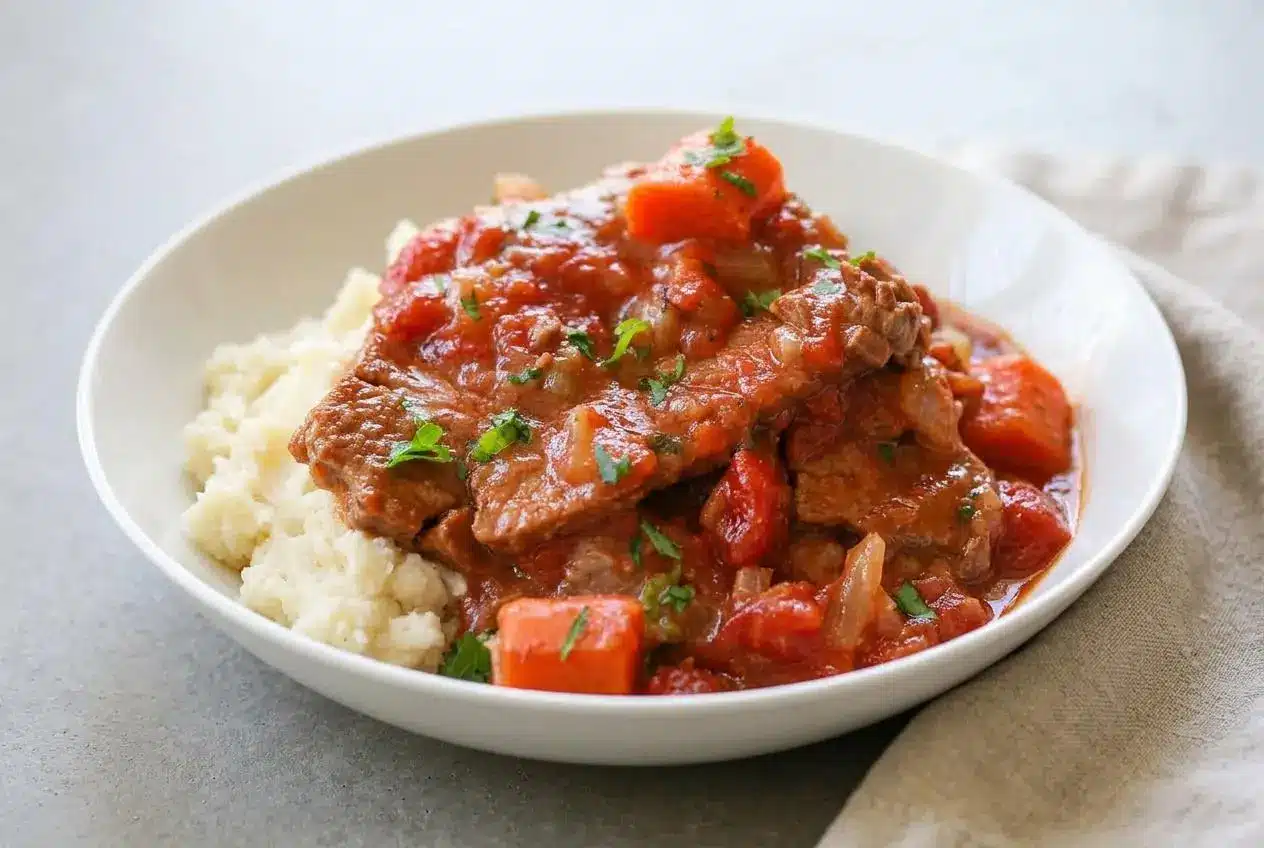
Swiss steak is round steak tenderized with a mallet, browned, and slowly braised in seasoned tomato gravy until fork tender.
This swiss steak recipe turns an economical cut of beef into a deeply comforting dinner with tender slices, sweet vegetables, and a rich tomato gravy.
As it braises, the kitchen fills with the savory smell of onions, beef, and tomatoes slowly coming together. The glossy gravy is worth the wait.
Keep the beef in an even layer while browning so it can develop a deep golden crust instead of steaming.
What Makes Classic Swiss Steak So Tender
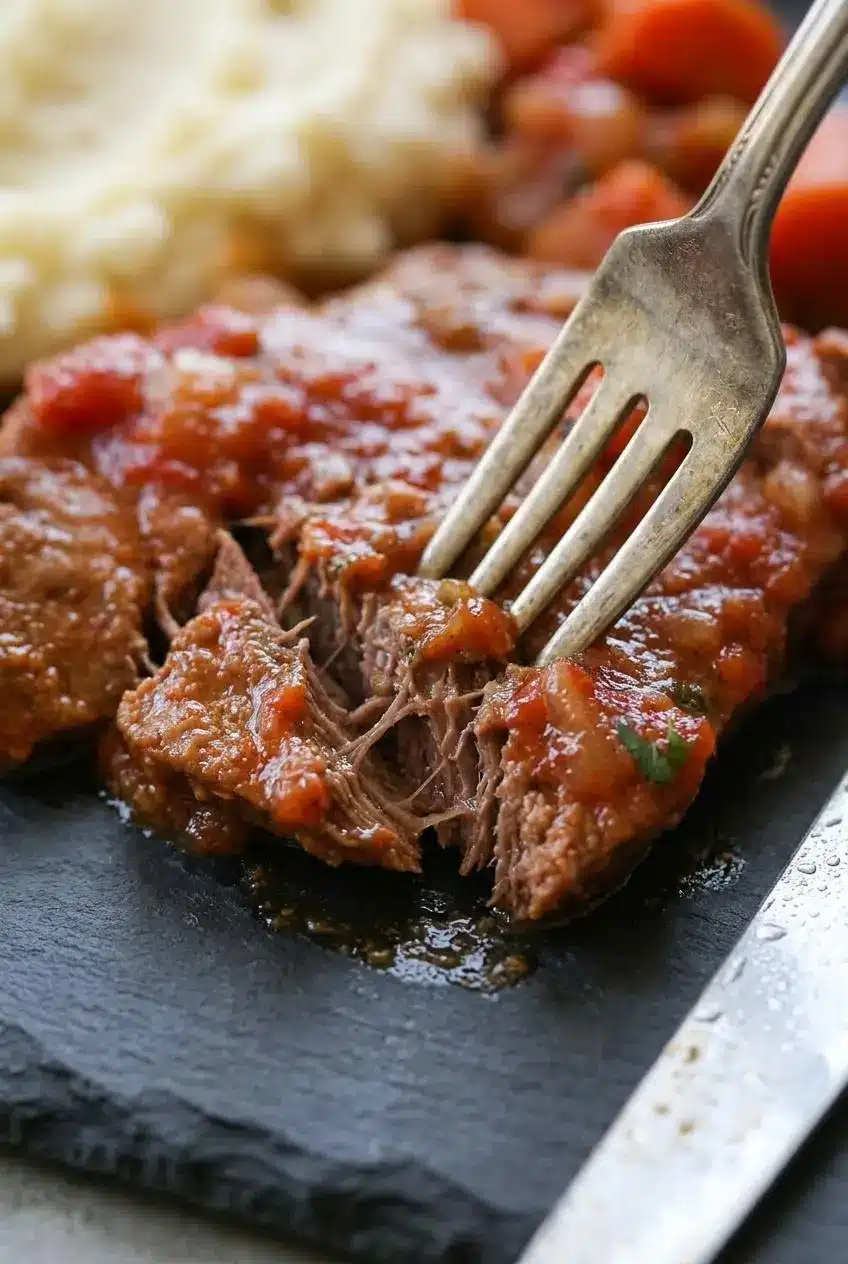
Swiss steak becomes tender through two patient steps: mechanical tenderizing before cooking and a long, covered braise afterward. The name comes from “swissing,” a method of rolling or pounding tough meat to soften its texture, not from Switzerland.
Round steak is lean and full of firm muscle fibers, so it can seem stubborn at first. Pounding it thins the meat and loosens those dense fibers. During the slow oven braise, connective tissue gradually softens in the tomato-rich liquid, changing firm steak into beef that yields easily to a fork.
The Technique of Swissing Beef
Place the round steak on a sturdy work surface and pound it with a meat mallet until it reaches an even ½-inch thickness. Work across the whole piece rather than concentrating on one spot, which can create thin tears that cook unevenly.
The goal is a flatter, more uniform steak with a lightly textured surface. That texture helps the seasoned flour cling, while the even thickness lets the braising liquid work consistently across the meat. A deep chestnut crust from browning adds another layer of savory flavor to the finished gravy.
Choosing Between Round Steak and Cube Steak
Top round and bottom round both work well here. Top round is generally a bit more uniform and lean, while bottom round can have a slightly beefier flavor and may need especially thorough pounding. Either cut benefits from the full braising time.
Pre-tenderized cube steak is a convenient alternative when time is tight. Its characteristic small indentations mean much of the tenderizing work is already done, so it can work well in a quicker skillet version. For another easy option using this cut, try tender cube steak.
- Top round: Choose it for tidy slices and pound it evenly before dredging.
- Bottom round: Choose it for robust beef flavor and give it plenty of gentle braising time.
- Cube steak: Choose it for convenience, but still brown it well so the gravy has full flavor.
Ingredients for Classic Swiss Steak
Each ingredient supports the braise: beef provides structure, flour builds body, vegetables add sweetness, and tomatoes and broth create the savory liquid that tenderizes the steak.
- 1 ½ pounds round steak
- ½ cup all-purpose flour
- ½ teaspoon paprika
- ½ teaspoon garlic powder
- ½ teaspoon black pepper
- 2 tablespoons olive oil (or as needed)
- 2 yellow onions (chopped)
- 2 carrots (chopped)
- 28 ounces canned diced tomatoes (with juices, 1 can)
- 10 ounces beef broth (1 can)
- 1 tablespoon Worcestershire sauce
- 1 tablespoon cornstarch (optional)
The flour coating does more than season the steak. It encourages browning, leaves flavorful browned bits in the Dutch oven, and helps the braising liquid turn into a lightly thickened gravy. Paprika, garlic powder, black pepper, and salt to taste give the beef a warm, savory foundation.
Yellow onions and carrots soften under the steaks, adding natural sweetness that rounds out the tomatoes. Canned diced tomatoes bring brightness and enough acidity to keep the gravy from tasting heavy, while beef broth loosens the pan flavors. Worcestershire sauce gives the sauce a darker, savory edge without taking over.
I prefer chopping the carrots fairly small so they soften into the gravy instead of remaining firm beside the tender beef.
How to Make Swiss Steak
This Dutch oven method gives the beef time to soften while the vegetables and tomato gravy build flavor underneath it. Keep the pot covered during the braise so the surface stays moist and the liquid cooks gently rather than boiling hard.
- Heat the oven to 350°F before preparing the beef.
A fully heated oven keeps the braise steady from the moment the covered Dutch oven goes in. - Pound the round steak with a meat mallet until it is ½-inch thick throughout.
The steak should look evenly flattened, with no thick, untouched sections around the edges. - Mix the flour, paprika, garlic powder, black pepper, and salt to taste, then coat the steak thoroughly in the seasoned flour.
A light, even coating should cover the surface without forming thick clumps. - Warm 1 tablespoon of olive oil in a Dutch oven over medium heat, then brown the floured steak on both sides, adding more olive oil as needed.
Listen for a lively sizzle and look for a deep golden-brown crust before moving each piece. - Arrange the chopped onions and carrots across the bottom of the Dutch oven, then set the browned steak over them.
The vegetables form a flavorful bed that softens into the gravy as the beef cooks. - Pour in the diced tomatoes with their juices, beef broth, and Worcestershire sauce, leaving out the cornstarch, then cover the pot and braise for 2 ½ to 3 hours.
The gravy should bubble gently around the edges, and a fork should slide into the beef with little resistance when it is ready. - Spoon the steak and tomato gravy over mashed potatoes for serving.
The finished sauce should look glossy and lightly thickened, with tender vegetables tucked around the beef.
Do not rush the oven time by raising the heat. A vigorous boil can tighten the lean beef and leave it dry. Gentle bubbling is the target, and the covered pot should hold enough liquid to keep the steaks partly surrounded by gravy.
Alternative Cooking Methods
You can adapt this dish for a slow cooker or a stovetop Dutch oven, but keep one part of the process the same: brown the floured steak first. That sear creates the browned flavor in the pot and keeps the finished gravy from tasting flat.
Hands-Off Slow Cooker Method
Brown the pounded and floured steak in oil, then transfer it to the slow cooker with the onions, carrots, tomatoes, Worcestershire sauce, and slightly less beef broth than the oven version. Because a covered slow cooker holds in moisture, reducing the broth a little helps prevent a thin gravy.
Cook on low for 7 to 8 hours, until the steak is tender enough to pull apart easily with a fork. Avoid lifting the lid repeatedly, since the trapped heat and steam are doing the quiet work of softening the beef.
Quick Stovetop Skillet Simmer
After browning the steak and arranging it over the onions and carrots, add the tomatoes, broth, and Worcestershire sauce to a covered Dutch oven or deep skillet. Keep the heat low and simmer gently for 1 ½ to 2 hours, checking that the sauce stays at a quiet bubble.
If the bottom of the pot begins to look dry, lower the heat and stir the sauce carefully around the steaks. High heat is the enemy here. It can scorch the tomatoes before the round steak has time to become tender.
If skillet beef dinners are your thing, classic pepper steak is another satisfying option for a savory meal with tender beef and vegetables.
Savory Mushroom and Onion Variation
For an earthier variation, add sliced cremini mushrooms alongside the onions before braising. The mushrooms release moisture and soak up the tomato gravy, bringing a hearty diner-style character to the dish without changing the main technique.
Let the mushrooms share the bottom of the pot with the carrots and onions rather than piling them on top of the steaks. They will soften slowly and add savory depth to each spoonful of gravy.
Troubleshooting and Gravy Consistency Guide
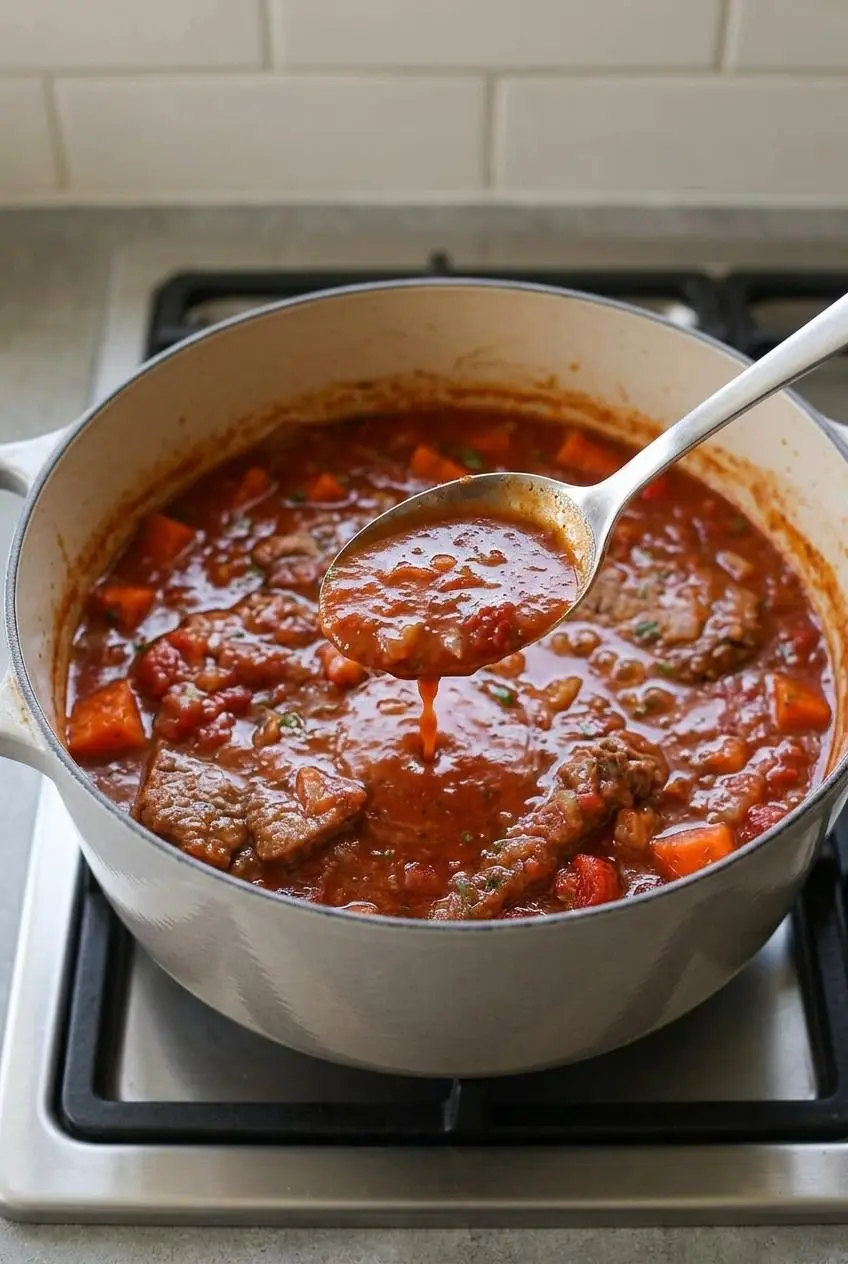
Swiss steak is forgiving when you know what each problem is telling you. Most issues come down to heat, time, or the balance of liquid in the pot.
Fixing Tough Meat and Braising Issues
- The steak is still chewy: It likely needs more time. Cover the pot tightly and continue braising for another 30 to 45 minutes, then test again with a fork. Round steak often feels firm before the connective tissue has had time to soften.
- The sauce is boiling hard: Lower the heat immediately. A gentle simmer protects the lean beef and gives the gravy time to develop without scorching.
- The steak browned poorly: The pot may have been crowded or the oil was not hot enough. Brown in batches next time, leaving room around each piece so moisture can escape.
- The gravy tastes flat: Stir the sauce well and make sure the Worcestershire sauce is fully incorporated. The browned bits from the pot and the seasoned flour should provide much of the savory depth.
Adjusting Gravy Thickness and Acidity
- The gravy is too thin: Let it simmer uncovered gently near the end of cooking so excess moisture can cook off. For more body, mix the optional cornstarch with cold liquid first, then stir the smooth slurry into the hot gravy.
- The gravy is too thick: Loosen it gradually with a small splash of beef broth, stirring around the steaks so the sauce becomes smooth again.
- The tomatoes taste too sharp: Add a small pinch of brown sugar or a pat of butter, then taste again. Either option softens the tomato acidity without making the gravy sweet.
- The gravy tastes overly salty: Add more unsalted tomato juices or broth if available, then let the sauce simmer gently so the flavors blend before serving.
A finished tomato gravy should coat a spoon in a thin, glossy layer. It should flow over mashed potatoes rather than sit in stiff lumps, while still clinging to the tender steak.
Serving Suggestions and Leftovers
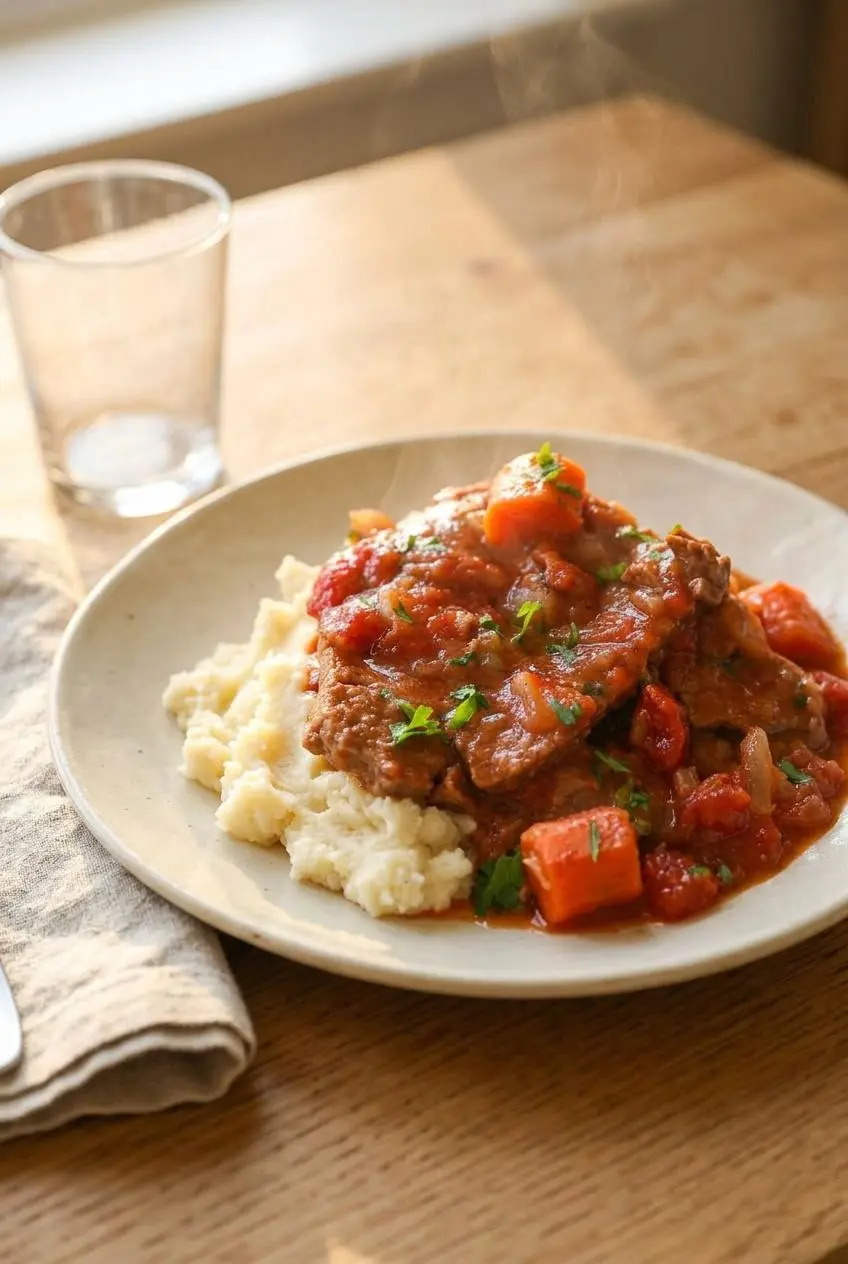
The rich tomato gravy needs something ready to catch every spoonful. Choose a mild, comforting side that lets the beef remain the center of the plate.
What to Serve with Swiss Steak
- Garlic mashed potatoes: Their creamy texture catches the tomato gravy beautifully.
- Buttered egg noodles: Their soft folds hold the sauce and make the meal feel especially cozy.
- Steamed white rice: A practical choice when you want the tomato gravy to shine.
- Green beans: Their fresh snap adds contrast to the slow-braised beef.
- A crisp dinner salad: A tangy dressing helps balance the richness of the gravy.
Storing and Reheating Leftovers
Cool leftover Swiss steak promptly, keep the beef covered in its gravy in an airtight container, and refrigerate it until needed. Storing the meat in sauce helps protect its texture and prevents the surface from drying out.
Reheat portions gently in a covered skillet or low oven with a splash of broth if the gravy has thickened. Keep the heat moderate and warm the beef through slowly so it stays tender instead of tightening or drying out.
Conclusion
Swiss steak rewards patience with beef that turns soft and fork tender in a rich tomato gravy. Pounding the round steak evenly and maintaining a gentle covered braise make the biggest difference.
Serve it over something ready to catch the sauce, then enjoy the kind of comforting dinner that makes a slow-cooked pot feel right at home.
Frequently Asked Questions
What Cut of Meat Works Best for Swiss Steak?
Round steak is the traditional choice, especially top round or bottom round. These lean cuts become tender when pounded thin and braised slowly in tomato gravy. Cube steak also works well when you want a pre-tenderized option. It still benefits from browning before it simmers in the sauce.
Why Is It Called Swiss Steak If It Is Not from Switzerland?
The name refers to swissing, a mechanical tenderizing method that uses rolling or pounding to soften tough meat fibers. It does not refer to the country of Switzerland. Pounding the steak with a mallet follows the same practical idea by thinning and tenderizing the round steak before braising.
How Do You Fix Swiss Steak If the Meat Is Still Tough?
Keep the pot covered and continue braising the steak in its liquid for another 30 to 45 minutes. Tough round steak usually needs more gentle cooking time, not higher heat. Check with a fork before serving. When ready, the fork should slide into the meat easily and the steak should no longer resist or feel chewy.
Can You Freeze Cooked Swiss Steak with Gravy?
This guide focuses on refrigerated leftovers and gentle reheating in gravy. Keep leftover steak covered in its sauce so it stays moist when warmed again. If you plan to store portions beyond the immediate leftovers period, use a storage approach appropriate for your container and local food-handling recommendations.
What Is the Difference Between Swiss Steak and Salisbury Steak?
Swiss steak uses whole pieces of tenderized beef round steak braised in tomato and vegetable gravy. Salisbury steak uses seasoned ground beef shaped into patties. Salisbury steak is often served with a brown mushroom gravy, while Swiss steak is known for its slow-cooked tomato gravy and tender slices of beef.

Swiss Steak Recipe

Equipment
- Meat tenderizer
- Dutch oven
Ingredients
- 1 ½ pounds round steak
- ½ cup all-purpose flour
- ½ teaspoon paprika
- ½ teaspoon garlic powder
- ½ teaspoon black pepper
- 2 tablespoons olive oil or as needed
- 2 yellow onions chopped
- 2 carrots chopped
- 28 ounces canned diced tomatoes with juices, 1 can
- 10 ounces beef broth 1 can
- 1 tablespoon Worcestershire sauce
- 1 tablespoon cornstarch optional
Instructions
- Heat the oven to 350°F before preparing the beef. A fully heated oven keeps the braise steady from the moment the covered Dutch oven goes in.
- Pound the round steak with a meat mallet until it is ½-inch thick throughout. The steak should look evenly flattened, with no thick, untouched sections around the edges.
- Mix the flour, paprika, garlic powder, black pepper, and salt to taste, then coat the steak thoroughly in the seasoned flour. A light, even coating should cover the surface without forming thick clumps.
- Warm 1 tablespoon of olive oil in a Dutch oven over medium heat, then brown the floured steak on both sides, adding more olive oil as needed. Listen for a lively sizzle and look for a deep golden-brown crust before moving each piece.
- Arrange the chopped onions and carrots across the bottom of the Dutch oven, then set the browned steak over them. The vegetables form a flavorful bed that softens into the gravy as the beef cooks.
- Pour in the diced tomatoes with their juices, beef broth, and Worcestershire sauce, leaving out the cornstarch, then cover the pot and braise for 2 ½ to 3 hours. The gravy should bubble gently around the edges, and a fork should slide into the beef with little resistance when it is ready.
- Spoon the steak and tomato gravy over mashed potatoes for serving. The finished sauce should look glossy and lightly thickened, with tender vegetables tucked around the beef.