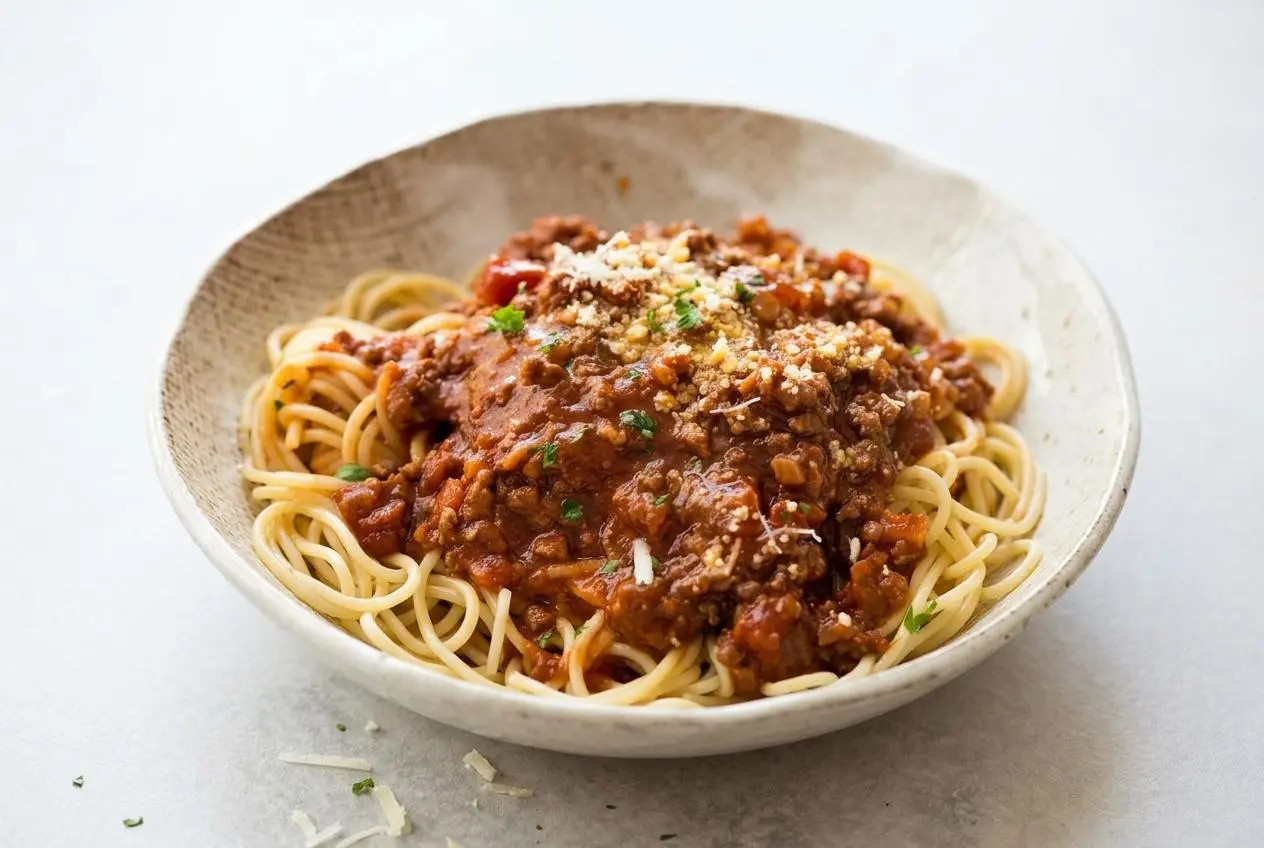
Spaghetti Bolognese is a rich meat sauce you can make two ways: a quick 30-minute version for busy nights or a slow-simmered pot for deeper, more traditional flavor. Both methods use the same core ingredients and both work beautifully.
Spaghetti Bolognese is comfort food in its most dependable form: savory meat, tomatoes, herbs, and pasta that actually feels satisfying. This version keeps the method clear and gives you the little details that make the sauce taste fuller, cling better, and avoid that watery puddle at the bottom of the bowl.
If you like a thick, glossy sauce instead of a loose red one, you’re in the right place. The pasta-water finish changes everything.
Finely chop the onion so it melts into the sauce instead of sitting in obvious chunks.
Key Ingredients for Authentic Flavor
Each ingredient has a job here, whether it builds savory depth, balances acidity, adds body, or helps the sauce taste rounder and more finished.
- 1 1/2 tbsp olive oil
- 2 garlic cloves, minced
- 1 onion, finely chopped (brown, yellow or white)
- 1 lb / 500g beef mince (ground beef) OR half pork, half beef
- 1/2 cup (125 ml) dry red wine (sub water or beef broth/stock)
- 2 beef bouillon cubes, crumbled OR granulated beef bouillon
- 800g / 28 oz can crushed tomato (or tomato passata)
- 2 tbsp tomato paste
- 2 tsp white sugar, if needed
- 2 tsp Worcestershire sauce
- 2 dried bay leaves
- 2 sprigs fresh thyme (or 1/2 tsp dried thyme or oregano)
- 3/4 tsp cooking salt (kosher salt)
- 1/2 tsp black pepper
To Serve
- 400 g / 13 oz spaghetti, dried
- Parmesan cheese and finely chopped parsley (optional)
I usually lean toward the half pork, half beef option because the pork adds tenderness and a little extra richness, but all-beef still gives you a very solid sauce.
The Soffritto: Your Flavor Foundation
The official recipe starts with onion and garlic, which already gives the sauce a strong base. For a more traditional bolognese feel, many cooks build that base as a soffritto with finely diced onion, carrot, and celery. The point is not crunch or color. It is gentle sweetness and aroma.
If you go that route, cook the vegetables until they are soft and fragrant, not browned. You want them to relax into the oil and almost disappear into the sauce. That quiet first step makes the whole pot taste more layered later on.
The Best Meat for Bolognese
The meat choice changes the personality of the sauce. Beef gives you a fuller, deeper flavor. Pork brings extra fat and tenderness, which makes the finished sauce feel silkier and a bit more luxurious.
If you are using ground beef only, 80/20 or 85/15 is a good range. Leaner beef can taste flat and turn a little dry in a longer simmer. Much fattier than that, and the sauce can edge into greasy. The goal is rich, not heavy.
Browning matters too. When the meat gets real color instead of just turning gray, the sauce develops a deeper savory backbone that no extra seasoning can fully fake.
The Role of Red Wine and Dairy
Red wine does two useful things here. First, it loosens the flavorful browned bits from the pan. Second, it adds a darker, more complex note that makes the sauce taste like it cooked longer than it did. As it simmers, the sharp alcohol smell fades and the aroma becomes rounder and meatier.
If you do not cook with wine, the recipe already gives you solid substitutes: water or beef broth or stock. Broth is the better swap if you want to keep some of that extra depth.
A small splash of milk or cream is a classic optional addition for bolognese. It softens the acidity of the tomatoes, helps the meat taste more tender, and gives the sauce a smoother finish. It is not part of the official ingredient list here, so treat it as an optional finishing touch rather than a required step.
Worcestershire sauce and beef bouillon do a lot of quiet heavy lifting too. They boost savory depth and make the sauce taste fuller without shouting for attention.
How to Make Spaghetti Bolognese
This recipe gives you two good options. The quick method gets dinner on the table fast, while the slow-simmered path gives you a darker, thicker sauce with more developed flavor. Same starting point, different payoff.
Method 1: The Quick 30-Minute Sauce
- Heat the olive oil in a large pot or deep skillet over medium high heat, then add the onion and garlic and cook for 3 minutes.
The onion should soften and turn lightly golden, and the mixture should smell fragrant rather than sharp. - Raise the heat to high and add the beef, breaking it up as it cooks until it is well browned.
Look for real color on the meat and no obvious raw spots, because that browning builds a deeper savory base. - Pour in the red wine and let it come to a simmer for 1 minute while scraping the bottom of the pot.
The harsh wine smell should cook off quickly, leaving the pan smelling richer and cleaner. - Add the beef bouillon, crushed tomato, tomato paste, sugar if needed, Worcestershire sauce, bay leaves, thyme, salt, and black pepper, then stir and bring everything to a simmer.
Once the sauce starts bubbling, lower the heat to medium so it cooks at a gentle bubble rather than a hard boil. - Cook the sauce uncovered for 20 to 30 minutes, stirring now and then and adding water if it thickens more than you like.
It should become richer, slightly darker, and thick enough to coat a spoon without turning pasty. - Taste the sauce and add more salt if needed, then spoon over cooked spaghetti or finish by tossing the pasta in the sauce.
The flavor should taste balanced and savory, with the tomato no longer feeling sharp or one-dimensional.
Tossing Sauce and Spaghetti (optional)
- Bring a large pot of salted water to a boil and cook the spaghetti for the time on the package minus 1 minute.
The pasta should be flexible but still a little firmer in the center than you want to serve it. - Reserve a mug of the pasta cooking water, then drain the spaghetti.
That starchy water is what helps the sauce turn glossy instead of watery. - Add the drained spaghetti to the bolognese with about 1/2 cup (125 ml) of the reserved pasta water over medium heat and toss gently for 1 1/2 to 2 minutes.
The strands should turn red, the sauce should tighten slightly, and the pasta should look coated rather than merely topped. - Divide into bowls and finish with Parmesan cheese and finely chopped parsley if using.
The final dish should look glossy and cohesive, with sauce clinging to every forkful.
Method 2: The Traditional Slow-Simmered Sauce
For the deeper version, start exactly the same way: soften the onion and garlic, brown the meat well, reduce the wine, and add the remaining sauce ingredients. Then add 3/4 cup of water, cover the pot, and let it simmer on very low for 2 to 2.5 hours, stirring every 30 minutes or so.
During that long simmer, the sauce changes noticeably. It darkens, thickens, and smells rounder and more savory. The meat becomes more tender, the tomato taste softens, and the whole pot starts tasting connected rather than like separate ingredients sharing space.
After the covered simmer, uncover the pot and cook for 20 minutes more to thicken. This is the weekend path, and it tastes like it. If you want the sauce to really hug the spaghetti, finish with the optional pasta-water toss from the method above.
Tips for the Perfect Bolognese Sauce
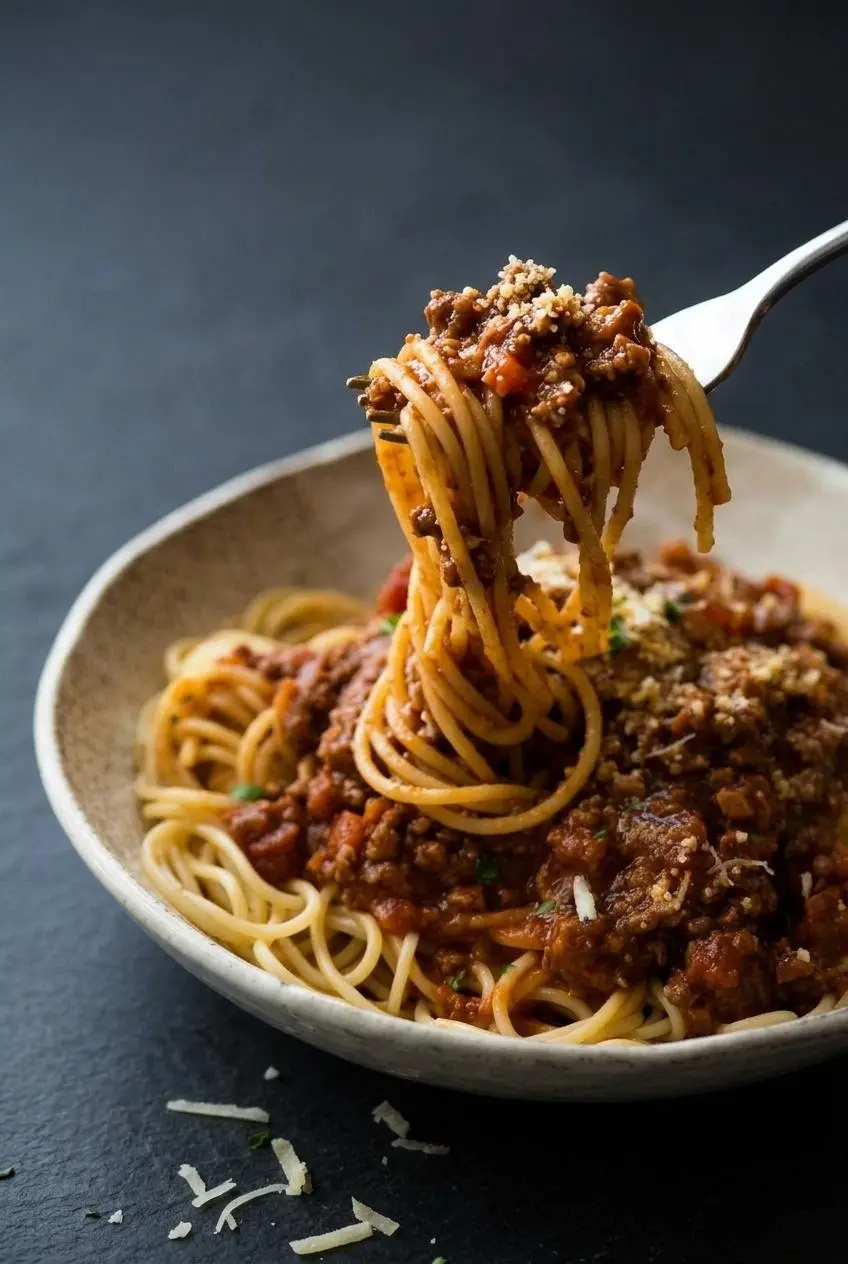
The difference between a decent meat sauce and a really satisfying bolognese often comes down to a few small habits.
- Don’t crowd the pan: If your pot is packed too tightly, the meat steams instead of browning. If needed, brown in batches so you get color and flavor instead of gray crumbles.
- Let the wine reduce: Give it that minute to simmer and scrape the pan. You want the sharp smell to mellow before the tomatoes go in.
- Use the pasta-water finish: Tossing the pasta in the sauce with a splash of starchy water helps the sauce emulsify and cling. It also keeps the bowl from turning watery underneath.
- Be patient with the simmer: Even the quick version needs a gentle uncovered simmer so the sauce can reduce and concentrate. The slow version simply takes that process further.
- Taste at the end: Tomatoes vary, bouillon varies, and so does salt. Adjust right before serving so the sauce tastes balanced.
- Use sugar only if needed: If the tomatoes taste acidic, the white sugar smooths that edge without making the sauce sweet.
- Think about texture: A proper bolognese should be thick and spoonable, not dry and not soupy. If it looks tight in the pot, loosen with a little water. If it looks loose, simmer a bit longer uncovered.
Many home cooks wonder what the secret to a really flavorful bolognese is. It is mostly patience, proper browning, and enough simmer time for the tomatoes, meat, and seasonings to settle into each other.
Common Variations to Try
The classic version is plenty satisfying, but bolognese is very flexible if you want to nudge it in a different direction.
Slow Cooker Bolognese
This works well if you want a hands-off version. Start the recipe on the stovetop first by softening the onion and garlic, browning the meat, and reducing the wine. Then transfer everything to the slow cooker with the remaining ingredients and cook on low until the meat is very tender and the sauce tastes fully developed.
You may need to leave the lid slightly ajar near the end or finish the sauce uncovered on the stovetop if it seems too loose. Slow cookers hold moisture well, which is helpful for tenderness but not always for thickness.
More Flavor Twists
- With pancetta: Add finely diced pancetta with the onions for a saltier, deeper savory base that leans more traditional.
- Vegetarian mushroom bolognese: Replace the meat with finely chopped mushrooms and lentils, then cook until the mushrooms release their moisture and start to brown. The result is earthy, hearty, and surprisingly satisfying.
- Extra vegetables: Finely diced mushrooms, carrots, celery, or zucchini can melt into the sauce and add body without making it feel veggie-forward.
If you prefer a more tomato-forward pasta sauce, homemade spaghetti sauce gives you a clearer contrast to the richer, meatier style of bolognese.
What to Serve with Spaghetti Bolognese
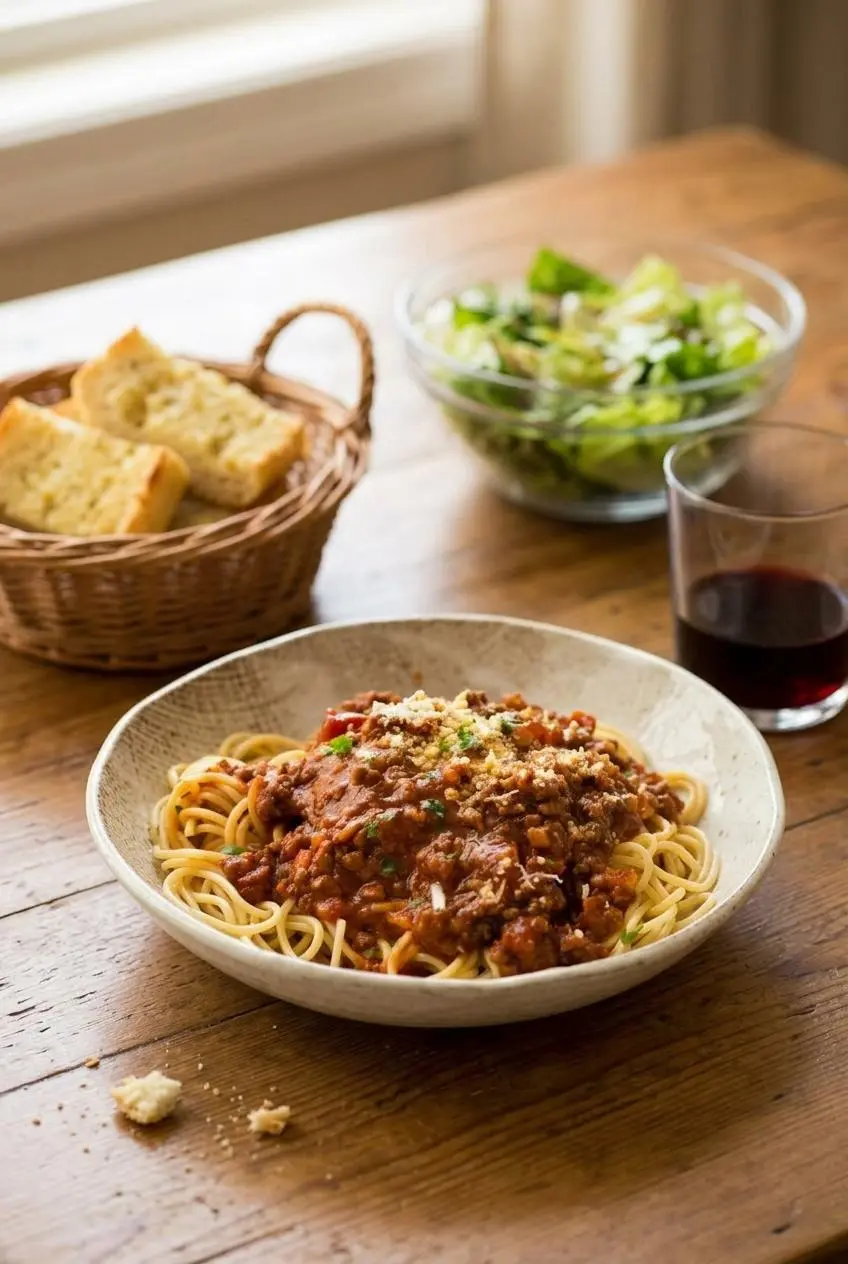
This is a rich dish, so the best sides either mop up the sauce or bring a fresh contrast.
Spaghetti is popular and absolutely delicious here, but wider pasta shapes like tagliatelle, pappardelle, or fettuccine hold a heavy meat sauce even better. Their broader surface catches more of the ragù and gives you a meatier bite.
For the table, warm garlic bread is an easy favorite because it deals with every last bit of sauce. A crisp salad with a tangy dressing also helps cut through the richness. If you want something briny and fresh, a simple Greek salad fits nicely.
And yes, always finish with Parmesan. This is not the moment for restraint.
Storing, Freezing, and Reheating
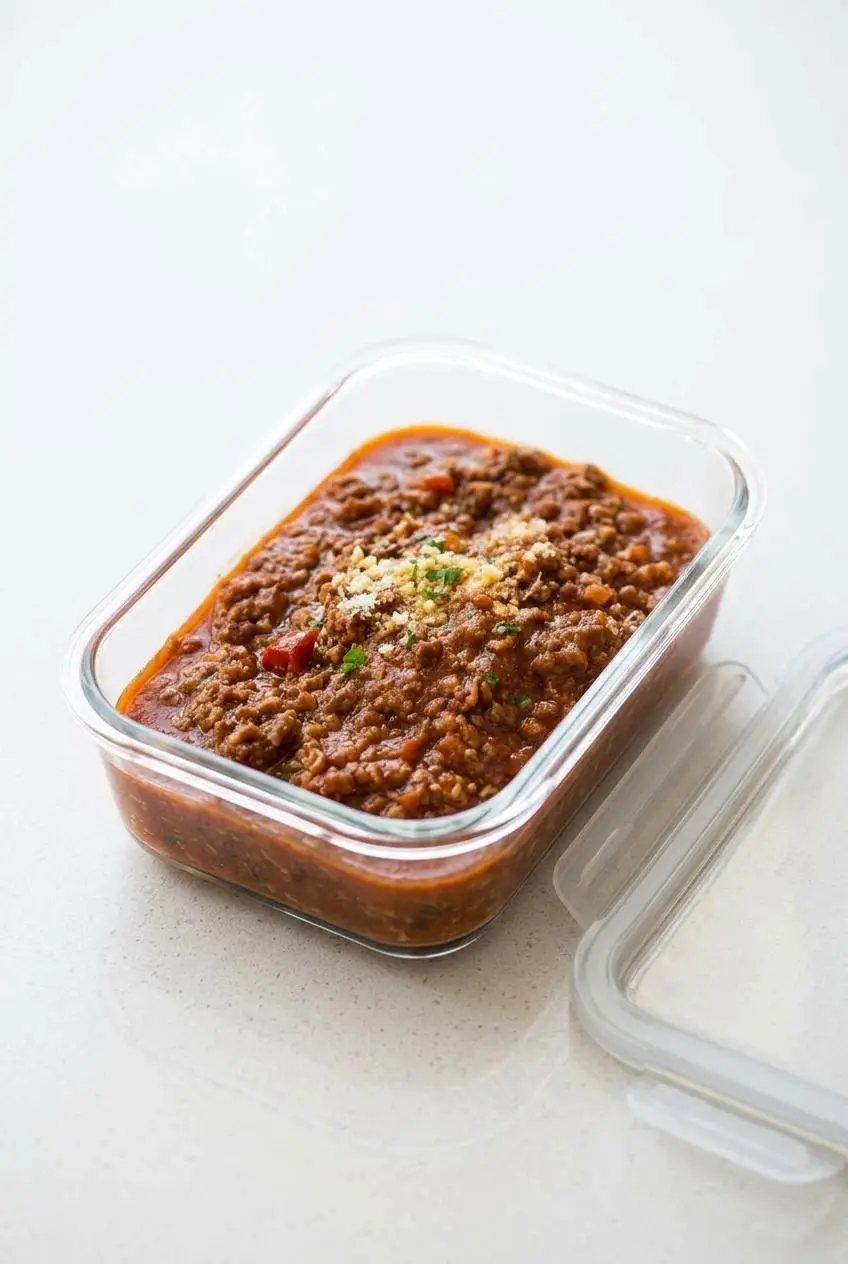
Bolognese is a very good make-now, eat-again dish, but it tastes best when you store the sauce separately from the pasta whenever possible.
For the refrigerator, cool the sauce and transfer it to a covered container. For the best balance of quality and food safety, refrigerate leftovers promptly and use them within 3 to 4 days, following leftovers and food safety guidance.
You can also freeze the sauce in portioned containers or freezer-safe bags once it has cooled. Press out excess air when possible, and freeze it for up to 3 months. Keeping the pasta separate helps preserve texture better than freezing the full mixed dish.
To reheat chilled sauce, warm it gently on the stovetop and add a splash of water if it has tightened up. To reheat from frozen, thaw it in the refrigerator first if convenient, or warm it slowly from frozen over low heat, stirring as it loosens. If you want a second life for leftovers, the sauce works very well in baked spaghetti casserole.
Troubleshooting Your Bolognese
When the sauce is off, the fix is usually pretty straightforward.
- Problem: My sauce is watery. The usual cause is too much liquid left in the pot or not enough uncovered simmering. Let it bubble gently without the lid until it reduces, and toss the pasta in the sauce instead of spooning sauce over plain noodles.
- Problem: My sauce is too thick. It has reduced more than you want, especially after a long simmer or a fridge rest. Add a splash of water while reheating or finishing the sauce until it loosens to a spoonable texture.
- Problem: My sauce tastes acidic or sour. Tomatoes can vary a lot. Add the white sugar if needed, or mellow the edge with a small splash of milk or cream as an optional finishing touch.
- Problem: My sauce is bland. Usually it needs more salt, more simmer time, or both. A little extra Worcestershire sauce or more beef bouillon can also deepen the savory flavor.
- Problem: The meat feels dry. Very lean beef is often the culprit. Next time, use beef with a bit more fat or a pork and beef blend for a softer texture.
- Problem: The flavor feels flat even though the ingredients are right. Make sure the meat browned properly and the wine had time to reduce. Those two early steps carry more flavor than they seem to.
Conclusion
This Spaghetti Bolognese gives you a reliable weeknight method and a slower, deeper version when you want the full payoff of a long simmer. Either way, the goal is the same: a rich, thick, savory meat sauce that actually clings to the pasta.
If you remember one trick, make it this one: finish the spaghetti in the sauce with a little pasta water. It turns a good bowl into a much better one.
Frequently Asked Questions
What Is the Difference Between Meat Sauce and Bolognese?
Bolognese is a specific Italian meat sauce, or ragù, from Bologna. It is usually thicker, richer, less tomato-forward, and often includes milk or cream. A typical American meat sauce is often looser and more centered on tomato.
Can I Make Bolognese Without Red Wine?
Yes. Beef broth or stock is the best substitute because it keeps the sauce savory and full-bodied. Water also works, but the flavor will be a little lighter.
What’s the Best Pasta for Bolognese?
Traditionally, wide flat noodles like tagliatelle, pappardelle, or fettuccine are the best match because they hold the heavy sauce well. Spaghetti is still a very common and very tasty choice, especially if you toss it directly in the sauce before serving.
How Do You Add Vegetables to Bolognese for Picky Eaters?
Finely grate or chop vegetables such as carrots, celery, or zucchini and cook them at the very beginning with the onions. They soften into the sauce as it simmers, so you get extra body and flavor without obvious vegetable pieces.
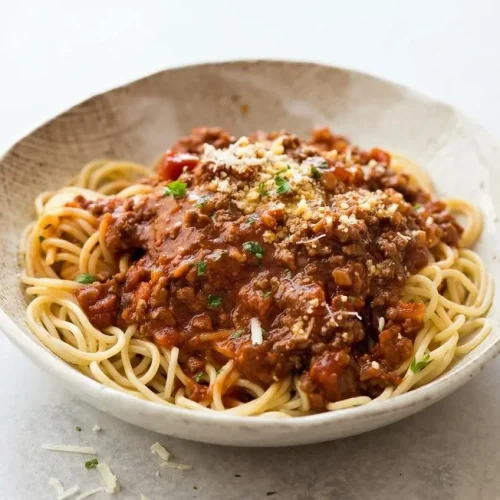
Spaghetti Bolognese

Equipment
- Large pot or deep skillet
- Large Pot
Ingredients
- 1 1/2 tbsp olive oil
- 2 cloves garlic, minced
- 1 onion, finely chopped (brown, yellow or white)
- 1 lb / 500g beef mince (ground beef) OR half pork, half beef
- 1/2 cup (125 ml) dry red wine (sub water or beef broth/stock)
- 2 beef bouillon cubes, crumbled OR granulated beef bouillon
- 800g / 28 oz can crushed tomato (or tomato passata)
- 2 tbsp tomato paste
- 2 tsp white sugar if needed
- 2 tsp Worcestershire sauce
- 2 dried bay leaves
- 2 sprigs fresh thyme (or 1/2 tsp dried thyme or oregano)
- 3/4 tsp cooking salt (kosher salt)
- 1/2 tsp black pepper
To Serve
- 400 g / 13 oz spaghetti, dried
- Parmesan cheese and finely chopped parsley optional
Instructions
Method 1: The Quick 30-Minute Sauce
- Heat the olive oil in a large pot or deep skillet over medium high heat, then add the onion and garlic and cook for 3 minutes. The onion should soften and turn lightly golden, and the mixture should smell fragrant rather than sharp.
- Raise the heat to high and add the beef, breaking it up as it cooks until it is well browned. Look for real color on the meat and no obvious raw spots, because that browning builds a deeper savory base.
- Pour in the red wine and let it come to a simmer for 1 minute while scraping the bottom of the pot. The harsh wine smell should cook off quickly, leaving the pan smelling richer and cleaner.
- Add the beef bouillon, crushed tomato, tomato paste, sugar if needed, Worcestershire sauce, bay leaves, thyme, salt, and black pepper, then stir and bring everything to a simmer. Once the sauce starts bubbling, lower the heat to medium so it cooks at a gentle bubble rather than a hard boil.
- Cook the sauce uncovered for 20 to 30 minutes, stirring now and then and adding water if it thickens more than you like. It should become richer, slightly darker, and thick enough to coat a spoon without turning pasty.
- Taste the sauce and add more salt if needed, then spoon over cooked spaghetti or finish by tossing the pasta in the sauce. The flavor should taste balanced and savory, with the tomato no longer feeling sharp or one-dimensional.
Tossing Sauce and Spaghetti (optional)
- Bring a large pot of salted water to a boil and cook the spaghetti for the time on the package minus 1 minute. The pasta should be flexible but still a little firmer in the center than you want to serve it.
- Reserve a mug of the pasta cooking water, then drain the spaghetti. That starchy water is what helps the sauce turn glossy instead of watery.
- Add the drained spaghetti to the bolognese with about 1/2 cup (125 ml) of the reserved pasta water over medium heat and toss gently for 1 1/2 to 2 minutes. The strands should turn red, the sauce should tighten slightly, and the pasta should look coated rather than merely topped.
- Divide into bowls and finish with Parmesan cheese and finely chopped parsley if using. The final dish should look glossy and cohesive, with sauce clinging to every forkful.