
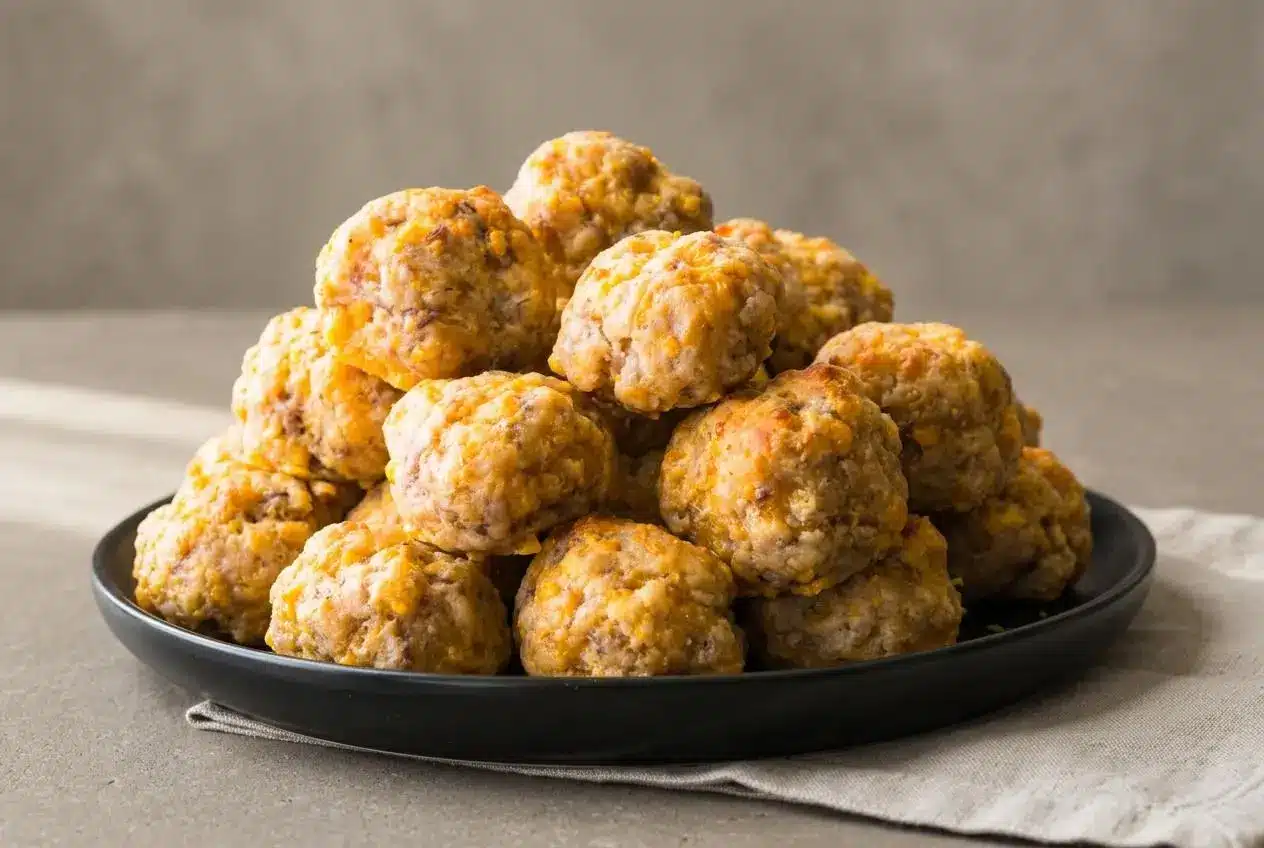
Bake pork sausage, sharp cheddar, Bisquick, milk, and Italian seasoning at 350°F for 20 to 25 minutes, until the sausage balls are browned and cooked through. They’re a warm, savory appetizer with crisp bottoms and tender, cheesy centers.
This sausage balls recipe makes a classic party bite that works just as well for holiday brunch as it does for game day. The dough comes together in one bowl, then bakes into deeply savory little rounds with a golden crust.
Freshly grated cheddar makes all the difference, giving the centers a richer melt and helping the dough hold together. That cheesy aroma starts before the timer is up.
Use a rimmed baking dish so any rendered fat stays contained and the balls have room to brown rather than crowding together.
Key Ingredients and Why They Work
Each ingredient contributes something important: sausage brings savory richness, cheddar adds flavor and binding, Bisquick provides structure, milk softens the crumb, and Italian seasoning rounds out the aroma.
- 2 cups Bisquick
- 1 pound pork sausage
- 16 ounces sharp cheddar cheese, (grated)
- 1/2 cup milk
- 1 1/2 teaspoons Italian seasoning
Pork sausage forms the flavorful foundation. Choose mild sausage for a classic crowd-friendly flavor, or use hot sausage if you want more heat. Its fat also keeps the finished bites from eating dry.
Sharp cheddar provides the bold cheese flavor and helps bind the heavy dough. Grating cheese from a block leaves more of its natural oils available to mingle with the sausage and biscuit mix, while bagged shredded cheese can make the mixture feel drier.
Bisquick baking mix gives the balls their biscuit-like structure. The milk moistens that structure so the interior stays tender instead of chalky, and Italian seasoning adds a gentle herb note that keeps the richness in balance.
I look for a dough that feels heavy and tacky, with cheddar evenly threaded through it. Freshly grating the cheese by hand makes that texture much easier to achieve.
How to Make Sausage Balls
Mix firmly enough to create a cohesive dough, then portion evenly so every ball bakes at the same pace. A spring-loaded cookie scoop is especially handy for keeping the size consistent.
- Set the oven to 350°F (177°C) and coat a rimmed baking dish with nonstick cooking spray.
The prepared surface should look lightly slick, which helps the bottoms release after baking. - Combine the Bisquick, pork sausage, grated cheddar, milk, and Italian seasoning in a mixing bowl, then scoop and firmly compress the mixture into 1-inch balls before arranging them in the dish.
The dough should hold together when squeezed, not scatter into loose crumbs. - Bake for 20 to 25 minutes until the sausage balls are richly browned.
Look for sizzling, golden bottoms and a hot center when checked with an instant-read thermometer before serving warm.
Let the sausage balls sit in the pan for a moment after baking so the melted cheese settles. Their best texture is a lightly crisp exterior with a soft, savory middle.
Essential Tips for Moist Sausage Balls
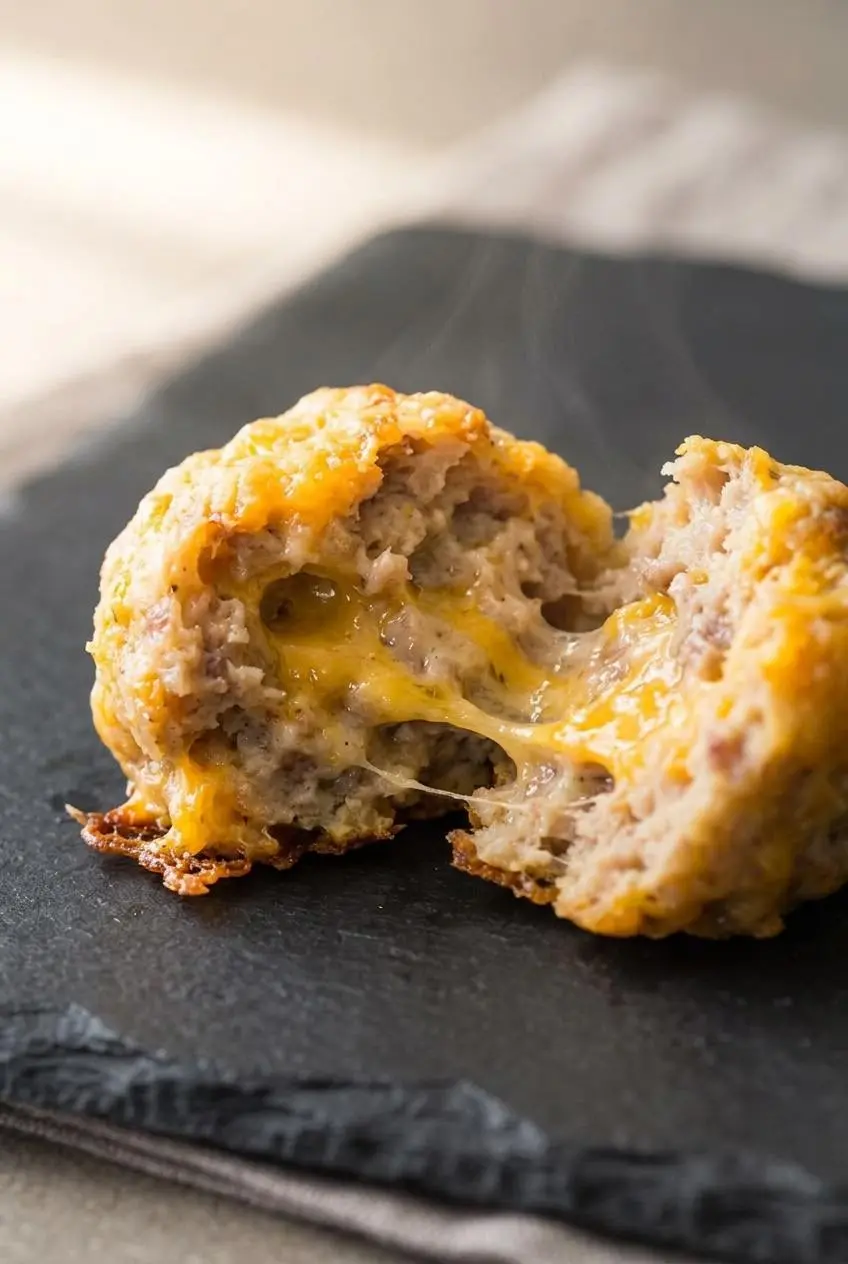
Most texture problems begin before the pan reaches the oven. These quick adjustments keep the dough workable and the finished sausage balls tender.
- Crumbly dough: If the mixture will not hold when pressed, work in a small splash of milk or broth until it becomes cohesive. Add liquid gradually so the dough does not become sticky.
- Hard-to-mix sausage: Let refrigerated sausage sit briefly at cool room temperature before combining it with the other ingredients. It will blend more evenly without aggressive overmixing.
- Dry finished balls: Avoid pre-shredded cheese when possible. Its coating can interfere with the soft, tacky dough that gives sausage balls their tender center.
- Uneven baking: Keep the balls close to 1 inch and leave a little space around each one. Oversized portions brown on the outside before the middle catches up.
- Dense texture: Stop mixing once the ingredients are evenly distributed. Constant kneading can make the biscuit mix compact.
If the first batch looks pale at the bottom, give the pan a little more time in the oven while watching closely. The browned underside is where much of that satisfying tender crunch develops.
Make-Ahead and Reheating Guide
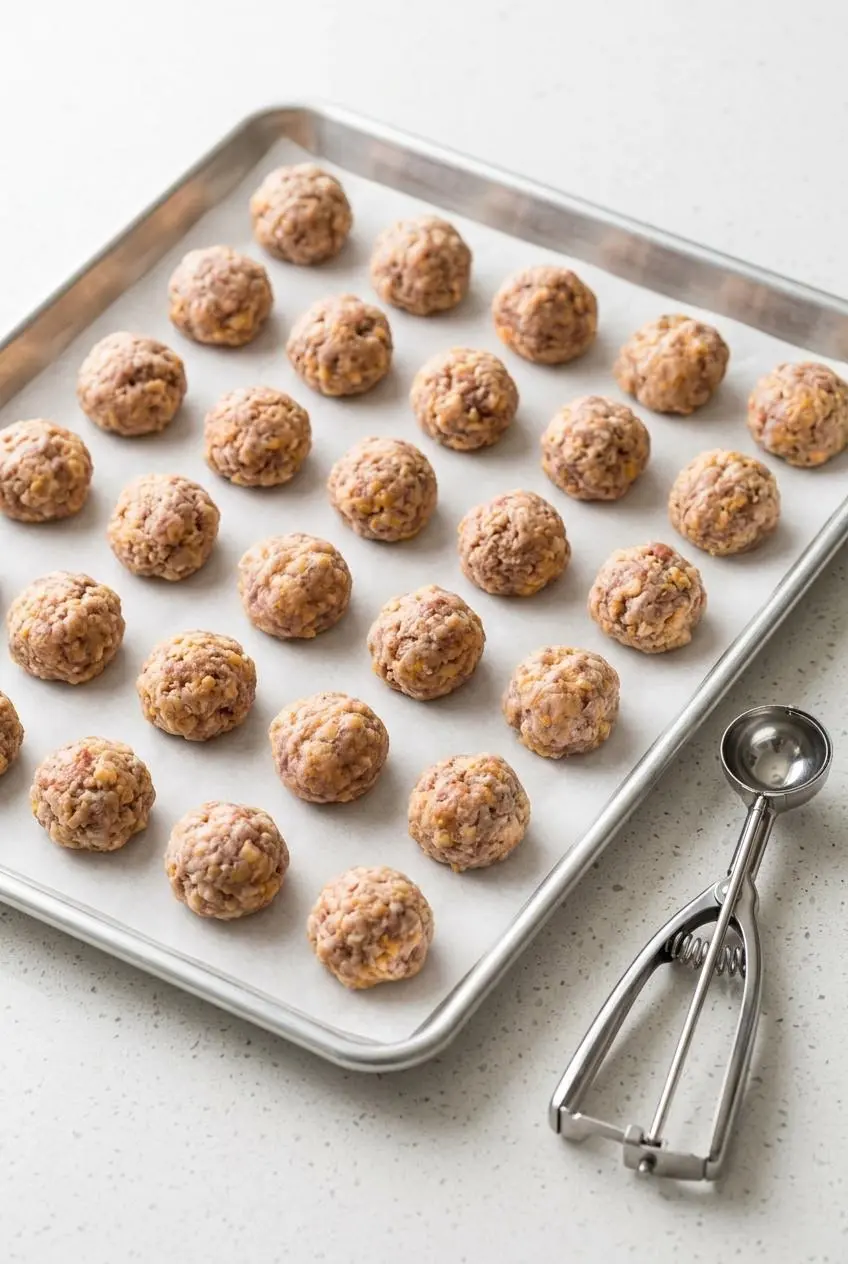
For party prep, shape the mixture close to baking time and keep it chilled in a covered container until you are ready to cook. After baking, cool leftovers before placing them in an airtight container in the refrigerator.
To reheat, arrange sausage balls in a single layer in the oven until warmed through. This restores the crust more effectively than piling them into a deep dish, where trapped steam can soften the bottoms.
Preparing Sausage Balls Ahead
Portioning the dough ahead can make party-day cooking much calmer. Keep the shaped balls covered and chilled on their baking dish, then bake when you want the freshest aroma and crispest edges.
For leftover portions, rewarm only what you plan to serve. Small batches heat more evenly and are less likely to dry out while waiting for the center to warm.
Slow Cooker Party Serving Strategy
For a buffet, move the baked sausage balls to a slow cooker set to warm. Line the bottom with paper towels first, then replace them if they become saturated, so excess fat does not collect beneath the balls.
Keep the lid slightly ajar if condensation starts forming. That little bit of ventilation helps protect the golden crust while the slow cooker keeps the appetizers warm.
Popular Variations and Delicious Dips
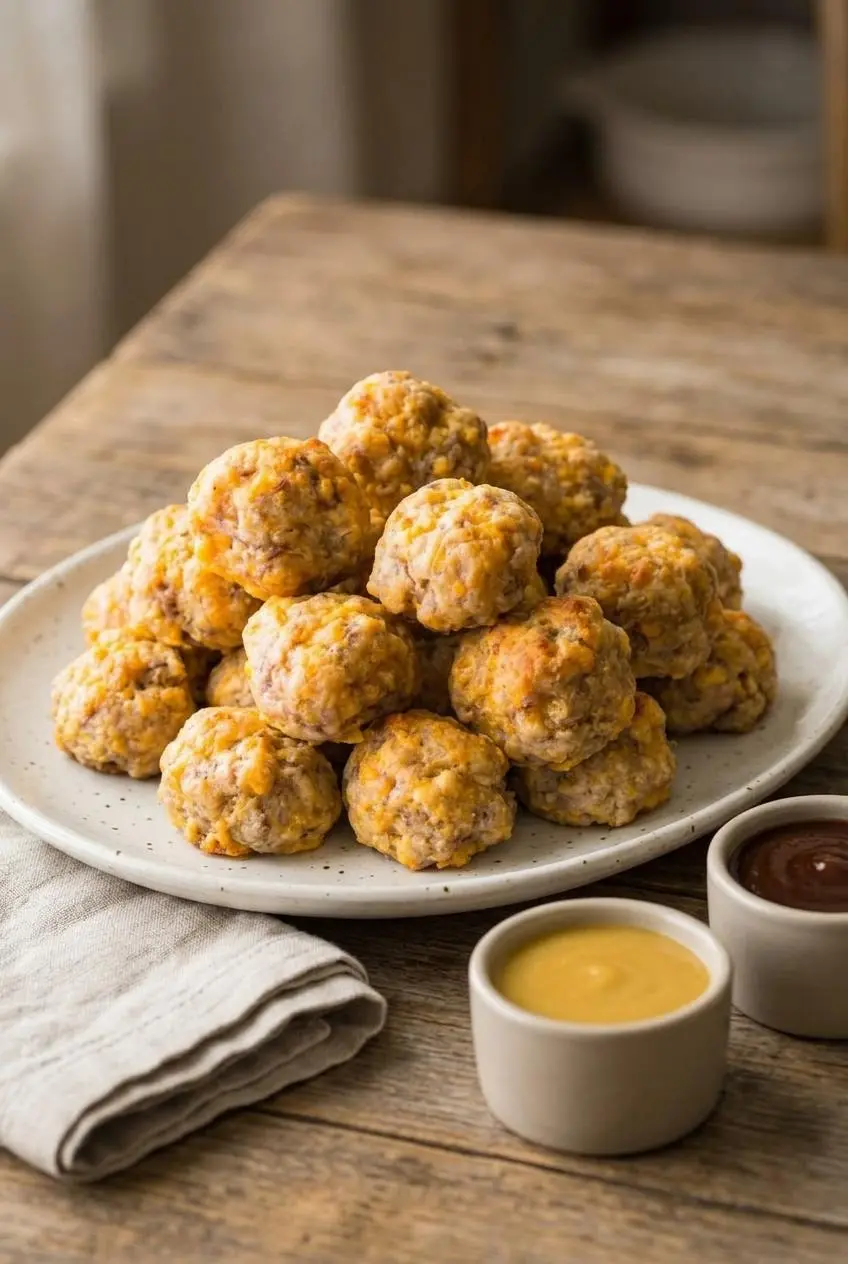
Keep the main version exactly as written, then use these optional ideas when you want a different flavor direction or a fuller appetizer spread.
- Spicy sausage: Choose hot pork sausage for a stronger peppery kick without changing the dough’s texture.
- Pepper jack: Swap some of the cheddar for pepper jack for a creamy heat that reaches every bite.
- Crushed red pepper: Add a pinch for a sharper finish while keeping the classic cheddar flavor in front.
- Smoked honey butter: Brush warm baked balls lightly for a sweet-savory, glossy finish.
Homemade Biscuit Mix from Scratch
If Bisquick is unavailable, whisk together 2 cups of all-purpose flour, 1 tablespoon of baking powder, 1/2 teaspoon of salt, and 2 tablespoons of cold cubed butter. Work the butter into the dry ingredients until the mixture resembles coarse crumbs, then use it in place of the Bisquick.
This option makes a more homemade-style biscuit base, but the dough should still feel compact and tacky enough to shape. Press a test portion together before scooping the full batch.
Cream Cheese Sausage Balls
For a softer, richer interior, try cream cheese sausage balls. Softened cream cheese adds moisture and a mellow tang, which is especially helpful when you prefer a less crumbly bite.
Keep this change optional and expect a more plush texture than the classic cheddar-forward version. The centers stay softer, while the outside still benefits from a thorough golden bake.
Best Dipping Sauce Pairings
Sausage balls are flavorful enough to serve plain, but a dip can turn them into the centerpiece of an appetizer platter. Offer a couple of contrasting choices so guests can go sweet, tangy, or creamy.
- Honey mustard: Its sweet tang cuts through the pork and sharp cheddar.
- Warm maple syrup: A natural match for brunch, especially alongside eggs and fruit.
- Zesty barbecue sauce: Adds smoky tang for game-day spreads.
- Creamy herb ranch dip: Gives each bite a cool, familiar finish.
Serve the balls with scrambled eggs and a fruit platter for brunch, or place them on a warm appetizer tray with dip bowls for a party. Keep napkins nearby, because the crisp bottoms can leave a little delicious evidence behind.
Conclusion
These sausage balls bring together savory pork, sharp cheddar, and a tender biscuit-like crumb in one easy-to-share bite. Grate the cheddar from a block and squeeze each portion firmly for the most reliable texture.
Pull them when they are deeply golden, then serve them hot while the cheese is still soft and fragrant. A warm platter rarely stays full for long.
Frequently Asked Questions
Why Are My Sausage Balls Dry or Crumbly?
Bagged shredded cheese can make the dough less moist and less cohesive. Too much biscuit mix can create a dry, sandy texture. Work in a small splash of milk or broth if the mixture breaks apart when squeezed. Mix only until combined, then shape the dough firmly into tight balls.
Can I Prepare Sausage Balls Before Baking?
Yes, you can mix and shape the sausage balls before you are ready to bake. Keep the shaped dough covered and chilled until it goes into the oven. Bake the balls when you want their crust at its crispest and the cheese at its meltiest.
How Do You Know When Sausage Balls Are Done?
The tops should be browned and the bottoms should look dark golden and sizzling. A thermometer inserted into the center is the most dependable way to check the pork. Avoid pulling them while the middle still looks soft and raw.
How Do You Keep Sausage Balls Warm for a Party?
Transfer the freshly baked balls to a slow cooker set to warm. Line the bottom with paper towels to absorb excess rendered fat. Leave a little ventilation if steam starts softening the crust. Serve in small batches so the platter stays warm and inviting.

Sausage Balls Recipe

Equipment
- rimmed baking dish
- Cookie Scoop
- Mixing Bowl
Ingredients
- 2 cups Bisquick
- 1 pound pork sausage
- 16 ounces sharp cheddar cheese (grated)
- 1/2 cup milk
- 1 1/2 teaspoons Italian seasoning
Instructions
- Set the oven to 350°F (177°C) and coat a rimmed baking dish with nonstick cooking spray. The prepared surface should look lightly slick, which helps the bottoms release after baking.
- Combine the Bisquick, pork sausage, grated cheddar, milk, and Italian seasoning in a mixing bowl, then scoop and firmly compress the mixture into 1-inch balls before arranging them in the dish. The dough should hold together when squeezed, not scatter into loose crumbs.
- Bake for 20 to 25 minutes until the sausage balls are richly browned. Look for sizzling, golden bottoms and a hot center when checked with an instant-read thermometer before serving warm.









1 thought on “Sausage Balls Recipe”