Reverse searing cooks a thick steak gently at 225°F to 275°F, then finishes it in a smoking-hot skillet for 1 to 2 minutes per side for a deeply browned crust and evenly cooked center.
This reverse sear steak recipe is built for thick ribeye or filet mignon, with low oven heat doing the careful work before a fast cast iron sear delivers that steakhouse-style finish.
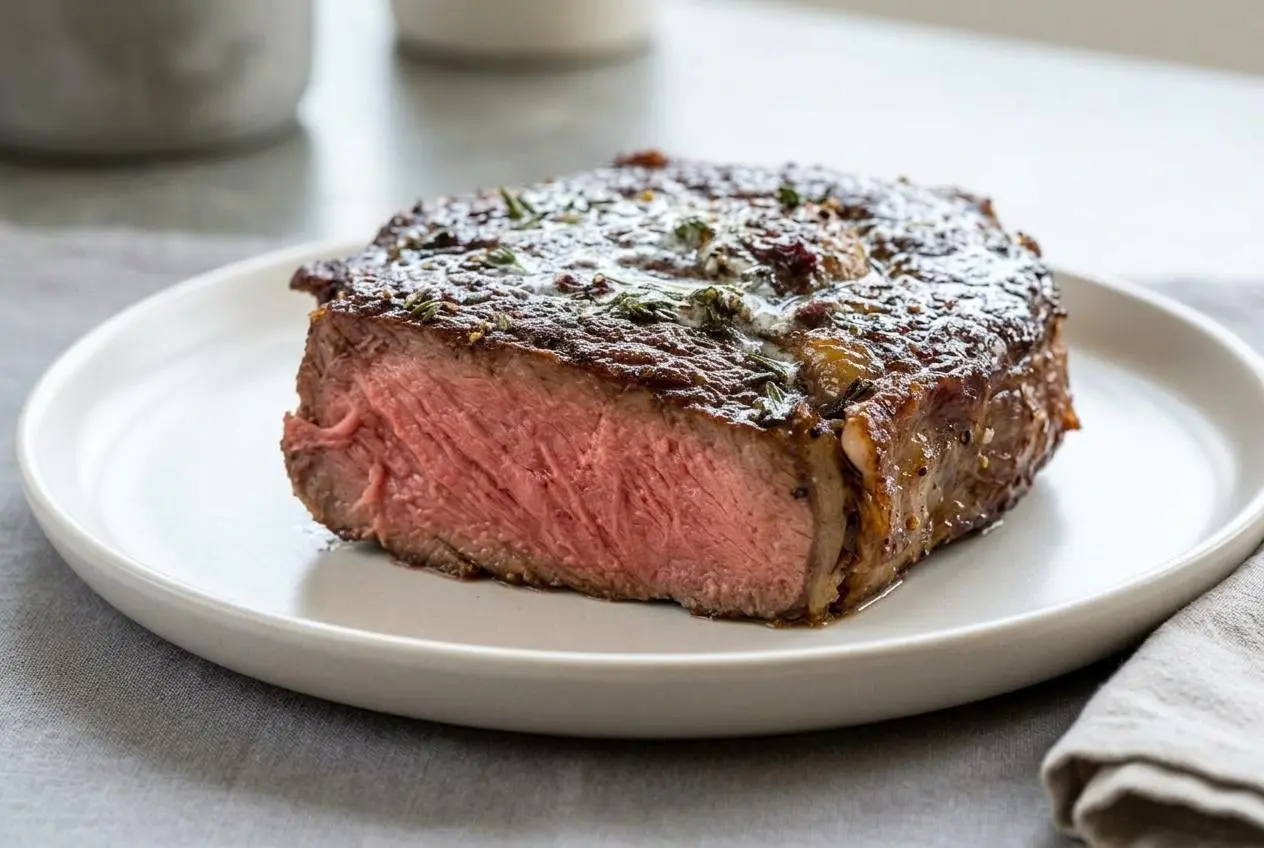
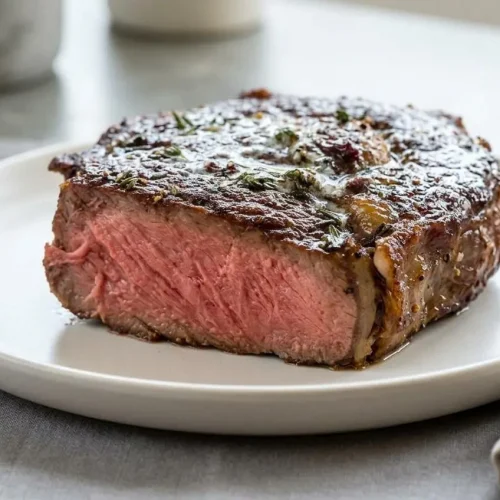
The payoff is a crisp mahogany crust around a tender pink interior, without a thick gray band at the edges. The skillet sizzle is the final signal.
Pat the steaks very dry before seasoning so the surface can brown quickly instead of steaming in the pan.
Why This Reverse Sear Steak Recipe Delivers Flawless Doneness
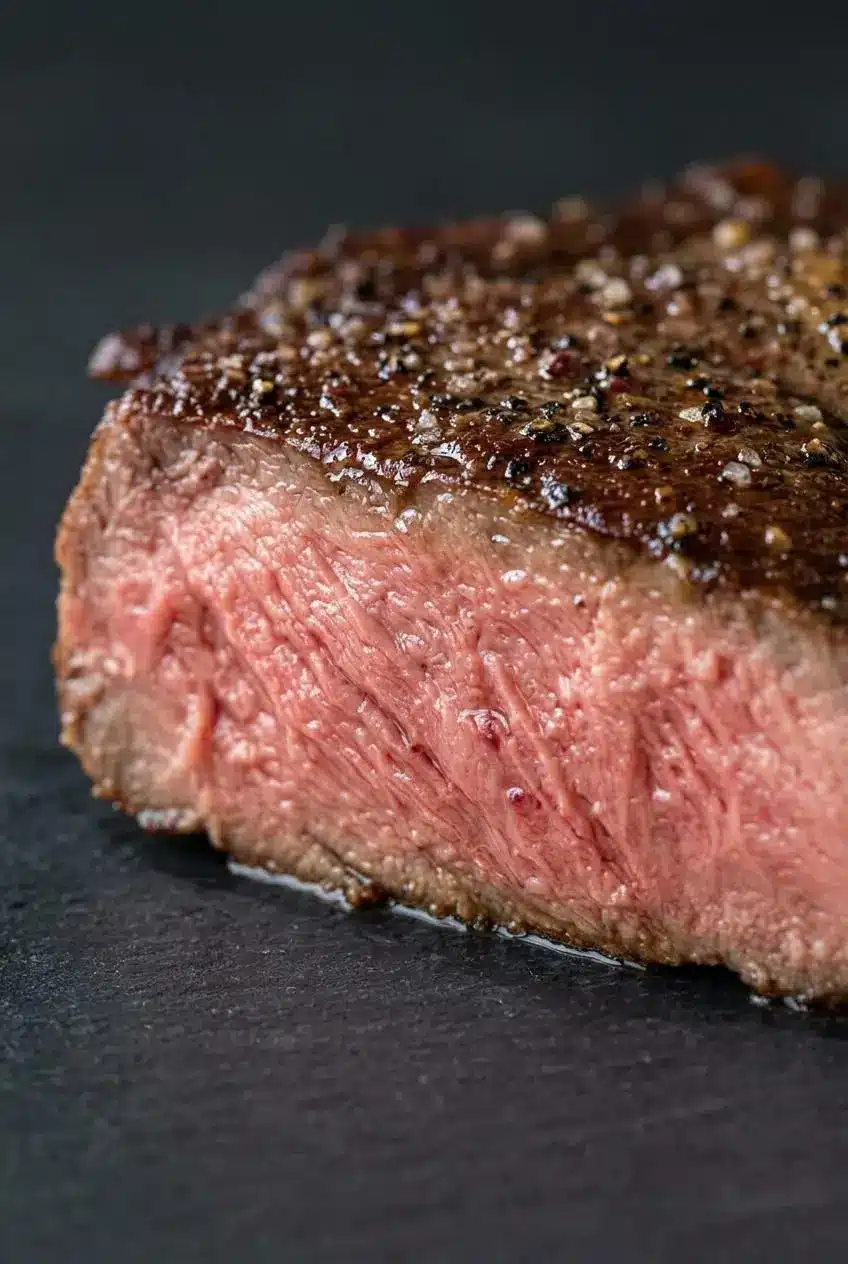
Low oven heat warms the steak gradually, giving the center time to rise in temperature without racing past the outer layers. That slower climb is why reverse-seared steak can stay pink from edge to edge instead of developing a wide gray ring beneath the crust.
As the steak warms, its exterior becomes drier and takes on a matte appearance. That dry surface matters because moisture slows browning. Once the steak reaches the hot skillet, the surface can brown rapidly through the Maillard reaction, producing the savory aroma and dark crust you want.
The gentle warming phase also gives naturally occurring enzymes time to work while the beef remains at lower temperatures. You do not need to chase that detail with a stopwatch, though. The practical advantage is simple: the steak cooks more evenly, and you get more control over the final doneness.
Traditional high-heat cooking starts with a fierce sear, which can overcook the outer layers before the middle catches up. Reverse searing flips that order. Bake first, sear last, and keep the skillet stage brief.
Essential Reverse Sear Steak Ingredients
Each ingredient supports the finished steak: beef provides richness and structure, salt seasons deeply, pepper adds warmth, oil helps form the crust, and butter adds a glossy, savory finish.
- 2 steaks, 1 ½ to 2″ thick, like ribeye or filet mignon
- kosher salt, for seasoning
- black pepper, for seasoning
- 1 tablespoon vegetable oil
- 1 tablespoon unsalted butter, optional
Kosher salt seasons the meat evenly and helps draw a little surface moisture outward, which supports better browning. Black pepper brings a sharp, roasted edge that stands up to rich beef.
Vegetable oil handles the initial high-heat sear better than butter alone. Add the butter only after lowering the heat so its milk solids have less chance to darken too quickly. The optional butter gives the steak a fuller, glossy finish.
I prefer steaks with a visible fat cap because it softens beautifully during the oven phase and becomes especially flavorful when briefly seared on its edge.
How to Make Reverse Sear Steak
Use a rimmed baking sheet and wire rack so hot air can circulate around the steak rather than trapping moisture underneath. An instant-read thermometer keeps the process precise, especially when steak thickness varies.
- Position an oven rack in the center, heat the oven to 275°F (135ºC), and line a rimmed baking sheet with foil or parchment paper before setting a wire rack on top.
The raised rack keeps the steak elevated so its underside dries along with the top and sides. - Blot the steaks thoroughly with paper towels, place them on the rack, and season both sides generously with kosher salt and black pepper.
The surface should look dry rather than shiny before it goes into the oven. - Bake until the thickest center reaches 85 to 90°F (29 to 32ºC) for rare, 90 to 95°F (32 to 35ºC) for medium-rare, 100 to 105°F (38 to 41ºC) for medium, 110 to 115°F (43 to 46ºC) for medium-well, or 120 to 125°F (49 to 52ºC) for well done, checking often after 15 minutes.
This stage takes about 15 to 25 minutes, depending on thickness and preferred doneness, and the exterior should look lightly dry and matte. - Heat a 12-inch cast iron skillet or stainless steel pan over high heat for a few minutes, add the vegetable oil, then sear the steaks for 1 to 2 minutes on each broad side once the oil is just beginning to smoke.
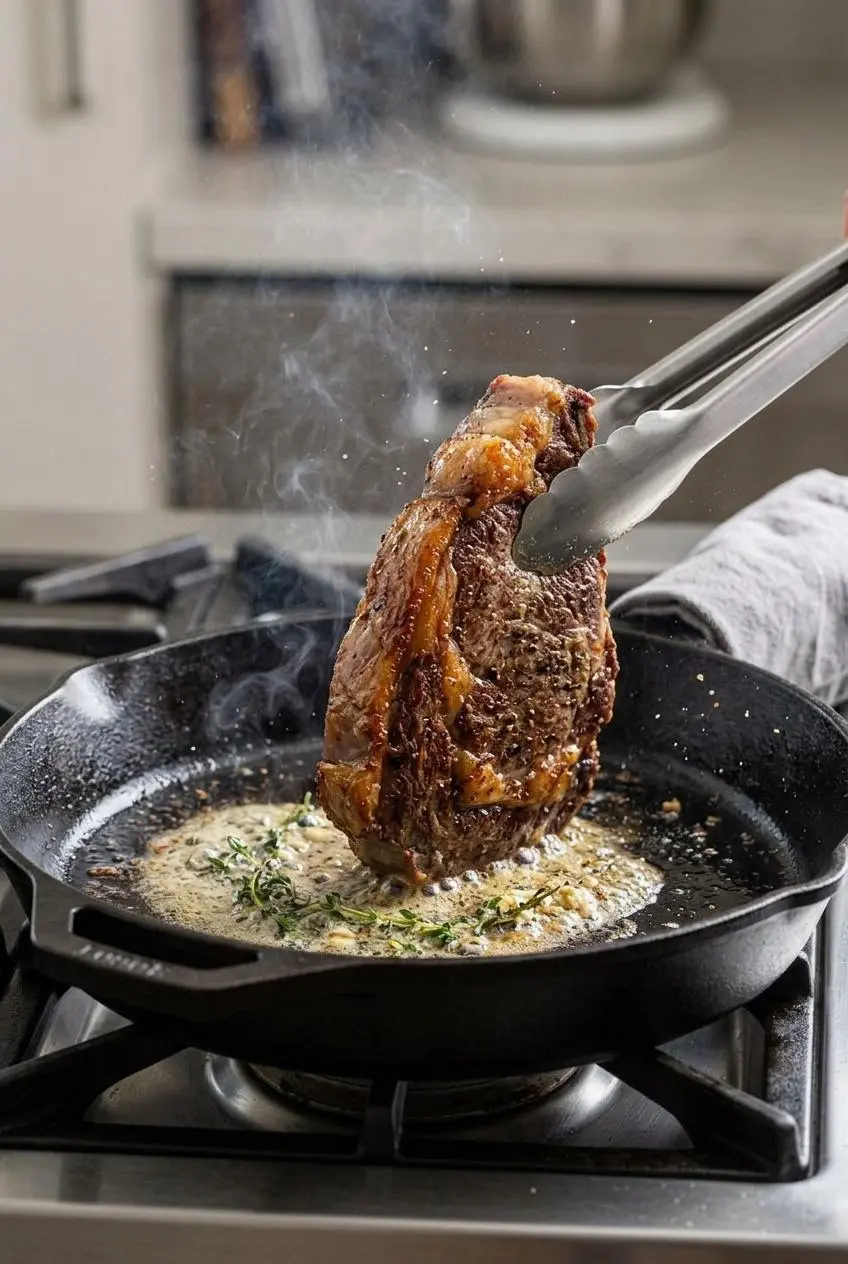
The beef should make an immediate loud sizzle and develop a deep brown crust rather than a pale, damp surface. - Use tongs to hold each steak on its sides for 30 to 60 seconds per side, cooking the fat edges until softened and browned; continue until the center reaches 115 to 120°F (46 to 49ºC) for rare, 120 to 125°F (49 to 52ºC) for medium-rare, 130 to 135°F (54 to 57ºC) for medium, 145 to 150°F (63 to 66ºC) for medium-well, or 155°F (68ºC) for well done.
The fat cap should look rendered and feel less firm when pressed with the tongs. - Lower the heat to medium-low, add the unsalted butter if using, and spoon the melted butter over the steaks for 1 minute before moving them to a clean plate or cutting board to rest for 5 to 10 minutes.
The butter should foam gently, and the steak should remain warm and juicy when sliced.
Outdoor Grill and Smoker Method
For an optional outdoor version, set up a two-zone charcoal grill with coals on one side and an indirect cooking area on the other. A pellet smoker works well too. Hold the cooking chamber around 225°F to 250°F and cook the steak indirectly until it reaches the same oven pull temperature for your preferred doneness.
Then move the steak directly over scorching coals or the hottest grill zone for a quick finish. Turn it frequently if flare-ups appear, and keep the final sear brief so the center does not overshoot. The same thermometer targets still matter more than the clock.
Aromatic Garlic Herb Butter Baste
For an optional restaurant-style finish, add smashed garlic cloves, rosemary, thyme, and a pinch of cracked coriander seeds with the butter during the final minute. Spoon the foaming butter over the steaks as the herbs perfume the pan.
Rosemary and thyme add woodsy depth, while coriander gives a light citrus-like lift that cuts through rich beef fat. Keep these additions optional and add them only at the end, when the butter is warm but no longer exposed to the skillet’s fiercest heat.
Choosing the Right Cut and Thickness
Reverse searing works best with steaks that are at least 1 ½ to 2 inches thick. A thinner steak reaches its final internal temperature too quickly, leaving little time to build a proper crust before the center overcooks.
- Ribeye: Its marbling melts gradually during the low oven phase, making it an excellent choice for a rich, juicy result.
- New York strip: This cut has a firmer bite and a distinct fat edge that benefits from the upright searing step.
- Filet mignon: Tender and leaner than ribeye, filet mignon cooks beautifully with close thermometer monitoring.
Boneless steaks usually warm a bit more predictably because the thermometer can reach the center easily. Bone-in steaks can take longer, especially near the bone, but they offer dramatic presentation and a generous portion of meat around the center.
Skip cuts under 1 ½ inches thick for this technique. They are better suited to fast direct heat, such as a marinated flank steak, where a quick cook protects a thinner cut from drying out.
Handling Large Bone-In Porterhouse and Tomahawk Cuts
Large porterhouse and tomahawk steaks are natural candidates for reverse searing because their thickness gives you room to build a crust without sacrificing the center. Expect the meat close to the bone to warm at a different pace than the middle of the steak.
Insert the thermometer probe into the thickest area of meat, keeping it away from bone and large pockets of fat. Check more than one spot if the steak is especially large. The center temperature should guide when it leaves the oven, not the temperature near the bone.
Adapting for Grass-Fed and Leaner Steaks
Leaner and grass-fed steaks often contain less insulating fat, so they can warm more quickly and lose moisture sooner than highly marbled cuts. Watch the thermometer closely during the oven stage and consider removing the steak about 5°F earlier than the usual pull range.
Use the shortest effective skillet sear for leaner beef. The goal is a dark crust, not extra time in the pan. Butter basting can add richness, but keep it brief so the steak stays tender rather than pushing beyond the doneness you want.
Baking Time and Internal Temperature Milestones
The oven phase usually takes about 15 to 25 minutes for the stated steak thickness at 275°F, but time changes with thickness, starting temperature, bone, and oven behavior. Use time as a rough checkpoint only. The internal temperature tells you when to move to the skillet.
- Rare: Remove from the oven at 85 to 90°F, then finish at 115 to 120°F after searing and resting.
- Medium-rare: Remove from the oven at 90 to 95°F, then finish at 120 to 125°F after searing and resting.
- Medium: Remove from the oven at 100 to 105°F, then finish at 130 to 135°F after searing and resting.
- Medium-well: Remove from the oven at 110 to 115°F, then finish at 145 to 150°F after searing and resting.
- Well done: Remove from the oven at 120 to 125°F, then finish at 155°F after searing and resting.
The gap between the oven pull temperature and the final temperature accounts for the skillet sear and carryover heat. A fast sear raises the internal temperature quickly, so do not wait for the steak to reach its final goal while it is still in the oven.
If your thermometer has a thin probe, place it sideways into the center of the steak rather than straight down from the top. That position reaches the true middle more reliably and helps avoid a misleading reading from a warmer outer layer.
Essential Tips and Common Pitfalls to Avoid
Small details make the difference between a dark, crisp crust and a steak that looks steamed or overcooked. These fixes keep the method on track.
- Pale crust: The steak surface was likely damp or the pan was not hot enough. Dry the beef thoroughly and wait until the oil is just beginning to smoke before adding the steak.
- Gray banding: The steak spent too long over high heat. Use the low oven phase first, then sear hard and fast instead of cooking at medium heat.
- Steak sticks to the pan: The crust has not formed yet. Let the steak sit undisturbed for the first sear, then turn it once it releases more easily.
- Heavy smoke: Use vegetable oil for the initial sear and add butter only after reducing the heat. Open ventilation before heating the skillet.
- Rubbery fat edge: Hold the steak upright with tongs and sear the fat cap directly until it softens and browns.
- Weak browning with two steaks: Avoid crowding the skillet. Give each steak enough room for heat to circulate instead of trapping steam.
Keep the oven between 225°F and 275°F for the most even results. At 300°F, the outer layers heat too quickly, which makes it harder to preserve the gentle temperature gradient that defines this technique.
Resting, Slicing, and Serving Suggestions
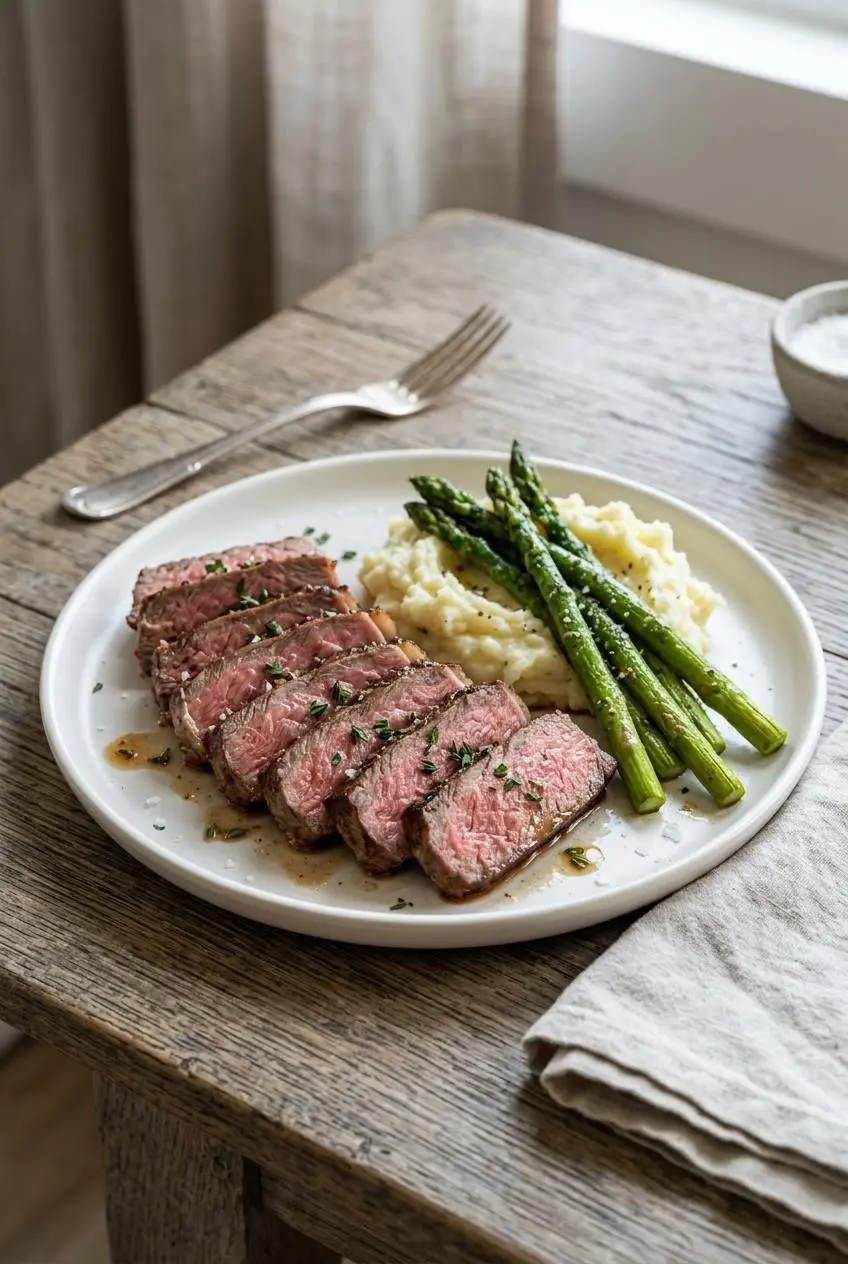
Reverse-seared steak needs only a short 5 to 10 minute rest after the final sear because the oven phase has already cooked it gradually. Rest it on a warm plate or cutting board, then serve while the crust is still at its best.
Slice across the grain, especially with strip steak, to shorten the muscle fibers and make each bite feel more tender. For a whole filet or ribeye, thick slices keep the center warm and show off the even pink interior.
- Serve with garlic butter mashed potatoes and roasted asparagus for a classic steakhouse-style dinner.
- Pair the steak with crisp roasted potato wedges and a bright green salad to balance the richness.
- Slice the beef thinly over greens for a fresh steak salad that makes the most of the browned crust and tender center.
- Add a spoonful of compound herb butter just before serving if you want an extra layer of richness.
Conclusion
Low oven heat followed by a fierce skillet sear gives thick steak an evenly cooked center and a deeply browned crust. Start with a steak at least 1 ½ inches thick, dry the surface well, and pull it from the oven before it reaches final doneness.
An instant-read thermometer is the key to repeatable results. Once you hear that sharp skillet sizzle and see the crust turn mahogany brown, dinner is very close.
Frequently Asked Questions
How Long Should You Reverse Sear a Steak?
For this method, bake a 1 ½- to 2-inch steak at 275°F for about 15 to 25 minutes, checking the internal temperature after the first 15 minutes. Finish with a 1 to 2 minute sear per side in a smoking-hot skillet. Thickness and desired doneness affect the total time, so rely on the thermometer rather than the clock.
Is 300 Too Hot for Reverse Sear?
For the most even pink center, 300°F is hotter than necessary. It warms the outer layers more quickly and can create a wider gray band beneath the crust. Keep the oven between 225°F and 275°F. The lower range gives you more time to monitor the steak and pull it at the right temperature.
What Are Common Mistakes to Avoid When Reverse Searing Steak?
Avoid steaks under 1 ½ inches thick, because they can overcook before the crust develops. Do not skip the wire rack, which helps the surface dry more evenly. Also avoid crowding the skillet and relying on time alone. A hot pan and an instant-read thermometer make the biggest difference.
Do You Need to Rest a Reverse-Seared Steak?
Yes, but the rest can stay brief. Let the steak rest for 5 to 10 minutes after the pan sear before slicing. That pause lets the surface settle after the high heat while keeping the steak warm enough to serve with a crisp crust.
Reverse Sear Steak Recipe

Equipment
- Rimmed baking sheet
- Wire rack
- Instant-read meat thermometer
- 12-inch cast iron skillet or stainless steel pan
- Tongs
Ingredients
- 2 steaks, 1 ½ to 2″ thick, like ribeye or filet mignon
- kosher salt for seasoning
- black pepper for seasoning
- 1 tablespoon vegetable oil
- 1 tablespoon unsalted butter optional
Instructions
- Position an oven rack in the center, heat the oven to 275°F (135ºC), and line a rimmed baking sheet with foil or parchment paper before setting a wire rack on top. The raised rack keeps the steak elevated so its underside dries along with the top and sides.
- Blot the steaks thoroughly with paper towels, place them on the rack, and season both sides generously with kosher salt and black pepper. The surface should look dry rather than shiny before it goes into the oven.
- Bake until the thickest center reaches 85 to 90°F (29 to 32ºC) for rare, 90 to 95°F (32 to 35ºC) for medium-rare, 100 to 105°F (38 to 41ºC) for medium, 110 to 115°F (43 to 46ºC) for medium-well, or 120 to 125°F (49 to 52ºC) for well done, checking often after 15 minutes. This stage takes about 15 to 25 minutes, depending on thickness and preferred doneness, and the exterior should look lightly dry and matte.
- Heat a 12-inch cast iron skillet or stainless steel pan over high heat for a few minutes, add the vegetable oil, then sear the steaks for 1 to 2 minutes on each broad side once the oil is just beginning to smoke. The beef should make an immediate loud sizzle and develop a deep brown crust rather than a pale, damp surface.
- Use tongs to hold each steak on its sides for 30 to 60 seconds per side, cooking the fat edges until softened and browned; continue until the center reaches 115 to 120°F (46 to 49ºC) for rare, 120 to 125°F (49 to 52ºC) for medium-rare, 130 to 135°F (54 to 57ºC) for medium, 145 to 150°F (63 to 66ºC) for medium-well, or 155°F (68ºC) for well done. The fat cap should look rendered and feel less firm when pressed with the tongs.
- Lower the heat to medium-low, add the unsalted butter if using, and spoon the melted butter over the steaks for 1 minute before moving them to a clean plate or cutting board to rest for 5 to 10 minutes. The butter should foam gently, and the steak should remain warm and juicy when sliced.