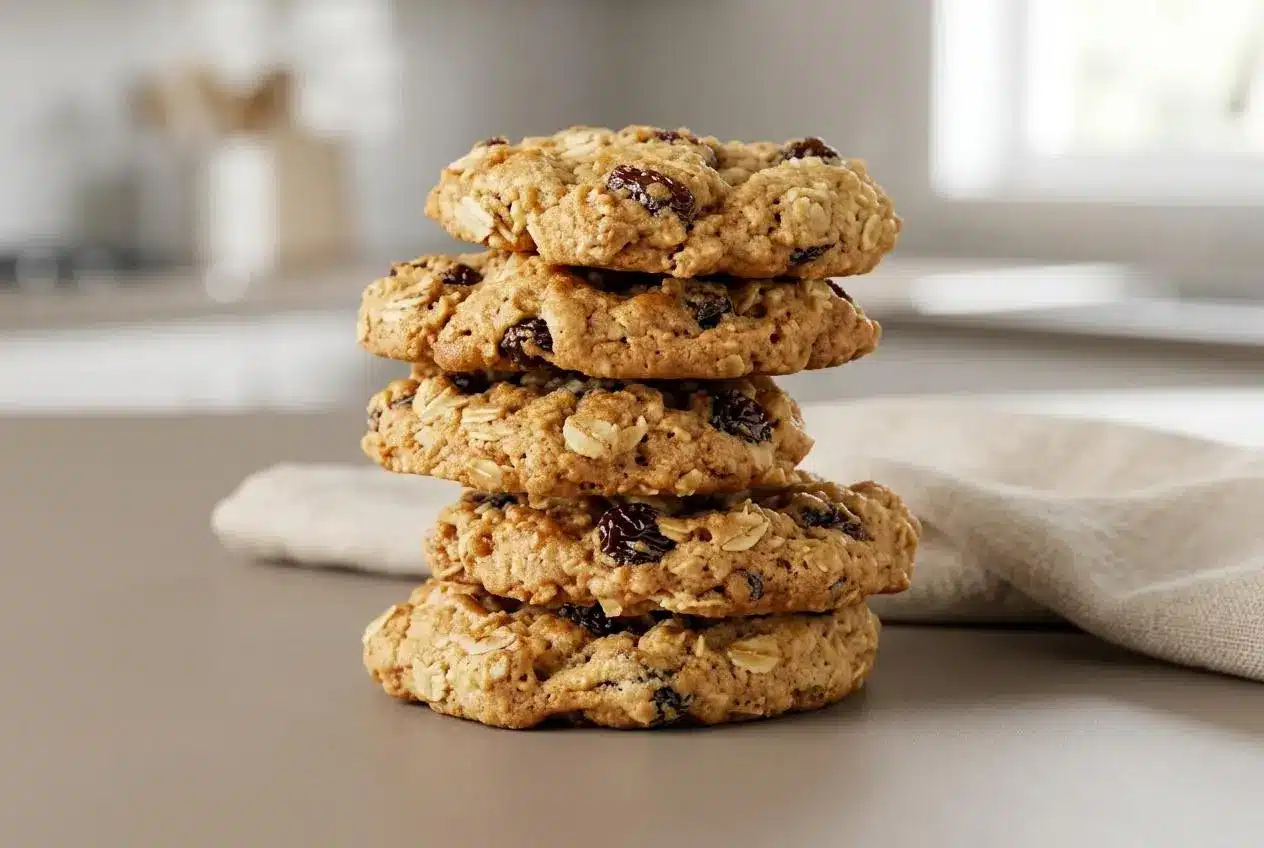
Bake Quaker Oatmeal Cookies at 350 F for 8 to 10 minutes, pulling them when the edges are light golden and the centers still look pale and soft. A one-minute rest on the hot pan finishes the set without losing that chewy middle.
These classic oatmeal raisin cookies combine buttery dough, warm cinnamon, plump raisins, and hearty oats for a familiar homemade treat with crisp edges and a tender chew.
The kitchen starts to smell like butter and cinnamon right as the cookies are ready to come out. Watch the pale centers.
Use room-temperature butter that gives slightly when pressed but has not turned oily or glossy.
Essential Ingredients for Quaker Oatmeal Cookies
Every ingredient contributes to the cookie’s balance: butter carries flavor, sugars shape texture, flour provides structure, oats add chew, and cinnamon and raisins bring warmth and sweetness.
- 14 tablespoons butter (softened)
- 3/4 cup brown sugar (firmly packed)
- 1/2 cup granulated sugar
- 2 eggs
- 1 teaspoon vanilla
- 1 1/2 cups all purpose flour
- 1 teaspoon baking soda
- 1 teaspoon cinnamon
- 1/2 teaspoons salt
- 3 cups Quaker Oats (quick or old-fashioned, uncooked)
- 1 cup raisins
Softened butter creams smoothly with the sugars, creating a dough that bakes with a tender center instead of spreading into a thin crisp disk. Brown sugar holds onto more moisture and adds gentle caramel flavor, while granulated sugar helps the edges turn golden. Eggs bind the dough, vanilla rounds out the sweetness, and baking soda gives the cookies lift.
Flour provides enough structure to hold the oats and raisins together, so measure it by fluffing it first, spooning it into the measuring cup, and leveling the top. Cinnamon gives the dough its warm bakery aroma, and salt keeps the sweetness from tasting flat.
I use butter that is cool but pliable, because butter that looks melted around the edges usually leads to cookies that spread more than I want.
Old-Fashioned Rolled Oats vs. Quick Oats
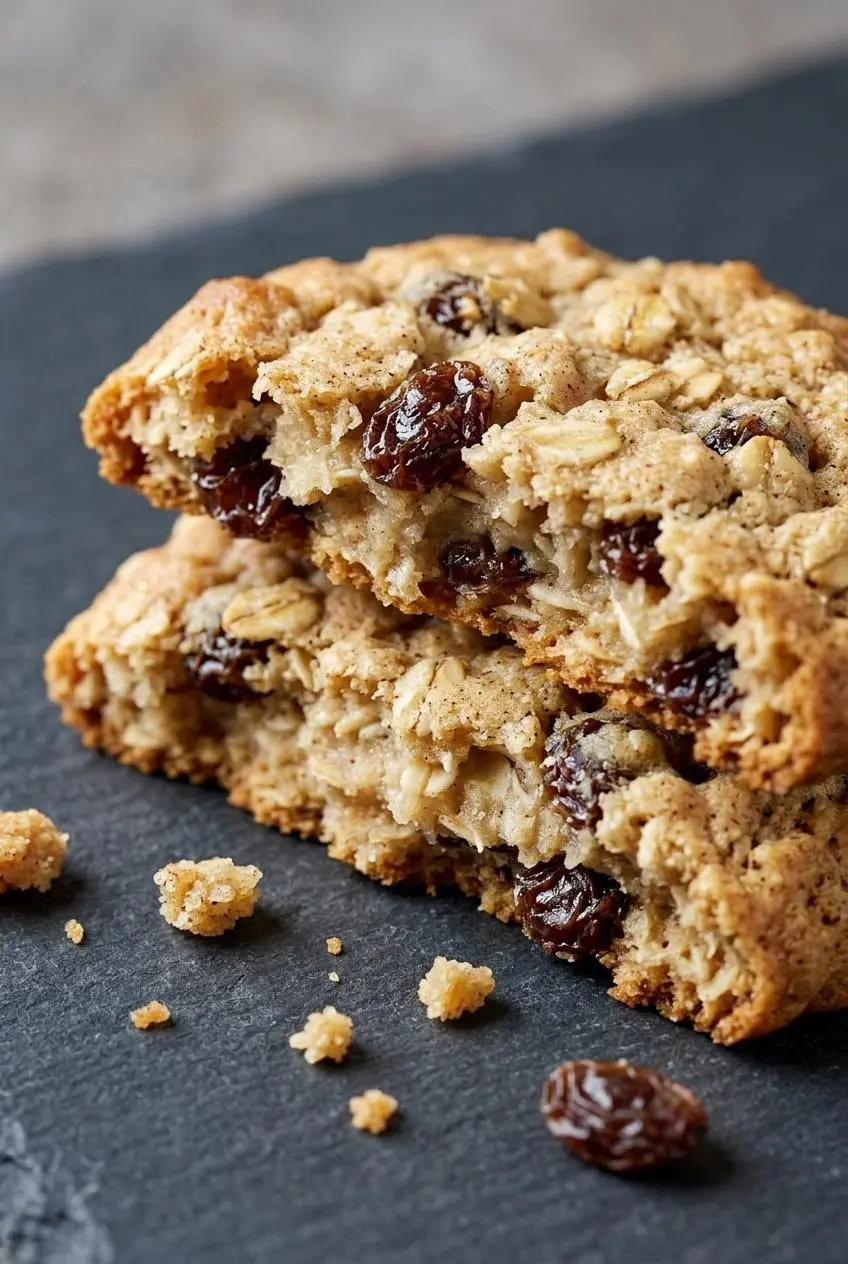
Both oat styles work in this dough, but they produce noticeably different cookies. Old-fashioned rolled oats stay more distinct after baking, giving the cookie a hearty chew and a pleasantly rustic bite. They also create more visible oat texture across the surface.
Quick oats are cut into smaller pieces and absorb moisture faster. They make a softer, more uniform cookie with a slightly denser crumb. If you prefer a pronounced chewy center and more oat texture, choose old-fashioned rolled oats. If you like a smoother cookie, quick oats are a practical swap.
The Butter and Sugar Balance for Perfect Chew
Beat the softened butter with both sugars until the mixture looks creamy and unified. This step distributes the sugar through the fat, which helps the cookies bake evenly. Avoid melted butter. It cannot trap air the same way softened butter can, and the dough may spread too quickly.
Brown sugar is the main contributor to the soft, chewy interior, while granulated sugar encourages the edges to brown and lightly crisp. The combination gives these cookies contrast: a golden rim, a tender center, and enough buttery richness to carry the oats and cinnamon.
How to Make Quaker Oatmeal Cookies Step by Step
The key is to mix until each addition disappears into the dough, then stop. Overworking the dough after the flour goes in can make the finished cookies less tender.
- Set the oven to 350 F, then beat the softened butter with the brown sugar and granulated sugar in a large bowl using an electric mixer on medium speed.
The mixture should look creamy and lighter in texture, with no obvious chunks of butter remaining. - Add the eggs and vanilla, then beat until fully blended into the creamed mixture.
The dough should look smooth and cohesive rather than streaky or separated. - Whisk together the flour, baking soda, cinnamon, and salt, then mix the dry ingredients into the wet mixture.
Stop once the flour disappears so the dough stays soft rather than stiff. - Fold in the Quaker Oats and raisins until they are distributed throughout the dough.
With old-fashioned oats, the dough will feel thick and offer a little resistance as you stir. - Scoop rounded tablespoonfuls of dough onto ungreased cookie sheets, leaving room between portions for spreading.
Each mound should hold its shape instead of looking loose or shiny. - Bake for 8 to 10 minutes, then leave the cookies on the hot sheets for 1 minute before moving them to a wire rack to cool completely.
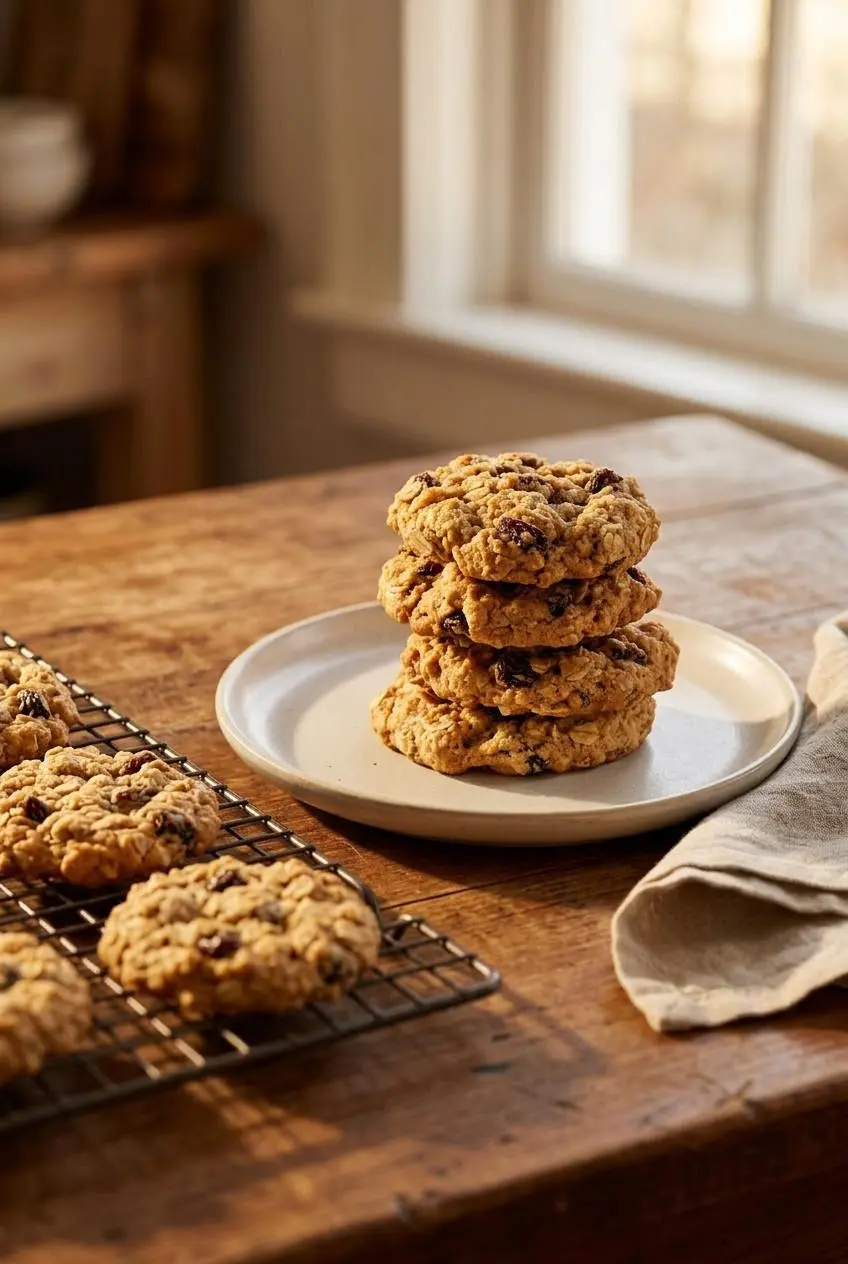
Take them out when the edges are light golden and the centers remain pale and slightly underdone, with a buttery cinnamon aroma.
For a standard oven, the stated 8-to-10-minute range gives the best guide. Convection ovens can brown cookie edges more quickly, so begin checking early and use color, not just the timer, as your final cue. The centers will look softer than the finished cookie feels after cooling.
Troubleshooting Common Oatmeal Cookie Mistakes
Most oatmeal cookie problems come down to butter temperature, flour measurement, or a few extra minutes in the oven. These fixes target the texture you want instead of asking you to start over.
- Flat, wide cookies: Butter that is melted or overly warm makes the dough spread before the cookie structure sets. If the kitchen feels warm or the dough looks glossy, portion it onto the pan and chill the dough portions for 15 minutes before baking.
- Dry, crumbly dough: Flour packed directly into a measuring cup can add more flour than intended. Fluff the flour, spoon it gently into the cup, and level it with a straight edge rather than scooping and pressing.
- Hard or brittle cookies: Oatmeal cookies continue to firm as they cool. Remove them by the 10-minute mark while the center still looks pale and soft, rather than waiting for the whole cookie to look fully browned.
- Cookies that spread unevenly: Placing dough on a hot cookie sheet starts melting the butter before the pan enters the oven. Let cookie sheets cool between batches so each round begins under the same conditions.
- Raisins clumped in one area: Add the oats and raisins gradually, scraping the bowl as you fold. The dough is thick, so a few deliberate turns work better than a quick stir.
Do not judge doneness by firmness alone. At the eight-minute point, a properly chewy cookie has set edges but a center that still looks a little too soft. That is exactly what you want.
Keeping Dough and Cookies Fresh
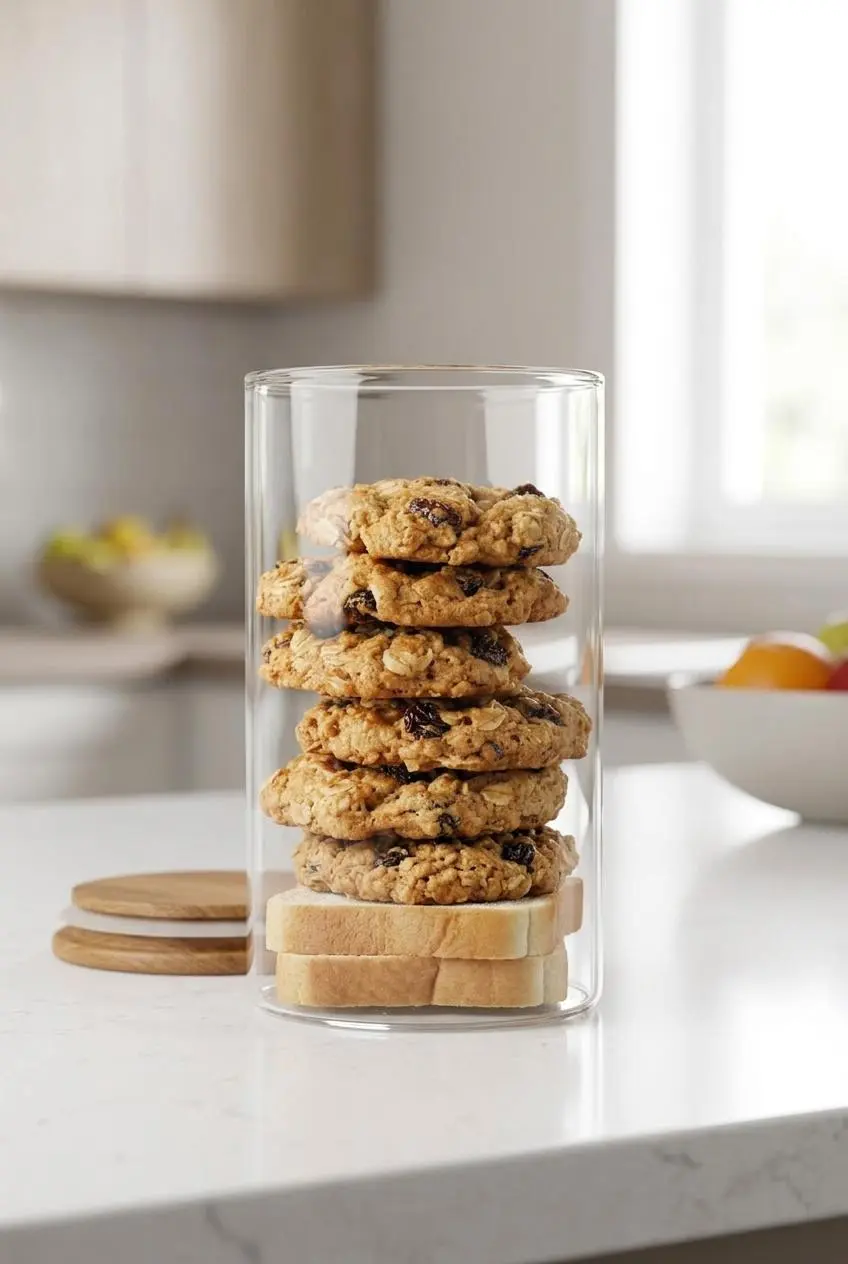
Let baked cookies cool completely before placing them in a tightly covered container at room temperature. Trapping warmth in the container can make the surface sticky, while cooling first protects the tender texture.
A plain slice of sandwich bread in the container can help maintain a softer texture by sharing moisture with the cookies. Replace the bread if it becomes dry or stale. Keep the container away from heat and humidity, which can make the cookies lose their pleasant chew.
If you need to pause before baking, cover the prepared dough well and keep it chilled until you are ready to portion it. Cold dough is especially helpful when the butter has softened quickly in a warm kitchen, since it helps control spreading.
Delicious Variations and Mix-In Ideas
Keep the original dough intact, then change the mix-ins only when you want a different flavor direction. Oats, cinnamon, and brown sugar make a flexible background for chocolate, nuts, fruit, and coconut.
- Replace the raisins with butterscotch morsels for a deeper caramel-like sweetness.
- Add toasted chopped pecans or walnuts for earthy crunch and a more substantial bite.
- Stir in shredded coconut for a toasted, chewy finish that works especially well with cinnamon.
- For a more deeply toasted flavor, brown the butter first, then cool it until it returns to a softened consistency before mixing. A little ground nutmeg can reinforce that warm cereal-shop aroma.
For another fruit-forward option, try oatmeal cranberry cookies when you want tart dried fruit in place of the classic raisin profile.
Oatmeal Chocolate Chip Cookies
For oatmeal chocolate chip cookies, swap the raisins for semi-sweet chocolate chips or butterscotch morsels. Semi-sweet chips add a familiar chocolate contrast, while butterscotch emphasizes the brown sugar and cinnamon. For a separate chocolate-focused version, see these oatmeal chocolate chip cookies.
Sheet Pan Oatmeal Cookie Bars
This dough was developed for drop cookies, where each portion gets direct heat around its edges. For a 13×9-inch pan version, use a separately tested oatmeal bar formula instead of guessing at baking time, since a thicker layer changes how the center sets and how quickly the edges brown.
Conclusion
These cookies earn their chewy texture from softened butter, brown sugar, properly measured flour, and the one-minute rest on the baking sheet. Old-fashioned oats give the most distinct chew, while quick oats make a softer, more uniform cookie.
Pull the cookies when their edges are light golden and their centers still look pale and soft. That small bit of restraint is what keeps every batch tender and comforting.
Frequently Asked Questions
Can I Use Quick Oats Instead of Old Fashioned Oats?
Yes. Quick oats work as a 1:1 substitute for old-fashioned oats in this dough. Quick oats absorb moisture faster, so the cookie becomes a little denser and softer. Old-fashioned oats keep more texture and create a chewier, heartier bite. Choose quick oats for a smoother cookie and rolled oats for more visible oat texture.
Why Did My Oatmeal Cookies Turn Out Flat?
Flat cookies usually mean the butter was too warm, the baking sheet was hot, or the flour was undermeasured. Use softened butter, not melted butter. Measure flour with the spoon-and-level method. Chill portioned dough briefly if the dough feels warm or loose before baking.
Can I Chill the Cookie Dough Before Baking?
Yes. Chilling helps when the dough is warm or when you want cookies with less spread and thicker centers. Cover the dough well so it does not dry out. Portion the dough first if you want to move it directly from the chilled pan to the oven. Use the same visual cues for doneness: light golden edges and pale centers.
How Do I Keep Baked Oatmeal Cookies Soft and Chewy?
Cool the cookies completely, then keep them in an airtight container at room temperature. Add a plain slice of sandwich bread to help preserve a soft texture. Keep the container closed between servings to limit exposure to dry air. Avoid overbaking, since storage cannot bring back moisture lost in the oven.
How Can I Make Quaker Oatmeal Cookies Even Better?
Small changes in handling can make the flavor and texture more pronounced. Chill warm dough portions before baking to encourage thicker, chewier centers. Use a little more cinnamon or vanilla if you want a stronger warm-spice profile. Try browned butter for a deeper nutty flavor, but cool it back to a softened consistency before mixing.
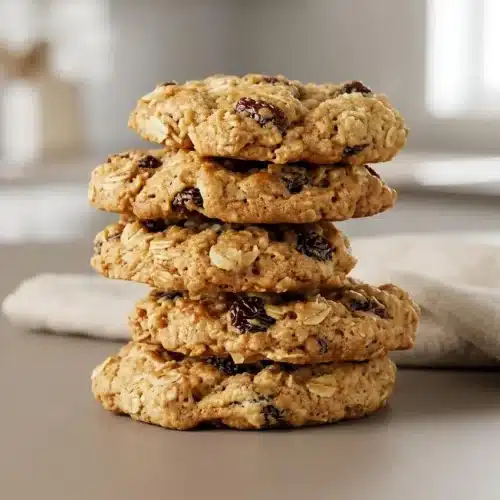
Quaker Oatmeal Cookies

Equipment
- Electric Mixer
- large bowl
- Cookie sheets
- Wire rack
Ingredients
- 14 tablespoons butter softened
- 3/4 cup brown sugar firmly packed
- 1/2 cup granulated sugar
- 2 eggs
- 1 teaspoon vanilla
- 1 1/2 cups all purpose flour
- 1 teaspoon baking soda
- 1 teaspoon cinnamon
- 1/2 teaspoons salt
- 3 cups Quaker Oats quick or old-fashioned, uncooked
- 1 cup raisins
Instructions
- Set the oven to 350 F, then beat the softened butter with the brown sugar and granulated sugar in a large bowl using an electric mixer on medium speed. The mixture should look creamy and lighter in texture, with no obvious chunks of butter remaining.
- Add the eggs and vanilla, then beat until fully blended into the creamed mixture. The dough should look smooth and cohesive rather than streaky or separated.
- Whisk together the flour, baking soda, cinnamon, and salt, then mix the dry ingredients into the wet mixture. Stop once the flour disappears so the dough stays soft rather than stiff.
- Fold in the Quaker Oats and raisins until they are distributed throughout the dough. With old-fashioned oats, the dough will feel thick and offer a little resistance as you stir.
- Scoop rounded tablespoonfuls of dough onto ungreased cookie sheets, leaving room between portions for spreading. Each mound should hold its shape instead of looking loose or shiny.
- Bake for 8 to 10 minutes, then leave the cookies on the hot sheets for 1 minute before moving them to a wire rack to cool completely. Take them out when the edges are light golden and the centers remain pale and slightly underdone, with a buttery cinnamon aroma.