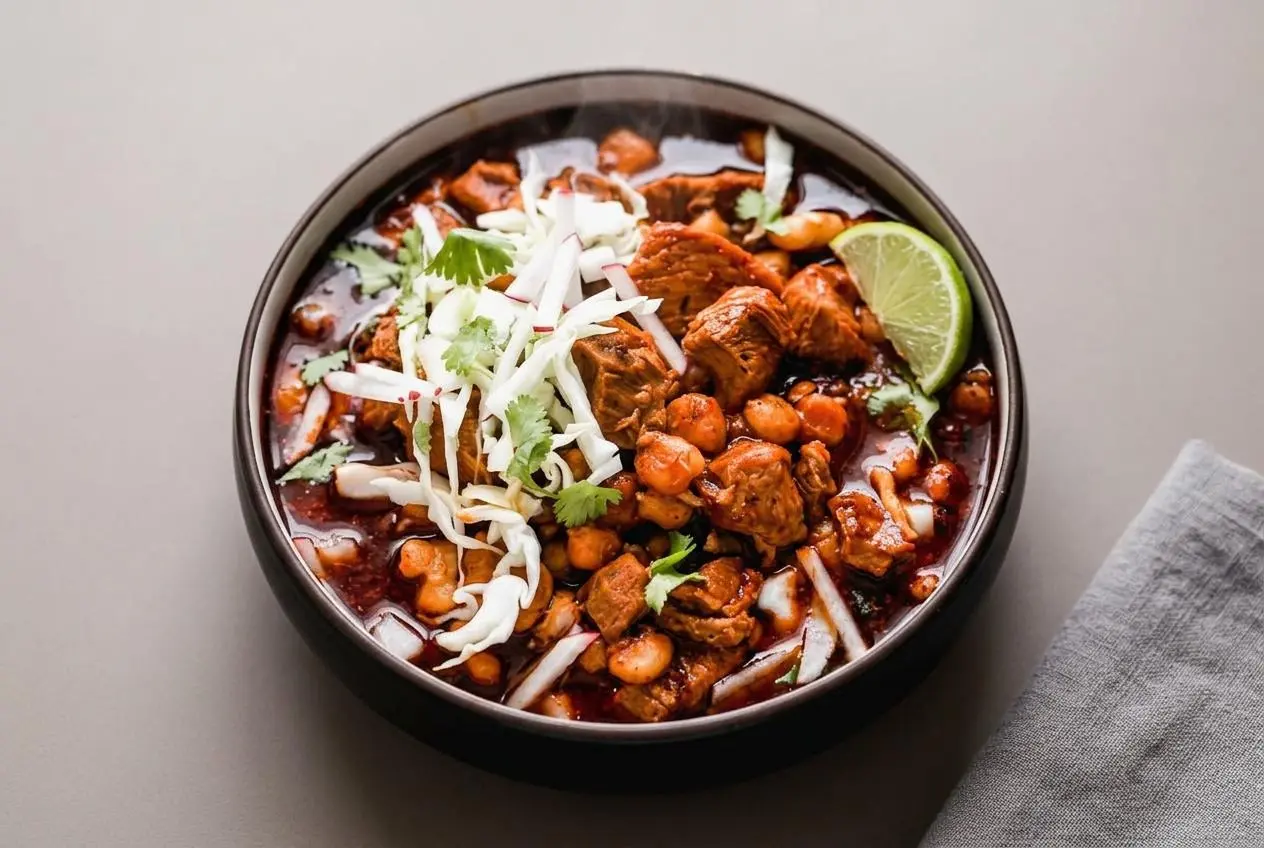
Pozole is a traditional Mexican soup made with tender pork shoulder, white hominy, and pureed dried red chiles in a deeply savory broth.
This pozole recipe builds flavor in layers: pork simmers with garlic and bay leaves, then a strained guajillo and ancho chile sauce turns the broth a vivid brick red.
The aroma of garlic, oregano, and simmering pork makes the wait worthwhile. The silky chile broth is the payoff.
Keep the pork at a gentle simmer rather than a hard boil so the meat stays succulent and the broth remains clear.
Essential Ingredients for This Pozole Recipe
Each ingredient contributes something important, from pork richness and hominy’s hearty chew to the red chile sauce’s color, warmth, and depth. Fresh toppings bring acidity, crunch, and brightness to every bowl.
- 5 lb pork shoulder or butt roast
- 10 cloves garlic, divided
- 2 teaspoons salt
- 1 yellow onion, quartered
- 4 bay leaves
- 3 tablespoons better than bouillon chicken flavor, or chicken bouillon granules
- 6 dried gaujillo chiles
- 6 dried ancho chiles
- 1-3 dried chiles de arbol, optional, for spicier/hotter soup
- 2 tablespoons oil
- 1 tablespoon Dried oregano
- 1/2 teaspoon ground cumin
- 8 oz can tomato sauce
- 1 teaspoon white vinegar
- 2 25oz cans white hominy, drained and rinsed
- salt and pepper, to taste
- Thinly shredded Cabbage (required)
- diced yellow or white onion (required)
- fresh cilantro (required)
- lime wedges (required)
- avocado (optional)
- A few thinly sliced radishes (optional)
- Warm corn or flour tortillas, for serving
Pork shoulder, also sold as pork butt, has enough marbling to enrich the broth while its connective tissue softens during the long simmer. White hominy provides the classic chewy, tender corn kernels that make pozole feel substantial.
I remove any unusually thick seams of fat from the pork before cooking, but leave the light marbling in place because it gives the broth a fuller flavor.
Selecting the Best Pork Cuts and Bones
Pork shoulder and pork butt are ideal here because they become tender without drying out. The collagen gradually softens into the broth, while the fat adds savory body. If you enjoy a fuller, more gelatinous broth, pork neck bones can be simmered with the meat as an optional addition, then removed before serving.
A lean cut such as pork loin can work in a pinch, but it will not give the same richness or forgiving texture. Look for pork that separates easily when pressed with a fork rather than meat that looks stringy or tight.
Dried Chiles: Guajillo, Ancho, and Arbol
Guajillo chiles give pozole rojo its bright red color and a gently tangy, fruity flavor. Ancho chiles add darker, earthy depth with a subtle raisin-like sweetness. Chiles de arbol are optional and bring a sharper heat, so start conservatively if you prefer a milder bowl.
Remove the stems, seeds, and pale inner veins before soaking the chiles. For extra fragrance, lightly toast the deseeded pods in a dry skillet for about 1 minute before boiling them. Stop as soon as they smell warm and nutty, since over-toasted chiles can turn bitter.
Hominy Selection and Pre-Treatment
Canned white hominy is convenient and works beautifully after draining and rinsing. Rinsing washes away the packing liquid so it does not cloud the broth or compete with the chile flavor. For an even cleaner taste, briefly blanch the rinsed hominy in simmering water, drain it again, and add it during the final simmer.
Dried maize offers a more traditional route but needs separate soaking and cooking before it can replace canned hominy. This version is designed around canned hominy, which becomes tender and flavorful as it simmers in the seasoned pork broth.
How to Make Silky Red Pozole
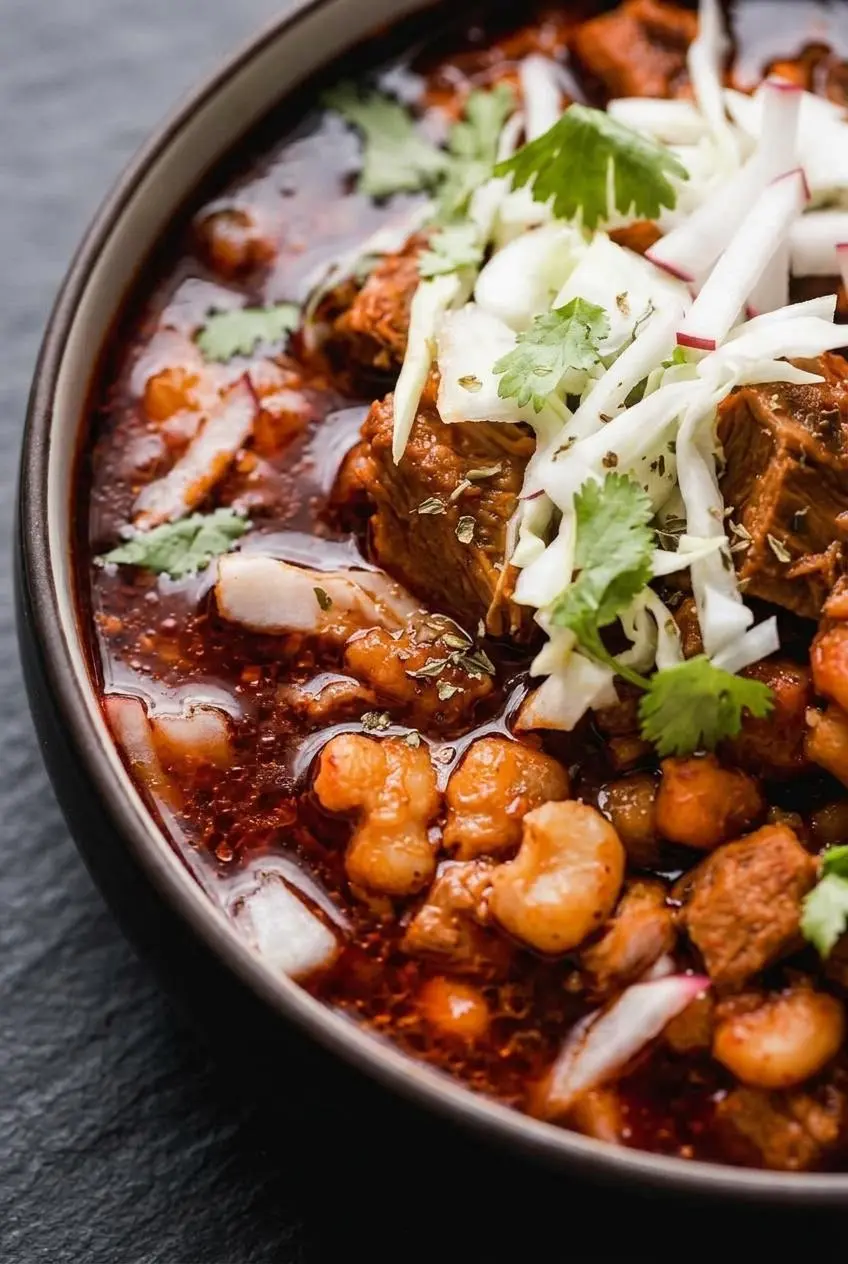
Simmering and Skimming the Pork Broth
Start the pork in cool water and bring it up to a boil so foam rises to the top early. Skim that gray foam away before adding the aromatics. Once the onion, garlic, bay leaves, salt, and bouillon go in, lower the heat until the liquid barely bubbles.
A furious boil can tighten the pork and make the broth look cloudy. A calm simmer gives the pork time to soften and lets the aromatics build a rounded, savory base.
Toasting, Blending, and Straining the Chile Sauce
Boiling the deseeded chiles softens their skins and makes them easy to blend with garlic and reserved chile water. The puree should look thick and smooth before it goes through the fine mesh strainer.
Do not skip the strainer. It catches stubborn chile skin and any remaining seeds, giving the finished pozole broth a velvety texture instead of a sandy one. Frying the strained puree in oil deepens its aroma and rounds out the raw chile flavor.
Assembling and Final Simmer
After removing the cooked aromatics, stir the red chile sauce into the pork broth with tomato sauce, oregano, cumin, vinegar, and hominy. The broth will shift from pale and savory to a vibrant brick red. The pork is ready when a piece yields with little pressure from a fork.
- Trim away large pieces of fat from the pork, cut the roast into 1-inch cubes, and place it in a large stock pot with enough water to cover it by about 2 inches, using 8-10 cups water.
Bring the water to a boil and skim away the foam that collects on the surface. - Add the quartered onion, 5 whole garlic cloves, bay leaves, 2 teaspoons salt, and chicken bouillon to the pot, then reduce the heat to a gentle simmer for 1 ½ hours.
The broth should bubble softly while the pork begins to soften and smell deeply savory. - Remove the stems, seeds, and veins from the dried chiles, then place them in a small pot with enough water to cover them.
Boil for 15 minutes, until the chile skins are softened and flexible. - Transfer the softened chiles to a blender with a slotted spoon, then add 1 cup of the chile cooking liquid and the remaining 5 peeled garlic cloves.
Blend until the mixture becomes a smooth, thick red puree. - Discard the chile cooking water, heat 2 tablespoons oil in the small pot over medium heat, and strain the blended chile puree into the oil through a fine mesh strainer.
Cook over medium-low heat for 10 minutes, stirring often, until the sauce smells mellow and concentrated. - Remove the bay leaves, onion, garlic cloves, and neck bones (if used) from the pork pot, then stir in the chile sauce, tomato sauce, oregano, cumin, white vinegar, and hominy.
Bring the pozole to a slow boil, then simmer for 30 minutes, until the pork is very tender and the broth is brick red. - Taste the broth and adjust with salt, chicken bouillon paste, or oregano as needed.
The finished broth should taste savory, lightly tangy, and balanced rather than flat or harsh. - Ladle the hot pozole into bowls and add shredded cabbage, diced onion, cilantro, and lime juice, with avocado and radishes if desired.
The fresh toppings should stay crisp against the rich, steaming broth.
Alternative Cooking Methods: Instant Pot and Slow Cooker
Both appliances can make a satisfying pork base, but prepare the chile sauce separately so you can still strain and fry it for the smoothest flavor.
- Instant Pot: Combine the cubed pork, water, onion, garlic, bay leaves, salt, and bouillon. Cook on High pressure for 20 minutes, then allow a natural release before opening the lid. Remove the aromatics, stir in the prepared chile sauce and hominy, and use Sauté mode for 10 minutes until the broth comes together.
- Slow cooker: Add the pork, aromatics, water, salt, and bouillon, keeping the liquid below the cooker’s maximum fill line. Cook on Low for 6 to 7 hours or High for 4 hours. Stir in the strained chile sauce and hominy during the final 45 minutes.
- For both methods: Keep the chile sauce and hominy out until the pork is tender. This prevents the hominy from becoming overly soft and lets you adjust seasoning after the concentrated chile sauce is added.
Popular Pozole Variations
These optional versions change the protein or chile base while keeping the comforting hominy-and-broth character of pozole.
Chicken Pozole Rojo
Use bone-in chicken thighs or breasts in place of pork for a lighter variation. Simmer the chicken for 35-45 minutes, until it is cooked through and easy to shred, then remove the bones and return the shredded meat to the red chile broth.
Pozole Verde With Tomatillos
For a brighter green variation, replace the dried red chiles with a blended salsa verde of simmered tomatillos, poblano peppers, cilantro, and epazote. For a detailed version, try this tangy pozole verde, which keeps the familiar hominy base with a fresh, herbal broth.
Quick 30-Minute Leftover Pozole
Use leftover shredded pork or rotisserie chicken when you need a faster dinner. Simmer the meat with prepared chile paste, quality broth, and canned hominy just long enough for the flavors to blend and the hominy to heat through.
Vegetarian Bean and Hominy Pozole
For a meatless bowl, use vegetable broth with extra white hominy and pinto or black beans. Keep the guajillo and ancho chile base for depth, then finish generously with cabbage, lime, cilantro, radishes, and avocado.
Essential Pozole Toppings and Serving Ideas
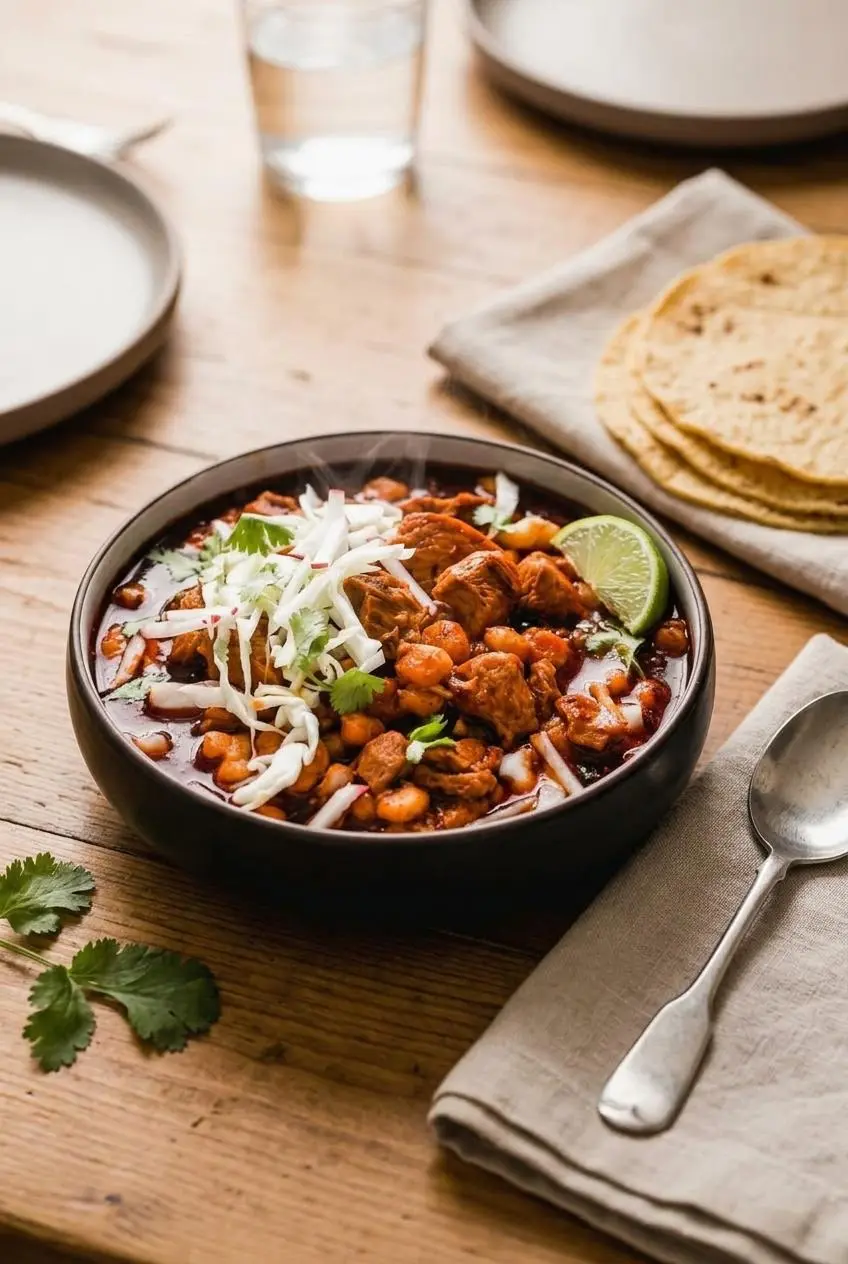
Pozole toppings are functional, not decorative. Rich pork broth needs crisp, cool, acidic elements to keep each spoonful balanced.
- Shredded cabbage: Adds clean crunch and stays pleasantly firm in the hot broth.
- Diced onion and cilantro: Bring sharpness and herbal freshness that lift the chile flavor.
- Lime wedges: Add a bright finish that helps balance the pork’s richness.
- Radishes and avocado: Radishes add peppery crunch, while avocado softens the heat with a creamy texture.
- Mexican oregano: Sprinkle a little over individual bowls for an earthy, aromatic finish.
- Tortillas or tostadas: Serve warm corn or flour tortillas alongside, or offer crisp tostadas for scooping.
For a larger gathering, set out the toppings separately so everyone can build a bowl to their taste. A side of creamy queso dip also works nicely with tortillas before the pozole is served.
Troubleshooting and Texture Fixes
A few small adjustments can rescue a broth that feels too harsh, oily, thin, or underseasoned.
- Bitter broth: Chile seeds, veins, or over-toasted pods are usually the problem. Strain the broth again if needed, then dilute with unsalted chicken broth and brighten individual bowls with lime. A small pinch of brown sugar can soften lingering bitterness.
- Tough pork: The pork needs more gentle simmering time for its connective tissue to soften. Keep the lid on, maintain low heat, and continue cooking until the pieces give easily to a fork.
- Greasy surface: Use a wide ladle to skim excess fat from the top while the soup is hot. If the pozole has been chilled, the firm fat on top can be lifted away before reheating.
- Broth that is too spicy: Add more unsalted broth and extra blanched hominy to spread out the heat. Lime, avocado, cabbage, and tortillas help make each bowl taste gentler.
- Broth that tastes flat: Add salt gradually, especially when using bouillon, then check oregano and vinegar. The flavor should have savory depth, chile warmth, and a faint tang.
Storing and Reheating Pozole
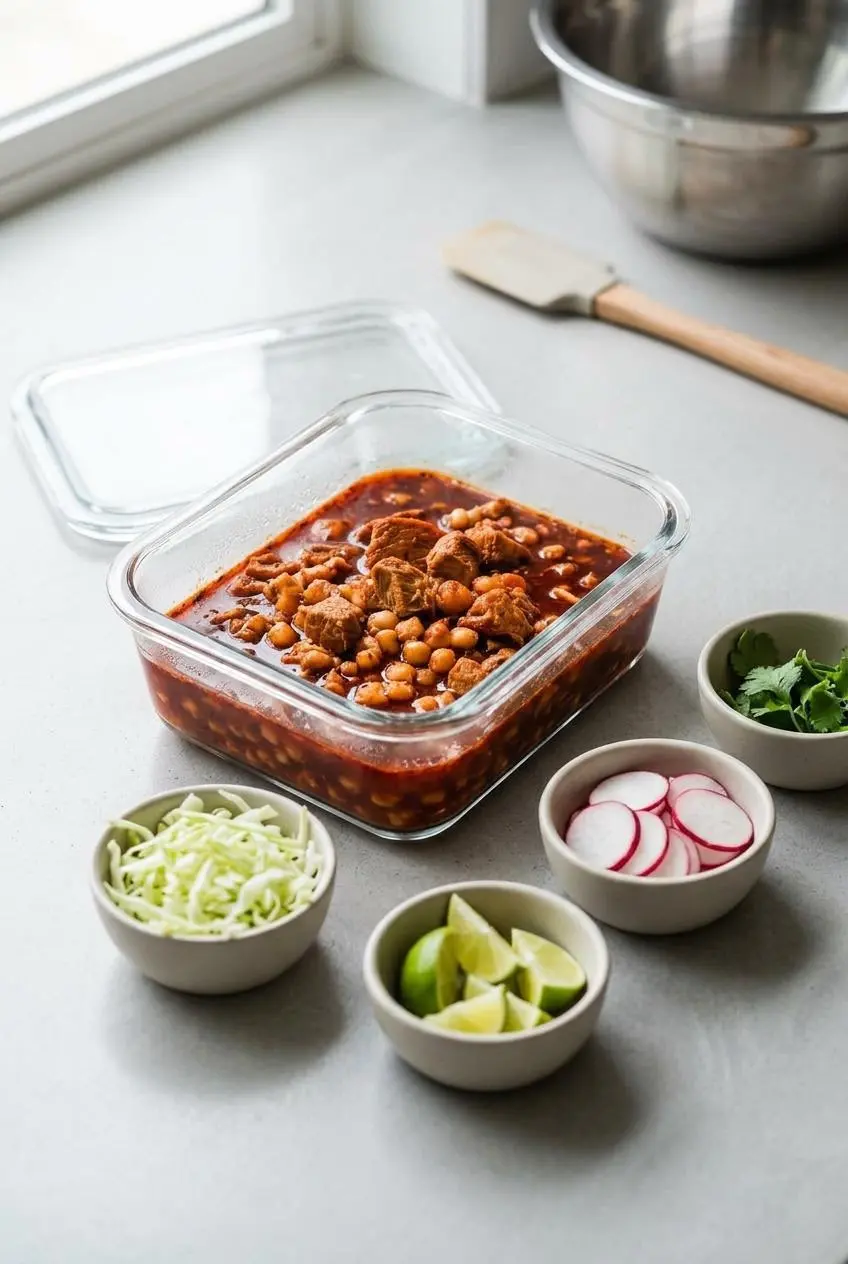
Pozole often tastes more integrated after it rests because the pork and hominy continue absorbing the chile broth. Cool the soup promptly, transfer it to airtight containers, and keep the cabbage, cilantro, onion, radishes, avocado, and lime separate until serving.
Reheat only the portion you plan to eat in a pot over medium-low heat. Stir occasionally and avoid a hard boil, which can make the pork stringy and soften the hominy too much. Add a splash of broth if the pozole thickens as it sits.
If you need to hold leftovers, keep them chilled in a covered container and reheat gently until steaming. Fresh garnishes should always be prepared separately so they retain their crunch and brightness.
Conclusion
Great pozole rojo comes from patient simmering, a well-strained chile sauce, and pork that turns tender enough to break apart with a fork. The brick-red broth should taste savory, warm, and lightly tangy.
Set out the crunchy toppings, squeeze in plenty of lime, and serve the bowls hot with tortillas or tostadas. It is comfort food with plenty of character.
Frequently Asked Questions
What Cut of Meat Is Best for Traditional Pozole?
Pork shoulder or pork butt is the best choice for tender, flavorful pozole. Its marbling enriches the broth while collagen softens during simmering. Bone-in shoulder or optional neck bones can add extra body to the broth.
Can I Make Authentic Pozole in an Instant Pot or Slow Cooker?
Yes. An Instant Pot cooks the pork base on High pressure for 20 minutes, followed by a natural release. A slow cooker needs 6 to 7 hours on Low or 4 hours on High for the pork base. For either method, add the prepared chile sauce and hominy after the pork becomes tender.
How Do I Fix Pozole Broth if It Tastes Too Spicy or Bitter?
Strain the broth again if stray chile seeds or skin pieces remain. Dilute with unsalted chicken broth, then add lime to individual bowls. A small pinch of brown sugar can soften bitterness without making the broth sweet.
Can Pozole Be Frozen and Reheated Without Changing Texture?
For the best texture, keep fresh cabbage, onion, cilantro, radishes, avocado, and lime separate from stored pozole. Reheat the soup gently on the stovetop rather than boiling it hard. Add fresh toppings only after the broth is hot and the pork is warmed through.
Pozole Recipe

Equipment
- Large stock pot
- Small saucepan
- Blender
- Fine mesh strainer
Ingredients
- 5 lb pork shoulder or butt roast
- 10 cloves garlic divided
- 2 teaspoons salt
- 1 yellow onion quartered
- 4 bay leaves
- 3 tablespoons better than bouillon chicken flavor, or chicken bouillon granules
- 6 dried gaujillo chiles
- 6 dried ancho chiles
- 1-3 dried chiles de arbol optional, for spicier/hotter soup
- 2 tablespoons oil
- 1 tablespoon Dried oregano
- 1/2 teaspoon ground cumin
- 8 oz can tomato sauce
- 1 teaspoon white vinegar
- 2 25oz cans white hominy drained and rinsed
- salt and pepper to taste
- Thinly shredded Cabbage required
- diced yellow or white onion required
- fresh cilantro required
- lime wedges required
- avocado optional
- A few thinly sliced radishes optional
- Warm corn or flour tortillas for serving
Instructions
- Trim away large pieces of fat from the pork, cut the roast into 1-inch cubes, and place it in a large stock pot with enough water to cover it by about 2 inches, using 8-10 cups water. Bring the water to a boil and skim away the foam that collects on the surface.
- Add the quartered onion, 5 whole garlic cloves, bay leaves, 2 teaspoons salt, and chicken bouillon to the pot, then reduce the heat to a gentle simmer for 1 ½ hours. The broth should bubble softly while the pork begins to soften and smell deeply savory.
- Remove the stems, seeds, and veins from the dried chiles, then place them in a small pot with enough water to cover them. Boil for 15 minutes, until the chile skins are softened and flexible.
- Transfer the softened chiles to a blender with a slotted spoon, then add 1 cup of the chile cooking liquid and the remaining 5 peeled garlic cloves. Blend until the mixture becomes a smooth, thick red puree.
- Discard the chile cooking water, heat 2 tablespoons oil in the small pot over medium heat, and strain the blended chile puree into the oil through a fine mesh strainer. Cook over medium-low heat for 10 minutes, stirring often, until the sauce smells mellow and concentrated.
- Remove the bay leaves, onion, garlic cloves, and neck bones (if used) from the pork pot, then stir in the chile sauce, tomato sauce, oregano, cumin, white vinegar, and hominy. Bring the pozole to a slow boil, then simmer for 30 minutes, until the pork is very tender and the broth is brick red.
- Taste the broth and adjust with salt, chicken bouillon paste, or oregano as needed. The finished broth should taste savory, lightly tangy, and balanced rather than flat or harsh.
- Ladle the hot pozole into bowls and add shredded cabbage, diced onion, cilantro, and lime juice, with avocado and radishes if desired. The fresh toppings should stay crisp against the rich, steaming broth.