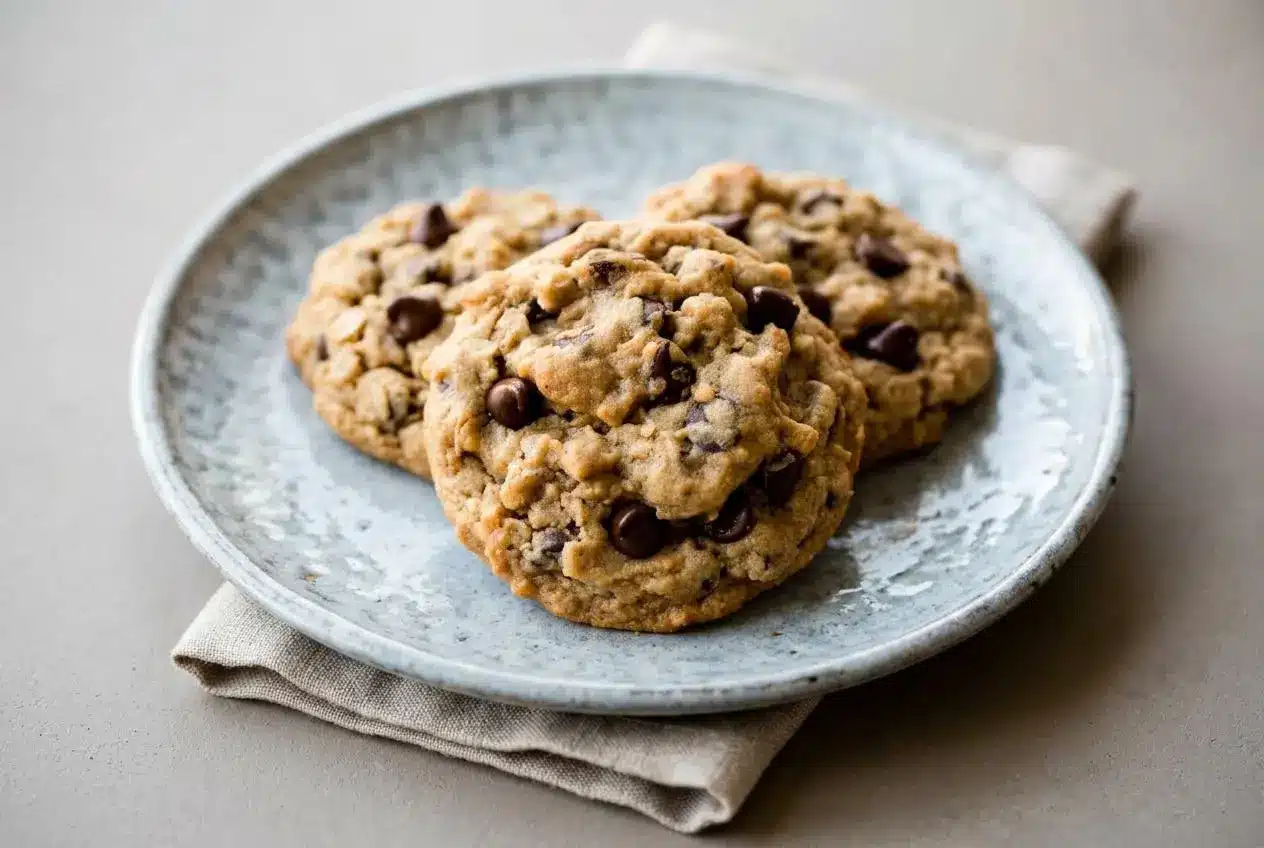
These peanut butter oatmeal cookies combine creamy peanut butter, rolled oats, butter, and balanced sugars for thick, soft cookies with chewy centers and lightly golden edges.
Peanut butter oatmeal cookies deliver buttery richness, nutty oats, and plenty of melty chocolate in every bite. Creamed butter and sugar give them lift, while rolled oats keep the texture substantial rather than cakey.
The warm, caramelized peanut aroma is your signal that the edges are ready. The soft centers are the best part.
Use parchment paper or a silicone baking mat so the cookie bottoms brown gently and release cleanly.
Key Ingredients and Texture Foundations
Each ingredient supports the cookies in a specific way, from structure and lift to moisture, chew, rich peanut flavor, and pools of melted chocolate.
- 1 and 1/2 cups (188g) all-purpose flour (spooned & leveled)
- 1 teaspoon baking powder
- 1 teaspoon baking soda
- 1 teaspoon salt
- 1 cup (16 Tbsp; 226g) unsalted butter, softened to room temperature
- 1 cup (200g) granulated sugar
- 1/2 cup (100g) packed light or dark brown sugar
- 2 large eggs, at room temperature
- 1 cup (240g) creamy peanut butter
- 2 teaspoons pure vanilla extract
- 2 cups (170g) old-fashioned whole rolled oats
- 2 and 1/2 cups (450g) semi-sweet chocolate chips, plus more for topping if desired
Butter creates tenderness and helps the dough spread at the right pace. Flour, baking powder, and baking soda give the cookies structure without making them cakey. Eggs bind the dough, vanilla rounds out the peanut flavor, and chocolate chips bring sweetness that balances the oats.
Granulated sugar encourages spread and lightly crisp edges. Brown sugar holds more moisture, which is why the centers stay pleasantly chewy instead of dry. The combination gives these cookies a thick, bakery-style texture with a soft middle.
I prefer dark brown sugar here when I want a deeper caramel note, but either light or dark brown sugar keeps the centers moist and chewy.
If you enjoy a smoother cookie with more classic peanut butter flavor and no oat chew, these peanut butter chocolate cookies are a useful comparison.
Choosing the Right Peanut Butter
Use a standard commercial creamy peanut butter, such as Jif or Skippy, for the most dependable texture. These peanut butters are emulsified, meaning their fat and solids stay blended together. That steady texture helps the dough hold its shape and bake into thick cookies.
Natural peanut butter can work in other styles of baking, but drippy or separated versions are unreliable here. Extra oil can make the dough spread too far, while the thicker solids left behind can produce a crumbly cookie. Even when stirred well, natural peanut butter varies from jar to jar, so the final texture is harder to predict.
Crunchy peanut butter also changes the structure because the chopped peanuts interrupt the smooth dough. Save it for an optional variation rather than swapping it directly into this method.
Rolled Oats vs Quick Oats
Old-fashioned whole rolled oats are the right choice for a chewy cookie. Their larger flakes absorb moisture gradually while keeping their shape, so every bite has distinct oat texture instead of a soft, dense crumb.
Quick oats are cut more finely and absorb liquid faster. In this dough, they can pull in too much moisture and leave the cookies dry, sandy, or oddly puffy. They also lose the hearty chew that makes oatmeal cookies satisfying.
For the best balance, spoon and level the flour rather than scooping directly from the bag. Packed flour can make an already thick oat dough too stiff to spread well.
How to Make Chewy Peanut Butter Oatmeal Cookies
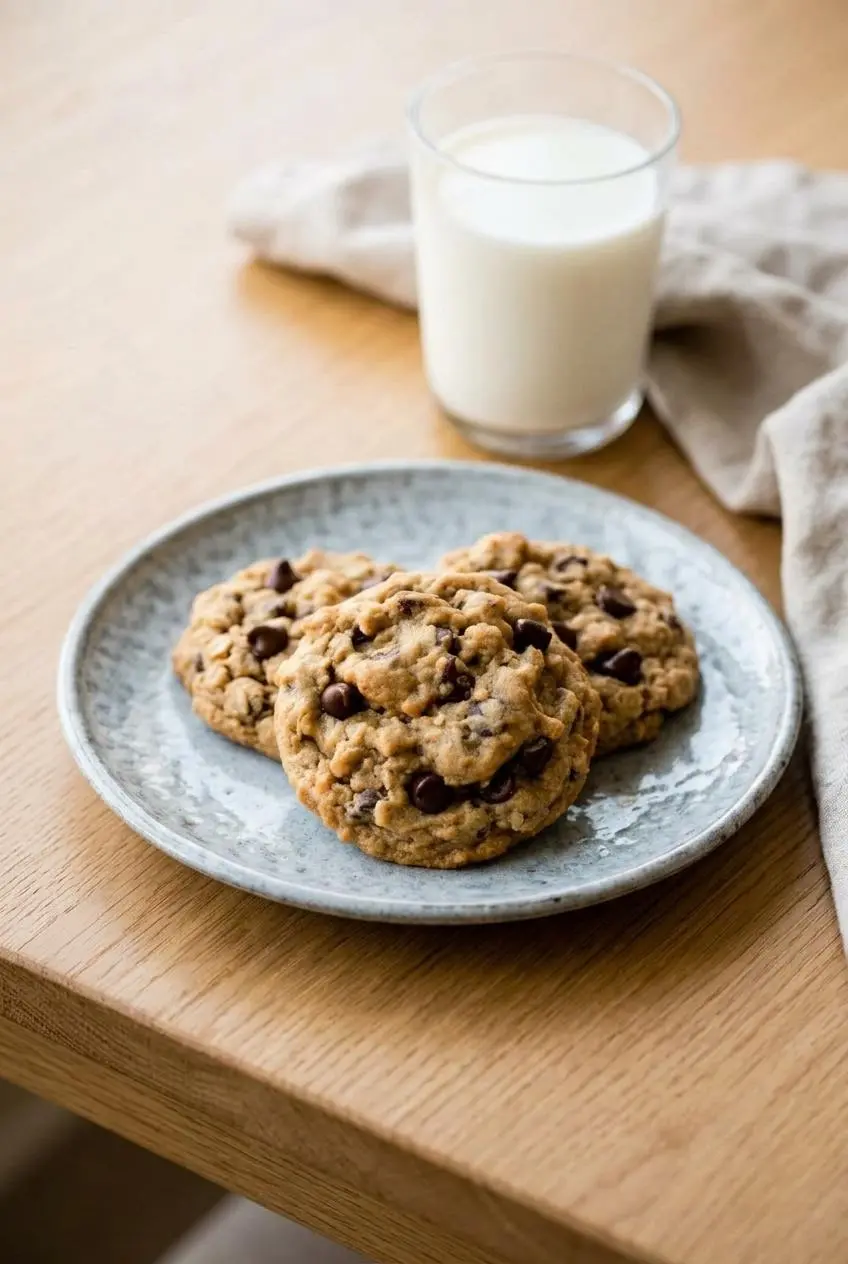
These cookies rely on a brief chill, gentle flour mixing, and an early pull from the oven. The centers should look pale and soft when the edges turn lightly golden.
- Whisk the flour, baking powder, baking soda, and salt in a medium bowl, then set the mixture aside.
Blend the leaveners evenly through the flour so the cookies rise consistently. - Beat the softened butter with a hand mixer or stand mixer fitted with the paddle attachment on medium-high speed for about 1 minute.
Stop when the butter looks smooth and creamy with no firm lumps. - Add the granulated sugar and brown sugar, then beat on medium-high for about 2 minutes until fluffy.
The mixture should look lighter in color and feel aerated, which helps create tender edges. - Beat in the eggs, creamy peanut butter, and vanilla on high speed for about 1 minute, scraping the bowl as needed.
Keep mixing until the peanut butter is fully blended and the batter looks smooth and cohesive. - Mix in the dry ingredients on low speed, then add the oats and chocolate chips while the mixer runs on low.
Stop as soon as no dry flour remains because overmixing can make the cookies tough; the dough will be thick and sticky. - Cover the dough and refrigerate it for at least 20 minutes, then heat the oven to 350°F (177°C) and line baking sheets with parchment paper or silicone baking mats.
After chilling, the dough should feel firm but slightly tacky rather than loose or greasy. - Scoop 2 Tablespoons of dough per cookie, place the mounds 3 inches apart, and bake for 12 to 14 minutes before cooling them on the baking sheet for 5 minutes.
Pull the cookies when the sides are lightly browned and smell nutty and caramelized, while the centers still look very soft.
Move the cookies to a wire rack after their brief rest. If desired, press a few extra chocolate chips into the warm tops for a more chocolate-forward finish.
Essential Success Tips and Troubleshooting
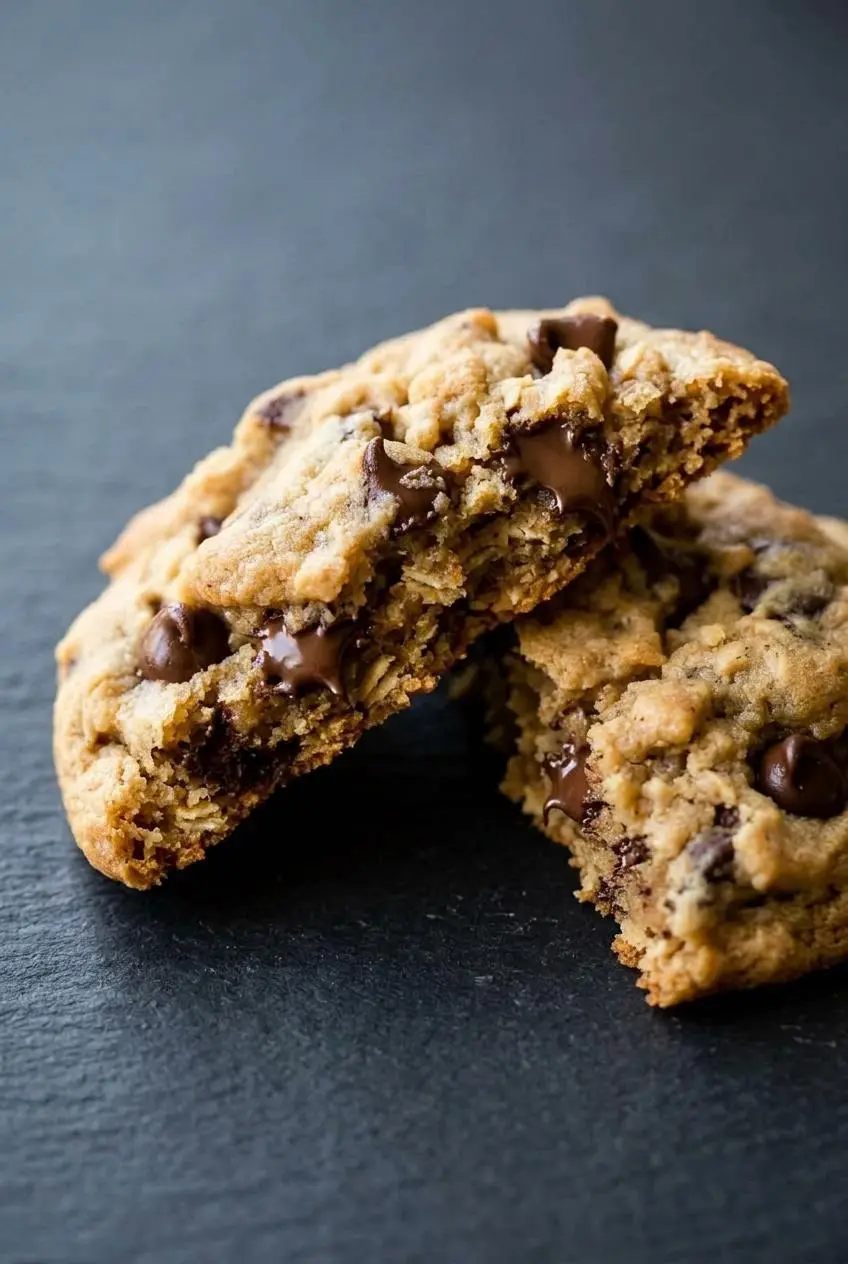
Cookie texture usually comes down to dough temperature, flour measurement, and knowing when to stop baking. These small adjustments solve the most common problems without changing the main method.
Why Dough Chilling Matters
The 20-minute chill does two useful jobs at once. It firms the butter so the cookies do not spread into thin puddles, and it gives the rolled oats time to absorb moisture from the dough.
Properly chilled dough feels thick, firm, and a little tacky when pressed. It should scoop cleanly without running off the scoop. If the dough feels shiny and loose, it needs more time in the refrigerator before baking.
If the dough has been chilled for longer than 1 hour, let it sit at room temperature for at least 30 minutes before scooping. Very cold dough can be difficult to portion and may stay overly tall in the oven.
Fixing Cookies That Will Not Spread
- Cookies stay in tall balls: The dough may be too cold or contain too much flour. Let very firm dough soften as directed, then gently flatten each mound with your palm or the back of a fork before baking.
- Cookies spread too much: The butter may have been overly soft, the dough may have skipped chilling, or the peanut butter may have been oily. Chill the dough until it feels firm and use commercial creamy peanut butter.
- Cookies are dry or crumbly: Quick oats, packed flour, separated natural peanut butter, or overbaking can all cause this. Use rolled oats, measure flour by spooning and leveling, and remove the cookies while their centers still look soft.
- Cookies seem underdone in the middle: Leave them on the hot baking sheet for the full 5 minutes. Residual heat finishes the pale centers without turning the edges hard.
- Chocolate chips sink or look uneven: Fold them through only after the oats are incorporated. Thick dough holds the chips in place better than a warm, loose dough.
Do not wait for the middle to look fully set in the oven. The cookies continue to firm as they cool, and that carryover cooking is what protects the chewy centers.
Storage and Make-Ahead Instructions
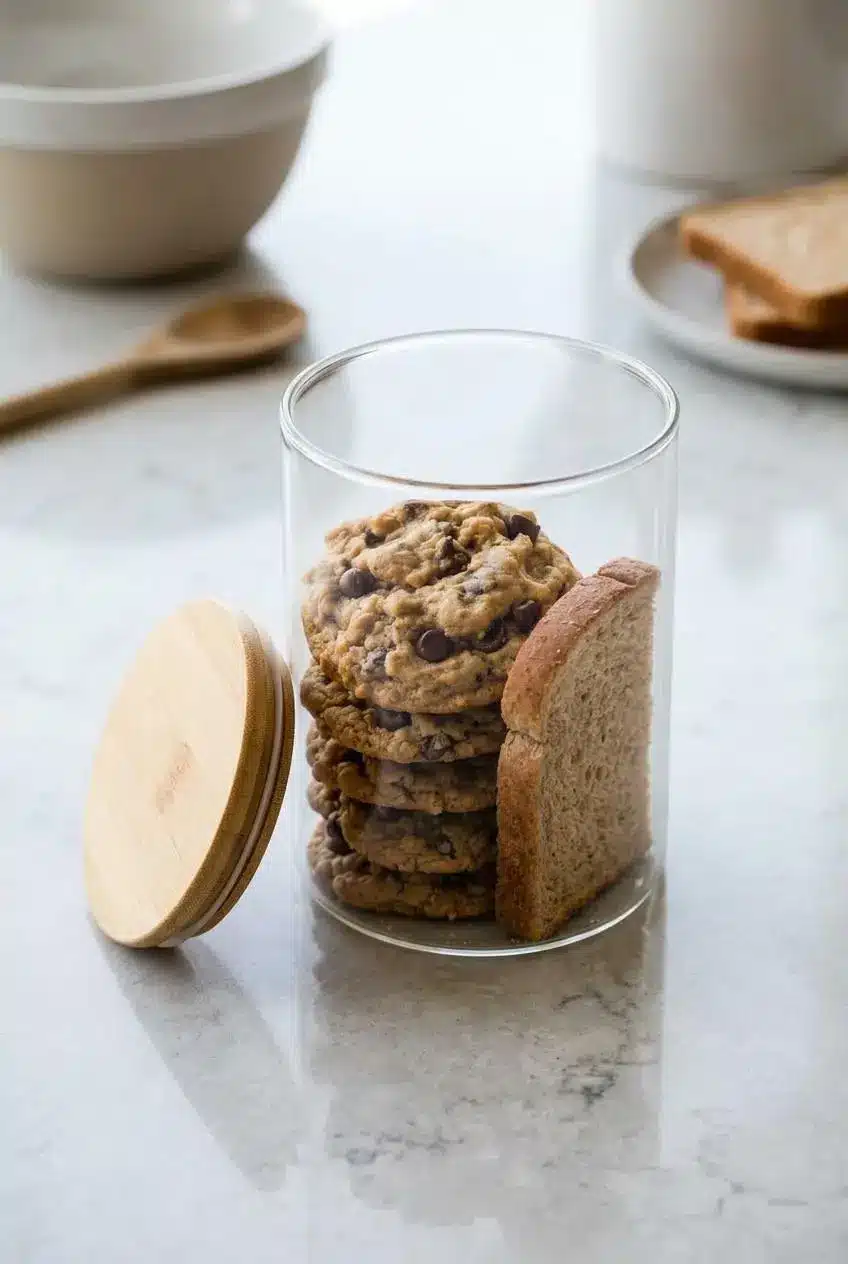
Let the cookies cool completely, then keep them covered in an airtight container at room temperature. A slice of bread in the container can help maintain a softer texture by buffering moisture around the cookies.
The baked cookies stay fresh covered at room temperature for up to 1 week. Keep the container away from direct sunlight and avoid refrigerating the cookies, which can make their texture firmer and drier.
For advance prep, keep the covered dough in the refrigerator for up to 4 days. If it has chilled longer than 1 hour, allow it to stand at room temperature for at least 30 minutes before scooping so it is workable again.
Popular Recipe Variations and Dietary Swaps
Keep the classic dough as written for the thickest, chewiest result, then treat these ideas as separate optional directions. Each one changes the texture or flavor in a noticeable way.
Naturally Gluten-Free and Flourless Options
For a gluten-free direction, use certified gluten-free rolled oats and replace the all-purpose flour with a suitable gluten-free flour blend designed for baking. Check labels carefully on the baking powder, chocolate chips, and other packaged ingredients as well.
A flourless version is a different cookie rather than a direct swap. Peanut butter, rolled oats, and honey can make a three-ingredient peanut butter oat cookie, but expect a denser, softer texture closer to a snack bar than the buttery, creamed-cookie texture here.
Honey and maple syrup add more moisture than granulated sugar, so they can increase spread and create a softer dough. Use them in a separate flourless formula rather than replacing the sugars in this classic dough one-for-one.
Flavor Mix-Ins and Sweetener Swaps
- Chocolate chip and sea salt: Keep the chocolate chips, then finish warm cookies with a light sprinkle of flaky sea salt for a salty contrast that sharpens the peanut flavor.
- Toasted peanuts: Fold in chopped toasted salted peanuts for extra crunch and a stronger roasted-nut aroma.
- Cinnamon: Add ground cinnamon for a warmer oatmeal-cookie profile that pairs especially well with dark brown sugar.
- Monster cookie style: Add colorful candy pieces and chopped roasted nuts for a playful, candy-studded variation.
- Peanut butter cup direction: For a richer candy-filled cookie, try these Reese’s peanut butter cookies instead of changing this dough.
Want an oat-and-chocolate cookie without peanut butter? These oatmeal chocolate chip cookies offer that more traditional flavor profile.
Conclusion
These cookies bake up thick and buttery with chewy oat-studded edges, tender centers, rich peanut flavor, and plenty of melted chocolate. The balance of brown sugar, rolled oats, and creamy peanut butter keeps every bite satisfying.
Chill the dough, pull the cookies while the centers are still soft, and let the baking sheet finish the job. A pinch of flaky sea salt on a warm cookie makes a particularly good final touch.
Frequently Asked Questions
What Peanut Butter Works Best for Oatmeal Cookies?
Standard commercial creamy peanut butter works best because it stays emulsified and gives the dough a stable texture. Choose creamy peanut butter such as Jif or Skippy. Avoid natural peanut butter with visible oil separation. Oily peanut butter can make cookies spread too much or bake up crumbly.
Why Are My Peanut Butter Oatmeal Cookies Dry or Crumbly?
Dry cookies usually come from overly absorbent oats, excess flour, separated peanut butter, or overbaking. Use old-fashioned whole rolled oats instead of quick oats. Spoon and level the flour so the dough does not become too stiff. Remove the cookies when the centers are still soft and pale.
Should Peanut Butter Oatmeal Cookie Dough Be Chilled Before Baking?
Yes. Chill the dough for at least 20 minutes before baking. The butter firms up, helping control cookie spread. The rolled oats absorb moisture and become pleasantly chewy. The chilled dough should feel firm with a slightly tacky surface.
How Do You Keep Peanut Butter Oatmeal Cookies Soft for Days?
Cool the cookies completely and store them in an airtight container at room temperature. Add a slice of bread to help maintain moisture in the container. Keep the lid closed between servings. Avoid refrigerating baked cookies if you want to preserve their soft, chewy texture.
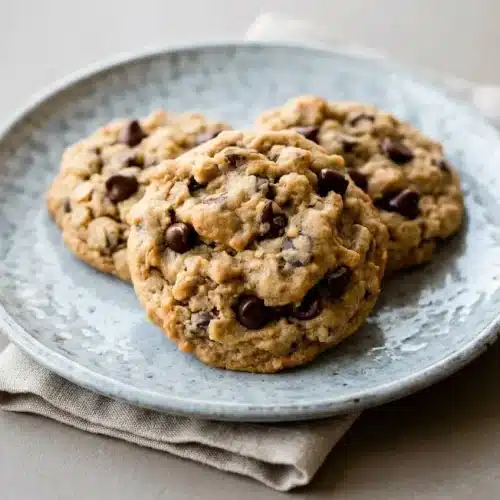
Peanut Butter Oatmeal Cookies

Equipment
- Glass Mixing Bowl
- Whisk
- Electric Mixer (Handheld or Stand)
- Baking Sheets
- Silicone Baking Mat or Parchment Paper
- Medium Cookie Scoop
- Cooling Rack
Ingredients
- 1 1/2 cups all-purpose flour (188g) (spooned & leveled)
- 1 teaspoon baking powder
- 1 teaspoon baking soda
- 1 teaspoon salt
- 1 cup unsalted butter softened to room temperature (16 Tbsp; 226g)
- 1 cup granulated sugar (200g)
- 1/2 cup packed light or dark brown sugar (100g)
- 2 large eggs at room temperature
- 1 cup creamy peanut butter (240g)
- 2 teaspoons pure vanilla extract
- 2 cups old-fashioned whole rolled oats (170g)
- 2 1/2 cups semi-sweet chocolate chips (450g), plus more for topping if desired
Instructions
- Whisk the flour, baking powder, baking soda, and salt in a medium bowl, then set the mixture aside. Blend the leaveners evenly through the flour so the cookies rise consistently.
- Beat the softened butter with a hand mixer or stand mixer fitted with the paddle attachment on medium-high speed for about 1 minute. Stop when the butter looks smooth and creamy with no firm lumps.
- Add the granulated sugar and brown sugar, then beat on medium-high for about 2 minutes until fluffy. The mixture should look lighter in color and feel aerated, which helps create tender edges.
- Beat in the eggs, creamy peanut butter, and vanilla on high speed for about 1 minute, scraping the bowl as needed. Keep mixing until the peanut butter is fully blended and the batter looks smooth and cohesive.
- Mix in the dry ingredients on low speed, then add the oats and chocolate chips while the mixer runs on low. Stop as soon as no dry flour remains because overmixing can make the cookies tough; the dough will be thick and sticky.
- Cover the dough and refrigerate it for at least 20 minutes, then heat the oven to 350°F (177°C) and line baking sheets with parchment paper or silicone baking mats. After chilling, the dough should feel firm but slightly tacky rather than loose or greasy.
- Scoop 2 Tablespoons of dough per cookie, place the mounds 3 inches apart, and bake for 12 to 14 minutes before cooling them on the baking sheet for 5 minutes. Pull the cookies when the sides are lightly browned and smell nutty and caramelized, while the centers still look very soft.