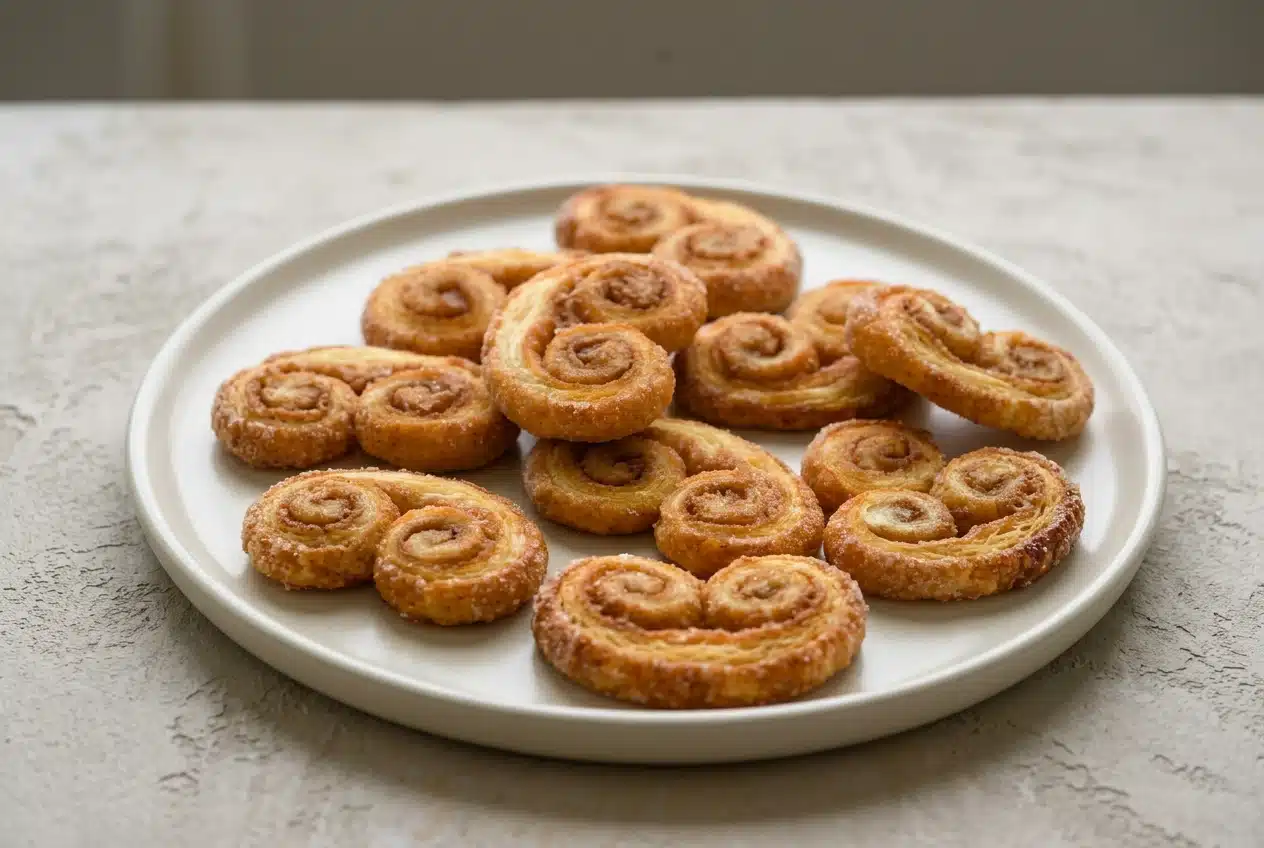
Palmiers are French puff pastry cookies shaped into twin scrolls. This palmiers recipe uses store-bought puff pastry and cinnamon sugar for flaky layers and crisp, caramelized edges. Roll the pastry from both sides, slice it, then flip the cookies during baking to brown both faces.
Each slice looks like a little heart, with two curls meeting in the middle. The shape comes from rolling up a rectangle, so there’s no cookie cutter or homemade dough to fuss with.
The cinnamon smells wonderful as the sugar browns, but the best part comes after the cookies cool. Listen for that first snap.
Before you start, clear enough counter space to unfold a full pastry sheet without dragging it through the sugar.
Ingredients for Cinnamon-Sugar Palmiers
Puff pastry gives these cookies their flaky layers, and granulated sugar caramelizes into a crisp coating. Ground cinnamon adds warmth, while salt keeps the sweetness in balance.
- ¾ cup granulated sugar
- 1½ teaspoons ground cinnamon
- ⅛ teaspoon salt
- 1 (17.3-oz) package (2 sheets) frozen puff pastry, thawed (Pepperidge Farm recommended)
Work with thawed pastry that’s still cool to the touch. It should unfold without cracking at the creases and feel firm enough to hold its shape as you roll it. The sugar goes under the sheet as well as on top, so it coats the outside and winds up between the curls.
I’d go by how the pastry feels: if it bends easily but still lifts off the counter without sagging, it’s ready to roll.
How to Make Palmiers
Prep: 15 minutes. Cook: 20 minutes. Total: 35 minutes. Yield: 30 cookies. Rating: 4.72 out of 5 from 7 reviews.
- Heat the oven to 400°F (205°C) with a rack in the middle.
Cover a baking sheet with parchment to keep the caramelized sugar from sticking to the pan. - Stir the sugar, cinnamon, and salt together in a small bowl.
Mix until the cinnamon is evenly distributed and no dark clumps remain. - Scatter 2 tablespoons of the cinnamon sugar across a clean work surface and open one sheet of pastry over it.
Use a rolling pin to ease out the fold marks and bring the sheet to a 9 by 12-inch (23 by 30-cm) rectangle. - Cover the top of the pastry evenly with ¼ cup (50 g) of the cinnamon sugar.
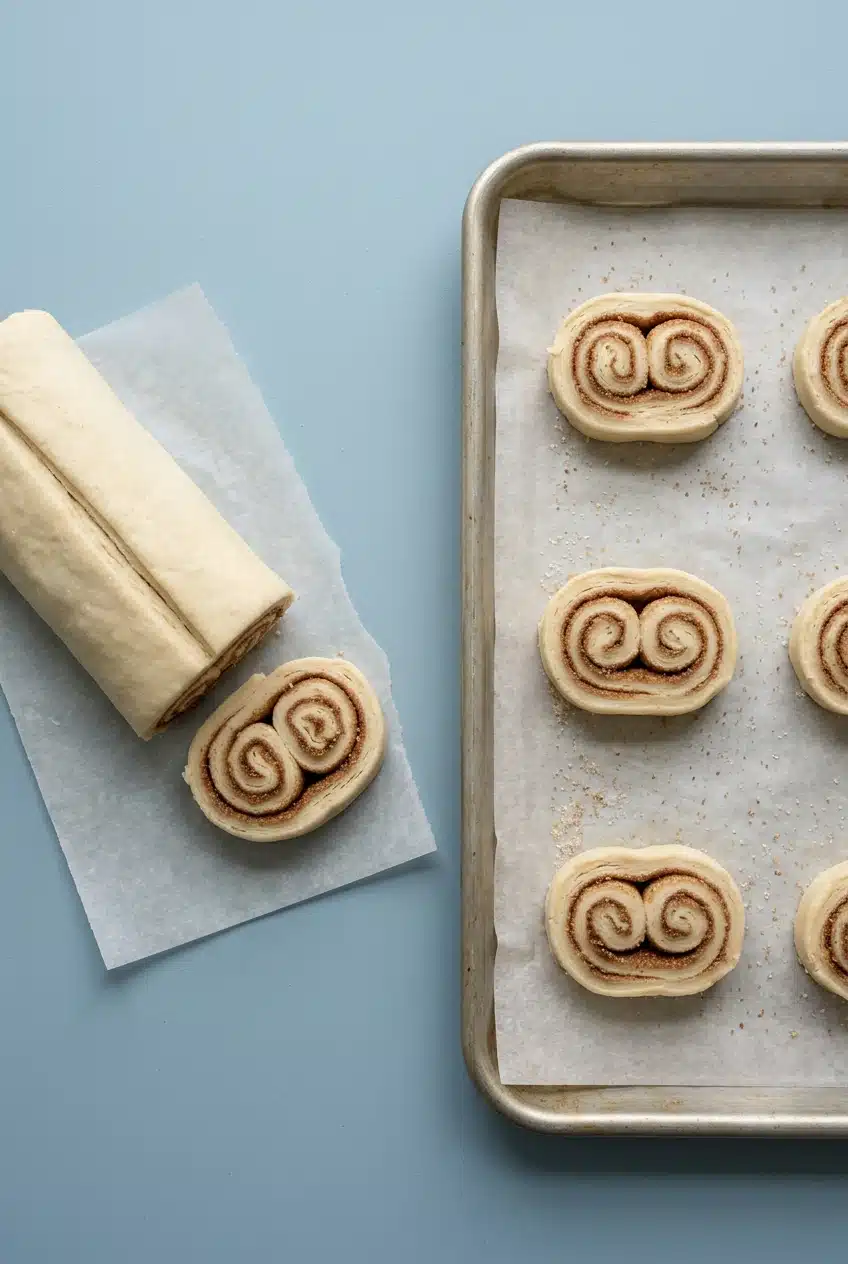
Pass the rolling pin over the sheet a few times so the sugar grips the dough. - Start at the two short edges and roll each one inward until the curls touch in the middle.
Turn the log over and gently cup the sides with your hands to make a compact roll about 2 inches (5 cm) across, then shape the remaining sheet the same way with the remaining cinnamon sugar. - Saw through the logs with a sharp knife to make slices about ½ inch (13 mm) thick, then arrange them on the parchment-lined baking sheet about 2 inches (5 cm) apart.
Tuck any loose curls back into shape and refrigerate any extra rolls while the first batch bakes. - Bake for 12 minutes, then take the pan out and turn the cookies over with a metal spatula.
The sugar will be very hot, so use a small spoon rather than your fingers if a cookie needs a nudge onto the spatula. - Slide the pan back into the oven for 5 to 6 minutes.
Look for puffed layers and a golden, caramelized finish on both faces. - Leave the cookies on the baking sheet for a few minutes before moving them to a wire rack.
Let them cool completely on the rack and bake any remaining dough the same way.
Roll and Slice the Scrolls
Spread the cinnamon sugar out to the edges so the outer curls don’t end up bare. Before slicing, glance at the end of the log: the coils should be about the same size, with the seam between them close to the middle. If one side is much bigger, ease it back a little and roll the other side in to meet it.
Let the knife move back and forth rather than pushing it straight down. A clean cut leaves two distinct spirals instead of squashing them into an oval.
Know When to Flip and When They’re Done
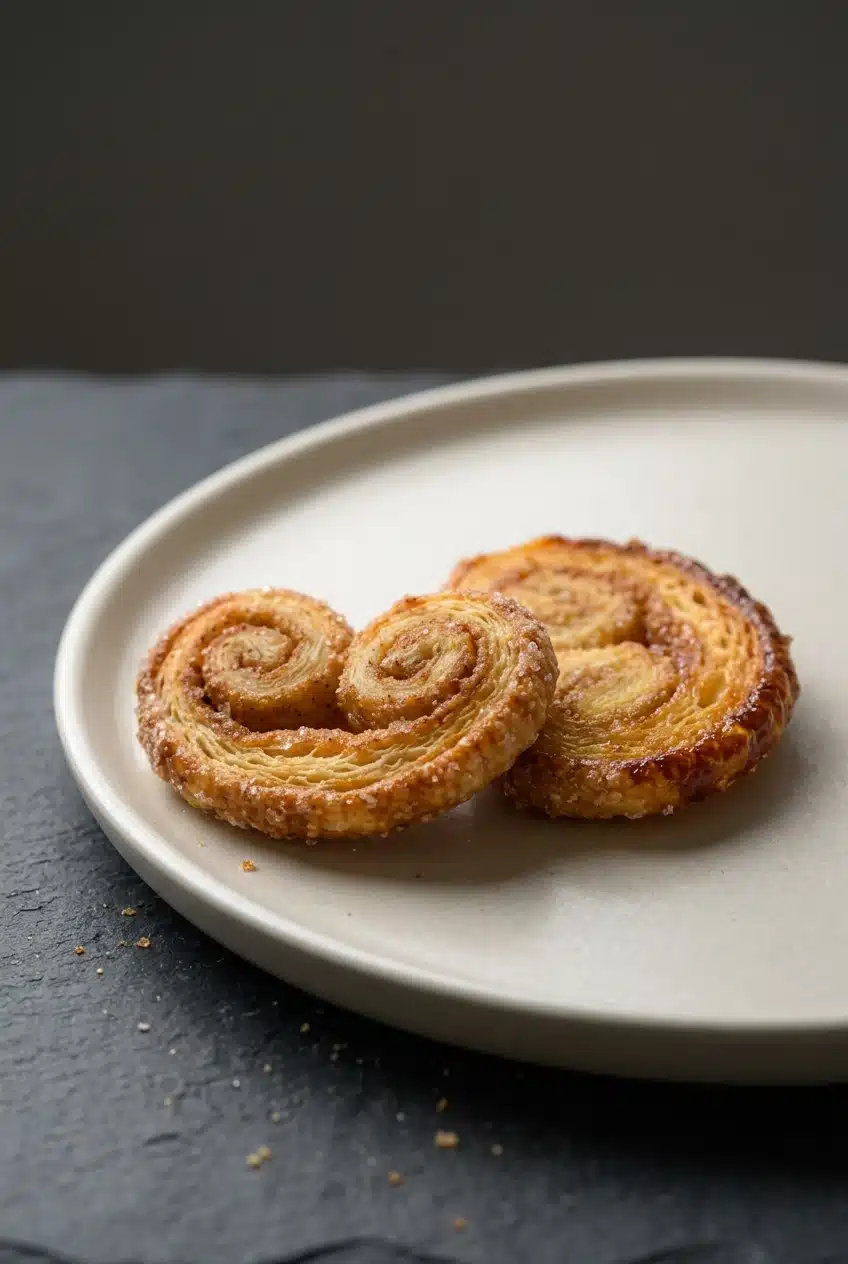
When you lift the first cookie to turn it, look underneath for caramel color where the pastry sat against the pan. The top can still look lighter at this point. Once you flip the cookies, the second side gets its turn against the hot sheet.
At the finish, look for golden color across both faces and clearly puffed layers around the edges. The cookies can still feel a little soft when warm; judge the crunch once they’ve cooled on the rack.
Why Palmiers Unroll, Stay Soft, or Burn
- The curls open up: A loose roll can come apart as you slice it. Snug the curls together before baking, without pressing the layers flat.
- The slices squash under the knife: The dough may have warmed up too much. Chill the log until it feels firm enough to slice without compressing the coils.
- The cookies spread into each other: A crowded pan leaves the curls nowhere to go as they puff. Bake in batches rather than squeezing the last slices onto the sheet.
- The edges darken while the centers look pale: The top doesn’t tell the whole story. Check the undersides as you turn the cookies, and judge the finished batch by the color across both faces rather than by the darkest edges.
- The cookies seem soft: If they’re still warm, give them time to cool before deciding they needed longer in the oven. Fully cooled cookies that are both pale and soft point to too little browning.
Sweet and Savory Palmier Variations
The same double-scroll shape works for several styles, from an unspiced cookie to a savory appetizer.
Plain Sugar Palmiers
Choose plain granulated sugar for the classic sweet version. Without cinnamon, the toasted sugar and flaky pastry are the flavors you notice first.
Cinnamon-Sugar Palmiers
This is the version above. Cinnamon carries through the curls, adding a warm spice flavor alongside the darker caramel at the edges.
Homemade Rough Puff
If you prefer to make your own pastry, rough puff is an option. Bring it to the same cool, pliable consistency before shaping it so it rolls without cracking or slumping.
Savory Palmiers
For an appetizer, try a separate savory version with pesto or grated cheese. Follow a method intended for that filling rather than using the sweet cookies’ browning cues.
Make-Ahead and Storage
Plan around whether you want to finish shaping first or have the cookies fully baked before serving.
- Shaped log: If you’re baking in batches, refrigerate the extra log while the first pan bakes. Slice it when you’re ready to load the next tray.
- Unbaked slices: Slice and arrange them as the baking sheet becomes available so the cut pastry doesn’t have to sit out while another batch bakes.
- Baked cookies: Cool them completely, then store them in an airtight container at room temperature. For the crispest edges, serve them freshly baked and fully cooled.
How to Serve Palmiers
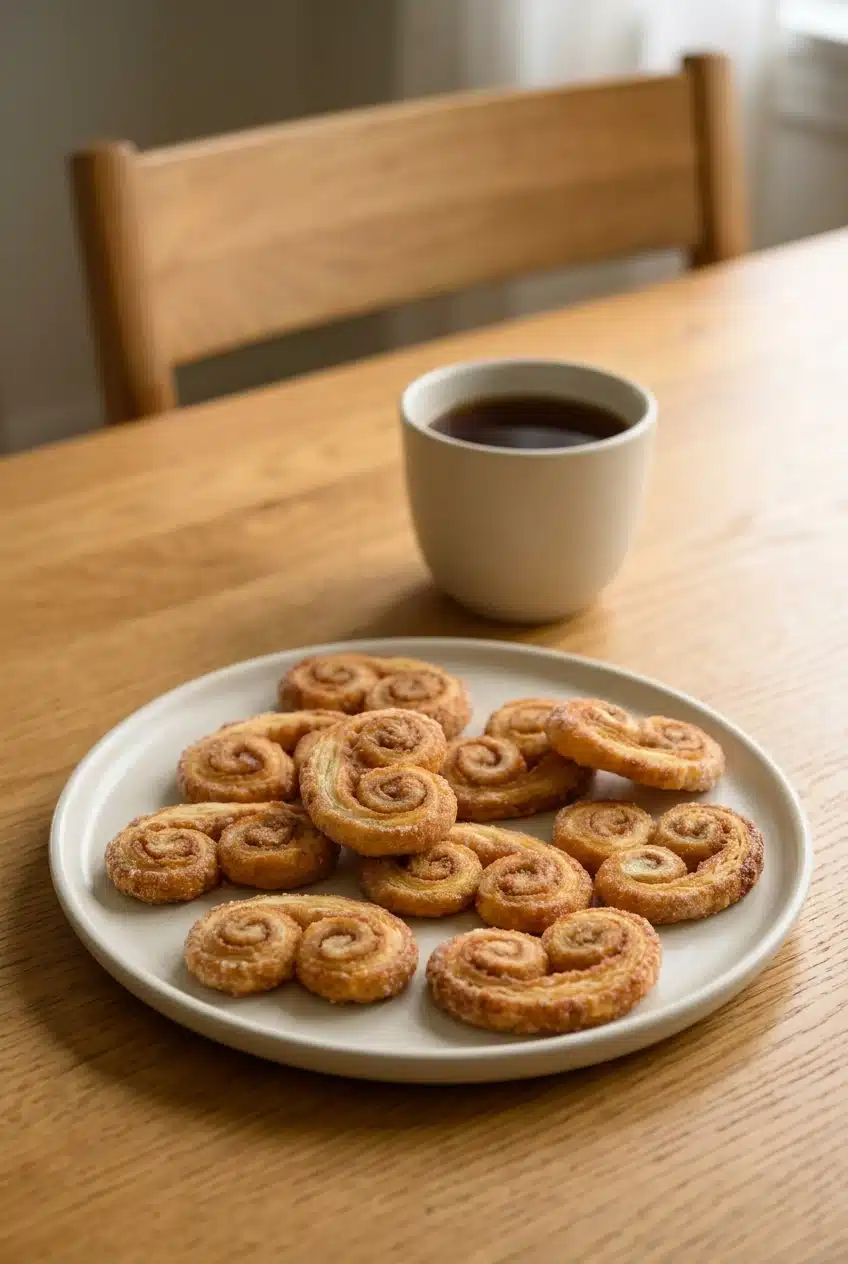
Serve the cinnamon palmiers with coffee or black tea, tuck them onto a holiday cookie platter, or set them next to a scoop of ice cream so the edges stay crisp until the first bite.
The Keys to Crisp Palmiers
Start with cool, flexible pastry and aim for two balanced scrolls. A centered seam makes it easier to slice cookies with evenly sized curls.
Check both faces for color before pulling the pan. Then give the cookies time on the rack so those caramelized edges can crisp up before you share them.
Frequently Asked Questions
What Are the Ingredients in Palmiers?
Classic sweet palmiers are made with puff pastry and sugar. This version adds ground cinnamon for warmth and salt to balance the sweetness.
Are Palmiers Hard to Make?
No. Store-bought puff pastry takes care of the dough. The parts that need your attention are keeping the curls even and checking how the cookies brown.
How Do You Make the Best Palmiers?
Roll the pastry while it’s cool and flexible, and slice without pressing the coils flat. Check the underside when you flip the cookies, then let them cool fully before judging the crunch.
How Far in Advance Can You Make Palmiers?
If crunch matters most, bake them close to serving and leave time for them to cool. You can shape both logs before baking the first batch and chill the extra log until it’s time to slice it. If you bake the cookies before serving, wait until they’re fully cool before packing them airtight.
Are Palmiers the Same as Elephant Ears?
“Elephant ears” is a nickname for palmiers, but in the US it can also mean the flat fried dough sold at fairs. Palmiers are baked puff pastry cookies with two distinct curls.
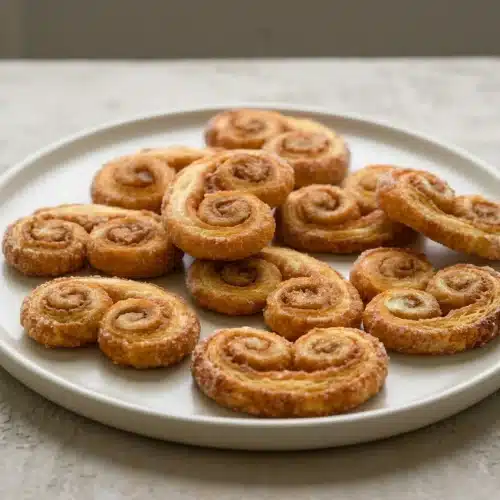
Palmiers Recipe

Equipment
- Baking Sheet
- Parchment Paper
- Small bowl
- Rolling Pin
- Sharp knife
- Metal Spatula
- Wire rack
Ingredients
- ¾ cup granulated sugar
- 1½ teaspoons ground cinnamon
- ⅛ teaspoon salt
- 1 (17.3-oz) package (2 sheets) frozen puff pastry thawed (Pepperidge Farm recommended)
Instructions
- Heat the oven to 400°F (205°C) with a rack in the middle. Cover a baking sheet with parchment to keep the caramelized sugar from sticking to the pan.
- Stir the sugar, cinnamon, and salt together in a small bowl. Mix until the cinnamon is evenly distributed and no dark clumps remain.
- Scatter 2 tablespoons of the cinnamon sugar across a clean work surface and open one sheet of pastry over it. Use a rolling pin to ease out the fold marks and bring the sheet to a 9 by 12-inch (23 by 30-cm) rectangle.
- Cover the top of the pastry evenly with ¼ cup (50 g) of the cinnamon sugar. Pass the rolling pin over the sheet a few times so the sugar grips the dough.
- Start at the two short edges and roll each one inward until the curls touch in the middle. Turn the log over and gently cup the sides with your hands to make a compact roll about 2 inches (5 cm) across, then shape the remaining sheet the same way with the remaining cinnamon sugar.
- Saw through the logs with a sharp knife to make slices about ½ inch (13 mm) thick, then arrange them on the parchment-lined baking sheet about 2 inches (5 cm) apart. Tuck any loose curls back into shape and refrigerate any extra rolls while the first batch bakes.
- Bake for 12 minutes, then take the pan out and turn the cookies over with a metal spatula. The sugar will be very hot, so use a small spoon rather than your fingers if a cookie needs a nudge onto the spatula.
- Slide the pan back into the oven for 5 to 6 minutes. Look for puffed layers and a golden, caramelized finish on both faces.
- Leave the cookies on the baking sheet for a few minutes before moving them to a wire rack. Let them cool completely on the rack and bake any remaining dough the same way.