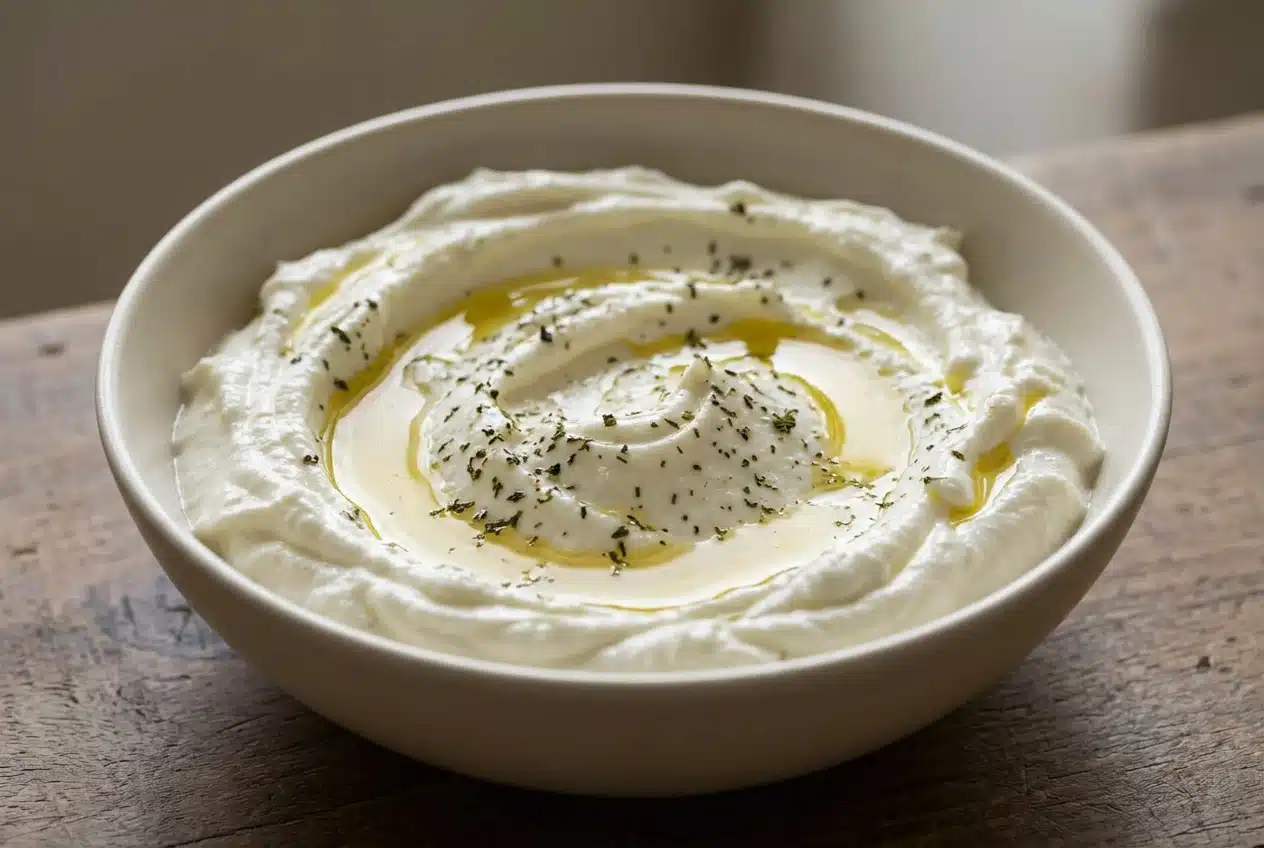
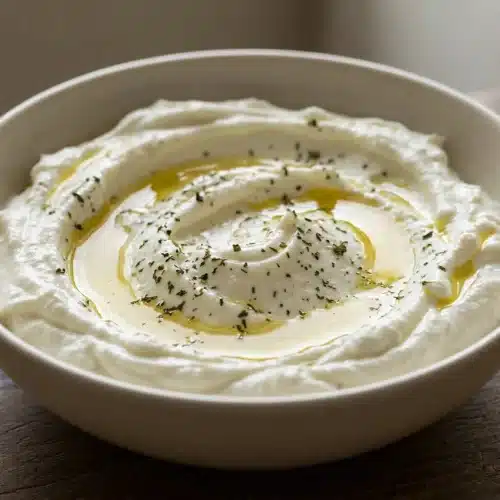
This labneh recipe turns plain full-fat Greek yogurt into a thick, creamy, tangy spread. Let the whey drain through a lined strainer in the refrigerator, then stir in olive oil, dried mint, and garlic. The draining does the work, so there’s no cooking involved.
Greek yogurt already holds its shape better than regular yogurt. Draining it further gives you something you can swipe across toast with a knife instead of spooning it on.
The olive oil rounds out the tang, while dried mint and garlic give the chilled spread a savory finish. It’s thick enough to catch on the edge of a piece of pita.
Choose a bowl deep enough to leave a gap under the strainer so the yogurt won’t sit in the whey as it collects.
Ingredients for Homemade Labneh
Full-fat Greek yogurt gives the labneh its creamy body and tang, and salt seasons it before draining. Olive oil adds richness, dried mint brings an herbal aroma, and minced garlic gives the finished spread a savory bite.
- 2 cups plain full-fat Greek yogurt
- ½ teaspoon salt
- 2 tablespoons olive oil
- 1 teaspoon dried mint
- 1 garlic clove (minced)
The salt goes into the yogurt first so it seasons the whole batch. Save the oil, mint, and garlic for the drained yogurt, where they’ll flavor the spread you’re actually serving.
Greek Yogurt vs. Regular Plain Yogurt
Look for both “plain” and “full-fat” on the Greek yogurt tub. Plain keeps the flavor unsweetened so the mint and garlic come through. The yogurt should already sit in a soft heap when you scoop it. The finished labneh will be firmer still.
Using Regular Plain Full-Fat Yogurt
Regular plain full-fat yogurt is an option if that’s what you have, but don’t count on the two yogurts to finish with the same consistency.
- Greek yogurt starts thick because some of its whey has already been removed. It’s the starting point for this recipe.
- Regular plain yogurt starts looser. A batch can release more whey and still finish softer than one made with Greek yogurt.
How to Make Labneh
Prep: | Draining: | Total: | Serves: 4
The liner holds back the yogurt, the mesh supports the liner, and the bowl catches the whey. Set aside fridge space for the whole setup. Once it’s in there, draining is hands-off until you’re ready to mix in the seasonings.
- Fit cheesecloth or a coffee filter inside a fine-mesh strainer and set the strainer across a bowl.
The liner should cover the mesh wherever the yogurt will touch it. - Stir the salt into the Greek yogurt in a second bowl.
Mix until the yogurt looks even throughout. - Transfer the salted yogurt to the center of the lined strainer.
Keep the yogurt inside the edges of the liner so it can’t slip around them. - Wrap the top of the setup with plastic wrap and refrigerate it for at least 12 hours or overnight.
As the yogurt thickens, liquid whey will collect underneath. - Lift out the liner and scrape the thickened labneh into a bowl.
The drained yogurt should come away in soft clumps rather than pour. - Fold the olive oil, dried mint, and minced garlic through the labneh.
Stop when the mint flecks are evenly scattered and no streaks of oil remain. - Bring the labneh to the table while it’s still chilled.
A spoonful should sit in a creamy mound.
How to Tell When Labneh Is Ready
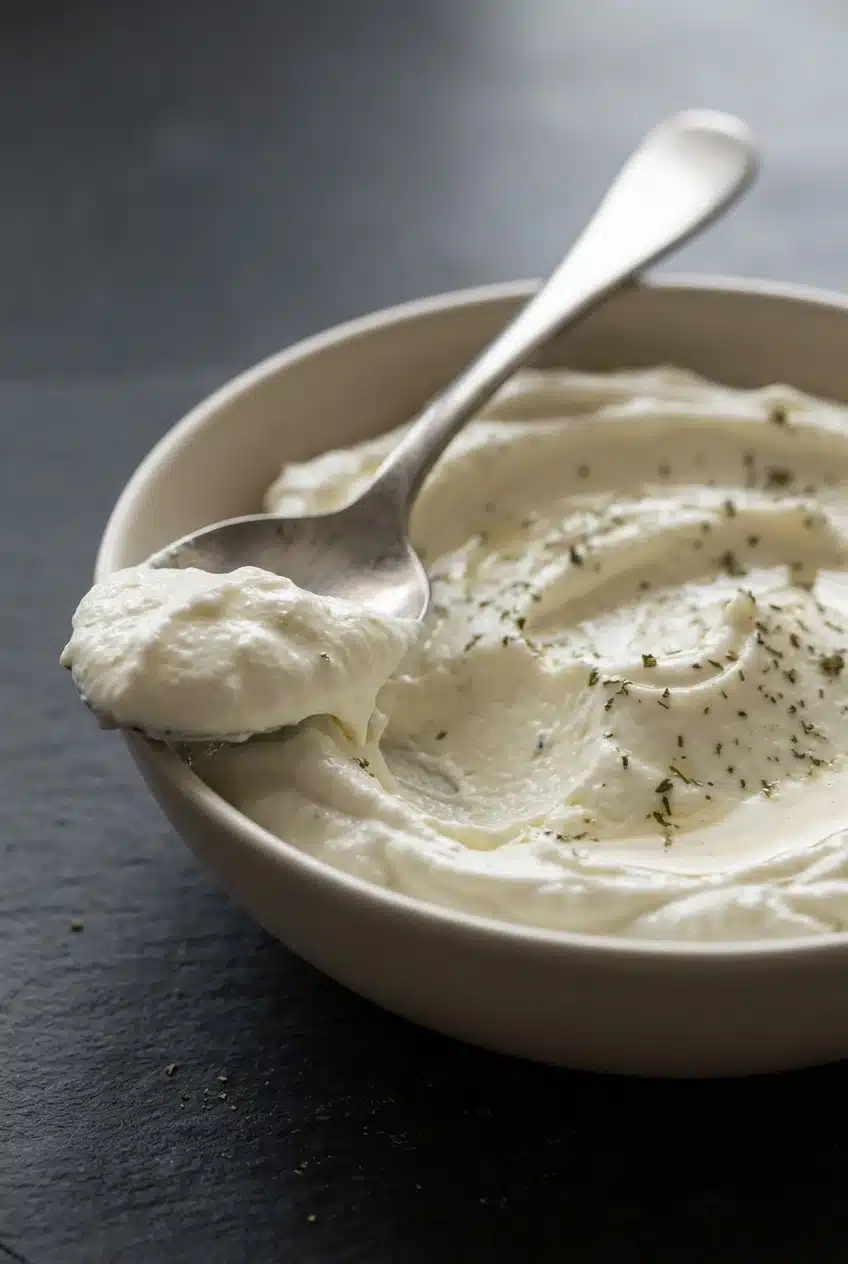
After the draining time, judge the labneh by how it moves, not by how much whey is in the bowl. Scoop up a spoonful. If it holds a soft mound instead of running off, it’ll work well as a dip.
For toast, I’d check a small swipe with a butter knife. A smooth layer that stays where you spread it is the texture to look for.
What to Check if Your Labneh Is Runny
- The bottom of the strainer sits in liquid. Whey needs room to collect away from the yogurt. Switch to a deeper bowl so there’s space below the mesh.
- There are white blobs in the catch bowl. Thin whey is what you want to see. Thick bits of yogurt suggest a tear or an exposed edge, so check that the liner is intact and covers the mesh.
- The setup looks right, but the labneh is softer than expected. Check which yogurt you used. Regular yogurt starts looser, and a softer batch may suit a dip better than a toast spread if it still holds a scoop.
Ways to Vary the Flavor
Keep the mint and garlic mixed into the spread, then use an optional topping to change the flavor at the table.
Herb and Spice Toppings
A topping gives you a more pronounced hit of herbs and spice on the surface, while the mixed-in mint and garlic season every scoop.
An Herb and Spice Finish for Serving
Try chopped parsley and sumac for a fresh, lemony accent that plays up the yogurt’s tang. Serve the topping on the side if you’d like some scoops without it.
How to Serve Labneh
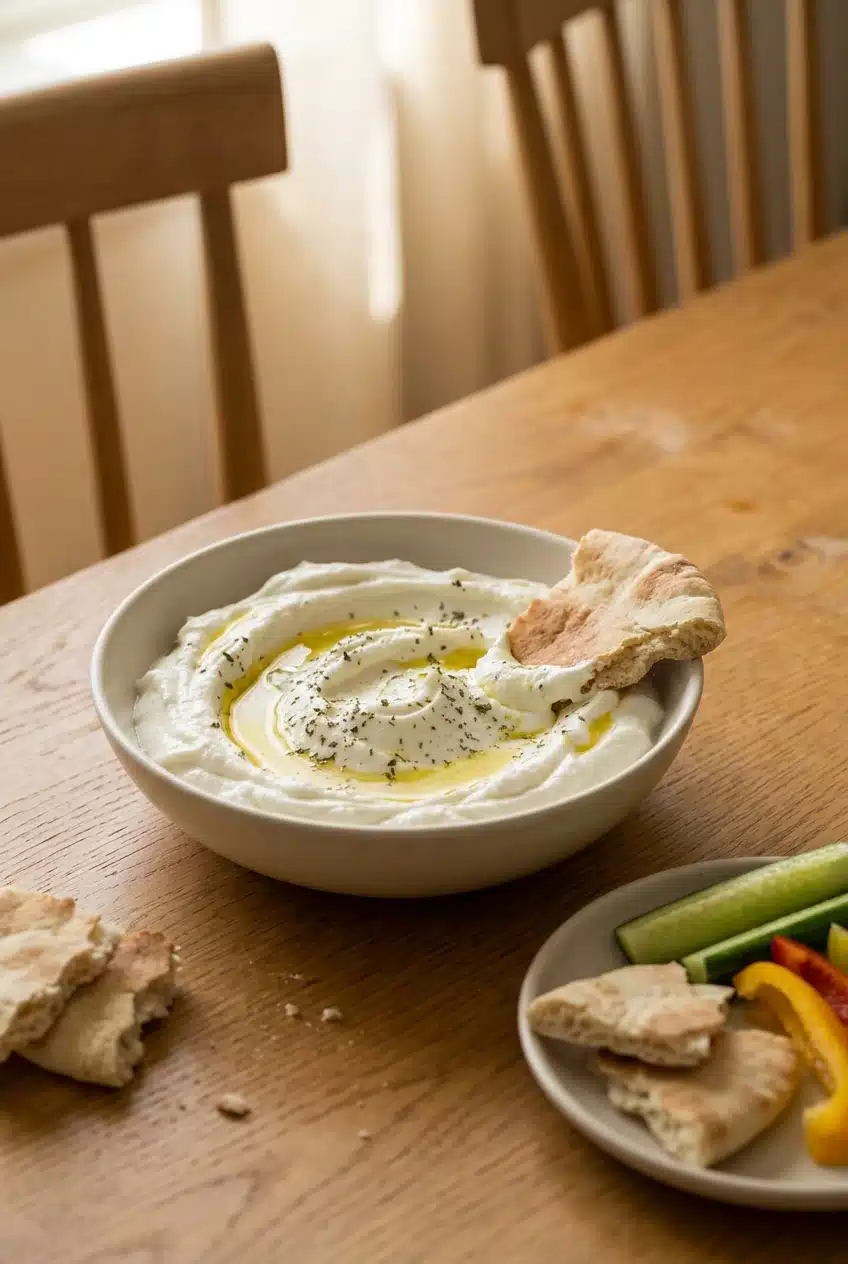
- As a dip: Spoon softer labneh into a shallow bowl and serve it with warm pita or crisp cucumber and bell pepper strips.
- On toast: Swipe thicker labneh over toasted bread and top it with sliced cucumber and tomato.
- In a sandwich or wrap: Use a thin layer where you’d normally reach for mayo, or spread it inside the pita for lamb gyros.
Making Labneh Ahead
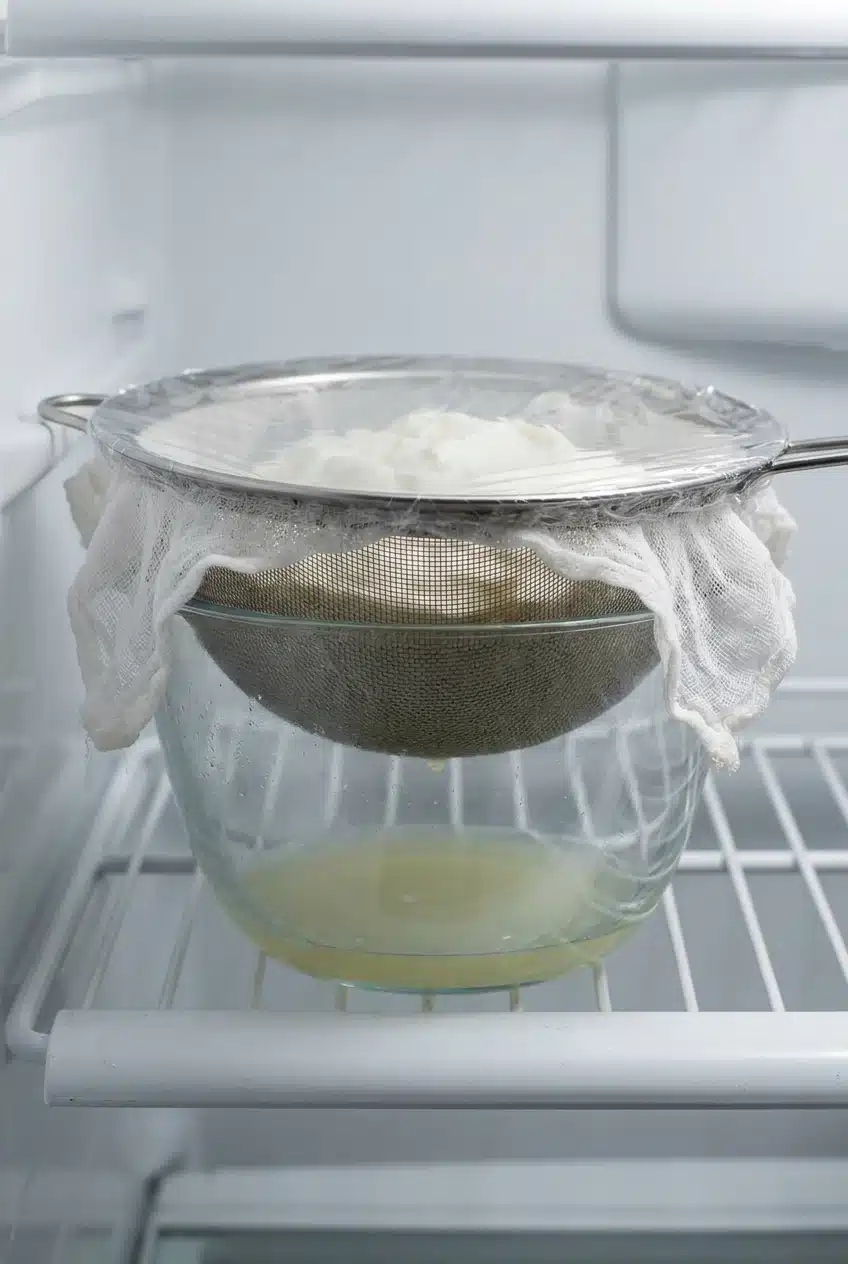
Work backward from when you want to eat. For lunch, set up the strainer the night before so the yogurt has time to drain. Leave yourself a moment to transfer it to a bowl and mix in the finish before serving.
The draining time is part of the preparation, not a shelf-life estimate for the finished dip. If the labneh is ready before you are, keep it covered and chilled until serving. Keep the toast or crisp vegetables separate until you need them.
The Takeaway
Let the whey drain away first, then finish the thickened yogurt with olive oil, mint, and garlic.
If a spoonful holds a soft mound, bring out the pita. If it leaves a smooth swipe, it’s ready for toast.
Frequently Asked Questions
What Is the Difference Between Labneh and Greek Yogurt?
Greek yogurt is the starting ingredient here. Draining off more whey makes it thicker and gives it the spreadable consistency of labneh.
Can I Make Labneh Without Cheesecloth?
Yes. Use a coffee filter inside the fine-mesh strainer instead. Make sure it covers the mesh where the yogurt will sit.
Why Is My Labneh Still Runny?
Check the catch bowl first. If thick yogurt has slipped through, look for a tear or gap in the liner. If only whey has collected, consider whether you started with a looser yogurt.
Should I Add Garlic Before or After Straining?
Add it after straining, along with the olive oil and dried mint. Only the yogurt and salt go into the strainer.
How Far Ahead Can I Make Labneh?
Start early enough to allow for the full refrigerator draining time. Plan to mix in the seasonings close to serving rather than treating the draining schedule as a guide to how long the finished dip keeps.
How Many Calories Are in Labneh?
There isn’t a single calorie count for labneh. For homemade labneh, an estimate depends on the yogurt you use, how much labneh you get after draining, and the size of your serving.
Labneh Recipe

Equipment
- Fine mesh strainer
- Cheesecloth or coffee filter
- Two bowls
- Plastic wrap
Ingredients
- 2 cups plain full-fat Greek yogurt
- ½ teaspoon salt
- 2 tablespoons olive oil
- 1 teaspoon dried mint
- 1 garlic clove (minced)
Instructions
- Fit cheesecloth or a coffee filter inside a fine-mesh strainer and set the strainer across a bowl. The liner should cover the mesh wherever the yogurt will touch it.
- Stir the salt into the Greek yogurt in a second bowl. Mix until the yogurt looks even throughout.
- Transfer the salted yogurt to the center of the lined strainer. Keep the yogurt inside the edges of the liner so it can’t slip around them.
- Wrap the top of the setup with plastic wrap and refrigerate it for at least 12 hours or overnight. As the yogurt thickens, liquid whey will collect underneath.
- Lift out the liner and scrape the thickened labneh into a bowl. The drained yogurt should come away in soft clumps rather than pour.
- Fold the olive oil, dried mint, and minced garlic through the labneh. Stop when the mint flecks are evenly scattered and no streaks of oil remain.
- Bring the labneh to the table while it’s still chilled. A spoonful should sit in a creamy mound.