Soak dried navy beans, simmer them until tender, then bake them slowly with bacon, molasses, brown sugar, and apple cider vinegar for a thick, savory-sweet glaze.
Old Fashioned Baked Beans earn their deep flavor through patient soaking, a proper parboil, and low oven heat. The result is creamy beans in a smoky sauce that clings to every spoonful.
As the bacon crisps and the molasses darkens, the kitchen starts to smell like a proper cookout. Save that bean liquid.
Set aside 2 cups of the starchy bean cooking liquid before draining, since it gives you an easy way to loosen the sauce if the beans start to look dry.
Essential Ingredients for Old Fashioned Baked Beans
Each ingredient contributes to the final balance: creamy beans build structure, bacon adds richness, molasses brings depth, and vinegar keeps the glaze bright rather than heavy.
- 1 pound dried navy beans
- 8 ounces thick cut bacon, diced
- 1 medium yellow onion, finely chopped
- 2 cloves garlic, minced
- 1/2 cup plain tomato sauce or ketchup
- 1/4 cup molasses
- 1/2 cup brown sugar
- 2 tablespoons apple cider vinegar
- 1 tablespoon prepared yellow mustard
- 2 teaspoons Worcestershire sauce
- 1 teaspoon smoked paprika
- 2 teaspoons salt
- 1/2 teaspoon freshly ground black pepper
- 1 bay leaf
Thick cut bacon gives up flavorful fat that carries the onion, garlic, and smoked paprika. Tomato sauce adds body to the glaze, while yellow mustard and Worcestershire sauce bring savory tang behind the sweetness. The bay leaf quietly rounds out the long bake.
I always spread dried beans across a light-colored tray first, checking for tiny stones or damaged beans before rinsing them thoroughly for soaking.
The Role of Navy Beans
Navy beans are the classic choice because their mild flavor lets the molasses and bacon take center stage. Their thin skins stay intact through soaking, simmering, and baking, while their interiors turn creamy enough to absorb the dark, sticky sauce.
Use dried navy beans rather than trying to bake them straight from the bag. Starting with soaked and parboiled beans gives the centers a head start, so they finish tender without the skins becoming tough.
Balancing Molasses, Sugar, and Acid
Molasses gives baked beans their dark color and earthy, lightly bitter depth. Brown sugar softens that edge and helps the sauce caramelize around the beans and bacon.
Apple cider vinegar is the counterweight. Its tang cuts through the bacon fat and sweetness, while prepared yellow mustard adds another sharp note. Together, they keep the sauce bold and rounded instead of sugary.
Soaking and Parboiling the Navy Beans
Soaking and parboiling are the foundation for tender baked beans. Cover the dried beans with several inches of cold water and leave them to soak overnight, then drain and refill the pot with fresh water.
If an overnight soak does not fit your schedule, bring the beans and water to a boil, take the pot off the heat, and let them stand covered before continuing. This can soften the beans enough to begin the next stage, though a cold soak is the more traditional route.
Bring the soaked beans to a boil in fresh water, then maintain a gentle simmer for 60 minutes. A bean should feel soft and creamy inside when bitten, but its skin should still hold together rather than split wide open.
Before draining, reserve 2 cups of the cooking liquid. This slightly starchy liquid helps the sauce stay silky during baking and gives you control when one batch of beans absorbs more moisture than another.
Step-by-Step Dutch Oven Baking Method
Low, covered heat gives the beans time to absorb the seasoned sauce without drying at the edges. A 6-quart Dutch oven works especially well because you can build the bacon base and bake in the same pot.
- Soak the navy beans overnight under several inches of water, then drain them and simmer in fresh water for 1 hour before draining again and reserving the cooking liquid.
The beans should be tender through the center while the skins remain mostly intact. - Cook the diced bacon in a Dutch oven until crisp, then soften the onion for 5 to 7 minutes and stir in the garlic for 1 minute.
The onion should look translucent and smell sweet before the sauce ingredients go in. - Stir in the tomato sauce, molasses, brown sugar, apple cider vinegar, mustard, Worcestershire sauce, smoked paprika, salt, pepper, and bay leaf, then add the beans and 1 1/2 cups reserved bean liquid and bring the mixture to a brief simmer.
The sauce should coat the beans evenly before the pot goes into the oven. - Cover the Dutch oven and bake on the middle rack at 325 °F for 2 to 3 hours, uncovering it for the last 20 to 30 minutes and adding reserved bean liquid if the pot looks dry.
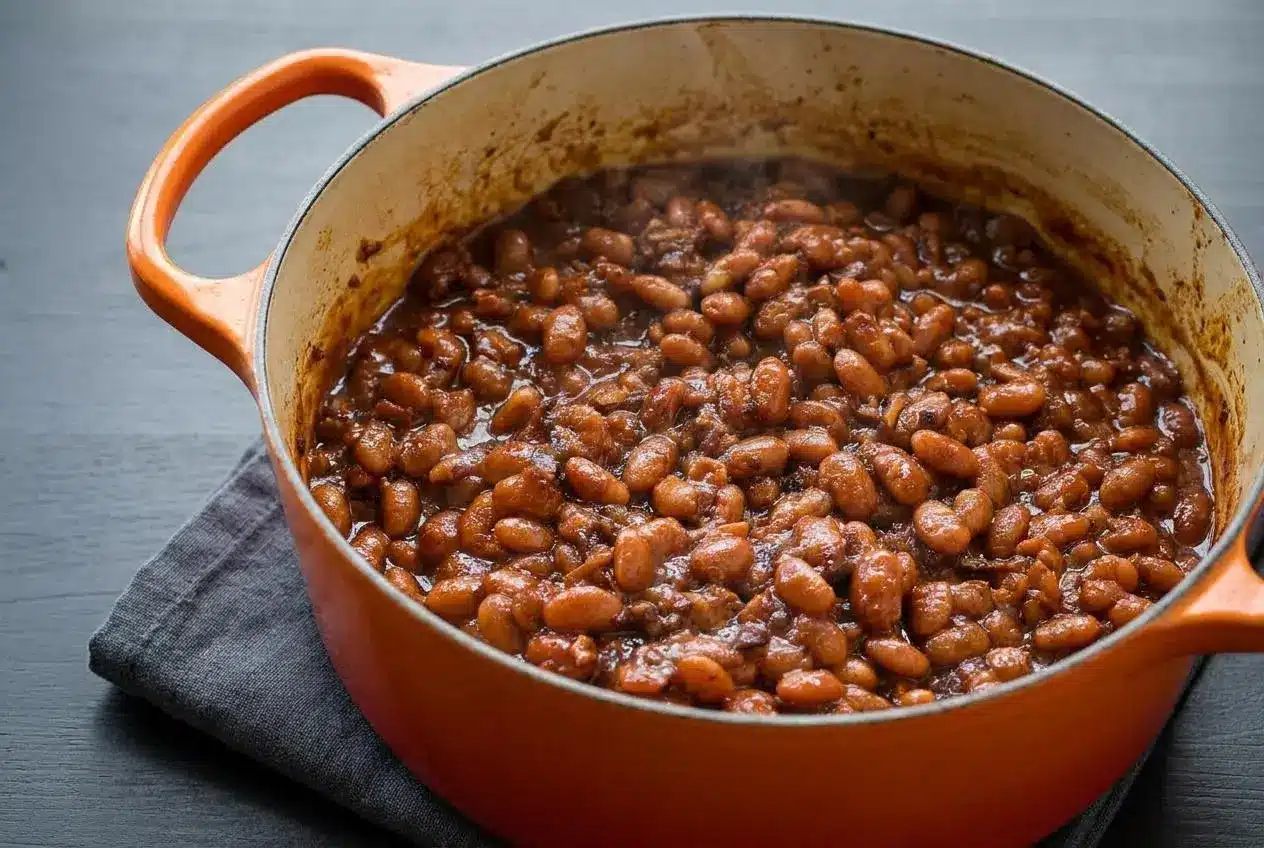
Finish when the beans are tender and the sauce is thick, glossy, and bubbling around crisp-edged bacon pieces.
Check the pot near the end rather than walking away from it completely. If the sauce looks thin, keep the lid off a little longer. If it tightens before the beans are fully tender, stir in a little reserved bean liquid and continue baking covered.
The best finish looks more like a glaze than soup: the sauce should settle slowly around the beans, and the top should smell smoky, sweet, and lightly caramelized.
Troubleshooting Tough Beans and Sauce Consistency
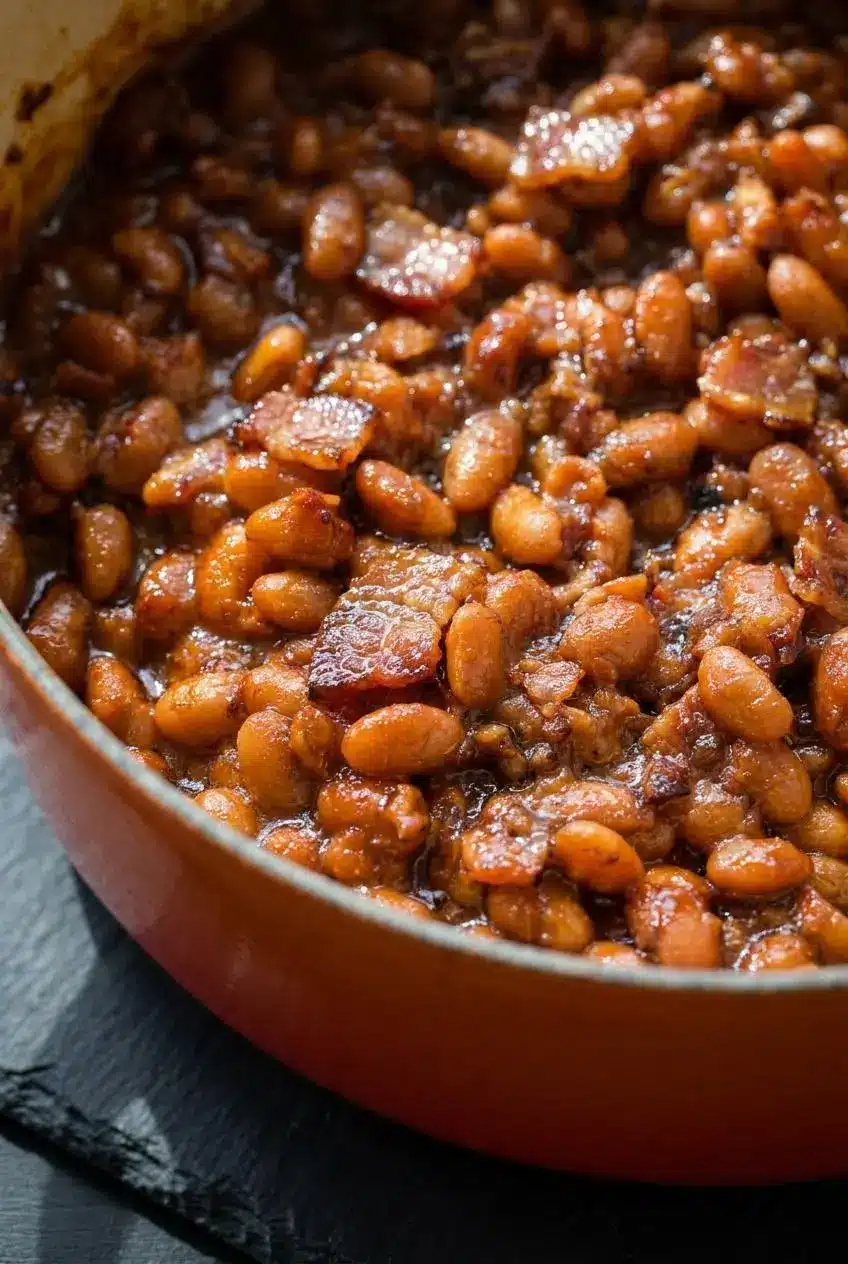
A few practical adjustments can rescue stubborn beans or a sauce that refuses to behave.
- Beans are still hard: Older dried beans and mineral-heavy water can slow softening. Add 1/4 teaspoon baking soda per pound of dried beans to the boiling water, then continue parboiling until the centers are tender.
- Beans stayed firm after baking: Acidic ingredients and sugars belong in the sauce after parboiling. Get the beans tender first, then let the molasses, vinegar, and brown sugar do their work in the oven.
- Sauce is too thin: Mash 1 cup of cooked beans against the side of the pot and stir them back in. Their starch thickens the glaze naturally without changing its flavor.
- Sauce is too thick: Stir in a little reserved bean liquid, just enough to loosen the beans. Add it gradually so the sauce stays rich rather than watery.
- Top looks dry: Keep the Dutch oven covered for most of the bake. Uncover only near the end, when you want the liquid to reduce and the bacon edges to brown.
Slow Cooker and Canned Bean Alternatives
These optional routes keep the same flavor direction while fitting a different schedule. They do not replace the Dutch oven method above, but they can be useful when you need a more hands-off approach.
Slow Cooker Crock Pot Method
For slow cooker baked beans, soak and parboil the navy beans first, then cook the bacon, onion, garlic, and sauce mixture on the stovetop as written. Transfer everything to the slow cooker and cook on LOW for 6 to 7 hours or on HIGH for 3 to 4 hours, until the beans are tender.
Remove the lid for the final 30 minutes, or longer if needed, so excess moisture can escape. If the mixture becomes too thick during cooking, stir in a little water to bring back a spoonable consistency.
Canned Navy Bean Shortcut
For a faster option, use four 15-ounce cans of drained navy beans in place of 1 pound of dried navy beans. Skip soaking and parboiling, reduce the added liquid by half, and bake at 325 °F for 45 minutes until the beans are hot and the sauce has thickened.
Canned beans are already tender, so they need less time in the oven. Keep an eye on the sauce during the final stretch, because the glaze can thicken quickly once it starts bubbling.
Maple Syrup and Bacon Variation
For a lighter New England-style sweetness, replace half the molasses with pure maple syrup. The maple flavor is softer and more fragrant, while the thick cut bacon still provides the smoky backbone.
Salt pork is another traditional option if you prefer a more straightforward cured-pork flavor. Keep it as an optional swap for the bacon rather than adding it alongside the bacon.
Storage and Reheating Guidelines
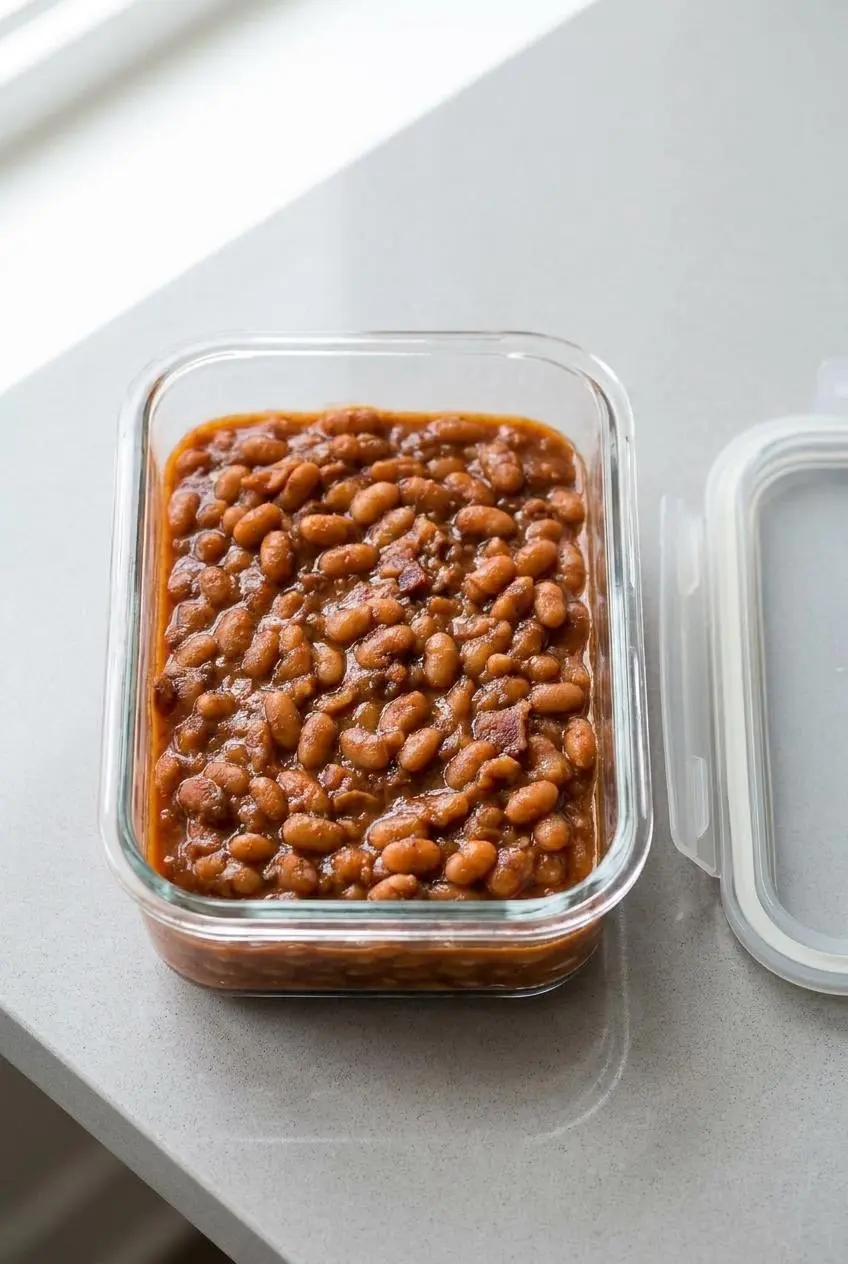
Let the beans cool completely, then transfer them to a sealed container and keep them chilled. Portioning them before storing makes it easier to warm only what you plan to serve.
Reheat gently on the stovetop over medium-low heat, stirring occasionally. Add a splash of water or broth if the molasses glaze has tightened too much. A microwave also works for individual portions, using short bursts and a stir between each one.
For the best texture, avoid overheating. The beans should be hot throughout, while the sauce remains glossy and loose enough to coat a spoon.
What to Serve with Homemade Baked Beans
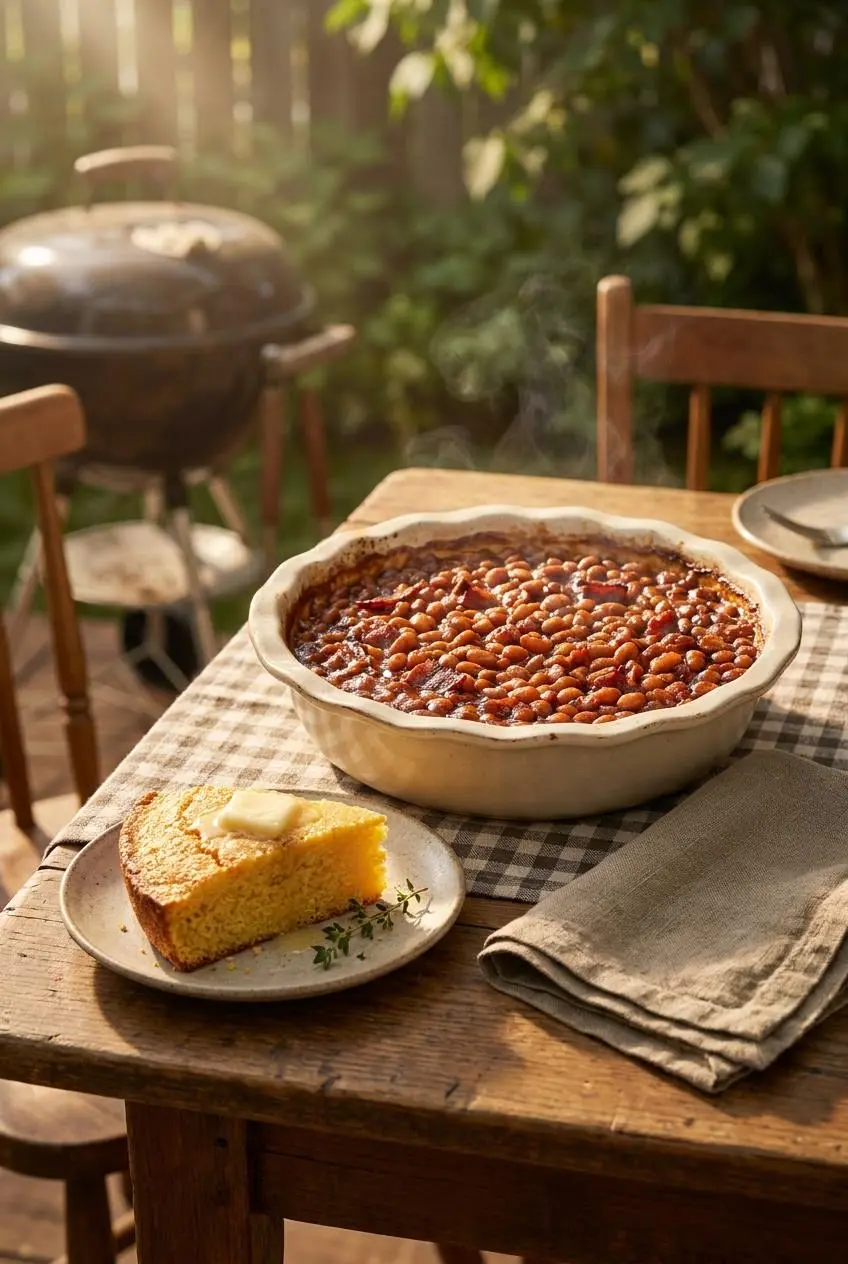
These beans belong beside smoky grilled foods and cool, crisp sides that balance their sweet richness.
- Serve them with smoked ribs, pulled pork, or grilled burgers for a classic barbecue plate.
- Make them part of a cookout with baked BBQ chicken, where the tangy barbecue flavor pairs naturally with the molasses glaze.
- Offer skillet cornbread or buttermilk biscuits for scooping up the sauce.
- Balance the richness with coleslaw or a chilled loaded baked potato salad.
- Add baked mac and cheese when the menu calls for full comfort-food territory.
Conclusion
Slow baking gives these beans their signature depth: creamy navy beans, crisp bacon, and a dark molasses glaze with enough vinegar to stay balanced.
Keep the reserved bean liquid nearby and adjust as the pot cooks. That small bit of flexibility is what makes the final spoonful thick, glossy, and deeply satisfying.
Frequently Asked Questions
Why Are My Dried Beans Still Hard After Baking?
Older beans can take longer to soften, especially when they go into the oven before they are tender from parboiling. Simmer the soaked beans until the centers are creamy first. If they remain stubborn, add 1/4 teaspoon baking soda per pound of dried beans to the boiling water, then continue cooking before adding the sweet and acidic sauce ingredients.
Can I Substitute Canned Beans for Dried Navy Beans?
Yes. Use four 15-ounce cans of drained navy beans for 1 pound of dried navy beans. Skip the soaking and parboiling, cut the added liquid in half, and bake at 325 °F for 45 minutes. The sauce should be hot, thick, and bubbling before serving.
How Should Homemade Baked Beans Be Stored and Reheated?
Cool the beans completely before sealing and chilling them. Store portions in containers that leave enough room for easy stirring when reheating. Warm them gently on the stovetop or in the microwave, adding a splash of water or broth when the glaze looks overly thick. Stir well so the beans heat evenly without breaking apart.
Can Old Fashioned Baked Beans Be Made in a Crock Pot?
Yes. Complete the soaking, parboiling, and stovetop bacon-and-sauce preparation first, then transfer the mixture to a slow cooker. Cook on LOW for 6 to 7 hours or HIGH for 3 to 4 hours, until tender. Leave the lid off for the final 30 minutes if the sauce needs more time to thicken.
Old Fashioned Baked Beans

Equipment
- Dutch oven (6 quart)
Ingredients
- 1 pound dried navy beans
- 8 ounces thick cut bacon diced
- 1 medium yellow onion finely chopped
- 2 cloves garlic minced
- 1/2 cup plain tomato sauce or ketchup
- 1/4 cup molasses
- 1/2 cup brown sugar
- 2 tablespoons apple cider vinegar
- 1 tablespoon prepared yellow mustard
- 2 teaspoons Worcestershire sauce
- 1 teaspoon smoked paprika
- 2 teaspoons salt
- 1/2 teaspoon freshly ground black pepper
- 1 bay leaf
Instructions
- Soak the navy beans overnight under several inches of water, then drain them and simmer in fresh water for 1 hour before draining again and reserving the cooking liquid. The beans should be tender through the center while the skins remain mostly intact.
- Cook the diced bacon in a Dutch oven until crisp, then soften the onion for 5 to 7 minutes and stir in the garlic for 1 minute. The onion should look translucent and smell sweet before the sauce ingredients go in.
- Stir in the tomato sauce, molasses, brown sugar, apple cider vinegar, mustard, Worcestershire sauce, smoked paprika, salt, pepper, and bay leaf, then add the beans and 1 1/2 cups reserved bean liquid and bring the mixture to a brief simmer. The sauce should coat the beans evenly before the pot goes into the oven.
- Cover the Dutch oven and bake on the middle rack at 325 °F for 2 to 3 hours, uncovering it for the last 20 to 30 minutes and adding reserved bean liquid if the pot looks dry. Finish when the beans are tender and the sauce is thick, glossy, and bubbling around crisp-edged bacon pieces.