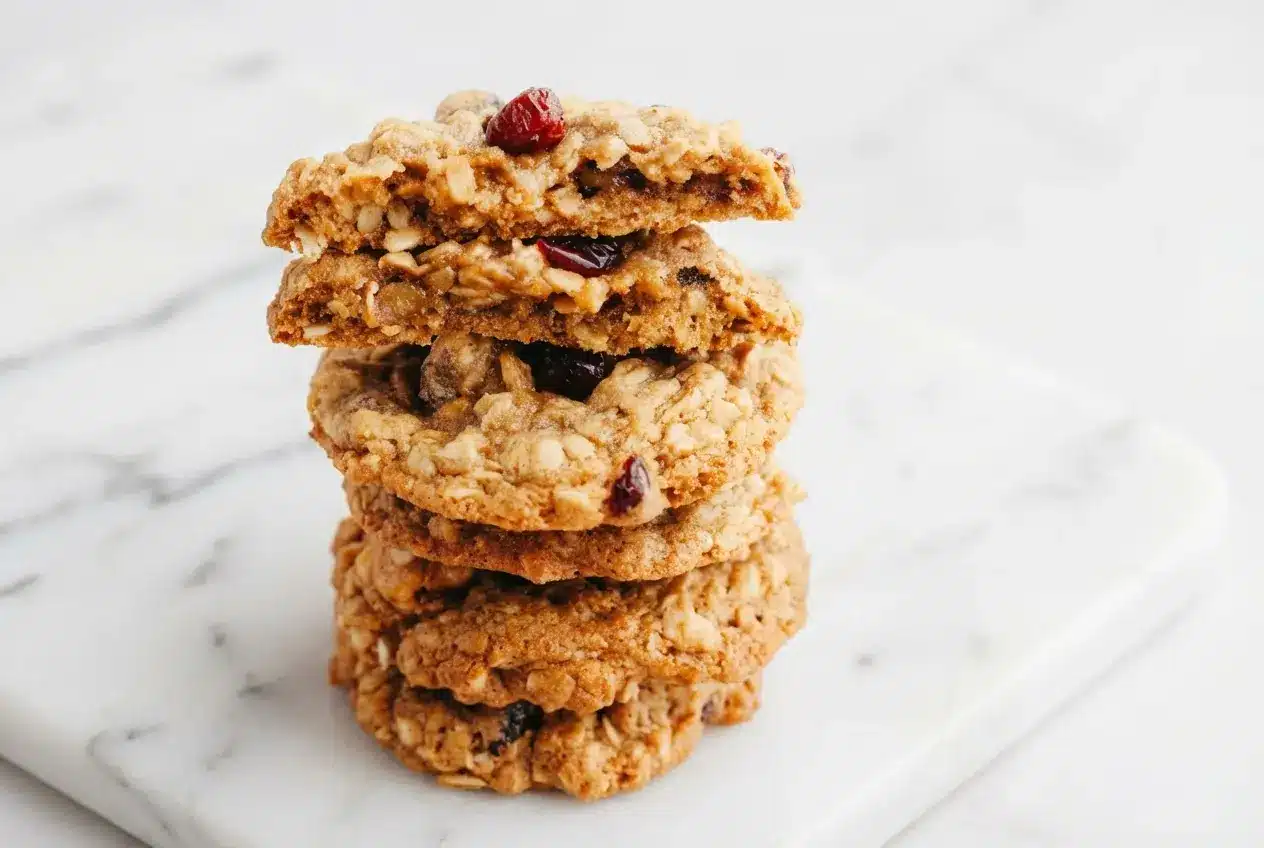
There is something wonderfully old-school about a kitchen that smells like toasted butter, cinnamon, and oats. These oatmeal cranberry cookies bring that cozy bakery feeling home, but with a few smart tricks that make them far more reliable than the average holiday cookie.
In my kitchen, this is the batch I bake when I want a cookie that stays soft in the center, chewy at the edges, and full of deep flavor. If you have ever ended up with dry oatmeal cookies or berries that taste a little leathery, this recipe solves both problems in one simple, foolproof way.
Why You’ll Love This Recipe
Deep, bakery-style flavor: Brown butter gives these cookies a rich, nutty backbone that tastes far more complex than a standard butter dough. It adds that warm, toasted character I usually only get from a really good neighborhood bake shop.
The secret twist: I soak the dried cranberries in warm orange juice for 10 minutes before they go into the dough. That little step makes the fruit plump and juicy, so it does not pull moisture away from the rolled oats and leave the cookies dry.
Chewy in all the right ways: Old-fashioned oats, molasses, and properly chilled dough work together to create that ideal chewy texture. You get tender middles, lightly set edges, and bursts of tart fruit in every bite.
Warm and festive: Cinnamon, nutmeg, and cardamom bring a gentle spice that pairs beautifully with the citrus and brown butter. The toasted walnuts remind me of the rich aroma you get from homemade candied nuts, only folded into a softer, more comforting cookie.
Ingredients and Substitutions
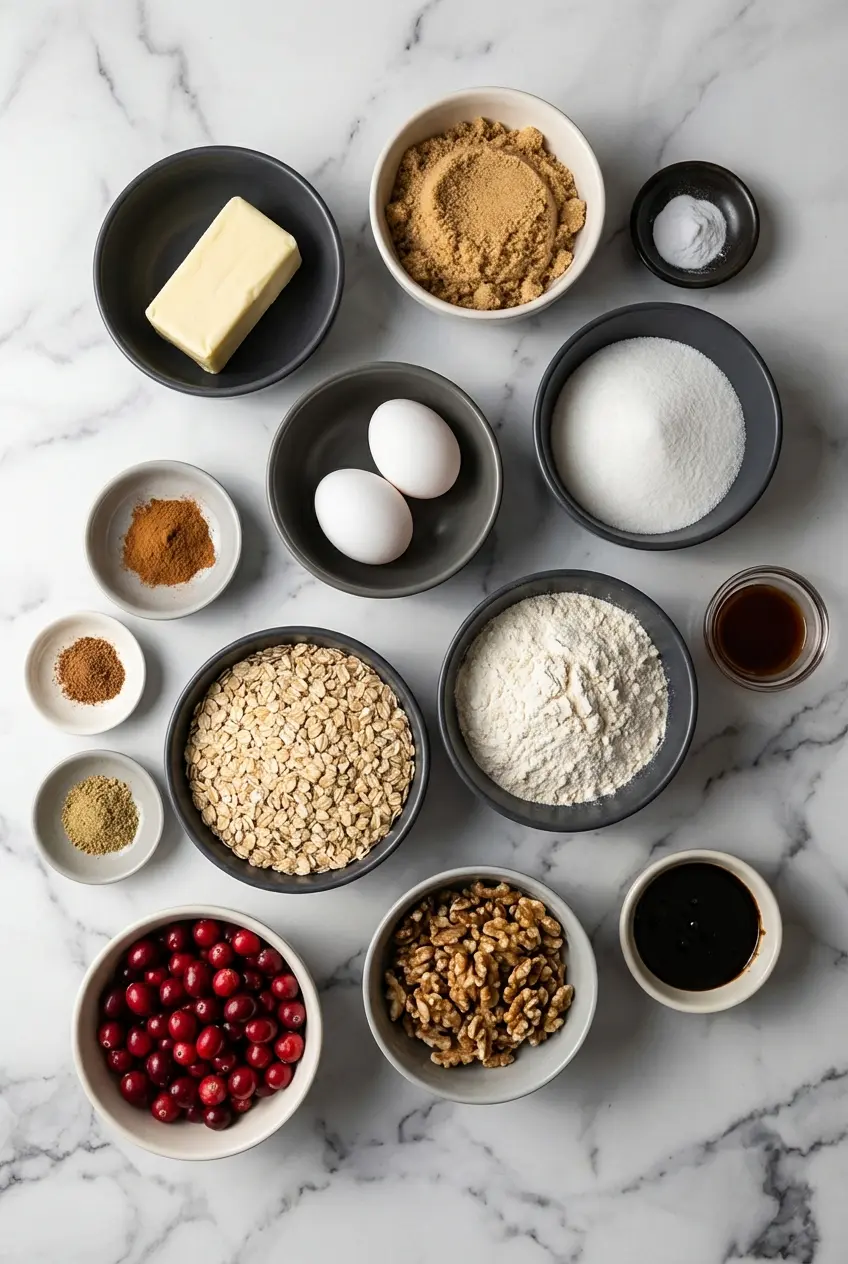
Each ingredient here earns its place, from the brown butter base to the warming spices and chewy oats. The combination is simple, but the balance is what gives these cookies their soft, rich bite.
Ingredients
- 1 cup (227 grams) unsalted butter
- 1 cup (200 grams) light brown sugar
- 1/4 cup (50 grams) white sugar
- 2 large eggs room temperature
- 2 teaspoons vanilla extract
- 1 3/4 cups (210 g) all purpose flour
- 1 teaspoon kosher salt
- 1 teaspoon baking soda
- 1 teaspoon ground cinnamon
- 1/4 teaspoon ground nutmeg
- 1/4 teaspoon ground cardamom
- 2 1/2 cups (222 grams) rolled oats
- 1 cup (100 grams) cranberries
- 1/2 cup (58 grams) walnuts
- 1 tablespoon molasses unsulphured
Ingredient Notes & Substitutions
Rolled Oats: Old-fashioned oats are the best choice for a hearty, chewy texture. Quick oats absorb liquid too fast and break down more easily, which can leave the dough dry, powdery, and less pleasantly textured.
Cranberries: Dried cranberries are ideal here once they have been hydrated, but fresh diced cranberries also work if you want a brighter, tarter finish. If you like a sweeter cookie, white chocolate or butterscotch chips tuck in nicely alongside the fruit.
Brown Butter: Unsalted butter gives you better control over the final seasoning and lets the nutty flavor come through cleanly. If you need a dairy-free version, coconut oil or a good stick-style vegan butter can work, though the flavor will be a little different.
Molasses: This small amount matters more than people expect. It adds moisture, helps the cookies stay soft, and brings a deep caramel note that makes the brown sugar and spices taste fuller.
Walnuts: Toasting them is optional, but I almost always do it because it sharpens their flavor and keeps them from tasting flat in a rich dough. Pecans are also lovely if that is what you already have in the pantry.
Room Temperature Eggs: Eggs that are not ice-cold blend much more smoothly into cooled brown butter. That keeps the mixture glossy and cohesive instead of turning grainy or curdled.
How to Make oatmeal cranberry cookies
Brown the Butter and Prep the Mix-Ins
- Set the butter in a small saucepan over medium-low heat and let it melt completely. Keep cooking for about 5 minutes, watching as it foams and sputters, until the milk solids turn light brown and the butter smells deeply nutty and toasted, then remove it from the heat right away.
- Transfer the brown butter to a bowl so it stops cooking, then leave it to cool slightly. You want it fluid and warm, not piping hot.
- While the butter cools, you can toast the walnuts if you like. Heat the oven to 350°F/175°C, spread the walnuts on a tray or baking dish, and toast them for 5 to 7 minutes until fragrant, then let them cool.
- For the texture trick that makes these cookies so soft, place the dried cranberries in a small bowl and cover them with warm orange juice for 10 minutes. Once they look plumper, drain off any extra liquid before adding them to the dough.
Build the Dough
- In a medium bowl, whisk together the all purpose flour, ground cinnamon, ground nutmeg, ground cardamom, kosher salt, and baking soda until the spices are evenly distributed. Set this bowl aside.
- To the cooled brown butter, add the light brown sugar, white sugar, molasses, and vanilla extract. Whisk until the mixture looks smooth, glossy, and thick.
- Add the 2 room temperature eggs and whisk again until the dough base is fully blended and silky. If the eggs are the right temperature, the batter should stay smooth instead of seizing.
- Fold the dry ingredients into the wet mixture, then add the rolled oats, drained cranberries, and toasted walnuts. Mix only until everything is combined, because overworking the dough can make the cookies heavier than they need to be.
Chill and Bake
- Cover the cookie dough and refrigerate it for 45 minutes so it can firm up. This resting time helps the oats hydrate and keeps the cookies from spreading too much in the oven.
- Preheat your oven to 350°F/175°C and line 2 baking sheets with parchment paper.
- Use a 3 tablespoon cookie scoop to portion the dough, spacing each mound 3 to 4 inches apart. Bake 6 cookies at a time, one sheet at a time, for 11 to 13 minutes, until the edges are set but the centers still look slightly underbaked.
Cool for the Best Texture
Let the cookies rest on the baking sheet for 5 minutes before transferring them to a cooling rack. That short pause lets the centers finish setting gently, which is one of the easiest ways to keep the final texture soft and chewy.
Chef’s Tips for Success
The cranberry soak is not just a nice extra, it is a smart bit of baking science. Dried fruit behaves like a sponge in the oven, so if you add it dry, it pulls moisture from the dough instead of staying tender itself.
Room temperature eggs matter just as much. In a fat-rich dough like this one, cold eggs can make the cooled brown butter tighten up too quickly, which leads to a curdled-looking batter and less even mixing.
I also swear by a cookie scoop for consistency. Even portions bake at the same rate, and that means every cookie comes out with the same chewy center and set edges.
If you want that picture-perfect bakery look, use the scoot method right after baking. Place a large round cookie cutter over each hot cookie and gently swirl it in a small circle to tidy the edges into a neat round shape.
The Science of Brown Butter in Cookie Dough
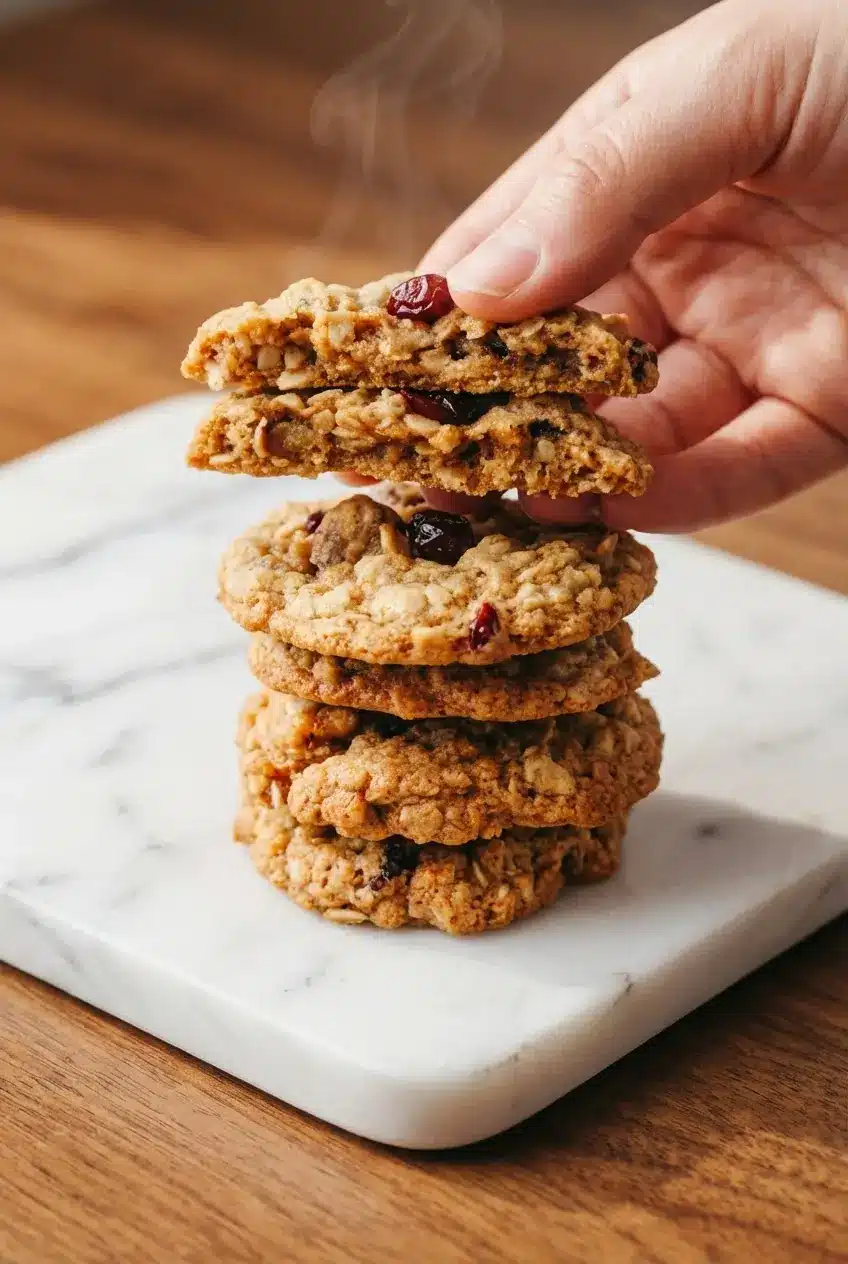
Softened butter, melted butter, and brown butter all behave differently in cookie dough. Softened butter traps air when creamed, which usually creates a lighter texture, while melted butter encourages a denser, chewier cookie because the fat is already fully liquefied before baking.
Brown butter goes one step further because some of its water cooks off as the milk solids toast. That gives you a more concentrated butterfat flavor and a richer, slightly denser crumb, which is exactly what makes these cookies feel substantial and chewy instead of cakey.
The flavor change is just as important as the texture change. As the milk solids brown, they develop a deeper toasted character tied to the Maillard browning reaction, which is why these cookies taste nutty and caramel-like before they even cool.
Why Pastry Chefs Hydrate Dried Fruit
Professional bakers hydrate dried fruit because it protects the texture of the final bake. Oats and flour already need their share of moisture to soften properly, so when dry cranberries go in untouched, they compete for that liquid and can leave the cookie more crumbly than chewy.
Soaking the cranberries for 10 minutes in warm orange juice solves two problems at once. The berries become plump and tender, and the citrus slips into the dough in a subtle way that brightens the brown butter and spice without overpowering them.
This trick is flexible, too. Warm water works perfectly well, and other flavorings can be used when they suit the bake, but orange juice is especially lovely here because it gives these oatmeal cranberry cookies a little sparkle.
Pro Tips & Troubleshooting
Pro Tips
- Use a kitchen scale whenever possible, especially for flour and oats. Accurate metric weight measurements are one of the best defenses against cakey or dry cookies.
- Keep your eggs at room temperature so the brown butter mixture stays smooth and emulsified. The baking science behind room temperature eggs is simple, they blend more evenly into fat-based batters and help the dough come together properly.
- Underbake slightly on purpose. When the edges are set and the centers still look a touch soft, the residual heat from the pan will finish the job without drying out the middle.
- If you forgot to take the eggs out early, set them in a bowl of warm water for 10 minutes. It is a small shortcut that makes a big difference.
- Stocking old-fashioned oats is always worth it because they are useful far beyond cookies. The same hearty texture that works here also makes other bakes, like banana oatmeal muffins, taste more satisfying and less mushy.
Common Mistakes to Avoid
- Do not use quick or instant oats if you want the best chewy texture. They absorb liquid too fast and can make the dough feel dry before it even reaches the oven.
- Avoid adding cold eggs straight from the fridge to the cooled brown butter. That sudden chill can make the fat seize and leave the batter looking curdled.
- Do not skip the 45-minute chill. Warm, loose dough spreads too much and bakes thinner than intended.
- Be careful not to bake until the cookies look completely done in the oven. They should still seem slightly underbaked in the center, or they will turn hard as they cool.
- Do not crowd the sheet pan. Giving each cookie 3 to 4 inches of space helps them bake evenly and hold a better shape.
Serving & Storage
Serving Ideas
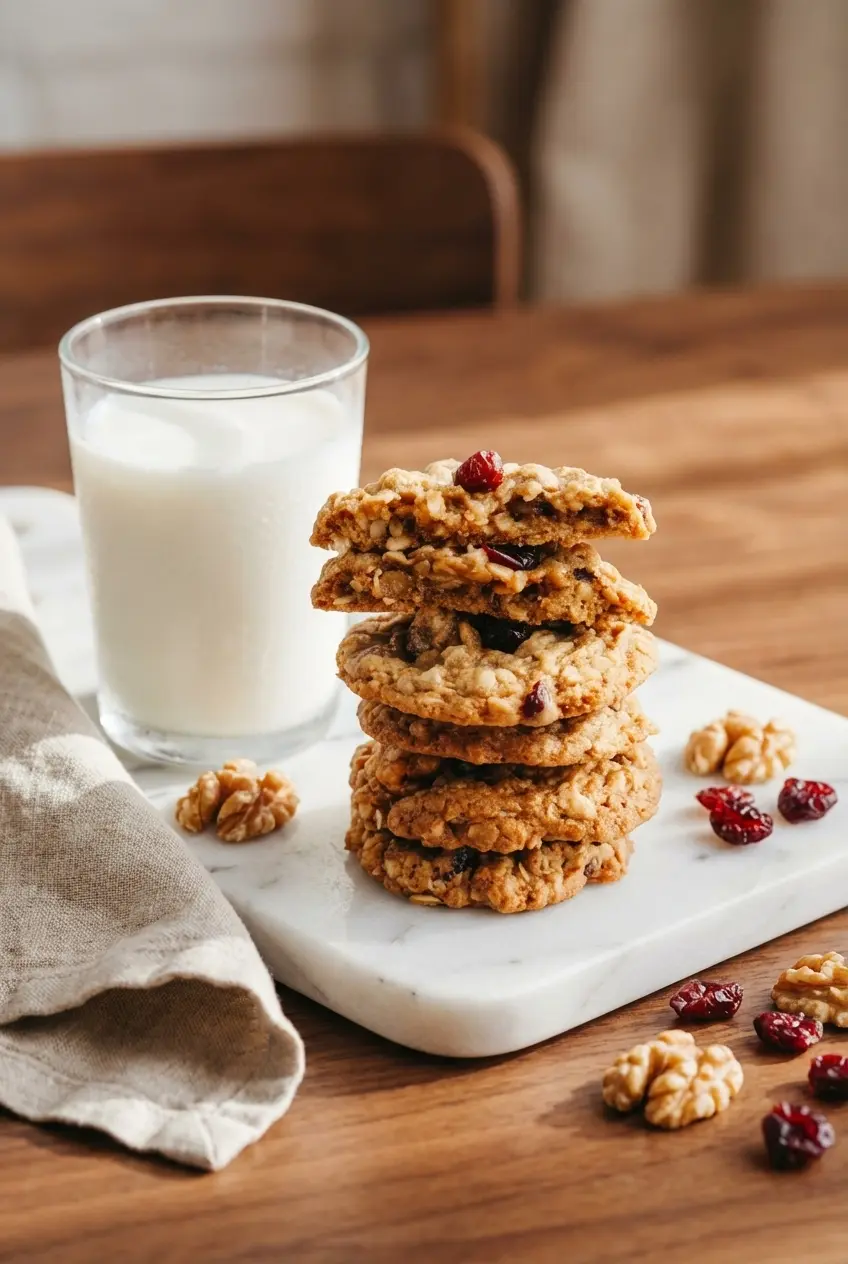
These cookies are at their very best just slightly warm, when the centers are still tender and the cranberries taste jammy. I love serving them with a cold glass of milk or oat milk, especially when the spices are still fragrant from the oven.
They also pair beautifully with coffee, spiced tea, or warm apple cider during the colder months. The brown butter and molasses make them feel especially welcome on a holiday dessert table, but honestly, they are just as good on an ordinary Sunday afternoon.
For dessert, I sometimes crumble one over a bowl of vanilla ice cream. The contrast between the chewy cookie, tart berries, and cold creamy scoop is the kind of simple treat that feels a little more special than the effort suggests.
Storage and Make Ahead
Baked cookies keep well at room temperature for several days if you store them in an airtight container. To help them stay soft, make sure they are fully cooled before sealing them up, so trapped steam does not turn the edges damp.
If you want fresh-baked cookies on demand, scoop the dough into portions first, then place the dough balls on a parchment-lined tray and freeze until firm. Once solid, transfer them to a freezer-safe container or bag, where they keep well for months, and guidance on freezing cookie dough follows the same practical approach many home bakers use for quality and freshness.
You can bake the dough straight from frozen, just adding an extra minute or two to the baking time. I still bake one sheet at a time, and I look for the same doneness cue, set edges with soft-looking centers, so the cookies stay chewy instead of turning crisp.
Chewy Oatmeal Cranberry Cookies

Equipment
- Baking Sheet
- Cookie Scoop
- Parchment Paper
Ingredients
- 1 cup (227 grams) unsalted butter
- 1 cup (200 grams) light brown sugar
- 1/4 cup (50 grams) white sugar
- 2 large eggs room temperature
- 2 teaspoons vanilla extract
- 1 3/4 cups (210 g) all purpose flour
- 1 teaspoon kosher salt
- 1 teaspoon baking soda
- 1 teaspoon ground cinnamon
- 1/4 teaspoon ground nutmeg
- 1/4 teaspoon ground cardamom
- 2 1/2 cups (222 grams) rolled oats
- 1 cup (100 grams) cranberries
- 1/2 cup (58 grams) walnuts
- 1 tablespoon molasses unsulphured
Instructions
Brown the Butter and Prep the Mix-Ins
- Set the butter in a small saucepan over medium-low heat and let it melt completely. Keep cooking for about 5 minutes, watching as it foams and sputters, until the milk solids turn light brown and the butter smells deeply nutty and toasted, then remove it from the heat right away.
- Transfer the brown butter to a bowl so it stops cooking, then leave it to cool slightly. You want it fluid and warm, not piping hot.
- While the butter cools, you can toast the walnuts if you like. Heat the oven to 350°F/175°C, spread the walnuts on a tray or baking dish, and toast them for 5 to 7 minutes until fragrant, then let them cool.
- For the texture trick that makes these cookies so soft, place the dried cranberries in a small bowl and cover them with warm orange juice for 10 minutes. Once they look plumper, drain off any extra liquid before adding them to the dough.
Build the Dough
- In a medium bowl, whisk together the all purpose flour, ground cinnamon, ground nutmeg, ground cardamom, kosher salt, and baking soda until the spices are evenly distributed. Set this bowl aside.
- To the cooled brown butter, add the light brown sugar, white sugar, molasses, and vanilla extract. Whisk until the mixture looks smooth, glossy, and thick.
- Add the 2 room temperature eggs and whisk again until the dough base is fully blended and silky. If the eggs are the right temperature, the batter should stay smooth instead of seizing.
- Fold the dry ingredients into the wet mixture, then add the rolled oats, drained cranberries, and toasted walnuts. Mix only until everything is combined, because overworking the dough can make the cookies heavier than they need to be.
Chill and Bake
- Cover the cookie dough and refrigerate it for 45 minutes so it can firm up. This resting time helps the oats hydrate and keeps the cookies from spreading too much in the oven.
- Preheat your oven to 350°F/175°C and line 2 baking sheets with parchment paper.
- Use a 3 tablespoon cookie scoop to portion the dough, spacing each mound 3 to 4 inches apart. Bake 6 cookies at a time, one sheet at a time, for 11 to 13 minutes, until the edges are set but the centers still look slightly underbaked.
Cool for the Best Texture
- Let the cookies rest on the baking sheet for 5 minutes before transferring them to a cooling rack. That short pause lets the centers finish setting gently, which is one of the easiest ways to keep the final texture soft and chewy.
Notes
Nutrition
Conclusion
These cookies earn their keep with two simple upgrades, nutty brown butter and cranberries plumped in orange juice. Together, they create a batch that tastes rich, cozy, and just a little more special than the usual oatmeal cookie.
If you are baking for family, a cookie exchange, or just your own afternoon coffee break, this recipe is an easy one to trust. Once you make it once, it is the kind of dough that invites little personal touches, from white chocolate chips to a different nut, without losing its soft, chewy soul.