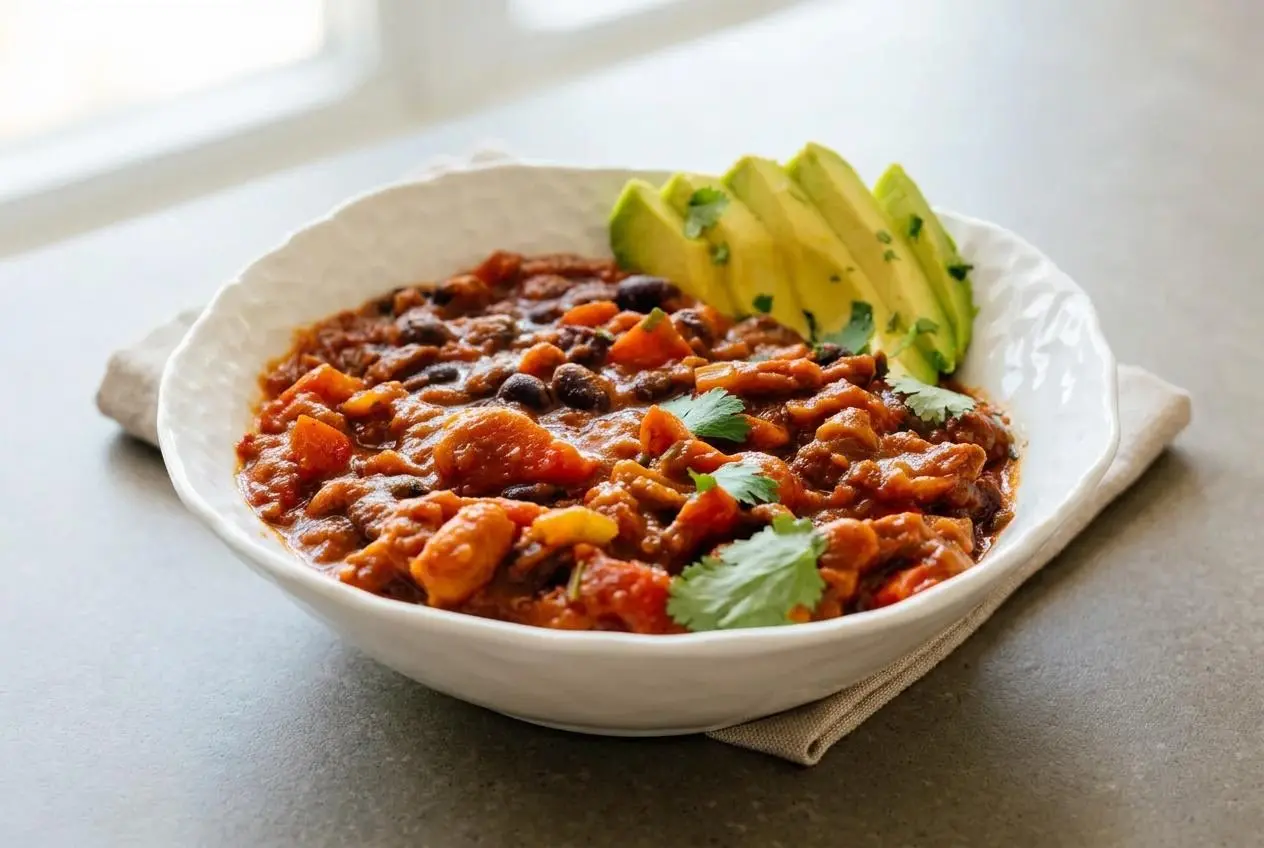
Make this chili by sautéing vegetables, blooming spices in olive oil, then simmering tomatoes and beans until rich. Blend a portion of the finished chili for a thick, velvety texture, then brighten it with vinegar or lime juice.
This meatless chili recipe has a hearty spoon-coating texture, smoky warmth, and enough vegetable flavor to make every bowl feel complete.
Black beans stay pleasantly firm while pinto beans soften into the tomato broth, creating a satisfying contrast. The partial blend is where the magic happens.
Chop the carrots, celery, pepper, and onion to a similar size so they soften evenly and melt into the chili without leaving crunchy surprises.
Key Ingredients for Hearty Meatless Chili
Each ingredient brings something useful: vegetables create a savory foundation, beans add body, tomatoes supply moisture and tang, and spices build the smoky warmth that makes chili taste deeply satisfying.
- 2 tablespoons extra-virgin olive oil
- 1 medium red onion, chopped
- 1 large red bell pepper, chopped
- 2 medium carrots, chopped
- 2 ribs celery, chopped
- ½ teaspoon salt, divided
- 4 cloves garlic, pressed or minced
- 2 tablespoons chili powder
- 2 teaspoons ground cumin
- 1 ½ teaspoons smoked paprika
- 1 teaspoon dried oregano
- 1 large can ( 28 ounces ) or 2 small cans ( 15 ounces each) diced tomatoes, with their juices
- 2 cans (15 ounces each) black beans, rinsed and drained
- 1 can (15 ounces) pinto beans, rinsed and drained
- 2 cups vegetable broth or water
- 1 bay leaf
- 2 tablespoons chopped fresh cilantro, plus more for garnishing
- 1 to 2 teaspoons sherry vinegar or red wine vinegar or lime juice, to taste
- Garnishes: chopped cilantro, sliced avocado, tortilla chips, sour cream or crème fraîche, grated cheddar cheese, etc.
Black beans bring earthy flavor and a firm bite, while pinto beans become creamy enough to help thicken the pot. The onion, bell pepper, carrots, and celery create a mellow, savory vegetable base before the tomatoes and broth go in.
I rinse canned beans well in a colander before adding them, which keeps excess sodium and cloudy bean liquid out of the chili.
The Best Bean Blend for Texture and Protein
Black beans hold their shape through the simmer, so the chili has a substantial bite. Pinto beans are softer and creamier, especially after blending. If you want a three-bean variation, kidney beans work well as an optional swap or addition because they stay firm and make each spoonful feel heartier.
Rinsing canned beans matters for more than appearance. It removes the starchy canning liquid that can muddy the tomato broth and make the finished chili taste overly salty before you have a chance to season it properly.
Aromatics and Vegetables That Add Body
Onion, bell pepper, carrots, and celery act like a classic mirepoix-style foundation for this chili. The carrots bring subtle sweetness, celery adds savory depth, and red bell pepper contributes mellow flavor and color. Chop them evenly so they soften at the same pace and blend naturally into the broth.
These vegetables also give a meatless chili the kind of layered texture that a pot made only with beans can lack. Let them become tender before moving on, since crunchy vegetables will not disappear during the later simmer.
Essential Spices for Authentic Chili Heat
Chili powder provides the familiar warm backbone, cumin brings an earthy note, and oregano adds a dry herbal edge. Smoked paprika is especially helpful here because it adds a woodsy, smoky depth that often comes from browned meat in traditional chili.
Garlic joins the spices at the end of the vegetable sauté so it stays fragrant rather than bitter. Keep the spices moving in the oil for the full minute, and the kitchen should smell bold and toasty rather than raw or dusty.
How to Make the Best Meatless Chili Step-by-Step
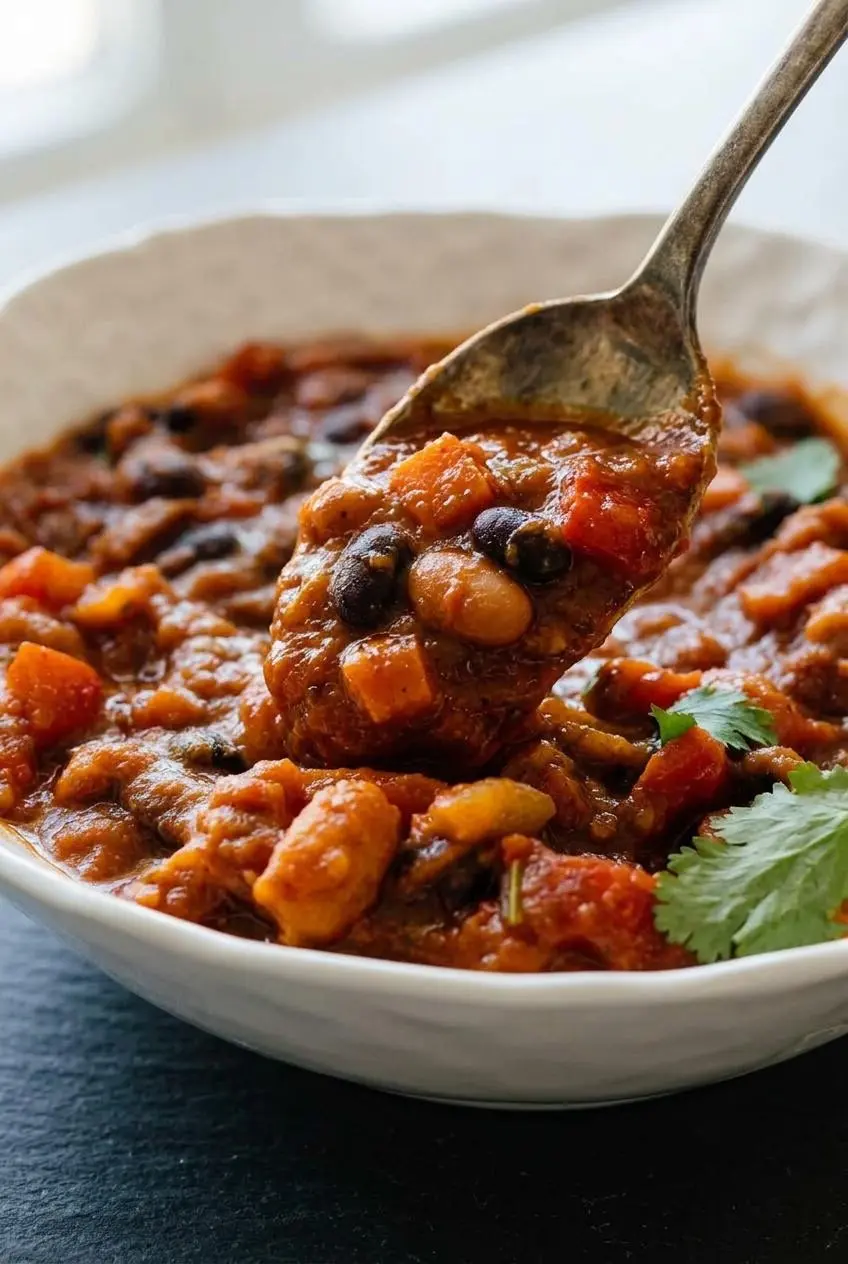
This stovetop method builds flavor in layers, then uses a partial blend to turn the tomato and bean broth into a thick, cozy stew.
- Heat the olive oil in a large Dutch oven or heavy-bottomed pot over medium heat until it shimmers, then add the onion, bell pepper, carrots, celery, and ¼ teaspoon of the salt.
Cook for 7 to 10 minutes, stirring now and then, until the onion looks translucent and the vegetables are tender with lightly golden edges. - Stir in the garlic, chili powder, cumin, smoked paprika, and oregano.
Keep stirring for about 1 minute, until the spices smell intensely fragrant and no dry patches remain in the pot. - Add the diced tomatoes with their juices, black beans, pinto beans, vegetable broth or water, and bay leaf, then bring the mixture to a simmer.
Lower the heat as needed and simmer gently for 30 minutes, stirring occasionally, until small steady bubbles rise and the beans remain whole. - Take the pot off the heat and remove the bay leaf, then blend 1 ½ cups of the chili with some of its liquid until smooth and stir it back into the pot.
Use an immersion blender or potato masher instead if preferred, stopping when the chili looks thicker but still has plenty of whole beans. - Stir in the chopped cilantro, then add vinegar, red wine vinegar, or lime juice to taste and season with the remaining salt as needed.
The finished chili should coat the back of a spoon and taste brighter after the acidic finish.
Sautéing the Vegetable Mirepoix
Give the vegetables their full cooking time before adding garlic and spices. This is the flavor foundation, and rushing it leaves the chili tasting sharper and less rounded. Look for onions that have softened and turned translucent, with a few pale golden edges on the carrots and celery.
A heavy Dutch oven helps hold steady heat, but any heavy-bottomed pot works well. Stir often enough to prevent sticking, especially once the vegetables start releasing their moisture.
Blooming Spices and Simmering
Blooming spices means warming them briefly in fat before adding the tomatoes and broth. Olive oil carries the aroma of cumin, chili powder, paprika, and oregano through the whole pot, giving the finished chili more depth than spices stirred straight into liquid.
After the tomatoes and beans go in, avoid a hard boil. A gentle simmer lets the tomato flavor mellow while keeping the beans tender but intact. Vigorous bubbling can split the beans and turn the pot grainy.
The Puree Technique for Thick Texture
Blending 1 ½ cups of cooked chili creates body without flour or cornstarch. Include some broth in the blender so the mixture becomes smooth enough to stir back in easily. The blended beans and vegetables act as a natural thickener while the remaining beans provide texture.
For a more rustic result, press beans against the side of the pot with a potato masher. Blend less for a chunkier chili, or blend a little more if you prefer a smoother, stew-like bowl.
Expert Tips and Common Mistakes to Avoid
A rich chili comes from managing texture and seasoning at the right moments, not from piling on extra ingredients. Small adjustments make a noticeable difference.
- Thin chili: Let it simmer uncovered for 10 extra minutes so moisture can cook off without changing the seasoning balance.
- Still too brothy: Mash an additional cup of beans against the side of the pot, then stir well and let the chili settle briefly.
- Need a fast thickening shortcut: Stir in refried beans a spoonful at a time until the texture looks right.
- Bland flavor: Add a small splash of vinegar or lime juice before adding more salt. Acid often wakes up muted spices.
- Bitter spices: Keep the heat at medium and stir constantly during the one-minute bloom. Burned spices cannot be fixed with more broth.
- Too much salt: Add a splash of broth or water and simmer gently rather than adding more tomatoes, which can shift the flavor balance.
For greater control over the heat and salt level, use a homemade chili seasoning blend. You can lean smoky with more paprika, earthier with cumin, or keep the heat gentle for a milder pot.
An optional pinch of unsweetened cocoa powder stirred in with the spices gives the chili a roasted, earthy background. Use it lightly, since it should deepen the flavor without making the chili taste like dessert.
Balancing Acidity and Richness at the Finish
Tomatoes and spices become richer during simmering, so the final splash of sherry vinegar, red wine vinegar, or lime juice is more than a garnish. Start with the lower amount, stir, and taste. The right level makes the chili taste brighter and less heavy while leaving the smoky spices intact.
Vinegar offers a rounder tang, while lime juice tastes fresher and sharper. Either option works well, so choose the flavor you enjoy with your toppings.
Troubleshooting Runny or Watery Chili
- Simmer uncovered: Extra steam needs an escape route. Keep the heat gentle so the beans do not break apart.
- Mash beans in the pot: This thickens the broth while keeping the spice profile exactly where you want it.
- Blend a portion: This is the smoothest option when you want a thicker chili with a velvety finish.
- Add refried beans: This works quickly when dinner is close and the pot needs more body.
Versatile Variations: Slow Cooker and Protein Swaps
Keep the stovetop version as written for the fullest flavor, then use these optional adaptations when you want a hands-off meal or a different kind of chew.
Crockpot and Slow Cooker Adaptation
For slow cooker chili, sauté the vegetables and bloom the garlic and spices in a skillet first. Transfer everything to the slow cooker with the tomatoes, beans, bay leaf, and broth, reducing the broth by ½ cup because less liquid evaporates during slow cooking.
Cook on Low for 6 to 8 hours or High for 3 to 4 hours, then remove the bay leaf and mash or blend part of the chili before finishing with cilantro and acid. For another hands-off bean dinner, try this slow cooker chili.
Grain and Lentil Meatless Upgrades
Stir cooked quinoa, farro, or brown lentils into the chili during the final 10 minutes of cooking if you want more chew. These additions give the bowl a texture closer to ground meat while keeping the bean-and-vegetable flavor front and center.
- Quinoa: Adds a light, nubby texture that blends easily into the chili.
- Farro: Brings a firmer chew and works especially well for a hearty dinner bowl.
- Brown lentils: Add a soft, savory bite that fits naturally with the beans.
Spicy Chipotle and Mild Customizations
- Add one minced chipotle pepper in adobo sauce for deeper smoke and substantial heat.
- Choose mild chili powder and sweet bell peppers for gentler, family-friendly bowls.
- Use extra sliced jalapeños at the table so each person can control the heat.
- Swap standard diced tomatoes for fire-roasted tomatoes if you want a smokier tomato flavor.
Storage, Freezing, and Make-Ahead Instructions
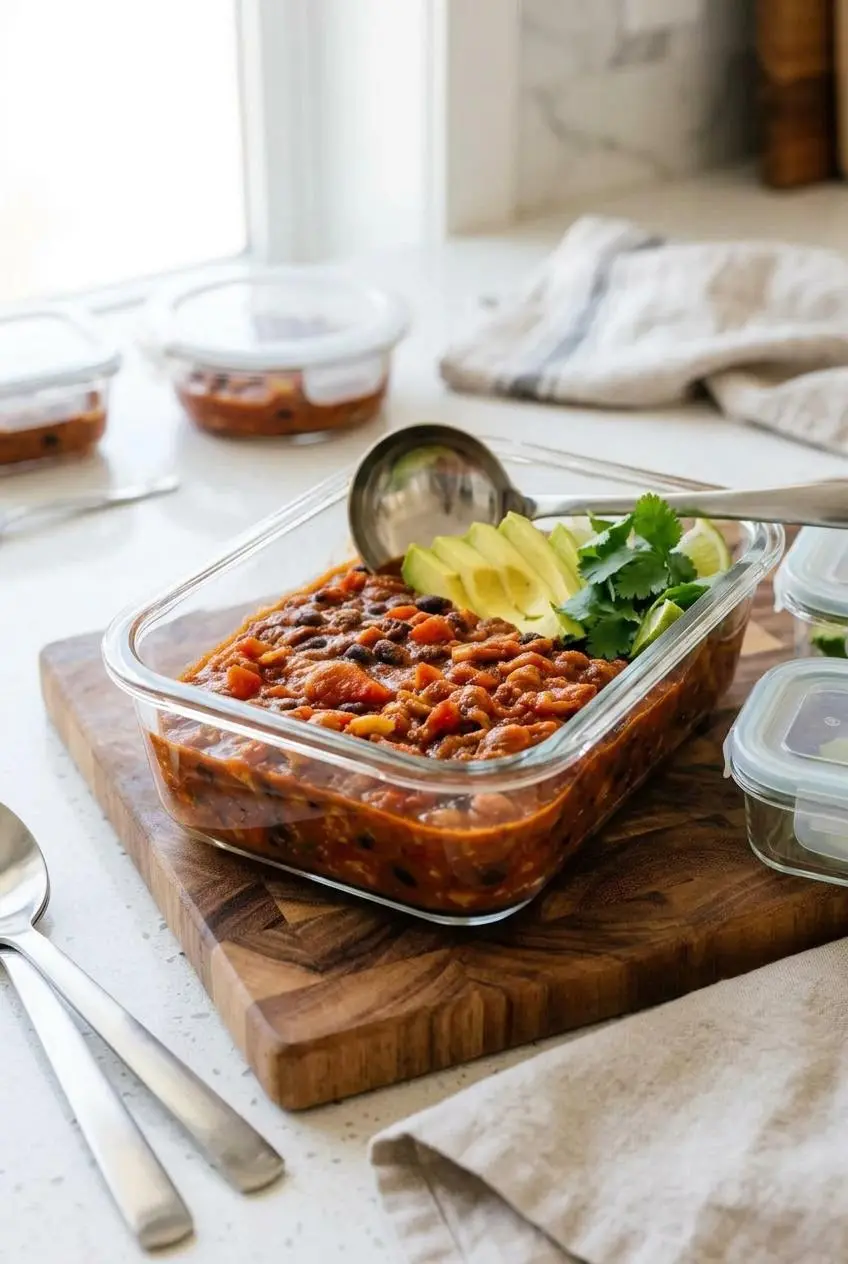
The flavors settle and meld as the chili rests, making it a useful option for planned lunches or a later dinner. Store toppings separately so avocado, cilantro, chips, and dairy garnishes keep their best texture.
Refrigerator Storage and Reheating
Transfer cooled chili to airtight containers and refrigerate it for up to 4 days. Cool leftovers promptly, keep the refrigerator at 40°F or below, and use shallow containers when possible for safe cooling and chilled storage.
Reheat a single portion gently on the stovetop or in the microwave, stirring partway through. Add a splash of water or broth if the blended beans have thickened the sauce too much, then finish with fresh cilantro or lime juice after warming.
Freezer Prep and Thawing Guidelines
For longer storage, portion cooled chili into freezer-safe containers, leaving room for expansion. Keep the freezer at 0°F or below, label the container clearly, and move a portion to the refrigerator to thaw before reheating.
Freeze the chili without avocado, chips, cheese, sour cream, or fresh cilantro. Add those toppings after reheating so the bowl tastes fresh and the crunchy elements stay crisp.
Delicious Ways to Serve Meatless Chili

A bowl of chili can stay classic or become the center of a more substantial meal. Set out toppings separately so everyone can build the combination they like.
- Top with diced avocado, chopped cilantro, shredded cheddar, sour cream or crème fraîche, and pickled jalapeños.
- Serve with warm skillet cornbread for something soft and buttery beside the smoky tomato broth.
- Use tortilla chips for scooping, then add cheese and avocado for loaded chili nachos.
- Ladle the chili over baked sweet potatoes for a cozy dinner with contrasting sweet and smoky flavors.
- Spoon leftovers into halved bell peppers before baking for a hearty stuffed-pepper filling.
- Turn leftovers into creamy chili mac for a comforting pasta dinner.
For game-day snacking, serve it with tortilla chips and turn part of the batch into a warm chili cheese dip. Keep the main pot warm and let the toppings do the rest.
Conclusion
This chili gets its depth from softened vegetables, spices bloomed in olive oil, and a slow, gentle simmer. Blending a portion gives it thick body while keeping plenty of whole beans in every bowl.
Finish with vinegar or lime juice, pile on the toppings you enjoy, and serve while the chili is hot and fragrant. A warm bowl is never a bad plan.
Frequently Asked Questions
What Is the Best Way to Thicken Meatless Chili?
Blend 1 ½ cups of the cooked chili until smooth, then stir it back into the pot. Use an immersion blender for a quicker, less smooth result. Mash beans with a potato masher for a chunkier texture. Simmer uncovered if the chili needs to reduce further.
Can I Make Meatless Chili in a Slow Cooker?
Yes. Sauté the vegetables and bloom the spices first, then transfer everything to the slow cooker. Reduce the broth by ½ cup to account for lower evaporation. Cook on Low for 6 to 8 hours or High for 3 to 4 hours. Mash or blend part of the chili before adding cilantro and vinegar or lime juice.
How Do You Give Vegetarian Chili a Meaty Flavor?
Build savory depth with browned onions, smoked paprika, chili powder, cumin, and tomatoes. A finishing splash of vinegar or lime juice sharpens those deeper flavors. Use fire-roasted tomatoes for an optional smoky edge. Add a small amount of unsweetened cocoa powder with the spices for roasted complexity. Keep the chili at a gentle simmer so the tomato and spice flavors have time to meld.
How Long Does Meatless Chili Last in the Fridge and Freezer?
Keep refrigerated chili in an airtight container for up to 4 days. For longer storage, portion it into freezer-safe containers, keep it frozen at 0°F or below, and thaw it in the refrigerator before reheating.
What Beans Work Best in Vegetarian Chili?
Black beans and pinto beans make an excellent combination because they offer different textures in the same bowl. Black beans stay firm and earthy. Pinto beans add creaminess, especially after blending. Kidney beans are an optional addition when you want another firm, hearty bean.
Meatless Chili Recipe

Equipment
- Dutch oven or heavy-bottomed pot
- Blender or immersion blender or potato masher
Ingredients
- 2 tablespoons extra-virgin olive oil
- 1 medium red onion chopped
- 1 large red bell pepper chopped
- 2 medium carrots chopped
- 2 ribs celery chopped
- 1/2 teaspoon salt divided
- 4 cloves garlic pressed or minced
- 2 tablespoons chili powder
- 2 teaspoons ground cumin
- 1 1/2 teaspoons smoked paprika
- 1 teaspoon dried oregano
- 1 large can ( 28 ounces ) or 2 small cans ( 15 ounces each) diced tomatoes with their juices
- 2 cans (15 ounces each) black beans rinsed and drained
- 1 can (15 ounces) pinto beans rinsed and drained
- 2 cups vegetable broth or water
- 1 bay leaf
- 2 tablespoons chopped fresh cilantro plus more for garnishing
- 1 to 2 teaspoons sherry vinegar or red wine vinegar or lime juice to taste
- Garnishes: chopped cilantro, sliced avocado, tortilla chips, sour cream or crème fraîche, grated cheddar cheese, etc.
Instructions
- Heat the olive oil in a large Dutch oven or heavy-bottomed pot over medium heat until it shimmers, then add the onion, bell pepper, carrots, celery, and ¼ teaspoon of the salt. Cook for 7 to 10 minutes, stirring now and then, until the onion looks translucent and the vegetables are tender with lightly golden edges.
- Stir in the garlic, chili powder, cumin, smoked paprika, and oregano. Keep stirring for about 1 minute, until the spices smell intensely fragrant and no dry patches remain in the pot.
- Add the diced tomatoes with their juices, black beans, pinto beans, vegetable broth or water, and bay leaf, then bring the mixture to a simmer. Lower the heat as needed and simmer gently for 30 minutes, stirring occasionally, until small steady bubbles rise and the beans remain whole.
- Take the pot off the heat and remove the bay leaf, then blend 1 ½ cups of the chili with some of its liquid until smooth and stir it back into the pot. Use an immersion blender or potato masher instead if preferred, stopping when the chili looks thicker but still has plenty of whole beans.
- Stir in the chopped cilantro, then add vinegar, red wine vinegar, or lime juice to taste and season with the remaining salt as needed. The finished chili should coat the back of a spoon and taste brighter after the acidic finish.