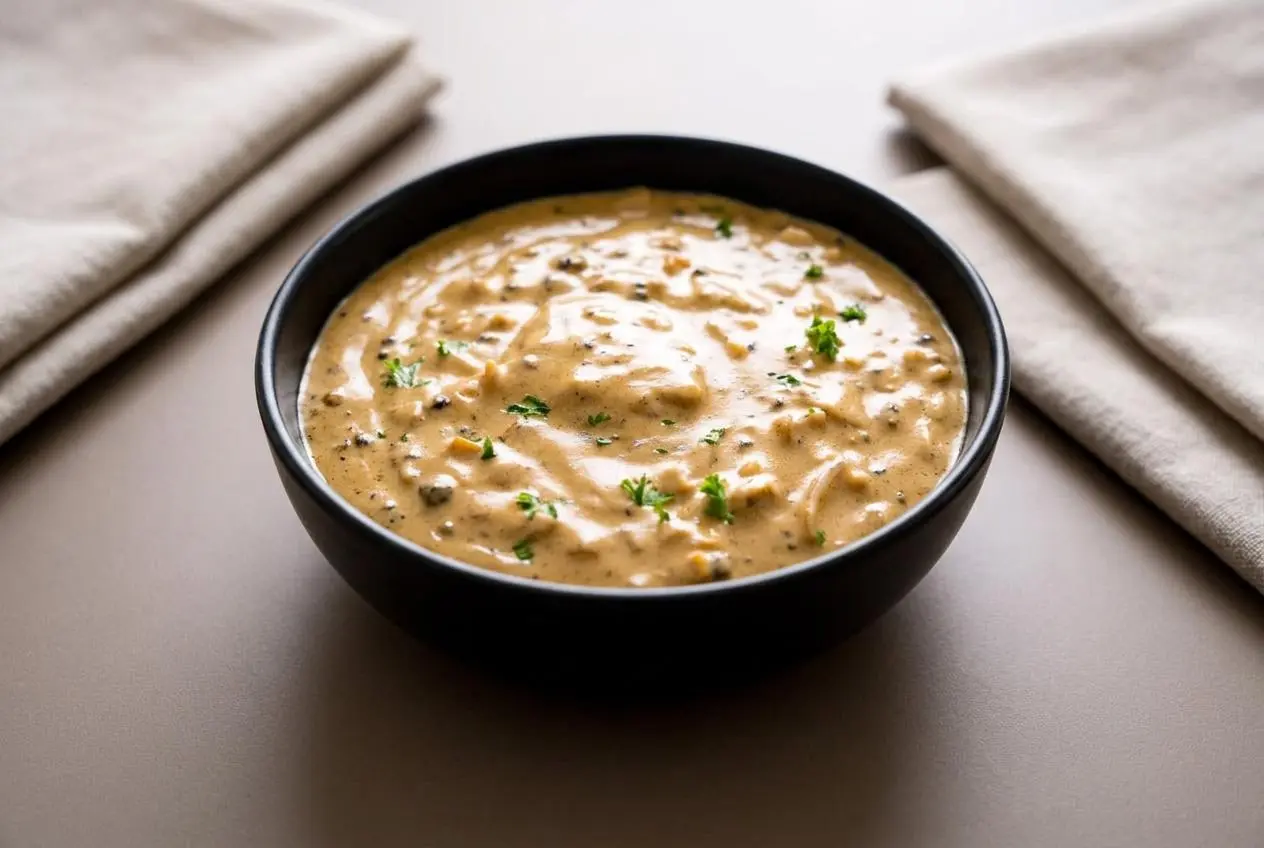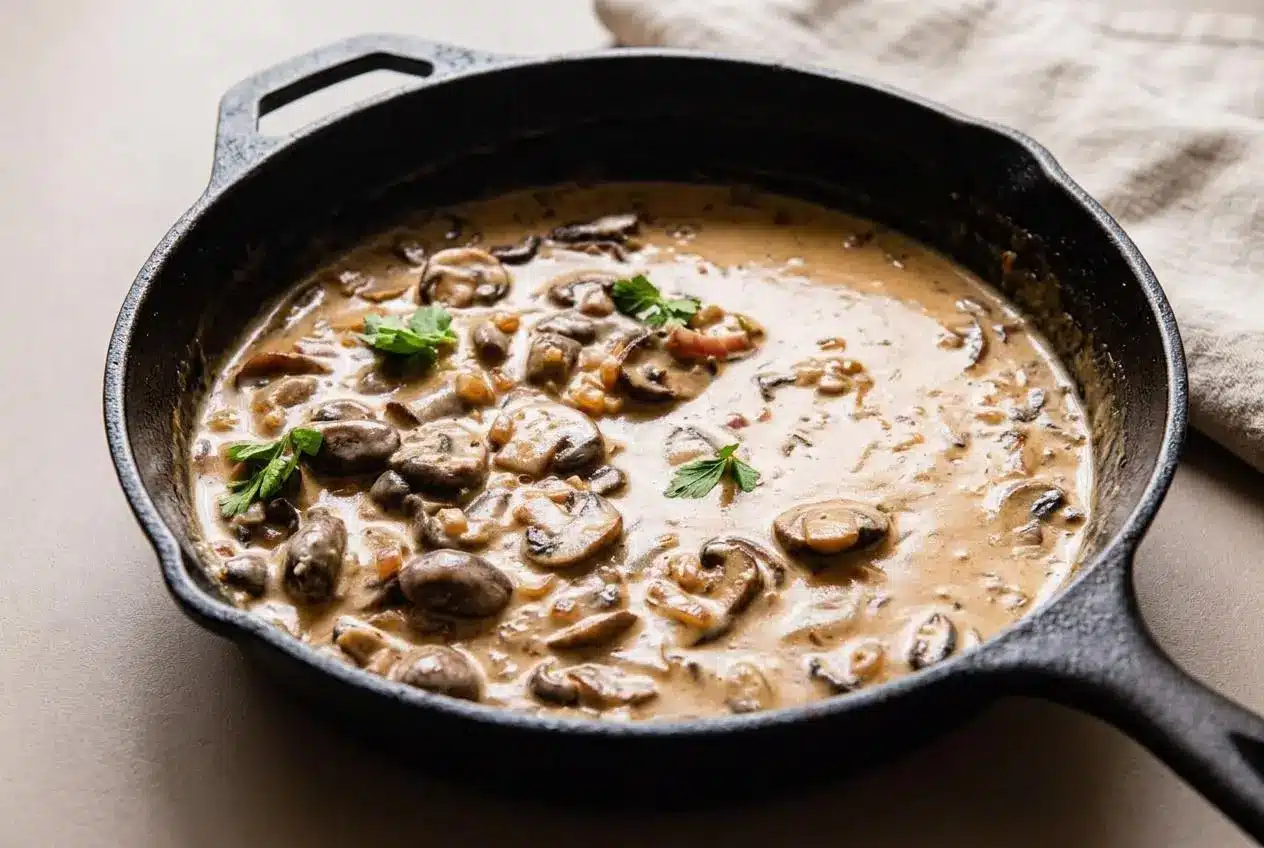
Classic Marsala sauce is a rich pan sauce made by browning mushrooms and aromatics, reducing Marsala wine with stock, and warming in cream for a velvety finish.
This marsala sauce brings deep mushroom flavor, rosemary, and a nutty wine reduction together in about 25 minutes. It is designed as a standalone sauce, so it can turn a plain protein or pile of pasta into dinner.
The savory aroma starts building as the onions soften and the mushrooms turn golden. The key is patience with the reduction.
Use a wide skillet if possible, leaving room around the mushrooms so they brown instead of releasing moisture and steaming.
Essential Ingredients for Restaurant-Quality Marsala Sauce
Each ingredient supports the finished sauce: aromatics build savoriness, mushrooms add depth, flour gives light body, and cream rounds out the wine and stock reduction.
- 1 tbsp olive oil
- 1 onion (chopped)
- 1 clove garlic (minced)
- 200 g / 2 cups mushrooms (sliced thickly)
- 1 tbsp fresh chopped rosemary (chopped, or 1 tsp dried rosemary)
- 1 tbsp flour
- 125ml / 1/2 cup sweet Marsala wine
- 1 cup stock, chicken or vegetable
- 125m / 1/2 cup double cream/heavy cream
- salt to taste
- pepper to taste
- 1-2 sprigs parsley (optional)
The onion and garlic form the savory foundation, while thick mushrooms bring earthy umami and a satisfying bite. Rosemary adds piney warmth, flour helps the sauce cling, and heavy cream softens the concentrated wine flavor into a smooth, rich finish.
I slice mushrooms fairly thick because thin slices tend to disappear into the sauce before they develop that pleasantly meaty texture.
For a gluten-free finish, skip the flour and rely on a slightly longer natural reduction, or use a cornstarch slurry as an optional thickener near the end. Keep either approach outside the main method so the original texture and ingredient balance stay intact.
Choosing Between Dry and Sweet Marsala
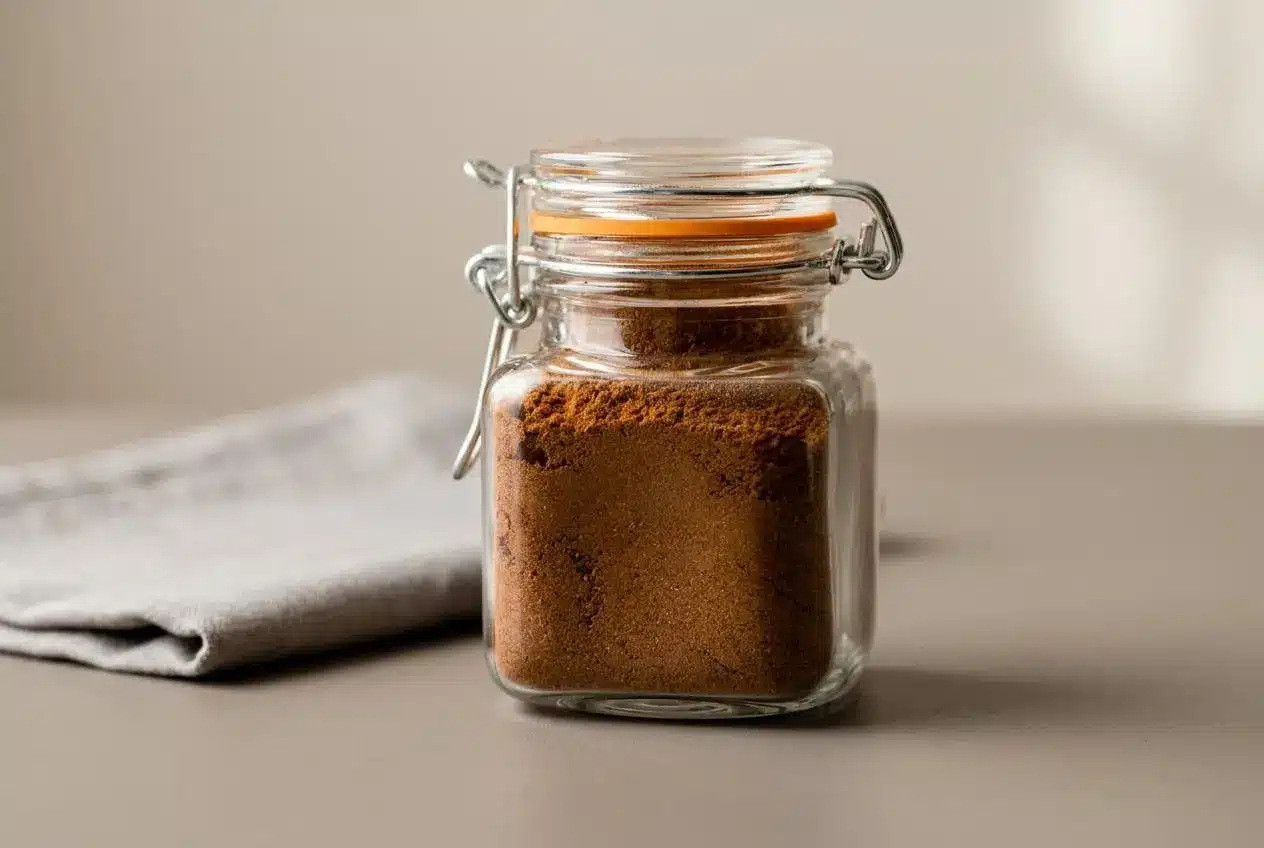
Dry or semi-dry Marsala is the strongest choice for savory sauces. It has the characteristic toasted, nutty flavor of Sicilian fortified wine without pushing chicken, steak, or pasta into dessert territory.
This ingredient list uses sweet Marsala, so reduce it carefully and taste before adding extra salt. If the sauce tastes noticeably sweet after reducing, balance it with a little stock, lemon juice, or Dijon mustard rather than adding more wine. Sweet Marsala is more commonly used for desserts such as tiramisu, while dry Marsala gives a more savory result.
Marsala is a fortified wine, not masala. Masala refers to spice blends used in Indian cooking, so the two names may sound similar but bring entirely different flavors to the pan.
Best Mushrooms for Deep Umami Flavor
Cremini, often labeled baby bella mushrooms, give the sauce a deeper brown color and earthier flavor than white button mushrooms. White buttons still work well when they are fresh and dry, especially if you give them enough room in the skillet.
For a more rustic mushroom sauce, use a mix of cremini with shiitakes or other wild mushrooms. Their flavor is more assertive, so pair them with chicken stock or beef broth when you want a darker, more robust result.
Stock and Dairy Options
Chicken stock keeps the sauce rounded and flexible for poultry, pork, and pasta. Beef broth gives it a darker, meatier profile that suits steak, while vegetable stock keeps the sauce appropriate for vegetables, polenta, and baked potatoes.
Choose full-fat heavy cream or double cream for the smoothest finish. Once it goes into the skillet, keep the heat low and avoid a hard boil. Gentle warmth lets the sauce stay cohesive while it thickens enough to lightly coat a spoon.
How to Make Perfect Marsala Sauce Step-by-Step
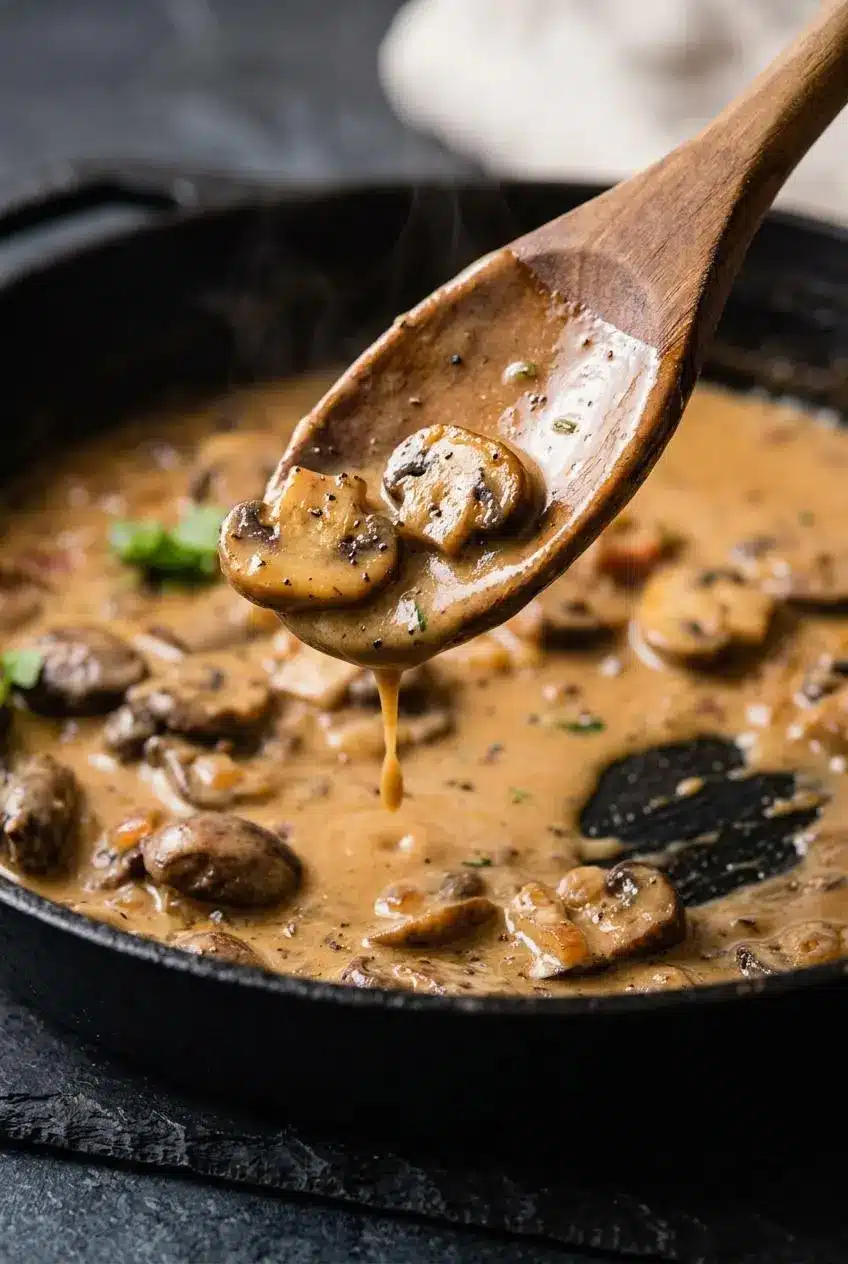
Good Marsala sauce comes from building flavor in layers. Soften the aromatics first, brown the mushrooms without salting too soon, then let the wine reduce until its sharp edge becomes a warm, toasted aroma.
- Warm the olive oil in a frying pan over low heat, then cook the chopped onion for 5-7 minutes before stirring in the minced garlic for 30 seconds.
The onion should look soft and glossy, and the garlic should smell fragrant without taking on color. - Add the thickly sliced mushrooms, pepper, and rosemary, then cook over medium heat until the mushrooms are golden; season with salt when they are nearly done.
Leave the mushrooms undisturbed briefly at first so browned patches form instead of a watery layer in the pan. - Stir in the flour, pour in the Marsala, and cook for about 5 minutes until the wine has reduced by half; add the stock and cook for 5 minutes more, then stir in the double/heavy cream, adjust the seasoning, remove from the heat, and finish with parsley if using.
The finished sauce should look velvety and leave a thin, even coating on the back of a wooden spoon.
The wine reduction is the flavor pivot. As the Marsala bubbles, the aroma changes from sharp and wine-forward to rounder and nutty. Do not rush straight to the stock, because reducing the wine by half concentrates the flavor that makes this sauce distinctive.
This method works without meat drippings, making it useful as a standalone pan sauce. If you have browned bits left after cooking chicken or pork in the skillet, they can add extra savory depth, but they are not required for a full-flavored result.
Pro Tips and Troubleshooting Common Sauce Mistakes
Most Marsala sauce problems come down to heat, crowding, or seasoning too early. These quick fixes keep the sauce glossy, savory, and balanced.
- Watery mushrooms: An overcrowded pan traps steam. Use a roomy skillet, cook the mushrooms over medium heat, and wait to salt until they are nearly golden.
- Pale flavor: The mushrooms or wine may need more time. Let the mushrooms brown in spots, then reduce the Marsala until it smells nutty rather than raw.
- Too salty: Stock and wine become more concentrated as they reduce. Hold back on salt until the cream has warmed through and you can taste the finished balance.
- Grainy or separated sauce: High heat after adding cream is usually the culprit. Lower the heat right away and stir gently until the sauce looks smooth again.
How to Fix an Overly Sweet Sauce
If sweet Marsala has concentrated too much, bring the sauce back toward savory territory with a small splash of unsalted stock. A few drops of lemon juice can brighten it, while Dijon mustard adds tang and a little bite. Add any correction gradually, tasting between additions so the sauce does not become sour or overly sharp.
Fresh thyme is a good optional partner for Dijon when serving the sauce with pork, chicken, or roasted vegetables. Its herbal edge helps counter the richer notes from cream and sweet wine.
Thickening Methods and Preventing Separation
If the sauce seems thin after the cream warms through, give it a little more time over low heat so moisture can evaporate. For a quicker optional fix, use one of these approaches:
- Beurre manié: Knead equal parts softened butter and flour into a smooth paste, then whisk in tiny pieces until the sauce thickens. This adds a glossy, classic pan-sauce body.
- Cornstarch slurry: Stir cornstarch with cold water first, then add a small amount to the gently simmering sauce. This is useful for a gluten-free thickening route.
- Natural reduction: Keep simmering gently until the sauce coats a spoon. This produces the cleanest flavor and requires no added thickener.
Do not substitute low-fat milk for heavy cream if you want the same texture. Milk is more likely to look grainy in an acidic wine sauce, while heavy cream gives the sauce the richness needed for a smooth finish.
Delicious Ways to Serve Marsala Sauce
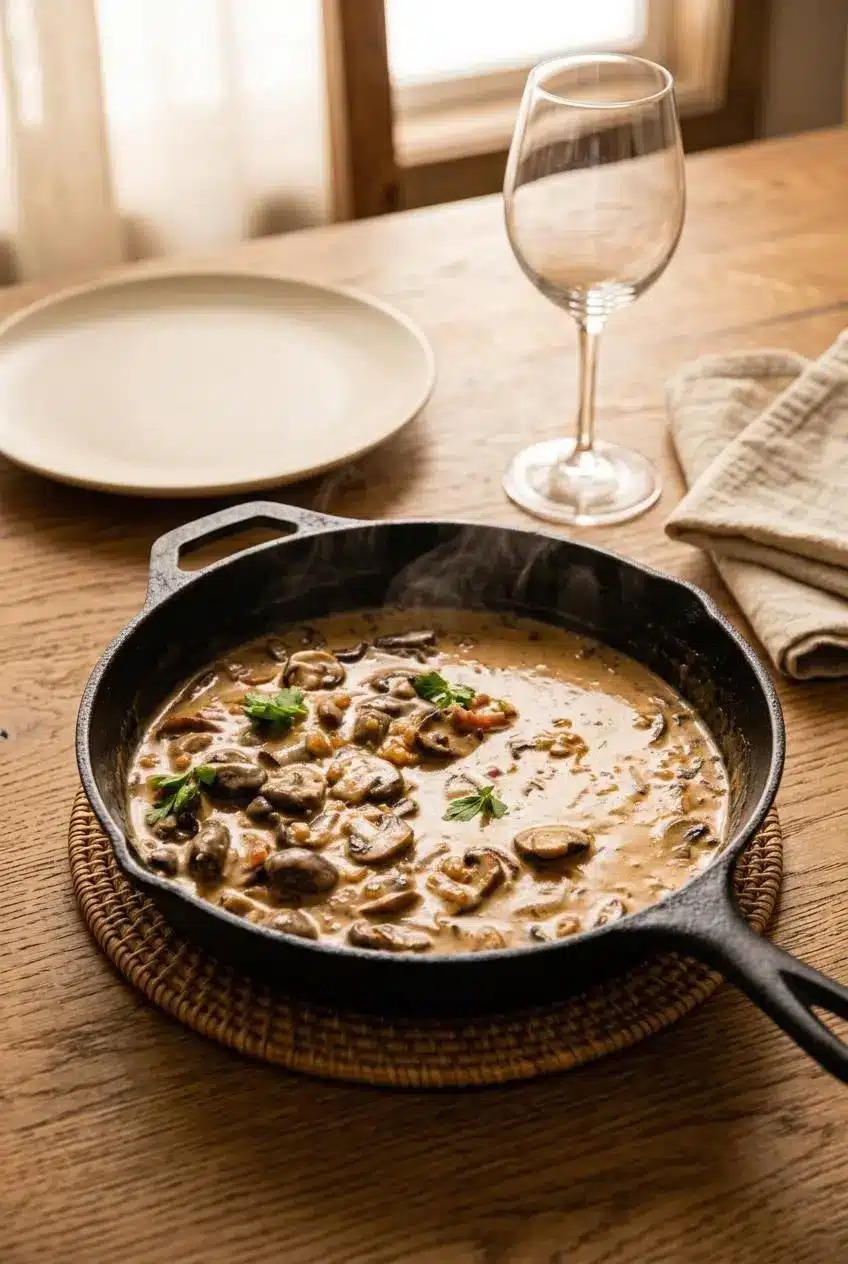
This sauce earns its place far beyond chicken cutlets. Its creamy mushroom flavor works especially well with mild proteins, hearty starches, and vegetables that can catch plenty of sauce.
- Spoon it over pan-seared chicken cutlets for a fast dinner, or build a fuller meal with classic chicken marsala.
- Serve it with ribeye steak, pork tenderloin, or roasted salmon fillets, using chicken stock for a lighter profile or beef broth for deeper beefy flavor.
- Toss it with wide fettuccine or pappardelle, or take the pasta route further with chicken marsala pasta.
- Pour it over gnocchi, creamy mashed potatoes, soft polenta, roasted portobello caps, or warm split baked potatoes.
- Use it with quickly seared shrimp if you want a lighter main course with the same savory mushroom finish.
Classic Dairy-Free Marsala Sauce
For a non-creamy version, omit the heavy cream and let the reduced Marsala and stock create the body. Finish the sauce off the heat by swirling in cold unsalted butter until it looks glossy. This produces a lighter pan sauce with a more pronounced wine-and-mushroom flavor.
The result is less creamy but still silky, especially when the wine and stock have reduced enough to cling lightly to the mushrooms. Serve it over chicken, pork, pasta, or roasted vegetables.
Gourmet Mustard and Mascarpone Variation
For a thicker, tangier pasta sauce, use mascarpone as an optional alternative to some or all of the heavy cream, then add Dijon mustard to sharpen the richness. The mascarpone makes the sauce especially lush around gnocchi, broad noodles, and roasted vegetables.
Keep the heat low after adding mascarpone and stir until it melts smoothly into the sauce. A little fresh thyme works particularly well here, giving the richer variation a bright herbal lift.
Storing and Reheating Marsala Sauce
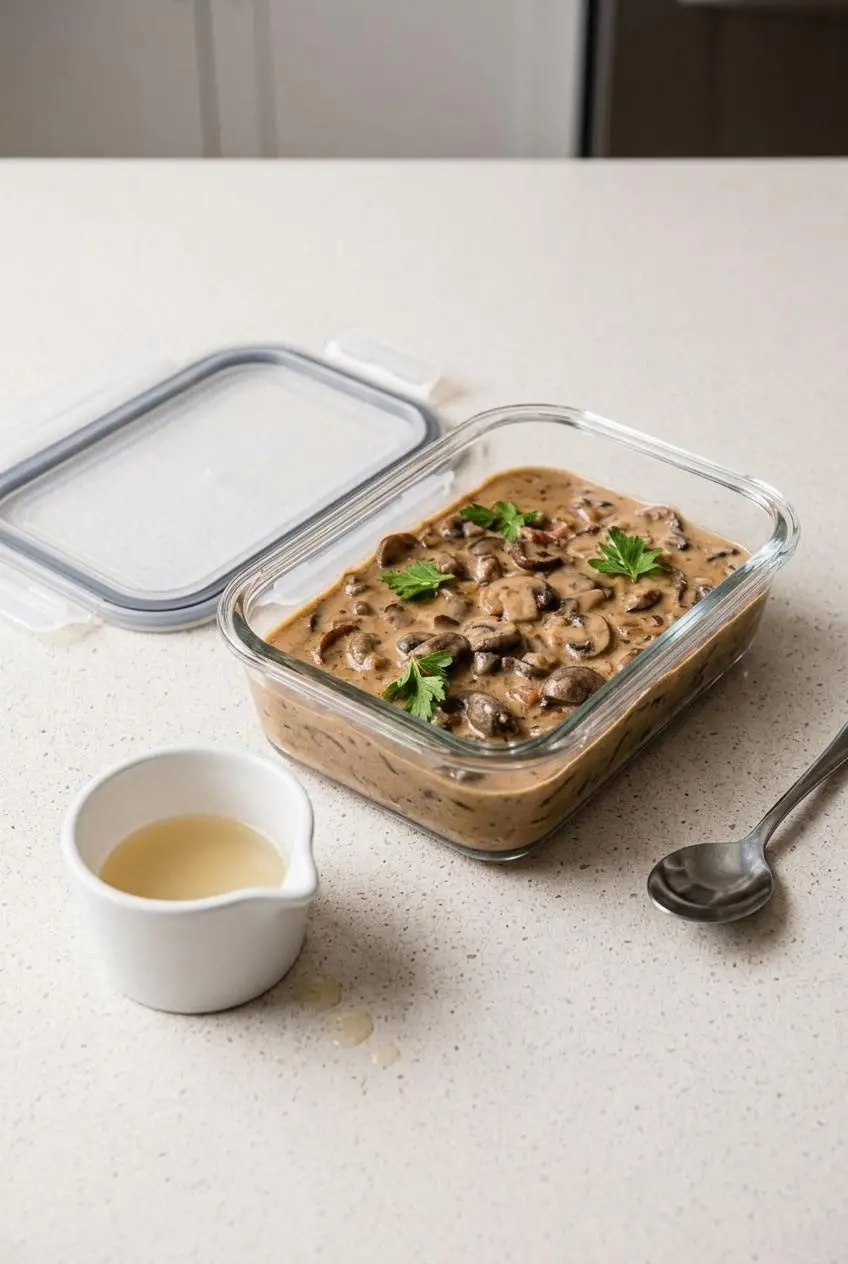
Cool leftover sauce promptly, transfer it to an airtight container, and keep it chilled. Because cream sauces can lose their smooth texture when held for too long, make only what you expect to use soon and reheat smaller portions as needed.
Warm the sauce in a small skillet over low heat, stirring often. If it has thickened in the container, loosen it with a splash of warm broth or water until the sauce regains its glossy, spoon-coating texture. Avoid high heat, which can make the cream look grainy or separated.
If you are planning ahead, prepare the sauce close to serving time for the best texture. The mushroom flavor holds up well, but the cream finish is at its silkiest straight from the pan.
Conclusion
This 25-minute sauce brings together golden mushrooms, aromatic rosemary, reduced Marsala, stock, and cream in one skillet. Browning the mushrooms well and reducing the wine by half are the two moves that create its restaurant-style depth.
Serve it wherever dinner needs a little extra comfort, from chicken and steak to pasta and potatoes. Keep the heat gentle once the cream goes in, and the sauce will stay beautifully velvety.
Frequently Asked Questions
Should I Use Dry or Sweet Marsala Wine for Savory Sauce?
Choose dry or semi-dry Marsala for savory dinner sauces whenever possible. It gives you nutty, fortified-wine depth without making the finished sauce sugary. Sweet Marsala can still work in this recipe, but reduce it carefully and balance the finished sauce with stock, lemon juice, or Dijon mustard if the sweetness becomes prominent.
What Is the Best Substitute if I Do Not Have Marsala Wine?
Dry Madeira is the closest substitute because it has similar fortified richness. Dry Sherry also works well and brings a slightly nuttier edge. Dry white wine with a small splash of brandy is another useful option when neither is available. Reduce it in the same way, then taste before seasoning because each substitute has a different level of sweetness.
Can I Make Marsala Sauce Without Heavy Cream?
Yes. Omit the cream and reduce the Marsala and stock until the sauce has enough body to coat a spoon. For a silky finish, swirl cold butter into the sauce off the heat. This gives you a glossy, lighter style with a stronger wine-and-mushroom flavor.
How Do You Store and Reheat Leftover Marsala Sauce?
Keep leftover sauce covered in an airtight container and chilled, then reheat it gently in a skillet over low heat. Stir often and add a splash of broth or water if it has become too thick. Skip aggressive boiling during reheating. Gentle heat helps the cream sauce return to a smooth, glossy consistency.
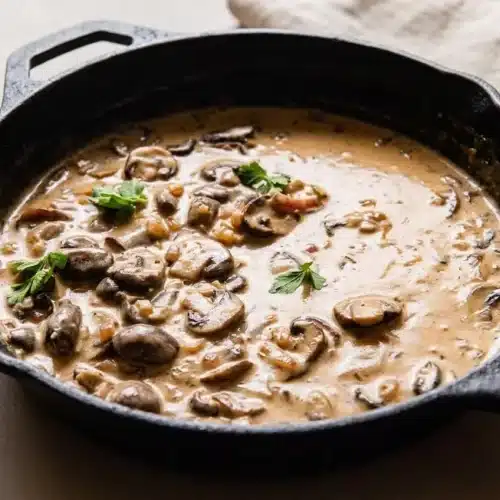
Marsala Sauce

Equipment
- Cast Iron Skillet
Ingredients
- 1 tbsp olive oil
- 1 onion chopped
- 1 clove garlic minced
- 200 g / 2 cups mushrooms sliced thickly
- 1 tbsp fresh chopped rosemary chopped, or 1 tsp dried rosemary
- 1 tbsp flour
- 125ml / 1/2 cup sweet Marsala wine
- 1 cup stock, chicken or vegetable
- 125m / 1/2 cup double cream/heavy cream
- salt to taste
- pepper to taste
- 1-2 sprigs parsley optional
Instructions
- Warm the olive oil in a frying pan over low heat, then cook the chopped onion for 5-7 minutes before stirring in the minced garlic for 30 seconds. The onion should look soft and glossy, and the garlic should smell fragrant without taking on color.
- Add the thickly sliced mushrooms, pepper, and rosemary, then cook over medium heat until the mushrooms are golden; season with salt when they are nearly done. Leave the mushrooms undisturbed briefly at first so browned patches form instead of a watery layer in the pan.
- Stir in the flour, pour in the Marsala, and cook for about 5 minutes until the wine has reduced by half; add the stock and cook for 5 minutes more, then stir in the double/heavy cream, adjust the seasoning, remove from the heat, and finish with parsley if using. The finished sauce should look velvety and leave a thin, even coating on the back of a wooden spoon.