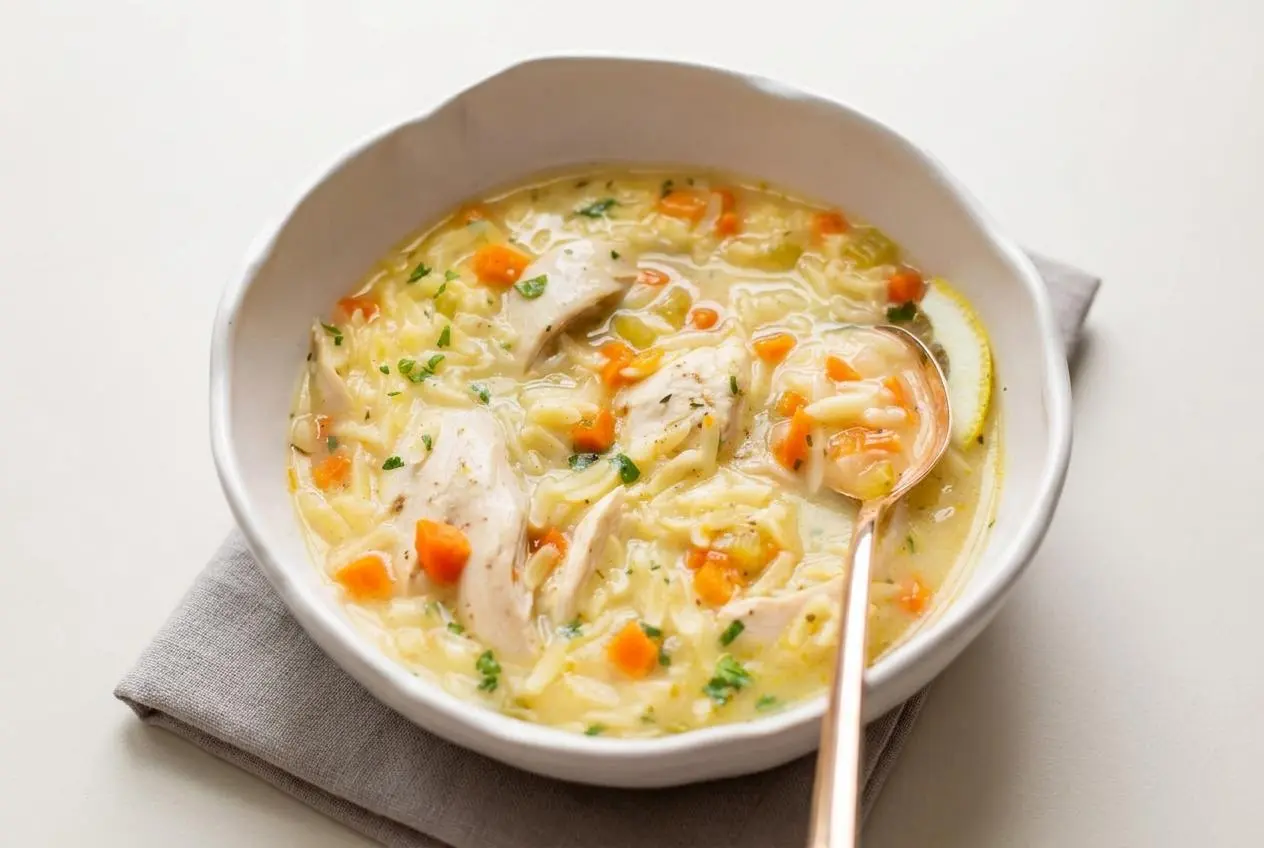
Lemon chicken orzo soup combines chicken, mirepoix, and rice-shaped pasta in a savory broth, then finishes with lemon juice and parsley for a bright, comforting bowl ready in under an hour.
This lemon chicken orzo soup starts with buttery vegetables and garlic, then turns velvety as the orzo cooks in the broth. The citrus goes in at the end, so every spoonful tastes fresh rather than harsh.
It is cozy enough for a chilly night but lively enough for spring. The tender-crisp vegetable stage makes all the difference.
Keep a wooden spoon nearby once the orzo goes in, because frequent stirring prevents the pasta from settling and catching on the bottom.
Essential Ingredients for Bright Flavor
Each ingredient contributes something useful: vegetables build savory sweetness, butter and oil carry aroma, flour gives the broth light body, and lemon and parsley bring freshness to the finished soup.
- 2 sticks celery (chopped finely)
- 2 medium carrots (peeled & chopped finely)
- 1/2 medium onion (chopped)
- 1 tablespoon butter
- 1 tablespoon olive oil
- 3 cloves garlic (minced)
- 2 tablespoons flour
- 6 cups chicken broth
- 1/4 teaspoon Italian seasoning
- 1.5 pounds uncooked chicken breasts
- 1 cup uncooked orzo
- 1 tablespoon lemon juice (or to taste)
- 1 tablespoon chopped fresh parsley (or to taste)
- Salt & pepper (to taste)
Finely chopping the celery, carrots, and onion creates an even mirepoix that softens quickly and spreads its flavor through every bowl. The flour briefly cooks in the fat, forming a light roux that gives the broth a gently velvety texture without making it heavy.
Chicken breasts stay mild and tender in this broth, while the orzo releases starch as it simmers and naturally gives the soup more body. Parsley adds a clean herbal finish that keeps the richer broth from tasting flat.
I like to roll room-temperature lemons firmly on the counter before juicing them, since they usually give up more juice with less effort.
Broth and Citrus Foundations
Choose a chicken broth you enjoy sipping on its own, since it forms the backbone of the pot. A lower-sodium broth gives you more control when seasoning at the end, especially because lemon can make saltiness seem more noticeable.
Fresh lemon juice tastes rounder and more fragrant than bottled concentrate. Add it after turning off the heat so the citrus stays bright and aromatic rather than developing a cooked, slightly bitter edge. If you want a more herbal finish, steep a strip of lemon zest or a fresh dill sprig in the hot broth briefly, then remove it before serving.
Chicken and Pasta Selection
Raw chicken breasts gently simmering in the broth add poultry flavor as they cook. For a faster dinner, shredded rotisserie chicken works well as an optional shortcut, but add it near the end so it only warms through.
Orzo pasta resembles grains of rice, but it behaves like pasta: it absorbs liquid and releases starch. That is why it creates such a comforting texture in soup. For another useful way to work with this little pasta shape, try this lemon orzo recipe.
How to Make Lemon Chicken Orzo Soup
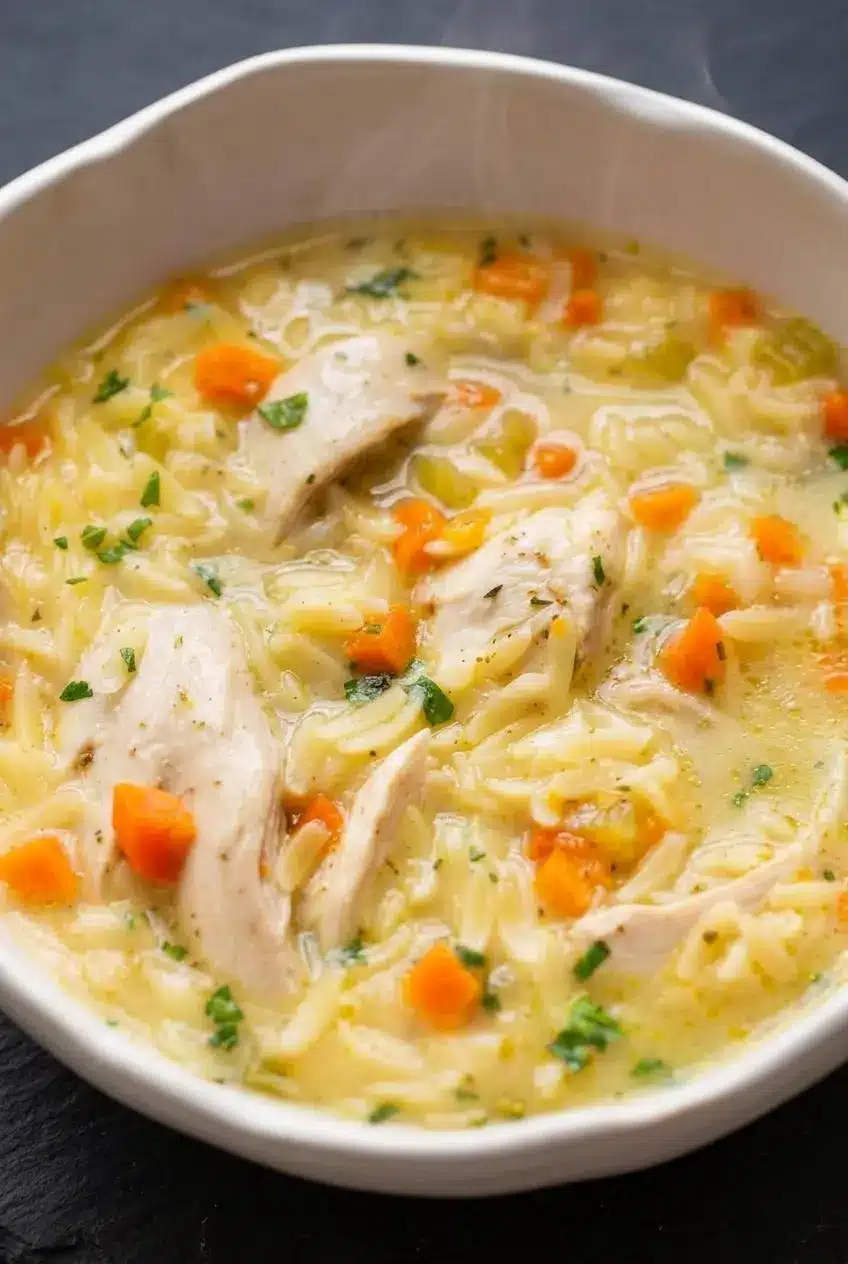
A large soup pot or Dutch oven gives the vegetables room to soften evenly and keeps the simmer easy to manage. Use an instant-read thermometer before shredding the chicken: poultry should reach a minimum internal temperature of 165°F.
- Warm the butter and olive oil in a large soup pot over medium-high heat, then cook the celery, carrots, and onion for 5 to 7 minutes.
The vegetables should soften while still holding a little bite, with the onion turning translucent around the edges. - Add the minced garlic and stir for about 30 seconds, then sprinkle in the flour and cook it for about 1 minute.
The garlic should smell fragrant quickly, and the flour should coat the vegetables without leaving dry patches. - Slowly pour in the chicken broth while stirring, then add the Italian seasoning and chicken breasts before bringing the liquid to a boil.
Keep stirring until the flour disappears into the broth and the liquid looks smooth rather than lumpy. - Set the lid slightly ajar, lower the heat, and simmer the soup for 15 minutes.
Small, steady bubbles should rise around the chicken instead of a hard rolling boil. - Add the orzo and cook for about 10 minutes, stirring the pot often with the lid off.
The orzo is ready when it looks translucent with a tiny pale center and feels tender with a little firmness. - Transfer the chicken to a cutting board, cut it into bite-size pieces, and return it to the soup with the lemon juice, parsley, salt, and pepper.
Turn off the heat before adding the lemon, then taste for a bright, savory broth with a fresh citrus finish.
Serve right away for the loosest, brothy texture. The orzo keeps absorbing liquid as it stands, so the soup naturally thickens quickly in the pot.
Practical Tips and Common Mistakes
Small adjustments matter here because lemon and orzo can change the texture and balance of the soup faster than expected.
- The soup tastes bitter: Lemon juice likely cooked too long. Stir it in off the heat, then avoid bringing the soup back to a boil.
- The soup tastes too tart: Add a splash of chicken broth, then taste again. A pinch of salt or a small pat of butter can round out sharp citrus notes without covering the lemon flavor.
- The orzo sticks to the pot: Stir often, especially during the first few minutes after adding it. Tiny pasta settles quickly and can scorch if left undisturbed.
- The chicken seems dry: Check its temperature promptly and remove it once cooked through. Letting breasts simmer much longer than needed can make the meat stringy.
- The soup becomes too thick: Stir in more chicken broth until it returns to a spoonable consistency. Season again after thinning, since extra broth can soften the flavor.
Popular Recipe Variations
The main pot stays bright and brothy, but a few optional changes can shift it toward a creamier Greek-style bowl or a faster weeknight dinner.
Greek Avgolemono Style
For a silky egg-thickened finish, whisk two eggs with fresh lemon juice in a bowl. Slowly whisk in a ladle of warm broth, then another, until the mixture is warmed gradually. Stir it back into the soup off the heat and do not boil it afterward, which helps keep the eggs smooth rather than scrambled.
This method creates a creamy texture without dairy and gives the soup a fuller lemon character. For a deeper look at that style, see this Greek lemon chicken soup.
Rotisserie Chicken Shortcut
Use shredded rotisserie chicken when time is tight. Cook the vegetables, broth, and orzo as directed, then stir the cooked chicken in during the final 5 minutes so it heats gently without becoming dry.
This variation changes the flavor slightly because the chicken does not simmer in the broth from the beginning, but it still delivers a satisfying bowl with much less hands-on prep.
Grain and Vegetable Swaps
- Baby spinach or chopped kale: Stir it in at the end so the residual heat wilts the greens while keeping their color lively.
- Fresh dill: Add it with or in place of some parsley for a more pronounced Greek-inspired herbal note.
- White rice: Use it as an optional grain swap, allowing for its longer cooking needs and adding extra broth if it absorbs too much liquid.
- Ditalini or gluten-free orzo: These can replace regular orzo, but begin checking early because pasta shapes and brands cook at different rates.
Storage, Freezing, and Reheating Guide
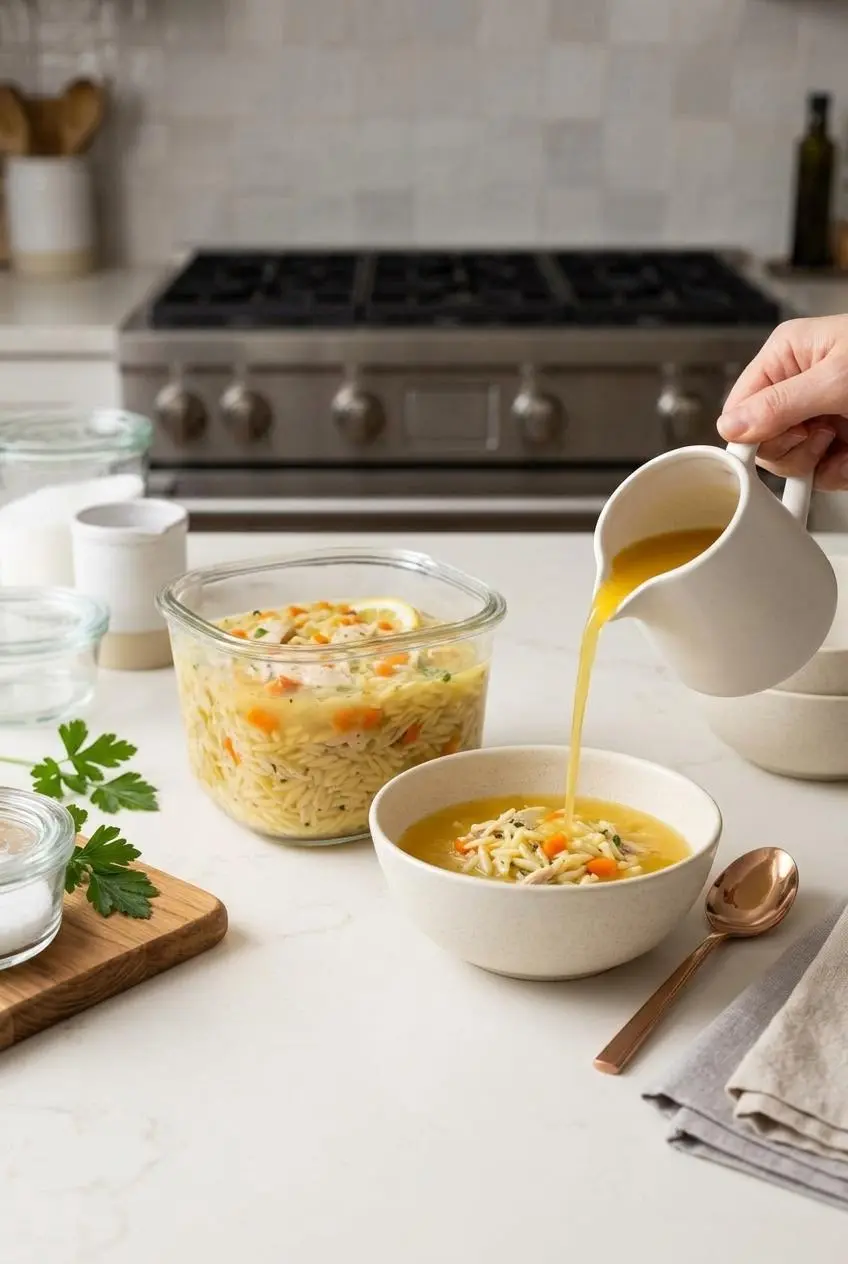
Orzo keeps drinking up broth after cooking, so handling the pasta separately is the best texture strategy when you expect leftovers.
Refrigeration and Reheating Ratios
Cool leftover soup promptly, transfer it to an airtight container, and keep it chilled. When reheating on the stovetop over medium-low heat, add chicken broth or water gradually until the thickened soup loosens to the consistency you like. Warm it gently and stir often so the orzo does not stick.
For planned leftovers, cook the orzo in salted water separately and add it to individual bowls before ladling in hot soup. This keeps the broth lighter and gives the pasta a better chance of staying pleasantly firm.
Freezing Broth Without Mushy Pasta
Freeze the cooked chicken and vegetable broth base without the orzo for the best texture later. Keep the pasta separate, then cook fresh orzo in the warmed broth when you are ready to serve. This avoids the soft, swollen texture that cooked orzo can develop after freezing and reheating.
Use clean containers, chill the broth before storing it, and follow poultry freezing and storage practices when handling the chicken-based broth.
Serving Suggestions and Pairings
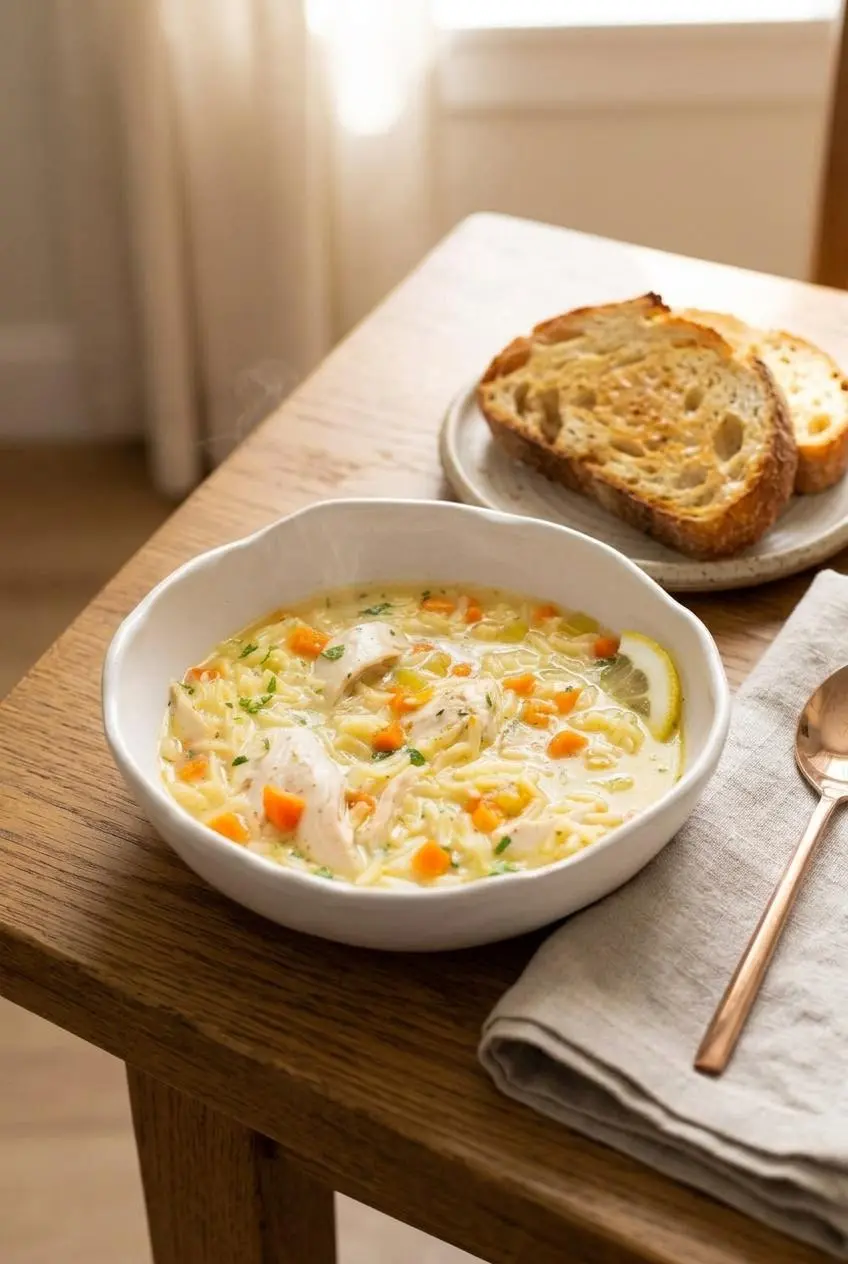
The lively lemon broth pairs best with sides that can soak up the soup or offer a cool, crisp contrast.
- Serve warm bowls with thick slices of crusty sourdough, a toasted baguette, or warm pita wedges.
- Add a crisp Mediterranean salad with cucumber, cherry tomatoes, Kalamata olives, feta, and a light vinaigrette.
- Finish each bowl with extra parsley and black pepper for a fresher aroma at the table.
Conclusion
This soup brings together tender chicken, gently thickened broth, soft vegetables, and a clean pop of lemon in one comforting pot. It is warm, savory, and refreshing without feeling heavy.
Stir the orzo often, check the chicken carefully, and add the lemon after the heat is off. That final bright squeeze makes the whole bowl sing.
Frequently Asked Questions
Do I Need to Cook the Orzo Separately Before Adding It to the Soup?
No. If you plan to serve the soup right away, simmer the orzo directly in the broth for about 10 minutes. It adds body as it cooks. For planned leftovers, cook the orzo separately and add it to each bowl. That approach keeps it from absorbing most of the broth while stored.
How Do I Store Leftover Lemon Chicken Orzo Soup Without It Getting Mushy?
Cool the soup promptly and keep it in an airtight container in the refrigerator. The orzo will continue absorbing liquid as it chills, so the soup will become thicker. Reheat gently with a splash of chicken broth or water, stirring until the broth becomes loose and spoonable again. For future batches, storing cooked orzo separately gives the best texture.
Can I Use Rotisserie Chicken Instead of Raw Chicken Breasts?
Yes. Shredded rotisserie chicken is a convenient option for a faster meal. Stir it in during the final 5 minutes while the orzo cooks. This warms the chicken through without giving it time to turn dry.
How Can I Fix the Soup if It Tastes Too Sour or Acidic?
Add more chicken broth a little at a time and taste after each addition. This softens the lemon flavor while keeping the soup savory. A small pat of butter, a pinch of salt, or a tiny pinch of sugar can also round out sharp citrus edges. Add lemon gradually next time, since individual lemons vary widely in acidity.
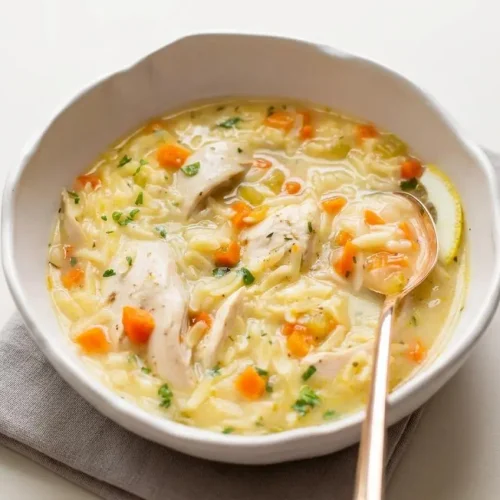
Lemon Chicken Orzo Soup

Equipment
- Large soup pot or Dutch oven
- Garlic Press
- Cutting board
- Instant-read meat thermometer
Ingredients
- 2 sticks celery chopped finely
- 2 medium carrots peeled & chopped finely
- 1/2 medium onion chopped
- 1 tablespoon butter
- 1 tablespoon olive oil
- 3 cloves garlic minced
- 2 tablespoons flour
- 6 cups chicken broth
- 1/4 teaspoon Italian seasoning
- 1.5 pounds uncooked chicken breasts
- 1 cup uncooked orzo
- 1 tablespoon lemon juice or to taste
- 1 tablespoon chopped fresh parsley or to taste
- Salt & pepper to taste
Instructions
- Warm the butter and olive oil in a large soup pot over medium-high heat, then cook the celery, carrots, and onion for 5 to 7 minutes. The vegetables should soften while still holding a little bite, with the onion turning translucent around the edges.
- Add the minced garlic and stir for about 30 seconds, then sprinkle in the flour and cook it for about 1 minute. The garlic should smell fragrant quickly, and the flour should coat the vegetables without leaving dry patches.
- Slowly pour in the chicken broth while stirring, then add the Italian seasoning and chicken breasts before bringing the liquid to a boil. Keep stirring until the flour disappears into the broth and the liquid looks smooth rather than lumpy.
- Set the lid slightly ajar, lower the heat, and simmer the soup for 15 minutes. Small, steady bubbles should rise around the chicken instead of a hard rolling boil.
- Add the orzo and cook for about 10 minutes, stirring the pot often with the lid off. The orzo is ready when it looks translucent with a tiny pale center and feels tender with a little firmness.
- Transfer the chicken to a cutting board, cut it into bite-size pieces, and return it to the soup with the lemon juice, parsley, salt, and pepper. Turn off the heat before adding the lemon, then taste for a bright, savory broth with a fresh citrus finish.