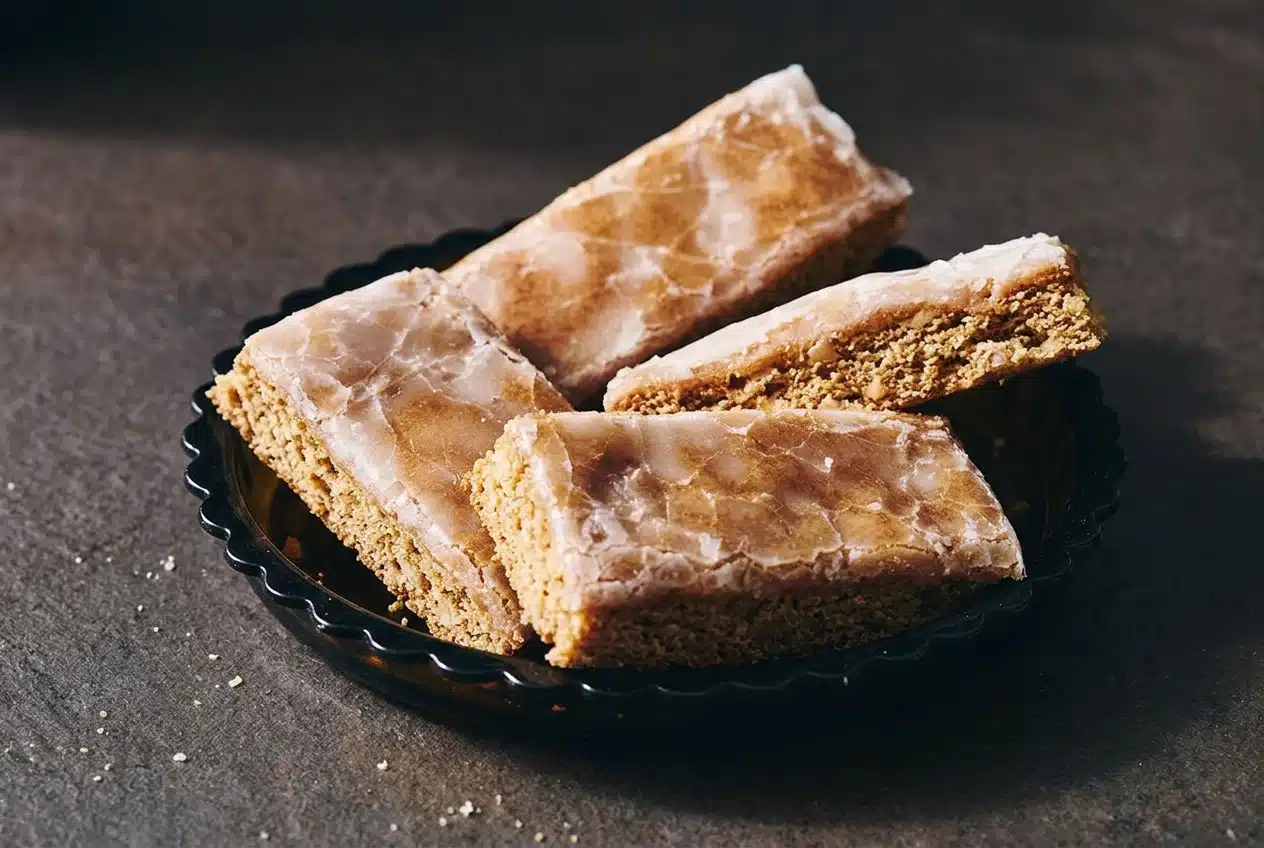
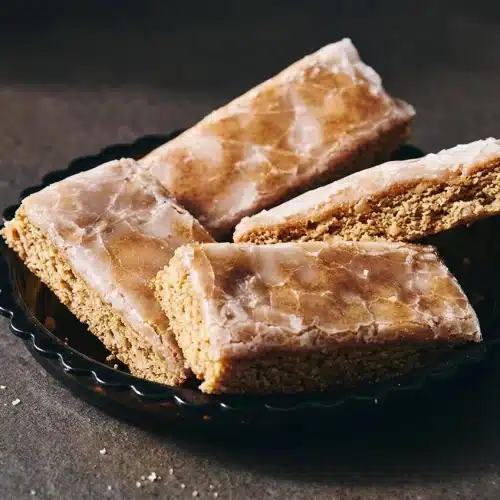
Lebkuchen is a family of German spiced holiday bakes. This lebkuchen recipe makes honey and citrus bars with a brushed sugar glaze and no baking wafers. Chill the dough overnight, then roll and bake it as one slab.
Unlike rolled cutouts or the nut-rich rounds called Elisenlebkuchen, these bars go into one parchment-lined pan. There’s no need to shape individual cookies before baking.
Lemon and orange keep the cinnamon, cloves, and nutmeg from tasting heavy. The last bite has a little kick of ginger.
Set out the pastry brush before the pan goes into the oven so you’re ready to glaze the slab while it’s warm.
Lebkuchen Bar Ingredients
Each ingredient has a job: flour and egg give the slab structure, honey and brown sugar bring sweetness and moisture, and almonds add texture. Citrus lifts the warm spices, while confectioners’ sugar gives the bars a smooth finish.
- 3/4 cup (255g) honey
- 1/2 cup (106g) light brown sugar, packed
- 1 large egg
- 2 teaspoons each finely grated lemon peel and orange peel; or 1/4 teaspoon each lemon oil and orange oil
- 2 1/4 cups (270g) King Arthur Unbleached All-Purpose Flour
- 1/4 teaspoon baking soda
- 1/2 cup (57g) finely chopped blanched almonds
- 2 teaspoons ground cinnamon
- 1 teaspoon ground ginger
- 1 teaspoon ground nutmeg
- 1 teaspoon ground cloves
- 1/4 cup (39g) mini diced ginger, finely ground*
- 1 cup (113g) confectioners’ sugar
- 2 tablespoons (28g) water, brandy, or apple juice (or a combination)
*If you’re using a food processor, you can pulse the mini diced ginger and blanched almonds together instead of preparing them separately.
Honey gives the bars a floral sweetness, while light brown sugar adds a caramel note. Ground ginger blends into the dough with the cinnamon, nutmeg, and cloves. The crystallized ginger gives it a sharper bite. The grated peels, or the citrus oils listed as an alternative, bring fragrance rather than ginger heat.
The chopped almonds give the bars a little texture without large pieces of nut. Confectioners’ sugar dissolves into a glaze thin enough to brush. You won’t need Backoblaten, the edible baking wafers used for some individual Lebkuchen.
How to Make Lebkuchen Bars
Mix the dough the day before you bake. Once the slab goes into the oven, use that time to stir together the glaze so it’s ready when the bars come out.
- Heat the honey and brown sugar in a medium saucepan, giving the mixture an occasional stir as it warms.
As soon as it boils, take the pan off the heat and leave the syrup to cool until lukewarm. - In a large bowl, beat the egg and the lemon and orange peel or oils into the lukewarm syrup.
The mixture should look uniform, with no streaks of egg. - Stir in the flour, baking soda, almonds, ground spices, and finely ground diced ginger until no dry patches remain.
Cover and refrigerate the dough overnight, even though it feels stiff and still clings to the spoon. - The next day, set the oven to 350°F and lightly grease a 9-by-13-inch pan before lining it with parchment.
The parchment lets you lift the baked slab out in one piece. - Dust the work surface lightly with flour and roll the dough into a 9-by-13-inch rectangle.
Lift it with a wide spatula or drape it over the rolling pin and unroll it into the pan, keeping pressure off the edges. - Bake for 20 to 22 minutes, checking the middle of the slab with a cake tester.
Pull the pan when the tester comes out clean. - While the slab bakes, stir the chosen liquid into the confectioners’ sugar.
Keep stirring until the glaze is smooth and free of lumps. - Move the baked slab to a cooling rack and brush on the glaze right away with a pastry brush.
Let the first coat soak in a little before brushing on another layer. - Wait until the glazed slab has cooled completely, then slice it into 1-by-2-inch bars.
The center should no longer feel warm when you cut.
Mix and Chill the Dough
Let the syrup lose its heat before beating in the egg. Once the flour goes in, judge the mix by whether it holds together, not by whether it pulls cleanly away from the bowl.
Roll and Transfer the Slab
I’d use the rolling pin if the dough feels awkward to lift. It supports the rectangle across its width so you don’t have to tug it into place by the corners.
Bake, Glaze, and Cool the Slab
The first coat should soak into the warm surface a little rather than sit in puddles. Give it a chance to settle before going back over it with the brush.
Sticky Dough, Dense Edges, and Glaze Troubleshooting
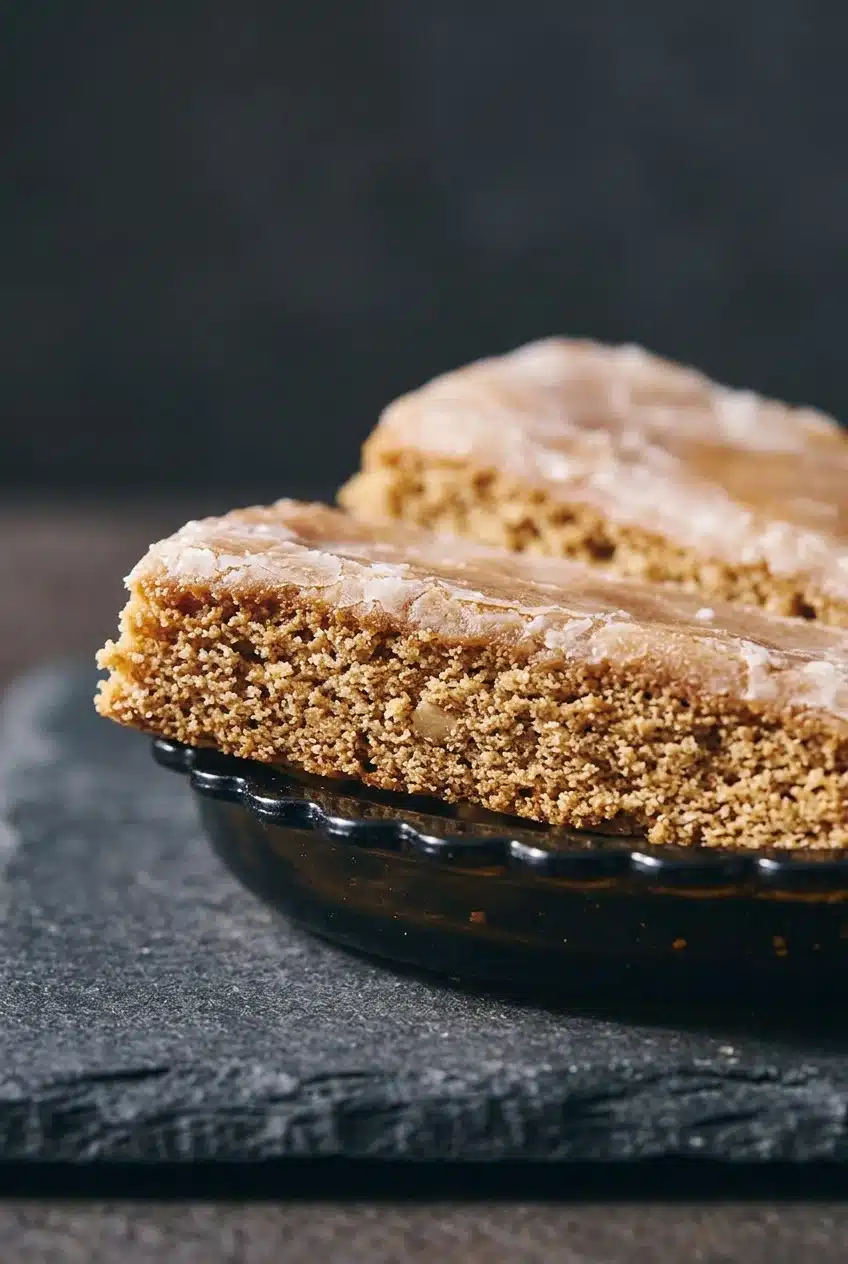
- The dough sticks to the spoon: Stiff and sticky is normal before chilling. If the dough holds together, resist the urge to mix in more flour. Save the light dusting for the work surface.
- The edges look packed down: Pressing the dough to fill every corner can make those bites dense. If you want a quick check, glance across the slab once it lands in the pan. Look for even thickness rather than perfectly filled corners.
- The edges look done first: Edge color doesn’t tell you whether the middle is baked. Use the center tester to make the call.
- The glaze smears when you slice: Glazing and slicing happen at different temperatures. Brush the slab warm, but wait until it’s completely cool to cut.
Lebkuchen Styles and Flavor Variations
Wafer-Based Elisenlebkuchen and Cutout Cookies
Elisenlebkuchen are nut-rich rounds, while cutout Lebkuchen are rolled and stamped into individual shapes before baking. These pan bars stay in one piece until after baking and glazing. Each format calls for its own dough or batter.
Wafer-Based Elisenlebkuchen
Backoblaten are thin edible wafers that form the bottom of each round. They stay on the cookie when you eat it, unlike the parchment under these bars.
Chocolate as an Alternative Finish
- Sugar-glazed bars: The light coating leaves the honey, citrus, and spices up front.
- Chocolate-finished Lebkuchen: A cocoa-rich coating adds a deeper flavor and is a feature of some individual cookies and rounds.
Candied Citrus Peel vs. Fresh Peel
Freshly grated lemon and orange peel give the dough a bright citrus aroma. Diced candied peel is an optional alternative if you’d rather have a sweeter, more pronounced candied-fruit flavor.
Making Lebkuchen Ahead
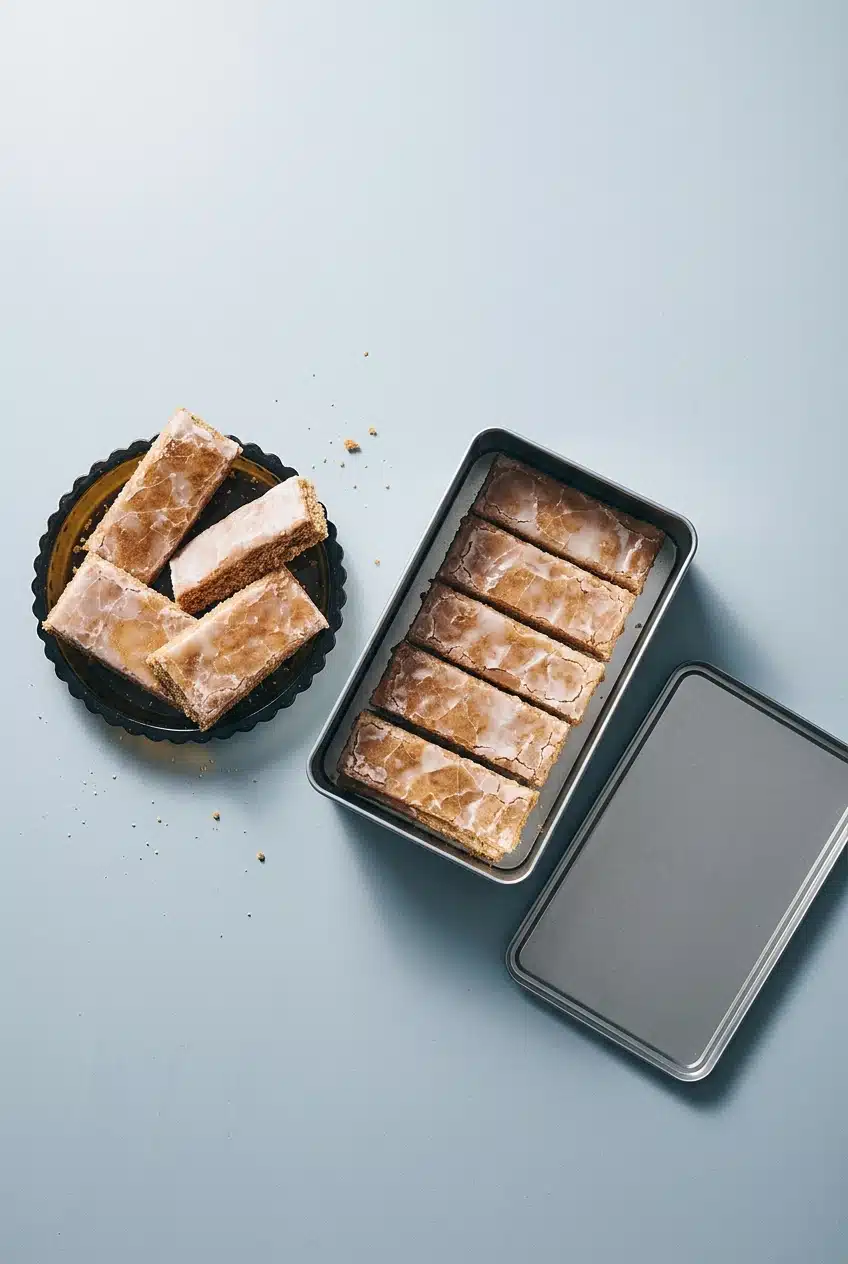
Work backward from when you want to pack the tin. Mix and refrigerate the dough the day before baking. On baking day, leave time for the slab to cool and the glaze to set before slicing and packing.
Once the glaze no longer feels tacky, pack the cut bars in a clean, airtight container.
Serving Lebkuchen Bars
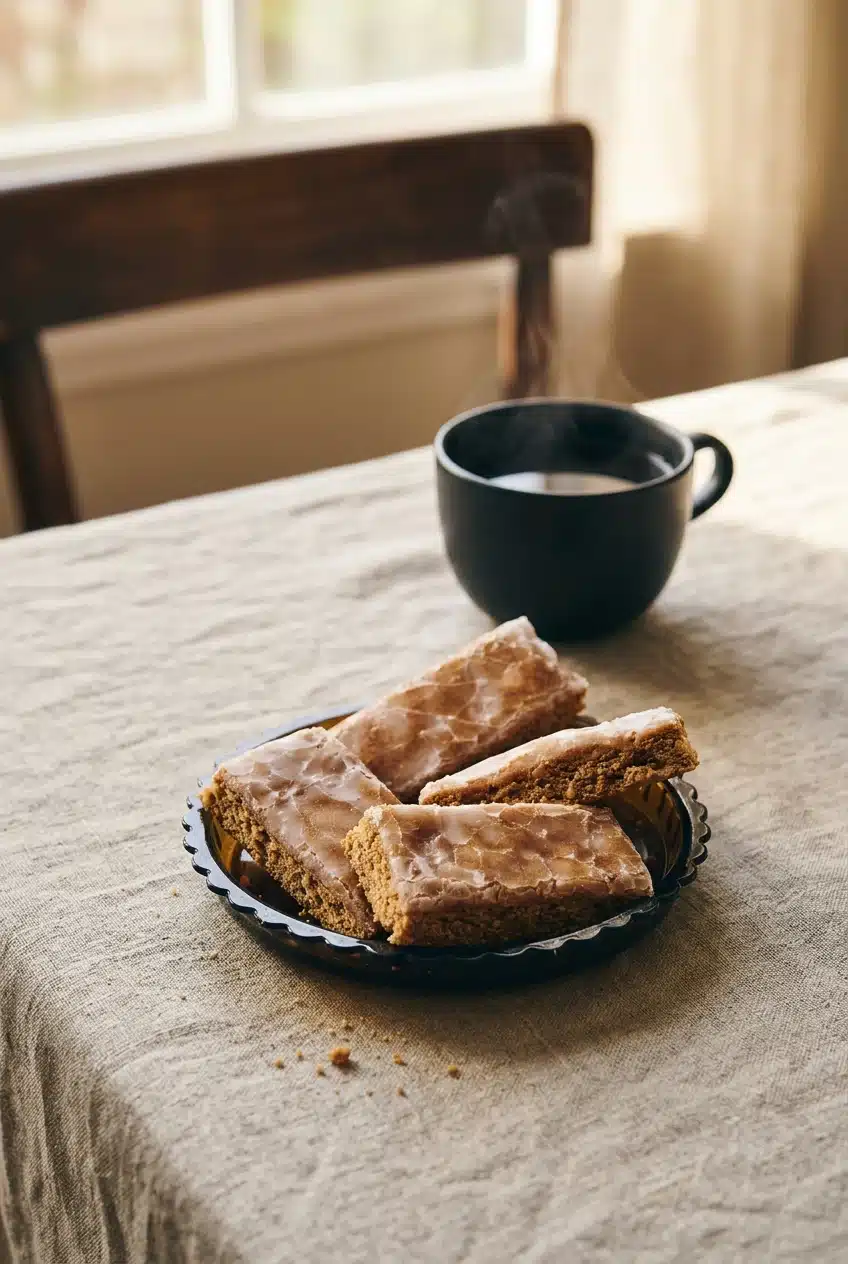
Serve the bars with black tea or coffee to balance the sweet glaze, or pair them with warm apple cider to bring out the cinnamon and cloves. In a holiday cookie assortment, tuck the slender bars between round cookies to fill the gaps.
A Wafer-Free Lebkuchen for the Cookie Tin
One pan gives you honey, citrus, and warm spices in tidy bars, with no wafers to shop for or individual cookies to shape.
Start the dough the evening before you want to bake. That leaves baking day free for rolling, glazing, and putting together the tin.
Lebkuchen FAQs
What Is Lebkuchen, and How Is It Different From Gingerbread?
Lebkuchen is often called German gingerbread, but the name covers several shapes and textures. These honey-and-citrus bars are one version, quite different from a crisp gingerbread cutout.
Do I Need Baking Wafers to Make These Lebkuchen Bars?
No. The dough bakes as a slab in a parchment-lined pan. Save the edible wafers for a style such as Elisenlebkuchen.
Is Lebkuchen Dough Supposed to Be Stiff and Sticky?
Yes, for these bars. The dough can resist stirring and still cling to the spoon. Chill it as directed before deciding how it handles on the rolling surface.
Should I Glaze the Bars Warm or Cool?
Glaze these bars while the slab is warm so the sugar coating can soak in a little. Let it cool completely before slicing. Some individual cookies are glazed after cooling, but that’s a different finish.
Can I Make Lebkuchen Ahead for a Cookie Tin, and How Should I Store It?
Yes. Build in the dough chill and let the glaze set before packing. Keep the cooled bars covered in an airtight tin or container.
Can I Make These Bars Nut-Free or Vegan?
These bars contain almonds, egg, and honey. Choose a recipe developed for your needs rather than assuming those ingredients can be left out. If you’re baking for someone with a nut allergy, ask about their cross-contact precautions before preparing a batch.
Lebkuchen Recipe

Equipment
- Medium saucepan
- Large Mixing Bowl
- 9-by-13-inch baking pan
- Parchment Paper
- Rolling Pin
- cake tester
- Cooling Rack
- Pastry brush
Ingredients
- 3/4 cup honey
- 1/2 cup light brown sugar packed
- 1 large egg
- 2 teaspoons each finely grated lemon peel and orange peel; or 1/4 teaspoon each lemon oil and orange oil
- 2 1/4 cups King Arthur Unbleached All-Purpose Flour
- 1/4 teaspoon baking soda
- 1/2 cup finely chopped blanched almonds
- 2 teaspoons ground cinnamon
- 1 teaspoon ground ginger
- 1 teaspoon ground nutmeg
- 1 teaspoon ground cloves
- 1/4 cup mini diced ginger finely ground*
- 1 cup confectioners’ sugar
- 2 tablespoons water, brandy, or apple juice (or a combination)
Instructions
- Heat the honey and brown sugar in a medium saucepan, giving the mixture an occasional stir as it warms. As soon as it boils, take the pan off the heat and leave the syrup to cool until lukewarm.
- In a large bowl, beat the egg and the lemon and orange peel or oils into the lukewarm syrup. The mixture should look uniform, with no streaks of egg.
- Stir in the flour, baking soda, almonds, ground spices, and finely ground diced ginger until no dry patches remain. Cover and refrigerate the dough overnight, even though it feels stiff and still clings to the spoon.
- The next day, set the oven to 350°F and lightly grease a 9-by-13-inch pan before lining it with parchment. The parchment lets you lift the baked slab out in one piece.
- Dust the work surface lightly with flour and roll the dough into a 9-by-13-inch rectangle. Lift it with a wide spatula or drape it over the rolling pin and unroll it into the pan, keeping pressure off the edges.
- Bake for 20 to 22 minutes, checking the middle of the slab with a cake tester. Pull the pan when the tester comes out clean.
- While the slab bakes, stir the chosen liquid into the confectioners’ sugar. Keep stirring until the glaze is smooth and free of lumps.
- Move the baked slab to a cooling rack and brush on the glaze right away with a pastry brush. Let the first coat soak in a little before brushing on another layer.
- Wait until the glazed slab has cooled completely, then slice it into 1-by-2-inch bars. The center should no longer feel warm when you cut.