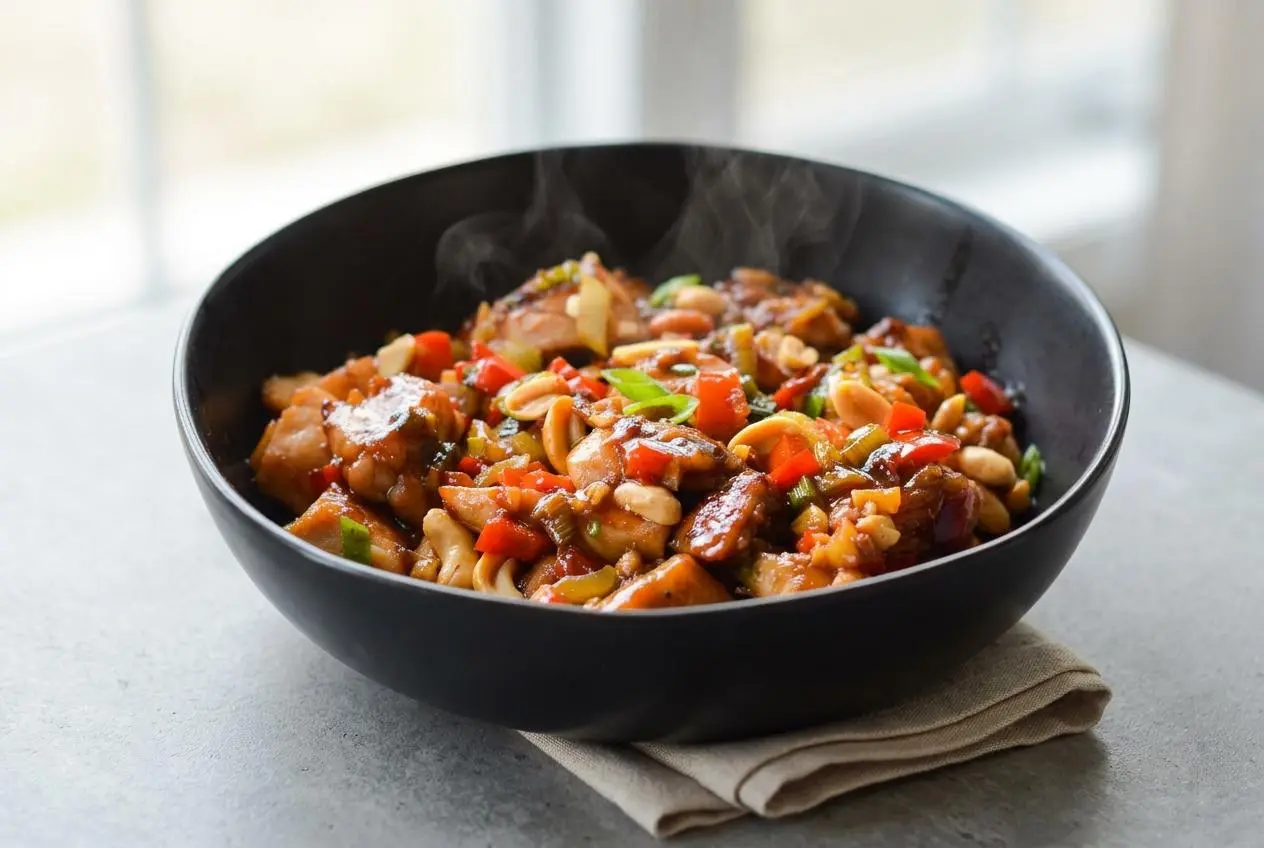
Kung Pao chicken is a Chinese stir-fry with tender chicken, crisp vegetables, roasted peanuts, and a savory, sweet, tangy sauce with gentle chili warmth.
This kung pao chicken recipe brings that glossy, takeout-style finish to a weeknight skillet. Soy sauce, hoisin, balsamic vinegar, ginger, garlic, and sesame oil create a deep, balanced coating without weighing down the chicken.
The vegetables stay bright and lightly crisp, while the peanuts add their signature crunch. The trick is fast heat and a well-whisked sauce.
Have every ingredient chopped, measured, and within reach before heating the skillet, because the final stir-fry moves quickly.
Essential Ingredients and Their Flavor Roles
Each ingredient supports the finished stir-fry, from the cornstarch that protects the chicken’s moisture to the peppers, celery, scallions, and nuts that bring color, freshness, aroma, and crunch.
For the Marinade
- 1½ tablespoons soy sauce
- 1 tablespoon dry sherry
- 2 teaspoons cornstarch
- 1½ lbs chicken tenderloins (or boneless skinless chicken breasts), cut into 1-in (2.5-cm) pieces
For the Sauce
- 1 tablespoon balsamic vinegar
- 2 tablespoons soy sauce
- 1 tablespoon hoisin sauce, best quality such as Kikkoman or Lee Kum Kee
- 1 tablespoon sesame oil
- 1½ tablespoons sugar
- 1 tablespoon cornstarch
- ½ teaspoon crushed red pepper flakes (use half the amount for a milder sauce)
- ¼ teaspoon ground ginger
- ⅓ cup water
For the Stir-fry
- 2½ tablespoons vegetable oil
- 1 large red bell pepper, diced
- 2 stalks celery, halved lengthwise and thinly sliced
- ¼ teaspoon salt
- 3 cloves garlic, chopped
- 5 scallions, white and green parts, thinly sliced
- ⅓ cup whole roasted unsalted peanuts or cashews
Soy sauce seasons both the chicken and sauce with savory depth. Dry sherry adds a rounded edge to the marinade, while cornstarch helps the chicken stay succulent and gives the finished sauce its clingy sheen. Bell pepper and celery keep the dish from becoming soft all over, and scallions brighten the rich sauce.
Balsamic vinegar stands in for the darker, tangy notes often found in restaurant-style Kung Pao sauce. Hoisin and sugar soften that acidity, sesame oil adds nuttiness, and crushed red pepper flakes provide adjustable heat. Roasted peanuts or cashews finish every bite with a toasted snap.
I toss the chicken until every piece looks lightly coated and no dry cornstarch remains at the bottom of the bowl, which helps the chicken cook evenly in the hot skillet.
The Velvet Marinade Foundation
Velveting is a quick way to give lean chicken a more tender stir-fry texture. The soy sauce seasons the surface, dry sherry adds flavor, and cornstarch forms a light coating around the pieces. During the 15-minute rest, that coating hydrates and helps shield the chicken from the intense heat of the skillet.
The goal is not a thick batter. The chicken should look lightly slick, with no visible clumps of starch. This small step makes a noticeable difference when tenderloins or chicken breast hit a very hot pan, where they can otherwise turn dry before they pick up color.
Building the Sweet, Tangy, and Spicy Sauce
Kung Pao sauce works because each flavor has a job. Soy sauce brings saltiness, balsamic vinegar adds tang, hoisin and sugar round out the sharp edges, and sesame oil gives the sauce a roasted aroma. Ginger and red pepper flakes add warmth without taking over.
Whisk the sauce until the cornstarch is fully dissolved, scraping the bottom of the bowl where it tends to settle. Give it another whisk immediately before it goes into the skillet. Once heated, the liquid turns from thin and cloudy to clear, glossy, and able to coat the chicken and vegetables.
How to Make Kung Pao Chicken
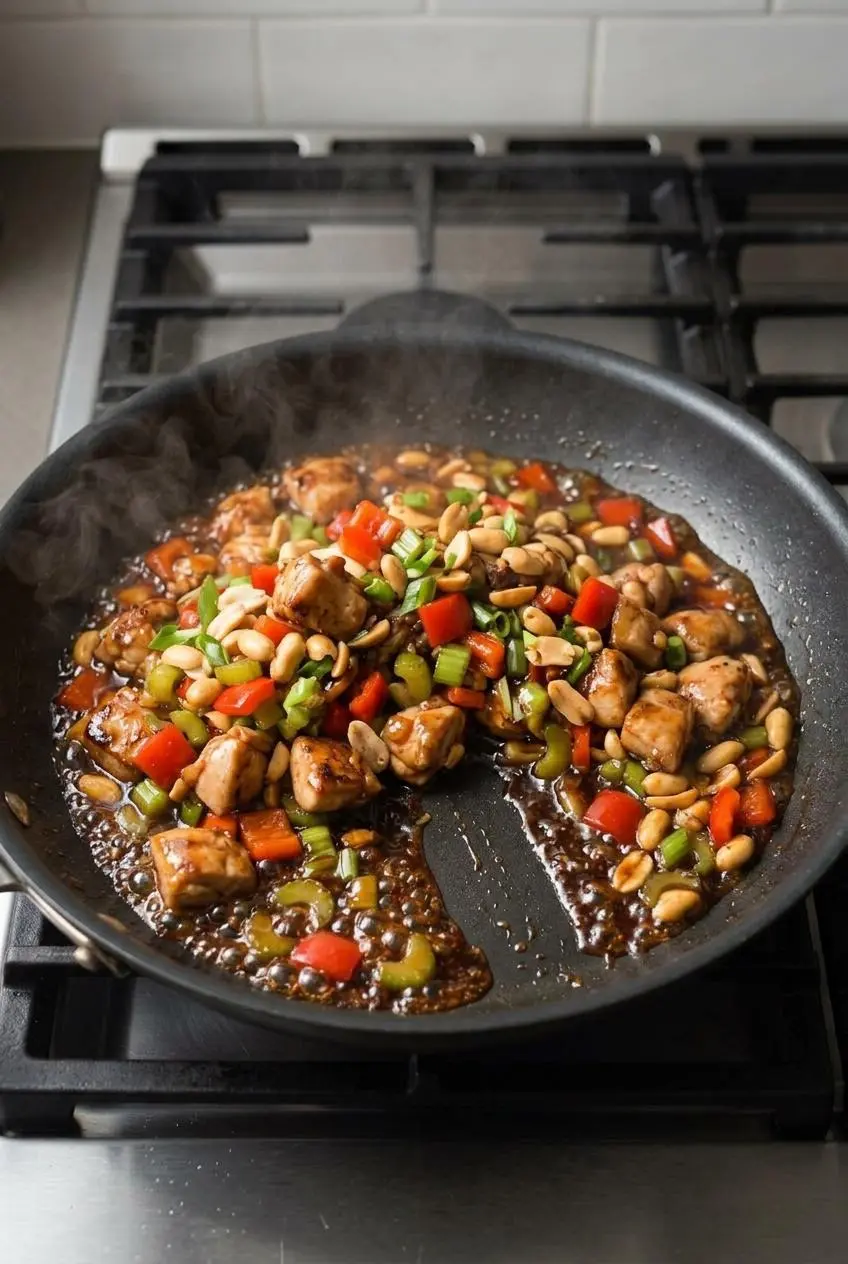
This method uses two cooking stages: vegetables first, then chicken in batches. Keeping those steps separate gives you browned edges, crisp vegetables, and a sauce that stays glossy instead of watery.
- Whisk the soy sauce, dry sherry, and cornstarch in a medium bowl until smooth, then add the chicken and turn it to coat; leave it at room temperature for 15 minutes, stirring now and then.
The coating should look even and lightly glossy, with no cornstarch settled in dry patches. - Combine every sauce ingredient in a second medium bowl and whisk thoroughly, scraping the bottom to loosen any cornstarch.
The mixture should look smooth and uniform before it is added to the skillet. - Heat a large nonstick skillet over high heat until very hot, then add 1 tablespoon of the oil and swirl it around the pan; add the bell pepper, celery, and salt, and stir often for about 5 minutes before moving the vegetables to a large bowl.
The vegetables should soften slightly, show a few browned spots, and still retain some crispness. - Return the skillet to high heat, add ½ tablespoon of oil, and cook half of the chicken for about 1½ minutes without moving it too much; turn the pieces and cook for about 1½ minutes more, then transfer them to the bowl with the vegetables.
The chicken should turn opaque with lightly golden edges and be cooked through at the center. - Add another ½ tablespoon of oil and cook the remaining chicken for about 1½ minutes on the first side and 1 minute after turning; add the final ½ tablespoon of oil with the garlic and scallions, then stir for about 30 seconds.
The garlic and scallions should sizzle sharply and smell fragrant without taking on dark color. - Return the chicken and vegetables to the skillet, pour in the sauce, and reduce the heat to low; stir for about 30 seconds until everything is heated through, then fold in the nuts and adjust the seasoning if needed.
The sauce should become clear, thick, and shiny, coating the ingredients without pooling heavily at the bottom of the pan.
If the sauce thickens more than you like as it sits, loosen it with a little water and toss gently until it coats the stir-fry again.
Expert Stir-Fry Tips and Troubleshooting
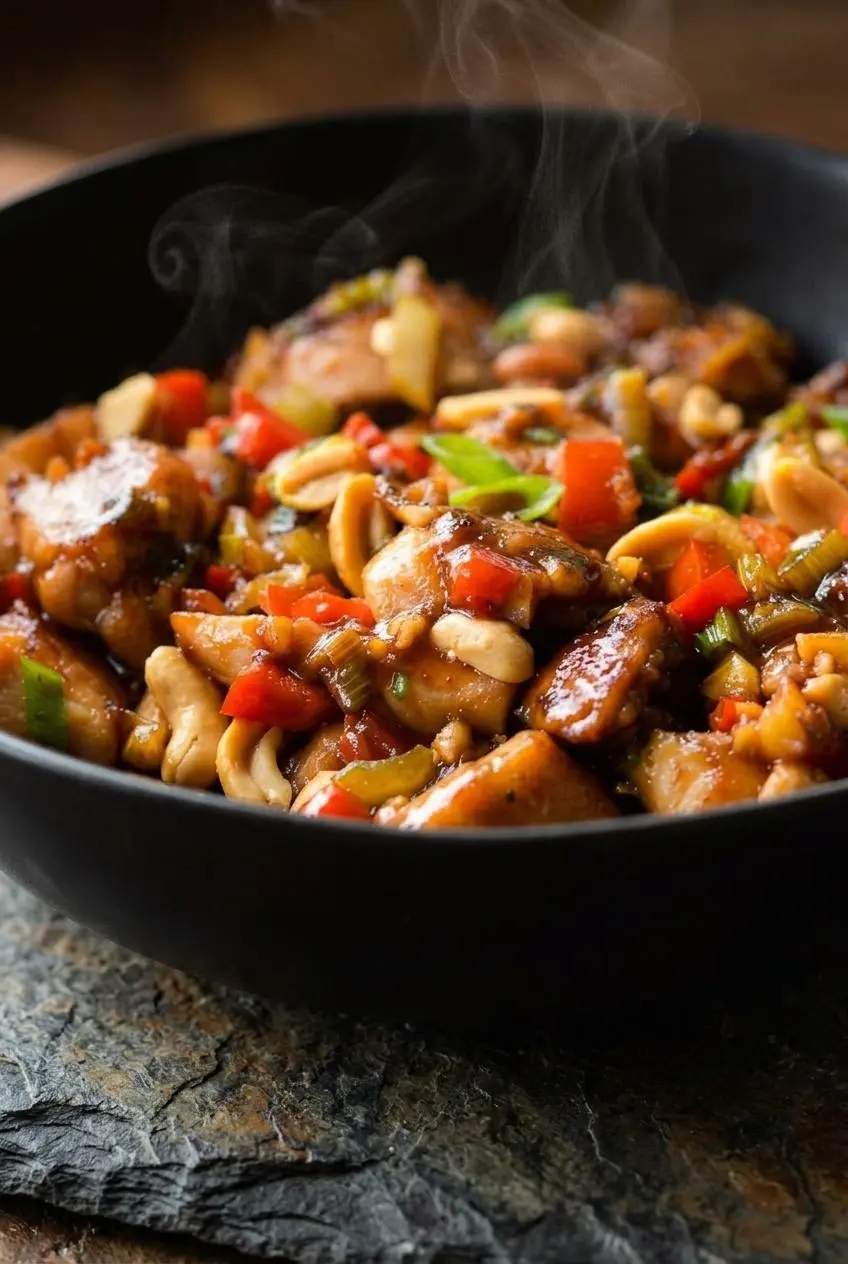
A successful stir-fry depends more on heat management than fancy equipment. A large nonstick skillet works well when it is fully hot before the oil and chicken go in.
Preventing Sogginess by Batch Searing
Overcrowding drops the skillet temperature quickly. Instead of browning, the chicken releases moisture and steams, leaving pale pieces and a thin sauce. Cooking in two batches gives each piece contact with the hot pan, so it can become opaque and lightly golden in under three minutes.
Let the first side of the chicken sit undisturbed for its initial 1½ minutes. Constant stirring at that stage prevents browning. Once the chicken has color, turn it and finish cooking just until done.
Fixing Sauce Consistency and Heat Balance
- Too thick: Stir in a small splash of warm water over low heat until the sauce loosens and looks glossy again.
- Too thin: Keep the skillet over low heat and stir briefly. The cornstarch needs a little more heat to activate, but prolonged cooking can soften the vegetables.
- Starchy or lumpy: Whisk the sauce again before pouring it in, especially if it has been sitting while the chicken cooks.
- Too spicy: Use the reduced amount of red pepper flakes listed in the ingredients. Serve with rice to soften the heat in each bite.
- Not spicy enough: Add more crushed red pepper flakes gradually, tasting after the sauce has coated the chicken.
Preserving Nut Crunch and Aromatic Bloom
Stir the roasted peanuts or cashews in at the end, just before serving. Adding them earlier lets them absorb sauce and lose their crisp texture. If you expect leftovers, reserve some nuts separately and add them to each portion after reheating.
Garlic and scallions need only about 30 seconds in the hot pan. Their fragrance should bloom quickly, but garlic turns bitter if it stays over high heat too long. For an optional Sichuan-style finish, bloom a small pinch of freshly toasted, ground Sichuan peppercorn with the garlic for a citrusy, lightly numbing aroma.
Serving Suggestions, Storage, and Reheating
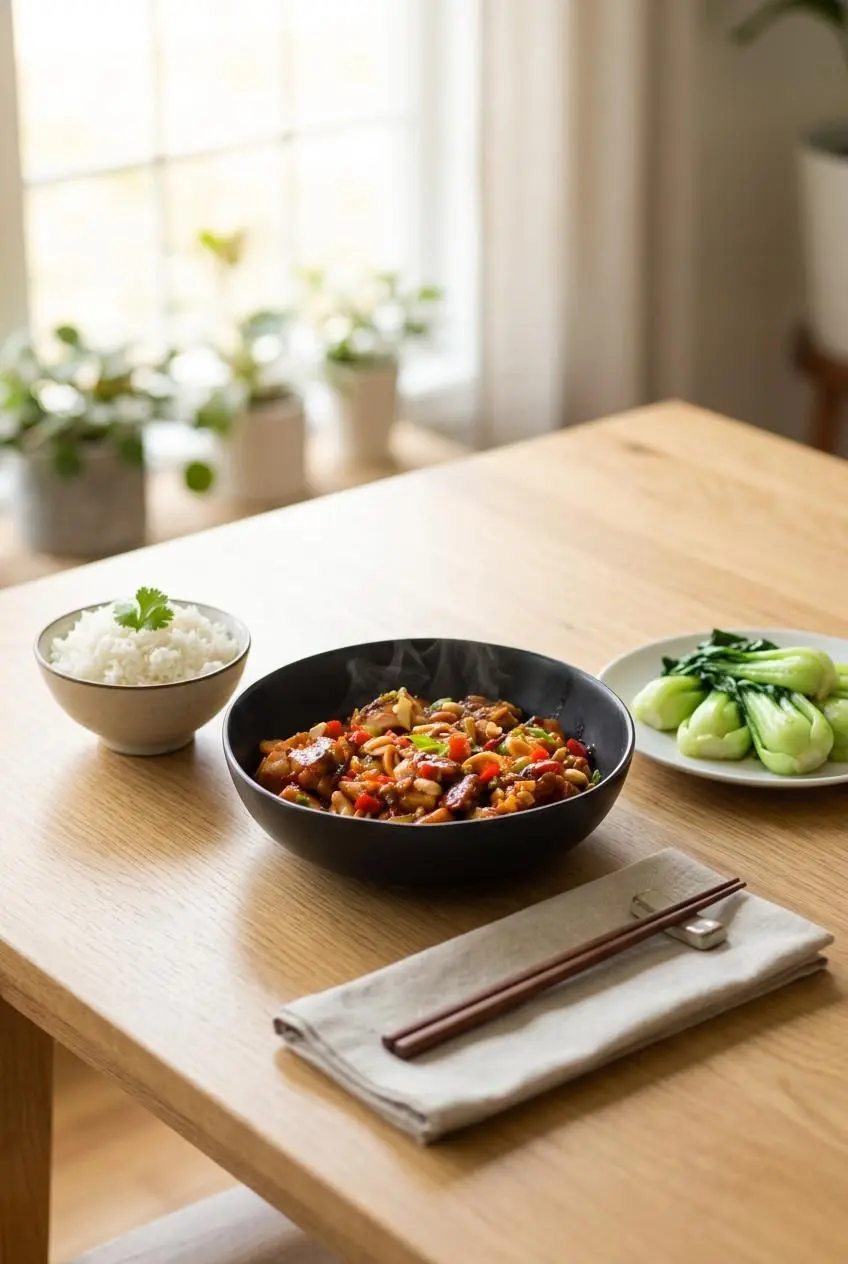
The rich, savory-sweet sauce benefits from a plain, absorbent side that catches every glossy spoonful.
Best Side Dish Pairings
- Steamed jasmine rice: Its floral aroma and soft texture balance the chile warmth and bold sauce.
- Brown rice: A heartier option with a chewy bite that holds up well under the stir-fry.
- Garlic noodles: Tossed simply, they turn the dish into a more substantial takeout-style dinner.
- Sautéed baby bok choy: Mild greens and a little crunch make a fresh contrast to the sauce.
A cool, crunchy crisp Asian chicken salad also pairs nicely with the warm stir-fry when you want more vegetables on the table.
Storing and Skillet Reheating Instructions
Let leftovers cool, then transfer them to an airtight container and keep them chilled. For the best texture, store any reserved peanuts separately so they stay crisp.
Reheat a portion in a skillet over medium heat with a small splash of water. Stir gently until the sauce becomes loose and glossy again, then add reserved nuts at the end. Avoid cooking it longer than needed, since the celery and bell pepper soften quickly.
Custom Variations and Dietary Swaps
These optional changes keep the sweet, tangy, spicy character while adapting the dish to different preferences. Keep them separate from the main ingredient list so the original balance stays intact.
Gluten-Free Tamari Option
Replace the soy sauce with gluten-free tamari and choose a certified gluten-free hoisin sauce. Check the labels on both products, since standard hoisin and soy sauce commonly contain wheat. The flavor remains savory and rounded, though tamari may taste slightly deeper and less sharp.
Crispy Tofu or Extra Veggie Version
For a vegetarian version, use pressed, cubed extra-firm tofu dusted with cornstarch in place of chicken. Sear it in batches until the edges are golden before proceeding with the vegetables and sauce. Tofu absorbs the sauce readily, so serve it promptly for the best exterior texture.
- Zucchini: Dice it and add it with the bell pepper and celery for a tender, mild vegetable addition.
- Carrots: Slice them thinly so they can soften during the initial vegetable stir-fry while keeping some crunch.
- Water chestnuts: Add sliced water chestnuts with the vegetables for a clean, crisp bite that holds up in sauce.
- Chicken thighs: Use boneless, skinless thighs for a richer flavor and more forgiveness under high heat.
- Shrimp: Use peeled shrimp and cook only until opaque, then return them to the pan with the sauce.
Extra Spicy Sichuan Style
- Add whole dried red chilies to the hot oil briefly for a deeper chile aroma, then leave them in the finished dish as a garnish-like heat cue.
- Use ground Sichuan peppercorn with the garlic and scallions for its floral, tingling character.
- Add a dash of chili oil at the end if you want richer heat and a red sheen on the sauce.
- If you enjoy bold chili dishes, try crispy bang bang chicken for another spicy, sweet-savory dinner option.
Conclusion
This fast homemade stir-fry delivers tender chicken, crisp vegetables, nutty crunch, and a bright, glossy sauce in about 30 minutes. Batch-searing keeps the skillet hot enough to create the browned edges that make the dish taste especially satisfying.
Adjust the chile warmth to suit your table, and hold back a few peanuts for a last-minute crunch. Small details make every bowl feel freshly cooked.
Frequently Asked Questions
Can You Eat the Whole Dried Chilies in Kung Pao Chicken?
Whole dried chilies are mainly there to perfume the oil and add spicy warmth. Most people move them to the side of the plate rather than eating them whole. They can be quite hot, especially if the seeds have loosened into the dish.
What Is the Best Cut of Chicken for Kung Pao Chicken?
Chicken tenderloins cook quickly and stay tender with the cornstarch marinade. Boneless, skinless chicken breast also works well when cut into even pieces and cooked just until done. Boneless chicken thighs offer a richer flavor and are more forgiving if the skillet runs especially hot.
How Do You Keep the Peanuts Crunchy in Kung Pao Chicken?
Use whole roasted unsalted peanuts or cashews. Fold them in during the final moments of cooking, after the sauce has thickened. For leftovers, keep some nuts separate and scatter them over each reheated serving.
Can I Make Kung Pao Chicken Ahead of Time for Meal Prep?
You can whisk the sauce and coat the chicken before cooking so the final stir-fry comes together faster. Keep the prepared components chilled if they are not being cooked right away. Reheat cooked portions gently in a skillet with a splash of water, then add peanuts at the end for better crunch.
Kung Pao Chicken Recipe

Equipment
- Large nonstick skillet
- Medium bowl
Ingredients
For the Marinade
- 1 1/2 tablespoons soy sauce
- 1 tablespoon dry sherry
- 2 teaspoons cornstarch
- 1 1/2 lbs chicken tenderloins (or boneless skinless chicken breasts) cut into 1-in (2.5-cm) pieces
For the Sauce
- 1 tablespoon balsamic vinegar
- 2 tablespoons soy sauce
- 1 tablespoon hoisin sauce best quality such as Kikkoman or Lee Kum Kee
- 1 tablespoon sesame oil
- 1 1/2 tablespoons sugar
- 1 tablespoon cornstarch
- 1/2 teaspoon crushed red pepper flakes use half the amount for a milder sauce
- 1/4 teaspoon ground ginger
- 1/3 cup water
For the Stir-fry
- 2 1/2 tablespoons vegetable oil
- 1 large red bell pepper diced
- 2 stalks celery halved lengthwise and thinly sliced
- 1/4 teaspoon salt
- 3 cloves garlic chopped
- 5 scallions white and green parts, thinly sliced
- 1/3 cup whole roasted unsalted peanuts or cashews
Instructions
- Whisk the soy sauce, dry sherry, and cornstarch in a medium bowl until smooth, then add the chicken and turn it to coat; leave it at room temperature for 15 minutes, stirring now and then. The coating should look even and lightly glossy, with no cornstarch settled in dry patches.
- Combine every sauce ingredient in a second medium bowl and whisk thoroughly, scraping the bottom to loosen any cornstarch. The mixture should look smooth and uniform before it is added to the skillet.
- Heat a large nonstick skillet over high heat until very hot, then add 1 tablespoon of the oil and swirl it around the pan; add the bell pepper, celery, and salt, and stir often for about 5 minutes before moving the vegetables to a large bowl. The vegetables should soften slightly, show a few browned spots, and still retain some crispness.
- Return the skillet to high heat, add ½ tablespoon of oil, and cook half of the chicken for about 1½ minutes without moving it too much; turn the pieces and cook for about 1½ minutes more, then transfer them to the bowl with the vegetables. The chicken should turn opaque with lightly golden edges and be cooked through at the center.
- Add another ½ tablespoon of oil and cook the remaining chicken for about 1½ minutes on the first side and 1 minute after turning; add the final ½ tablespoon of oil with the garlic and scallions, then stir for about 30 seconds. The garlic and scallions should sizzle sharply and smell fragrant without taking on dark color.
- Return the chicken and vegetables to the skillet, pour in the sauce, and reduce the heat to low; stir for about 30 seconds until everything is heated through, then fold in the nuts and adjust the seasoning if needed. The sauce should become clear, thick, and shiny, coating the ingredients without pooling heavily at the bottom of the pan.